
Search…

Following the Freedom March in Alabama

It was a difficult few days for us as we were forced to confront thoughts and feelings that we would have much rather avoided. We addressed issues that many of us Americans would like to think have been completely resolved. But it seems to us that turning a blind eye is not the solution.

The lesson we learned is that the light of day is best, because as much as this is fairly recent history, we were taken aback by how little we knew about the details. In Birmingham, the details are on display – front and center – and in Montgomery… CONTINUE READING >>

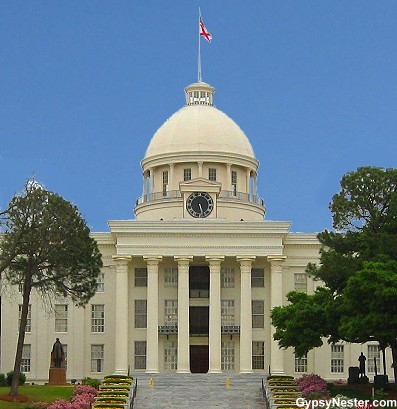
The Capitol Building in Montgomery, Alabama

As we continued our journey across The South, our trek led us to The Heart of Dixie, Alabama.

Our first stop was Montgomery. As the capital of the state and former capital of The Confederate States of America, this city is steeped in history, but for people of our generation the more recent history is burned more indelibly in our memories.

Montgomery might be the epicenter of the modern civil rights movement, beginning back on the first of December 1955, when Rosa Parks refused to give up her seat on a segregated bus.

Our knowledge of these events was sketchy at best, so we decided to seek out some of the sites of these historic events with a bit of our usual spur-of-the-moment tourism.
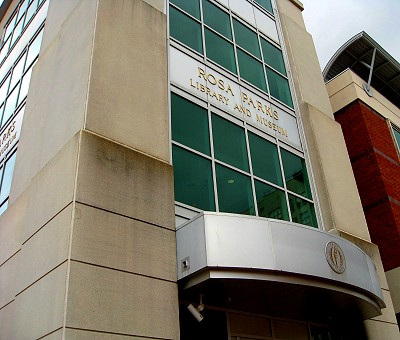
The Rosa Parks Library and Museum

Without any advanced plans, The Rosa Parks Library and Museum on the Troy University campus was the first of these sites that we came upon.

After chatting with a few of the students that staff the museum, we headed inside to the focal point of the presentation, a re–creation of the bus Mrs. Parks was riding.

We entered a darkened room they call the Cleveland Avenue Time Machine, climbed aboard, and were taken for a ride through the years from Jim Crow in the 1800s to the Montgomery Bus Boycott in 1955 and 1956.

The Rosa Parks incident triggered the boycott, which began as a one day event but ended up lasting over a year, before being settled by an agreement that nobody could be forced to give up their seat based on race.

The success of the boycott led to more efforts to end segregation and secure voting rights. The story of those struggles led us to The Southern Poverty Law Center and The Civil Rights Memorial Center.
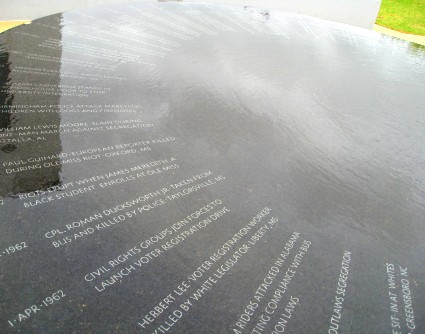
The Civil Rights Memorial

The Memorial captured our attention as we walked up the street toward The Center.

The smooth granite circular slab is engraved around the outside edge with the names of people killed in the struggle for equal rights. Water washes over the stone as a constant reminder of Dr. Martin Luther King’s words, “We will not be satisfied until justice rolls down like waters and righteousness like a mighty stream.”
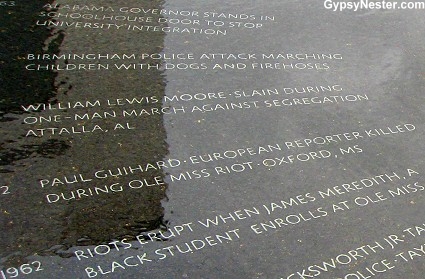
The Civil Rights Memorial

The Memorial was created by Vietnam Veterans Memorial designer Maya Lin, who envisioned the plaza as “a con-templative area — a place to remember the Civil Rights Movement, to honor those killed during the struggle, to appreciate how far the country has come in its quest for equality, and to consider how far it has to go.”
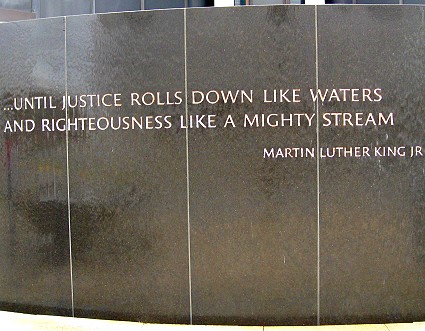
The Civil Rights Memorial

Inside The Center there is a tribute to each of the victims and information on many of the cases The Law Center has fought through the years.

After we browsed the exhibits and watched a film in the theater, it was hard not to let anger be our overriding emotion, but then we came to The Wall of Tolerance just before the exit.

Tolerance and nonviolent resistance were the hallmarks of the movement, certainly we should carry on that tradition today.

The twenty by forty foot wall is an electronic display of the hundreds of thousands of visitors who have pledged to stand up for equality.

After seeing the stories of so many brave souls who gave their lives in the fight for basic American rights, it was not a difficult decision to take the pledge and add our names.

“By placing my name on the Wall of Tolerance, I pledge to take a stand against hate, injustice and intolerance. I will work in my daily life for justice, equality and human rights – the ideals for which the Civil Rights martyrs died.”

It was a deeply emotional moment watching our names appear on the wall, we’re sure we were not alone in walking out the door with tears in our eyes. Actually, Veronica was openly sobbing and the nice volunteer at the exit had kleenex at the ready, so we’re absolutely positive we weren’t the first.

Click here for more pictures of The Civil Rights Memorial Center
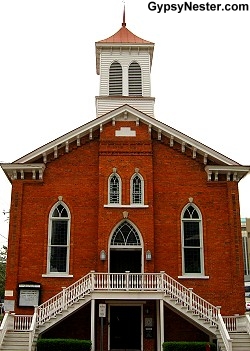
Dexter Avenue Baptist Church

The Dexter Avenue Baptist Church, where Dr. King served as pastor, stands just around the corner, literally in the shadow of the capitol building that was the birthplace of The Confederacy and site of George Wallace’s famous “segregation now, segregation tomorrow, segregation forever” speech.

Obviously the atmosphere was pretty charged around here back in the early sixties when advocates began to arrive from around the country to stand up to segregation and register African Americans to vote.

This led to some of the most extreme violence perpetrated during the entire movement, most notably the beating of Freedom Riders as they arrived in Montgomery to integrate bus service and depots in 1961, and Bloody Sunday at the Selma to Montgomery Marches for voting rights in ’65.
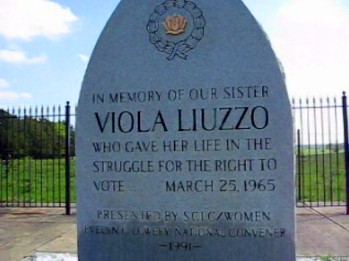
The Memorial for Viola Liuzzo

One of the lesser known participants in the marches was Viola Liuzzo. After the final march Viola volunteered to drive people back to Montgomery from Selma and committed the unforgivable act of being a white woman in a car with a black man. Nothing got a bigot’s blood to boiling like that.

So four Klansmen chased the car down Highway 80 and about halfway between the two towns, pulled up beside the car and shot Viola four times in the head. Even though one of the shooters was a known FBI informant, not one of the murderers was convicted by their all white juries.

In 1991 the Women of the Southern Christian Leadership Conference placed a marker for Mrs. Liuzzo near the highway at the site of the shooting.
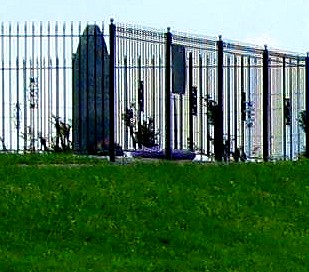
The Memorial for Viola Liuzzo

We felt that we should see it, so we stopped on our way to Selma. We wanted to cover the exact route of the Selma to Montgomery Marches (though we were going backward), to get a real feel for what happened there.

We had to watch closely, the marker can be easy to miss, as we did on our first pass. But after doubling back we found it. In a sad commentary as to how far we still have to go, the marker has been knocked down and defaced, often by painting Confederate flags on it, many times.
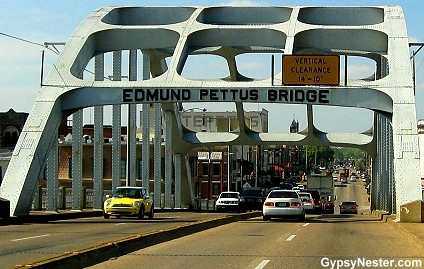
The Edmund Pettus Bridge, Selma Alabama

We entered Selma at the Edmund Pettus Bridge, scene of Bloody Sunday, when 600 marchers were beaten and gassed as they tried to cross the bridge on their first attempt at marching to Montgomery.
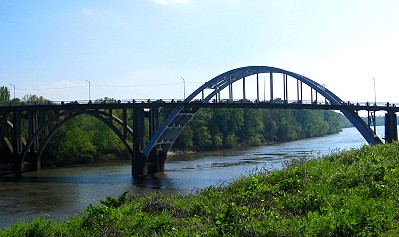
The Edmund Pettus Bridge, Selma Alabama

Two days later Dr. King led another march, this time only planning to go as far as the bridge, to prove the point that they had the legal right to do so on the authority of a Federal District Court Judge.

The third march left Selma two Sundays after the first try, with just over three thousand people. They walked about twelve miles a day, sleeping in fields along the way, until they reached Montgomery four days later. By the time they marched up to the capitol building the group had grown to 25,000. But later that night the murder of Mrs. Liuzzo marred the success.
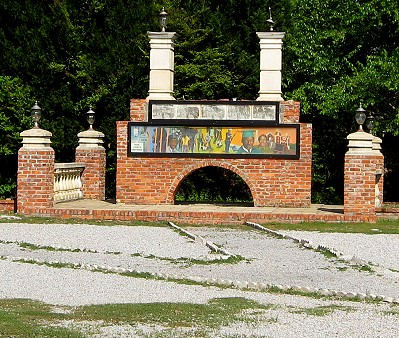
Before we crossed the bridge into Selma, we pulled off to see the small memorial below the eastern entrance, but it was in a sad state of repair. Once across we were a little surprised by the lack of acknowledge-ment the town of Selma seems to have for these events and the civil rights movement in general.

With banners hanging from the lampposts reading: “Historic Places, Social Graces,” the city seemed to want to play up its Southern charm more than any of its more recent history. I guess we can’t blame them too much, it wasn’t pretty, but it still struck us as strange after seeing the beautiful tributes in Montgomery.
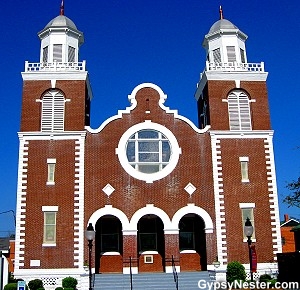
Brown Chapel African Methodist Episcopal Church in Selma, Alabama

The two biggest landmarks from the movement in Selma, the Edmund Pettus Bridge and the Brown Chapel African Methodist Episcopal Church, have not changed much over the decades, so we parked and set out on foot to retrace the route of the marchers from the bridge back to the church that had served as the starting place for all three of the Selma to Montgomery Marches.

As we walked up Martin Luther King, Jr. Street we were struck by how much everything looked like the pictures taken fifty years earlier. Other than the street being paved, The George Washington Carver Homes where many of the marchers lived and took in participants from out of town, including Viola Liuzzo, looked exactly the same.

Sometimes progress isn’t readily visible. We were ready to move on.
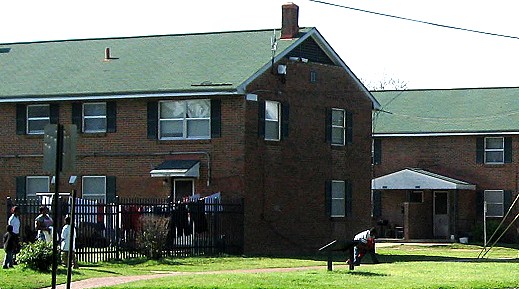
Housing projects in Selma, Alabama

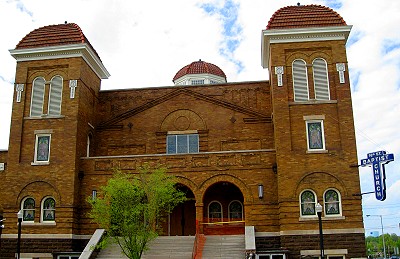
16th Street Baptist Church in Birmingham, Alabama

Our exploration into the history of the civil rights movement would not have been complete without seeing the 16th Street Baptist Church in Birmingham, the site of the lowest, most cowardly act ever perpetrated by the segregationists.
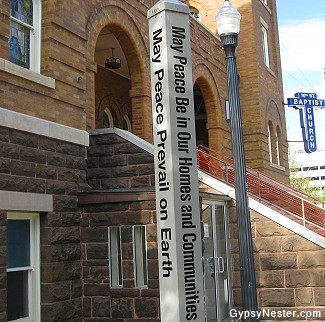
On a September Sunday morning in 1963 four Klansman planted a bomb in the basement of the church and set it to go off during a youth meeting at the morning services.

Four young girls were killed in the blast, but only one of the perpetrators was arrested. He paid a small fine for illegal possession of dynamite. No one else was arrested, tried or convicted for the murders until many years later.

The church is still active and it seemed a bit unseemly for us to treat it as a tourist attraction, so we went across the street to The Birmingham Civil Rights Institute. The Institute, an affiliate of the Smithsonian, had by far the most extensive exhibition about the civil rights movement that we had seen in our travels.

Set up as a walking journey, multimedia exhibits took us through the turbulent decades of the fifties and sixties while the powerful Oral History Project told us the stories from the actual participants, in their own voices.

Across from The Institute is Kelly Ingram Park, which served as a staging ground for many of the demonstrations in Birmingham. Even though it was a bit chilly it felt good to do some walking outside, so we followed the park’s Freedom Walk which circles the four acre green space.
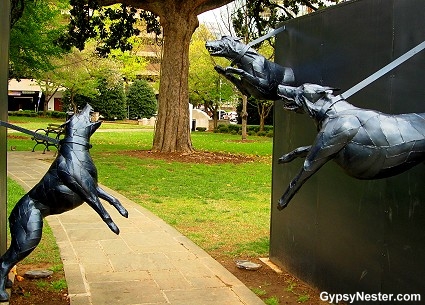
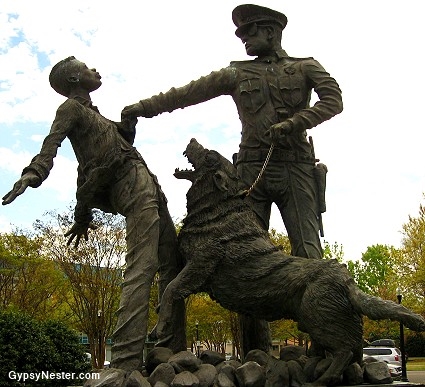
Police and Dog Attack Sculpture

The Walk is lined with several statues, including four that we found had particular impact, by sculptor James Drake.

Drake’s works put us right in the middle of the situations he depicts.

None more so than Police and Dog Attack. The sculpture completely captures the ferociousness of three attack dogs lunging. It was a powerful statement, giving us the feel of what it must have been like to have the dogs turned loose back during the May 1963 demonstration.
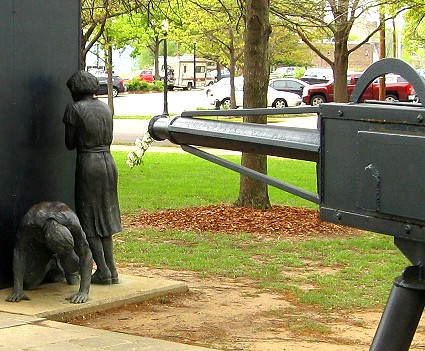
Firehosing of Demonstrators

Elsewhere along the path we encountered Firehosing of Dem-onstrators, depicting water cannons being turned on protesters, and Children’s March (“I ain’t afraid of your jail”), where we stopped to look through the steel bars of a jail cell window at two youngsters who represent the children that were arrested during the protests.

Click here to see more photos of Freedom Walk
The last of Drake’s works along The Freedom Walk is Foot Soldier Tribute. This serves as a memorial to all who struggled with “gallantry, courage and great bravery” in the civil rights movement. Mayor Richard Arrington Jr. dedicated the tribute with those words in 1995.

Birmingham was so violent during the civil rights era that it became known as Bombingham, but now the city seems to have come to terms with itself by commemorating its sordid history and celebrating the outcome more openly than either of our previous stops.

It was a difficult few days for us as we were forced to confront thoughts and feelings that we would have much rather avoided. We addressed issues that many of us Americans would like to think have been completely resolved. But it seems to us that turning a blind eye only leads to a situation like Selma, where our eyes could not see much progress.

The lesson we learned is that the light of day is best, because as much as this is fairly recent history, we were taken aback by how little we knew about the details. In Birmingham, the details are on display – front and center – and in Montgomery the good fight continues every day to defend the civil rights of all Americans.

So perhaps we all shall overcome.

David & Veronica, GypsyNester.com

Delve deeper:
The Freedom Walk in Birmingham
The Civil Rights Memorial in Montgomery
The Martin Luther King Memorial in Washington, DC
Following Dr. King’s Footsteps Though Travel
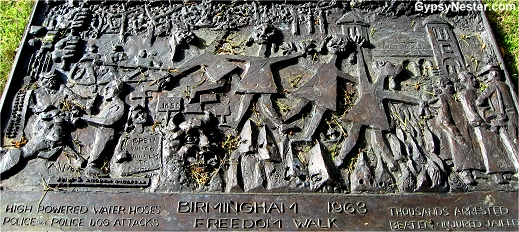
Freedom Walk, Birmingham, Alabama


The Walk is lined with several statues, including four that we found had particular impact, by sculptor James Drake. Drake’s works put us right in the middle of the situations he depicts… CONTINUE READING >>

Freedom Walk, Birmingham, Alabama

Kelly Ingram Park served as a staging ground for many of the demonstrations in Birmingham. Even though it was a bit chilly it felt good to do some walking outside, so we followed the park’s Freedom Walk which circles the four acre green space.

Police and Dog Attack Sculpture

The Walk is lined with several statues, including four that we found had particular impact, by sculptor James Drake. Drake’s works put us right in the middle of the situations he depicts. None more so than Police and Dog Attack. The sculpture completely captures the ferociousness of three attack dogs lunging. It was a powerful statement, giving us the feel of what it must have been like to have the dogs turned loose back during the May 1963 demonstration.
Firehosing of Demonstrators

Elsewhere along the path we encountered Firehosing of Dem-onstrators, depicting water cannons being turned on protesters, and Children’s March (“I ain’t afraid of your jail”), where we stopped to look through the steel bars of a jail cell window at two youngsters who represent the children that were arrested during the protests.
One of the most powerful works along The Freedom Walk also happens to be one that is not Drake’s, Foot Soldier Tribute is by Tuskegee University art professor Ronald McDowell. This serves as a memorial to all who struggled with “gallantry, courage and great bravery” in the civil rights movement. Mayor Richard Arrington Jr. dedicated the tribute with those words in 1995.

Birmingham was so violent during the civil rights era that it became known as Bombingham, but now the city seems to have come to terms with itself by commemorating its sordid history and celebrating the outcome.

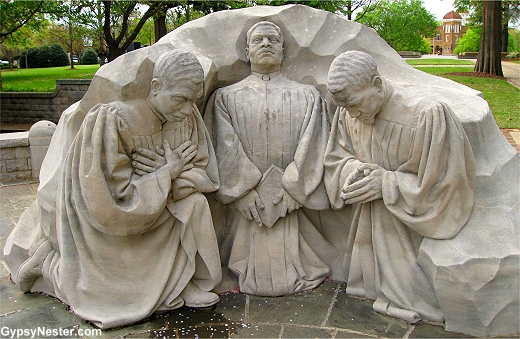
Peace Be Stil, Freedom Walk, Birmingham, Alabama
“Peace Be Still” depicts Reverends N.H. Smith, John T. Porter and A.D. King in 1963. During a sympathy march they knelt to pray as the marchers were met by police dogs and billy clubs.

David & Veronica, GypsyNester.com

Read more about our trip through Birmingham, Montgomery and Selma with more photos and videos by visiting “Following the Freedom March in Alabama.”

Delve deeper:
The Civil Rights Memorial in Montgomery
Retracing the Freedom Walk from Selma to Montgomery
The Martin Luther King Memorial in Washington, DC

A Town Standing on Stilts

There is something about driving to the very tip of a place, the end of the line, land’s end, that we can’t resist. It’s kind of like climbing a mountain for us, we do it because it’s there. In Louisiana that point where State Highway 1 hits the water is Grand Isle.

Building a road across this expanse of wetland took extensive… CONTINUE READING >>

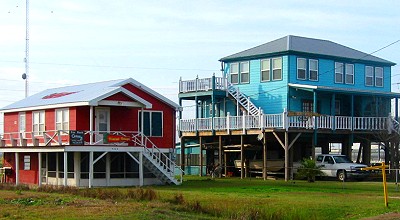
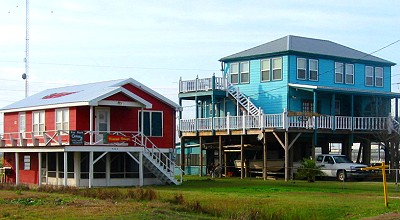
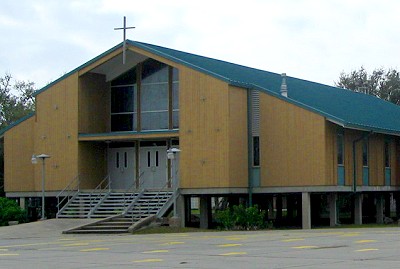
A whole town on stilts, Grand Isle, Louisiana

There is something about driving to the very tip of a place, the end of the line, land’s end, that we can’t resist.

It’s kind of like climbing a mountain for us, we do it because it’s there. In Louisiana that point where State Highway 1 hits the water is Grand Isle.

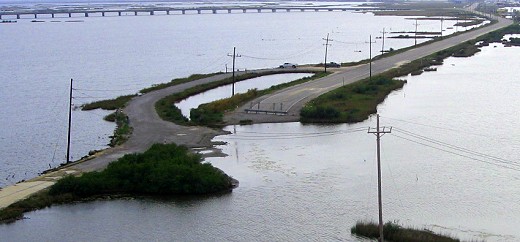
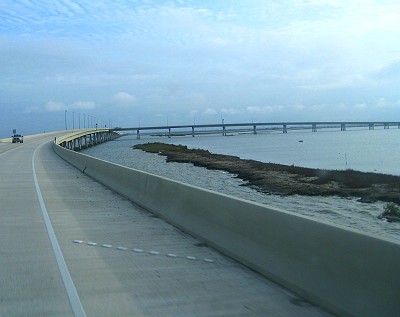
Building a road across this expanse of wetland took extensive engineering and ingenuity. The bridges are marvels of modern construction, while other stretches of highway, that have succumbed to the water, have been rerouted using some less than marvelous methods.

Road through the salt marsh toward Grand Isle

Bridge through the salt marsh toward Grand Isle

After crossing dozens of miles of swamp and marsh that would be hard to call land, we made it over one last bridge and on to the only inhabited coastal barrier island in the state.

The first thing we noticed – it would have been nearly impossible not to – was that the entire town was up on stilts.

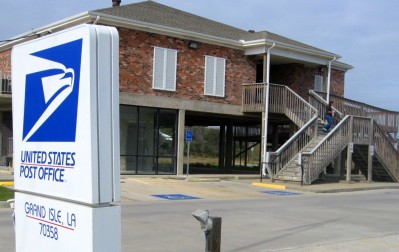
Post Office on Stilts

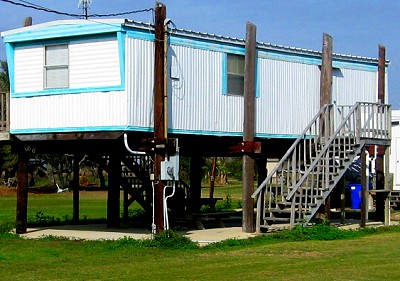
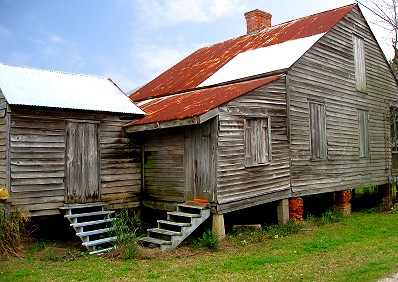
Let’s clarify, all of the buildings in the town are up on pilings, or bricks, or blocks, or poles, or something.

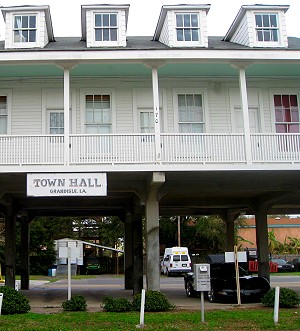
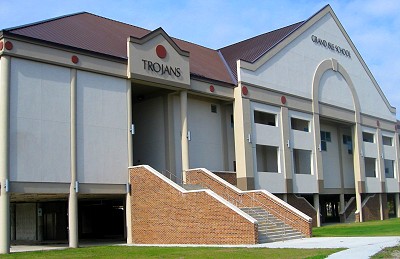
Not only the houses, but churches, schools, stores, restaurants, the fire department, the police station, the post office and the city hall up on stilts. Anything to keep them abovewater when a storm surge washes over the island, which is no rare occurrence.

Town Hall on stilts

Grand Isle gets hammered by a hurricane or tropical storm on average more than once every three years and takes a direct shot every eight.

Most recently Gustav and Katrina washed five feet of water over the island, but the worst ever surges have been three times that high.

One local lady told us about a sign showing up hundreds of miles away after a recent assault. Many of the “camps,” as they call these beach houses, have signs with cute names like “Crawdaddy’s Home” or “Sea You Later” and after Gustav her friend got a call from a man in Texas who found their sign on the beach.

The sign was mailed back, nailed back up, and now waits for the next big blow.

Grand Isle School on stilts

As we drove in, the island felt nearly abandoned. As nice as the weather was in late winter, it is still a summer place.

Only about 1,500 folks stay year ’round, but come summertime ten times that many will be soaking up the sun on the beaches. Personally, we’re just as happy to hit things in the offseason.

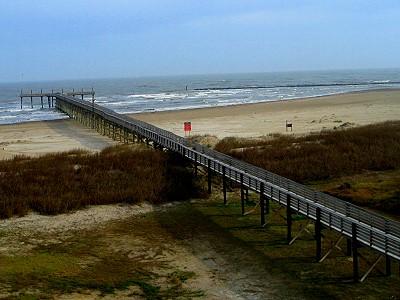
Fishing pier in Grand Isle Louisiana

Our offseasonness allowed us to have a spot right by the beach in the campground at Grand Isle State Park.

In addition to a really nice beach, the park has the only fishing pier that juts out into The Gulf of Mexico in the state of Louisiana, an observation tower for great views of the gulf to the south and swamps elsewhere, nature trails and a lagoon with more excellent fishing opportunities.

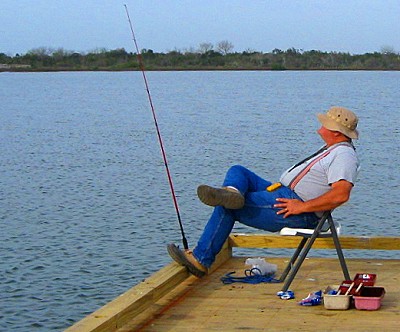
Fisherman in Grand Isle Louisiana

Fishing is the main attraction in Grand Isle, especially the annual Grand Isle Tarpon Rodeo Fishing Tournament that draws over fifteen thousand anglers every July, but bird watching is big too.

The park protects over 150 acres of salt water marsh that serve as a stopping off point for thousands of migratory birds. Unfortunately for us, those feathered friends don’t show up till later in the spring.

Pelican

On our walks along the beach and out the pier we were treated to shows from the feathered permanent residents, the Brown Pelicans.

We watched them fly in formations, skim just inches above the surface of the sea, and their most entertaining move by far, dive head first after fish from insane heights. It is beyond comprehension how their necks can stand that kind of impact.

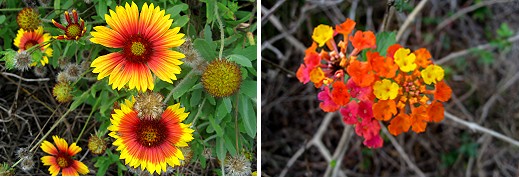
Flora of Grand Isle

Church on stilts, Grand Isle Louisiana

There were also a crazy amount of helicopters flying around. It seemed like there was never a moment without a whirlybird overhead.

Grand Isle is the closest land to many of the offshore oil rigs out in the gulf and choppers are the fastest way to get back and forth, so the helicopter per capita ratio has got to be a world record.

Trailer on stilts

The island is not all that big, about ten miles long and less than a mile wide, so we broke out our trusty bikes and rode from the state park, on the far eastern edge, into the town, at the center.

This time of year the inhabitants consist of mostly fisherman, oil workers and a few of the hardy island types that seem to populate almost every lonely outpost that is surrounded by water. Generally a good group to sit and have a beer with, so we did.

Grand Isle home

After our bull session, it was time to go in search of some of the local grub… oysters and shrimp.

From what we could gather, Grand Isle is not much of an epicurean destination, and even less so in the offseason.

There are only four or five restaurants and this time of year only a few of them were open. But we did find some delectable oysters served both raw and, in the local favorite manner, grilled over coals.

Shrimp and corn chowder

More interesting was our discovery of a new dish we had not encountered before, shrimp and corn chowder.

Tomato based with a creole flair, this is a traditional wintertime dish and, even though it wasn’t actually cold outside, it did hit the spot.

With our spots hit, we could clearly see that Grand Isle is a hot spot we’re glad we spotted.

David & Veronica, GypsyNester.com

Gaudí or Gaudy? You Decide.

Picasso had very harsh words about his style. George Orwell wrote that Gaudí’s work was “hideous” and that he wished that revolutionaries would have bombed one of his buildings.

But Barcelona, quite frankly, would not be the city that it is today had it not been for Antoni Gaudí and his… CONTINUE READING >>

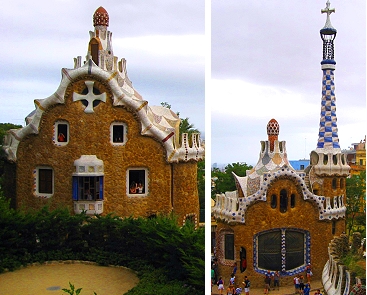
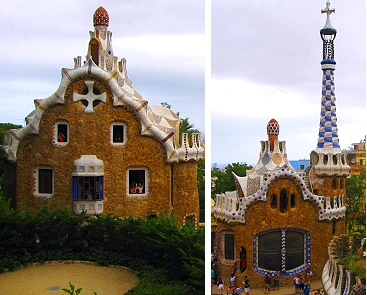
Gatehouses at Park Guell

Barcelona quite frankly would not be the city that it is today had it not been for Antoni Gaudí.

Toward the end of the nineteenth century the Catalan Modernista movement was really hitting its peak in architectural expression, and his buildings epitomized the style.

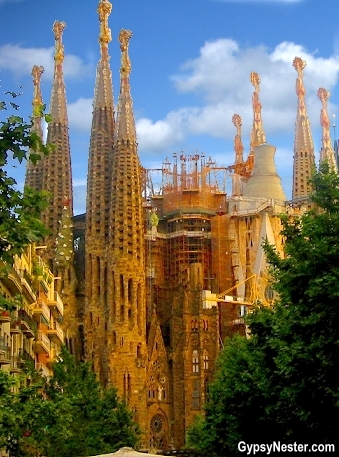
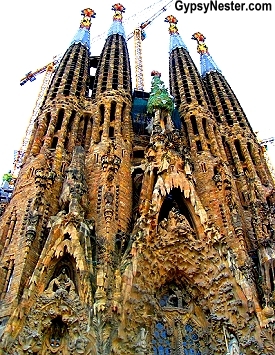
Sagrada Familia

The massive basilica Sagrada Familia is no doubt the best known, and largest of Gaudí’s works. Begun in 1883, when he was just 30, and as yet to be completed, it became his magnum opus.

We spent an entire day fully mesmerized by both the interior and exterior of this wonderfully unique house of worship.

It incorporates all of the traits that have come to define Gaudí’s work, whimsical, flowing lines, unexpected use of color, and a deep connection with nature and natural forms.

The combination creates a structure like none other. We both agreed that this was the most amazing building we’d ever seen.

Gaudi's Sagrada Famila

But not everyone has always been so enamored with it. Many contemporaries of Gaudí, and fellow artists of the Catalonian Modernisme, were less than cordial.

At the time construction was getting underway, public opinion was rather harsh. Picasso once wrote, “Send Gaudi and the Sagrada Familia to Hell.”

Years later, when George Orwell came to Barcelona for The Spanish Revolution, he called Sagrada Familia “one of the most hideous buildings in the world.” He wrote that he wished the revolutionaries would have bombed it.

In fact it was quite some time before this masterpiece was accepted. It wasn’t until the 1950s, when Salvador Dali championed Sagrada Familia as a great work, that the tide of opinion began to change.

Though Gaudí may not have been the most popular architect in his own time, Barcelona is filled not only with his designs, but his influence. (click to see more about Sagrada Familia)

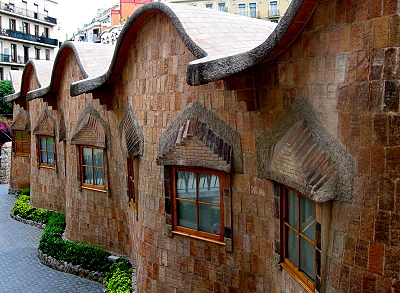
The Sagrada Familia School

We found one of those works right next to the basilica.

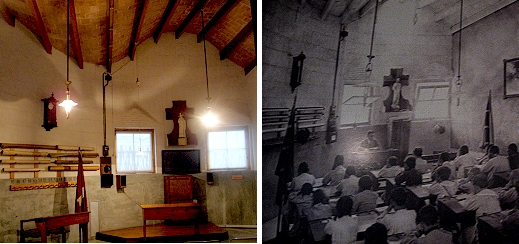
The Sagrada Familia School was built in 1909 for the children of the workers to attend during construction of the church, but now houses an exhibit of Gaudí’s tools, drawings and models.

What easily could have been a simple small brick building became an idiosyncratic schoolhouse when designed by Gaudí. In his words:

“When the building simply has all it needs with the available means, it has character, or dignity, which is the same thing.”

The Sagrada Familia School

To us it felt like something from a fairy tale, perhaps we had stumbled onto Hansel and Gretel’s house. But this was nothing compared to what we were about to experience.

Gatehouses at Park GuellGatehouses at Park Güell

The next day we took a subway, and a walk up several hundred steps, to one of the world’s wildest parks, Park Güell. Gaudí really got to cut loose here, not as a builder, but as a landscape architect. His concept’s incredible interaction with the natural world had us feeling like we were inside the pages of a Dr. Seuss book.

As usual in our experience with Gaudí’s work, our ideas of form and function were seriously challenged, along with our brains. You’ve gotta love when art does that.

Park Güell, Barcelona Spain

The park was originally designed to be a selling point for a housing development that Count Eusebi Güell, for whom the park was named, had dreamt up.

The idea was that well-to-do Barcelonians would like to live up on the top of Muntanya Pelada (Bare Mountain) for the fresh air and superb views it provided. Financially it was a miserable failure, not one house was sold, but the park has become one of Barcelona’s biggest attractions, with great reason.

Park Güell, Barcelona Spain

After the climbing the stairs, a brief bout of being lost, and a stop for some Saturday tapas, we found the park.

At first it didn’t seem so different from any other urban green space but, little did we know, we had entered from the undeveloped side.

Following the path, we were treated to great views of the city below and a few small hints of what was to come.

Then we came around a bend and felt like Dorothy and friends when they first spotted Oz. From our vantage point the entrance, buildings, main terrace, and staircases leading up to it all spread out before us. Perhaps entering from wrong side wasn’t a bad way to experience our first encounter after all.

Park Güell

We proceeded down the roadway, originally intended for the well-to-do houses but now filled with visitors to the park, and decided to approach the giant terrace, known as the Grand Square, from underneath.

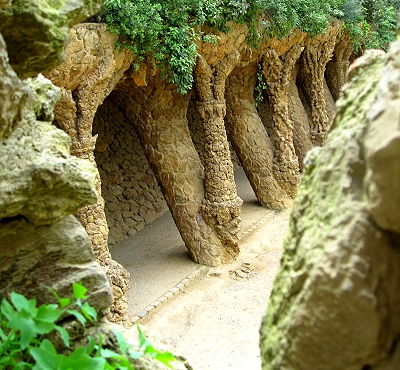
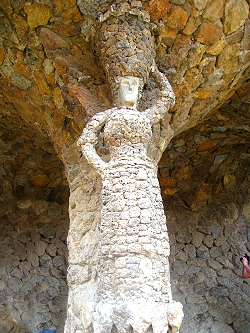
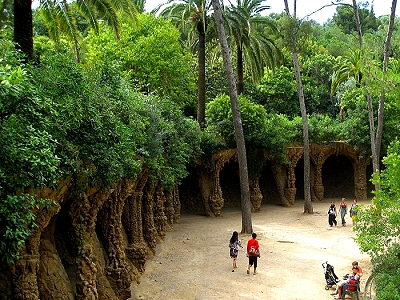
From below we could see that the road we walked in on sat atop a viaduct type structure with supports that look like tree trunks and statues made from a montage of ancient stones.

Forest of Romanesque columns, Park Guell

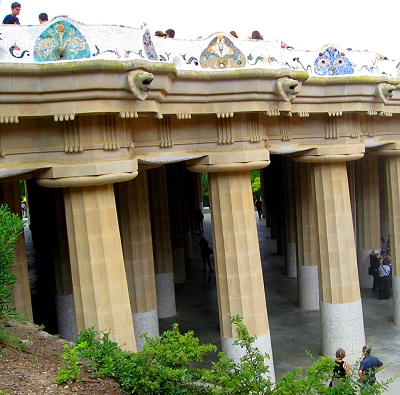
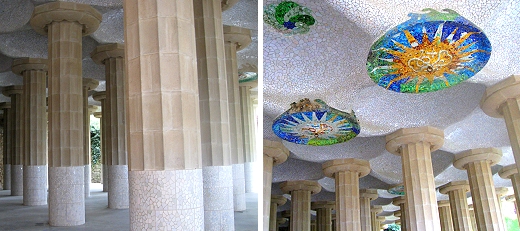
Gaudí’s propensity to emulate natural forms continued under the square in the Hall of 100 Columns, a forest of Doric columns that support the colossal plaza up above.

But as usual in his work, there are quite a few detours from the ordinary.

None of the columns stand perfectly perpendicular to the ground or parallel to each other. It gave us an unbalanced feeling as we walked around. Despite the name, there only eighty-six columns here. Gaudí wanted to avoid a crowded feeling, so he randomly left a few out.

The brightly colored mosaics on the ceiling and the echoing sounds of Catalonian children playing amongst the towering giants completed the scene for us.

Park Güell

When we climbed up to the Grand Square we got the full view of the main entrance to Park Güell. From our perch we could look down the double staircase to the front gate and see the two gatehouses that flank the entrance from above.

This struck us as the best perspective to view these from because the rooftops, with their crazy spires and tile work, are the most impressive aspect of these fantastical buildings that now serve as a welcome center and gift shop. Yes, even this place is not immune to the lure of cheesy tourist crap.

Park Güel

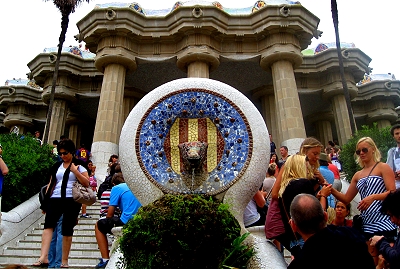
The staircases, seriously packed with people, led down to the centerpiece of the entrance area, a huge sea serpent that forms a bench.

The monster is decorated with more mosaic work and, at the base of the stairs, the head of the serpent forms a fountain.

There’s a fun bit of lore about the bench itself. Legend claims that the seats were shaped by using the buttocks imprints of a naked workman sitting in wet clay. Well isn’t that nice, we were needing a good sit by then and the imprints hugged our derrieres nicely.

Palau Güell

The park’s namesake, Count Eusebi Güell, had a long relationship with Gaudí prior to their collaboration on the failed housing development.

In fact The Count had commissioned the eclectic architect to build a house near La Rambla just before the 1888 Universal Exhibition in Barcelona.

Palau Güell

So we took another stroll down La Rambla, because we loved it so much the first time, and so we could check out The Count’s crib, Palau Güell. Said to be one of the most luxurious in all of Barcelona, we were too late to go inside, so we’ll have to take their word for it.

Palau Güell, Barcelona Spain

From the outside this struck us as one of the more normal of Gaudí’s designs, but on closer inspection the palace definitely shows some of his quirky touches.

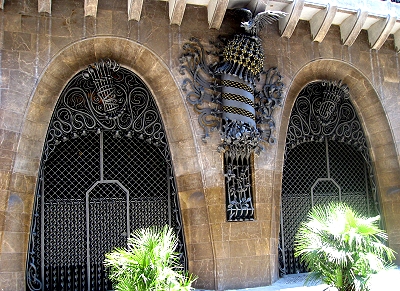
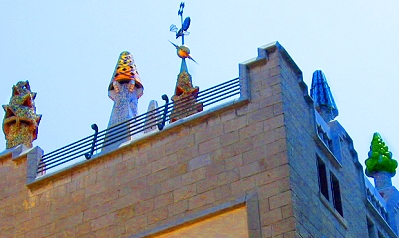
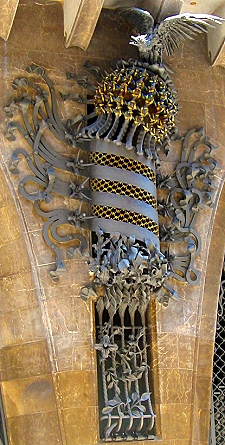
The front is dominated by two interesting archway carriage entrances where we found some very cool wrought-iron work on the gates, but the roof is where Gaudí hid most of his trademark fanciful details. Small conical spires, some topped with what look like piles of fruit, line the edges. He simply didn’t do conventional.

In 1910 The Count abandoned the palace to live in a house up at Park Güell, so his daughter moved in and stayed until 1945, when the palace became the Museum of Scenic Art.

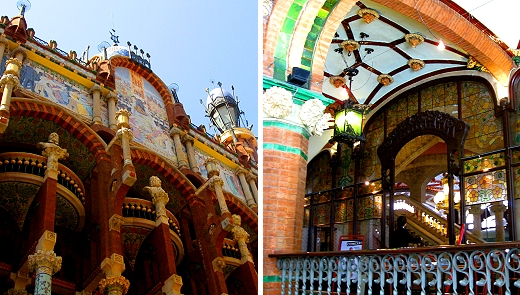
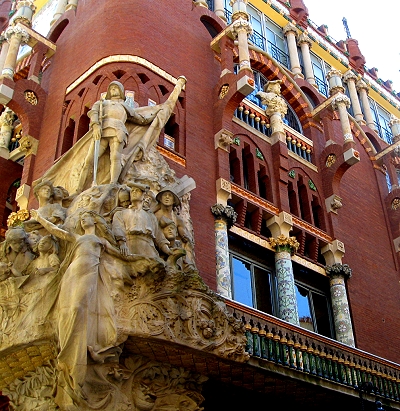
The last destination on our Modernisme tour of Barcelona, though not designed by Gaudí, was the concert hall Palau de la Música Catalana built by architect Lluís Domènech i Montaner in 1905.

Palau de la Música Catalana built by architect Lluís Domènech i Montaner in 1905.

Palau de la Música Catalana

This is a remarkable building, and it certainly epitomizes the Catalan Modernista movement, with curved lines, odd shapes, bright colors and mosaic work, but it just wasn’t striking us with the same force as our earlier stops.

While Domènech i Montaner was highly important in Art Nouveau architecture, and this is his most famous work, it seems we might have been overdosing on Modernisme by this time and didn’t fully appreciate this incredible hall. If we had it to do again, perhaps we should have started here.

Gaudí and Catalan Modernista may not be everyone’s cup of tea, but we have to strongly disagree with George Orwell’s bring-in-the-heavy-artillery dislike of it. Barcelona just wouldn’t be Barcelona without it – a city that nourishes your mind and your soul.

David & Veronica, GypsyNester.com

Delve Deeper into Barcelona:
Sagrada Familia
The Gothic Quarter and La Rambla
Eating Tapas

The Fantastical Park Güell


enlarge video
You’ve never seen a park quite like this (we promise)! We came around a bend and felt like Dorothy and friends when they first spotted Oz… CONTINUE READING >>

At first Park Güell didn’t seem so different from any other urban green space but, little did we know, we had entered from the undeveloped exit side. Following the path we got some great views of the city below and a few small hints of what was to come.

Then we came around a bend and felt like Dorothy and friends when they first spotted Oz.

For more about this incredible park and the man that designed it: https://www.gypsynester.com/gaudi.htm

Visit our GypsyNester YouTube Channel!

Going Goth in Barcelona

Join your GypsyNesters as we explore the Gothic Quarter of Barcelona!

From the Human Statues of La Rambla to the deep dark interior of the Quarter to the sea, we find everything the Barri Gòtic has to offer. Music, ruins, street performers and protesters…this place has it all!  CONTINUE READING >>

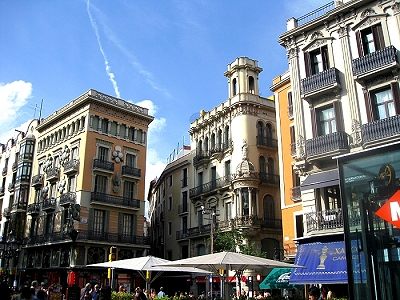
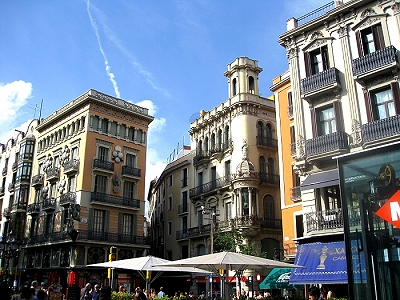
La Rambla

If the heart of Barcelona is the old city’s Gothic Quarter, known as Barri Gòtic in the local Catalan language, then the aorta must be La Rambla.

The life blood of the Catalonian capital flows through this boulevard, from the Plaça de Catalunya to the sea at Port Vell.

La Rambla, Barcelona, Spain

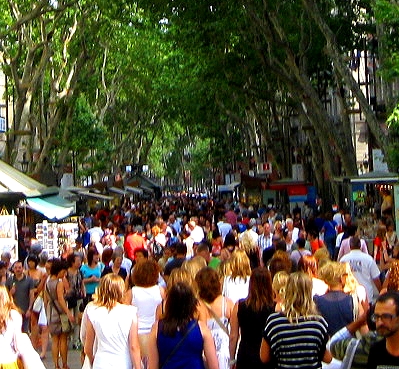
We set out to ramble down La Rambla. This tree lined pedestrian walkway is actually a series of streets and as such is more correctly referred to as Las Ramblas, but call it whatever it is still quite the show.

The stretch of streets has become one giant open air theater.

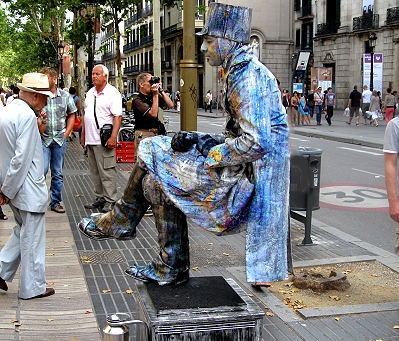
It is truly one of the world’s premier venues for street performers. Most do their schtick as human statues by painting themselves to look like metal or marble.

Many had some very impressive costumes and props, one even looked to be floating in mid-air.

WATCH: The amazing Human Statues of La Rambla

Human Statue, La Ramla, Barcelona

The idea is to attract enough attention to get a little donation. Then the frozen forms burst to startling life as soon as a coin hits their tip jar.

Squeals of laughter, glee, surprise and even some terrified screams filled the air along the avenue.

Not just anyone can paint up and try to hold perfectly still along La Rambla though. The performers must be OK’d by the Department of Commerce and Tourism and display a permit. It is actually a pretty serious business with the top talents earning hundreds of Euros a day.

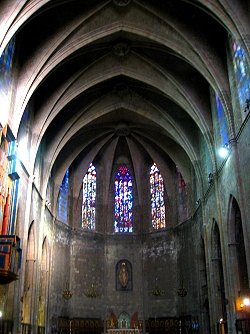
Santa Maria del Pi

About half way along, and off to the side of the promenade, we took a small detour to check out the church of Santa Maria del Pi, which means St. Mary of the Pine Tree.

Depending on who we asked, the name refers to the legend that The Holy Family found shelter in a pine tree during their flight from Herod or simply that a pine tree used to stand out in front.

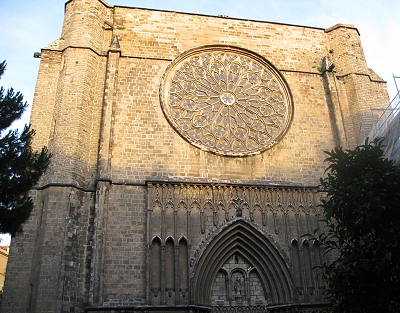
Santa Maria del Pi

The church dates back to the 1300s and is a fine example of the Gothic style, but it is best known for the huge ornate rose window adorning the front facade.

Over thirty feet in diameter, it is quite a sight. Unfortunately it is not the original work, that was destroyed by a fire in 1936 set by anti Franco forces as the revolution was brewing.

The interior is so formidable, due to its bunker-like feel and heavy acoustics, we could feel its holiness bearing down on us, literally. It was quite a different feel from the lively spirit and music outside.

WATCH: Take a stroll though the Barri Gòtic

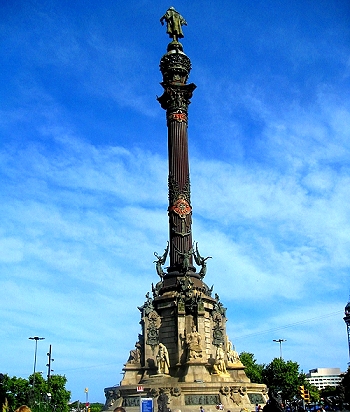
Christopher Columbus Monument, Barcelona Spain

Bursting back out into the sunshine and fresh air, we snagged a gelato and headed to the end of the road where it meets the Mediterranean Sea at Port Vell.

The circle at the end of La Rambla is home to the famous Christopher Columbus Monument.

Built for the Exposición Universal de Barcelona in1888, it marks the spot where Columbus returned to Spain after his first voyage to the New World.

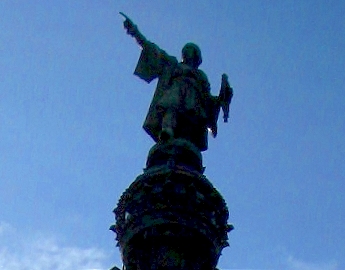
Columbus pointing toward the sea, Barcelona, Spain

A statue of the confused explorer stands atop a pedestal nearly two hundred feet high. The Captain is striking a stoic pose with his outstretched arm toward The Mediterranean.

Myths have persisted through the years that he is pointing West toward the Americas of his discovery, or East toward his home of Genoa, Italy, but the fact is he is pointing South, for no better reason than that it looks good for him to be pointing out to sea.

As far as we know the statue is made of real bronze, not a painted person politely posing for pedestrians.

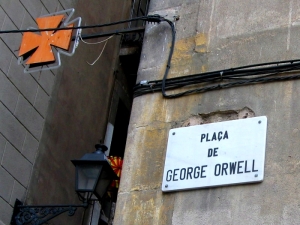
Plaça de George Orwell

From beneath the bronze Christopher we headed into the heart of the Gothic Quarter.

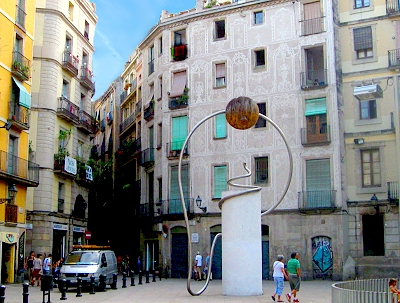
Wandering through the narrow, ancient streets, we came upon a small square and noticed a sign with name Plaça de George Orwell.

We sat outside a cafe for a cool drink and some quick tapas, and asked our server why the square was named after the famed writer. He had no idea, so we were forced to go to Google.

George Orwell Plaza

The renowned author came to Barcelona in 1936 to fight in The Spanish Revolution, saying he had “come to Spain to join the militia to fight against Fascism.”

He was wounded in battle the next year and then wrote the book Homage to Catalonia about his experiences and the corruption and tyranny of Soviet communism that he had discovered during his service. And, yes, there were quite a few “security” cameras in George Orwell Plaza. A little Big Brother irony, no?

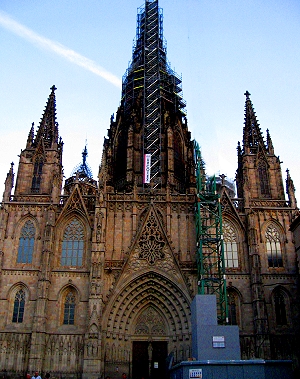
Catedral de la Santa Creu i Santa Eulàlia, or Cathedral of the Holy Cross and Saint Eulalia

As we walked further away from the sea we came upon the Plaça Nova which is dominated by the Catedral de la Santa Creu i Santa Eulàlia, or Cathedral of the Holy Cross and Saint Eulalia. This is actually the seat of the bishop and main church of Barcelona, not Guadi’s masterpiece Sagrada Familia.

Makes sense since there has been a church on this spot basically ever since there has been such a thing as Christian churches.

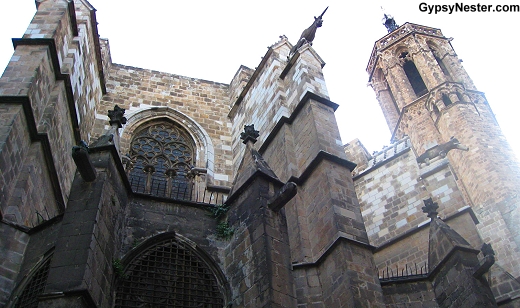
The current version is about 700 years old and is about as Gothic as it gets, an impressive mass of spires, towers, arches, flying buttresses and gargoyles.

The Gothic Quarter in Barcelona, Spain

Remnants of the Ancient Roman City of Barcino

The original church dates back to the year 343 when Barcelona was a Roman enclave called Barcino. The legend is that the Carthaginian Hamilcar Barca, father of Hannibal, named the city Barcino after his family in the 3rd century BC.

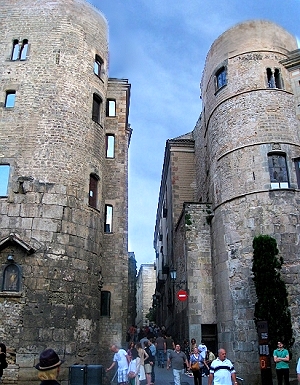
History says that by about 15 BC the Romans had established a castrum or military camp here. As we looked around the plaza, we began to notice that remnants of the Roman city remain.

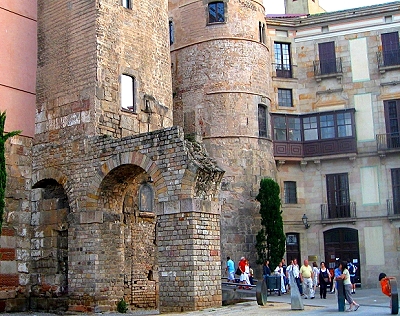
This was once the spot where the main gate opened through the city’s walls. The remains of that Roman gateway and an aqueduct have been incorporated into the medieval Portal del Bisbe that leads back into the Gothic Quarter.

Roman gateway and an aqueduct have been incorporated into the medieval Portal del Bisbe that leads back into the Gothic Quarter

Through the passage and behind the cathedral there are a few bits and pieces left of the Roman Forum and, tucked into a courtyard, four columns from the Temple of Augustus.

With the sun sinking low and many miles of ancient cobblestones under our feet, we were ready to call it a day, all in all a great day. But wait, by Barcelona standards it wasn’t near dinner time, surely we could manage one more quick stop for some tapas before we found a subway stop.

Of course we could, and don’t call me Shirley.

David & Veronica, GypsyNester.com

Delve Deeper into Barcelona:
Sagrada Familia
Eating Tapas
Gaudí or Gaudy – You Decide