
Search…

“Delayed-Launch Period?” Really?

Uh. I can’t let this one go by. The Wall Street Journal has published an article entitled “Benefits of a Late Launch,” discussing a new book, “Not Quite Adults.”

I haven’t read the book and it’s going to take some time before I gather the fortitude to do so, as the subtitle is enough to make me cringe: “WHY 20-SOMETHINGS ARE CHOOSING A SLOWER PATH TO ADULTHOOD, AND WHY IT’S GOOD FOR EVERYONE.” I want to be clear that I am responding to the Journal article, not the book.

To be fair, before I go off on my own rant, I will cite the benefits as the Journal lays them out… CONTINUE READING >>

Boomerang Kid!

Uh. I can’t let this one go by. The Wall Street Journal has published an article entitled “Benefits of a Late Launch,” discussing a new book, “Not Quite Adults.

I haven’t read the book and it’s going to take some time before I gather the fortitude to do so, as the subtitle is enough to make me cringe: “WHY 20-SOMETHINGS ARE CHOOSING A SLOWER PATH TO ADULTHOOD, AND WHY IT’S GOOD FOR EVERYONE.” I want to be clear that I am responding to the Journal article, not the book.

To be fair, before I go off on my own rant, I will cite the benefits as the Journal lays them out:

“A recent book suggests the trend may actually be a good thing. Few young adults who live at home are slackers mooching off their parents, say the authors of “Not Quite Adults,” a book based on more than 20 large, long-term data sets supported by the MacArthur Foundation, and interviews with 500 young people ages 18 to 35.

More often, they are using the parental subsidies to get through college or professional training, and to save money, say the authors, Richard Settersten, a professor of human development at Oregon State University, and writer Barbara Ray.

In fact, many young adults who finish college and delay marriage get a much stronger start in life, according to the authors.

Settersten and Ray also contend that the closeness between today’s parents and young-adult children can ‘open new kinds of conversation’ that can deepen family bonds. They see ‘some great things about how this period of life is being shaken up,’ including a wider range of lifestyle and education choices for young people. That assumes, of course, that the young adults are actually making progress during the delayed-launch period toward getting an education, saving money and building their credentials, the authors add.

Of course, another factor is that young adults have higher expectations as consumers, to own items once considered luxuries such as cell phones, dishwashers and digital cable TV…”

I find the term “parental subsidies” comically offensive. What are we – the Department of Agriculture? David and I were very clear with our Spawn, it’s known in our family as THE Talk. Any help we would offer monetarily once The Spawn reached eighteen would be a gift.

We do not “owe” them anything. We were blessed enough to be able to help them with their higher education, and we’ve put a cap on that, limiting it to an undergraduate degree.
We feel further “subsidizing” could easily become a counterproductive disincentive to starting their own lives.

Are we now expected to give our 20-somethings “a wider range of lifestyle and education choices” on our dime? Are we to give this oh-so-special generation more advantages?
Let ’em go out and see the world while we sit at home eating 25-cents-a-bag ramen noodles, paying the credit card bills and watching our retirement savings dwindle?

I worked my hind end off and saved my hard-earned dollars so I could enjoy this part of my life. I was an over-involved, over-the-top helicopter mom, just like I was supposed to be. David and I gave our offspring every opportunity our situation allowed. Now I’m supposed cough up MORE so the Spawn can live the dream? I think not.

Even more comical is “that young adults have higher expectations as consumers.” ARE YOU KIDDING ME? Dishwashers and digital cable TV? I don’t have those luxuries and I’m certainly not going to pay for my adult kids to have them. And if they ever live in my basement, THEY will be the dishwashers – and I will be hosting many lavish dinner parties. Heck, I might even start a catering business.

Delaying marriage is often attributed to “kids” boomeranging back home after college. The Journal cites the authors of “Not Quite Adults” as feeling that this gives a young adult a “much stronger start in life.” Possibly so.

My three un-boomeranged Spawn would be considered an Old Maid, Confirmed Bachelor and the dreaded Spinster Cat Lady if they lived in a different time.

Staying single longer is a choice many of today’s 20-somethings make. But trading marriage (or a solid relationship) for twelve more years of childhood – while Mommy does your laundry and Daddy sets up your job interviews – is not a “delayed-launch period.” It’s extended adolescence.

The kicker is that the article dubs “young people ages 18 to 35.”
Isn’t thirty-five the beginning of middle age? Are we to have our offspring skip over the part where they learn the joy of earning the benefits of a life for themselves? If the saying is true, and “fifty is the new thirty” then, possibly thirty is the new infant.

Break out the diapers Honey, Junior’s moving home to enjoy our parental
subsidies.

I have grave doubts as to whether anyone living with Mommy and Daddy at thirty-five receives any long-term benefit from the situation. Unless, of course, they have moved back home to take care of their parents in their old age.

Now, there’s a trend that I could get behind.

Veronica, GypsyNester.com

So you’ve heard my side of this. What’s your take?

Oh My Stars!

Looking up at the night sky at an out-in-the-boondocks National Park sent my thoughts wandering, as only the night sky can. Then came a shocking thought:How long until we can no longer see the stars?

Sitting up and scanning the land around me I saw the bright dots from tiny little towns – and, alas, the Park itself – enough light pollution to hinder me from observing what The Ancients or Magella… CONTINUE READING >>

Starry, Starry Night

Looking up at the night sky at an out-in-the-boondocks National Park sent my thoughts wandering, as only the night sky can. Then came a shocking thought:

How long until we can no longer see the stars?

Sitting up and scanning the land around me I saw the bright dots from tiny little towns – and, alas, the Park itself – enough light pollution to hinder me from observing what The Ancients or Magellan or Shakespeare would have seen in their day.

Growing up in the desert of California, the stars danced over my head. As a Girl Scout I consulted a guidebook, sought out the major constellations and relished the romantic stories behind them.

But if there are kids currently living in my childhood home, they most likely never see those big beautiful balls of gas. The area has grown much too populated.

Don’t get me wrong – I enjoy being able to see where I’m going at night without tripping and breaking my face. Humanity’s scientific progress has given me much – the ability to read comfortably in bed or not getting attacked in a dark alley being among my favorites.

As long as I’m being honest, I’ll admit that outer space scares the crap out of me. I find it rather daunting to think that I’m but a speck-on-a-speck dancing around an outrageously huge universe. I don’t cotton to being insignificant – it messes with my self-centered human sensibilities.

Because of this, I understand why the Ancients wrote stories about the constellations, why the stars were tied in with so many belief systems. People like me have to bring the stars down-to-earth somehow or the entire thing just gets too much for us. If I didn’t have anything to do at night but look at the stars, I’d be making up stories about them too – just to make sense of the whole thing.

I forced my attention back to our Park Ranger as she pointed out the Pleiades. Seven beautiful, virginal sisters sent off into the sky for the safekeeping of their virtue while poor pent-up Orion chases after them for eternity…

Again I sat up with a ghastly thought.

My future grandkids (if it’s in the stars) might never see this.

I began to wonder why this was so distressing to an outer space fearer like myself. A major reason would be our connection to our past.

How can we possibly teach about ancient societies to a kid who has never really seen the stars?

How difficult will it be to explain to a city-dwelling child with every up-to-the-minute light emitting electronic gadget that the sky provided our ancestors entertainment before the onset of reality TV, Nintendo and the Metroplex Cineplex Imax 36?

As for the Explorers – those incredibly brave, ballsy men who discovered new worlds and trade routes – the stars must have been wondrous indeed. I imagine that even today, if a person is hanging out in the middle of the Atlantic Ocean, those celestial orbs are plenty bright to guide the way to his destination.

No longer needed for navigation, I wonder if a ship’s crew look away from the GPS systems long enough to enjoy the beauty of the night sky. Do passengers leave the gaming tables, endless buffets and showrooms to visit Orion and his taunting little virginal vixens?

What if Shakespeare hadn’t seen the stars? What would we have lost? Would Romeo and Juliet be those achingly beautiful star-crossed lovers without the night sky? We might have ended up with blood pudding-crossed lovers or, worse, just an ordinary pair of very upset teenagers.

My hope for our future grandkids is they understand society, history, romance and literature in a meaningful way. Then and there I vowed that I would be the one to show them the stars.

I spent the next few hours gazing on the heavens, dreaming up ways to trick the little buggers into leaving their state-of-the-art smart phones at home, if only for one night.

Veronica, GypsyNester.com

Dispatch 3, Machu Picchu & Peru, South America Live-Blog

Our live-blog continues through Peru with Machu Picchu, The Sacred Valley, the Ollantaytambo and Sacsayhuaman Ruins, Cusco, Aguas Calientes, Guayaquil and Lima.

Stunning mountain-hugging train rides, a visit to a weaving cooperative, and the mysteries of the Incas… CONTINUE READING >>

DAY TEN: Gorgeous Guayaquil, Ecuador

Afternoon:
Guayaquil is the largest and the most populous city in Ecuador, with around 4 million residents, and is graced with many stunning examples of Spanish, Italian and French influenced architecture.

Guayaquil, Ecuador's Central BankWe head out by bus to explore the city with our fantastic guide, Fernando, pointing out the most important, and beautiful buildings. At the central bank, answering a question about the capital of Ecuador, he quips that his home town of Guayaquil is like the New York of Ecuador and Quito the Washington, D.C. “We make the money and they spend it.”

Veronica FINALLY gets to pet an iguana!
At a downtown park, directly in front of the cathedral, we exit the bus and get a big surprise…

Iguanas in Guayaquil, Ecuador
Dozens of Iguanas roaming free, no wonder everyone calls this the Iguana Park. Not quite Galapagos numbers of Iguanas, but a bigger shock to see them right in the middle of a city.


One of the rangers even gives Veronica a chance to feed one… our Spanish es no muy bueno, but we think that sign says don’t feed the animals – maybe we didn’t see the part about unless assisted by a ranger.

To see more about beautiful Guayaquil, click here

The Malecon, Guayaquil, Ecuador
From the unlikely lizards we make our way to the Malecon, a two mile long river walk along the Guayas River. We didn’t perambulate the entire distance, but caught the highlights, The Moorish Tower, gardens, statues, snack shops and the like. Hard to think of a nicer spot to while away a sunny afternoon.

Evening:
Santa Ana Hill, Guayaquil, Ecuador
But Fernando knew an even better spot, Santa Ana Hill in the oldest part of the city.

Santa Ana Hill, Guayaquil, Ecuador
The stairs leading up the hill are a community all to themselves… and we must say one of the most intriguing quarters of any city we have ever come upon.

Santa Ana Hill, Guayaquil, Ecuador
The buildings along the stone staircase are all recently refurbished so the little homes, restaurants and shops gleam in brightly colored freshness while kids play and folks mill about chatting and grabbing a bite.

Lighthouse atop Santa Ana Hill, Guayaquil
At the top, after 444 steps, there is a small chapel and a lighthouse, plus the reward of a panorama of the entire city.

We check into the Hotel Oro Verde, meaning green gold, which Fernando explains refers to bananas. Ecuador is the world’s leading exporter of bananas and most of them pass through the port here in Guayaquil. The hotel is absolutely extraordinary. Gorgeous rooms and truly first class service.

Dinner at The Hotel Oro Verde lived up to the fine standard set by everything else we encountered here in Guayaquil. Our only complaint is that we couldn’t stay longer.

To see more about beautiful Guayaquil, click here

DAY ELEVEN: The Sacred Valley of the Incas

Morning:
Flying into Cusco, we don’t have to descend very far from our cruising altitude since we will be landing over 11,000 feet high in the Peruvian Andes.

WATCH: The most amazing, insanely beautiful flight we’ve ever taken!

a booth with something called Oxyshot. But wait, the clerk is out cold, must be the thin air.
Inside the airport we spot a cure for the light-headed feeling and sleepiness that the low oxygen at high altitude can bring on, a booth with something called OxiShot. But wait, the clerk is out cold, must be the thin air.

Click here to learn how we dealt with altitude issues while in Peru

Afternoon:
The Sacred Valley of the Incas, Peru
On the bus from Cusco to The Sacred Valley of the Incas (Valle Sagrado de los Incas) our guide for this portion of the trip, Eddy, points out the Urubamba River, which formed this valley, is part of the headwaters of the Amazon River.

See more about The Sacred Valley of the Incas

The Sacred Valley of the Incas, Peru
Eddy goes on to explain something that has been misunderstood for centuries. The name for the people who lived in this area when the Spanish came was not the Incas, but the Quechua. Pronounced Ke-chu-wa, the name is routinely used only for the language the people spoke, and many still speak, but that is not really correct. Inca was only the name for the ruler, as in, the Inca ruled over the Quechua. But in order to replace the rulers, the Spanish began to call everyone and everything Inca, thus taking away its royal meaning.

open air market in the town of Pisac, Peru
Before we check in to our hotel for the evening, we make a quick stop at the open air market in the town of Pisac.

open air market in the town of Pisac, Peru
On our way off the bus Eddy warns us that, in the tourist market, many items claimed to be made of the finest “baby alpaca” wool are more likely made from the notorious “maybe alpaca” wool.

Pisac, Peru in the sacred valley

Posada del Inca in Yucay, Sacred Valley. Peru
Our hotel for the next two days is the Posada del Inca in Yucay, a beautiful former convent. The grounds are stunning, with wonderfully restored buildings surrounded by gardens that would make the greenest green thumb green with envy.

Coca Tea in Peru at Posada del Inca in Yucay
Upon arrival we are offered coca tea, a local tea purported to help with altitude issues. A bit timid about trying it, we decide to give it a shot since we had both nodded out on the bus. We don’t want to miss anything! We’ll be sure to report on its effects, if any.

Click here for more ways we dealt with the altitude

Evening:
Alpaca in Peru
Dinner at Posada del Inca gives us a chance to try some alpaca. Our first real culinary adventure on the trip, alpaca is basically a smaller version of the llama. Although they look somewhat like sheep, alpaca are actually a relative of the camel. Can’t say we ever had a hankering to try any roasted dromedary, but the alpaca looked quite good. Tastes like chicken, just kidding, more like veal but with a texture a bit like liver.

DAY TWELVE: Secrets of The Sacred Valley

Morning:
Chincheros, Peru
We begin a new day in the highlands of Peru by taking a bus over a mountain pass to the town of Chincheros.

Roof shrines in The Sacred Valley, Peru
In town our guide Eddy tells us how the mountain people hold on to their traditions and directs our attention to the roofs of the houses. Small shrines including a cross indicating the family is Christian, ceramic bulls for strength and fertility, a cask of corn beer to tie them to their ancestors, and a vial of holy water to sanctify the house.

See more about The Sacred Valley of the Incas

Spinning yarn at the weaving cooperative in Chincheros, Peru
Another age-old tradition is weaving and we are given a demonstration of the Quechua techniques, from spinning the yarn…

…and dying it with colors obtained from various plants, minerals…
Dying wool at the weaving cooperative in Chincheros, Peru

…and even bugs.
Dying yarn at the weaving cooperative in Chincheros, Peru

See more about our visit to this wonderful weaving cooperative!

The weaving cooperative in Chincheros, Peru
Then the yarn is woven into cloth with intricate patterns and figures. The final result is amazing and has been accomplished in this manner for centuries.

WATCH: How Peruvian rugs are made – you’ll never believe some of the “secret” ingredients that are used in the dying process!

See more about our visit to this wonderful weaving cooperative!

Farming in The Sacred Valley, Peru
Next we learn about the agriculture of the area, from agronomist Maywa Blanco, who explained much of which we got to see on our bus ride over here.

Some of the many varieties of corn in Peru
For the Quechua, survival requires wide diversity in their crops to help insure an acceptable harvest in the unpredictable mountain climate.

Some of the many varieties of potato in Peru
To account for various weather possibilities, such as unusually dry, wet or cold conditions the planting would be scattered over several months and at many different altitudes. Also many varieties of the same type of crop would be planted, for example over two hundred types of potatoes have been known to be raised in this area.

Choclo con queso in Peru
To finish up with our agriculture culture, we sneak in some street food and grab a choclo con queso -yum! The cheese is unbelievably buttery.

Afternoon: Ollantaytambo, Peru
The afternoon gives us our first chance to see some ruins from back in the time when the Incas ruled the Quechua.

Ollantaytambo, Peru
The Ollantaytambo Ruins are not ruins in the traditional sense, they are in too good of shape. This is more like a town that still contains some original buildings constructed in the time of the Incas, overshadowed by huge stone terracing that leads up to an unfinished temple. It is where the Inca came to make their last stand in the highlands against the Spanish.

See more Ollantaytambo Ruins

Ollantaytambo, Peru
Many of the stones were left sitting where ever they happened to be at the time that work was abandoned so Eddy points out some of the amazing stone cutting and shaping. Our guide, Eddy, points out many of the unfinished stones that show how this site was still under construction when the Spanish arrived in the 1500s.

The Ollantaytambo Ruins, Sacred Valley, Peru
The terracing goes all the way up the mountain and was designed not only to provide flat spaces for farming, but also to prevent landslides and flooding in times of heavy rains.

Even in the thin air up here, we make our way to the top and get a view on one side across the valley of the quarry where the stones were originally cut…

Grain storage buildings at Ollantaytambo, Peru
…and on the other we can see stone buildings that were used for storing grain.

See more Ollantaytambo Ruins

Coca candy in Peru
We did, however, find another way to help with the altitude – coca candy. We’re convinced it and the tea are helping. We’ve even taken to chewing the leaves!

Click here for more ways we dealt with the altitude

Ollantaytambo, Peru
From there the giant rocks were hauled down the mountain, over the river, and back up this mountain, all without the use of wheels. One of the many mysteries that surround the building abilities of the Quechua people when ruled by the Inca is the lack of the wheel. Eddy offers us the theory that the round shape represented the sun and moon and therefore was sacred so it could not be used for such mundane tasks as moving rocks, but no one knows for certain why they didn’t use wheels.

The massive stones fit together tightly at Ollantaytambo, Peru
Another of the mysteries of Ollantaytambo is exactly how the stone was cut, because no metal hard enough to cut granite was available at that time. Since the Quechua language was not written, and the Spanish destroyed most evidence of methods used in construction, we may never know the answers.

The massive stones fit together tightly at Ollantaytambo, Peru

See more Ollantaytambo Ruins

Evening:
In the evening anthropologist Teo Paredes gives us a briefing on our visit to Machu Picchu, and more of the mysteries and mysticism of the ancient people of this remarkable region. Tomorrow we will see these first hand, and hopefully begin to understand more.

DAY THIRTEEN: Heading to Machu Picchu (or our day of eating pets)

Morning:
Train Station in Ollantaytambo, Peru on the way to Machu Picchu
The big day has arrived, today we see Machu Picchu, but first a train ride. And not just any old train, a narrow gauge ride along the Urubamba River through spectacular Andes mountain scenery. The Expedition Train takes us down The Sacred Valley to the town of Aguas Calientes, base camp for our two days at the site of one of the New Seven Wonders of the World.

The bus ride up to Machu Picchu
Upon arrival we waste no time and proceed directly to the road up to Machu Picchu. We do not stop to eat, we do not check into our hotel, we do not pass go, we do not collect two hundred dollars, we just jump on a bus for a harrowing ride up a crazy-sheer cliff.

The road to Machu Picchu
The road takes thirteen switchbacks to make it up the mountain, all while passing busses coming back down this much-less-than-two-lane dirt road. Several times we are hanging right on the edge… with no guard rails… not that they would stop a bus from going over the side. But hey, they would make us feel better.

Machu Picchu, Peru with Road Scholar
As soon as we round the last switchback and see the site spread out before us, all of that is forgotten.

Goldfish Cerviche in Peru
Super-guide Eddy is going to take us through the entire site, but first lunch and some delicious Goldfish Cerviche… we have no idea, hopefully a translation snafu and not actually the bowl-inhabiting pet. Crazy name aside, it’s tasty.

Machu Picchu (old mountain)
Over our Goldfish, Eddy explains that Machu Picchu is not really the name for the city – the original name is lost forever. When Hiram Bingham came here in 1911 the locals told him of a place between Machu Picchu (old mountain)…

Huayna Picchu (young mountain)
…and Huayna Picchu (young mountain). When he told the world of his “discovery” (How does one discover something that lots of people already knew about?) the name stuck.

more pics from our Machu Picchu journey – & more info about this incredible site!

Afternoon:
The many types of stonework at Machu Picchu
Once inside, Eddy begins our tour by showing us the very different styles of stone work, which implies that the building of Machu Picchu took place at different times. This goes against many of the guidebooks we have seen that claim the entire city was built, occupied, and abandoned within the span of about one hundred years. Eddy most certainly doesn’t buy that theory, but as with so much about the time of the Incas, the facts remain a mystery.

Wonky stones at Machu Picchu
By cutting and arranging the stones in what appears a random fashion at first glance, using no mortar between the stones and slightly slanting the walls inward, the structures have survived numerous quakes that have destroyed almost all of the newer buildings in their path.

Amazing stone work at Machu Pichhu
Many things about the Quechua can be ascertained with some certainty through their reverence for the sun, moon, earth and water and their skill as builders and designers. Throughout the Inca Empire the buildings were made to withstand earthquakes.

Machu Picchu
Another point that Eddy makes is that it is not the ruins themselves that are so mind blowing, it is the location.

At first that sounds strange, but as we look throughout the sight we have to agree. Not to discount the remarkable structures and work involved, just to acknowledge that this spot is truly amazing above and beyond the ruins.

Beautiful Machu Picchu
Theories abound as to the purpose of this place… summer home for the Inca, agricultural testing site, hideout, fortress, or sacred city, but no single explanation seems to fit. Perhaps the truth is some combination of these that will forever remain a mystery.

more pics from our Machu Picchu journey – & more info about this incredible site!

Hitching post of the sun at Machu Picchu
As the tour continues Eddy shows us a rock cut and placed to represent and align with The Southern Cross, then another incredibly carved boulder that aligns with the sun called Intihuatana. In the Quechua language inti means sun and watana (huatana in Spanish) means place to tie up. So this is often called the hitching post for the sun.

Reflecting pool at Machu Picchu
A small building contains two carved stone pools that perfectly reflect the sky to the viewer at an angle through a window when standing on the small rocks that mark the proper spot. It is believed that these were used for star gazing at night… perhaps an Inca version of late night TV.

An extra wall was to keep the llamas out of the food supply at Machu Picchu
In one tiny entrance we notice a strange doorway. A wall blocks direct access, forming a kind of S turn to get inside, so we asked Eddy about it. He says this is a storage room and the extra wall was to keep the llamas out of the food supply. Ingenious.

Llama at Machu Picchu

See more great photos of the pensive llamas of Machu Picchu!

A llama blocks our path in Machu Picchu
Speaking of llamas, our fellow Road Scholar, Bill, saves the day by applying his llama whispering skills to this stubborn, furry fellow blocking our path.

When the site closes at five, we head back down the crazy road to find our hotel and some food.

more pics from our Machu Picchu journey – & more info about this incredible site!

Evening:
Pisco Sour, the drink of Peru
After we check into the very European feeling Hotel El Mapi, we toast the day with a Pisco Sour. Pisco is a distilled grape type of brandy and is considered the drink of Peru.

Since we have sampled the quintessential Peruvian drink, and we have tonight to explore culinary adventures on our own, we figured we should set out in search of some cuy for dinner. Cuy is Guinea Pig – yes just like the pets – and is traditionally eaten in the highlands on special occasions. We decide an occasion couldn’t get much more special than celebrating our visit to Machu Picchu so when we see a place with cuy al horno (oven roasted guinea pig) on the menu, we sit right down.


The cuy comes baked and quartered on a plate, head and all, with some potatoes on the side. Most disturbing are the tiny little feet and the two buck teeth.

Cuy, Guinea Pig, in Peru
But we’ve come this far so we have to eat it. Once again with the old cliché… it tastes like chicken. Only this time it’s true. Like a chicken thigh, or closer to rabbit. It’s good, and yes, we ate the whole thing… which is not really very much.

Our beautiful room at the Hotel El Mapi in Aguas Calientes
As we lay our heads down in our beautiful room at the Hotel El Mapi in Aguas Calientes, we dream of the sunrise at Machu Picchu tomorrow -AND we look back on one of the best days of our lives.

Click here to learn how we dealt with altitude issues while in Peru

DAY FOURTEEN: Breaking the Day at Machu Picchu

Early Morning:
For our second day at Machu Picchu we decide to get up before daylight so we can watch the sun rise at the Temple of the Sun while most of the other Road Scholars sleep in and then take in the sights of Aguas Calientes.

Several sources mentioned long lines for the bus to go up, but once again Eddy steers us in the right direction and advises us to get to the bus just before 6am. At 5:55 we walk right on to the second bus.

Morning:
Pre sunrise at Machu Picchu
With daylight breaking we scurry toward the temple which stands in the center of the ruins. Luckily the sun does not break over the mountains until over an hour after actual sunrise.

The Temple of the Sun before sunrise
We stake out a spot above where we can watch the sun come through the window of the temple. Two windows are aligned so that on the solstice the sun will rise in a notch on the mountain and shine directly through them. Since we are less than a week away from the June solstice (winter here, summer in the northern hemisphere), we figure it should be pretty darn close.

Sunrise! It is pretty darn close and the window lights up as advertised. Everyone around us is feeling very in tune with the cosmos right about now.

Sunrise at Machu Picchu

Sunrise at Machu Picchu

Sunrise at the Temple of the Sun in Machu Picchu Peru

The Temple of the Sun at sunrise

more pics from our Machu Picchu journey – & more info about this incredible site!

The back side of Machu Picchu
From the temple we climb upward to the top of the ridge between Machu and Huayna Picchu and get our first view of the back side of the ruins. We are surprised by how much is back here. We would say it is about half as big as the front side, but concentrated more on the terraces that were used for farming and, perhaps more important in this case, preventing erosion and landslides.

The Sun Gate at Machu Picchu
From here the famous Inca Trail leads up to the Sun Gate, or Inti Punku in the Quechua language.

The Inca Trail is a remnant from the expansive system of roads or trails that spanned Tawantinsuyu, the Quechua name for the Inca Empire.

The trail takes about an hour to hike up another few hundred feet above sea level from the main part of Machu Picchu, taking us over 2,000 feet above the valley below. Inti Punku is the spot where the sunrise can be seen from the Sun Temple window on the solstice in December. It is also where hikers that have walked the four days along the Inca Trail from The Sacred Valley get their first view of Machu Picchu.

Machu Picchu from the Sun Gate
For almost an hour we simply soak it all in until we need to make our way back so we don’t miss our train. Missing the train would be a problem since it is the only way in or out of Aguas Calientes… unless we want to walk back up to the Inca trail and hoof it another four days back to Ollanaytambo.

more pics from our Machu Picchu journey – & more info about this incredible site!

Afternoon:
WATCH: The breathtaking scenery through the Sacred Valley to Machu Picchu on The Expedition Train! This is the second highest railroad in the world, after the Qinghai–Tibet Railway.

In addition to the spectacular scenery as we head back up The Sacred Valley, the train’s crew entertains us with a traditional dance, including wild costumes, and a fashion show of alpaca wool items. These are not “maybe alpaca” and the prices reflect it, so we are content to just watch.

Evening:
We finish our day in Cusco, formerly the capital of The Inca Empire, and try our best to digest all we have seen in the last two days.

DAY FIFTEEN: Day of the “Sexy Woman”

Evening:
The enormous stones at Sacsayhuaman, Cusco, Peru
Our day in Cusco begins with a trip to the Sacsayhuaman ruins. Sacsayhuaman, pronounced very close to “sexy woman” (which proves easy to implant in our memory banks), is remarkable for the size of the stones. Pictured is the lovely Diana, Road Scholar and sexy woman, putting the size of the stones in perspective.

The Sacsayhuaman ruins in Cusco, Peru
Some of the blocks weigh in at around 200 tons and, as with every other site we have visited, they are expertly carved and placed.

The Sacsayhuaman ruins in Cusco, Peru
Eddy gives us an excellent explanation as to how the builders used the force of gravity to set the stones into each other and strengthen the structure. Each piece is cut to fit exactly in place and distribute the weight so as to hold everything in place. Some of the gigantic stones have a grid laid out over them to lend a better understanding to the wonkiness.

See more about the Sacsayhuaman site

Most of the site was destroyed by the Spanish after their conquest and the stones removed to be used in constructing new buildings down below in the city of Cusco, so only the largest rocks remain.

View of Cusco from the Sacsayhuaman ruins in Cusco, Peru
We scramble up to the top and find a fantastic view of Cusco, dubbed the Navel of the World during its run as the center of the Inca Empire. Sadly, only the foundations of the once splendid temples that used to stand at Sacsayhuaman are left.

See more about the Sacsayhuaman site

Street shot in Cusco, Peru
Many of the buildings in Cusco are built on top of the seemingly indestructible Quechua stone work walls.

Click here to see more pics and info about Cusco!

Afternoon:
The Temple of the Sun, Cusco, PeruLeaving the sexy woman behind, we make our way to the Korikancha, Temple of the Sun. This was the most important temple in the empire, dedicated to Inti, the sun god.

Because of the incredible stone stacking abilities of the Quechua, the original walls of the temple withstood earthquakes that reduced the Convent of Santo Domingo that Spanish colonists built on top of them to rubble.

Convent of Santo Domingo, Cusco, Peru
The convent was rebuilt, damaged again, and repaired to its current state as a museum.

Mysterious perfectly drilled circular hole at the sun temple in Cusco!
Inside our guide, Eddy, promises to blow our minds, and proceeds to show us a perfectly circular hole drilled through solid stone. The method to accomplish this is completely unknown to modern man. OK, minds blown!

Click here see more about The Temple of the Sun!

A double doorway leads to a sacred place
We also find a classic double doorway that indicates a special sacred room.

Window and niches in the Temple of the Sun God, Cusco, Peru
In this, and several other rooms, we see more of the window-like niches that are very common in all of the ruins we have visited. The construction of these niches is almost identical to windows except that they do not go completely through the wall, so no light comes through. They served as places for offerings, such as the best of the harvest or corn beer, to please the gods.

Cathedral of Santo Domingo, Cusco, Peru
From one temple to another, we head to the center of the belly button, Plaza de Armas and the Cathedral of Santo Domingo.

Plaza de Armas in Cusco, Peru
The plaza is unique in that it is dominated by two churches, because of a falling out between the Jesuits and Dominicans centuries ago. Both were built directly on top of the palaces of former Inca rulers with stones taken from Sacsayhuaman. (There’s that sexy woman again.)

We really have just one goal in mind, find the painting of The Last Supper where Jesus and the disciples are eating cuy. That’s right, we hear there’s a guinea pig last supper in the Cathedral of Santo Domingo.

Last Supper with cuy or guinea pig in Cusco, Peru

Inside the cathedral we find alters layered with insane amounts of silver, literally tons, but we are on a mission… and we succeed. A version of the classic scene, by Marcos Zapata, featuring a platter of cuy and bottles of chicha, the traditional corn beer.

Click here to see more pics and info about Cusco, her churches and this Last Supper!

Evening:
With our artistic mission accomplished we’re ready for a demonstration of traditional Peruvian musical instruments with Gustavo León Flores at our hotel, the lovely Casa Andina.

Peruvian musical instruments
Gustavo begins with the wind instruments by showing us many varieties of the ceramic Ocarina and flute-like quena made from bone or bamboo.

Pervian Musical Instruments
Next he demonstrates the sicus or zampolla, a version of panpipe that has practically become synonymous with Andean music. Other more exotic horns include the wakrapuku, made from cattle horns, and the conch shell.

Gustavo plays a harp in Cusco Peru
Gustavo plays all of the instruments expertly, especially the final group of stringed, where begins with a tune on a very different looking harp.

David attempts the charango in Cusco, Peru
Gustavo even gives David a shot on the charango, or kirkincho when it’s made from an armadillo shell, but our intrepid GypsyNester is somewhat flummoxed by the twenty strings… fourteen more than he’s used to.

Click here to learn how we dealt with altitude issues while in Peru

DAY SIXTEEN: Amazing Food in Lovely Lima, Peru

Morning:
Our last day of our Road Scholar trip begins with a surprise. It’s the feast of Corpus Christi and a huge procession in honor of St. Jerome is staging right in front of our hotel. Each year on Corpus Christi the churches of Cusco carry their patron saints through the streets to the cathedral in the main square.

The procession of feast of Corpus Christi in Cusco, Peru
The processions include bands, dancers…and very feisty llama…

St. Jerome being carried through the streets of Cusco, Peru
…and then culminates with a huge likeness of the saint carried through the streets on the shoulders of a couple dozen men.

WATCH: The surprise procession in front of our hotel!

With the parade passed, we can proceed to the airport and our flight to Lima.

Afternoon:
Plaza Mayor, Lima Peru
In Lima we get a quick tour of the main square, Plaza Mayor, and a brief history lesson. From the square we go to Señorio de Sulco Restaurant for a class in Peruvian cuisine.

To see more about our antics in Lima, click here

Cerviche Pescado at Señorio de Sulco Restaurant
We begin with Ceviche Pescado, it is commonly held that ceviche originated in Peru and it is somewhat of the national dish. Our chef, Ricardo, marinates filet of sole in lime juice, onion, chili peppers, salt & pepper, cilantro and leche de trigre, or tiger’s milk, which is made from fish sauce and more citrus juice. This is served with boiled sweet potatoes (camote) and toasted corn known as cancha.

Causa Limeña at Señorio de Sulco Restaurant, Lima Peru
The next dish is Causa Limeña, delicious mashed potatoes prepared with lime, onion, chili and a little oil, layered with avocado and chicken salad, formed in a round mold and beautifully garnished.

Do you love cooking classes like we do? Click here to see our classes from around the world!

Lomo Saltado at Señorio de Sulco Restaurant in Lima, Peru
For the main event, Chef Ricardo breaks out a wok and fires up some Lomo Saltado. This is a marinated, sliced beef stir fried very fast at high temperature with onions, garlic, tomato and soy sauces, then served with rice and french fries. Simple and crazy delicious.

WATCH: Chef Ricardo makes Causa Limeña – Oh. Yum.

Lucky for us, after watching these dishes get prepared we get to have our last meal together as Road Scholars by devouring Ricardo’s efforts.

To see more about our antics in Lima, click here

PREVIOUS DISPATCH: Galapagos Islands

David & Veronica, GypsyNester.com
We’re traveling with Road Scholar – a not-for-profit organization – through Ecuador, Peru, The Galapagos Islands, Machu Picchu and much, much more!

The Galapagos, South America Live-Blog

Our South American live-blog continues with a week sailing in The Galápagos Islands!

We are absolutely IN LOVE with the animals here – unbelievably friendly and so fun to photograph. The terrain is wild and the snorkeling unforgettable (and we’ve got underwater video!).

Join our adventure aboard the Yolita II… CONTINUE READING >>

PREVIOUS DISPATCH: Ecuador

NEXT DISPATCH: Machu Picchu/ Peru

DAY THREE: Headed to The Galapagos Islands!

Morning:
Tame Air Ecuador

Our plane to the islands from Quito. We’ve never heard of Tame before, as it serves mostly routes within Ecuador. But, as we sit here writing this 36,000 feet above the Pacific eating a lovely lunch, we have to say we wholeheartedly approve of every aspect of the flight.

Aerial view of Pichincha outside of Quito Ecuador
Aerial view of snow-covered Pichincha with a smaller volcano in the foreground as we climb out of Quito.

Afternoon:
Our first glimpse of the Galapagos Islands
Our first glimpse of the Galapagos Islands!

The Yolita II of the Galapagos

The vessel we will call home for the next week, the M/Y (as in Motor Yacht) Yolita II. David is in the zodiac pictured, I’m in the next one right behind. Our guide, Franklin, met us at the aeroport and had our bags transported, so we bypassed quite a few folks waiting to board other boats. That’s great organization, and we appreciate every extra minute we’ll have to explore these remarkable islands. -Veronica

Sting Ray in the Galapagos

Quick introductions, instructions and safety procedures are covered during the short cruise to our first destination, Las Bachas Beach on the island of Santa Cruz. The moment our feet hit the sand Franklin begins pointing out animals. Right at the shoreline, a brown pelican perched on an outcrop of lava rock, and a young stingray give us an unofficial welcome. This is going to be the best trip EVER.

A Marine Iguana, a species found only in the Galapagos, sunning himself near the water’s edge.

Sea lion in the Galapagos
Our fellow Road Scholar participant, Bill, captures his first sea lion! (Crazy about sea lions? click here for all the cute sea lion footage we took on this adventure!)


Sally Lightfoot (grapsus grapsus) crabs crawling across the jet black lava. They are one of the 100 species of crabs on the islands.

Another iguana considers a swim. Their fondness for water and diving ability, an adaptation they developed only here, separates these marine guys from all of their land-based cousins.


A short walk inland leads us to a salt water lagoon where this Great Blue Heron is keeping an eye out just in case his lunch swims by.

Click here for more pics and stories of the birds of these fabulous islands!

One of the dozens of frigate birds that accompany us as we sail away from Santa Cruz toward our next stop, Genovesa.

Evening:


Sunset in the Galapagos

Wow, just the first afternoon coming to an end… we are in for quite an experience!

A sea lion hitched a ride on Yolita in the Galapagos
This sea lion decides to take a quick break on the swim platform on the back of the Yolita II.

Click here for all the cute sea lion footage we took on this adventure!

After a spectacular sunset, we receive the first of our nightly briefings from Franklin. A quick recap of the day’s adventure and a look ahead at tomorrow’s.

We review all of our wildlife sightings and a question comes up about some small birds that have been trailing along in our wake, Storm Petrels, that leads to a great story about their name. The little guys fly just above the water and their feet skim the surface so that it looks almost like they are walking. Because St. Peter, (Petra) attempted to follow Jesus out onto the water, these were named in his honor.

Tomorrow we look forward to seeing many more of the water walkers, sea lions, perhaps a fur seal, the world’s only owl that hunts during the day, and the largest concentration of Red-Footed boobies anywhere on earth. By morning we will be anchored in the water-filled caldera of the ancient volcano that forms Genovesa Island, the famous Darwin’s Bay. Imagine Crater Lake, only in the middle of the tropical Pacific.

Galapagos visiting tip #1: Pack a battery powered or wind-up alarm clock. We had a bit of confusion this morning – the time didn’t update on anyone’s cell phones out here, so using the wake-up function was a lost cause. See all of our Galapagos tips here

DAY FOUR: Into the mouth of a volcano

Morning:
Darwin's Bay, Genovesa Island, Galapagos Island, Ecuador

We wake up anchored in Darwin’s Bay on Genovesa Island. In reality the whole island is one-big crescent shaped bay formed by the remnants of a large volcanic caldera that just clears the surface of the ocean. The name is derived from Genoa, Italy and is in reference to the birthplace of Christopher Columbus. In fact the official name of the Galapagos is Archipiélago de Colón, in honor of the famous mariner.

Click here to learn more about the volcanic landscape of these islands!

Sea lions in the Galapagos
In no time we are aboard the Zodiac boats and head ashore to the beach at El Barranco where several sea lions and an unimaginable number of birds greet us.

Rules for Going Ashore:

Always be at least six feet away from the animals. Stay alert, it’s surprisingly easy to break this rule as the animals have little fear of humans – if an animal approaches and comes within the six foot barrier, the HUMAN is obligated to step back.

-No touching the animals (which is, of course, impossible if you are obeying the first rule #1).

-Do not bring any type of food onto the islands, only drinking water is permitted.

-Stay on the clearly marked trails.

-No flash photography.

All of these rules are for the protection of this fragile ecosystem. Painstaking efforts are made by everyone involved with our Galapagos experience to avoid contamination of the islands from outside influences. From the airplane being sprayed for bugs right before we landed in order to prevent introducing invasive nonindigineous insect species and insect borne diseases, to our shoes being cleaned everytime we board the yacht to prevent transferring any tiny creatures from one island to another, protective precautions are made by these professional people who obviously truly love these islands.

Male frigates inflating in Galapagos Islands

Male frigates doing their version of the singles bar scene. After all, what girl could resist a bright red inflated gular sac like that?

Boobys looking after eggs in the Galapagos, Genovesa Island

The title “the bird island” is certainly fitting. Considering the proliferation of the red-footed and Nazca varieties of boobies, booby island was likely the original idea for a nick name… someone must have thought better of that nomenclature. Here are a Red-footed Booby and a Nazca Booby watching over their eggs.

Click here for more pics and stories of the birds of these fabulous islands!

Road Scholars gearing up for snorkeling on Genovesa Island in the Galapagos

After our birdwatching walk we don our fins, masks and snorkels to hit the water. Road Scholar participants, Roger & Debbie, help each other into wetsuits.

Galapagos fish

See more about what’s going on underwater in The Galapagos!

Afternoon:
Zodiac ride along the cliffs of Genovesa, Galapagos Islands

Our afternoon romp begins with a Zodiac ride along the cliffs where we pull right up beside the rocks for intimate encounters with Red-billed Tropicbirds…

Red-billed Tropicbirds in the Galapagos

…and seal lions!

David with his new sea lion friend
David with his new sea lion friend. (Want more sea lions? click here for all the amazing sea lion pics we took on this adventure!)

Prince Phillip's Steps, Genovesa Island, Galapagos, Eucuador|

We arrive at what are known as Prince Phillip’s Steps, a narrow path in a fissure, and climb to the top of the volcanic ridge that forms Genovesa Island.

Click here to learn more about the volcanic landscape of these islands!

So many birds!

Once we reach the summit we really see why this is called the bird island. Multiple thousands of our feathered friends have made Genovesa Island home.

WATCH: The most amazing, insanely exotic birds in the world!

A Nazca Boobie blocks our path

Even when they block the trail, don’t touch the boobies! (pictured is our guide, Franklin, and fellow Road Scholar participant, Janet)

Click here for more pics and stories of the birds of these fabulous islands!

Galapagos visiting tip #2: Bring comfortable, well worn, rubber soled shoes! They don’t mess around with the terrain here! See all of our Galapagos tips here

A baby boobie!

A baby boobie. Like a puppy, he needs to grow into those feet!

A female frigit gets a bit frisky!

A female frigate gets a bit frisky! And these two aren’t sporting a throat pouch – go figure!

Short-eared Owl, Genovesa Island, Galapagos

The highlight of this trek has to be spotting a Short-eared Owl eating a freshly captured Storm Petrel. These rare owls are diurnal, meaning they hunt during the day, and are the only owls known to exist that exhibit this behavior.

Franklin informed us of this owl’s unique hunting method. The owl will watch a hole in the rocks until a petrel comes out, then instead of immediately attacking, will enter the vacated opening and lay wait for his prey, sometimes for hours. When the unsuspecting petrel returns he is ambushed in his own home. The whole thing struck us as somewhat ingenious, if not a bit criminal in nature.

Click here for more on “Bird Island”!

DAY FIVE: Beautiful Bartolomé Island

Early Morning:
In our briefing last night we learned about the geologic forces that created this volcanic archipelago, and that as one of the younger islands in the group, Bartolomé will offer us some fine visual examples of volcanic handiwork. Oh yeah, plus we might get to see a penguin.

Moon over the Galapagos

We awake a stones throw from the equator with the sun rising in the east just as the full moon is setting in the west and feel really, really centered.

Pinnacle Rock, Bartolome Island, Galapagos

Our anchorage this morning is right at the base of Pinnacle Rock, “The Guardian of the Isles,” just off the coast of Bartolomé Island.

Morning:
Bartolome Island, Galapagos, Ecuador
We set out on the first expedition for the day, a hike to the summit of Bartolomé Island.

Cinder cones, Bartolome Island Galapagos

Easily observable evidence of recent volcanism surrounds us as Franklin points out lava bombs, flows and cinder cones.

Click here to learn more about the volcanic landscape of these islands!

Lava Lizard in Galapagos Island

A Lava Lizard, one of the few creatures willing to call this forboding environment home.

Beaches of Bartolome in the Galapagos

From the summit we can see for miles and Franklin points out about a dozen islands in the Galapagos chain.

Chocolate chip sea star, starfish

Our next excursion involves a cooling snorkel journey directly beneath Pinnacle Rock. Just seconds from the shore of Bartolomé Island we spot this Chocolate Chip Sea Star.

Razor Fish, Galapagos
Next thing we know, we’re in the middle of a school of Yellow-tailed Surgeonfish, named for the scalpel-like scales along their tails.

Hog fish, Galapagos Islands

A white tipped reef shark scurries out from under a rock and we were in too much awe to snap a photo, but we did capture this Hog Fish.

See more about what’s going on underwater in The Galapagos!

WATCH: Veronica is treated to several minutes of frolicking with a Galapagos sea lion.

(There’s more! click here for all the amazing sea lion videos we shot on this adventure!)

Galapagos visiting tip #3: Keep a supply of large zip-type sandwich bags with you to keep moisture and sand out of your belongings and camera equipment. See all of our Galapagos tips here

The Galapagos Penguin
On the way back to the Yolita II we encounter our first penguin. The Galapagos version are the only ones that live in the tropics.

Afternoon:
Lava flows on Santiago Island, Galapagos

Our afternoon adventure is a trek across the barren landscape of a very young lava flow on the island of Sanitago. Young meaning in this case about 130 years, which may sound slightly less than young, but geologically speaking is just the blink of an eye.

Barren landscape of a very young lava flow on the island of Sanitago

The molten rock flowing into the sea formed numerous types of mind boggling patterns and designs mostly depending on the speed of the cooling process.

Click here to learn more about the volcanic landscape of these islands!
Cactus grows among the lava flows on Santiago Islands, Galapagos, Ecuador

Somehow, miraculously, life always finds a way.

A sea lion plays in a lagoon
A sea lion plays in a lagoon surrounded by the lava flows.

Bartolomé Tower from Santiago

Pinnacle Rock takes on a gravity-defying angle from Santiago.

Galapagos visiting tip #4: Have a supply of pre-moistened lens cleaning wipes for eye/sun glasses. Works wonders on camera lenses as well. Salt air is sticky! See all of our Galapagos tips here

The tropical sun on the black basalt flow takes a toll on Veronica.

The tropical sun on the black basalt flow takes a toll on Veronica.

Our cabin aboard the Yolita II

We are happy to report that she survived to tell about another fabulous day.

DAY SIX: The Day of the Giant Tortoise

Early Morning:

The crew of Yolita II with Road Scholar in the Galapagos

The crew of Yolita II with Road Scholar in the Galapagos

We’ve been so busy studying the amazing wildlife and terrain of these enchanting islands that we have neglected to mention the incredible food, service and attention to every detail that Captain Vincente and his crew have provided.

The food on the Yolita II with Road Scholar in the Galapagos

Every meal has been beautifully prepared and presented right down to the snacks and juice that await us every time we return to the ship from an excursion. A giant gracias to the fantastic crew of the Yolita II.

Morning:
Our day on the island of Isabela, the largest of the Galapagos, will begin at sea level, rise above the clouds, and then return to the sea.

As we rise in altitude going up the Volcán Sierra Negra the scenery changes from dry, barren, lava flows to wet tropical jungle filled with exotic plants and birds, many we have never seen before.

Signs in island of Isabela, in the Galapagos, warn drivers to slow down for the safety of the birds.

Signs along the way warn drivers to slow down for the safety of the birds.

Vermillion Flycatcher of the Galapagos

In a stroke of huge luck (and the amazing eye of our guide, Franklin) we catch a glimpse of the tiny, extremely elusive Vermillion Flycatcher.

Click here for more pics and stories of the birds of these fabulous islands!

Volcán Sierra Negra, Isabella Island, Galapagos, Ecuador

From the bus we hike about two miles up to the rim of the active volcano which is playing hide and seek with the clouds. Often we are actually looking down on the clouds from above.

Volcán Sierra Negra, Isabella Island, Galapagos, Ecuador

The floor of the caldera is covered with black, freshly hardened lava from the last eruption, in 2005, and is still hot, warmed by the massive magma chamber just below the surface. Photos can’t capture the enormity of the situation!

Click here to learn more about the volcanic landscape of these islands!

Galapagos visiting tip #5: The flights into The Galapagos have a 44-pound weight limit for luggage and cabin space on the boats are tight. It’s best to take less clothing and to plan on hand washing if the need arises. See all of our Galapagos tips here

Afternoon:
Giant turtle egg in te Galapagos

On our way back down the mountain we visit the Tortoise Breeding Center of Isabela, home to over three hundred Giant Tortoises. The tour through the facility begins with an egg…

adolescent giant tortoise in The Galapagos

…then we see adolescents, twenty years old or so…

GIANT Tortoise.

…then the full grown big fellahs, who can easily top 500 pounds and be over 100 years old.

WATCH: This is a breeding center, I guess we shouldn’t be surprised to see some breeding going on.

Can’t get enough Giant Tortoises? Click here to find out more about the Tortoise Breeding Center and what they are doing to protect these wonderful creatures

Flamingoes in the Galapagos

From the breeding center we walk along the wetland trail and find a flock of Flamingos in a salt water lagoon.

Marine Iguana of the Galapagos Islands

Marine Iguanas seem to like hanging out on the boardwalk that leads through the wetlands.

La Choza, Puerto Villamil, Galapagos, Ecuador
The trail ends at the town of Puerto Villamil, a quaint tropical village, and one of the few human-inhabited places on these islands. After miles of hiking we were more than pleased to find this outpost of civilization and proceeded to wash down the trail dust with a chilled cerveza, Pilsner – Ecuador’s most popular brew – at an open air cantina called La Choza. We were pretty happy since they provided not only frosty refreshment, but a pretty jammin’ wifi signal too.

Evening:
Sea lion lounging on a boat in the Galapagos Islands
Rejuvenated, we climb back aboard the Zodiacs for the trip back to the Yolita II and found this guy lounging on a fishing boat in the harbor. (Want more sea lions? click here for all the amazing sea lion pics we took on this adventure!)

DAY SEVEN: Giant Tortoises & Massive Iguanas in the WILD and Swimming with Turtles

Morning:
Galapagos Penguins

We take the dingy into Elizabeth Bay and immediately come upon dozens of Galapagos penguins diving and frolicking beside us while they catch their breakfast. Our second day on Isabela will be filled with close encounters of the rare species kind.

Blue Footed Boobie in the Galapagos

A little closer to shore we pull up to a rock where a few Blue-footed Boobies stake out an observation post.

Click here for more pics and stories of the birds of these fabulous islands!

Sea turtles in the Galapagos

As we motored deep into the mangroves we could see an unbelievable number of sea turtles swimming just beneath the surface, along with spotted eagle rays and a large school of mullets. Since they were under water it was hard to tell what sort of hair style they were sporting.

Galapagos visiting tip #6: Don’t forget socks – we’re finding we’re going through quite a few pair. The hand washing of socks is happening. See all of our Galapagos tips here

Afternoon:
Dolphins jumping in the pressure wave of the Yolita II in the Galapagos

During our usual tasty midday meal the Yolita II made her way north to Urbina Bay, also on Isabela. Just after lunch a pod of dolphins join us on our journey. They seem to love riding on the surge of water that the ship pushes out in front… surfing the pressure wave.

WATCH: Dolphins frolic in the pressure wave of the Yolita II

See more about what’s going on underwater in The Galapagos!

Galápagos Giant Tortoise on Isabela's Urbina Bay

We make a wet landing, jumping out of the Zodiacs into the surf, on the black sand beach of Urbina Bay and begin our search for the Galapagos Giant Tortoise in the wild. The signs of them are everywhere, their tracks and droppings, and it isn’t long before we find one of these magnificent creatures.

Galápagos Giant Tortoise on Isabela's Urbina Bay

Not much farther along an enormous full grown male blocks our path. Eventually he let us by, perhaps because it seems he took a shine to Veronica.

Can’t get enough Giant Tortoises? Click here for more!

Land Iguana in the Galapagos Islands

Most of the animals here in the Galapagos show no fear of humans whatsoever, as we see again just up the trail with this Land Iguana.
Land Iguana in the Galapagos Islands

Giant Tortoise in the Galapagos

Maybe our giant tortoise friend does have a thing for Veronica because a few minutes after we make it back to the beach he comes plodding out of the brush to say goodbye.

Can’t get enough Giant Tortoises? Click here for more!

Green Sea Turtles in Galapagos Island, Ecuador

The afternoon is complete when we snorkel out in the bay and find it swarming with huge Green Sea Turtles.

Green Sea Turtles in Galapagos Island, Ecuador

WATCH: Another exciting swim for Veronica – check out Green Sea Turtles – up close and personal!

See more about what’s going on underwater in The Galapagos!

DAY EIGHT: Talk About Wild Kingdom!

Morning:
Peguins perched on tuff in the Galapagos

Our morning activities kick off with a dingy ride around Tagus Cove where we see several penguins perched on the tuff cliffs. Tuff is a sedimentary form of volcanic rock that forms when ash is piled up in layers over the ages and compressed into soft stone.

Tuff formations in the Galapagos

Because of its softness, tuff easily erodes into interesting and unique formations, like Pinnacle Rock that we saw a few days ago, and these ledges.

Flightless Cormorant eating a Tiger snake eel in the Galapagos

Within a few minutes Veronica spots a Flightless Cormorant eating a Tiger Snake Eel. In the blink of an eye (but sadly, not of a camera lens) a pelican swoops down and, after a mighty tug-of-war, steals the cormorant’s prey and takes it to the sky. Talk about wild kingdom!

A Darwin Finch and his nest in the Galapagos

Then we disembark from the dingy for a hike up a short trail to Darwin’s Lagoon. Along the trail we find not only one of Darwin’s famous finches, but its house too.

Click here for more pics and stories of the birds of these fabulous islands!

Darwin's Lagoon in the Galapagos Islands

When the first pirates and sailors first found this place they celebrated what they thought was the discovery of a big fresh water lake, but were terribly disappointed when it turned out to be salt water, even saltier than the sea. The water seeps in from the sea to fill the lagoon and is then concentrated by evaporation. From our vantage point, the lagoon looks much higher than the nearby ocean, but it’s only an optical illusion. No wonder they were fooled.

Sea Lion in the Galapagos Islands
Just before leaving the island for a quick snorkel dive we see this sea lion climbing out of the sea. (We’ve got video of this guy! click here for all the sea lion video we took on this adventure!)

In the water we find a couple of creatures that we haven’t seen from an underwater vantage point before today.

A penguin swims in the Galapagos

The crazy fast Galapagos penguin…

Spotted Eagle Ray in the Galapagos

… and the more leisurely Spotted Eagle Rays. We also found a bunch more sea turtles to swim with.

See more about what’s going on underwater in The Galapagos!

Galapagos visiting tip #7: Yikes! The sun is STRONG here. Bring sunscreen, a hat, sunglasses and a t-shirt for snorkeling. Don’t forget to apply sunscreen to the back of your neck! Better yet, cover it up. See all of our Galapagos tips here

Afternoon:
The Yolita II steams a short way to Fernandina Island and we go ashore on the youngest of the Galapagos islands.

Little Iguana sits atop huge iguana in the Galapagos!

Unbelievable numbers of Marine Iguanas on every rock or trail, along the trail, actually on almost every inch of this island. This guy is sporting a youngster on his head!

The Galapagos Islands are the only place in the world to find Marine Iguanas…

…and boy did we find Marine Iguanas!

So many iguanas in the Galapagos!

Fellow Road Scholar participants, Hub and Janet, take in the enormity of the situation!

Marine iguanas basking in the sun in the Galapagos

These prehistoric looking guys are the only iguanas that can swim and dive.

Marine Iguana in the Galapagos Islands

They have adapted to eat seaweed off of the underwater rocks.

Their adaptation also includes the ability to filter the salt out of sea water, so they periodically spit, or more precisely sneeze, out the excess salt.

Evening:
After dinner we head north and cross the equator as we briefly return to the northern hemisphere on our way around the top of Isabela Island. A few hours later we cross it again when we turn to follow the Southern Cross back down to tomorrow’s destination, Santiago Island.

Back on board the Yolita II, a cry of “thar she blows” rings out, but the spouts are too far off in the distance for any photo ops. We choose to see the bright side though and celebrate the fact that we finally found an animal in the Galapagos that didn’t want to stay directly in our path.

DAY NINE: We saw everything on our wishlist – and more!

Morning:
We awake in Buccaneer Cove (Caleta Bucanero), Santiago Island, so named because it once served as a hideout for pirates before and after attacks on the Spanish Galleons hauling gold and silver out of Peru. The island is also known as James Island, in fact, all of the Galapagos Islands have old English names from back when the privateers were working these waters. This one was dubbed James no doubt in anticipation of our impending visit four centuries later.

Santiago Island in the Galapagos

Before moving on Captain Vincente gives us a spin around the cove, taking the Yolita II to within just a few feet of the sheer rock walls.

Galapagos visiting tip #9: Bring swim shoes! Wet landings are made quite frequently and swim shoes protect your feet and work well for beach romping. See all of our Galapagos tips here

Afternoon:
Red sand beach at Rábida Island in the Galapagos

The afternoon starts, after a quick jaunt over to Rábida Island, with our last chance to swim with the fishes. We snorkel up and dive in from the unusually red sand beach. For those who haven’t been keeping score, we’ve seen white, golden, black and red sand beaches in the week that we’ve been here.

A bleeny sitting on the rocks in the Galapagos

We see amazing things – sea stars, surgeonfish, puffers, sargent majors, angel fish, but also a new guy, a Blenny, “sitting” on the rocks atop his little fins.

A Galapagos Marine Iguana feeds underwater!

Then Franklin calls out that he has spotted the last item on David’s list of creatures he hoped to see swimming in the ocean… the Marine Iguana. Even though we saw several thousand of them yesterday, seeing one feeding under water, then swimming back to shore, really completed our Galapagos undersea experience.

See more about what’s going on underwater in The Galapagos!

WATCH: Marine Iguanas – so many of them – in and out of the water!

As we are coming out of the water a worried mommy sea lion is calling for its baby. Finally baby arrives and they have a ridiculously cute reunion.

WATCH: Mommy and baby sea lion find each other!

(Want more sea lions? click here to find out the difference between a sea lion and a seal!)

Evening:
Daphne Major in the Galapagos

As the sun goes down we make our way back toward Baltra and the airport, but have enough daylight left for a circumnavigation around Daphne Island. This volcanic cone island holds a high standing in the history of research on The Galapagos. British scientists Peter and Rosemary Grant conducted an intensive study of Darwin’s finches here, and lived on Daphne for over 25 years while compiling the information that led to their famous book The Beak of the Finch.

The Beak of the Finch cave in The Galapagos Islands

As we circle, Captain Vincente takes us in close for a look at the cave where the Grants stayed, including their children, during their time on the island.

DAY TEN: One last morning (sigh)

Early Morning:
Getting in the Zodiac for one last ride in the Galapagos!

Our last morning on Yolita II begins early with a sunrise run to tiny Mosquera Islet.

Sunrise in the Galapagos
Not much more than a sandbar in the straights between Seymour and Baltra islands, but a great chance to take in one last Galapagos sunrise.

Morning:
Stalls set up with souvenirs at the airport in the Galapagos

Then we are off to the airport and even in this pristine place, one must exit through the gift shop. Yes, we fell under the spell of the swag sellers and made a goofy “I Heart Boobies” tourist purchase for Veronica’s dad. We are fairly certain he will wear it in all its inappropriate glory.

Afternoon:
On the plane to Guayaquil, Ecuador en route to Peru tomorrow morning. Machu Picchu – ho!

PREVIOUS DISPATCH: Ecuador NEXT DISPATCH: Machu Picchu/ Peru

David & Veronica, GypsyNester.com
Written on an adventure with Road Scholar – a not-for-profit organization – through Ecuador, Peru, The Galapagos Islands, Machu Picchu and much, much more!

Delve deeper:
See the incredible work done at Giant Tortoise Breeding Center
Check out the landscape of The Galapagos
Cavort with Sea Lions!
The Birds of The Galapagos – wild!
The Underwater World of The Galapagos
People live in the Galapagos?
Our tips for visiting The Galapagos Islands – including what to pack

YOUR TURN: Let us know what you think! Could these animals BE any cooler? Isn’t the terrain wild?

Swimming with Turtles in The Galápagos


enlarge video

Veronica gets some amazing underwater footage of Green Sea Turtles – even the marine animals are unafraid… CONTINUE READING >>

Veronica gets some amazing underwater footage of Green Sea Turtles – even the marine animals are unafraid of humans in The Galapagos!

Want to see more of The Galapagos and the animals that live there? Click here for our entire live-blog of our adventure in The
Galapagos

David & Veronica, GypsyNester.com

Delve deeper:
See the incredible work done at Giant Tortoise Breeding Center
Check out the landscape of The Galapagos
Cavort with Sea Lions!
The Birds of The Galapagos – wild!
The Underwater World of The Galapagos
People live in the Galapagos?
Our tips for visiting The Galapagos Islands – including what to pack

YOUR TURN: Are The Galapagos Islands on YOUR bucket list? Have we inspired you to go? 

Dispatch 1, South America Live-Blog

Join us in Ecuador! Follow us as we visit Le Panecillo, where the Incas worshiped the sun, with amazing views of the city of Quito from 9,843 feet.

Take a trip to the Equator (we’re feeling very centered), visit a church coated in gold, explore marketplaces.

And, of course, we’ll delve into the food and culture of Ecuador – GypsyNester style – on our way to The Galápagos… CONTINUE READING >>

NEXT DISPATCH: Galapagos Islands

DAY ONE: It’s in the Gettin’ There!

Morning:

We're so excited!

The time has come! You voted for it – now we’ll deliver! And we couldn’t be more excited!

We’re heading to South America – and are live-blogging our journey through Ecuador, Peru, The Galapagos Islands, Machu Picchu, Cusco and much, much more!

Here’s how it works: We’ll be updating this live-blog as we go, so be sure to check back and hit your refresh button often! We will be checking in regularly to read your comments and suggestions, so don’t be shy – let ’em fly! What do you want to see? (see the comments here and below to see what folks are asking for!)

WATCH your goofy GypsyNesters as we prepared for the trip!:


Map provided by Road Scholar, click on map for our detailed itinerary:
Road Scholar Map for our trip

We will be traveling with Road Scholar, a not-for-profit organization – that provides educational travel programs for like-minded folks wanting to learn as much as they can about the areas they are visiting.
Our journey will have only fourteen other fellow adventurers, so we are very excited that we can participate in a program like this AND still feel like our low-to-the-ground traveling selves.

Afternoon:


Lan Airlines!
Getting ready to board our plane! Thinking a big, fat nap is in our near future.

See you in South America!

Evening:
Our Guide, Veronica

We’ve arrived in Quito, Ecuador! Meet Veronica (yay! another Veronica), our Road Scholar host, waiting to take us to our hotel.

Sheraton Quito room
Ahhhhhh… time for our beauty rest! After twelve hours of travel, our room is a beautiful sight. Want to be well rested to explore Quito tomorrow with our fellow Road Scholars. Can’t wait to meet them!

DAY TWO: Stormin’ Quito, Ecuador

Early Morning:

We’re up and at it! Thought I’d post a little about what we’re planning on doing today. This will be a day of firsts for us. Our first day on the continent of South America, our first time in the Southern Hemisphere, our first trip south of the equator. Speaking of the equator, we are actually going to straddle the middle of the globe today!

We are heading just a few miles north to the Mitad del Mundo (Middle of the World) where we will see the actual big blue line that runs exactly halfway between the two big candy striped poles at either end of the planet. At least that’s what I’m expecting.

Maybe there’s really just a monument and a museum, but I’m hoping for big blue line that I can stand with one foot on either side of. We’ll let you know how it turns out.

Veronica has already been teased for all the photos she’s taking, so prepare for tons of them! -David

Morning:
GypsyNesters at the Equator in Ecuador
Check us out – we’re at the equator! Feeling very centered. 😉

Egg balanced on a head of a nail at the equator
Veronica here: Just wanted to brag that I was able to balance an egg on the head of a nail here at the equator. Even with the wind blowing, it stayed on. Not sure how the science of this works – but I did it and David couldn’t, so that’s all that counts in my book! (at The Intiñan Solar Museum)

click to see more about our adventure at The Intiñan Solar Museum, including a pic of the “egg-balancing certificate!

Afternoon:

San Francisco church and convent
Quito’s Colonial Center. View from the steps of San Francisco church and convent.

Street shot in Quito, Ecuador. Isn't she great?
Street shot: This lady was sweet enough to let us snap her photo – and sent us along with a blessing.

Iglesia de la Compañia de Jesus

Iglesia de la Compañia de Jesus’ interior is covered in gold. Taking photos is heavily frowned upon inside of churches in Ecuador, but we were allowed to take a shot through an open door with our zoom. The church is large and blindingly beautiful.

Coated in gold - Iglesia de la Compañia de Jesus, Quito Equador

Ecuador food!
Our first South American meal! Goat stew and the fanciest chips we’ve ever seen. Plantain, yucca and yams. Nothing like a little goat stew to fuel up for the afternoon. (at Cafe Plaza Grande in the Colonial Center)

Virgen de Quito

We had spent most of the day being watched over by what we thought was an angel high atop a hill overlooking the colonial city.

When we reached the top of El Panecillo, almost 10, 000 feet above sea level, we found that our protector was no angel.

Instead we discovered a one hundred thiry foot winged madonna, Virgen de Quito. She’s very untraditional – locals claim that she is the only one in the world with wings like an angel.

El Panecillo, Spanish for little bread, overlooks this city of two million – exposing views in three hundred sixty degrees. The Inca used this spot for sun worshipping.

The Virgen chose the perfect spot to look out over her people.

Virgen de Quito

Snow covered volcano - Pichincha
Snow covered volcano, Pichincha, peeks out over the clouds at 15,000 feet. Snow this close to the equator? WOW.

click to see more about Quito, Ecuador, the Colonial Center, the Virgin of Quito, El Panecillo, the churches and the AMAZING “steaming ice cream!”

Evening:
Great lecture on The Galapagos, now taking our exhaused, jet-lagged, altitude addled, HAPPY selves to bed.

DAY THREE: Headed to The Galapagos Islands!

Early Morning:
Today we catch a flight to the Galapagos Islands, in our excitement we are up hours before we should be. These islands first appeared on maps in about 1570 and were named “Insulae de los Galopegos” (Islands of the Tortoises) in reference to the giant tortoises found there.

We can hardly wait to see them and their namesakes, but unfortunately may have some difficulty keeping the live in our live-blogging. These are some remote suckers and internet access is hard to come by out among the Blue-Footed Boobies. We’ll be sure to update just as soon as we encounter a wifi signal.

David standing in both hemispheres at once!

Yesterday we had perfect weather for both our trip to the equator and Quito’s old city. We did get to straddle the center of the Earth, but not at the Mitad del Mundo.

Turns out that the monument is at the place where the equator was thought to be until GPS recently showed it to be a couple hundred meters off, so we went to The Intiñan Solar Museum where the real line is. The line is red (not blue as I imagined it), but we still managed to stand in both hemispheres at once.

As I said yesterday, a day of firsts. -David

Morning:
Tame Air Ecuador
Our plane to the islands. We’ve never heard of Tame before, as it serves mostly routes within Ecuador. But, as we sit here writing this 36,000 feet above the Pacific eating a lovely lunch, we have to say we wholeheartly approve of every aspect of the flight.

Aerial view of Pichincha outside of Quito Ecuador
Aerial view of snow-covered Pichincha with a smaller volcano in the foreground as we climb out of Quito.

Our first glimpse of the Galapagos Islands
Our first glimpse of the Galapagos Islands!

Afternoon:
The Yolita II of the Galapagos
The boat we will call home for the next week, Yolita II. David is in the Zodiac pictured, I’m in the next one right behind. Our guide, Franklin, met us at the aeroport, had our bags transported and we bypassed quite a few folks waiting to board other boats. That’s great organization, and we appreciate every extra minute we’ll have to island hop.

Sting Ray in the Galapagos
Quick introductions, instructions and safety procedures were quickly followed by our first destination, Las Bachas Beach on the island of Santa Cruz. Before we could get our bearings, Franklin was pointing out animals. Right at the shoreline, a young stingray. This is going to be the best trip EVER. (click here to continue on to the Galapagos)

NEXT DISPATCH: Galapagos Islands

David & Veronica, GypsyNester.com
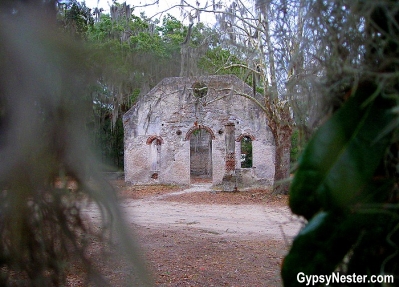
We’re traveling with Road Scholar – a not-for-profit organization – through Ecuador, Peru, The Galapagos Islands, Machu Picchu and much, much more!

Getting Ready for South America

The time has come! You voted for it – now we’ll deliver! And we couldn’t be more excited!

We’re heading to South America and, starting June 1st, we’ll be live-blogging our journey through Ecuador, Peru, The Galápagos Islands, Machu Picchu, Cusco and much, much more!

We want to be sure we cover EVERYTHING, so please be sure to leave a comment about what you are most interested in seeing on this trip!

Are you interested in the animals of The… CONTINUE READING >>


WATCH your goofy GypsyNesters as we prepared for the South America!

We're so excited!

You voted for it – and we delivered!

We live-bloggied our South American journey through Ecuador, Peru, The Galapagos Islands, Machu Picchu, Cusco and much, much more!

Click here to see our South American live-blog!

Map provided by Road Scholar, click on map for detailed itinerary:
Road Scholar Map for our trip

We traveled with Road Scholar, a not-for-profit organization – who provides educational travel programs for like-minded folks wanting to learn as much as they can about the areas they are visiting. Our journey had only fourteen other fellow adventurers, so we were very excited that we could participate in a program like that AND still feel like our low-to-the-ground traveling selves.

Luggage we're taking to South America

In keeping with our “One Trip Rule“, we packed so we could easily carry everything at once from plane to cab to hotel to train to boat.

Veronica had a small backpack and her rolling bag that is small enough to carry on airplanes.

David had a large backpack that he checked.

What we've packed for South America

As usual, we had a change of clothes, toiletries, cameras and laptops with us in our carry ons. We never pack things we we’ll immediately need upon arrival in our checked luggage, in case it’s lost or delayed.

Normally we don’t check anything, but since we spent such a long time in South America, we opted to bring our large backpack. We also had to keep in mind that there is a 44-pound weight limit on flights from Quito, Ecuador to The Galapagos, so even though we had the extra space, we still had to watch our weight.

Click here to see our South American live-blog!

Packing for South America - large zip-lock sandwich bags our your friend!

Large zip-lock sandwich bags are our friends! For many reasons:

Convenience. We moved from hotel to boat to hotel to train, and having a bag just for travel-sized toiletries is easy and convenient for on-the-fly packing.

Moisture and sand. We were in some wild and wet places! Having a small cache of baggies help keep our belongings dry and clean.

Cord management. We always have a soft cord bag with us. Inside the bag, we separate cords into plastic baggies. Camera, phone, airplane headsets, laptop and wireless accessories all have separate baggies. Keeps cords from tangling!

Note on electronics: Most laptops are dual voltage (look at the excruciatingly small print on your charger – usually on the “box” on the cord). If it can handle both 220 and 110, your laptop will become your personal power station. We use a small travel adapter (adapters don’t change the voltage, a bulky TRANSFORMER would be needed to convert the power) and use our dual voltage laptop to charge our cell phone, camera, I-pod and the like via USB cords. Cool, eh?

Packing for South America - Roll your clothes!

Veronica’s packing secret: Roll clothes!

By rolling clothes and setting them vertically in the suitcase, the ability to see everything packed is achieved! No more unpacking to find things!

Two-quart zip-lock plastic baggies filled with bathing suits and undergarments go in the upper compartment (once packed, sit on them to squeeze all of the air out) with shoes. Keeps stuff separated and clean. We brought extra large plastic zip bags for dirty/wet clothes.

Learn more about how we pack and our always-adhered-to “One Trip Rule”!

What we wore on the plane:
We experienced a huge range of climate variation on our trip, from islands on the equator to chilly nights two miles high in the Andes, so we had a few hours of discomfort at the beginning of the trip by wearing WAY too many layers. And our coats!

By wearing our bulky stuff we make more room in our luggage. Later in the trip, coats and sweaters make great extra blankets/pillows on airplanes/buses/trains and can be draped over luggage, affixed to backpacks or tied around our waists when we don’t need them. We always bring a blow-up neck pillow too – nothing like a sore neck to ruin a long distance trip!

Underwater camera practice!

Most exciting! We’re now the proud owners of underwater camera gear! We had a chance to snorkel (with turtles and penguins and sea lions!) in The Galapagos Islands.

Don’t forget to watch the video above to see how we “trained” for capturing underwater moments!

David & Veronica, GypsyNester.com

Click here to see our South American live-blog!