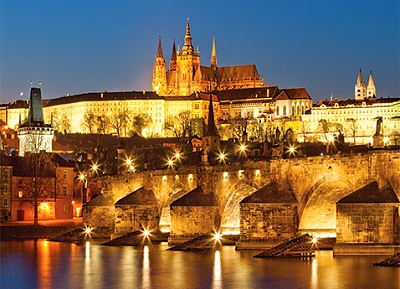
In front of the opera house in Prague, an astounding musician using water filled brandy snifters as his instrument. He played with the skill of a concert pianist… perhaps he should be inside the hall.
Watch: The incredibly talented (and hysterically funny) Peter! He even performs a special serenade to Veronica!.. See more
What is middle aged? I suppose we are implying the middle of our lifespan. So let’s say eighty years. That makes forty, give or take a few years, middle aged. Ninety is certainly a possibility, so, forty-five. Some of us might even live to be 100, so I can even go as high as fifty.
After that it gets a little curious. Fifty-five? Well, people have lived to 110, so let’s call the late fifties the absolute top side of middle age.
If someone sixty-plus is going around claiming to be middle aged, basically they are declaring… CONTINUE READING >>
What is middle aged? I suppose we are implying the middle of our lifespan. So let’s say eighty years. That makes forty, give or take a few years, middle aged.
Ninety is certainly a possibility, so, forty-five. Some of us might even live to be 100, so I can even go as high as fifty.
After that it gets a little curious. Fifty-five? Well, people have lived to 110, so let’s call the late fifties the absolute top side of middle age.
If someone sixty-plus is going around claiming to be middle aged, basically they are declaring that they intend to live to be the oldest human ever in the history of the world. I’m not buying it.
The fact is that only one person in two billion will live to be 116 or older, so we’ve got to draw the line somewhere.
Personally, I have absolutely no desire to live past 100. No thanks, that’s just more time than I need. But wait — I could get Willard Scott to announce my birthday on the Today Show. Of course ol’ Willie would be 257 by then, so… it might be worth it just to see that.
Perhaps I’m looking at this the wrong way. Maybe middle age isn’t so much about chronology, but more about functionality. Like the way a car’s age is more about mileage than model year.
One thing’s for sure, I rolled my odometer over a long time ago. My vision started going at twenty-nine and shows no signs of magically returning to the eagle-eyed sharpness of my youth. A dozen new lenses later, I’m about half blind now, so… middle age.
I’m certainly at least half deaf. The predictable outcome from decades of playing in some pretty loud bands. I have several drummers to personally thank. Nothing like a few good cymbal crashes right at ear level to take the edge off of that pesky ability to hear. What did you say?
I am also ridiculously forgetful, but I always have been. So either I was senile at eighteen or it’s just the way I am. I’m not talking about not being able to find my keys — I literally drive along the freeway, miles past my exit, and come to my senses wondering What in the world am I doing here?
I have shown up at concerts without my guitar, not just once or twice, many times. I pick up cell phones and listen for a dial tone… every time. I pay for gas but don’t remember to put it in the tank. Do me a favor, next time a car goes by with a coffee cup, laptop, book or a bag of groceries on the roof, give me a little wave.
I’m going to make the smoothest transition into dementia ever, I won’t even notice it. It’s all a matter of getting the supply of brain cells down to a manageable number.
So I guess the middle means half of the expected life of our bodily functions. The warranty must be running out on a bunch of my parts. When they’re halfway worn out, then that must be middle age. Because when they’re all the way spent, well… bucket, meet foot.
Still, I can’t decide if I feel old or young. Maybe THAT’s what middle age is all about. There are times I think, I don’t feel much different than I did thirty years ago. Other times I think I might keel over any minute. Depends on the day — or even more so — the time of day.
Mornings? I’m not exactly springing up like Jack from his box these days. Snap, Crackle, Pop — I sound like a bowl of Rice Krispies getting out of bed. But I figure if I wake up looking no worse than my driver’s license picture I’m off to a pretty good start. No worries, it’s nothing a gallon or two of strong coffee can’t bring around.
Afternoons? They’re usually OK, as long as the weather isn’t doing something squirrelly. Several of those cereal-sounding joints can put the National Weather Service to shame. I wonder why they don’t just call me for the forecast, because I am regularly kicking their butts in the accuracy department. Of course they’d have to catch me before I get into some of Granny Clampett’s rheumatiz medicine.
Speaking of hooch, evenings can be pretty groovy after a couple cold fellahs. Of course timing is important, because it’s pretty easy for happy hour to turn into nap time. Then I’d have to go back to square one and the driver’s license photo test and, well, might as well just stay in bed. It’s terribly grueling.
Bottom line? It’s getting to the point where it’s hard for me to claim to be middle aged anymore. I don’t buy this fifty-is-the-new forty horse hockey — the old dirt nap is the new big sleep.
Don’t get me wrong, I’m not saying I’ve got one foot in the grave, that would certainly not be middle aged. I guess that would be old age. That’s a whole ‘nother discussion, and I’m not ready for that.
I haven’t even made it to the point where I can start bragging about my age yet.
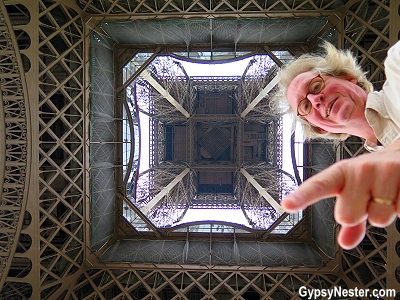
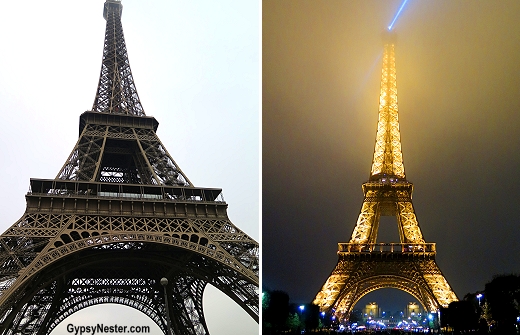
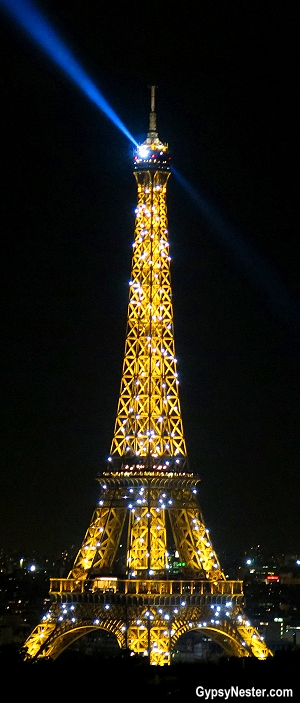
When Gustave Eiffel designed and built his tower in 1889 as an entrance to the 1889 World’s Fair he probably had no idea that it would become the enduring symbol of the city of Paris.
Seems like the perfect first stop for our visit to the City of Light.
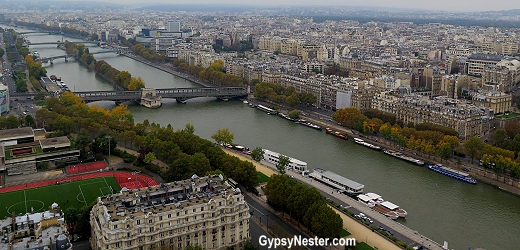
Once the tallest man-made structure on earth, the Eiffel Tower stands over a thousand feet high, but we were content to climb to the second observation level, just over a third of the way up. Even through the fog the panoramic view of the city was spectacular.
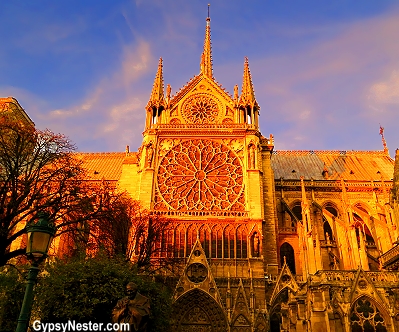
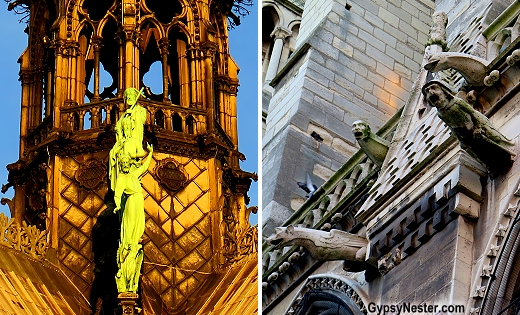
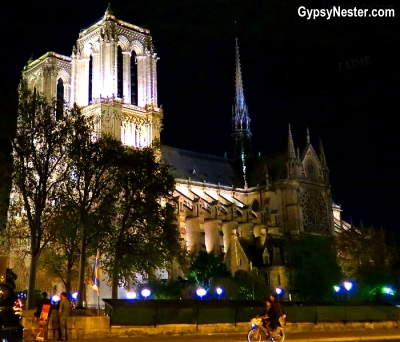
While the Notre-Dame Cathedral might be best known to us Americans for its bells — and a certain odd little man who rang them — the gargoyles, rose window, and flying buttresses are what are most catching our attention.
Built over the course of nearly two hundred years, beginning in 1163, Notre-Dame de Paris was among the first buildings in the world to incorporate the flying buttress as reinforcements for the walls. Although they were not part of the original design, its size required the additional support.
In the several hours we spend observing the church from every possible angle, and then while we hang around in the nearby Latin Quarter, we hear the bells toll several times.
10 Second video: Click the pic – and the crazy traffic comes
to life!
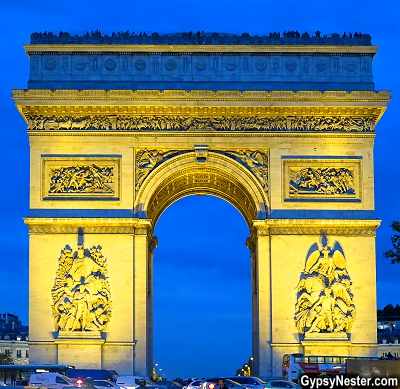
Next to the Eiffel Tower, the Arc de Triomphe may be the most recognizable monument in Paris.
The insane traffic clogging the roundabout that encircles the arch makes it look as though it might be impossible to get to.
Luckily there is a tunnel underneath the street that makes passage possible without risking our lives.
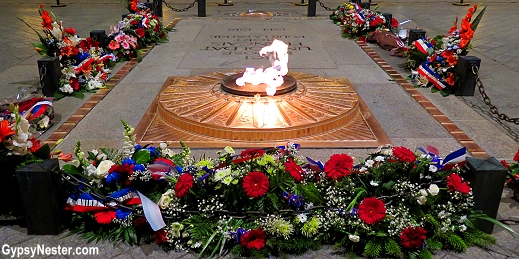
Built in 1806 to commemorate the victory at Austerlitz by Emperor Napoleon, the massive arch has gained significance as a memorial for all of the wars since and houses the tomb of the Unknown Soldier.
We exit the tunnel just in time to see the changing of the guard at the tomb.
Impressive as the perspective is from the ground, we are most excited to climb to the top for the ultimate view of the city.
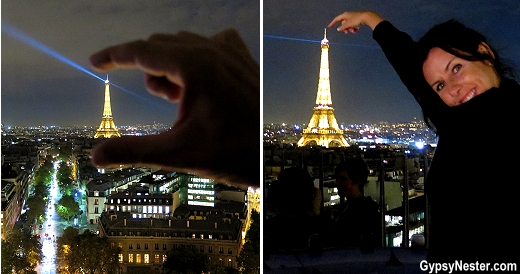
A few hundred steps later and a full 360 degree panorama of Paris is spread out before us just as darkness is falling.
The vantage point is unbeatable, not only for photographing Gustave Eiffel’s handiwork, but observing the continuous chaos on the roads below.
The flow of vehicles begins to look as if it is a living organism coursing through the arteries of the city.
Day Two: Creepy Catacombs and the Amazing Art and Architecture of Paris
Morning: Mon Dieu! Down deep into Paris
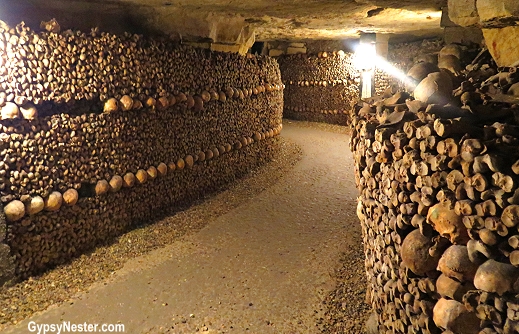
As far as we can tell, Halloween isn’t celebrated much in Paris, so we found a way to scare ourselves silly and dig our way deep into Paris.
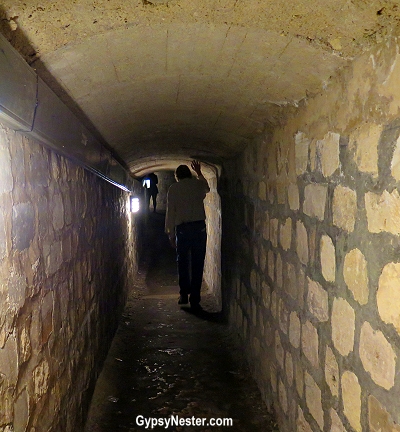
There is a surprisingly long line to enter the Catacombes de Paris, but the underground adventure turns out to be more than worth the wait.
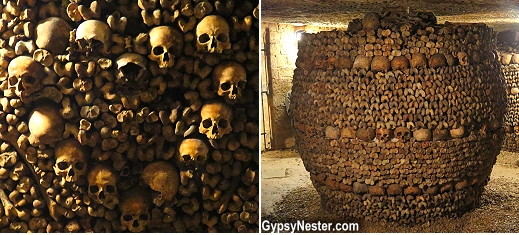
These tunnels and excavations were originally dug as a limestone quarry to supply building material for the world above. Years later, when several of the city’s cemeteries ran out of room for any more burials, the remains of some six million people were moved into the Catacombs.
Over time this became known as The World’s Largest Grave and began to attract curious visitors, including King Charles X, and was quite an attraction at the 1900 World’s Fair Exposition.
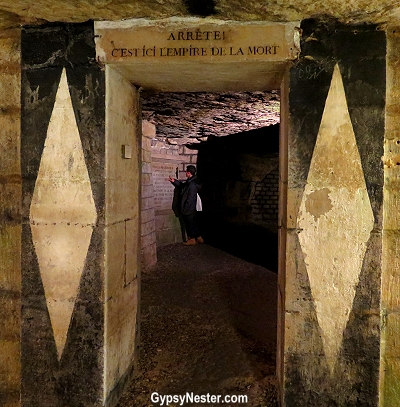
We proceed past the warning, Stop! This is the Empire of Death, and enter to see for ourselves.
What we find is beyond extraordinary, it’s downright bizarre, and the Halloween timing of our visit makes us just a little jumpy.
As part of our Viking cruise we set out on a bus tour of Paris for a peek at some of the city’s preeminent landmarks. A quick spin through the roundabout encircling the Arc de Triomphe gives us a great view of the monument, plus a taste for the crazy traffic that fights its way between the twelve streets that connect here.
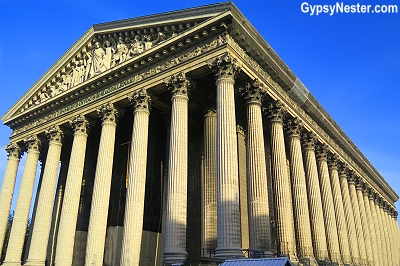
Nearby, La Madeleine looks much more like a Roman temple than a church. In fact, The Madeleine Church was built as a temple to the glory of Napoleon’s army in 1806.
Years later, King Louis XVIII decided that the building should be used as a church, and dedicated it to Mary Magdalene.
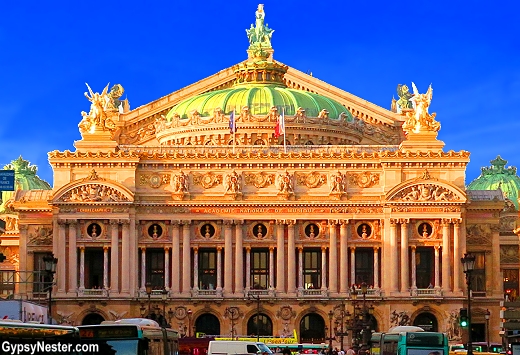
Next we pass the Palais Garnier, generally known as the Opéra de Paris, or Paris Opera House.
We know it as the home to the Phantom of the Opera, but that is only a small part of why this may be the most famous opera house in the world.
The amazing architecture could be more responsible for that stature.
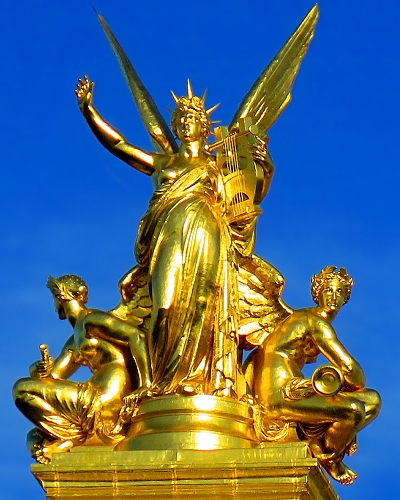
<– This statue is atop the building (see left corner of the pic above)!
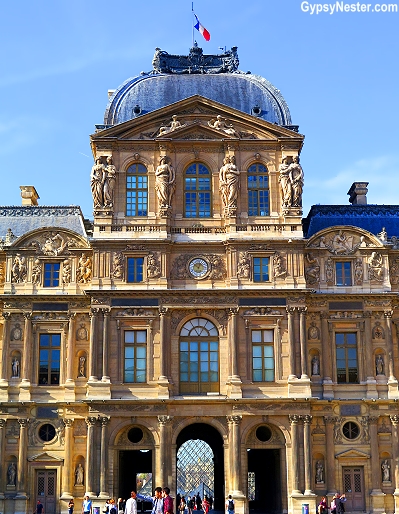
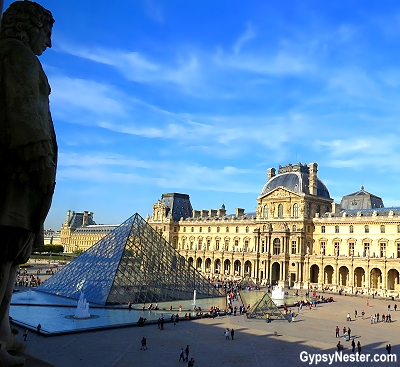
We do a drive-by through the courtyard of the Louvre, where it is easy to see how it was originally built as the Louvre Palace over eight hundred years ago.
When Louis XIV chose to move to the Palace of Versailles in 1682, the Louvre became a place to display the royal collection, including an impressive array of ancient Greek and Roman sculpture.
If not for the fact that we are coming back later, we would jump out and run inside.
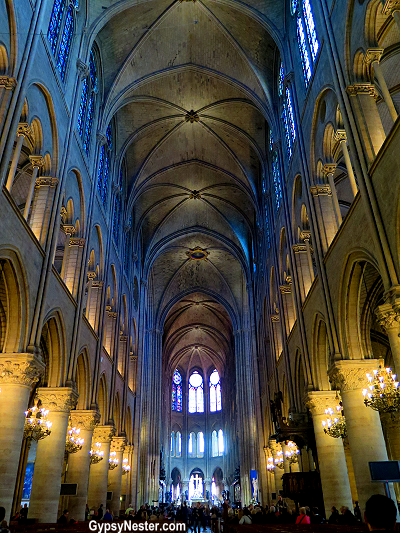
Speaking of inside, we do get to go in the Notre Dame Cathedral, and it is every bit as amazing as we expected.
Our guide offers an amusing warning about pickpockets, saying that it is the perfect spot for these thieves because of the darkness and the availability of immediate confessions in twelve different languages.
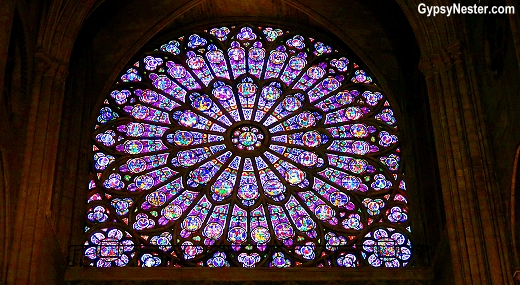
The sunlight streaming through the stained glass rose windows lit the otherwise darkened sanctuary in muted colors and makes us feel perfectly safe.
No nefarious characters in sight, hunchbacked or otherwise.
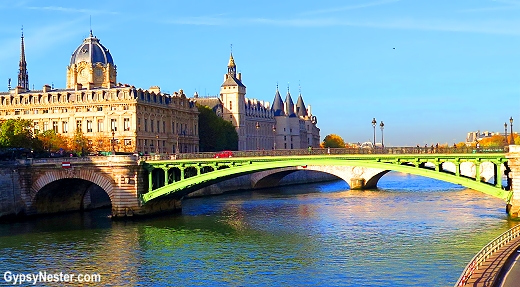
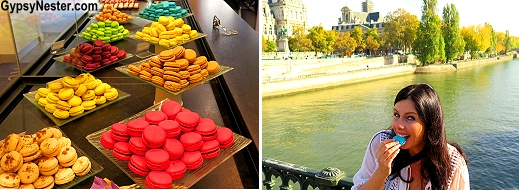
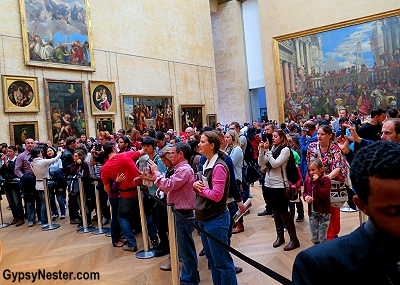
A quick stop for some macaroons gives us the energy to walk along the Seine back to the Louvre and a visit with a couple of grand ladies, Mona Lisa and Venus de Milo.
Evening: Loving the Louvre!
It would be impossible to see the collection at the Louvre in one afternoon, so our plan is to hit the highlights.
The former royal palace is home to an array of works that even uninformed art aficionados such as ourselves recognize immediately.
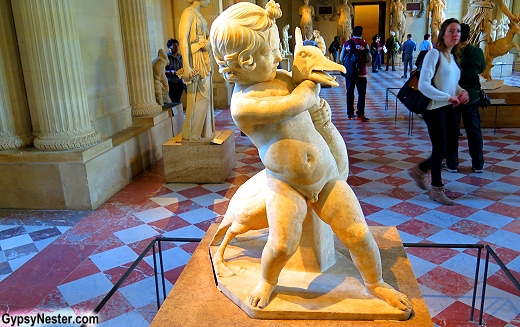
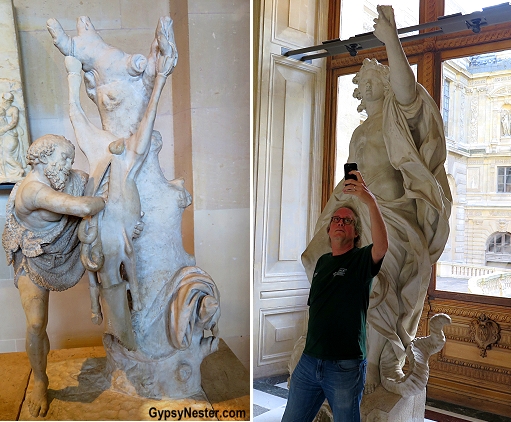
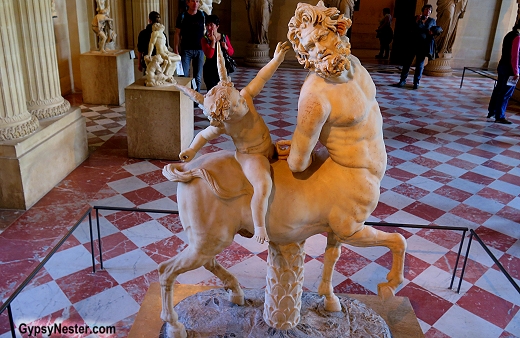
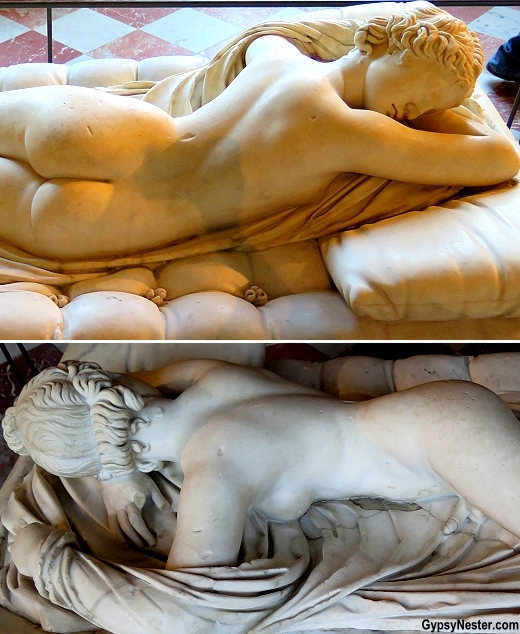
From that coveted position we make our way to the sculptures of ancient Greece, many of which strike us as downright bizarre. A few of our favorites are…
Boy Delivering Severe Beat-down to Goose…
Man Pulling Guts Out of Animal… Ancient Greek Dude Taking a Selfie…
Cupid Riding a Centaur…
…and Supine Woman With Shocking Surprise on the Front Side (turns out she’s just one of the boys!).
Guess what, these are not the actual names. Truth is, these are all remarkable, masterfully sculpted works of art.
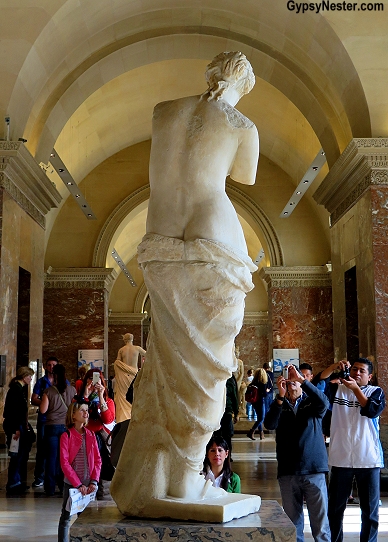
Heretofore we shall endeavor to display a modicum of proper decorum. The sight of Venus de Milo snaps us back to a state of appropriate awe.
<– Here’s what Venus de Milo sees
Named for the Greek Isle Milos, where it was discovered in 1820, she is Aphrodite, goddess of love and was sculpted over one hundred years before the time of Christ. She is considered a classic example of ancient Greek sculpture and, despite her loss of limbs, looks mighty good for her age.
Leaving the marble masterpieces behind, we head to the gallery of Italian artists.
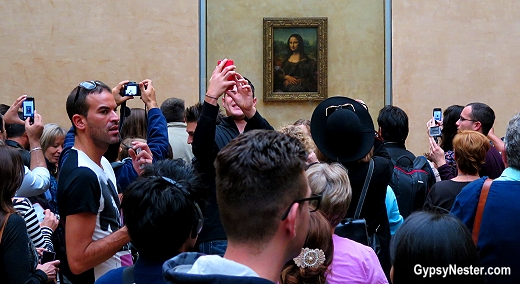
Here we shall find Leonardo da Vinci’s most famous work, Mona Lisa.
Perhaps her appearance in the background of countless tourist selfies is what is keeping her smiling these days.
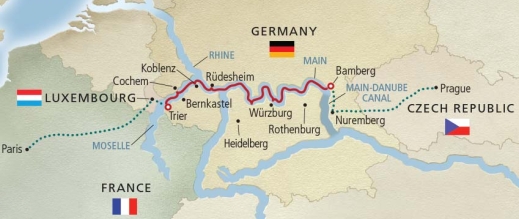
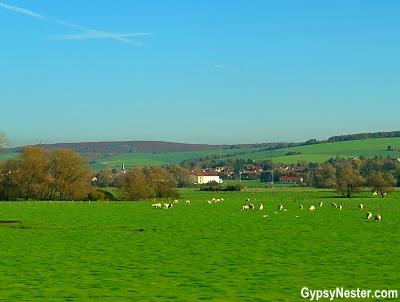
Today begins with a ride across the rolling hills and fields of France, the first of four countries we will set foot in today on our way to our Viking ship Odin.
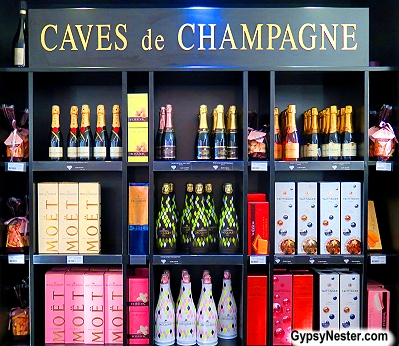
With the Champagne region, famous for obvious reasons, rolling by our window autumn is on display much more than back in the big city.
<
Nearing the end of our time in France we pass through the region of Lorraine, which is known for the egg dish that our program director Radim called a salty pie… quiche.
Afternoon: Luxurious Luxembourg
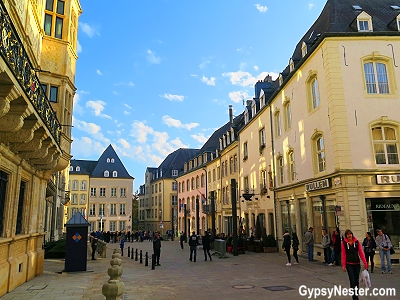
We stop in the Grand Duchy of Luxembourg, the world’s last remaining grand duchy, meaning that it is headed by a grand duke.
Taking a wild guess, we say that its survival has a lot to do with the fortifications we pass entering Luxembourg City.
Inside the walls we get a glimpse of what life looked like centuries ago.
Space was at a premium within the ramparts, so the streets were narrow and homes crowded together.
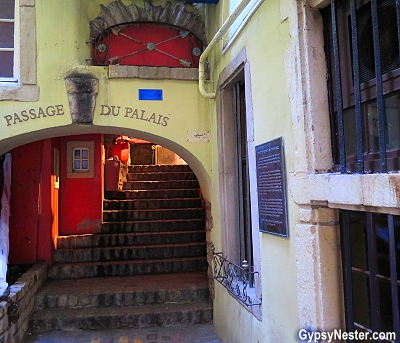
An arch displays crossed arrows above the doorway, a superstition utilized for plague avoiding. The idea was that since the sores from the dreaded disease looked like arrow wounds, perhaps this symbol might keep it away.
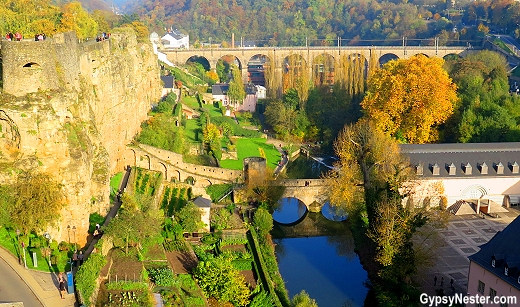
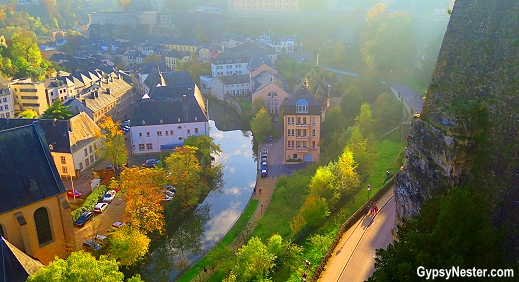
Standing on what is called the most beautiful balcony in Europe, it is easy to see why this was once called the Gibraltar of the North. The city was built with nearly perfect natural protection on three sides.
Slightly smaller than Rhode Island, Luxembourg is one of the smallest countries in Europe and is surrounded by France, Belgium, and Germany.
This has made for an interesting mixture of languages, with official business being conducted in three, Luxembourgish, French, and German.
As far as day-to-day life on the streets goes, we hear dozens of languages, often several used within the same conversation.
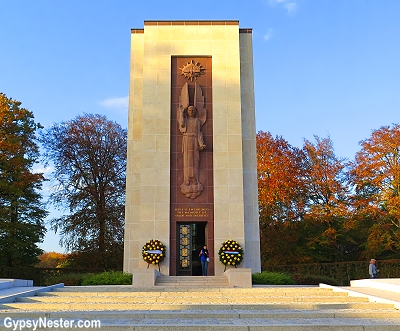
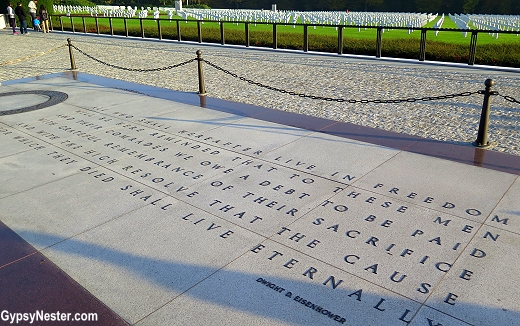
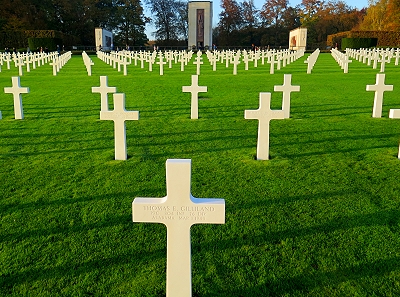
Just outside the city we visit the the solemn ground of the Luxembourg American Cemetery and Memorial, which is technically American soil, therefore entering our third country of the day.
Luxembourg presented the land to the United States in perpetuity in appreciation for being freed from Nazi occupation.
Many of the soldiers who lost their lives at the nearby Battle of the Bulge, which was instrumental in ending World War II, are buried here.
General George S. Patton, who survived the battle but perished in an automobile accident a few months later, is also laid to rest here.
Crossing one more border, making for our fourth nation in one day, we finish the day in Germany’s oldest city, Trier.
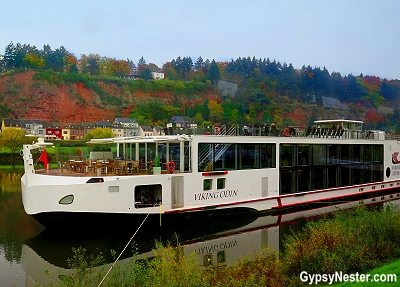
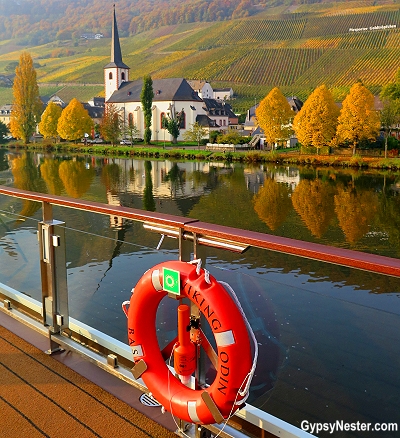
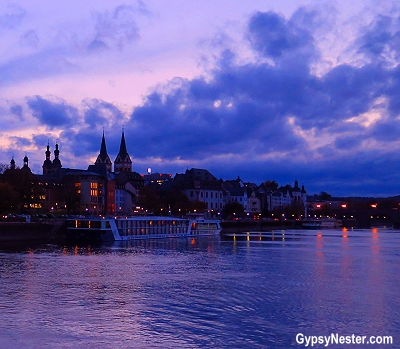
Our home for the next week, the Viking Longship Odin, waits docked on the Moselle River.
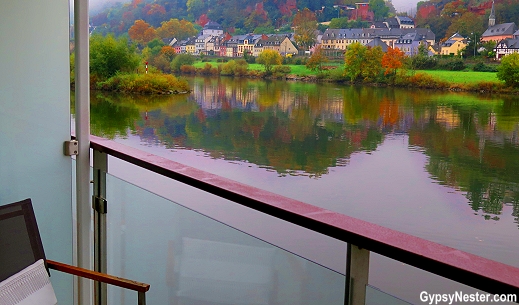
The view from our balcony!
WATCH: Our hotel manager, Thomas, shows us around our stateroom!
Day Four: Ancient Germany, Wine Country, and Sausage Walking
Morning: The oldest town in Germany
We awake from our first night aboard the Odin ready for a tour of Trier, known as the oldest city in Germany.
Established by the Romans over 2000 years ago as Augusta Treverorum, the city is certifiably ancient, however it has only been a part of Germany for the last two hundred of those years. For more than a thousand years in between it was ruled by the Franks.
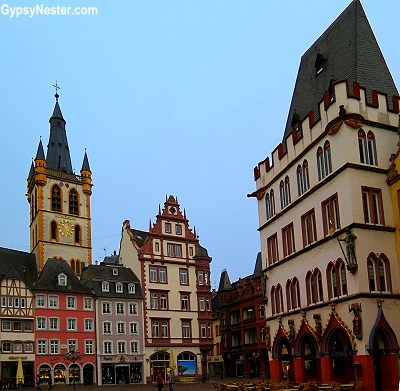
As the largest Roman city north of the Alps, Trier was extremely important, and much of the Roman history is well preserved. On our way to the main square, we pass the Roman Bridge over the Moselle River, two cranes along the banks, parts of the original city walls, an amphitheater, and a large section of ruins from the Roman baths. All, we are told, are the oldest in Germany.
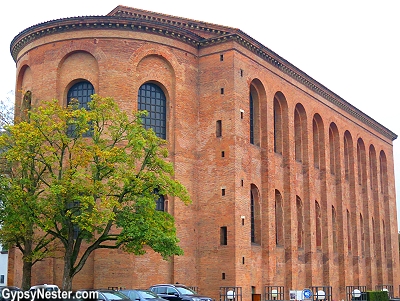
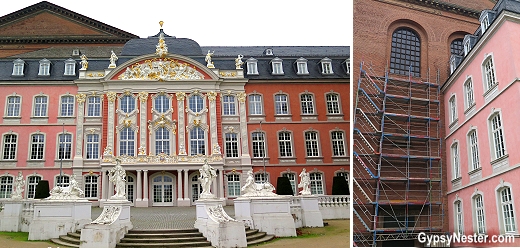
The modern city is still centered around the Palace Basilica that Emperor Constantine built in the year 310, making it another oldest in Germany.
It is an amazing piece of preserved Roman architecture, with the brick work still in remarkable condition. As with so many Roman structures, it became a church, and also served as the residence for the bishop…
until a more proper palace connected to the front was constructed in the seventeenth century.
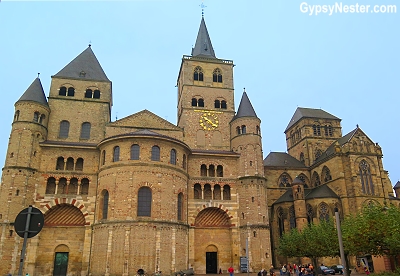
The Liebfrauenkirche (Church of Our Lady) holds the title of the oldest Gothic church in Germany, while next to it, the even older High Cathedral of Saint Peter is the oldest church of any kind in the country.
The cathedral was constructed using the bricks and stones from the even older Roman ruins beneath it.
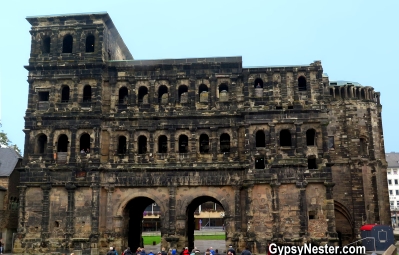
Perhaps Trier’s most famous landmark is the Porta Nigra, or black gate, the only remaining of the four original passages through the defensive city walls that the Romans built around 200 AD.
About a thousand years ago it too was transformed into a church, then in 1804 Napoleon ordered it restored to its original Roman form. Oh, and there is no older Roman gate in Germany.
The “oldest in Germany” moniker became a bit of a running gag with our guide, Jens, as most anything notable was identified as the oldest in Germany.
So to recap, we saw the oldest bridge, crane, walls, baths, amphitheater, palace, churches, and Karl Marx house in Germany. Wait, what?
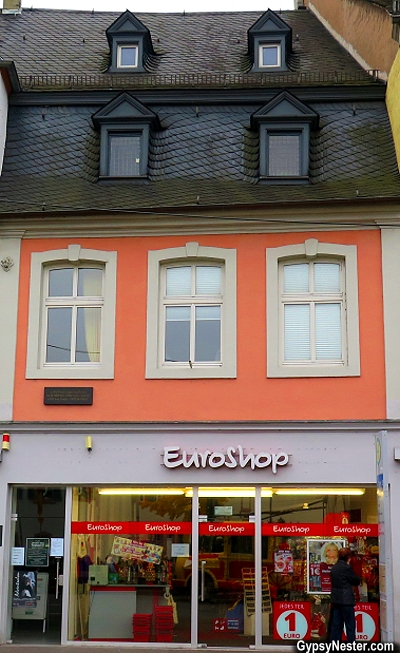
Oh yeah, Karl Marx was from Trier, and his house is right by the Porta Nigra. It is now a Euro Shop, or what we know as a dollar store.
Somehow we just don’t see the author of The Communist Manifesto shouting out, “price check on aisle 3,” before bursting into laughter because everything costs one Euro.
Afternoon: Cruising through the most beautiful wine country
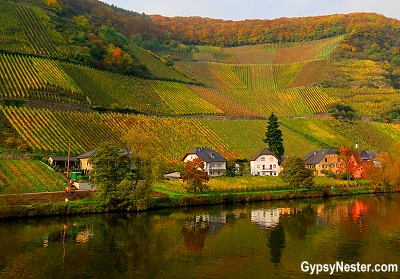
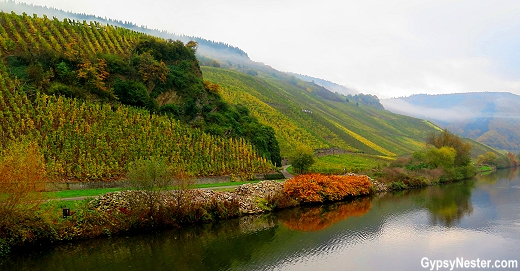
As we make our way down the Moselle we are cruising through one of Germany’s best known, and certainly most beautiful, wine regions.
Oh yeah, and the oldest too, because it was the Romans who first planted grapes here.
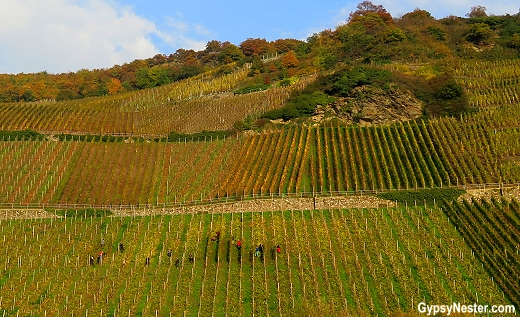
These picturesque hillsides produce wonderful Rieslings thanks to the sun on the south facing slopes, and perfect climate.
By now most of the vineyards have been harvested, but we do spot a group gathering grapes up one steep hillside.
Evening: Upping the Riesling ante
The charming medieval village of Bernkastel is our next stop.
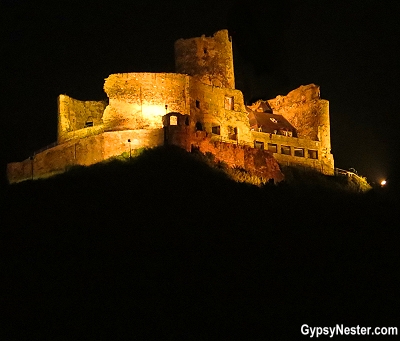
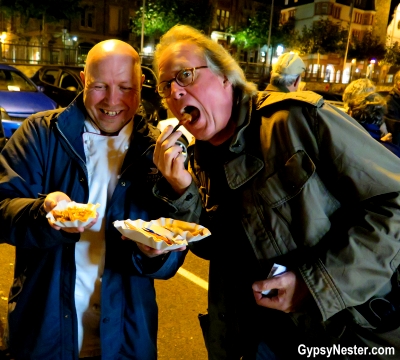
We dock directly under Landshut Castle and disembark for an evening exploration. Our first mission, join the Executive Chef from our ship, Andreas Glashke, for a sampling of sausages from a riverside stand.
This “sausage walk” was a last minute surprise that we discover is added to the itinerary from time to time.
Generally, according to unnamed crew sources, whenever Chef Andreas gets a hankering for some sausage.
After a few bites of brats and currywürst we, and most of the rest of the passengers, were sure glad he did.
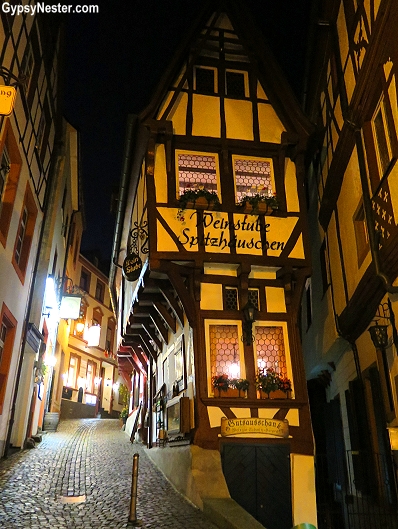
The distinctive buildings of the town, known as half-timber houses, look decidedly top heavy as they jut out and expand from the second floor up.
Many look to be leaning to and fro in a most precarious way.
The story we hear is that the design was developed to avoid taxes.
It seems that buildings were taxed based on the size of their ground floor, so the extended upstairs were basically tax free.
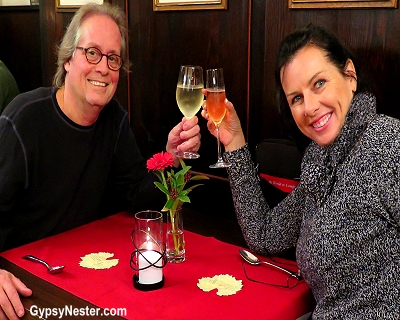
Veronica has hers laced with Weinbergspfirsichlikor, a regional peach liquor
The area is all about the wines, but when we stop in a little gasthaus we discover that chanterelle mushrooms are nearly as big a deal in these parts.
So by all means, we must try the two together.
We order two reislings, one trocken (dry) and the other halbtrocken (half-dry), to go with two bowls of wild mushroom soup.
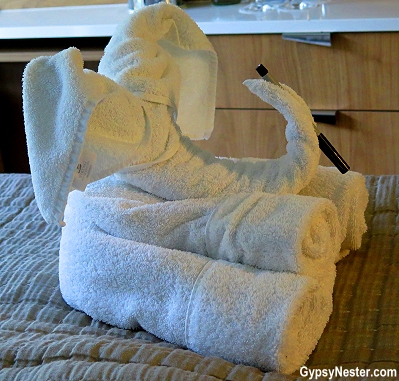
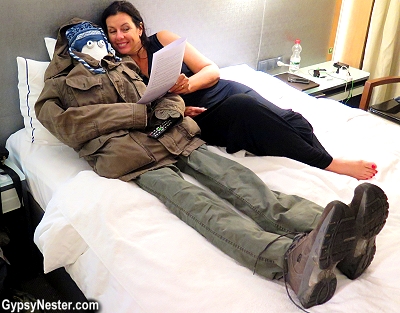
Back aboard the Odin we find our bed is occupied by an unexpected guest.
Who knew that elephants live in the Moselle valley?
Our cabin steward, Ionut, is happy to hear how much we like his addition to our collection of cruise towel animals and promises even better specimens to come.
We can hardly wait.
Day Five: The View from a Castle and Towel Animals Gone Awry
Morning: Storming the castle
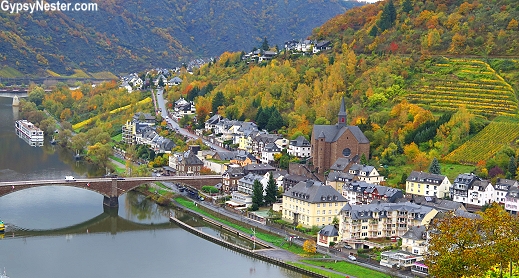
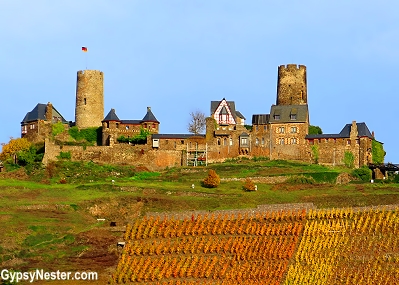
Our rainy day begins in Cochem, another town deeply connected to wine, and overseen by the imposing Imperial castle Reichsburg on the hill high above.
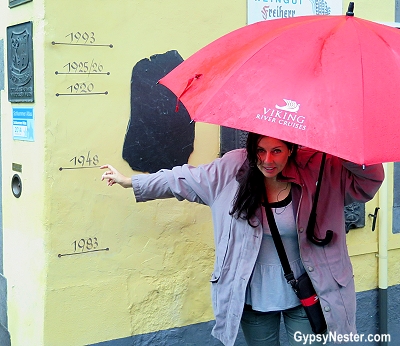
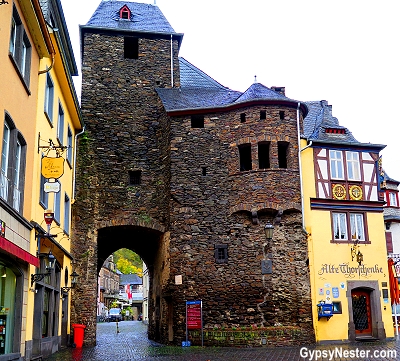
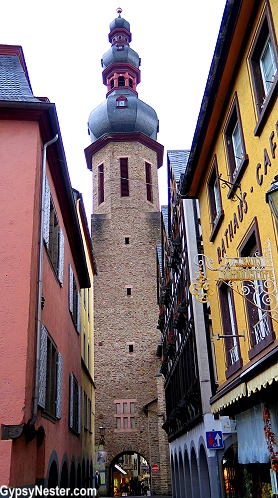
As we enter through the medieval city gate we see by the flood water markings that the city is also dominated by the Mosel River.
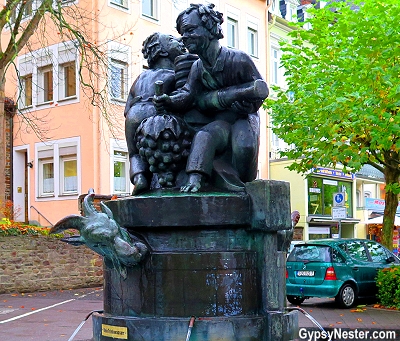
Inside the walls we find several wine presses on display, most real, but one odd statue of a goat in a press.
Our guide explains that legend has it that the goat was suspected of eating grapes, so the town judge decided to use the wine press to see if any wine would come out when the poor billy was squeezed.
Nope, only blood, and since only white wines are produced in this region the now dead goat was pronounced innocent.
We must confess to some confusion as to why this story is worthy of being immortalized in statue form.
The bell tower of St. Martin’s Church, Martinskirche, overlooks the old town market, where the saint is also remembered with a fountain. But the highlight for us comes when a special performance of Handel is played on the bells of the optometrist’s building.
Yet another odd story, the bells were installed as a sarcastic gesture toward the city hall across the square. Three times a day the bells ring out, basically declaring “I built this in spite of your rules” to the town council.
All of this is only an appetizer for the main course, the Cochem Imperial castle, Reichsburg. Actually, saying Reichsburg castle is redundant, like saying Reichs castle castle, because burg means castle.
By any name it is a fantastic sight looming over the town. It is even more impressive inside. Originally built in 1130, what we see was reconstructed from ruins by a private businessman, Louis Ravené, about one hundred and fifty years ago.
Afternoon: Enjoying Odin
We spend the afternoon aboard the Odin, but there is no shortage of activities to keep us entertained. Chef Andreas shows us how to make bread pudding, and there are painting and German classes.
Of course, first and foremost there is the breathtaking scenery of vineyards, quaint towns, and ancient castles flowing past us at all times.
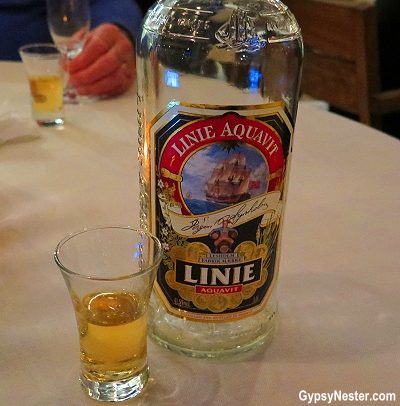
At the Viking Explorer Society cocktail party, where all veteran Viking sailors meet and greet with each other and the crew, our Hotel Manager, Thomas, introduces us to an age-old Norwegian tradition, Linje Aquavits.
Aquavits is a Scandinavian liquor similar to vodka, but aged in oak barrels.
To earn the Linje title the casks must be aboard a ship that crosses the equator (the Linje) at least twice. The rocking of the ship makes for a smooth flavor that just can’t be replicated on land.
Evening: Getting the ol’ blood pumping
Upon returning to our cabin we were given quite a start by opening the door to find someone in our bed – in the dark and watching CNN on our TV. Thinking we must be in the wrong room we sheepishly apologize and quickly shut the door.
Is the Aquavits that strong?
No, we aren’t crazy or drunk, this is our room. Looking in again we discover that Ionut has raised the bar of cruise towel animals to a new high, moving into the realm of humans.
We must find a way to up the ante ourselves.
Just before sundown we arrive at Koblenz, where the Moselle River joins up with the Rhine.
After spending the night docked we will be sailing upstream along what is known as the Middle Rhine, or Romantic Rhine, with an incredible concentration of medieval castles unlike anywhere else in the world.
Day Six: Castles of the Rhine and a Taste of Germany
Morning: Let’s check out what goes on inside a castle
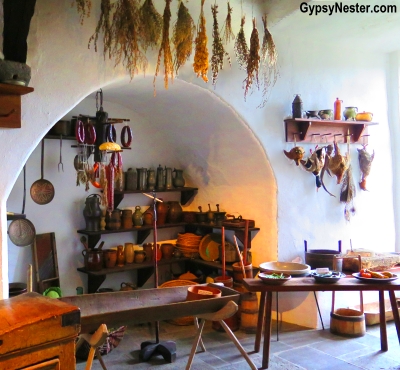
Today is all about the castles. What better place to begin than the only one on the Rhine that has never been destroyed, Marksburg Castle.
Oops, there we go being redundant again, burg means castle, burg means castle… No matter, from our perch high above the river it is easy to see how no invaders ever managed to ransack this stronghold.
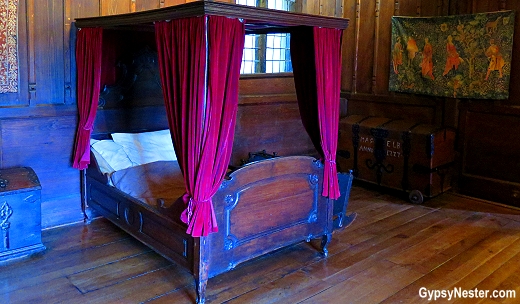
Inside we get to see eight-hundred years of well-preserved history.
The furnishings have been restored through the efforts of the German Castles Association, who bought the castle in 1900.
Although most of the artifacts are from other places, they provide an excellent look into life in the middle ages.
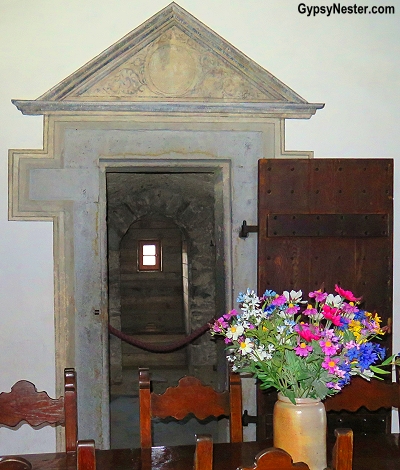
We get a lesson in medieval plumbing in the knights room, where the privy sits right behind the dining table.
The idea was that no knight wanted to miss out on what was being said at dinner simply because nature called.
The next room depicts a timeline of various knights’ uniforms, armors, and weaponry on a series of mannequins. The array of spears, battleaxes, maces, clubs, and other implements of mayhem make the shields and armor look wildly insufficient.
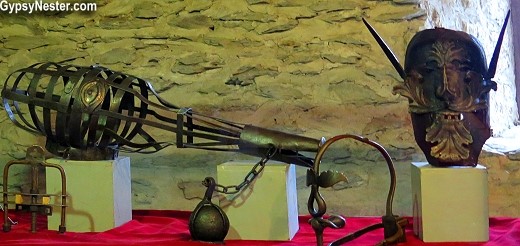
Eye-opening displays of torture, no wait, let’s call them criminal punishment devices, harken back to the days when Marksburg served as a prison. Certainly looks as though harsh sentences were the order of the day back then.
Of course, the view from the castle is spectacular – with the Longship Odin on the water!
Afternoon: Soooooo many castles!
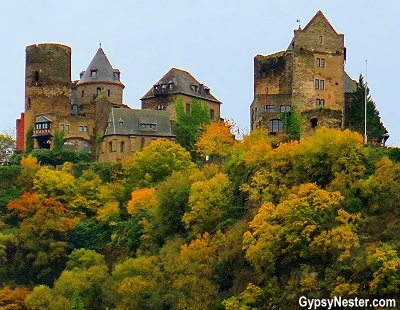
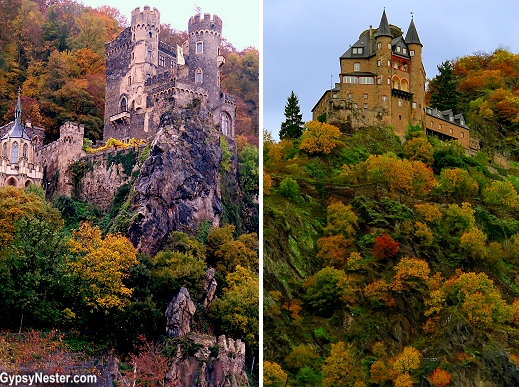
Our afternoon consists of cruising through an unbelievably beautiful onslaught of castles along both sides of the Rhine.
We never travel more than a mile or so before seeing the next fortress.
In fact, it is very possible that we are never out of sight of at least one castle.
Evening: A taste of Germany (or how David ODs on delicious sausages)
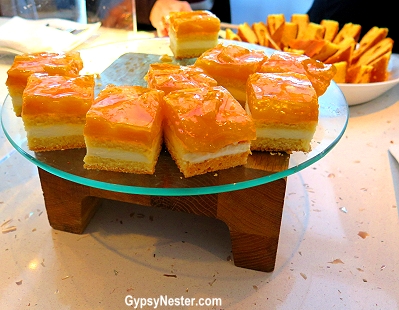
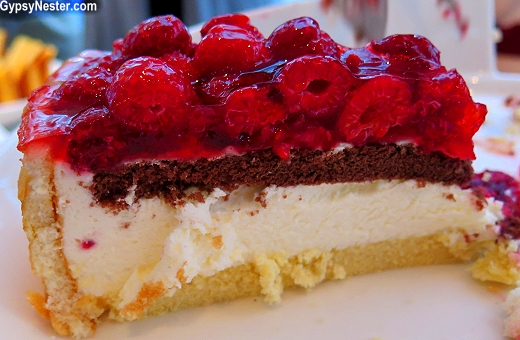
Yummy, local desserts are served with the finished product!
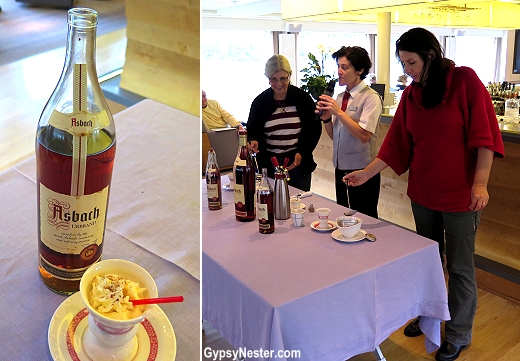
To keep us warm and alert while castle watching, a special Rudesheimer coffee-making demonstration is set up in the lounge.
Veronica volunteers to burn some sugar, and then some Asbach, a brandy made from local reisling grapes.
With whipped cream on top, the finished product perks everyone up for another round of fortress finding.
Chef Andreas has prepared a spectacular Taste of Germany for dinner this evening.
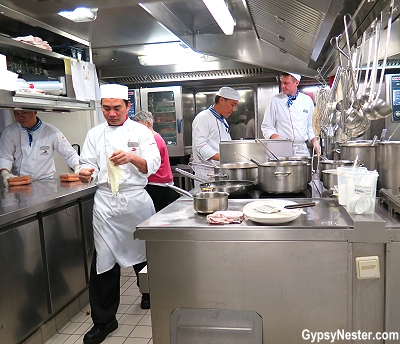
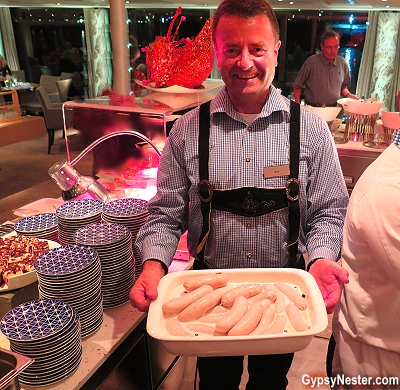
A remarkable array of sausages, more sausages, meats, cheeses, dumplings, sauerkraut, sweets and sausages is laid out buffet style through the lounge, the dining room, and even in the galley.
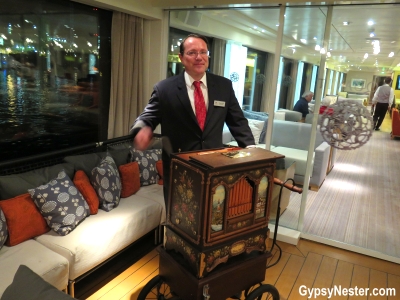
While we are browsing the culinary options, our new friend and hotel manager, Thomas, regales us with some music from a barrel organ.
In doing so, he becomes an organ grinder, as in one who cranks a barrel organ. Unfortunately, (or perhaps very fortunately depending on the point of view) there are no monkeys involved.
Jose tempts us with just one more sausage!
Turns out that there may well be a limit to just how much sausage a human can consume before becoming comatose.
David found that line after dry pork sausage, hot sausage, beef sausage, veal sausage, and several types of salami, when bed became the only viable option.
Thanks to the folks at Ensure who were kind enough to sponsor our video, and provided a supply of their new Ensure Active, which kept us hydrated throughout our escapades. All opinions are our own.
“In my opinion, anyone who would refer to children in such a disgusting and disrespectful way (adult or not) is an emotionally bankrupt shell of a person…”
BAM! My first hate mail.
I read a lot of blogs. Any of them worth their salt raise strong emotion and spark debate on their message boards. Sometimes it can get a bit heated, but makes for a nice balance.
We have had comments on our website that strongly disagree with our opinions and we relish them, we value every… CONTINUE READING >>
A comment on our site:
“In my opinion, anyone who would refer to children in such a disgusting and disrespectful way (adult or not) is an emotionally bankrupt shell of a person…”
BAM! My first hate mail.
I read a lot of blogs. Any of them worth their salt raise strong emotion and spark debate on their message boards.
Sometimes it can get a bit heated, but makes for a nice balance.
We have had comments on our website that strongly disagree with our opinions and we relish them, we value every addition to the conversation. Good stuff all the way around.
But this one hit me like a punch to the gut. My mother-in-law once told me I was too thin-skinned and I was beginning to believe it.
My first thought was, “OMG — was my message unclear? Did I go overboard with the snarkyness and cloud the overriding theme?”
I don’t mind criticism (I say with more bravado than I actually have), but being a bad writer horrifies me. Was my post so bad that it didn’t even make sense? Should I delete the post or rewrite it? Tone down the snark?
I fired off an e-mail to an old school chum who grew up to be a college professor. “Is my post as bad as I’m convincing myself it is?” One of those tell me like it is — I can take it e-mails. I knew he would do just that, which further panicked me as I hit the SEND button.
I waited — obsessively reading and rereading the post and the response — unable to see either objectively.
As luck would have it, Grown Up Professor was online and got back to me quickly. He assured me that my point was indeed clear. Whew. OK. Better. He went on to say he didn’t think my post was mean spirited at all.
Wait. What? My thin-skinned brain went back to reeling. Grown Up Professor may not have thought it mean spirited, but do others (aside from the hate mailer)?
Snarky as we can be, our site’s focus is to cheer people on, to help folks overcome the sadness that comes when the kids leave the nest – and we use humor to do this. Our writing is meant to empower people, not ruin their day. Damn.
I called my sister-in-law. She’d hand it to me straight; we have always had one of those exceptional relationships that transcends our differences. We frequently debate all of those untouchable subjects — politics, religion, music — with vigor and calm. We also respect each other immensely as parents. As the mother of my beautiful and inspirational special needs niece, she is truly my hero. She is devout, feminine and, unlike me, never cusses.
In other words, if my post were offensive, it was going to offend her. Not something I was eager to do.
Listening to her giggle as she read the post while I sweated it out on the other end of the line was music to my ears. She assured me that it was fine. Again, WHEW!
My son, The Boy, called soon after to actually congratulate me.
“Hey Mom,” says The Boy, “You got your first hate mail – you’ve made it!”
As I hung up the phone I began to wonder if my mother-in-law was indeed correct (as she often is) about my thin-skinly-ness. After all, she’s known me since I was a teenager. All the signs are there – even my kids incessantly tease me about it.
I sometimes wonder if I will ever be able to stand up for myself without the safety net of my family and friends. But I do know this– the next hate mail won’t sting so much.
As my wise Daddy told me (okay, I called him too – just to cry on his shoulder), “If you don’t want to be hated on, you can just sit around and do nothing. Even then – that’s no guarantee.”
The area is stunningly beautiful — packed full of national parks, state forests, beaches, and wildlife — and is quite the foodie town!
Join your GypsyNesters as we jump into adventure, cavort with kookaburras, drop bears and mamils, swim at the base of a waterfall, and eat and relax our way through Noosa… CONTINUE READING >>
Maybe even spend a little time communing with nature. Noosa was just the place.
Resorting to Relaxation
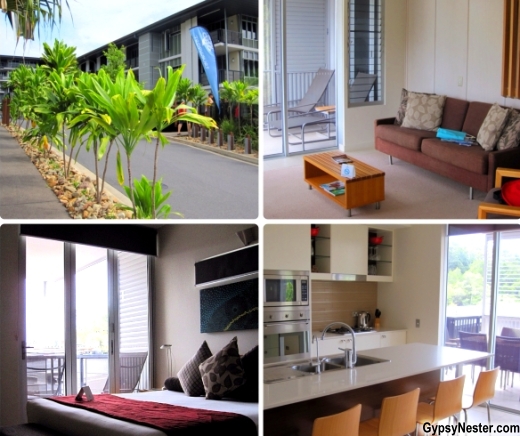
The area is packed full of National Parks and State Forests and our home for the next few days, the Outrigger Resort, sits right on the edge of Noosa National Park.
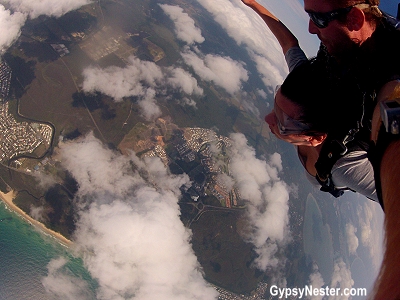
To shake off the remaining shakes we had from skydiving, we walked out our door and up the trail to the lookout atop Noosa Heads.
Our tranquil hike was also in hope of getting a rare peek at one of the wild koalas that reside in the park, but alas, our koala gazing was to be confined to the rescued variety we had already seen.
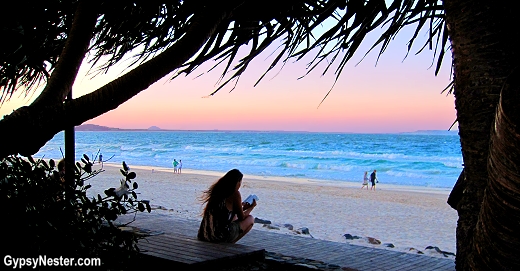
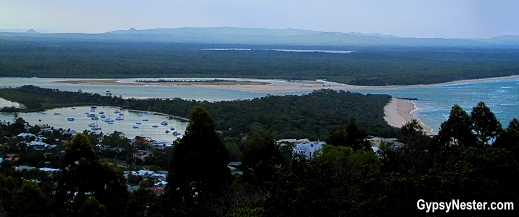
Our only consolation was a phenomenal view of the Coral Sea. Gee whiz, life is hard!
To complete our relaxation efforts, and reiterate just how difficult our lives can be, we stopped in at Stephanies Ocean Spa.
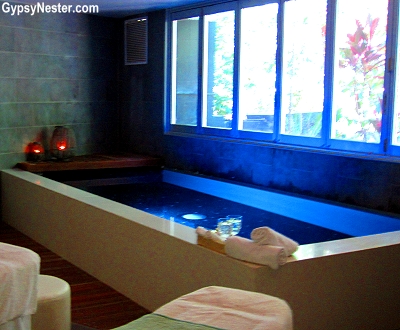
I was obviously in need of some sarcasm reduction, but they recommended Mineral Floatation Therapy in their mineral floatation pool. The idea is that the water’s high salt and mineral content makes a body so buoyant that it becomes almost like zero gravity. The muscles can completely relax and rejuvenate.
The freakishly buoyant Veronica reclined blissfully atop the saline solution, even nodding off for a short nap while buoyed by the mineral bath.
I, however, do not float. Never have, never will.
My experience was much more akin to a shipwreck victim desperately trying to survive by treading water for dear life than any mind-clearing Zen stress reduction therapy. I gave up and sat on the edge soaking my feet while she serenely snoozed.
Getting off the Beaten Path
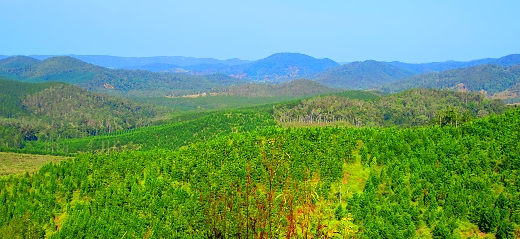
The next day we continued our park explorations with Off Beat Eco Tours on a trip through Conondale National Park and Imbil State Forest.
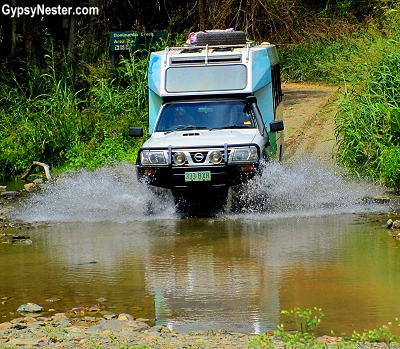
Owner/guide, Pete Blashki, picked us up in his safari wagon and whisked us off for a bushwhackin’ romp through the hinterlands.
Along the way Pete regaled us with gems of Aussie slang, legend, and folklore.
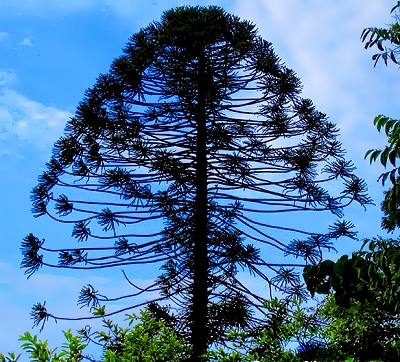
By the time we reached the forest we learned that… We kept an eye out for drop bears in the bunya trees!
a) Noosa is better known as Land of a Thousand Roundabouts (there are a freakishly large amount of them)
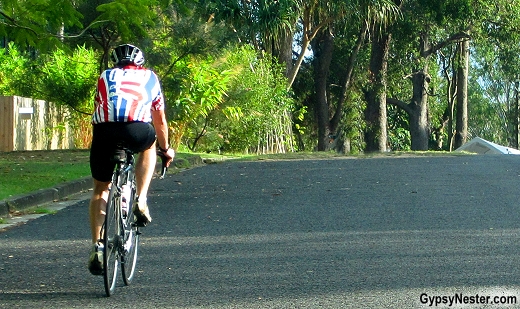
b) the roadways are filled with MAMILs (Middle Aged Men In Lycra) on bicycles
and
c) to be very wary of drop bears which, as near as we could tell, are some sort of mythical (depending on who you ask), giant, vicious, carnivorous, dive-bombing superkoalas.
As with the traditional koalas, we didn’t spot one.
We did, however, spot a MAMIL 🙂
Once inside the park we put the four-wheel drive on the wagon to the test, venturing deep into the woods on long-forgotten logging roads.
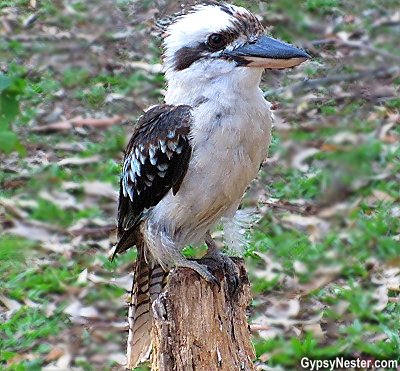
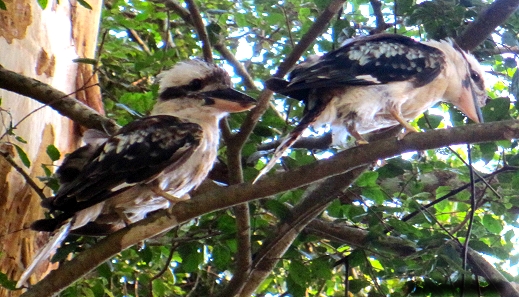
While we may have dodged the drop bears, we did see an abundance of wildlife, including an amazingly close encounter with kookaburras, and a much briefer view of a wallaby as he hopped hurriedly past us.
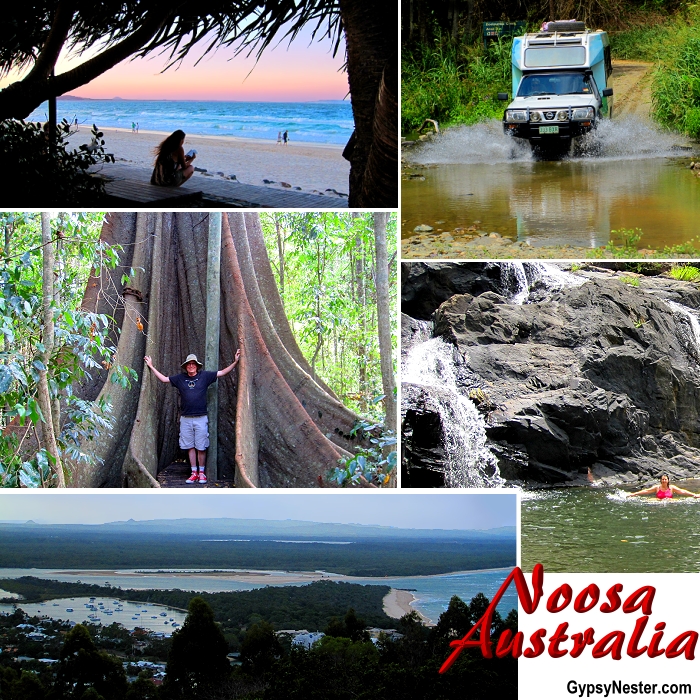
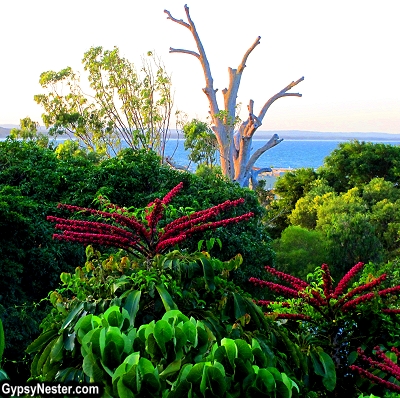
Periodically we got out to hike deeper into the jungle for a closer look at some of the amazing plant life surrounding us, including massive fig trees that rival the California Redwoods in size.
The trees changed drastically as we went up and down in altitude, with the figs dwelling down in the valleys with plentiful water, and eucalyptus thriving higher up.
Even in the forest shade it was getting hot, so Pete led us to an inviting stream.
After a cool, refreshing dip in the pool formed at the base of a waterfall, we were ready for a bite to eat.
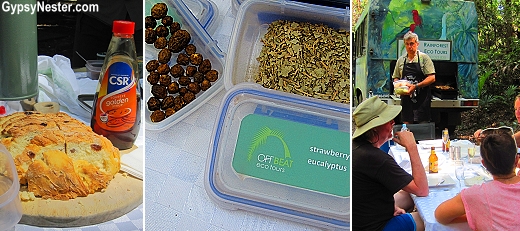
As deep in the woods as we were, Pete set up a big surprise for us that could only be described as the opposite of roughing it.
Stopping in the middle of nowhere, he climbed onto the roof of the truck and produced a table, complete with linen cloth, china, silver and glassware, and a grill.
In no time at all, we were enjoying a wilderness fine-dining experience of fresh baked bread and homemade spreads prepared with ingredients foraged from the jungle, roasted veggies, sausages, and drop bear.
Perhaps we shouldn’t question Pete’s straightforwardness, but our drop bear tasted suspiciously like chicken.
Noosa: Foodie Town Extraordinaire!
Once Pete dropped us off back in civilization it occurred to us that, based on his elegant backwoods presentation, and the attention to detail we found at the little beachside eateries, Berardo’s Bistro…
we had previously stopped into, food is very important to the inhabitants of Noosa. That became crystal clear later that night when we went for dinner at Locale.
As the name implies, the location is fabulous, with open sides facing the street and a garden, but that alone would not account for the popularity. Locale’s distinctive approach to Italian cuisine didn’t disappoint, with an intriguing selection of antipasti, primi piatti, secondi, and insalate.
We tried several interesting offerings, but more than anything left with the feeling that they really know their way around a gnocchi.
To Market, to Market
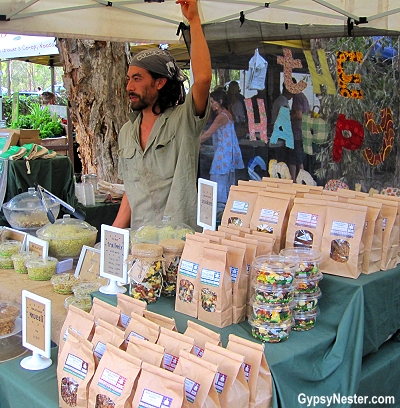
For a closer look at where all of this food was coming from, we stopped by the Sunday Noosa Farmer’s Market.
Browsing through the rows of booths there was an incredible abundance of fresh produce and every imaginable meat, including kangaroo.
Though we had massively mixed feelings about consuming roo; we, as we often do in our travels, found ourselves wishing we had a kitchen to stock.
But there was so much more than farm products on display. In some ways it was like a community breakfast, with booths brimming with all sorts of delectable goodies.
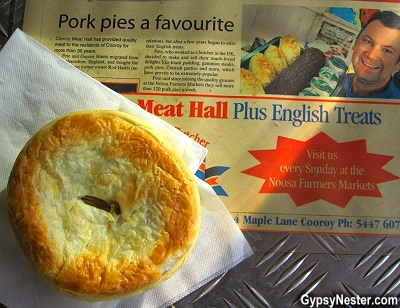
Baked goods were especially popular, with good ole Australian meat pies leading the way.
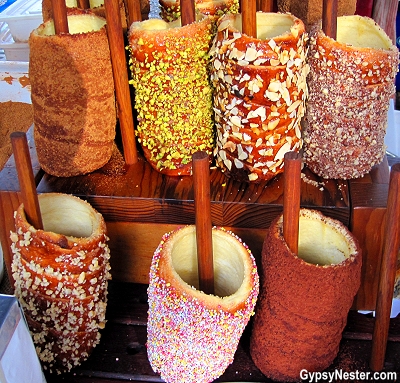
But almost anything out of an oven was available; we even found the fire-baked sweet rolls called Trdelník (chimney cakes) that we discovered in the Czech Republic.
There were also riots of flowers and plants, arts and crafts, herbal remedies for most any ailment, and a little music to keep things peppy.
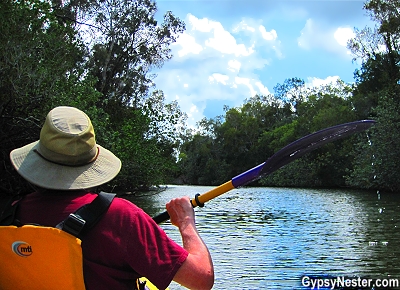
Unfortunately we didn’t have time to dally, we had a date with a kayak and yet another National Park, so we grabbed a meat pie and figs before making tracks.
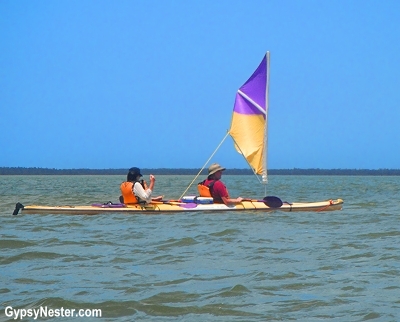
Paddling turned out to only be part of our propulsion.
We did a lot of tranquil drifting too, so as not to disturb the waterfowl, or ourselves. Then on our way back across the lake Vivienne rigged us up with a sail and we effortlessly skimmed across the water.



 <
<




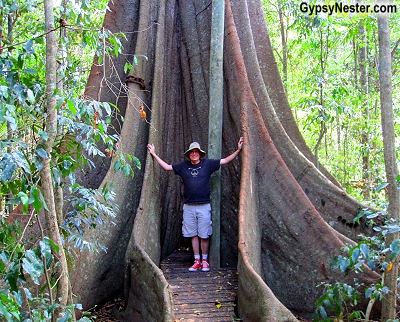 Periodically we got out to hike deeper into the jungle for a closer look at some of the amazing plant life surrounding us, including massive fig trees that rival the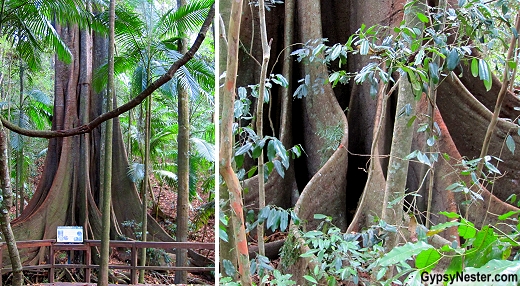
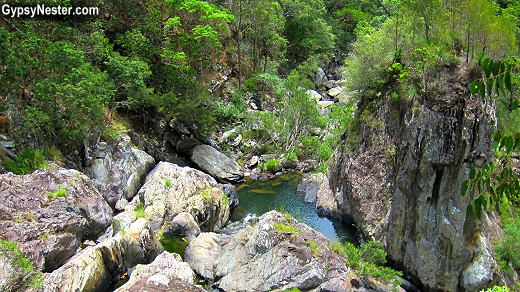
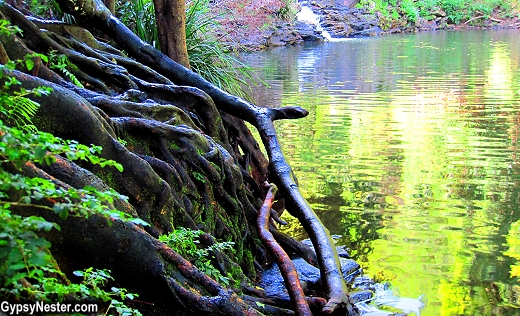 After a cool, refreshing dip in the pool formed at the base of a waterfall, we were ready for a bite to eat.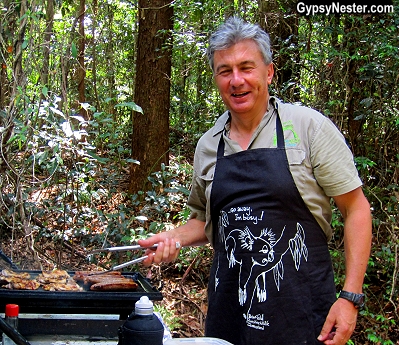
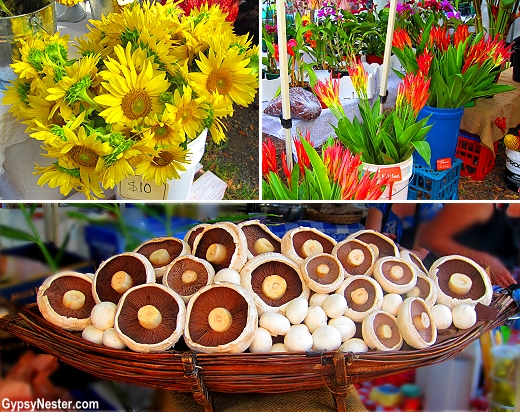
 There were also riots of flowers and plants, arts and crafts, herbal remedies for most any ailment, and a little music to keep things peppy.