
Thanks to Eurail for providing the 15-day rail pass that inspired this crazy adventure! Also HUGE thanks for the support from Visit Norway and Visit Oslo! As always, all opinions are our own.
Did you miss Dispatch One of this adventure? Click here to catch up!
Day Six: Peace and Chill in Oslo
Morning: On to Oslo – Norway, ba-by!
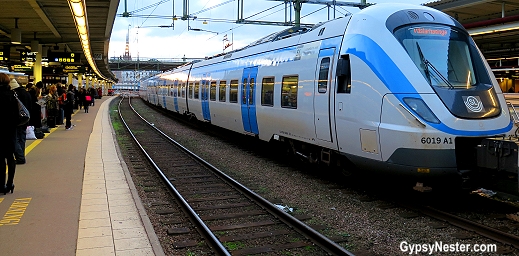
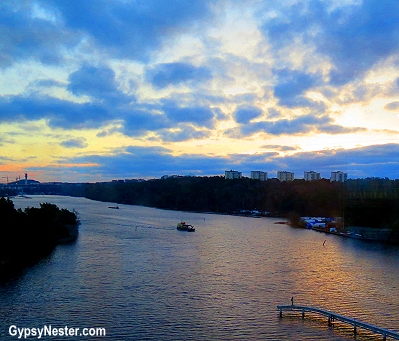
The brief appearance of the sun just as we are leaving Stockholm dissipates rapidly as we make our way toward the Norwegian border and Oslo.
We are remaining confidant that skies will clear when we go even farther north, so that some serious aurora borealis can shine down upon us.
View from our (train) window: Sweden–>Norway
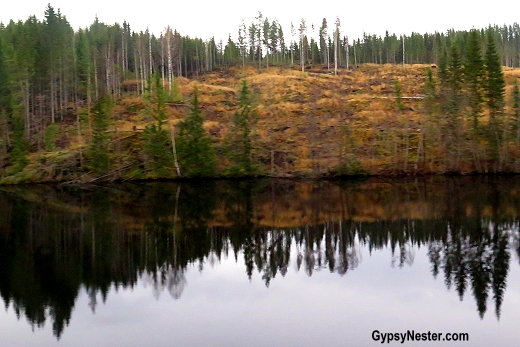
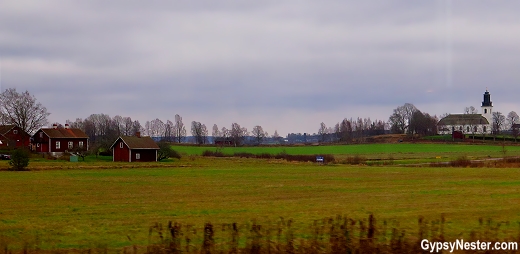
Afternoon: Give Peace a Chance
On arrival in Oslo we pick up Oslo Pass cards, which are good for all public transportation and entry into dozens of museums and attractions.
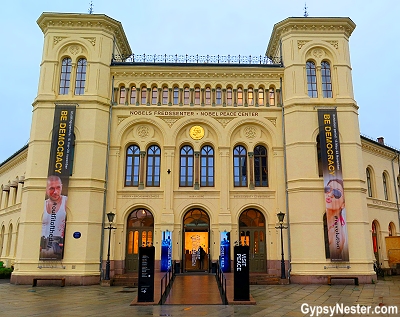
We put them to good use right away at the Nobel Peace Center, on the waterfront near the Sentralstasjon.
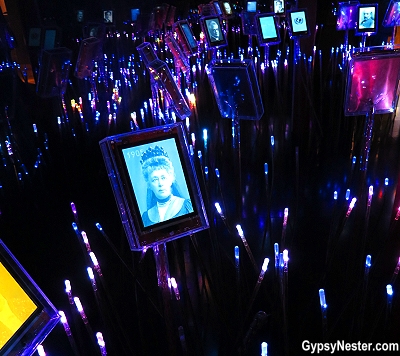
The building, which formerly served as the train station, houses a high-tech display of video screens with photos of all of the Nobel Peace Prize laureates and descriptions of their accomplishments.
It’s very cool; each display comes to life as we approach it, automatically scrolling through biographies, notable achievements, and other information about the Nobel Prize honorees.
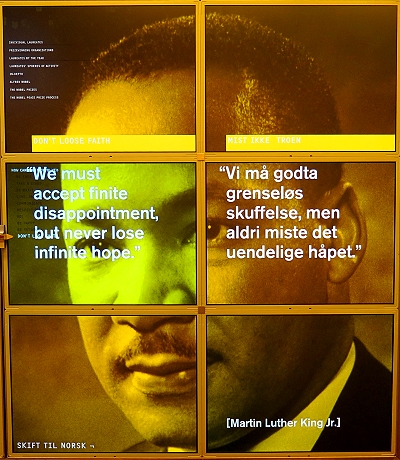
Another interesting display provides new information every year on the fiftieth anniversary of each recipient’s award.
Until the required passage of five decades, all of the details, who else was nominated or may have come close to winning, is kept strictly secret.
In 1964 Dr. Martin Luther King Jr. won the prize, so this year the files regarding his nomination were unsealed.
See more of our travels in Dr. King’s footsteps
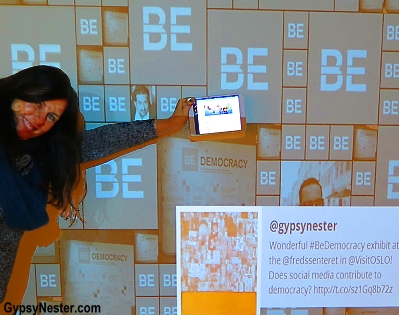
There is also a space for timely exhibitions, currently featuring a program called BeDemocracy.
This installation examines the role social media plays in spreading and maintaining democracy around the world. There are several interactive displays and a giant video board with tweets displayed in real time.
Of course we can’t resist sending one and watching it come up.
Evening: Just put us on ice!
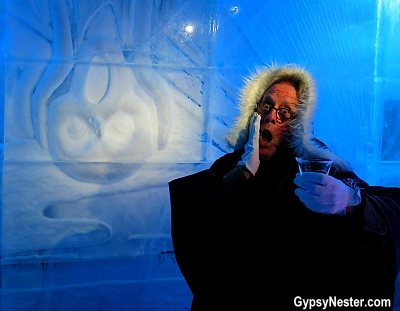
Before dinner we stop in at the Magic Ice Bar which, as the name implies, is a bar made of ice… entirely of ice.
Even the glasses that the drinks are served in are ice.
Needless to say, it is cold inside, but before we enter we are issued parkas.
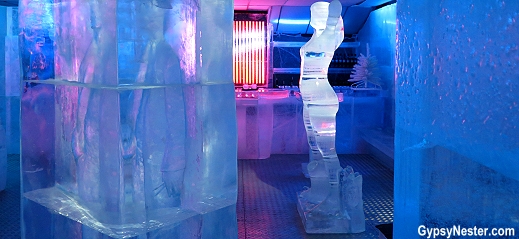
| <–10 Second video: Click the pic – and Veronica comes to life!
The coats not only help hold the cold at bay, but add to the Nordic explorer look that we are feeling at this point. In our brief stay (did we mention it was cold?) we get a little dose of what the famous ice hotel must be like. |
Several people have asked if we are going there, — and we would love to — but won’t be seeing it on this trip, so this is the next best thing.
See more of our adventures in Oslo!
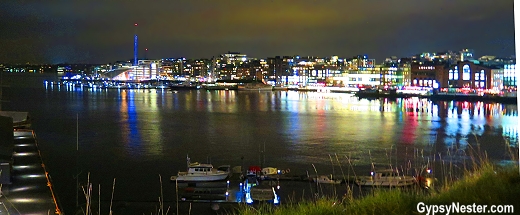
We decide to walk to dinner to warm up, yes, the nearly freezing temperature outside felt warm compared to the ice bar.
So we stroll down to the harbor and, after a bit of scouting through some ancient cobblestone streets, find the Festningen Restaurant tucked away beside the walls of the Akershus Castle.
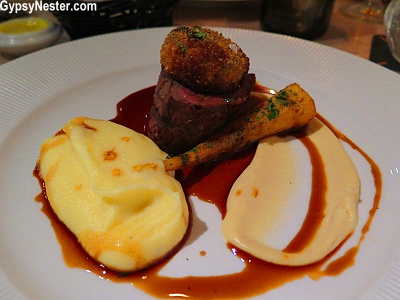
Festningen means fortress, but tonight it means great food in an unbeatable setting.
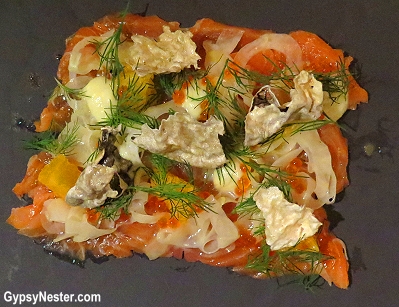
We stay with the chef’s menu for the evening, starting with a salmon appetizer.
The main course brings out the carnivore even in the self-proclaimed meat avoider Veronica. We can’t recall cutting into a better hunk of beef anytime recently, if ever. Lean but still very tender, and seared just right, it is outstanding.
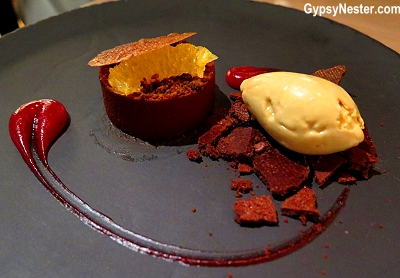
The dessert includes a variation on an old favorite, ice cream, but this is gingerbread flavored.
It is new to us, and delicious, but a little out of place with the chocolate and berry sauce next to it.
No worries, we just eat them separately and it’s like having two desserts. Viola! Our three course meal morphed into a four.
Day Seven: Leaping into the Abyss, Haunted Ships, and Stalking Munch
Morning: These guys are NUTS!
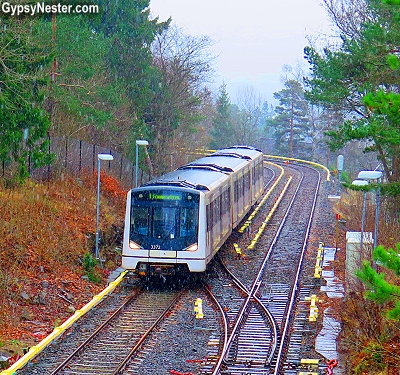
With a chill in the air, and a few flakes flying, we can almost feel the Norwegian’s thoughts turning to skiing.
So we head up to Holmenkollen for a look at the site of the 1952 Winter Olympics and the FIS Nordic World Ski Championships, the Holmenkollbakken ski jumping hill.
Oslo has grown to surround the hill so it is easy to get to; there is a metro stop just a few minutes’ hike away. Not much farther than the skiers go when flying off of the hill.
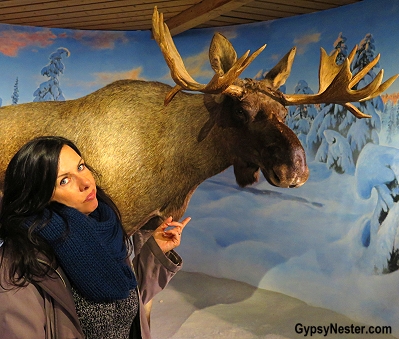
Sorry Norway, but Veronica STILL doesn’t believe in moose!
The sport of leaping off of a huge ramp while on skis was invented in Norway about a hundred and fifty years ago, and the Norwegians have dominated ever since.
So this is a fitting site for a ski museum, with a fascinating collection of old ski equipment, some of which looked familiar from back in the old days of David’s first set of skis.
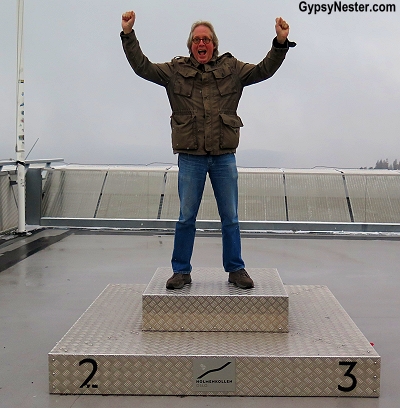
While we have been known to strap boards to our feet and slide down a snowy slope, never in a million years would we go anywhere near a hill like this.
Still, somewhere in the back of our minds we always wondered what it would be like.
Now’s our chance to find out!
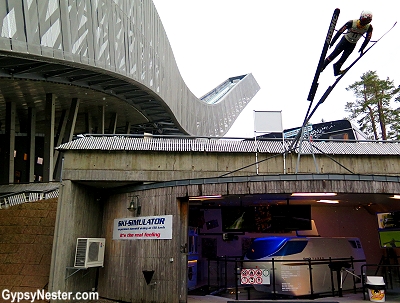
The complex includes a simulator that recreates the sensation of flying down the ski jump, no skis required.
We actually get to sit down, which is good because the thing rocks, rolls, tilts, and bumps enough that we feel like we got a pretty good idea of the real experience.
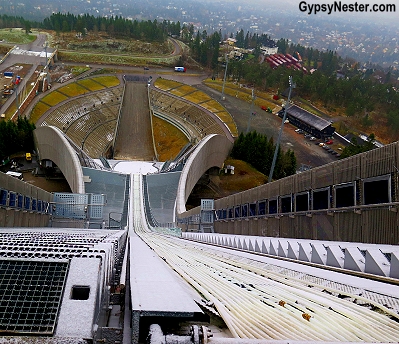
OK, now we are ready to go to the top and stare down this beast.
The view down the slope leaves no doubt in our minds that the simulation is the closest we will ever get to trying this.
The view of the city is fantastic though, especially since we know that we will be taking the elevator back down.
WATCH: Your GypsyNesters get schooled on how scary ski jumping is!
See more of our adventures in Oslo!
Afternoon: Fast-fjord-ward and some amazing Viking finds
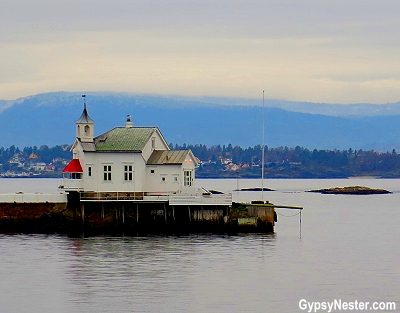
Back at the harbor we jump on the ferry to Nesoddtangen, which is also included on our Oslo Pass cards.
This gives us our first look at one of Norway’s famous fjords, the Oslofjorden.
This also gives us some great views of the city from the water.
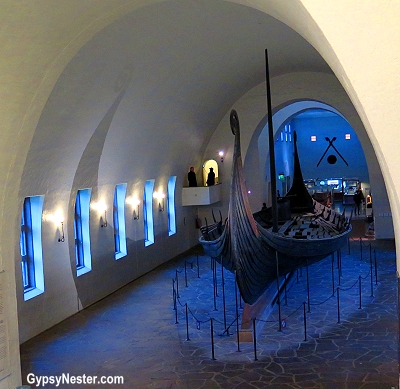
Just across the bay, we stop in at the Viking Ship Museum.
Three ships, the Oseberg, Gokstad, and Tune are on display here after being discovered as burial sites in the late eighteen and early nineteen hundreds.
The Oseberg dominates the main hall and is the best preserved of the three, in fact it is widely considered one of the finest finds to have survived the Viking Age.
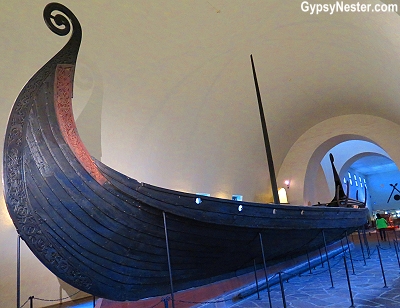
The ships were carefully excavated, and brought to this museum that was made specifically for them.
The Oseberg was first to be moved in 1926, then new wings were added as the other ships were brought in. The project was completed in 1957.
Important Vikings were buried in these ships filled with items to help them make the journey to the next world.
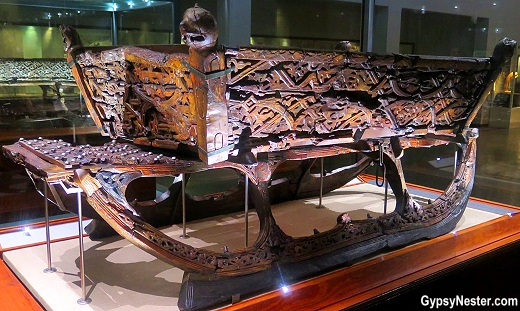
This custom gives us an amazing look into Nordic life from over one thousand years ago. Carts, sleds, weapons, furniture, clothes, and many more items, including human remains, were found and are now on display.
Follow us into the Viking Ship Museum…
Late afternoon: We don’t know art, but we know we like Munch
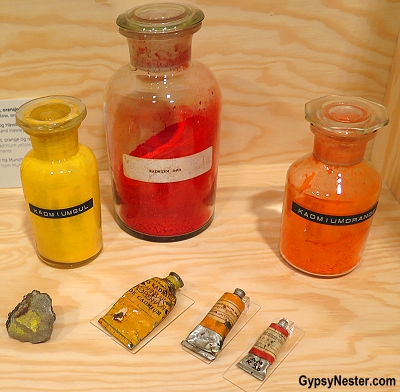
Munch’s paints, dyes, and palettes are also on display
Just a few stops away on the metro, (we’ve learned to look for the T signs) is the Munch Museum.
Edvard Munch, best known for The Scream, is Norway’s most renowned artist and bequeathed much of his work to start the museum after his death.
By adding to the collection, the museum now has over half of his paintings and copies of all of his prints.
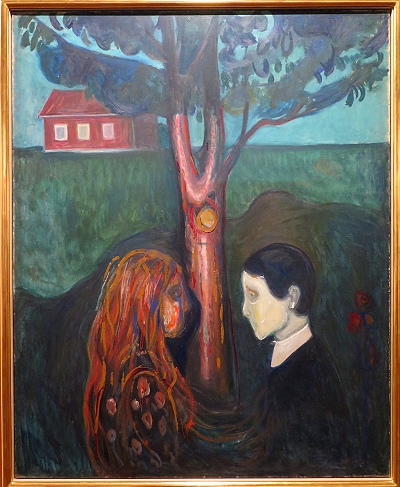
After spending a couple of hours with his work, we both agree that Edvard is our new favorite artist.
We can see his influence in a wide variety of mediums — obviously other artists that followed him — but also in pop culture such as cartoons, advertisements, television shows, and movies like Edward Scissorhands and the Scream series of horror films.
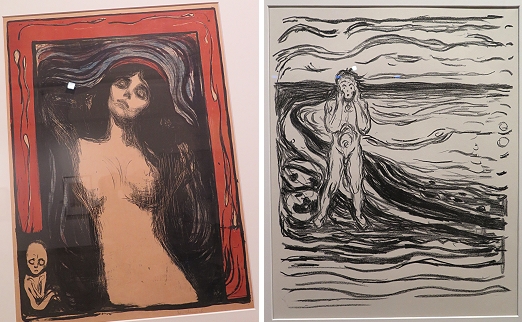
Munch was known for creating several renditions of many of his works, for instance, this Scream is one of four versions he created. In order to do a comparison, we head over to the National Gallery for a look at the first one he painted.
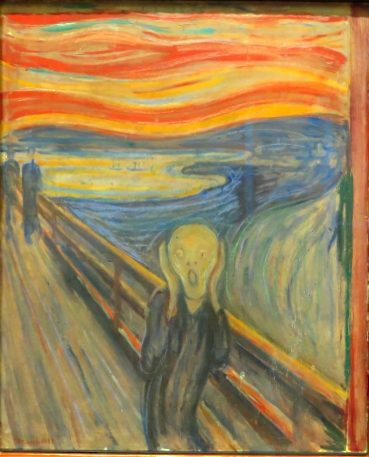
The Nasjonalgalleriet is part of the National Museum of Art, Architecture and Design, and has a remarkable collection, much of it by Norwegian artists, but it also includes selections from Renoir, Monet, Cézanne, and Picasso.
No offense guys, but we are here to see the Munch, specifically his original Scream from 1893.
This first effort is a bit brighter colored and more vibrant than the later 1910 version we saw at the Munch Museum and, being the distinguished art critics that we are, we deem it the better of the two.
No doubt both museums will be incredibly interested and influenced by our spur-of-the-moment decision.
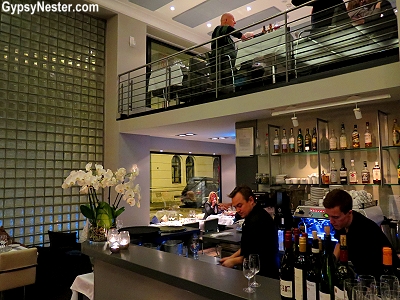
Dinner: Fun with locals; the best way to learn about local food
Maybe we should move on to a subject we know a little more about, eating.
For a taste of the sea we head over to the uber-sleek Havsmak, which means, well, taste of the sea.
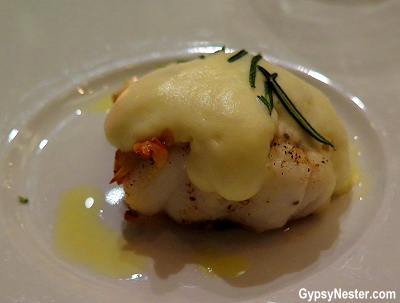
Our extremely helpful and friendly server suggests the chef’s menu of the night which begins with brosme, a fish much like cod, prepared with foam of potato, deep fried rosemary, and almonds.
We are off to a good start.
As we finish our brosme, the festive group next to us strikes up a conversation. They inform us that they have ordered a special holiday meal, consisting of favorites of the Jul (Christmas) season, but we had the sneaking suspicion they were wanting to see just how adventurous we might be when it comes to trying new things.
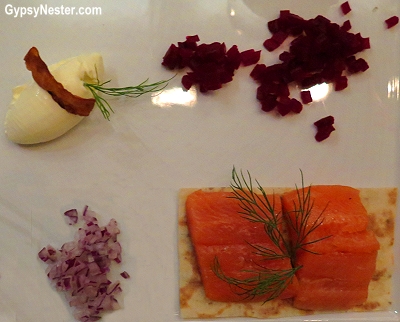
Little do they know we’ll try just about anything and are more than happy to share a special meal with new friends. Bring it on!
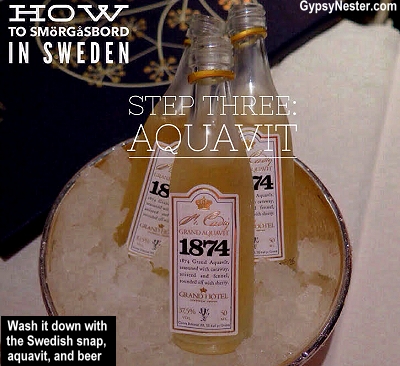
After generously buying us a round of aquavit, they are ready to test us with some rakfisk, which they describe as “rotted fish.”
It is trout, salted and fermented for weeks or even months, then eaten on potato bread with onion, beets, and sour cream. We give it a try and don’t freak out, which forces our new friends to up the ante.
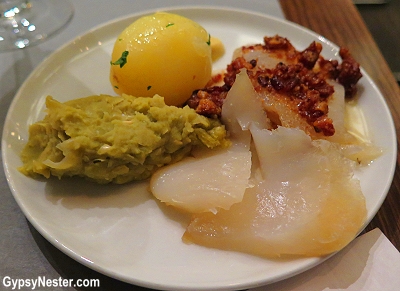
This time we get to sample a bizarre form of reconstituted cod, lutefisk.
The description, which granted may have been less than clear due to language barriers, involves dried cod that has been rehydrated using what our friends refer to as caustic soda.
By all means, let’s give it a go!
When consumed with all of the accoutrements it goes down right nicely, but the texture leaves a lot to be desired. It has a jelly-like consistency reminiscent of the cod tongues we had in Newfoundland.
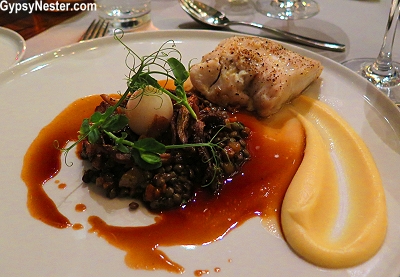
We figure it’s time to get back to our real meal — if only to make our server feel better, he’s lost all control of the situation (actually he’s rolling with the flow quite nicely and jumping in on the fun) — which seems much safer than our neighbors’ holiday specialities.
We turn to our main course of hake, yet member of the cod family, along with a lentil ragu with mushrooms and a quail egg. This particular fish is properly cooked, as opposed to fermented or reconstituted, and we consider that a huge step in the right direction.
See more of our adventures in Oslo!
Day Eight: Norway in a Nutshell
Morning: If we didn’t think it was winter yet…
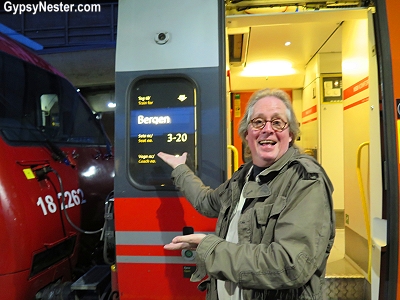
You’d think that David the Train Nut would be slowing down
by now – nope. We’re wearing our Eurail Passes out!
Today we set out to experience Norway in a Nutshell on a jaunt from Oslo to Bergen.
This is one of the most popular day trips in the country because, as the name implies, it includes a little bit of everything that makes Norway so cool.
Of course, trains have been front and center on this trip — and we will be riding some of the most scenic rails on earth today — but we are also going boating in a fjord.
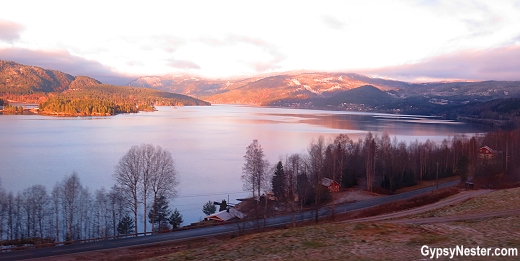
We pull out of Oslo before daylight, which this time of year (this far north) is not really all that early. By nine o’clock or so, we are getting sun for the first time in several days. We are squinting like mole people.
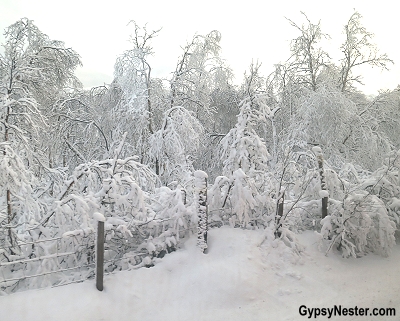
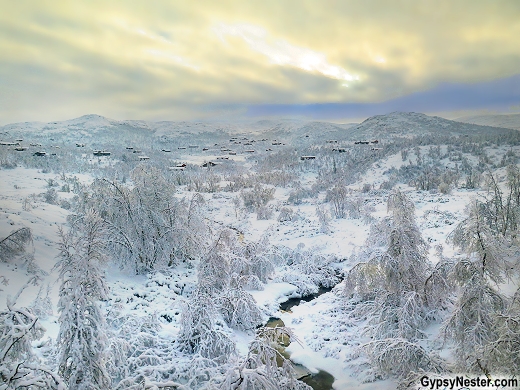
As we climb up the four-thousand-feet-(plus)-high Hardangervidda Plateau, the scenery and weather begin to change.
This is the Norway of Alpine winter sports, and winter is well underway up here.
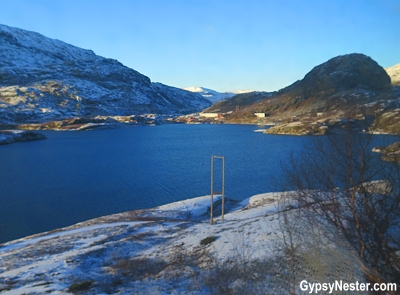
As we pull into Myrdal where we change trains to the Flåm Line things have changed again and blue sky prevails.
We are certainly seeing Norway’s weather in a nutshell!
See more about Norway in a Nutshell!
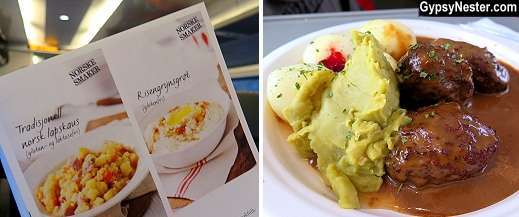
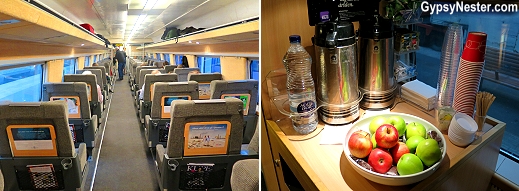
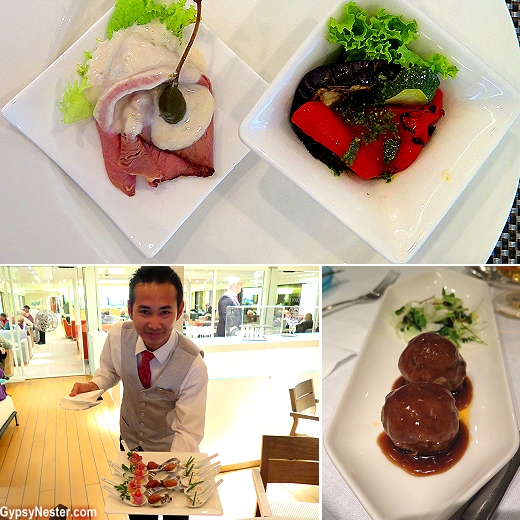
Train food? Yes please! Seasonal favorites are served aboard
Afternoon: Falling into Flåm (BTW, å is now officially Veronica’s favorite letter!)
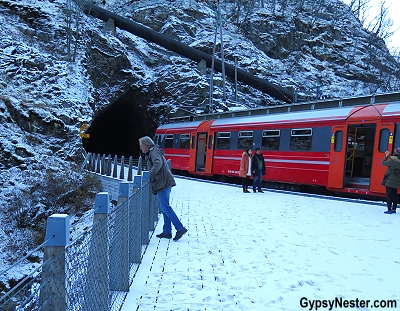
The railway down to the little town of Flåm is a scenic and engineering marvel.
The twenty kilometers are some of the steepest tracks in the world, dropping nearly three thousand feet through twenty tunnels.
We start down the canyon along five hairpin, switchback curves that take us to the river which we follow down to the sea.
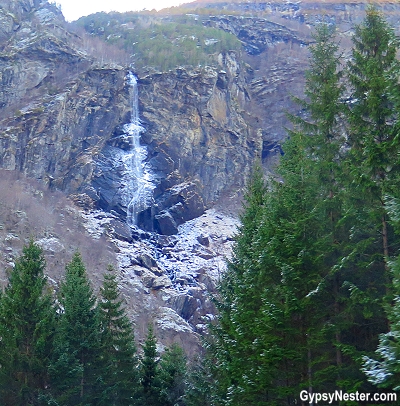
Along the way we pass countless waterfalls streaming over the edges of the valley walls.
The glaciers that carved this landscape left behind nearly vertical cliffs on both sides, perfect for the streams that flow over the edge to spill into misty veils of falling water.
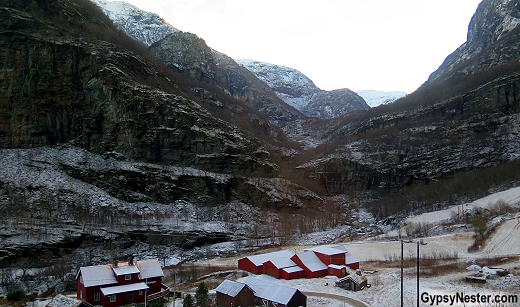
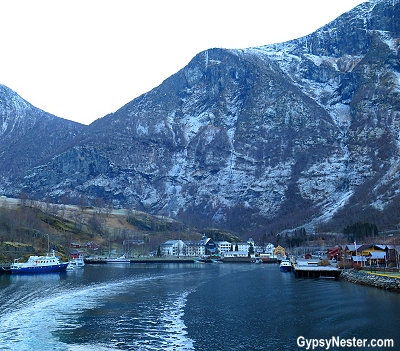
The town of Flåm features a small museum that chronicles the building of the railroad, but mostly we are excited to get on the ferry that will take us to Gudvangen via two of Norway’s most picturesque fjords.
So we eagerly climb aboard the Fjord1 ferry and bundle up ’cause we’re riding outside on the top deck all the way, baby!
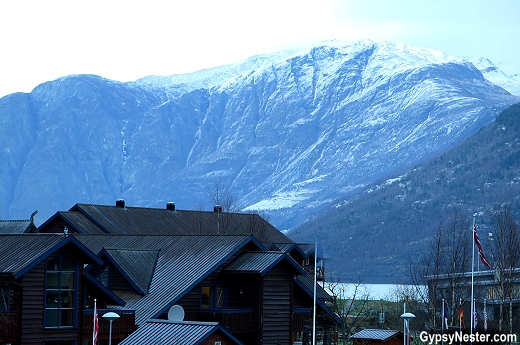
Late Afternoon/Evening: You can’t see THIS in the summertime!
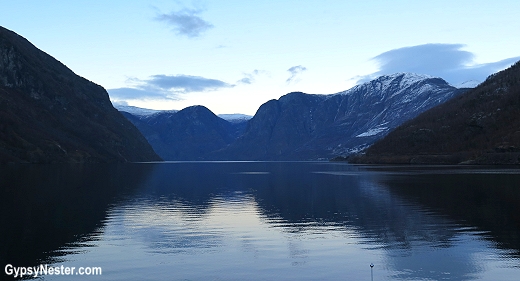
Our cruise begins in Aurlandsfjord, which looks like a classic fjord, because it is. We sail along beneath five thousand feet of cliffs and mountains, with our jaws dropped and eyes wide.
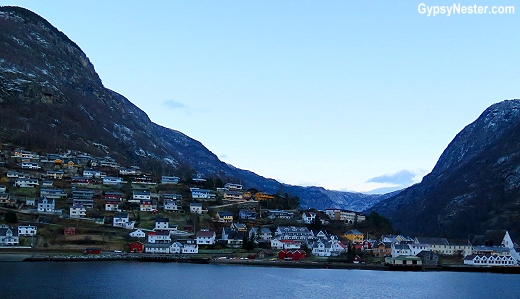
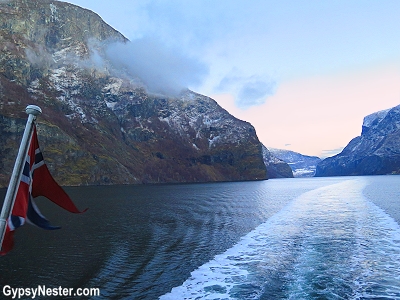
About an hour into our journey we turn into Nærøyfjorden.
It takes us a second, but we sound out the name and figure out that this is so named because it gets crazy narrow, only a few hundred meters wide in some spots.
Both fjords are branches of the Sognefjord, which is the largest fjord in Norway, and the whole area has been named the West Norwegian Fjords UNESCO world heritage site.

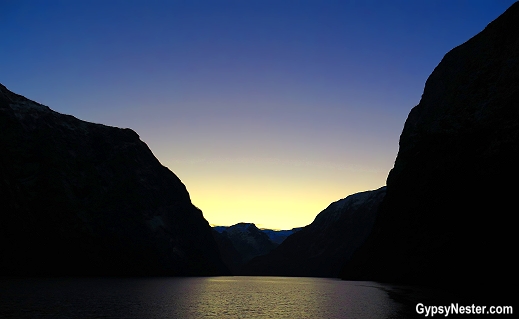
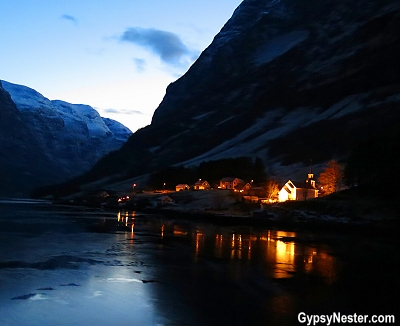
The remainder of our journey, along the famed Bergen Railway, unfortunately is happening after dark, so we’ll leave you with another “fjord after dark” pic.
But luckily we will get to see this scenic stretch of track in a couple of days when we make our way back across the country and then up above the Arctic Circle.
The real crazy is yet to come. But first sleep… it’s been a BIG day. See more pics of this incredible day!
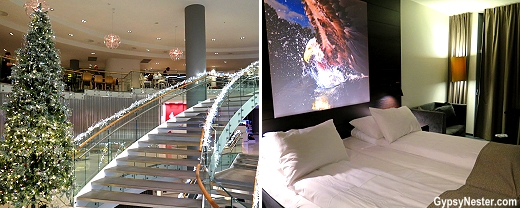
All dressed up for the holidays! The sleek and trendy Scandic Ørnen – our home for the night!
Day Nine: Bergen – Norway’s Second City
Morning: There’s Norway, and then there’s Bergen (or so the locals tell us)
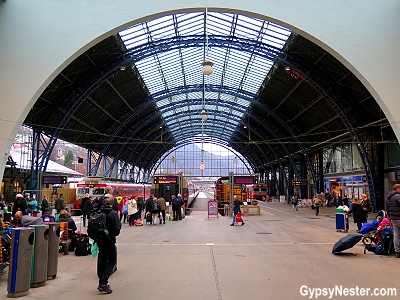
Our Norway in a Nutshell tour ends in Bergen, the country’s second largest city, so we spend a day exploring before climbing back aboard the train for the long journey way up north.
<–Bergen’s train station
Bergen‘s thousand-year history of the city has always had to do with trading on the sea, so it only seems right to begin at the harbor.
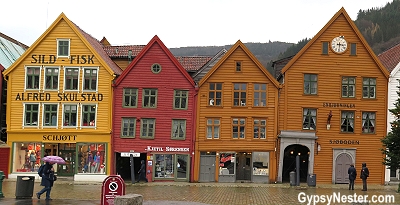
Bergen’s port is the busiest in Norway, but much of its history was as a part of Denmark.
In fact, Norway has only been fully independent since 1905, before that the Scandinavian kingdoms formed alliances, and sometimes fought, while the seat of power was either Denmark or Sweden.
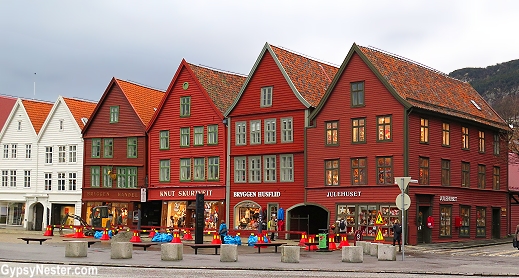
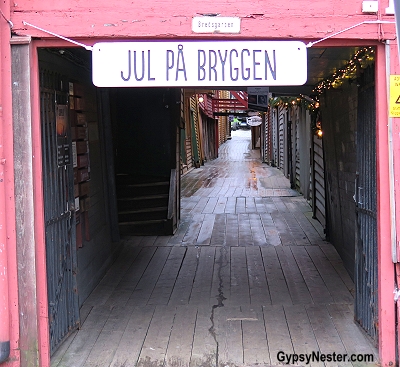
In the case of Bergen, much of its power came from Germany and the Hanseatic League that we first learned about in Lübeck.
These traders formed a city within a city along the waterfront that became known as Bryggen, meaning wharf, and has been preserved as a UNESCO World Cultural Heritage site.
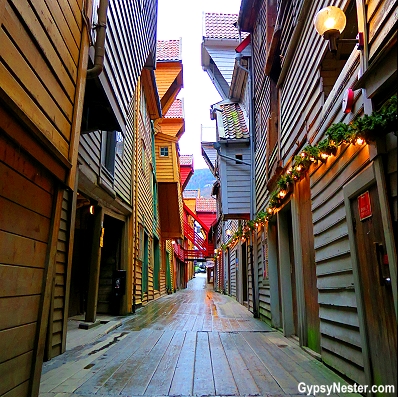
We wind our way through the maze of tiny alleys and walkways among the storehouses, trying to get a feel for what it must have been like seven hundred years ago with fish and humans piled in here on top of each other.
It’s hard to imagine, but thousands of pounds of fish were processed and shipped south from these tiny buildings every season.
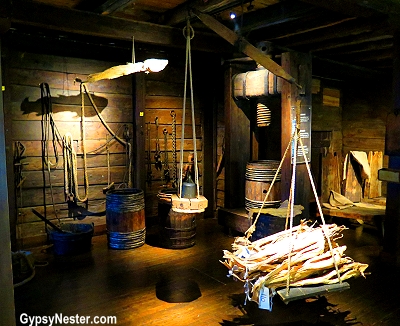
To get a look at what the inside of one of these structures we pop into the Hanseatic Museum.
The building has a history to itself, built in 1702 after one of the many fires that have ravaged Bergen through the years, it became a museum in 1872.
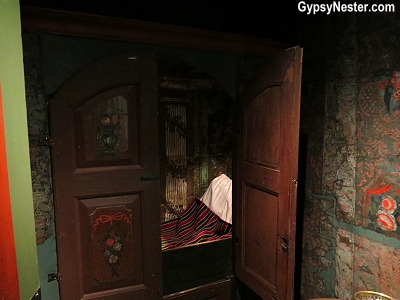
The ground floor still has dried fish hanging from the rafters, but we have no doubt that the slight aroma is nothing like reeking chaos that was going on back in the heyday of Bryggen.
Boiling out cod liver oil and pressing dried cod into barrels no doubt kicked up quite a stink.
Climbing up the narrow, dark, steep staircase we reach the second floor, which has bunks for the workers, offices, and trading space. Up one more flight are the nicer quarters. The bosses stayed up here, as far from the mess below as possible.
See more about beautiful Bergen!
Afternoon: Protecting the harbor and the view from the top
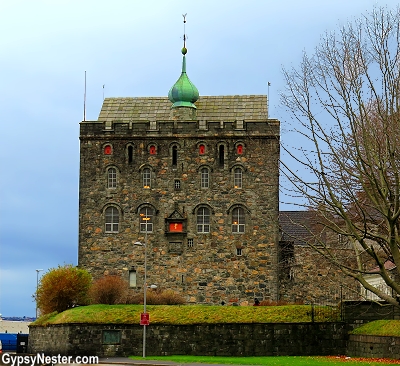
Past the rows of wooden warehouses, at the entrance to the port, we find the Bergenhus Fortress.
This area was the royal residence dating back nearly a thousand years, but the surviving buildings are from the middle of the thirteenth century.
The Håkonshallen, named for King Haakon, and the Rosenkrantz tower are still standing after surviving severe damage during World War II.
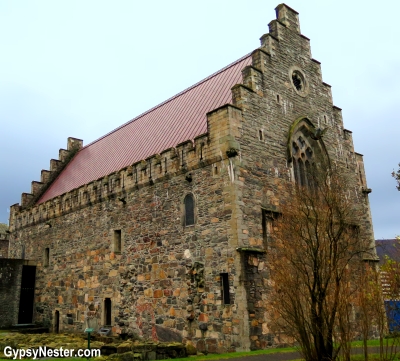
Norway was occupied by Germany during the war, and Bergen became an important submarine base for the Nazis, but the damage was caused by an accident, not bombing.
On April 20th, 1944, a Dutch ship loaded with explosives caught fire in the harbor and the resulting blast damaged or destroyed hundreds of buildings. Sabotage by the Norwegian resistance forces was suspected, especially since it took place on Hitler’s birthday, but it was only a coincidence.
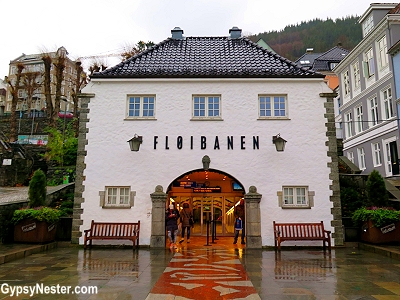
We only have to walk a few blocks from the water to get to one of Norway’s most popular attractions, the Fløibanen, using our Bergen City Card to gain admission.
This funicular railway goes a thousand feet up the side of Fløyen, one of the seven mountains that surround the city of Bergen.
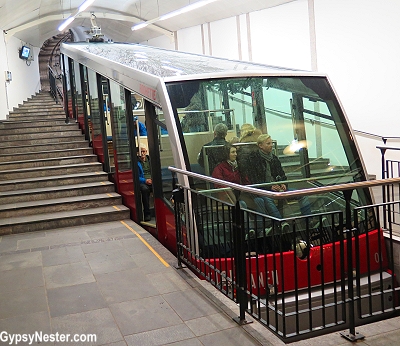
The basic idea of a funicular is something like an elevator.
Two cars are attached to each other by a cable so that they counterbalance each other. As one goes up, the other comes down.
All we know is that it worked just fine to give us an amazing panoramic view of the city, fjords, and surrounding mountains.
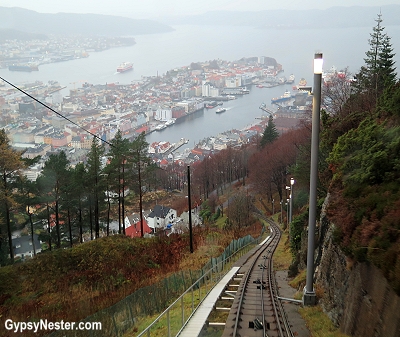
Even with the damp conditions we can see for miles.
Actually, considering that Bergen gets about seven feet of rain each year, we have to count ourselves as lucky that it’s not pouring on us.
Especially since fall is the rainiest time of year.
See more about beautiful Bergen!
Evening: Awww… quit yer crying
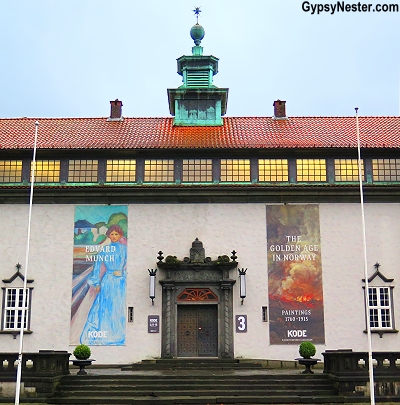
Bergen has also been known as a cultural center for centuries.
Several collectors have established museums over the years, including one of the largest collections of Munch paintings anywhere outside of Oslo, but the city is better known for its contribution to music.
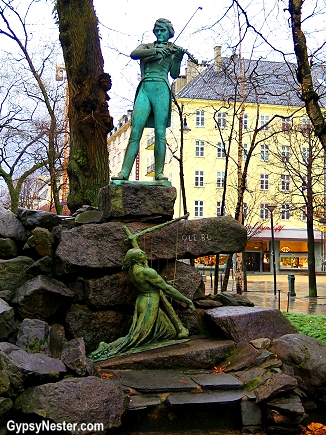
In the main shopping area we come upon a statue of a man playing violin. Being curious, we inquire and discover he is Ole Bornemann Bull.
While something less than a household name these days, he was huge back in his day, the mid 1800s. As a worldwide star he played everywhere, including the good ole U.S. of A.
He liked the states so much he decided to make a New Norway in northern Pennsylvania, so he built a castle and founded cities but his plan went bust.
The land wasn’t very good for farming and Ole Bull returned to Bergen while most of his citizens moved on to Minnesota and the Dakotas. His legacy lives on though, since the one-time settlement has become Ole Bull State Park.
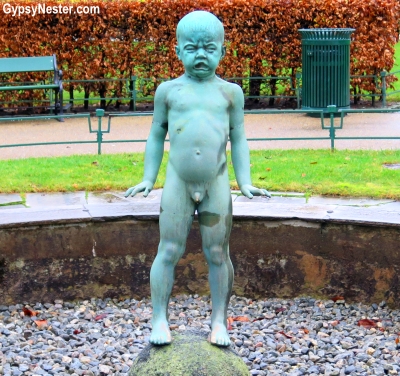
Nearby we encounter another statue, an upset-looking, naked boy crying in a pond.
This wonderfully expressive guy is called Grinegutten, crying boy in Norwegian, and we strongly feel that he has every right to be cranky — he’s been left stranded standing in his birthday suit in the middle of a fountain.
The audacity of it all!
We also strongly feel that Norway’s second city has left us feeling a whole lot happier than this little guy.
See more about beautiful Bergen!
Day Ten and Eleven: The Epic Journey North – C’mon Northern Lights!
Morning: The most important meal of the day and trains, trains, trains
Today we embark on the most epic portion of our journey, crossing the Arctic Circle.
But first we have about a thousand miles of rails to ride.
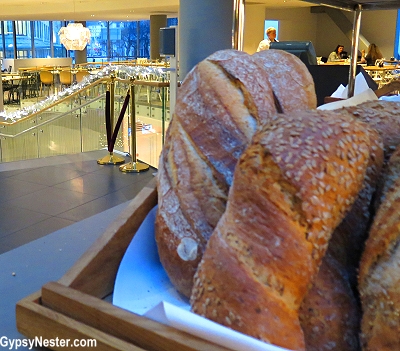
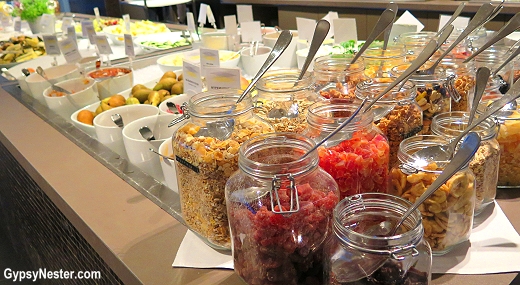
So we partake in the Scandic Ørnen‘s legendary breakfast, because riding on trains is hard work – and we don’t want to lose our momentum.
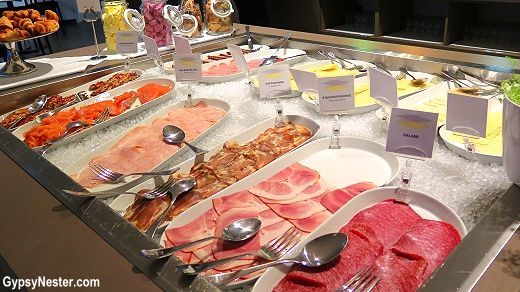
There are also made-to-order eggs, an omelet station, AND hot meat and potato dishes, but we can’t make it that far!
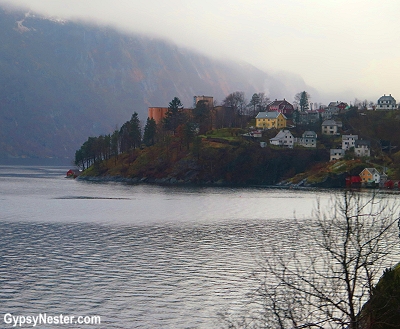
Boarding the first of the three trains that will take us there we learn that the tracks are closed up ahead so crews can service the tracks.
Uh-oh, we have connections to make, but the Norwegian Rail Service solves the problem without missing a beat.
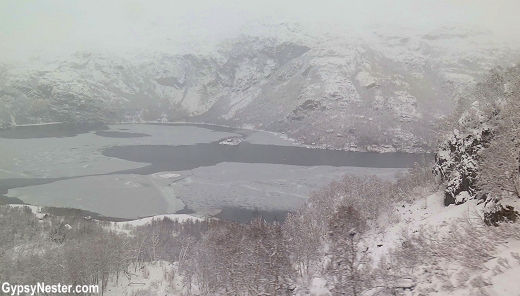
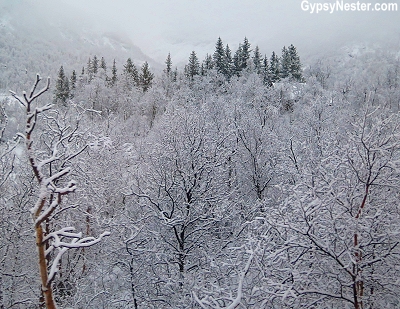
There are buses waiting to take us past the problem area and we pull into Oslo only a few minutes after our scheduled time.
Not only do we have plenty of time for our connection, but we get to see all of the spectacular scenery along the Bergen Line that we missed in the dark at the end of Norway in a Nutshell.
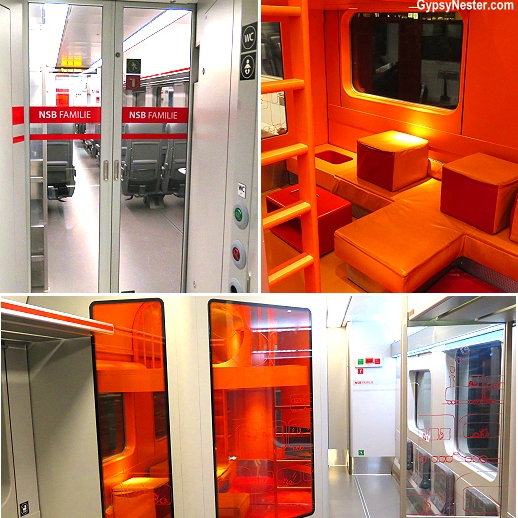
We would have found the family cars in Norway very handy back when we had small children – the little padded playroom is an excellent idea!
Later (we admit we’re losing our grip of time a bit): Into the Arctic
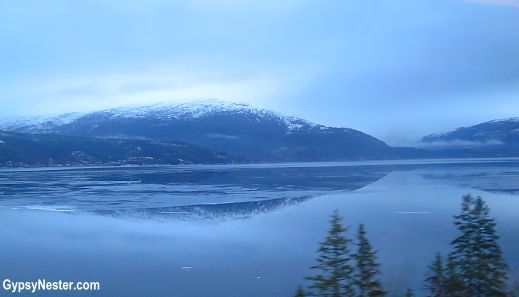
Our night train from Oslo takes us to Trondheim, where we change trains in the morning for the trip into the Arctic.
Between an overnight on the train and the sun barely making an appearance, things are starting to feel seriously weird.
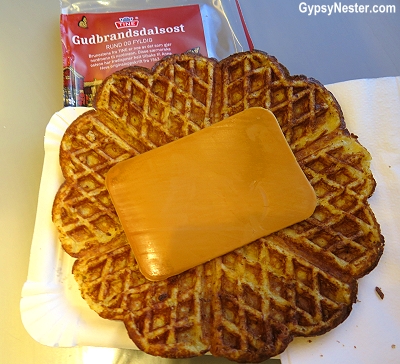
<– Breakfast: Yummy waffle with sweet goat cheese!
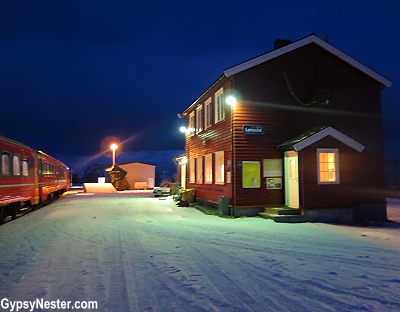
The sky is a really odd, glowy, dark blue when we jump off (and we do mean jump off) of the train at about two in the afternoon at Lønsdal.
This is not a regular stop on the line, it is what’s known as a flag stop. The train only stops if someone wants to get on or off, and it doesn’t waste any time.
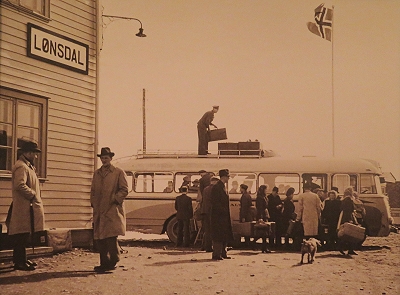
There is no town here, just a hotel, two National Parks, more natural beauty than you’ll ever know what to do with, and the Arctic Circle Centre.
The station and hotel came about because in the 1950s this was as far north as the railroad ran. Buses shuttled people back and forth to all points beyond.
The hotel’s popularity waned when the Nordlandsbanen line continued north, but now it is back, catering to hikers, cross-country skiers, families, and anyone who wants to soak in the quiet of a Nordic arctic lodge.
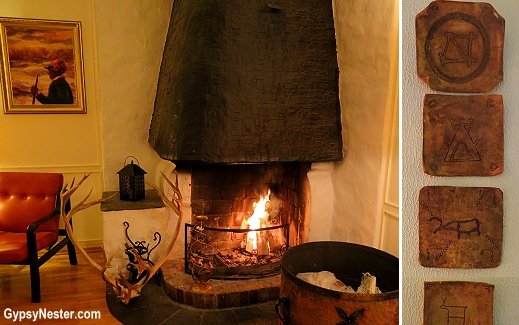
We’ve staked out our base camp for Northern Lights hunting tonight – dispatches coming from here for the rest of the day
Later (honestly, it doesn’t really matter at this point!): Up the mountain into some real weather
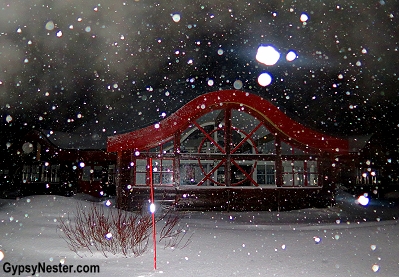
Arctic Circle Centre
Sissel, the innkeeper of the Saltfjellet Hotel Polarsirkelen, picks us up in her truck and we blaze a path through the snow to stand upon the line that marks the arctic.
As we drive up the mountain toward the Arctic Circle Centre, the snow flies, the wind howls and we definitely feel like we’re pretty darn close to the pole.
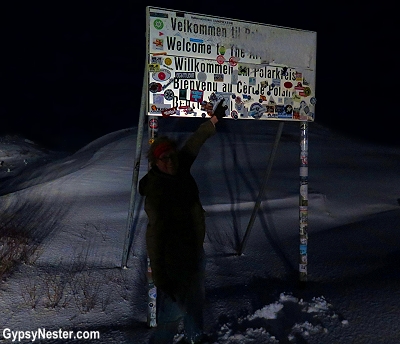
The visitor center is open May to September, so we have to improvise.
We wander around the frigid dark, listen to the odd-sounding, glass-crunchy snow beneath our feet, and look at the park signs by the light of our camera’s flash.
We are soon forced by the cold to shift into four-wheel drive to avoid spending the night in a drift – our non-arctic butts wouldn’t survive an hour in one.
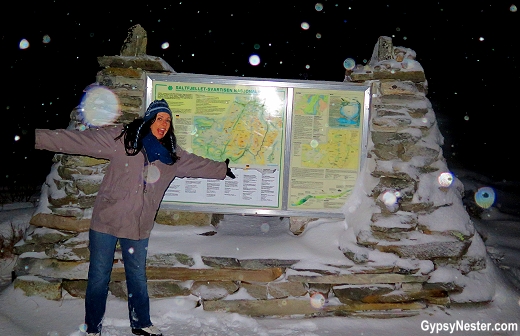
Later: Reindeer!
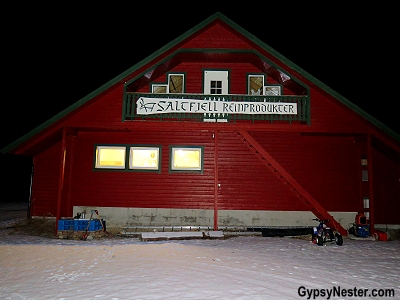
Back on the main road, we stop in at a Sami reindeer herder’s house.
The Sami people have lived in the northern area of Scandinavia for thousands of years, fishing, trapping, and herding reindeer.
Most of the reindeer roam free, but we have high hopes of seeing one of the famous sleigh pullers.
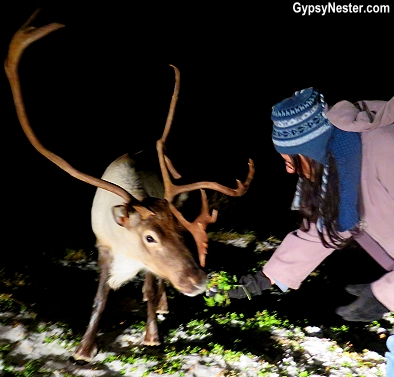
A buck happens to be hanging out nearby, and he is relatively tame, so we attempt to move in close without scaring him off.
We try to entice him by pulling some grass out of the snow and he sniffs around, but is a little skittish about getting too near.
After a bit of patience and sweet-talk, Veronica soon has him eating out of her hand. Normally, she gets all squeally when she is in the presence of animals, this time she was careful to keep the squeal inside.
Dinner: Reindeer (in Sissel’s defense, she did ask if we preferred something else)
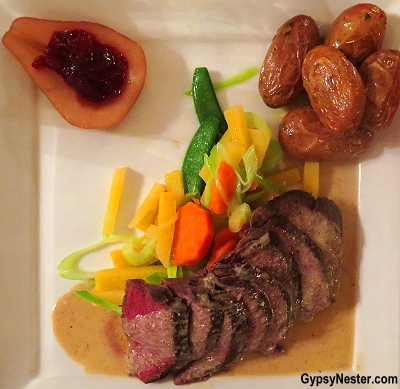
Raising and eating reindeer is part of the culture here and, though it seems a bit wrong to consume one after meeting one, we don”t sway from our food-is-a-great-way-to-learn-about-a-place philosophy.
Warm, hearty and not as gamey as we expected, we eat each tender medallion with that sense of thankfulness that comes from knowing where one’s food comes from.
Night: On the look out for the lights
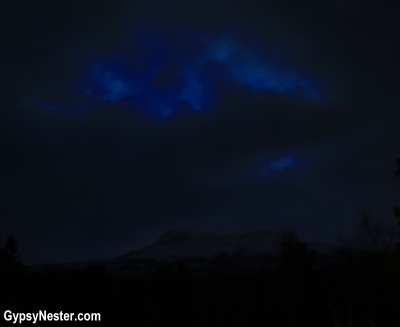
We’re splitting up the night watch for Northern Lights – waking up and heading outside at intervals.
No luck so far… and just one more night to find them…
<– Interesting cloud and light action going on here but, alas, it’s to the south
Day Twelve: To Bodø and Beyond!
Morning: If we’re not north enough…
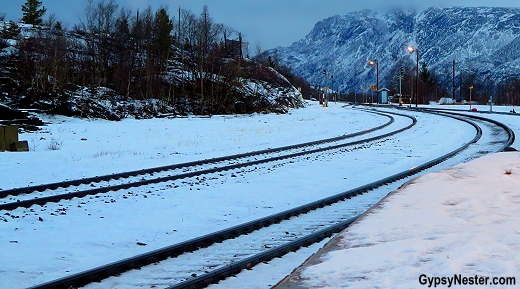
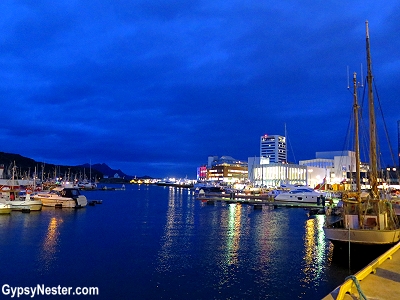
The termination, and by far northernmost point, of our journey is Bodø.
A city whose name we struggled to pronounce until we got here and heard the residents say it. It sounds a lot like “Buddha,” yet somehow we can tell that they are not referring to any Eastern mystics.
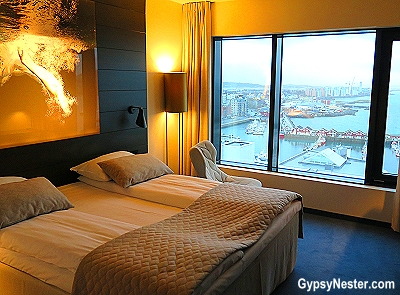
From the train we can see our hotel, it’s hard to miss since the Scandic Havet is the tallest building in town.
While walking to it, David mentions how great it would be if we were high up and facing the ocean.
He must be the mystic, because that’s right where our room is.
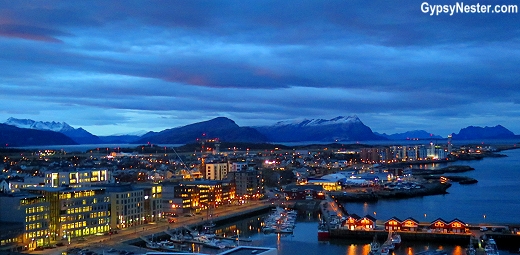
But we only have time for a quick gawk out the window, and to drop our bags, because we have so much to see…
Late Morning: Pulling out all the stops
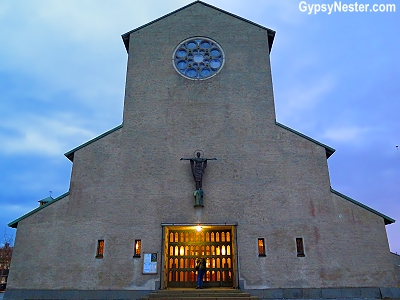
Our first stop is another of the city’s landmark buildings, the Bodø Kathedral.
The Cathedral, like almost everything in Bodø, was built after World War II because almost all of the town was destroyed by a German bombing raid in 1940.
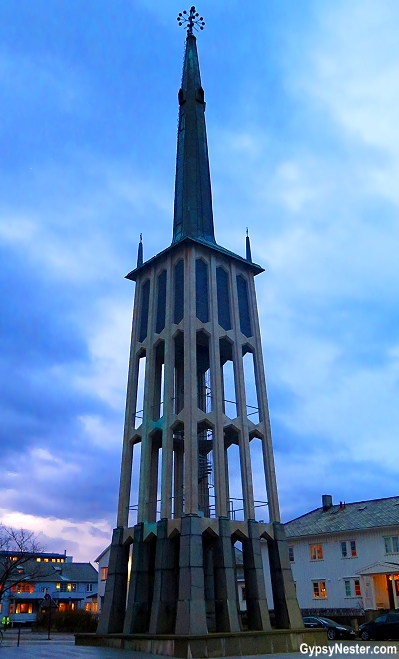
The church has a classic style, with an eye-catching free standing bell tower, but the most fascinating part of our tour inside is a demonstration of the remarkable pipe organ.
Organist Brian Hepworth takes us up to the loft and explains the inner workings of this incredible instrument, showing us the different tones and qualities of the various types of the thousands of pipes.
For the icing on the cake he gives us a bit of a private concert.
We can actually feel the movement underneath us when he pulls out the various stops that control which pipes are sounding.
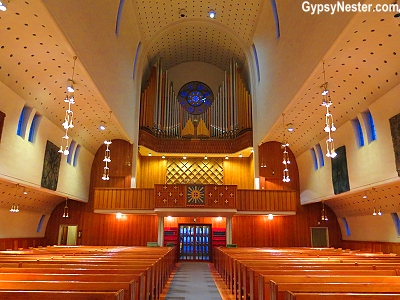
Then he pulls out all of the stops (yes, this is where that old saying comes from) and we really feel the power.
We know the word is wildly overused, but awesome is about the only way to describe it.
But we have to run because we are meeting the bus out to Saltstraumen in a few minutes…
Afternoon: Getting current
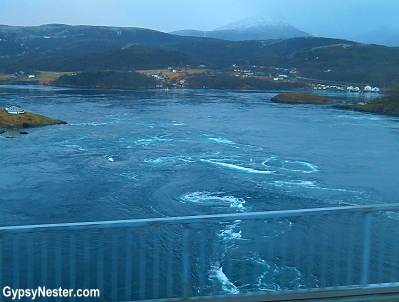
Saltstraumen is a narrow channel between two fjords where the world’s strongest tidal flow is found.
This bottleneck forces the tide waters to rush through, forming incredible, massive whirlpools and eddies as the levels desperately seek to equalize.
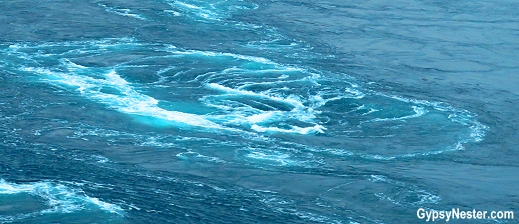
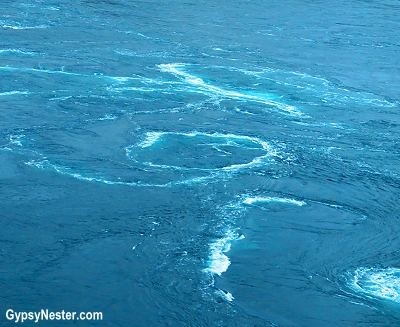
As we drive over the bridge that spans the straights we get an aerial view of the swirling designs that the wild currents form in the water.
For a closer look, the bus stops under the bridge and we walk right to the water’s edge.
WATCH: You’ve got to see the video to get the full idea of the crazy speed!
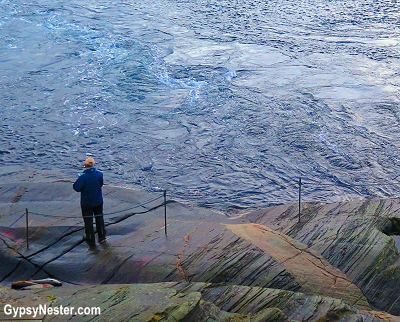
Clinging to the rocky shore we can really get a feel for the rushing water as the tide rises.
When the tide turns and heads back out to sea there will be a brief time that the straights are calm, but soon after the process reverses itself and the water rushes just as fast the other way.
And the fishing is fine…
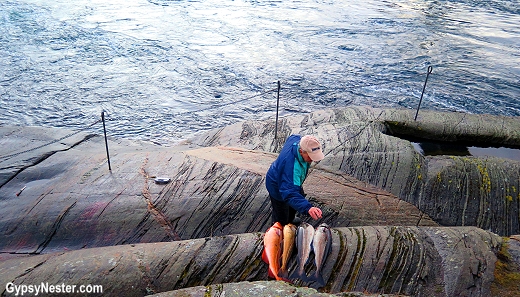
See more about our adventure at the Saltstraumen!
Evening: The importance of aviation in Norway
As with many remote outposts such as Bodø, aviation has played a big role in recent history.
Flying makes these far corners of the globe so much more accessible.
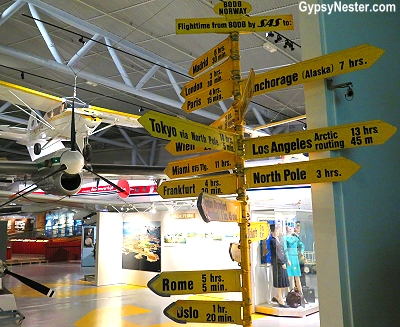
So on our way back into town we stop at the Luftfarstmuseet, which is the Norwegian Aviation Museum.
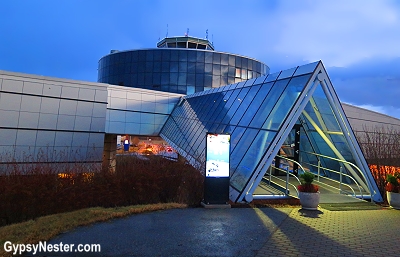
The building is cleverly designed in the shape of a giant propeller, with one blade housing historic displays of civilian aviation, and the other highlighting military flight.
In the middle there is a control tower overlooking the real Bodø airport. That’s where we start, and immediately get to see a couple of Scandinavian Airlines jets come in to land.
For many years seaplanes were the usual aircraft in this area, in fact throughout Norway, until landing strips were made. The museum features a large collection of many of these classic planes.
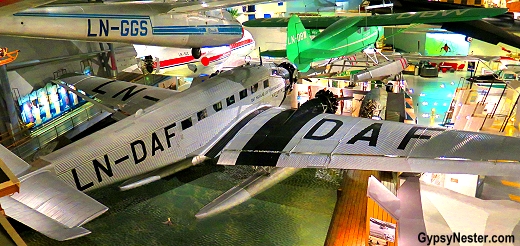
Most are the pontoon variety, with floats in place of landing gear, but there are a couple of the old “flying boats” as well. These are designed just as the name implies, like a boat with wings over the top.
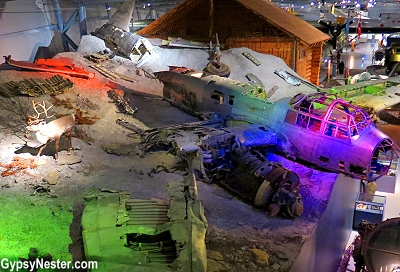
The military side has several World War II era German airplanes on display that had crashed in the mountains after the war.
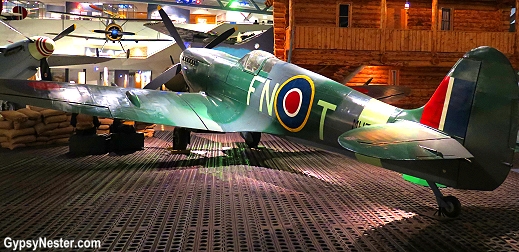
There is also a beautifully preserved Supermarine Spitfire, often mentioned along with the P-51 Mustang as the best fighter the Allies had.
See more about what we did in beautiful Bodø
Across the street from the museum is the Bodø Spectrum, a huge indoor waterpark and swimming complex which includes the Spectrum Spa. No way are we passing up the chance for some sauna action in the arctic, so we sweat, steam, sunlamp and soak for a while before heading back to our fabulous hotel.
The ride back is filled with high hopes that tonight’s the night for some momentous Aurora action, it kind of has to be, since it is our last chance…
Night: So did we see the Northern Lights?
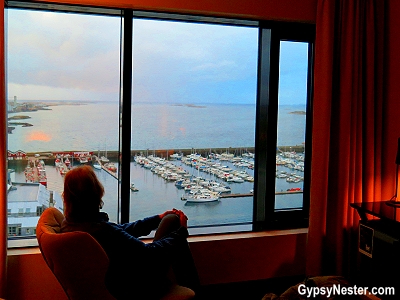
David here: As I observed earlier, the Scandic Hotel’s placement is perfect, right on the water, so there are no lights in our path, and facing north.
Now all we need is for it to clear up.
We’ve seen a few patches of blue sky during the short daylight hours, so we are cautiously optimistic. Around ten o’clock we head out to the dock to scan the northern heavens, and lo and behold a greenish glow begins to appear.
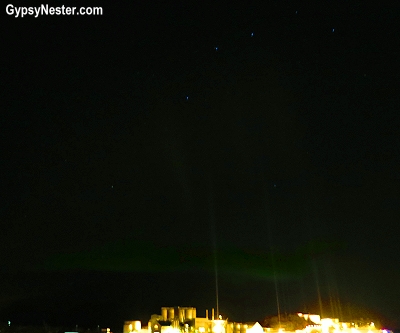
As it grows brighter, our doubts that it might just be a reflection or something else are removed.
This is most definitely the aurora, not a spectacular display, but certainly one nonetheless.
We even manage to capture some of it on camera.
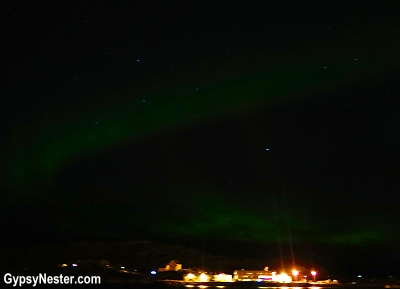
Between the cold and fatigue from the trip, even this excitement can’t keep us from crawling into bed, but Veronica doesn’t stay down.
She ventures back out after midnight, just in time for a much better aurora episode. This time there are some waves and even various colors.
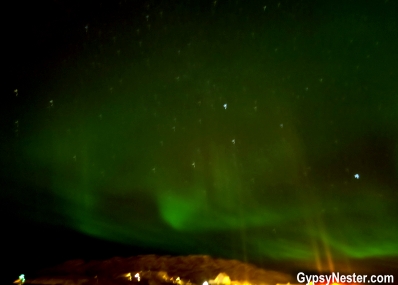
After clicking her brains out on the camera, and trying every possible setting, she feels confident enough in her capturing the moment to come inside to wake me up.
When I see the photos I jump out of bed and throw on my clothes and a coat. I’ve got to see this!
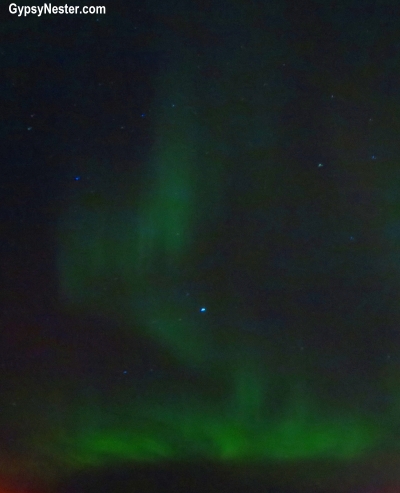
But alas, by the time we get back out there only a faint glow remains. We wait and watch for a while but now it’s getting seriously cold… like arctic cold.
If we didn’t have pictures, we know it would be hard to believe.
But we could actually say that about this whole trip.
We will have to spend some time with our photos just to reassure ourselves that all of this really happened on our amazing adventure across Scandinavia as we trekked up to the arctic.
Wow! Just wow!
Wonder how all of this happened?
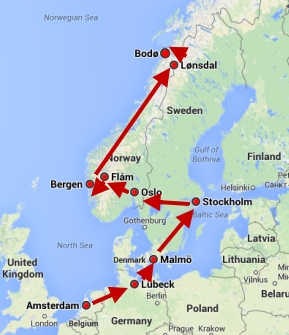
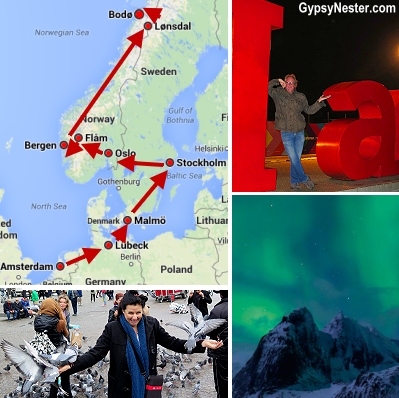
Are we crazy? It’s possible we’ve finally gone off the rails.
When Eurail contacted us to see if we’d like to take advantage of a 15-day rail pass, David the Train Nut’s pupils got wide and his answer was a resounding YES!
Veronica was all aboard too, and started dreaming of a wintertime jaunt to sunny Spain. David, however, had other plans. He suggested Scandinavia.
Veronica was not so onboard with this. Right. Let’s head north into the cold and dark. Why, pray tell? Then David said two words: Northern Lights.
That did it.
Did you miss Dispatch One of this adventure? Click here to catch up!
David & Veronica, GypsyNester.com
Thanks to Eurail for providing the 15-day rail pass that inspired this crazy adventure! Also HUGE thanks for the support from Visit Norway and Visit Oslo! As always, all opinions are our own.
See all of our adventures in Norway!
YOUR TURN: HAVE we gone completely off the rails? Would you embark on a journey like this? How much trouble would David have been in if Veronica didn’t get to see the Northern Lights?


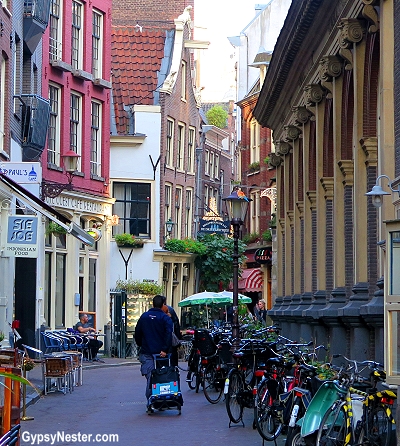
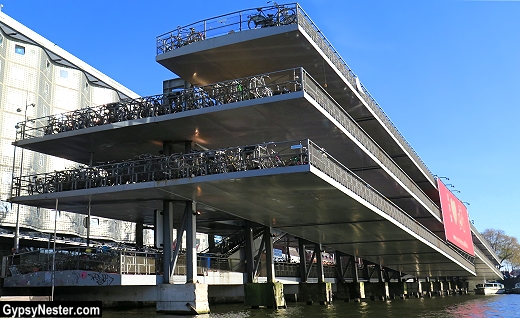 The three-story bicycle parking lot at the Amsterdam train station! We were told that an expansion is necessary and plans are underway.