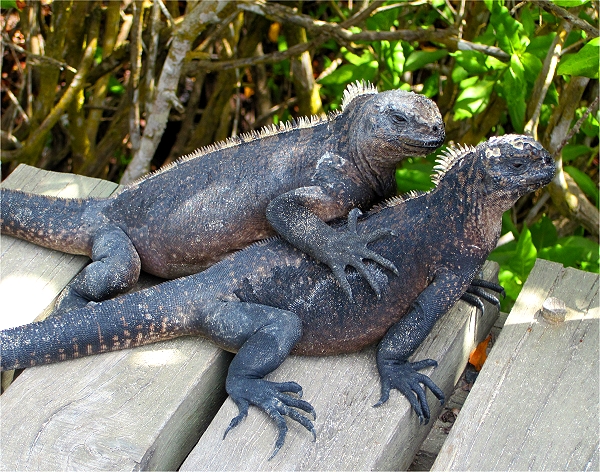
Marine Iguanas are surprisingly communal beings, but these two seemed to share a special friendship!
For more on our adventures in The Galapagos Islands!: https://www.gypsynester.com/galapagos.htm
Veronica, GypsyNester.com

 ORDER NOW -
Wherever Books Are Sold!
ORDER NOW -
Wherever Books Are Sold!Boomer Travel. Food. Laughter. Breaking the Empty Nest Rules!
Marine Iguanas are surprisingly communal beings, but these two seemed to share a special friendship!
For more on our adventures in The Galapagos Islands!: https://www.gypsynester.com/galapagos.htm
Veronica, GypsyNester.com
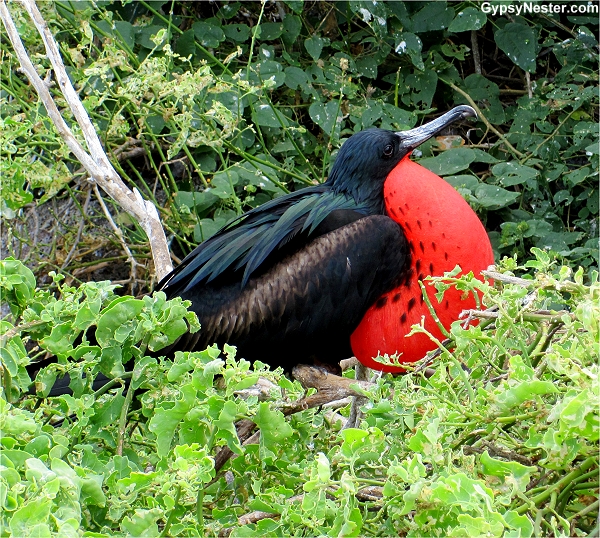
A male frigate doing his version of the Galapagos singles bar scene. What girl could resist a bright red inflated gular sac like that?
Veronica, GypsyNester.com
To see our entire Galapagos adventure, click here: https://www.gypsynester.com/galapagos.htm
Just want to see the birds? Click here: https://www.gypsynester.com/galapagos-birds.htm
We were invited to enter the People Pics Competition – we LOVE photo competitions! Excited to submit our two entries!
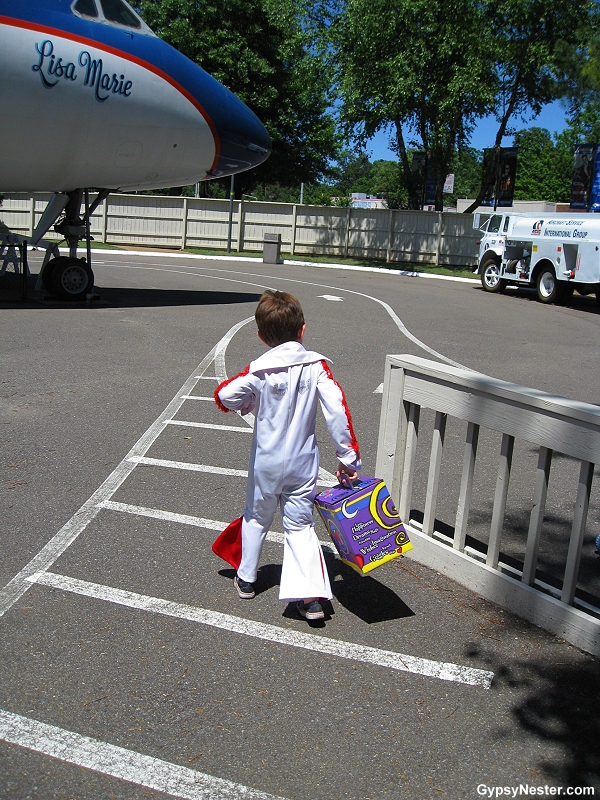
We caught “Little Elvis” headed toward the Lisa Marie on the grounds of Graceland. His parents INSISTED that they had nothing to do with the choice of his outfit, that Little Elvis was simply a true fan. Thank you, thank you very much.
For more Graceland antics: https://www.gypsynester.com/gl.htm
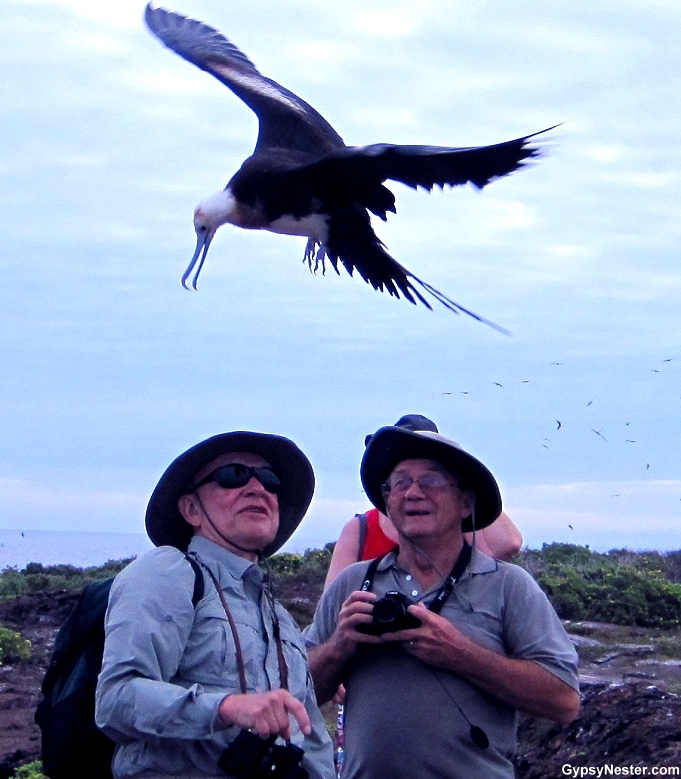
This is one of my favorite shots! The animals are so friendly in the Galapagos, including when in flight – the expressions on these guys’ faces are priceless as this frigate comes in for a closer look. I think I was the only one who remembered I had a camera!
For our whole trip in the Galapagos: https://www.gypsynester.com/galapagos.htm
Veronica, GypsyNester.com

Our first trip as a post-child-rearing couple coincided exactly with the official beginning our empty nest. On our son’s first day of college we were getting on a plane to Sardinia. It turned out to be a trip filled with firsts. First time in Sardinia, first time on an island in the Mediterranean, first time drinking Mirto, first time on a boat in the Mediterranean, and our first time eating donkey.
The amazing experiences on that trip instilled a burning desire to keep going. To keep moving, see new places, meet new people, and absorb as much of the world as we possibly could. Not long after that we embarked on our new life as full-time traveling gypsy empty nesters, GypsyNesters!
The photo is the first thing we saw when we hit the beach in Alghero – the most amazing sand “castle we’ve ever seen!
Veronica, GypsyNester.com
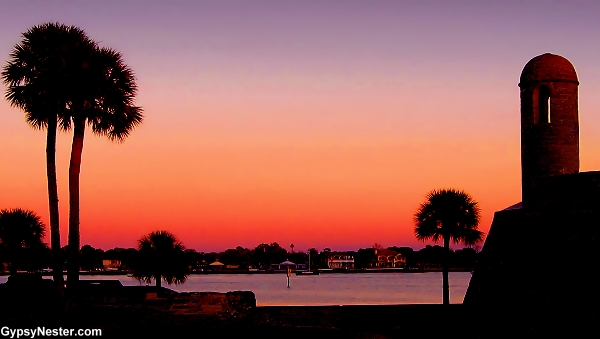
Sitting by the peaceful fort of St. Augustine watching the sunset is a beautiful way to spend an evening. I must have sat in the spot for three hours waiting for this silhouette and I have about fifty shots of differing contrasts to prove it! 😉
Veronica, GypsyNester.com
See more of our adventures in St. Augustine and all over Florida!
This Privacy Policy governs the manner in which GypsyNester.com collects, uses, maintains and discloses information collected from users (each, a “User”) of the https://www.gypsynester.com website (“Site”). This privacy policy applies to the Site and all products and services offered by GypsyNester.com.
Personal identification information
We may collect personal identification information from Users in a variety of ways, including, but not limited to, when Users visit our site, subscribe to the newsletter, and in connection with other activities, services, features or resources we make available on our Site. Users may be asked for, as appropriate, email address. Users may, however, visit our Site anonymously. We will collect personal identification information from Users only if they voluntarily submit such information to us. Users can always refuse to supply personally identification information, except that it may prevent them from engaging in certain Site related activities.
Non-personal identification information
We may collect non-personal identification information about Users whenever they interact with our Site. Non-personal identification information may include the browser name, the type of computer and technical information about Users means of connection to our Site, such as the operating system and the Internet service providers utilized and other similar information.
Web browser cookies
Our Site may use “cookies” to enhance User experience. User’s web browser places cookies on their hard drive for record-keeping purposes and sometimes to track information about them. User may choose to set their web browser to refuse cookies, or to alert you when cookies are being sent. If they do so, note that some parts of the Site may not function properly.
How we use collected information
GypsyNester.com may collect and use Users personal information for the following purposes:
– To improve our Site
We may use feedback you provide to improve our products and services.
– To send periodic emails
If User decides to opt-in to our mailing list, they will receive emails that may include company news, updates, related product or service information, etc. If at any time the User would like to unsubscribe from receiving future emails, we include detailed unsubscribe instructions at the bottom of each email.
How we protect your information
We adopt appropriate data collection, storage and processing practices and security measures to protect against unauthorized access, alteration, disclosure or destruction of your personal information, username, password, transaction information and data stored on our Site.
Sharing your personal information
We do not sell, trade, or rent Users personal identification information to others. We may share generic aggregated demographic information not linked to any personal identification information regarding visitors and users with our business partners, trusted affiliates and advertisers for the purposes outlined above.
Third party websites
Users may find advertising or other content on our Site that link to the sites and services of our partners, suppliers, advertisers, sponsors, licensors and other third parties. We do not control the content or links that appear on these sites and are not responsible for the practices employed by websites linked to or from our Site. In addition, these sites or services, including their content and links, may be constantly changing. These sites and services may have their own privacy policies and customer service policies. Browsing and interaction on any other website, including websites which have a link to our Site, is subject to that website’s own terms and policies.
Advertising
Ads appearing on our site may be delivered to Users by advertising partners, who may set cookies. These cookies allow the ad server to recognize your computer each time they send you an online advertisement to compile non personal identification information about you or others who use your computer. This information allows ad networks to, among other things, deliver targeted advertisements that they believe will be of most interest to you. This privacy policy does not cover the use of cookies by any advertisers.
Compliance with children’s online privacy protection act
Protecting the privacy of the very young is especially important. For that reason, we never collect or maintain information at our Site from those we actually know are under 13, and no part of our website is structured to attract anyone under 13.
Changes to this privacy policy
GypsyNester.com has the discretion to update this privacy policy at any time. When we do, we will revise the updated date at the bottom of this page. We encourage Users to frequently check this page for any changes to stay informed about how we are helping to protect the personal information we collect. You acknowledge and agree that it is your responsibility to review this privacy policy periodically and become aware of modifications.
Your acceptance of these terms
By using this Site, you signify your acceptance of this policy. If you do not agree to this policy, please do not use our Site. Your continued use of the Site following the posting of changes to this policy will be deemed your acceptance of those changes.
If you have any questions about this Privacy Policy, the practices of this site, or your dealings with this site, please contact us at:
GypsyNester.com
https://www.gypsynester.com
P.O. Box 20175
Kalamazoo, MI 49019
[email protected]
This document was last updated on August 28, 2013

Busan is the busiest port in South Korea and fishing is a big part of all of that maritime activity. This has created one of the biggest fish markets in all of Asia. The enormous Jagalchi indoor market covers three floors and is extremely busy, so venders have to catch a nap when they can.
Veronica, GypsyNester.com
See more about this amazing market – we didn’t recognize most of the fish sold!