
Search…

Barcelona’s Breathtaking (and Seuss-like) Basilica

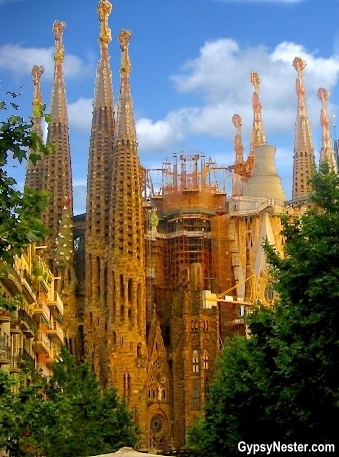
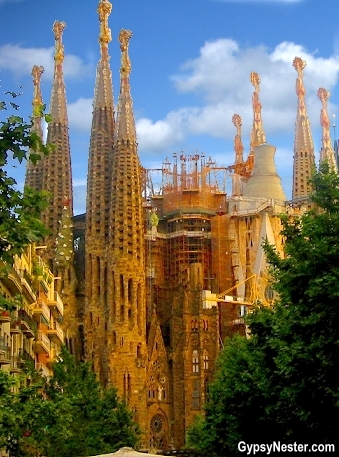
Barcelona has many treasures, but one stood out to us above all the others, literally and figuratively, Sagrada Família.

The massive church is without a doubt the pinnacle of architect and designer Antoni Gaudí’s incredible career. And we do mean pinnacle. Huge spires rise into the sky over fifty stories high – and it’s not even finished yet… CONTINUE READING >>

Sagrada Familia, Barcelona, Spain

Barcelona had been on our wish list for a long, long time.

Nearly twenty years ago we tried to drive down from France in the middle of a frantic concert tour, but only made it as far as the beautiful little Catalonian coastal village of Roses.

There a net of fresh seafood, local libations, a nurses’ strike and deep discussions of regional and global politics with the citizens happily trapped us for a couple days, thus ending our southward journey.

This time, on our recent manic motorized blitz across Europe in good ol’ Benny, we finally made it to the capital of Catalonia.

Barcelona has many treasures, but one stood out to us above all the others, literally and figuratively, Sagrada Família. The massive basilica is without a doubt the pinnacle of architect and designer Antoni Gaudí’s incredible career. And we do mean pinnacle. Huge spires rise into the sky over fifty stories high – and it’s not even finished yet.
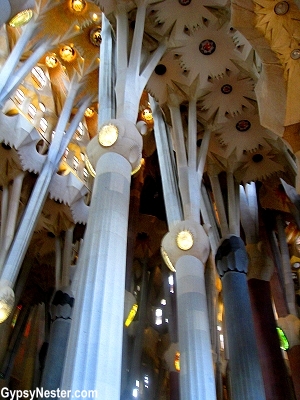
Inside Sagrada Familia, Barcelona, Spain

The church is still years, if not decades, away from completion and yet as we sat in awe for hours inside, trying to soak in every detail, we both agreed that this was the single most incredible building we’ve ever had the pleasure to enter.

There are no hard angles or straight lines within the church as everything emulates nature. Gaudí set out to make his series of columns that dominate the interior feel like giant trees in a forest.

Gazing up the enormous tapered pillars that split like branches, to provide structural support, as they ascended to the ceiling, we couldn’t help but conclude that he was wildly successful.
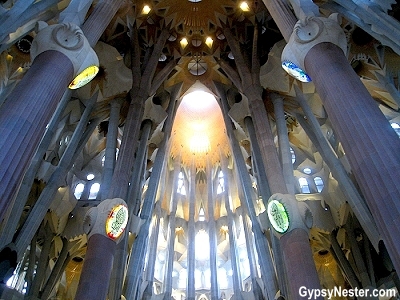
Toward the altar Sagrada Familia, Barcelona, Spain

All of the lines curve and sweep, up staircases, around windows and even forming the alter.

Sagrada Familia is the pinnacle of Gaudi’s work, a part of the Catalan Modernism and Art Nouveau movements of Barcelona that is known in the Catalan language as Modernisme. The style is so fanciful that we felt as if we had stepped into a Dr. Seuss book.
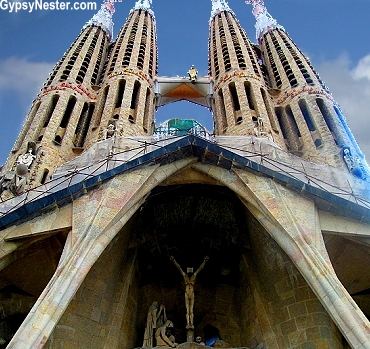
The Passion facade

As mesmerizing as the interior was, the outside demanded even more attention.

Our first impression was definitely dominated by the enormous scale of the building, but on closer inspection, it’s the details that make this structure even more amazing.

Three sides, all with entry ways, are decorated with incredible facades depicting the birth, death and glorification of Christ.
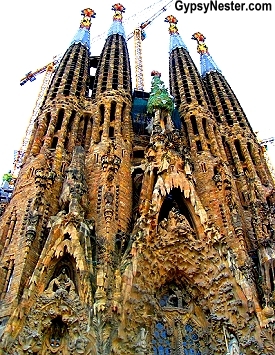
The Nativity Facade

The Nativity Facade faces the rising sun as a reminder of new birth and was Gaudí’s effort to set the tone for the entire project.

Knowing he wouldn’t survive to see Sagrada Família’s completion, Gaudí chose to work on this facade first because he wanted the ornate style to influence the future of the construction.

He included many symbolic scenes and creatures from nature to represent land and sea, stability and change or simply the glory of creation. Natural forms and themes dominate his work.
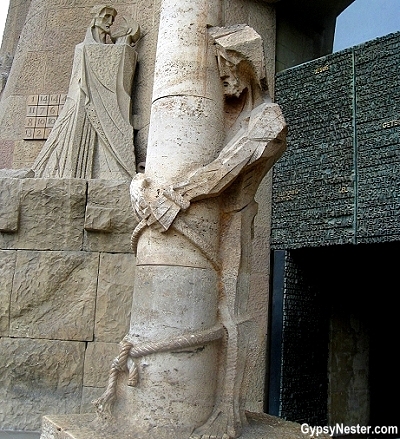
Statues on the Passion Facade, Sagrada Familia, Barcelona, Spain

In sharp contrast to the Nativity, The Passion Facade has a foreboding feel, in keeping with its somber subject matter.

The sculptures are harsh and angular, and absolutely fascinated us. Sculptor Josep Maria Subirachs wanted to use the sharp angles and block figures to accent shadows and highlight the contrasts of light and dark. The effect was superb.
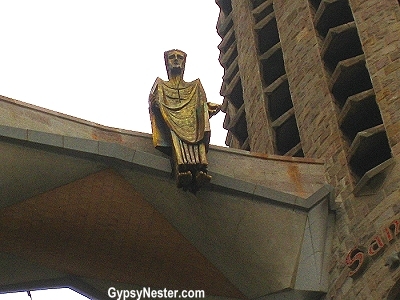
Christ looking down, Sagrada Familia, Barcelona, Spain

The passion scenes occupy three levels. The first depicts Jesus’ last night before the crucifixion and includes The Last Supper, the kiss of Judas, and the trial of Jesus.

The middle portrays Calvary and the crucifixion. At the top the death, burial and resurrection of Christ are recreated.

A whimsical representation of Christ’s resurrection in the form of a statue sitting on a beam above all the chaos captured Veronica’s attention to the point that we clogged our hard drive with photos of it.
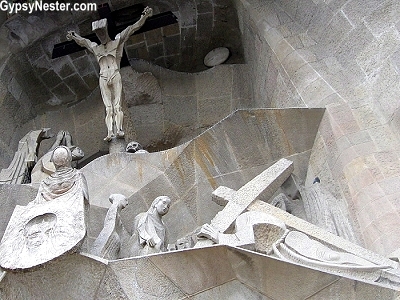
The Passion facade

All of the figures’ faces capture the intense emotions of the events. The grief of Mary, compassion of Veronica and betrayal of Judas are all portrayed perfectly.

The Roman soldiers have the jawlines of Rockem – Sockem Robots and yet their expressions display a certain sympathetic feel. We must have spent an hour trying to absorb all of the details.
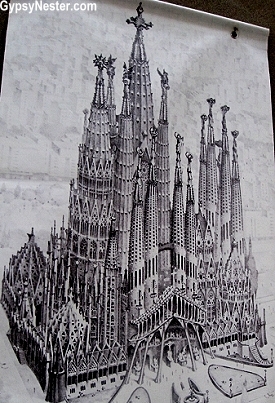
A drawing of the finished Sagrada Familia

The final facade will serve as the main entrance and be the most spectacular of all but, unfortunately for us, is not completed yet. It will be dedicated to the glory of Christ and depict the path to God through death, judgment, and finally heaven, with hell waiting for those who stray.

This whole face of the building was covered with a gigantic canvas veil to keep the scene a secret until the work is ready for viewing. Of course we saw that as an invitation to try to sneak a peek, but were decidedly unsuccessful.

Thwarted, we proceeded to Gaudí’s workshop below the Sagrada Família. Here we found a fascinating glimpse into the designing, planning and construction of this masterpiece through sketches, photos, notebooks, models and prototypes.
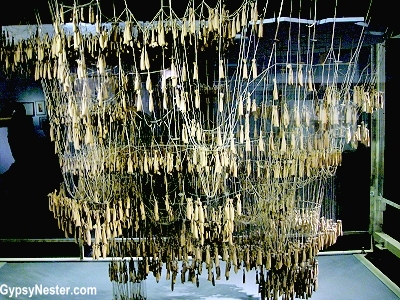
Upside down string models of the towers that Gaudí used to calculate the effects of gravity on the load bearing portions of the building

Perhaps most interesting of these were the upside down string models of the towers that Gaudí used to calculate the effects of gravity on the load bearing portions of the building.

By placing weights at what would be the peaks of all of the spires on his string structure, and overturning it to allow gravity to do its thing, he could reverse engineer the results to provide for the opposite forces on the upright finished product. Genius we’d say.
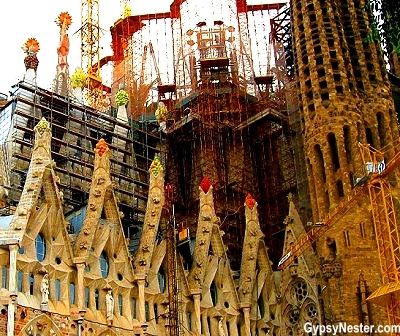
Sagrada Familia, Barcelona

Going through the displays chronicling the over a century of construction since work began in 1882, it occurred to us that Sagrada Família is very much in the tradition of the famous old cathedrals of Europe.

Not only in its grandeur, but also in the way that several generations of workers, artists and architects will participate in the creation. We found a huge part of our attraction to this great building was in the feeling of seeing a timeless monument being created.
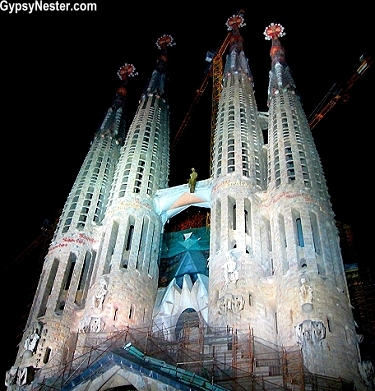
Sagrada Familia at night, Barcelona

We wandered through the exhibits until security herded us out the door for closing time, but still weren’t ready to leave this awesome structure.

We took another walk all the way around the outside and then figured we should grab a bite to eat, mmm, perhaps some paella.

Sitting in an outdoor cafe, in sight of the basilica, we waited on tenterhooks for the sun to set and the lights to flood Sagrada Familia.

Glad we did because the Sagrada Família stood out against the night sky in a way that made it even more mesmerizing.

As if that were possible.

Note: We returned to Barcelona in November 2023 and got to see the progress in the construction of Sagrada Família. While it is still far from finished, it is moving forward. Here is a photo:

David & Veronica, GypsyNester.com

Delve Deeper into Barcelona:
The Gothic Quarter and La Rambla
Eating Tapas
Gaudí or Gaudy – You Decide
Empty Nest Antidote: A Full Life

Check us out! We landed on the front page of Huffington Post 50!

The Huffington Post Ann Brenoff

They are the anti-empty nesters. When David and Veronica James’ last child left for college, they metaphorically stripped down to their underwear and did a happy dance. Job done; case closed; new life chapter about to be written.

Today, they are best-known as the Gypsy Nesters — the married-for-almost-three-decades couple who gave up their brick-and-mortar home for a virtual home on the road. They are semi-retired boomers who roam the globe full-time, approaching each day as an adventure and celebrating the freedom of being unshackled from the responsibilities of parenthood.

Their motto: Our only plan is to not have a plan.

The Jameses see themselves as both… CONTINUE READING >>

Check us out! We landed on the front page of Huffington Post 50!

The Huffington Post  

They are the anti-empty nesters. When David and Veronica James’ last child left for college, they metaphorically stripped down to their underwear and did a happy dance. Job done; case closed; new life chapter about to be written.

Today, they are best-known as the Gypsy Nesters — the married-for-almost-three-decades couple who gave up their brick-and-mortar home for a virtual home on the road. They are semi-retired boomers who roam the globe full-time, approaching each day as an adventure and celebrating the freedom of being unshackled from the responsibilities of parenthood.

Their motto: Our only plan is to not have a plan.

The Jameses see themselves as both…
CONTINUE READING

A Church with a Forest Inside


enlarge video
The style of Sagrada Familia in Barcelona is so fanciful that we felt like we had stepped into a Dr. Seuss… CONTINUE READING >>


There are no hard angles or straight lines within the church as everything emulates nature. Gaudí set out to make his series of columns that dominate the interior feel like giant trees in a forest. Gazing up the enormous tapered pillars that split like branches, to provide structural support, as they ascended to the ceiling, we couldn’t help but conclude that he was wildly successful.

All of the lines curve and sweep, up staircases, around windows and even forming the alter. Sagrada Familia is the pinnacle of Gaudi’s work, a part of the Catalan Modernism and Art Nouveau movements of Barcelona that is known in the Catalan language as Modernisme. The style is so fanciful that we felt as if we had stepped into a Dr. Seuss book.

For more on this magnificent masterpiece: https://www.gypsynester.com/sagradafamilia.htm

Visit our GypsyNester YouTube Channel!

The Quirky Cathedral San Lorenzo

We have an affinity for quirky architecture. The Cathedral San Lorenzo is as quirky as it gets.

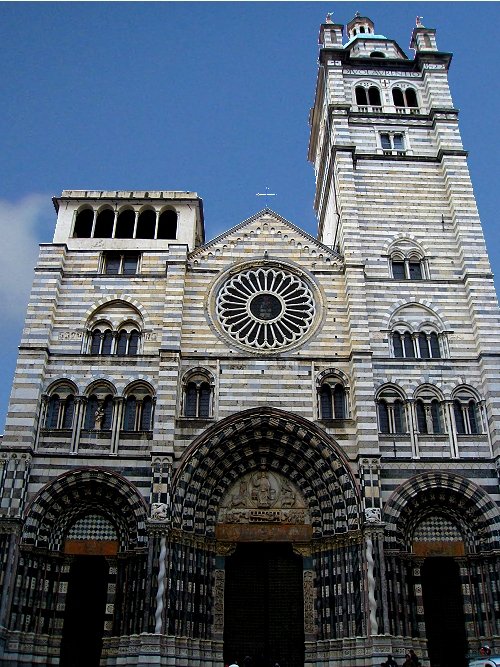
The facade, with the black and white layered stripes of marble and slate is typical of Genoa (or Genova to the Italians), was finished in 1312.

AND a bomb is housed… CONTINUE READING >>

We have an affinity for quirky architecture. The Cathedral San Lorenzo is as quirky as it gets.

San
Lorenzo began as a small church in the fifth or sixth century
and was rebuilt several times before being consecrated as
Genoa’s main cathedral in 1118. As is often the case with
medieval churches, the construction continued for centuries
incorporating numerous architects and styles throughout the
years. The facade, with the black and white layered stripes
of marble and slate is typical of Genoa (or Genova to the Italians), was finished in 1312.

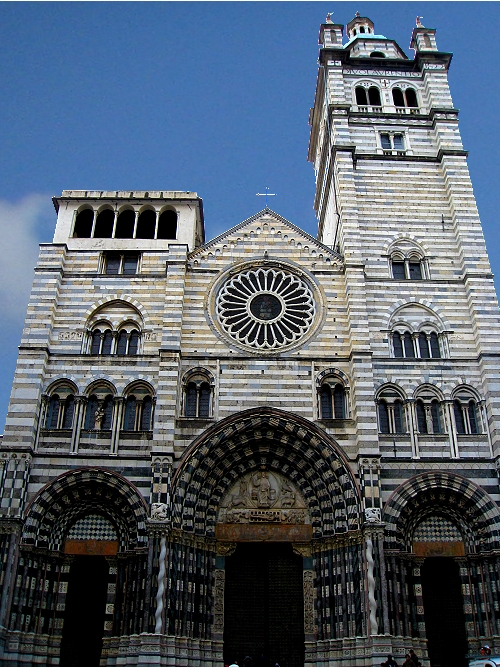
Cathedral San Lorenzo, Genoa Italy

The
plaza facing San Lorenzo is so small that I had to
lie supine with my head propped on an opposite building to
capture a partial photo of this wonderfully surprising cathedral.
Tight as the plaza is, musicians, street entertainers, balloon
artists and art students crowded the steps and cobblestones.

Cathedral San Lorenzo, Genoa Italy

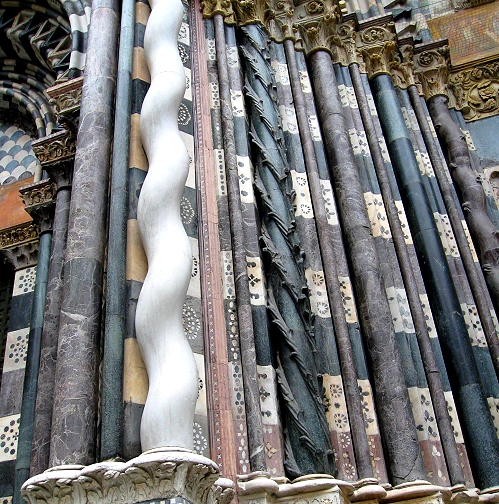
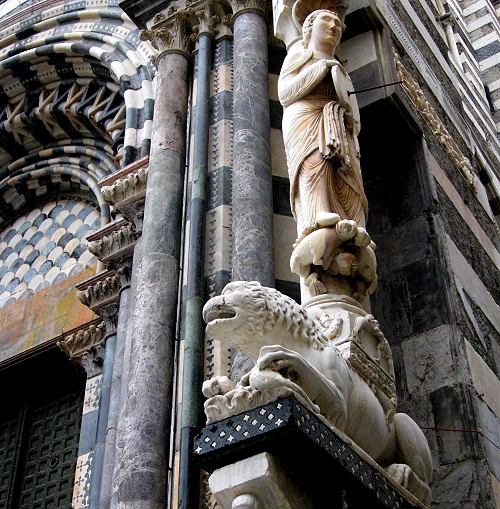
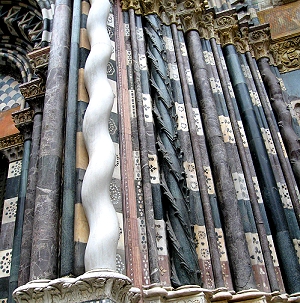
Close up on the columns at the front of the church. Each is its own work of art.

Cathedral San Lorenzo, Genoa Italy

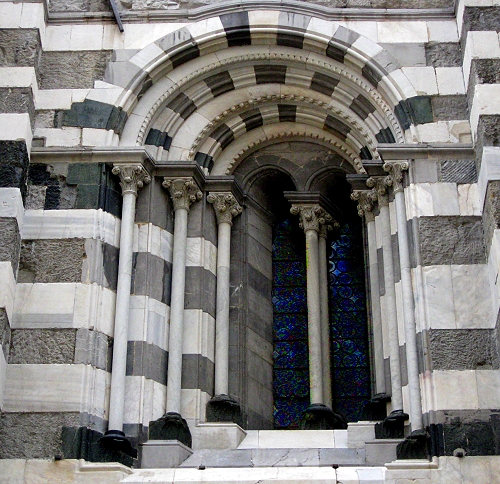
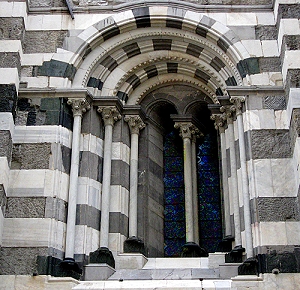
Yes, this shot is straight on. And, yes, the window is THAT wonky. I loved this window.

A figure column on a corner.

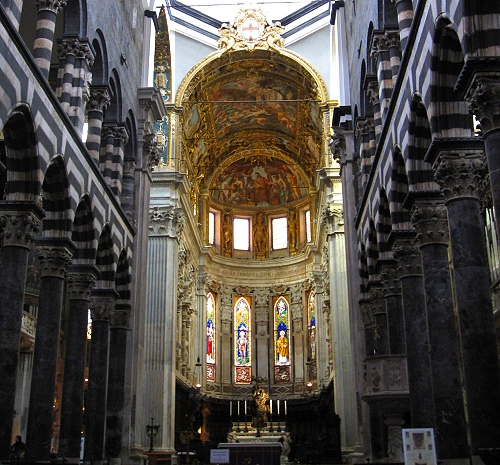
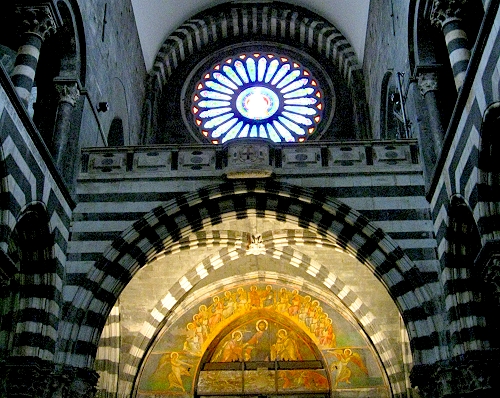
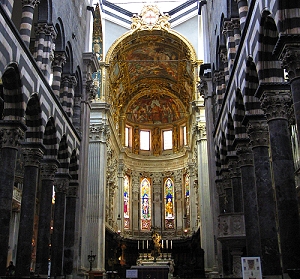
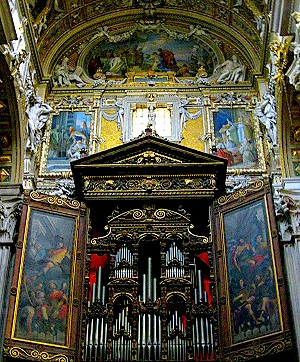
Inside the black and white continues to dominate the decor, yet the altar
area is bright and colorful – the contrast strange
and wonderful.

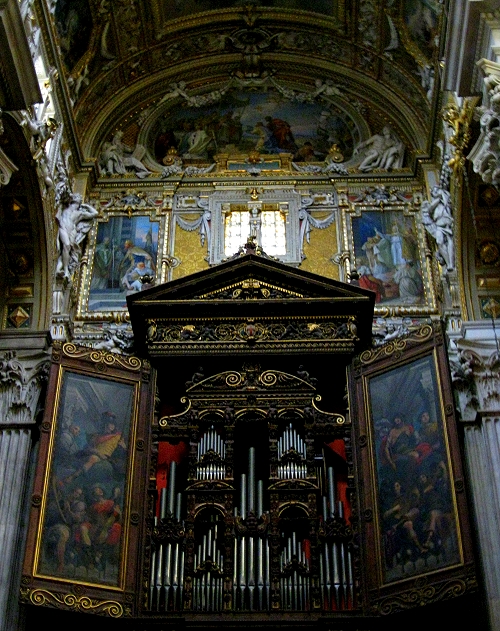
Pipe Organ in Cathedral San Lorenzo, Genoa Italy

The pipe organ.

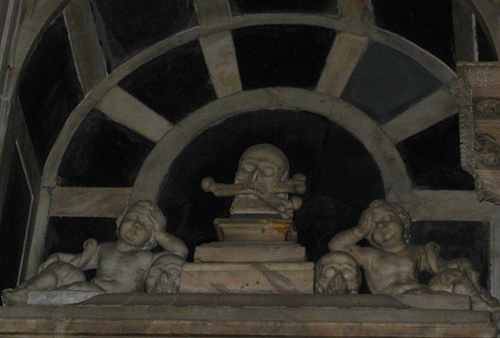
An odd little alcove in Cathedral San Lorenzo, Genoa Italy

An odd little alcove. Babies resting against skulls… hmmmm.

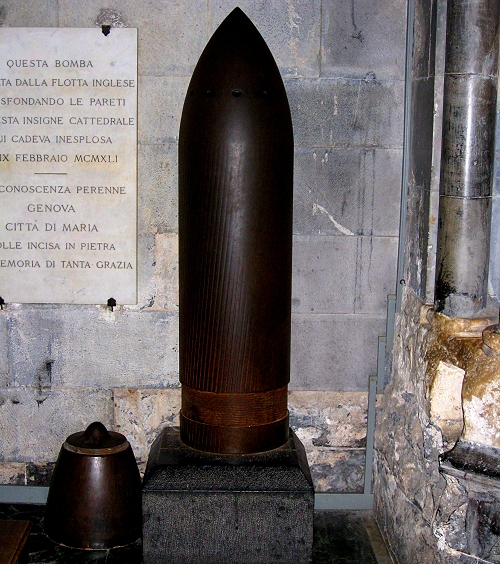
The miracle bomb in Cathedral San Lorenzo, Genoa Italy

Proudly displayed inside the Cathedral is an unexploded
World War II bomb that had hit, but miraculously spared the church by not detonating. Sure glad this
ominous projectile was a dud – the cathedral is such a unique
architectural specimen – its loss would have been tragic.
Hopefully the priests of San Lorenzo were expert
bomb diffusers. I would have hated for their incredible luck to run
out while I was snapping a photo.

Veronica, GypsyNester.com

See also:
Genoa’s Ancient City in Pictures
Overview of Genoa – learn more about the city itself

2012. A Year for Smiles

My New Year resolution is to make everyone I come in contact with smile. You are forewarned. I WILL crack you.

Sharing smiles with strangers has long been a personal philosophy of mine, at times to the occasional chagrin of David and the embarrassment of my former teenaged kids, but this year I want to… CONTINUE READING >>

Here's to hoping the Mayans were wrong!

My New Year resolution is to make everyone I come in contact with smile. You are forewarned. I WILL crack you.

Sharing smiles with strangers has long been a personal philosophy of mine, at times to the occasional chagrin of David and the embarrassment of my former teenaged kids, but this year I want to conscientiously up my ante. I want to be more aware.

My motives are somewhat selfish, I must admit, as I feel I am going to come out of this experience changed, but I’m fairly certain that it will be for the better. I know that during the course of this year I will, at times be made more joyful, and other times be the butt of a joke or the subject of an eye roll. Still I think the odds will be in my favor.

How many smiles will I encounter? Of this number how many lives can I change for the better – even if it is in the tiniest of ways? Can I keep a person from going home and kicking their dog? From feeling lonely? Would the smile spread to their next customer, their family, a friend in need?

After thinking about this, I realize I can’t go about this all willy nilly. I can’t, for example, be in a crowded subway and go around jumping from person to person like an idiot or standing on a seat above the throngs to start up an impromptu stand-up routine… I’m going to have to set some ground rules.

Our fast-talking, taxi-flagging, black-wearing, eff-bomb dropping urbanite daughters, The Piglet and Decibel, both live in New York City and I’m not about to give up visiting them because of an impossible dream to brighten up every passerby on a crowded mid-town street.

So here are my ground rules:

  1. In EVERY one-on-one organic situation – the cashier at a grocery store, a fellow hiker, a tour guide, EVERYone I am blessed to share a moment with – I will attempt to brighten their day with a friendly “hi,” a happy tale, a goofy laugh.I will do good deeds. I will go out of my way – WAY out of my way – to help carry luggage and groceries, assist old ladies across streets, aid stranded motorists.
  2. I will compliment. I will be more cognizant of others efforts and instead of keeping my appreciation to myself, I will take a moment to let them know.

    I will thank people FOR. Instead of a my usual cursory “Thank you,” I will be sure to show my gratitude by thanking them specifically FOR something. (I see a lot of “Thank you for being so patient with me”s in my future!)

    I will make eye contact. I’m amazed time and time again at how well this works. It doesn’t matter where I am, whether I speak a common language – eye contact and a smile rarely fails.

    No keeping numerical tabs. This is not about quantity, but quality. In the subway or crowded street situation, I will be happy with one person per car, per busy block.

    No “one-size fits all” shenanigans. I want to keep my quest on a personal level, I want to be able to reflect on one person at a time. The old smiley face-tee-shirt-have-a-nice-day routine won’t do.

Finally, I’m going to document some of my new friends’ smiles. And share them here with you. Share my wealth, as it were.

Happy New Year to each and every ONE of you. I appreciate you more than you could ever know.

Happy 2012! Here’s to hoping the Mayans were wrong!

Veronica, GypsyNester.com

YOUR turn: Help me out here! Any suggestions you have to help me make folks smile will be GREATLY appreciated!

Genoa, Italy’s Largest Little-Known City

When we hear the name Genoa it harkens thoughts of dry salami. That’s soooo not what this city is all about.

Our latest Italian adventure would open our eyes to an often overlooked region of Il Bel Paese (The Beautiful Country) — the Italian Riviera along the Ligurian Sea… CONTINUE READING >>

When we hear the name Genoa it harkens thoughts of dry salami.

That’s SO not what this city is all about. Our latest Italian adventure would open our eyes to an often overlooked
region of Il Bel Paese (The Beautiful Country) — the Italian Riviera along the Ligurian Sea.

Click for Genoa’s Ancient City Photos

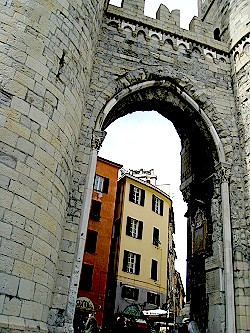
We decided to begin our explorations in the oldest section of the city. As with many towns in ancient times, walls were built to keep out the invading hordes.
Within those walls, the old city of Genoa (or Genova to the Italians) is the biggest and one of the best preserved in all of Europe — and is currently a bustling community filled with charming restaurants, shops and residences.

The ancient buildings and narrow cobblestone streets survived the World Wars much better than most and is in a constant state of renovation. It takes a lot of work to keep a place like this up to snuff.

Click to enlarge photo

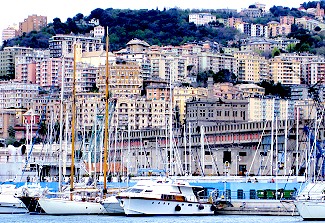
It’s not that Genoa was never bombarded, her harbor has taken some severe beat-downs, but her old city remained fairly unscathed.

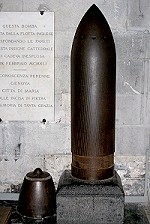
One might even speculate that there was divine intervention because the Cathedral San Lorenzo proudly displays an unexploded bomb that had miraculously spared the church.

Sure glad this ominous projectile was a dud — the cathedral is such a unique architectural specimen — its loss would have been tragic.

Hopefully the priests of San Lorenzo were expert bomb diffusers — we would hate for their incredible luck to run out while we were snapping a photo.

Cathedral San Lorenzo, Genoa ItalyClick for more San Lorenzo Photos

The plaza facing San Lorenzo is so small that Veronica had to lie supine with her head propped on an opposite building to capture a partial photo of this wonderfully quirky cathedral.

Tight as the plaza is, musicians, street entertainers, balloon artists and art students crowded the steps and cobblestones.

The public is not permitted to tour in the middle of the day, so we whiled away a few hours inspecting the magnificent exterior and watching tourists boorishly climb atop the church’s marble guard lions for snapshots as if at Disneyland.

Italians rightly expect decorum — this is a place of worship, after all — appropriate dress is mandatory and even the school children use polite hushed tones while visiting.

Cathedral San Lorenzo, Genoa Italy
Click for more San Lorenzo Photos

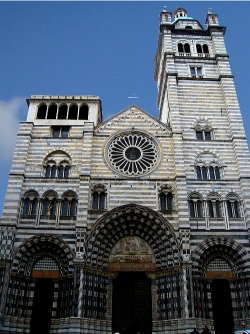
San Lorenzo began as a small church in the fifth or sixth century and was rebuilt several times before being consecrated as Genoa’s main cathedral in 1118.

As is often the case with medieval churches, the construction continued for centuries incorporating numerous architects and styles throughout the years.

The facade, with the black and white layered stripes of marble and slate is typical of this area, was finished in 1312.

Cathedral San Lorenzo, Genoa Italy

An asymmetrical window on the south side of the church stopped us in our tracks.

Approaching from the front, nothing seemed amiss, but once we stepped back a few paces we discovered the window had a decidedly lopsided skew.

Between it and the bizarre unmatched columns, we were in heaven. We love that kind of stuff.

The final touches inside San Lorenzo weren’t completed until the seventeenth century. It’s a wonderful display of a mishmashed styles.

Black and white continues to dominate the decor, yet the altar area and the pipe organ are bright and colorful — the contrast strange and wonderful.

From the cathedral we went in search of Genoa’s most noted native son, Christopher Columbus.

We had heard that his house was still around so we headed toward the eastern edge of the old city, googling on the go.

Christoffa Corombo, as he was known in the 15th century Genoese language (a dialect that is still in use today), was probably born here in 1451 but almost certainly NOT in the little tourist trap house by the Porta Soprana.
We decided to skip the house since our research revealed that it probably wasn’t built until long after the celebrated sailor had set sail on that great ocean in the sky.

It’s possible that it was built on top of Christopher’s OLD crib but that’s still about as likely as sailing to India from Portugal by going west.

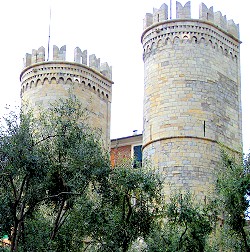
On the other hand, the towers at the Porta Soprana are more than worth a look.

Built in 1155 when the city walls were renovated, the two towers stand 100 feet high and frame the eastern entrance to the historic center of Genoa.

A fine example of medieval fortification if there ever was one.

Walking through the Centro Storico we realized that, although his house is a fake, the man known here as Cristoforo Colombo had a huge impact on this city. Before he gallivanted off in search of India, Genoa had lost a little of its luster.

Wars, pestilence, and foreign dominance had taken a bit of the spice out of the salami.

Even though Columbus discovered the treasures of the New World for the Spanish Crown he didn’t forget his hometown. He deposited his money in Europe’s –perhaps the world’s — first public bank, The Bank of St. George (Banco di San Giorgio) in Genoa.

He also donated one tenth of his earnings toward tax relief for the city.

Genoa became Spain’s banker and piles New World gold and silver started flowing into her coffers. Presto, the return of the spicy cold cut.

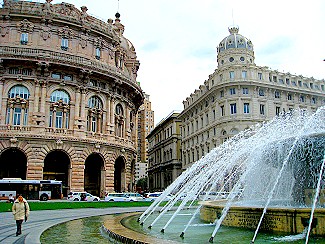
There are still remnants of those financial glory days, mainly around the Piazza De Ferrari.

The piazza is dominated by a huge fountain in the center, surrounded by majestic buildings including the regal Palazzo Ducale, the Stock Exchange and several wildly ornate banks.

The Palazzo was home to the Doges (dukes) of Genoa for over 450 years until Napoleon took the city in 1797 and it was stormed by soldiers and mobs. The Palazzo is now a museum and, happily, the mob has moved on.

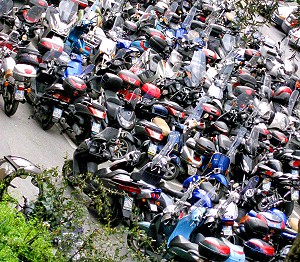
It seems that new, modern mobs have overtaken Genoa.

Vespas!

Other than perambulating they are the conveyance of choice and the only vehicles allowed in the ancient city.

It may not be the sea that Columbus knew — but it is a sea nonetheless –a sea of scooters. Not an ocean that ole Chris would recognize but then, he went to his grave believing that the Caribbean was India, so perhaps recognizing things wasn’t his strong suit.

Just so happens that David’s band mate Paolo‘s Mama lives in Genoa and like most Italian Mamas, the woman can COOK. We were invited to do something that we do well, eat! How’s that for synergy?

The restaurants in Italy are almost universally fantastic — but home cooked meals generally open up a whole new universe.

Unmatched care and hospitality are given to every aspect of the dining experience and the taste buds benefit bountifully.

Genoa is known as the home of pesto, it was invented here. And guess what we were having for dinner?

This was not to be a typical Italian meal but more a traditional Ligurian dinner. Handmade gnocchi with the classic basil and garlic pesto was the centerpiece while focaccia, cheeses, vegetable pastry, salad, gianchetti and various vinos rounded out the scrumptious spread.

One of the many advantages of visiting an Italian home is the opportunity to try dishes not available or that we would never order in a restaurant.

Gianchetti is a fine example, since we can’t recall thinking “I wish we could find some tiny blanched anchovies.”

Yup, little bitty boiled baby anchovies — complete with their little bitty boiled eyes — not bad actually, just odd.

Mainly we just wondered why they didn’t wait to let them grow up because a full grown anchovy can certainly rock on a pizza pie.

Guess we’ll have to head down to Naples for that — not that we need any excuse to eat our way across Italy.

David & Veronica, GypsyNester.com

See also:
Genoa’s Ancient City in Pictures
More Photos of Cathedral San Lorenzo