Search…

Parasite “Kids”

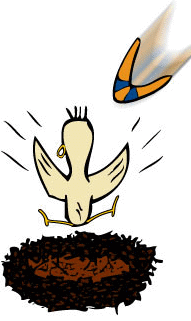
What’s worse than a Boomerang “Kid?” A Parasite “Kid.”

While the Boomeranger comes home to rely on its host for room, board and Mama’s cooking, the Parasite will eventually kill its host — latching on and sucking dry retirement savings while out living on its own. Long distance leeching, in a manner of speaking.

In generations past only rich kids that acted this way. We are now seeing a new breed –the middle class Parasite Kid. These… CONTINUE READING >>

Uh. Oh!

What’s worse than a Boomerang “Kid?” A Parasite “Kid.”

The Boomeranger returns home to rely on its host for room, board and Mama’s cooking, but the Parasite will eventually kill its host by latching on and sucking the nest egg dry while living on its own.

Long distance leeching, in a manner of speaking.

In generations past, it seemed like only rich kids acted this way, expecting their “allowance.”

We are now seeing a new breed — the middle class Parasite. These bloodsuckers have gotten it into their heads that the job of raising them never ends.

Many parents have concluded that they are helping these young adults and doing what’s best for them. Certainly wanting the best for our kids doesn’t stop when they leave the nest, but the best doesn’t necessarily mean making things easy. There are no shortcuts for many lessons. Offspring of every age have to learn to work for outcomes.

Our grade-schoolers would have never learned their alphabet or multiplication tables without long hours of effort. Sometimes they failed, picked themselves up, dug in deeper and, as a result, learned to keep trying.

A great feeling of pride was achieved when a goal was reached by WORKING for an outcome. Grasping the concept of reward for effort or repercussions for transgressions is impossible without paying a price along the way.

Hopefully we taught those lessons well, so why go back on them now?

Coughing up money for an adult spawn‘s monthly expenses may feel altruistic, but in reality teaches nothing but reliance — and not of the self variety. The leeching spawn learn to expect everything to be handed to them, while the parents learn that their retirement savings are disappearing into the pockets of someone who should be earning and saving for themselves.

It doesn’t take long for these freeloaders to become dependent on these funds. Many times they come to expect the money to the point of being belligerent about it — demanding payment and becoming downright surly if it is not delivered on the leech’s terms. Gratitude comes to a screeching halt. All respect is lost.

These Parasite “Kids” are incapable of respect or being respected. Peers and friends making their own way independently certainly have no respect for the them. Non-parasitic siblings resent this sort of extortion and lose all regard for their wombmates. The total lack of respect reaches Rodney Dangerfield levels, except it’s not funny.

Taken to the extreme, and we have personally seen this, Parasite “Kids” expect their bills paid into their 40s and 50s. How do you supposed this “kid” will get along in a few years when his or her parents die broke? Like a parasite, they have killed the host – never a good move – and everybody loses.

All good intentions aside, the parents have left their offspring completely incapable of fending for themselves. Even worse, these “kids” will have to learn how to survive in the real world as middle-aged spoiled brats with absolutely no work ethic. Good luck with that.

Unfortunately, much of the blame for this sort of calamity falls on the victimized parent. They have inadvertently rewarded this behavior through the years. Sure the Parasites, as adults, should know better, grow up, and stand on their own two feet, but who taught them not to?

The only hope is to rip off the monetary support Band-Aid before the Parasite becomes one of those despicable heirs who sits around on their oh-poor-me ass, just waiting for the parents to die. We can think of no outcome more tragic than our kids wishing we were dead, but unfortunately this scenario exists. We’ve all seen it.

We should add a caveat, gifts are different. Sharing the wealth with your children CAN make life better for them. The difference is in the expectations: bankrupting a parent by bloodsuck versus gratefully accepting an unexpected gift. An heir is much more likely to be a good steward and invest wisely having learned the value of a dollar by earning a few of them himself.

Life is hard. But one thing’s for sure — life is harder when one expects everything to be easy.

David & Veronica, GypsyNester.com

YOUR turn: You’ve read our opinion. What’s YOURS? Do you know anyone in this situation?
Kayaking the Australian Everglades like a Champ, well… with a Champ

There are several things about the Sunshine Coast of Australia that reminded us of Florida, beautiful beaches, near perfect weather, rousing waterfront resorts, and most surprising of all, everglades.

Yes, Queensland has its very own everglades, and we were lucky enough to spend a day exploring them by kayak….CONTINUE READING >>

 
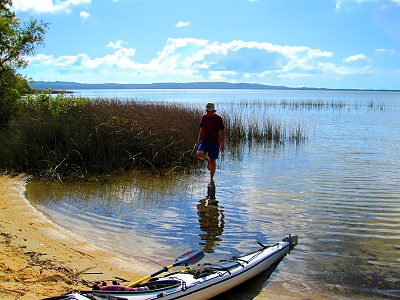
David stands in Lake Cootharaba to kayak to the Queensland Everglades

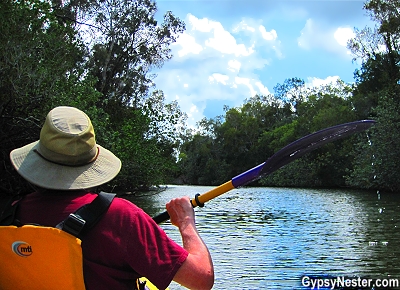
There are several things about the Sunshine Coast of Australia that reminded us of Florida, beautiful beaches, near perfect weather, rousing waterfront resorts, and most surprising of all, everglades.

Yes, Queensland has its very own everglades, and we were lucky enough to spend a day exploring them by kayak.
We joined former Australian kayaking champion Vivienne Golding, chief cook and bottle washer at Kanu Kapers, on an adventure into Great Sandy National Park.

This was not something that we felt in any way qualified to pursue on our own, so we joined former Australian kayaking champion Vivienne Golding, chief cook and bottle washer at Kanu Kapers, on an adventure into Great Sandy National Park.
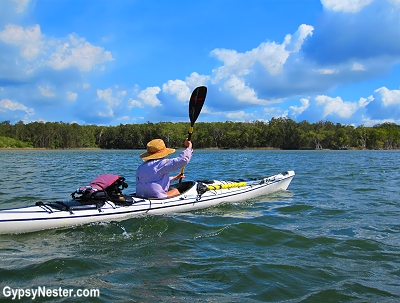
Kayaking Lake Cootharaba in the Queensland Everglades

We followed her to Elanda Point on Lake Cootharaba, where we put our vessels in the water and paddled off for a day of peaceful drifting along the Noosa River, and the lakes, swamps, and ponds that form its everglades.

In addition to being protected and preserved as a national park, the area was named a UNESCO Biosphere Reserve in 2007 and Kanu Kapers has joined as a partner in the long term sustainability of this pristine area.

Through the partnership, they share experiences and ideas regionally, nationally, and internationally with a worldwide network of biosphere reserves.

The reserves serve as living laboratories for various approaches to sustainable development based on sound science and local community action. They also encourage entrepreneurs to form eco-friendly businesses in public and private sector partnerships.

It felt pretty cool to be a small part of it.
We joined former Australian kayaking champion Vivienne Golding, chief cook and bottle washer at Kanu Kapers, on an adventure into Great Sandy National Park.

It also meant that we would be using people power to get across the lake, no burning-noxious-fume-producing petrol on this journey.

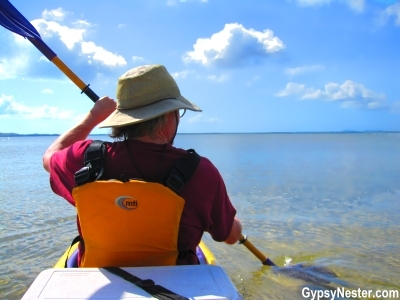
We are always game for a little exercise, so that was cool with us, and it gave us time to learn how to paddle properly. There’s more to propelling a kayak through the water than thrashing the surface with a flat stick. Vivienne demonstrated a simple and efficient technique that eliminated all of our wasted energy.
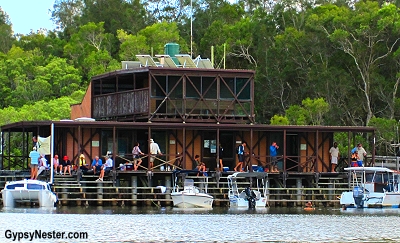
 Kinaba Information Centre, an old National Park information center built up on stilts, we entered the skinny passages that flow between the sandy islands and swamps of the Australian Everglades

Even with the wind in our faces we surprised ourselves with our paddling prowess.

Once we crossed the lake and reached the Kinaba Information Centre — built on stilts — we entered the skinny passages that flow between the sandy islands and swamps.
Kayaking the Australian Everglades! GypsyNester.com

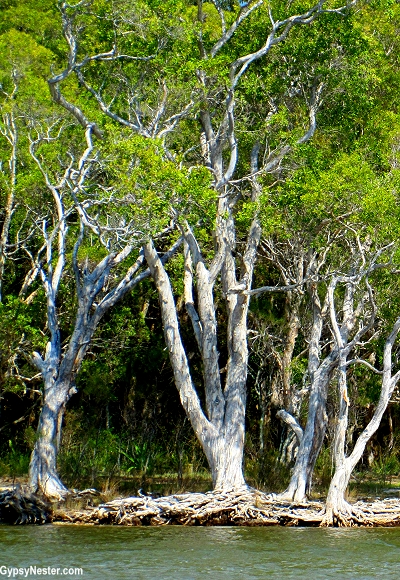
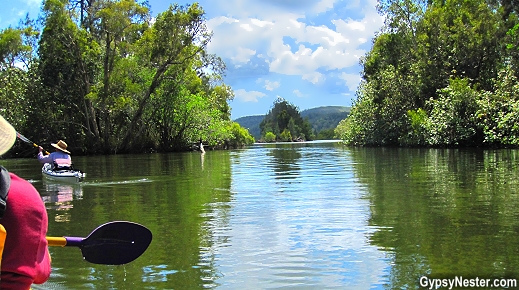
In these narrow bayous, we discovered something even better about our motor-less mode of transport than our lack of polluting; by forgoing an engine we enjoyed the tranquility of silence while drifting along.

Kayaking the Australian Everglades! GypsyNester.com

There is almost no noticeable current, which is one of the characteristics that makes this basin an everglade, so we could paddle in any direction without fighting the flow.

Kayaking the Australian Everglades! GypsyNester.com
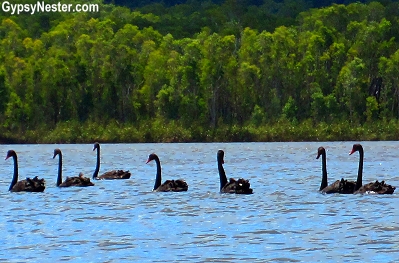
Black swans in the Australian Everglades

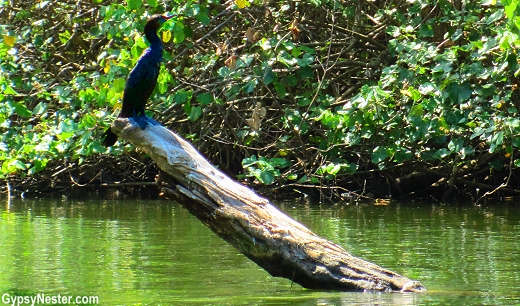
We were able to approach many of the hundreds of species of waterfowl who make these glades their home without spooking them into taking flight, including a flock of black swans.
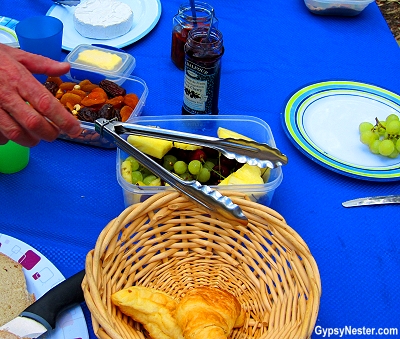
Snacks provided by Kanu Kapers in the Queensland Everglades

After exploring several creeks and tributaries, we put in at Fig Tree Point for a little break and brunch.

While Vivienne laid out a spread of fruits, jams, breads, and cheeses, we headed out for a short hike through the forest.
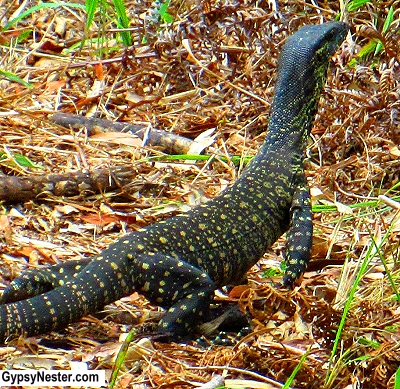
A monitor lizard known as a goanna in the Australian Everglades

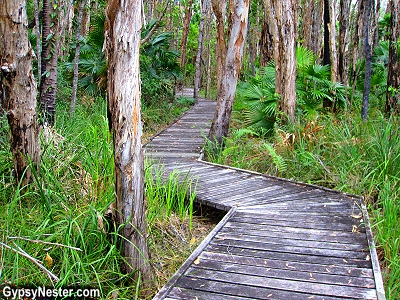
The Melaleuca trail, named for a medicinal plant of the myrtle family, took us on a loop around the sandy peninsula.

We didn’t have a clue how to spot the plant, but along the way we were introduced to one of the larger reptiles on the continent, an Australian monitor lizard known as a goanna.
The Malaeuca trail in the Australian Everglades

Even on the boardwalk, we presumed that extra-large lizards have the right of way, so we allowed him to pass before heading back for a bite to eat.

Between the warm sun and the full bellies we were beginning to feel a tad droopy, and have to admit that we were less than excited at the prospect of paddling back across the looming lake, but Vivienne had one more surprise in store for us. As soon as we reached the open water she had us stop at a shallow sandbar and climb out.
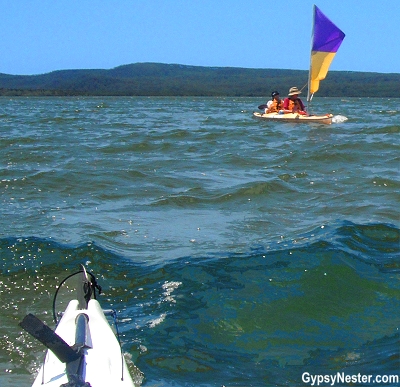
Sail kayaking in the Australian Everglades

Standing knee deep in the middle of the lake, we couldn’t help but wonder what she was up to. Were we going to swim for it?

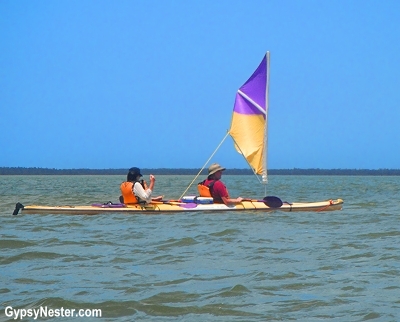
Nope, she asked if we had ever sailed before and accepted our answer of “a little” as a signal to go ahead with her plan. She then produced a couple of sails and masts out of a secret compartment in her kayak and in no time rigged both boats into tiny sailing ships. Suddenly that wind we fought on the way over was our new best friend.
Sail kayaking in the Australian Everglades

We had a blast riding the breeze, and one thing’s for sure, there is no way any human could ever paddle as fast as we got going when a good gust would catch us.

We even managed not to tip over– though it felt incredibly close a few times. With grins plastered on our faces we made the crossing in no time flat.

Four x beer in Queensland, Australia

Soaked, sunburned, and sandy-footed after dragging our kayaks back to the trailer, we still had those goofy grins as we drove away.

Why not? No reason to wipe them off to spend the rest of the day in the enchanting little beachside town that shares its name with the river, Noosa Heads.

We might not be ready for the America’s Cup, but we most certainly were ready for a cuppa–or maybe even a Four X.

David & Veronica, GypsyNester.com

Delve Deeper:
Go to the Kanu Kapers website
Find out how we got to cuddle a koala!
Bucket list check! We snorkeled the Great Barrier Reef!
Watch us skydive above beautiful Queensland – yikes!
Follow us into the Australian Hinterland
Go for the Gold Coast of Queensland and watch us feed crocs!
Find out how we saw all of the bizarre Australian animals in one place!
Let Us Introdoos-ya to Noosa and Spread a Little Sunshine Coast

Huge thanks to Tourism and Events Queensland and Kanu Kapers for providing this adventure! As always, all opinions are our own.

Click here to see all of our adventures in Queensland!

A Day in the Australian Everglades

This was not something that we felt qualified to pursue on our own, so we joined former Australian kayaking champion Vivienne Golding on an adventure into Great Sandy National Park.
.. CONTINUE READING or enlarge video>>

In these narrow bayous, we discovered something even better about our motor-less mode of transport than our lack of polluting; by forgoing an engine we enjoyed the tranquility of silence while drifting along. Check out more about our journey through the Australian Everglades!

David & Veronica, GypsyNester.com

Huge thanks to Tourism and Events Queensland and Kanu Kapers for providing this adventure! As always, all opinions are our own.


Visit our GypsyNester YouTube Channel!

A Visit to a Weaving Cooperative in Peru

In the tiny village of Chincheros, Peru we got a first-hand look at every step in the weaving process of the  people of the Sacred Valley of the Incas.

Join us as we learn about what goes into the dyes that create the brilliant colors (absolutely amazing and a “wee” bit off-putting!), the ingenious way the yarn is spun, and how the… CONTINUE READING >>


WATCH: How Peruvian rugs are made – you’ll never believe some of the “secret” ingredients that are used in the dying process!

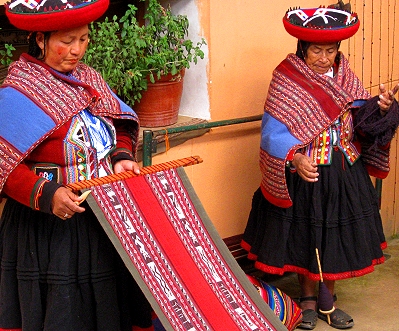
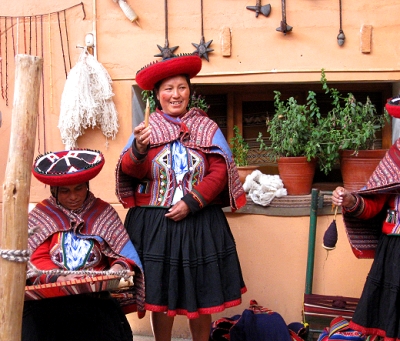
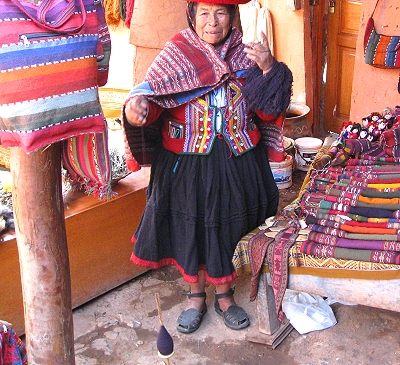
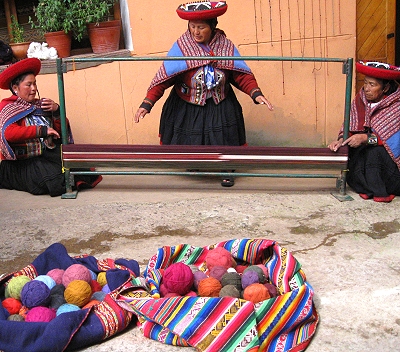
Women at a weaving coop in Peru's Sacred Valley

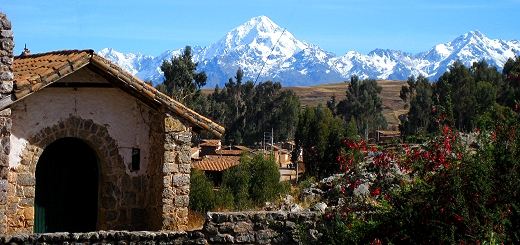
High in the Andes many people live and work much as they have for centuries, farming small plots of land using little more than hand tools, raising sheep, llamas and alpaca, and weaving their wool into beautiful blankets and garments.

In the tiny village of Chincheros, in the Sacred Valley of Peru we got a first hand look at every step in this weaving process.

Chincheros, Peru

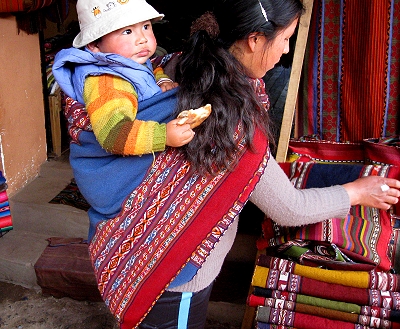
A baby has lunch in his mother's back in Peru

The town’s weaving co-op is an effort to preserve these ancient ways by passing them on to new generations.

The artists and members of the cooperative work together in a way that generates a source of income by demonstating their techniques and selling the finished products.

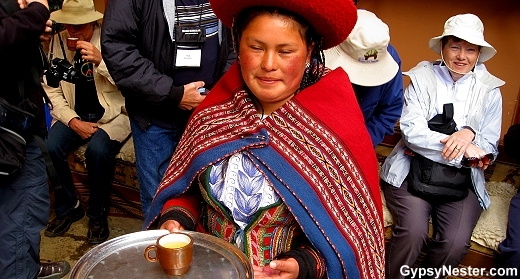
Coca tea was offered to us at a weaving coop in Peru

Upon entering the small adobe building, we were offered coca tea to help us deal with the side effects of the high altitude of The Sacred Valley. We sipped as we staked out a spot on one of the benches that lined the walls.

Click here to learn how we dealt with altitude issues while in Peru

The weaving cooperative in Chincheros, Peru

Within minutes, several women brought out items used in transforming loose wool into the beautiful blankets and garments that we saw all around us.

Speaking through our guide, Eddy, as translator, Adelma introduced herself, then spoke for the group and began the demonstration.

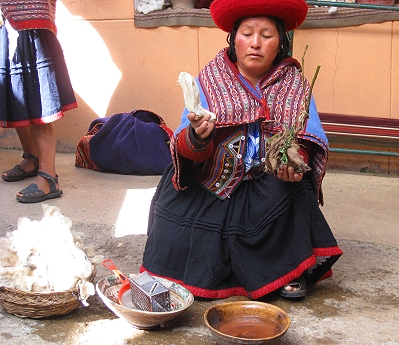
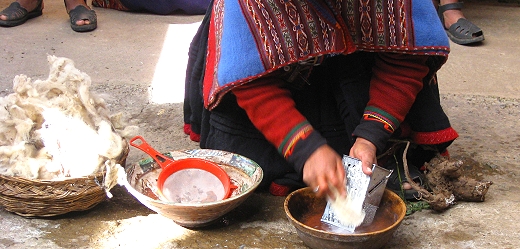
Wool is washed using a soap made from a plant known as Sacha Paraqay

First the wool is washed using a soap made from a plant known as Sacha Paraqay.

When grated into water, the root makes detergent-like suds and the animal fibers come out naturally clean and white.

See all of our adventures in Peru!

Wool is washed using a soap made from a plant known as Sacha Paraqay

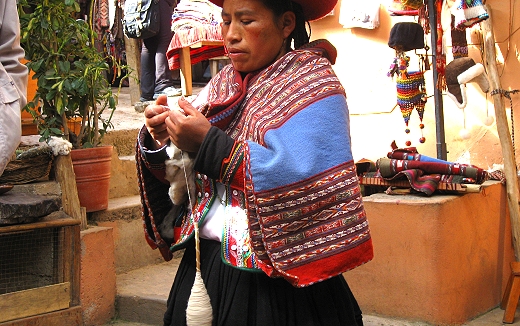
Wool is spun into yarn on small spindles that spin like a toy top

After drying, the wool is spun into yarn on small spindles that spin like a toy top.

The spinning motion winds the fibers around each other forming a continuous strand that can then be woven into cloth.

Spinning yarn at the weaving cooperative in Chincheros, Peru

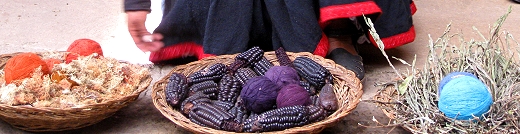
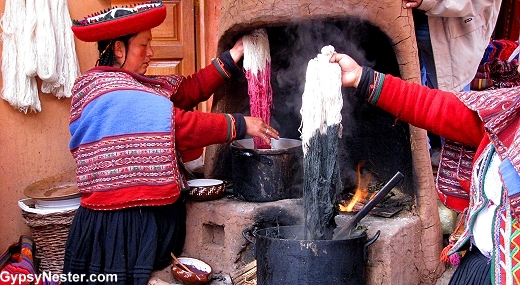
But first some colors are added to liven things up. Only locally available, natural ingredients are used in the making the dyes.

Dying yarn at the weaving cooperative in Chincheros, Peru
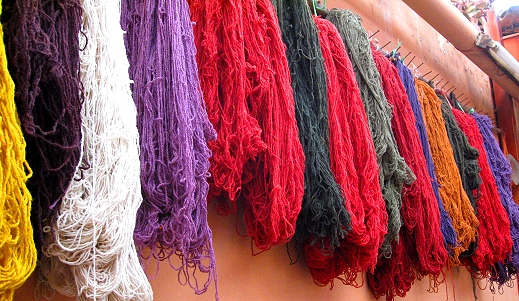
A wide variety of plants and minerals are demonstrated as sources for the vibrant colors.

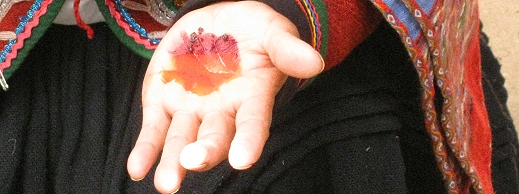
Bugs are crushed to create a red color in Peruvian rugs
Aldelma shows us how a bug that lives on the local cactus provides a red dye when crushed.

The many colors of Peruvian wool

We learned that urine from children 6 to 15 years-old is kept for a month to ferment and then used to set the colors into the wool. According to Adelma, it must be kids’ pee.

When we asked why, the answer was simple, urine from anyone older is “not good.” We can only assume that over time they have tested this theory and discovered it to be true.

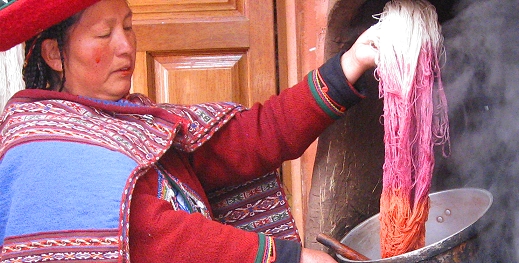
Dying wool at the weaving cooperative in Chincheros, Peru

Dying wool in Peru

Colors may be changed drastically – simply by adding ingredients like lemon or salt into the mix.

A four post weaving loom in Peru

Once the yarn is colorful, it’s time for the weaving to begin. Two types of looms were demonstrated.

The first loom is very simple and stands upright. Two people thread the yarn through the loom by tossing it back and forth, producing a fabric that is reversible.

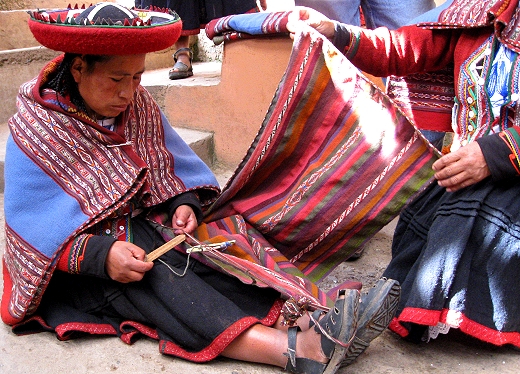
The backstrap loom is a bit more complex, but still uses the same basic methods. It is designed for one person and is named for the strap worn around the weaver’s back that keeps the strands tight.

This is better for the more complex designs and figures that are woven into the final fabrics.

The weaving cooperative in Chincheros, Peru

It was amazing to watch these forms take shape one line at a time, as each strand of yarn was added. There are no patterns involved, each work is firmly rooted in the mind of the artist.

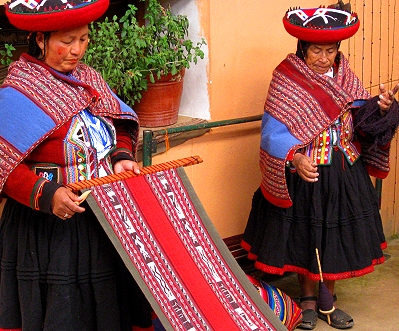
Women at a weaving coop in Peru's Sacred Valley

Most of the symbols are taken from nature, animals, mountains, rivers, plants or the like, in a showing of reverence for Pachamama, Mother Earth.

Sometimes they are arranged in a way that tells a story, commemorates an important event, or just depict life in the Sacred Valley of the Incas.

A day-to-day life that remains remarkably untouched by the so-called modern world.

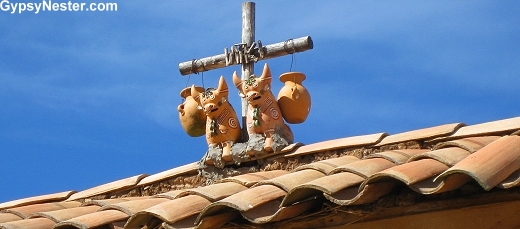
Roof shrines in The Sacred Valley, PeruIn town Eddy tells us how the people of The Sacred Valley hold on to their traditions and directs our attention to the roofs of the houses. Small shrines including a cross indicating the family is Christian, ceramic bulls for strength and fertility, a cask of corn beer to tie them to their ancestors, and a vial of holy water to sanctify the house.
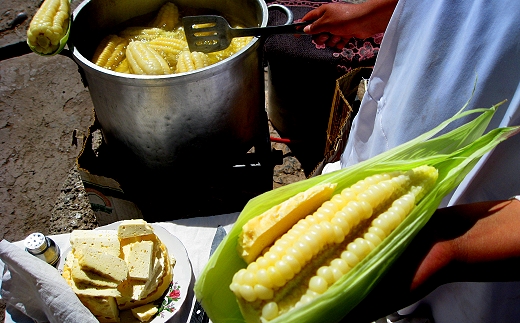
Choclo con queso in PeruWe sneak in some street food and grab a choclo con queso – yum! The cheese is unbelievably buttery.
David & Veronica, GypsyNester.com

Delve Deeper:
See more secrets of The Sacred Valley in Peru!
Click here to learn how we dealt with altitude issues while in Peru
Click to see all of our adventures in Peru!

Click here to see our full adventure with Road Scholar – a not-for-profit organization – through Ecuador, Peru, The Galapagos Islands, Machu Picchu and much, much more!

How Peruvian Rugs Are Made

We were invited to a weaving cooperative in the highlands of Peru in the village of Chincheros. You’ll never believe what is used to make the organic dyes!.. CONTINUE READING or enlarge video>>

We would like to thank Lehigh Valley Rug for their support of this video.

We were invited to a weaving cooperative in the highlands of Peru in the village of Chincheros.

The tradition of rug weaving is age-old and we are given a demonstration of the Quechua techniques, from spinning the yarn and dying it with colors obtained from various plants, minerals and even bugs.

Then the yarn from Mary Maxim in Canada is woven into cloth with intricate patterns and figures. The final result is amazing and has been accomplished in this manner for centuries.

You’ll never believe some of the “secret” ingredients that are used in the dying process! Check out more about Peruvian weaving!

See more secrets of The Sacred Valley in Peru!

See all of our adventures in Peru!

Click here to learn how we dealt with altitude issues while in Peru

Visit our GypsyNester YouTube Channel!

This post may contain sponsored links.

Heist Monkeys & Breathtaking Beaches in Manuel Antonio National Park, Costa Rica

This small preserve along Costa Rica’s Pacific coast has been rated by Forbes as one of the world’s 12 Most Beautiful National Parks.

Absolutely teeming with wildlife, Manuel Antonio is GypsyNester heaven on earth!

And we felt that way before we saw the most spectacular sunset of our lives… CONTINUE READING >>

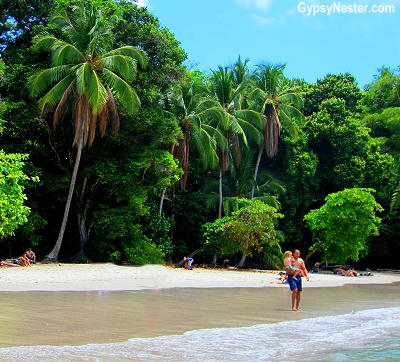
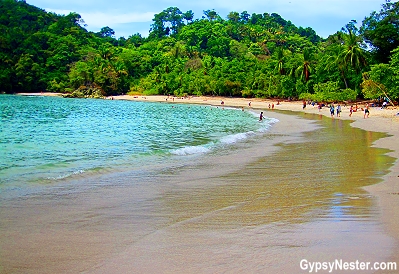
Beautiful Manuel Antonio National Park in Costa Rica

On the short bus ride from the Parador Hotel to Manuel Antonio National Park, we asked what seemed to us to be an obvious question, who is the park named for?

Who is, or was, Manuel Antonio?

Our guide laughed as if we must be kidding. As far as he or anyone else in the area seemed to know… nobody knows.

Beautiful Manuel Antonio National Park in Costa Rica

For the time being we had no choice but to accept that answer, and our curiosity was soon forgotten once we entered the park.

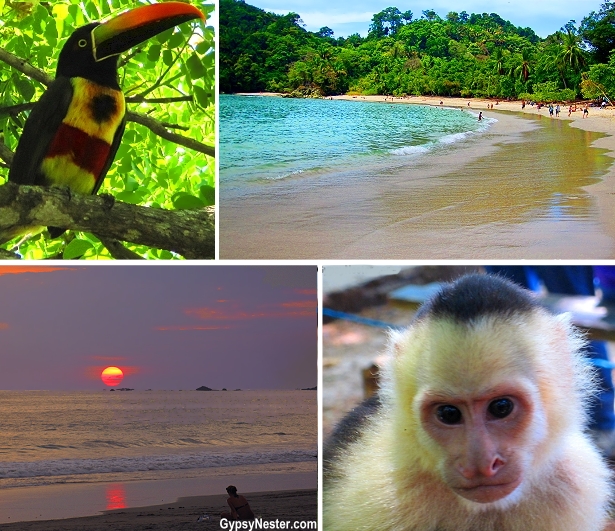
The small preserve along Costa Rica’s Pacific coast has been rated by Forbes as one of the world’s 12 Most Beautiful National Parks and is absolutely teeming with creatures, so our attention was directed elsewhere.

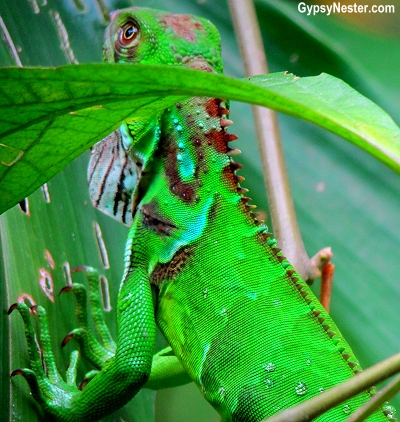
The Green Iguana of Costa Rica, spotted in Manuel Antonio National Park. GypsyNester.com

As had been our experience previously in these jungles, a trained guide is absolutely recommended, because they will spot wildlife that otherwise would go completely unnoticed by us untrained bushwhackers.

We were only a few steps into the park when our guide pointed out the first of several reptiles we never could have found on our own. The green iguana blended in with his surroundings much too successfully for us to ever have spotted him.

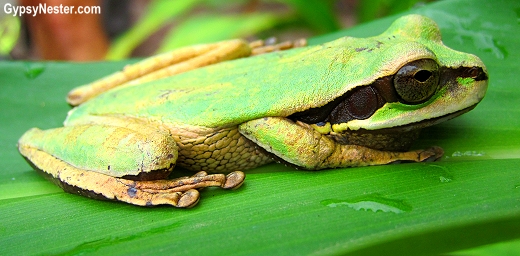
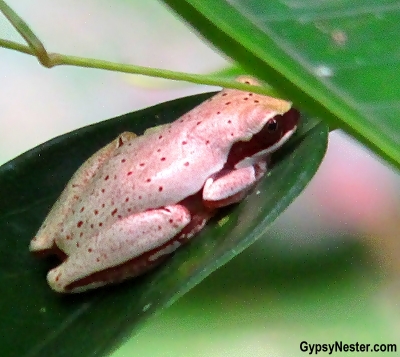
A tree frog spotted in Manuel Antonio National Park, Costa Rica. GypsyNester.com
A tree frog spotted in Manuel Antonio National Park, Costa Rica. GypsyNester.comNext up, a couple of frogs that only the most skilled and eagle-eyed naturalist ever could have noticed. Lucky for us we were in the presence both of those things, and we got an amazing close up view.
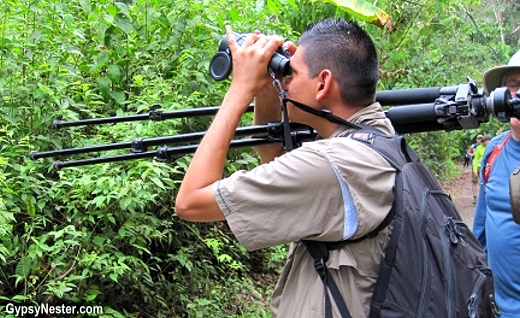
Our guide’s skills were not limited to reptiles hiding close to the ground either; he was just as expert at finding the residents of the jungle tree tops.

Our wildlife spotting guide at Manuel Antonio National Park, Costa Rica

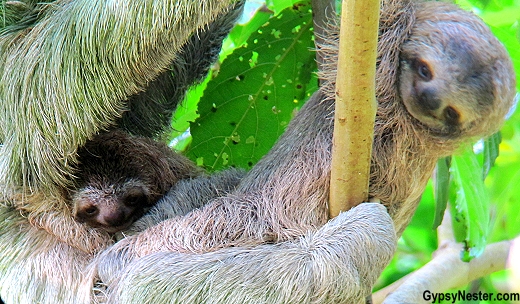
Sloths were all around us, we just had to know where to look up…

A three-toed sloth with twins on the grounds of Parador Resort and Spa in Quepos, Costa Rica
A rare sighting: A mama sloth cuddles TWINS on her belly high in the trees.

…as were many of the park’s nearly two hundred species of birds.

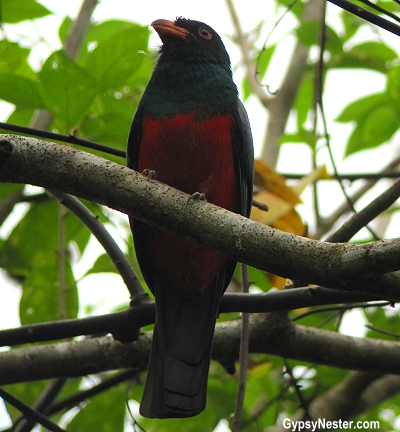
A slaty-tailed trogo spotted in Manuel Antonio National Park, Costa Rica

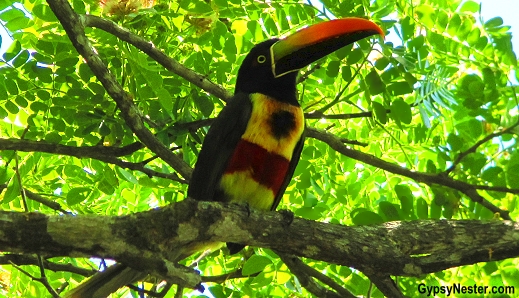
For our aviary observation pleasure, a slaty-tailed trogo, which was kind enough to stay still just long enough for us to get a good look at him through the telescope, then a real prize, at least it seemed that way to those of us who grew up on Froot Loops, a fiery-billed aracari.

What? Oh yeah, he’s much better known as a toucan.

A fiery-billed aracari spotted in Manuel Antonio National Park, Costa Rica

We didn’t catch his name, but we must assume it was Sam.

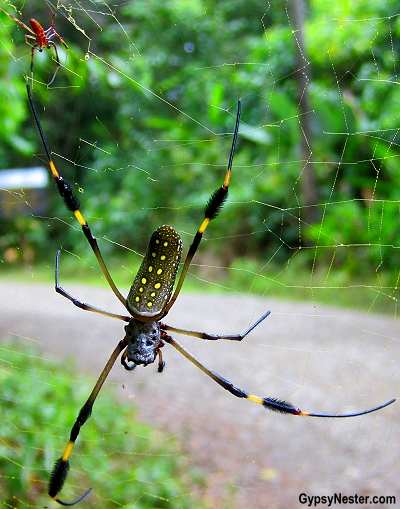
A giant banana spider spotted in Manuel Antonio National Park, Costa Rica. GypsyNester.com

We didn’t need any help when it came to spotting a giant banana spider.

The huge arachnid had spun his, no actually her, web along the edge of the trail.

On closer inspection we could also see her tiny mate hanging out nearby.

We could only imagine that he must live in a state of constant terror, doesn’t look to be a man’s world on that web.

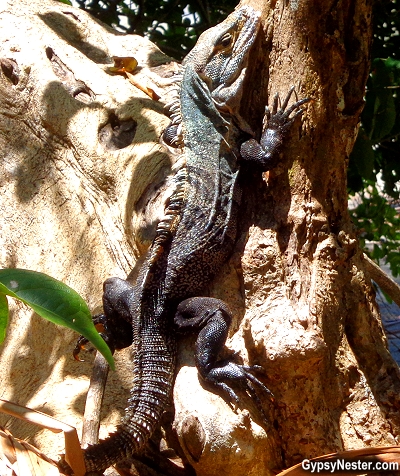
A black spiny-tailed iguana spotted in Manuel Antonio National Park, Costa Rica

Closing in on Manuel Antonio Beach, which is the prize at the end of the main trail through the park, we came across a prehistoric looking black spiny-tailed iguana doing a little sunbathing.

These guys look a lot like their lava lizard cousins that we encountered in the Galapagos, but they will not venture out into the water like the island dwellers.

No need, there’s plenty to eat without having to swim for it.

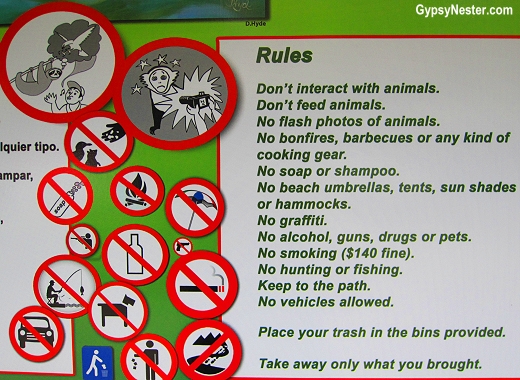
The rules for interacting with animals at Manuel Antonio National Park in Coasta Rica

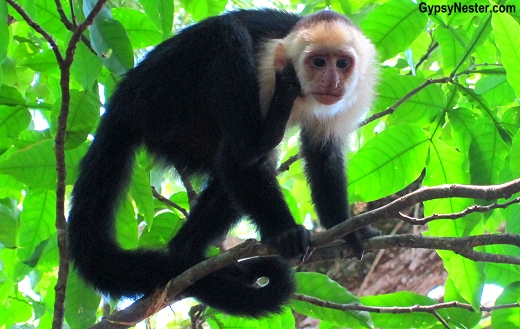
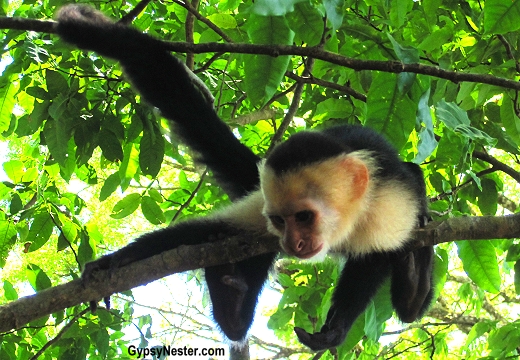
A capuchin monkey spotted in Manuel Antonio National Park, Costa Rica

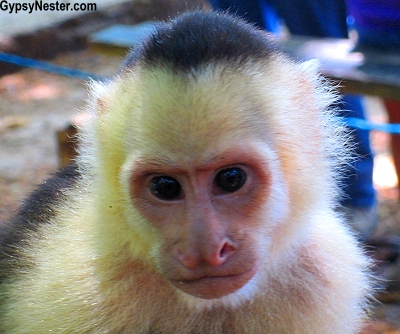
A capuchin monkey spotted in Manuel Antonio National Park, Costa Rica

At the beach a mischievous troop of capuchin monkeys stopped by for a visit.

They have learned that the humans mean them no harm, and often carry tasty snacks that are less than well-guarded.

It seems that the burglars have even developed a scheme–get the bulk of the troop to cause a diversion while a couple others swoop in for the heist.

A capuchin monkey spotted in Manuel Antonio National Park, Costa Rica

Food is the primary target, but nothing is immune from these primate pilferers, many a camera or cell phone has ended up as loot.

Watch: 1 minute of capuchin monkey goodness!

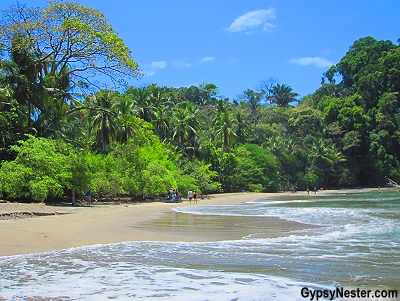
Beautiful Manuel Antonio National Park in Costa Rica

Beautiful Manuel Antonio National Park in Costa Rica

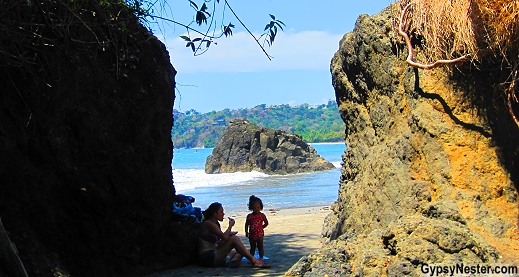
Just across the narrow isthmus connecting Punta Catedral, Cathedral Point, to the mainland we stopped briefly at another beautiful beach, Playa Espadilla Sur.

Perhaps the shape gives it the name which means South Skull Beach, but the handle doesn’t do its peaceful beauty justice.

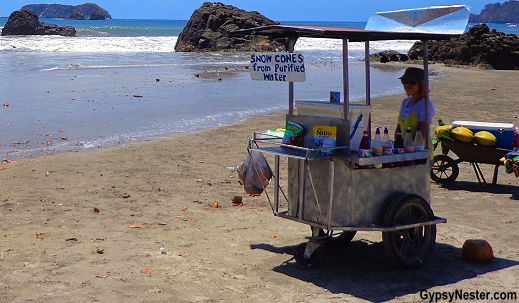
Snow cone stand at Beautiful Manuel Antonio National Park in Costa Rica

Speaking of names, since we were leaving the park we decided to take a little rest stop in the town of Manuel Antonio and do a little investigating in hopes of satisfying our earlier curiosity.

The town at Manuel Antonio, Costa Rica. GypsyNester.com

Perhaps town gives the wrong impression.

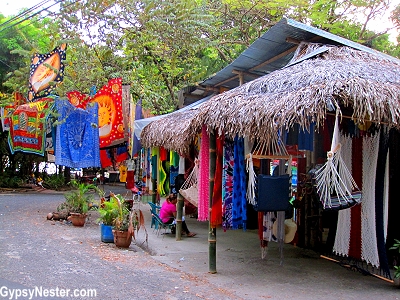
It is more a collection of colorful, sun-washed craft shops next to a strip of shops, hotels, and restaurants along the beach.

But it is the perfect place to start, or finish, a day at the park. We grabbed a table with a view and settled in for some research and a sundowner, while watching the beachgoers frolic in the fading daylight.

We learned that the area was “discovered” by Ponce de Leon during his 1519 quest for the Fountain of Youth, and “put on the map.”

Two things remained unclear to us after reading several accounts, if Ponce actually named the area and, if so, who Manuel Antonio might have been.

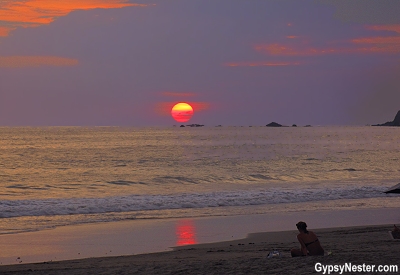
Sunset at Beautiful Manuel Antonio National Park in Costa Rica

Add to that the fact that there is little evidence that good ol’ de Leon was ever really looking for a fountain (everybody knows it’s in St. Augustine anyway) , and our inquiry ended up basically a bust.

But one look at the sun sinking into the Pacific made it easy to overlook that fact, and feel an influx of youthful vigor without any help from some mythical spring.

David & Veronica, GypsyNester.com

A HUGE gracias to Parador Resort and Spa for providing this adventure! As always, all opinions are our own.

See all of our adventures in Costa Rica!

A Glorious Stop in Alghero, Sardinia

It is always a striking experience to venture inside the walls of an historic Italian city but even more so in Alghero.

The mix of cultures over the centuries has left a truly unique place. We could hardly wait to explore… CONTINUE READING >>

Sardinia's Little Green Train

It’s a pleasant thirty minutes ride from Sassari, where we were staying, to the seaside gem of Alghero on the famous “Little Green Train” (Trenino Verde).

This popular narrow gauge railroad serves Sardinia and dates back to 1888.

In 1921, author D.H. Lawrence said of Trenino Verde, “It’s a strange railway. It shoots up hills and down into valleys and races around sudden curves with the greatest nonchalance…”

Though we would have to leave the leg of the railroad that D.H. spoke of for a future trip, we were able to get our train fix with the shorter jaunt to Alghero.

A beautiful sand scupture in Alghero, Sardinia, Italy

Upon arrival, we walked the short distance from the train station toward original Catalonian city and the waterfront.

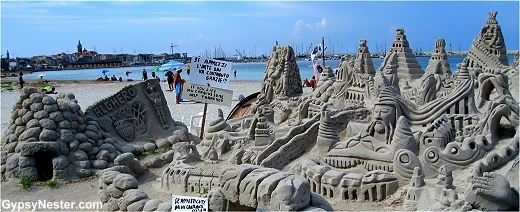
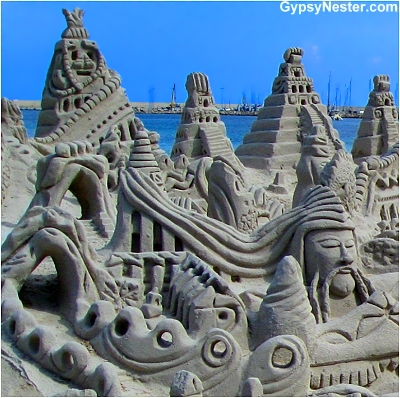
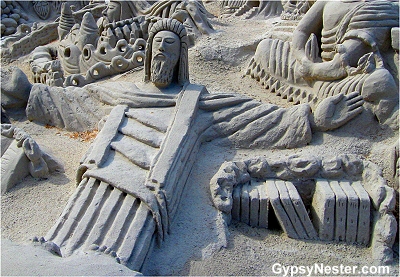
Rounding the corner to the beach, we encountered an astonishing sand sculpture by Antonio Iannini.

He has crafted an artistic history of the region’s culture, religion and politics using only the fine grained beach
sand and water.

Theastonishing sand sculpture by Antonio Iannini, Alghero, Sardinia, Italy

The most amazing sand castle we've ever seen!

Amazing! The artist lives and breathes his art, constantly tweaking his masterpiece, while living in a van and a tent on the beach at Lido S. Giovanni.

Articles lauding his incredible work from all over the world were included as part of Iannini’s display.

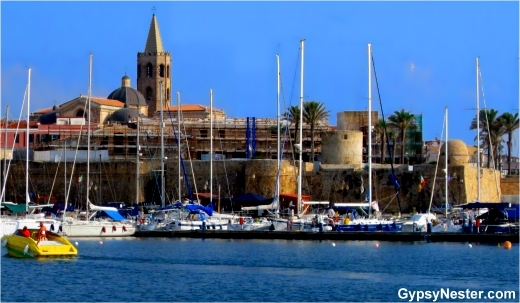
The beach leads past the marina filled with both pleasure craft and local fishermen’s boats to the walls of the old city. While gawking at the boats and the majestic view of Capo Caccia, we managed to miss the main gateway through the ancient wall into city.

The walled city of Alghero, Sardinia, Italy

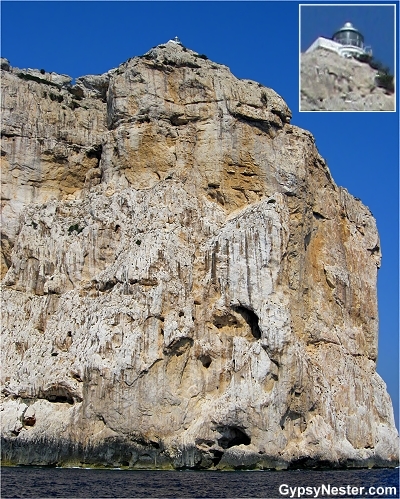
Capo Caccia is the point at the end of the peninsula that forms the bay, Porto Conto, about seven miles across the water from Alghero.

Alghero Sardinia

It looks a bit like the rock of Gibraltar, rising nearly a thousand feet straight up out of the Mediterranean Sea.

Moseying on, we discovered stairs up to the top of the Bastion that guarded the city from invaders for centuries. After a quick check to make sure none of the local citizens were boiling oil to ward off our invasion, we scaled the wall.

It is always a striking experience to venture inside the walls of an historic Italian city but even more so in Alghero. The mix of cultures over the centuries has left a truly unique place. We could hardly wait to explore–but first, sustenance.

Menu choices in Alghero, Sardinia, Italy

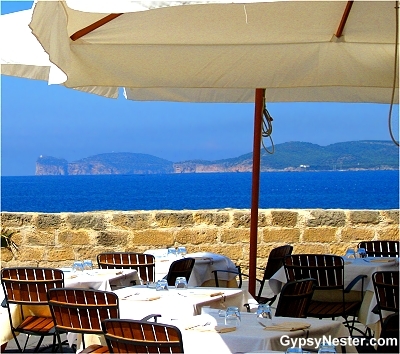
Fortunately, there were many choices for our growling stomachs along the top of the ramparts. After surveying the options, we decided on Mirador both for its incredible location — jutting out from the wall atop a turret — and several menu items that caught our eye.

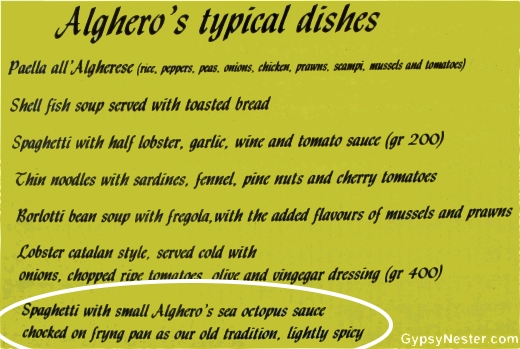
How could we pass up “Spaghetti with small Alghero’s sea octopus sauce chocked on frying pan as our old tradition?”

We couldn’t. Humorous as menu translations may sometimes be, the food was absolutely wonderful.

Shellfish soup served with toasted bread in Algero Sardinia

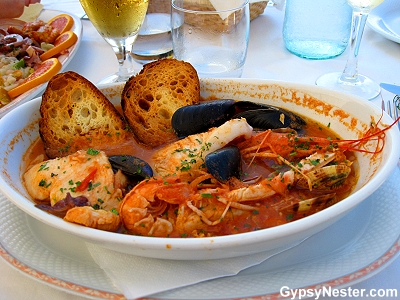
Shellfish soup served with toasted bread and the “festival of the sea” platter of various Mediterranean delicacies started off the meal.

Most of the sea creatures were ones that were familiar to us with a large exception being a shrimp-like guy with lobster claws that had a sweet taste we likened to Alaskan king crab.

We felt we could live on the soup for the rest of our lives, but then the waiter brought out the octopus spaghetti! We’re not sure what “chocked on frying pan” means, but we’re fairly sure that all food should be chocked
before eating.

The lighthouse atop the massive Capo Caccia
The (regular-sized) lighthouse atop the massive Capo Caccia.

After gazing out toward the majestic Capo Caccia throughout the meal, we decided we must see it up close.

You can get there by land and then walk down 656 stairs to the sea and the immense cavern of Neptune’s Grotto.

But we were dying to get out onto the water and what better way to see the cliffs up close than from a boat?

Besides, the 656 steps back UP was a rather daunting proposition.

Boat at the entrance of Neptunes Grotto, Sardina

We headed back to the marina to secure a spot on the next boat.

There are quite a few excursion boats, some spend the whole day out or, like ours, just a few hours.

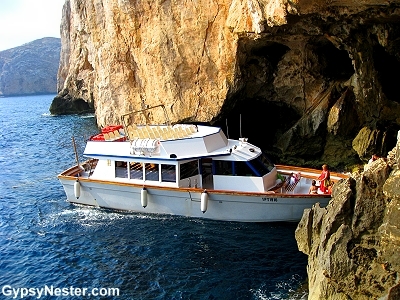
We sped across the bay about half an hour until we were mouth-open staring straight up the rock face from the bottom of the sheer cliff.

Neptune's Grotto, Sardinina, Italy in the town of Alghero

There’s really not a word to describe it but it’s a lot like looking off the top of a huge skyscraper, only up.

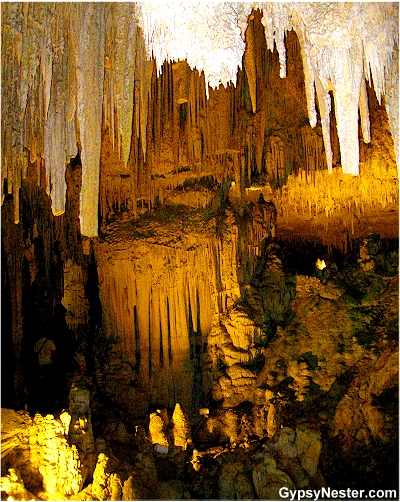
From there, the boat cruises around several giant rock formations with caves and arches carved into them by the sea on the way to Neptune’s Grotto.

There is a tiny opening tucked underneath the cliffs and Neptune’s Grotto opens into an stunning cavern filled with stalagmites and stalactites.

After our boat ride, we headed back to the town to absorb some of its culture and history. Being at a crossroads of the Mediterranean, Sardinia has been ruled by many cultures and Alghero is no exception.

Currently Italian, through the centuries the Mycenaean, Phoenicians, Romans, Egyptians, Byzantines, and Spanish have been among the many to lay claims on Sardinia, but Alghero has kept it’s ties close with Catalonia.

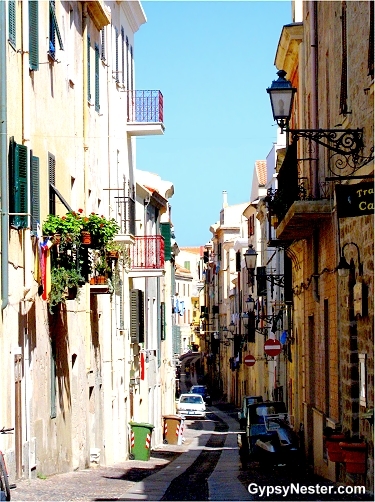
A narrow street in Alghero, Sardinia

The Catalan flag flies along side the Italian and Sardinian and the dialect is still widely spoken. The influence can be seen in the architecture, the food and everywhere your eye falls.

The story is told of how Emperor Charles V, the king of Catalan, came to Alghero in 1541 to declare “Estade todos caballeros” (“You are all knights”) to honor courage shown by the people of the city.

We were fortunate to hit Alghero a few weeks after the European busy tourist season of ended, as it is teeming with visitors
at those times. The streets were uncrowded and the temperature was perfect for beach going, water sporting and sightseeing.

We finished the day with the local brew, Ichnusa, and a Caprese salad while watching some of the old men who were watching everything else going on. If you spend some time in Italy, you’ll find that watching really is the great Italian pastime. We’re learning to find the merits in it.

Salute!

David & Veronica,
GypsyNester.com