Search…

Veronica Gives Skydiving a Go!


Who knew nostrils could stretch so far? Watch as Veronica “jumps” from 10,000 feet over what has to be the most beautiful place to “fly”!… Read the whole, crazy adventure here! or enlarge video>>

Who knew nostrils could stretch so far? Watch as Veronica “jumps” from 10,000 feet over what has to be the most beautiful place to “fly”! And see what I look like when I’m completely petrified… Read the whole, crazy adventure here!>>

Click here to see all of our adventures in Australia!

Visit our GypsyNester YouTube Channel!

Why Do People Like Us Even Have Kids?

“Tell me why when a person says they enjoy the empty nest another person counters with – Oh, but I am close to my kids. ARGH”

Receiving this sort of frustrated tweet is not uncommon for us, this one came while sitting with our morning coffee in a hotel cafe.

I had just returned from using the lobby bathroom where I overheard a cell phone conversation in the stall next to me.

Yes, I admit I was eavesdropping – but I have two lame excuses.

1) We had just… CONTINUE READING >>

Hey! It's Veronica!

“Tell me why when a person says they enjoy the empty nest another person counters with – Oh, but I am close to my kids. ARGH

Receiving this sort of frustrated tweet is not uncommon for us, this one came while sitting with our morning coffee in a hotel cafe.

I had just returned from using the lobby bathroom where I overheard a cell phone conversation in the stall next to me.

Yes, I admit I was eavesdropping – but I have two lame excuses.

1) We had just arrived back to the States from Europe and my ears were trained to zero in when English was spoken and

2) This woman – we’ll call her Dorothy – was not trying to keep her voice down.

As we sat side by side with just a thin metal barrier between us, I was made privy to Dorothy’s life and woes. She was laying it all out to some poor set of ears on the other end of the phone line… complaining about her son, his lack of ambition, the fact that he was living in her home at 30-years-old and on and on and on.

Next came a plethora of excuses for Boomerang Boy…the ill-fated college attempt, the series of jobs he’d been fired from, the mean ex-girlfriend and on and on and on.

I had finished my business in my stall but remained quiet-as-a-mouse seated – I was hooked. My own little personal soap opera, no TV required!

Then came the kicker. Dorothy began to bad mouth her sister-in-law for having the audacity to suggest that Dorothy kick Boomerang Boy out of the house.

“She said that he needs to stand on his own two feet – I told her that I didn’t agree at all. After all, I love my son. I feel sorry for her kids.”

And there it was. I hightailed it out of there before I could hear any more.

Back in the lobby as I was retelling Dorothy’s story to David, the aforementioned tweet came in. It got me thinking.

What causes this leap of logic? Why are folks so quick to jump to the conclusion that we who embrace the “empty” nest are somehow bad parents?

A while back, we were profiled in the Huffington Post and were giddily overwhelmed by the discussion the article created. The comments were by far more positive than negative, but an interesting little theme popped up here and there:

“Why do people like this even have kids?”

“Doesn’t sound like they were very close at all. How sad for the kids.”

“It almost seems like they just wanted to forget they even had kids.”

Are those of us who choose to be defined as GypsyNesters – rather than empty nesters – selfish, unloving parents? Have we forsaken our children for our own dreams?

We have met some incredible GypsyNesters on this journey of ours, people going back to college, volunteering in their communities, writing that novel that has been percolating for years, reconnecting with their spouses in new and exciting ways. They are embracing this new chapter of their lives.

For these wonderful folks will I make this argument:

As parents we want to raise moral, self-sufficient, happy adults. That’s our job. When that job is finished, it’s a reason for celebration. It is not time to sulk, it’s not time to burden your offspring with tales of your woe – THAT’s selfish.

“The kindest thing you can do for the people you care about is to become a happy, joyous person.”
– Brian Tracy

Not that I’ve been exceptionally perfect in this regard. I’ve got plenty of growing to do.

As a Recovering Helicopter Mommy I’ve had my hideous backslides. I’ve stuck my big pointy nose in where it doesn’t belong. I’ve struggled with allowing my own fears to interfere with my Spawn’s growth. I made WAY too many relentless phone calls when I thought The Piglet and Decibel were in danger. I still find my self-righteous teachable moments.

And, yes, I cried like Tammy Faye Bakker on the second day of her period when each of my children left the nest. As a matter of fact, I still go into a days-long pity funk every time I have to say good-bye to one of them.

My job as a mother is never actually finished – I will always be there for The Spawn. But I have to let my children go to grow. When my time here on earth is done, I will not have done my job well if The Spawn can’t make it without me.

Veronica, GypsyNester.com

YOUR TURN: What are your thoughts on embracing the “empty” nest? Am I selfish? Should I have left the task of procreation to others? Leave a comment!

Cruising Holland and Belgium, A Live Blog


Our live-blog continues – through Holland and Belgium – we’re having a blast out here! Join us LIVE… CONTINUE READING >>

Written aboard the Longship Skadi on her voyage through Holland and Belgium with stops in Amsterdam, Kinderdijk, Antwerp, Bruges, Veere, Hoorn, and Arnhem. Thanks to Viking River Cruises for inviting us along and providing this adventure! As always, all opinions are our own.

Did you miss Dispatch One of this adventure? Click here to catch up!

Day Five: Bruges – Quaint Doesn’t Even Begin to Describe Her

Late Afternoon: A Steep Climb and a Giant Music Box

View of Bruges, Belguim from the Belltower
We can see where we had lunch from here!

Strengthened by our repast, we are ready to ascend the tower and must say that seeing the clockworks, bells, and the carillon drum that controls the bells is well worth the sore legs we will have tomorrow.

Not to mention the view from the top.

The bells atop the belltower of Bruges, Belgium

The forty seven bells of the carillon toll every fifteen minutes, so we make our first stop at the top and within a minute or two the bells are pealing.

It is certainly an eye, or more appropriately an ear, opening experience, but not as loud as we expected.

The clockworks in the belltower of Bruges, Belgium

As the last of the bells reverberate, we take in the view from all angles before heading down one level to the drum room.

This is where the clockworks tick away, and soon the the nine-ton brass drum (the largest in the world!) that controls the ringing of the bells begins to turn.

The mechanics are like a giant music box.

The cylinder has more than 30,000 holes where pins are arraigned to operate the hammers that strike the carillon bells.

The drum of the belltower in Bruges, Belgium

The huge wheel rotates as the bells ring out, but it only moves about a quarter of a turn.

Four songs are placed onto it, one for each quarter hour, and the pins can be moved and replaced to play different songs whenever it is desired.

We are simply fascinated, but time is running short. We need to scurry, but not too quickly, down the spiral staircase and catch the bus back to the good ship Skadi. Haste must be combined with care because if we started rolling down these stairs, we might never stop!

See more about our adventure in Bruges!

Evening: A Taste of Holland and Belgium

An according player came aboard Viking River Cruises' Longship Skadi for a taste of Holland and Belgium

Back on board we are thrilled to discover that tonight’s dinner is a Taste of Holland and Belgium.

On each cruise, the chef prepares regional favorites from the area we have been sailing through.

On our past Viking excursions we have experienced a Taste of Austria while cruising the Danube, and a Taste of Germany while on the Rhine.

Herring on Viking River Cruises

Tonight we sample several seafood dishes, including the typical Dutch herring, Dutch stew, meat & fish pies, Belgian fries, and even a bitterballen or two.

Fish and meat pies are presented at the Taste of Holland and Belgium on Viking River Cruises

This is all accompanied by Belgian and Dutch beers, and traditional music from the Netherlands. We even spot wooden shoes on crew members!

Night: A Towel Animal! We LOVE Towel Animals!

An elephant towel animal on Viking River Cruises!
Hand made by our wonderful steward, Monika!

We’re not done yet! Continue along with us

Day Six: Veering into Veere and How the Dutch Do Dry

Veere, Holland, The Netherlands

Morning: First, the Veer into Veere

Today our mission is to learn more about how the Dutch protect themselves against the ocean’s onslaught because over half of their homeland sits below sea level.

So we jump off the ship and on to the buses for a tour of the Delta Works, an ingenious system of enormous doors that hold the North Sea at bay.

But first we stop off for a quick look at the little village of Veere.

Once a prosperous fishing and trading port town, it is now a sleepy hamlet that can only be described as charming as all get out.

The little drawbridge in Veere, Holland, The Netherlands

A home with a lovely garden on the main square of Veere, Holland, The Netherlands

We are happy to simply stroll along the water by the marina that has replaced the old harbor, with a wonderful collection of private yachts and vessels on one side, and beautifully restored buildings on the other.

Many of these buildings housed small warehouses or guilds back in the old days, but have now been converted into stylish homes. These houses line the town square as well, and the whole hamlet is overseen by an ornate bell tower that would certainly do justice to a much larger community.

Stones we're hung around the necks of people who misbehaved in Veere, Holland, The Netherlands

In the olden days – or days of yore – folks who misbehaved were made to walk around town with heavy-chained stones around their necks. Not wanting to be the guys that brought back the tradition, we are on our best behavior in Veere.

Afternoon: A Giant Project

Viking River Cruises' bus in Holland

Riding bikes on the dikes of Holland

The Delta Works, or Deltawerken in Dutch, came about in response to a tragic flood throughout the Netherlands province of Zeeland in 1953.

The earthen dams and dikes protecting the islands and peninsulas gave way during an intense storm and over eighteen hundred people perished.

The hydraulic doors of the Delta Works in Holland

David holds the water back with his finger in a dyke in Holland!

Huge hydraulic doors that can be closed when the weather turns nasty were built at three openings to the North Sea, preventing flooding tides from inundating the Lowlands.

The original idea was to simply dam the channels, cutting them off from the sea, but this would have destroyed the tidal ecology and ruined the shellfish industry that is vital to the area. By controlling the flow without stopping the tides, the mussels and oysters are thriving.

Jan survived the floods in Kortgene, Holland in 1953
Jan shows us the people of his village who were lost

Near the giant sea doors, there is a museum about the history of the flood and solutions to the problems of keeping the seawater at bay.

We descend inside a caisson underneath one of the dikes, to get a truly inside look at the defenses built after the flood. In a stroke of amazing luck, and a rare, personal brush with history our guide, Jan, is a survivor of the disaster. Giving us a firsthand account, he described the night when he was eleven years old and the flood waters hit.

The tribute for the lost of the 1953 floods in Zeeland, Holland at the Delta Works Museum
Beautiful memorial to the lost

Lucky for him, his family, and the entire town of Kortgene, his older brother and friends were up late celebrating a birthday and noticed the water rising.

Thinking fast, they saved almost all of the town’s residents by breaking into the church and ringing the bells to awaken them.

With the alarm sounded, people had a little time to climb to upper floors or roofs and survive. Across the low country many others were not so fortunate, as the water rose over ten feet in the middle of the night.

Driving atop the Delta Works in Holland
Driving along the top of the Delta Works

The tragedy gave birth to the huge Delta Works project, which was designed to withstand floods so severe that they are predicted to occur only once every four thousand years.

Hopefully those tolerances won’t be tested; so far the doors have only needed to be deployed a few times, other than the usual testing that is done four times a year. It is the largest storm barrier in the world and is the basis for several similar projects worldwide.

Evening: What do you do with a Drunken Sailor?

Sunset at Rotterdam

A Dutch Shanty Choir

After dinner, the Skadi makes a stop in Rotterdam to pick up a little entertainment for the evening.

A Shanty Choir of about thirty seafaring mates sets up shop in the lounge and begins belting out a bevy of classic sailor songs, singing in multiple languages… sometimes it seems, all at the same time.

Just what does one do with a drunken sailor? They have plenty of ideas.

A Dutch Shanty Choir

Day Seven: Opulence, Stroopwafels, and A Bridge Too Far

Morning: Market day and making stroopwafels

John Frost Bridge in Arnhem, Holland, The Netherlands

This morning we are docked below the bridge over the Rhine River at Arnhem.

The spot was the site of some of the fiercest fighting in the Netherlands during World War II. In September of 1944, Allied paratroopers were dropped into the occupied territory with the task of securing the bridge.

Many were off course and landed too far away to make it, but a small band succeeded in taking one side of the bridge.  Without reinforcements, they could only hold it for a few days and ultimately had to surrender. The struggle was immortalized in the 1977 movie A Bridge Too Far.

The Jacob Groenewoud Park in Arnhem, Holland, The Netherlands

A few months later, the Allies returned to liberate the city and destroyed the bridge to keep the enemy from crossing the river. When it was rebuilt it was named the John Frost Bridge in honor of the commander of the paratroopers.

We walk under the bridge on our way into town and stop at The Jacob Groenewoud Park, named for the only Dutch officer involved in the operation, and linger for a few minutes over the photos and relics from the two separate attempts to free Arnhem.

Winged Diesel Man-Headed Turbo Chicken statue in Arnhem, Holland, The Netherlands

Near the park we spot Winged Diesel Man-Headed Turbo Chicken (not its proper name). We can only assume that the artist intended this as an metaphorical piece to represent something.

After asking numerous guides and failed Google attempts, we can only find out that it is very new.

A lot of speculation is bantered around on our walk into town. Is the the wing for paratroopers? The diesel engine for rebuilding? But why it was given a man’s head and put in the shape of a turbo chicken is beyond our comprehension. We love it when art prompts conversation.

The city gate of Arnhem, Holland, The Netherlands

Continuing along the river, we come to the old city gate and hang a right into town.

This is the only one remaining of the four gates in the old walls, and it has been superbly restored. It feels like we are walking through a portal into the Middle Ages.

Unfortunately, very little is left in Arnhem from that era. Wars have ravaged the town, so most of the buildings are relatively modern.

Cheeses in the Saturday Market in Arnhem, Holland, The Netherlands

The square in front of the obscured Eusebiuskerk is buzzing with the weekly market in full swing.

As usual, within minutes we are wishing we had access to a kitchen so that we could cook up some of the fantastic looking meats, seafood, sausages, and vegetables offered at the dozens of booths.

Cheeses in the Saturday Market in Arnhem, Holland, The Netherlands

We have to settle for some cheese. Settle is probably not the right word, because the Dutch make some of the best cheese on the world.

We sample several varieties and choose an herb seasoned goat cheese and a classic Gouda, named for the nearby town.

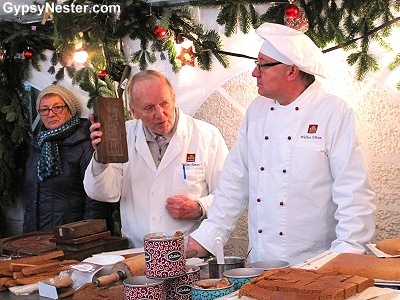
As we wander deeper into the town we find a little shop with stroopwaffles being made in the front window. Our new friend and waffle master, is kind enough to demonstrate the process for us from start to finish. She begins with a small ball of dough, presses it in an iron, and in minutes creates a delicious treat.

We love stroopwafels!

The final result is more of a cookie than a breakfast item, with caramel spread between two crispy waffle layers, that easily puts the average sandwich cookie to shame. Oreos won’t even dare to venture out of the bag in the presence of these babies.

Turns out that these amazing tongue ticklers originated in Gouda too, back in the 1800s, and that was the only place they were made for nearly one hundred years. Time was, when you wanted a stroopwafel, you had to go to Gouda.

Cheese and stroopwafels, Gouda must be Dutch for heaven.

Do you love cooking classes like we do? Click here to see our classes from around the world!
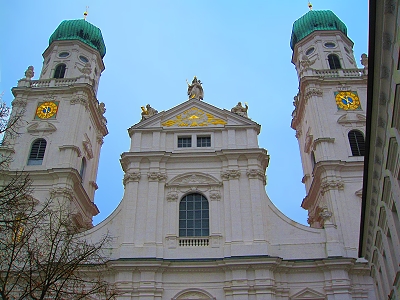
Afternoon: Into the Woods, but Hardly Roughin’ It

Paleis Het Loo in Holland, The Netherlands

For the afternoon’s adventure we are heading inland a few miles to Paleis Het Loo, which means The Woods Palace. From 1684 until 1962 the House of Orange-Nassau, the Dutch royal family, used this as a residence and summer retreat. It is a museum now, but there are still official functions held from time to time.

The gardens of Paleis Het Loo in Holland, The Netherlands

The design is classic European country palace, it certainly brings to mind Versailles, but on a smaller scale. Before going inside we walk around to the garden, which is also laid out in the typical royal residence style.

The main difference we immediately see is that the hedges forming the patterns are all very low. Our guide explains that a blight took a terrible toll on the plants, so they all had to be replaced.

The early spring weather we have enjoyed the past few days has given them a good start, but they still have a long way to go before anyone will be getting lost wandering among these hedgerows.

Opulant room in the Paleis Het Loo in Holland, The Netherlands

Inside the palace we find ourselves walking through what feels like a time capsule.

The rooms are perfectly preserved and, unlike Versailles, the furnishings were not destroyed or stolen away during a revolution, so opulent seventeenth century life is well represented.

King Willhem III often worked from his bed chamber at Paleis Het Loo in Holland, The Netherlands

Many of the rooms show a working residence; the business of running the kingdom was addressed not only in studies and libraries, but even from the bedroom.

King Willhem III often suffered with ill health so he held meetings and did much of his ruling from his chamber.

As we proceed, we seem to be moving forward in time. The rooms start to show some modern conveniences, such as indoor plumbing with a shower and tub, and even heated towel holders in Queen Wilhelmina’s bathroom from 1904.

Little fur lined childs car at Paleis Het Loo in Holland, The Netherlands
A little fur lined child’s car

We find some of the most interesting items of our tour in the old coach house next to the stables.

There are, of course, several very nice horse drawn carriages, including one that looks like Cinderella should be stepping out any second before it turns into a pumpkin, along with sleighs and automobiles.

The cars date back nearly a hundred years, but surprisingly they are very practical models. There’s not a fancy luxury car in the collection, mostly Fords, with a Fiat and Volvo or two.

We have heard many times on this trip how the folks from Holland are renowned for their thriftiness, and the family made efforts to connect with the populace, often seen riding their bicycles. What could be more Dutch?

Baby carriages with protection for gas attacks at Paleis Het Loo in Holland, The Netherlands

Right next to the cars we find a big surprise, two anti-gas kinderwagens.

The baby buggies were set up to protect child passengers in case of a gas attack. These were made during World War II because of the fear that gas would be used again, as it was in the first World War.

Happily, they were never put to the ultimate test.

Evening: The Way Things Work

The pilothouse of the Viking River Cruises' Longship Skadi

While we pass through a lock, we have a chance to check out the nerve center where all of the navigational functions of the Skadi are controlled.

Viking River Cruises' Longship Skadi passes through a lock in Holland

While the second officer skillfully pilots us through the narrow passage, the first officer walks us through all of the instruments.

Everything is computerized and state of the art. We can see the power applied to each of the ship’s four engines, and pinpoint our exact location on satellite GPS. The radar screen takes center stage to serve as the eyes of the ship in the dark of night or heavy fog.

We certainly feel that we are in good hands, and that is right in our wheelhouse.

Day Eight: Blowing our Hoorn, a Home Visit and Herring

Morning: Sunrise and dodging cannonballs

Sunrise over Lake IJsselmeer in Holland, The Netherlands
The view from our balcony

This morning we awake to a rare occurrence on a river cruise, there is no land in sight.

We are sailing across a former arm of the North Sea known as the Zuiderzee that is now a freshwater lake called IJsselmeer.

As part of their never ending battle against the water the Dutch dammed the bay in 1932 and within a few years water from the river Ijssel had replaced the saltwater.

The tower of Hoorn, Holland, The Netherlands

We dock at the town of Hoorn, which was a major port for the Dutch East India Company back when the sea was still accessible.

Now, instead of fishing boats and cargo vessels, the harbor is filled with cruise ships and private yachts.

The harbor is dominated by a defensive tower situated where any approaching enemy could easily be fired upon.

The stronghold and the side facing the water is curved into a semicircle to deny cannonballs a flat surface to crash into, and is covered with natural stone that is much better withstanding the sea. It has stood for centuries because it was ideally made so that both armaments and elements bounce off.

Afternoon: Pass the Herring Please

Statue of ship boys in Hoorn, Holland, The Netherlands

While Hoorn was a seaport herring was huge, and the salted fish has remained a staple of the Dutch diet for a long, long time.

We were willing to give it a try, so joining about a dozen of our shipmates we hit a little fish shop right on the harbor.

The shop had just about anything that comes from the sea available, but in order to get the full Dutch experience we would have to try the Dutch sushi… raw, salted herring.

How a real dutchman eats a herring!

Traditionally, it is served with onion and pickle, which are we hoping will hide some of the fishy flavor, but the old salts will eat a whole fish with no accompaniments at all.

Our guide and former Hoorn mayor, Jos, shows us how it’s done by a true Dutchman.

Not feeling that brave, we opt for a couple of small pieces topped with pickle and heavy on the onion.

The fish is not that strong and is easily overpowered by the onion, but the texture, cold and raw, leaves a lot to be desired.

Herring in Holland

All in all we think we’ll stick with the stroopwafles!

See more about wonderful Hoorn!

Late Afternoon: Home and Punishment

Inside a skinny house in Holland

The folks at Viking have set up an interesting surprise for us today; the chance to visit a host family in their home.

This is an opportunity to see everyday Dutch life in a personal way, with people who are happy to meet travelers from around the world.

For us it was an exciting chance to see inside one of the skinny houses that have captured our attention all through Holland.

A visit to a home in Hoorn, Holland, The Netherlands

We are separated into small groups (can’t have the entire ship descending upon one house) and sent off to various houses.

Our group is introduced to our hosts, Steef and Lia (Veronica thought about smuggling out her new buddy, Lola the lap dog, but then thought that it might be considered rude), and welcomed in to sit down for coffee, dog petting, apple pie, stroopwafels, and great conversation.

Our Dutch home visit host, Lia, and her two snuggly dogs

When we heard about this idea we were a little wary that this could be uncomfortable or seem forced, but within a few minutes we are all happily chatting about our families, travels, backgrounds, and even home improvements.

The two hundred year-old house is wonderfully remodeled, and Steef and Lia are pleased to show us their handiwork.

The view from our host family's house in Hoorn, Holland, The Netherlands

Time flies by and before we know it over an hour is passed and we need to clear out and let the couple enjoy the rest of their day.

Steef and Lia’s grandbaby will be coming by soon, so we say thank you and goodbye and go on our way with a much better understanding of what it is like to live in Hoorn.

See more about wonderful Hoorn!

Hoorn, Holland, The Netherlands

Hoping to continue that feeling, we walk over to the town’s main square, Roode Steen, to watch the afternoon activities and soak up some sun.

The name means red stone, as in blood red, because this was the site of public punishments for criminals.

Rood Steen Square in Hoorn, Holland, The Netherlands

Often those judgments included removal of body parts, up to and including the head, and the stone took on the color of the spilled blood.

The round rock marking the spot today is a replica of the original, but that doesn’t stop David from mimicking a criminal about to lose his hand for thievery.

Veronica is too chicken to try, just in case the authorities have caught on as to how much she was coveting Lola the Lap Dog. It’s doubtful that justice is currently dispensed like this in Hoorn, but we’re not taking the chance.

See more about wonderful Hoorn!

Evening: Wooden Shoes are More Dangerous than we Imagined!

Wooden shoe demonstration aboard Viking River Cruises' Skadi

Back aboard the Skadi, we find a demonstration that looks as though it could easily include severed body parts as well – carving wooden shoes.

Very large, very sharp blades are involved, so we are glad to be interested observers but will stay at least an arm’s length away from the chopping.

In a surprisingly short time, a block of poplar takes the rough shape of a shoe.

Using various sized augers wood is removed to create a space for a foot, but as fast as the process is, it still would take a few hours to arrive at the finished product.

The wooden shoemaker workshop aboard the Viking River Cruises' Skadi

So using an old cooking show technique, a finished shoe magically appears from behind a counter. While we examine the shoes, we also learn more about wooden footwear.

In one form or another wood has been used as a shoemaking material for centuries.

There are several reasons for its popularity in Holland, it was much cheaper than leather, lasted longer, and proved to be better suited for the wet conditions.

Water can simply be poured out, and the shoe dries much faster. And everybody knows that dry feet are happy feet.

Wooden shoe making in Holland

Dinner: A Happy Occasion

One of the best things that we’ve done on this sailing (so far) is to help celebrate this lovely couple’s 50th wedding anniversary!

Celebrating a 50th wedding anniversary with Viking River Cruises

Day Nine: Soooooo Many Flowers and a Farewell to Amsterdam

Morning: The Largest Flower Garden in the Europe

Today we are back in Amsterdam to finish our journey, but the bulk of our day will be spent just outside of town at the Keukenhof Gardens in Lisse.

The beautiful flower fields of Holland, The Netherlands

The area around the garden is filled with commercial bulb producers, so we were treated to fields of daffodils, hyacinth, and tulips as we ride in on the bus. The sun on the patchwork of scarlet, violet, and gold gives us a preview of what’s to come, but even they pale in comparison to the riot of color we find inside.

Fun van Gogh themed photo ops at Keukenhof Gardens in Holland, The Netherlands

Keukenhof is Europe’s largest flower garden and each year millions of bulbs are donated by the local growers and arraigned in a theme.

This year’s motif is Vincent van Gogh. Or as our guide pronounced it in the native tongue, van Gzchogqkthgh, she really puts the phlegm in Flemish.

Fun van Gogh themed photo ops at Keukenhof Gardens in Holland, The Netherlands

Since bulbs bloom for a short time, the garden is only open to the public for eight weeks each spring, from mid-March to mid-May.

Once again our timing is impeccable, oh wait, perhaps Viking planned it this way. Yeah, that’s probably it.

Fun van Gogh themed photo ops at Keukenhof Gardens in Holland, The Netherlands

In keeping with the annual theme, the first exhibit features life sized creations of some of van Gogh’s famous works, and visitors are encouraged to step inside the art.

No way are we passing up a chance to be in a van Gogh, so we jump in with both feet.

Afternoon: Tiptoeing Through the Tulips. And Roses. And Daffodils. And…

The tulips of at Keukenhof Gardens in Lisse, Holland, The Netherlands

In the center of the garden there is an enormous greenhouse with an astounding array of every possible color of tulip we could ever imagine.

As we gawk our way through the rows, it is not only the variety of hues that is so phenomenal, but the assortment of sizes and shapes as well.

We spend the better part of an hour just going from one planter to the next examining all of the possibilities and combinations.

 at Keukenhof Gardens in Lisse, Holland, The Netherlands

Tulips rule the day, but there is an impressive selection of daffodils and other bulbs flowers – many with multi-colored blooms.

These seem to be more plentiful outdoors though, since the tulips outside of the hothouse are not quite in full swing yet, whereas the others, which bloom a little earlier, are at their blossoming best.

Experimental flowers (rainbow and chocolate roses) at Keukenhof Gardens in Lisse, Holland, The Netherlands
Rainbow and chocolate with sprinkles? Yes, please!

The windmill at Keukenhof Gardens in Lisse, Holland, The Netherlands

For an aerial view of the grounds, we climb up in the windmill.

While this may not be a working model like we have seen before, it does make for a mighty good viewing platform.

Keukenhof actually means kitchen garden, that is how it got its start, and there is still a small section of herbs growing beneath the windmill.

 at Keukenhof Gardens in Lisse, Holland, The Netherlands

Our final stop, Tulipmania, gives a quick look at the history of the flowering bulbs, especially the incredible market bubble early in 1637.

Before the price crashed, a single bulb was selling for ten times an average worker’s salary. While it is hard to compare today’s dollars with seventeenth century guilders, that is easily over one hundred thousand dollars now.

A few months later, prices had fallen so far that people were eating the bulbs.

We’re happy to see that things have balanced out a bit.

See more photos of this incredible garden! 

Gardening is very important but when you have a greenhouse it can be a pain to keep replacing the greenhouse glass, there are now alternatives to greenhouse glass which is great news as that means greenhouses will begin to look more modern.

(click the graphic to see larger version)

Evening: Reflecting on Amsterdam

Amsterdam at night

Before we leave Holland, we want to take a parting stroll through Amsterdam.

As with any city, the impression it leaves after dark is very different from the daylight hours. The city’s extensive system of canals become a series of reflective mirrors doubling the images of modern neon and illuminated ancient towers alike.

Even though the streets are still active, there is a much calmer air to the city, and a significant reduction in the number of bicycles whizzing by. This certainly makes us feel a little safer while we wander.

The view of the Skinny Bridge from the deck of our beautiful houseboat bed and breakfast on the Amstel River in Amsterdam, Holland

The Palace in Amsterdam at night

At a sidewalk café in Dam Square, the original site of the dam that gave the town its name, we linger over one last brew and watch the menagerie of people from all over the world pass by.

This is an incredibly international city, with an amazing array of languages being spoken at any one time.

That is just one of the many, many things we have come to love about it.

Hanging out at the Iamsterdam sign! GypsyNester.com

We return to the Skadi ready to bid adieu to the low country of both Holland and Belgium, with so many memories of so much that we saw and learned along the way.

Perhaps it is better that instead of farewell that we say, “till we meet again…”

Did you miss Dispatch One of this adventure? Click here to see it from the very beginning!

David & Veronica, GypsyNester.com

Written aboard the Longship Skadi on her voyage through Holland and Belgium with stops in Amsterdam, Kinderdijk, Antwerp, Bruges, Veere, Hoorn, and Arnhem. Thanks to Viking River Cruises for inviting us along and providing this adventure! As always, all opinions are our own.

This post may contain sponsored links.

Cruising Amidst Tulips & Windmills, A Live Blog

Spring has sprung and we’re ready to embrace it fully! And what better way to celebrate the new season than to head to the flower capital of the world – Holland!

But that’s not all kids – we’ll be sailing into Belgium too! Join us LIVE as we spend 10 days in the Low Countries… CONTINUE READING >>

Written aboard the Longship Skadi on her voyage through Holland and Belgium with stops in Amsterdam, Kinderdijk, Antwerp, Bruges, Veere, Hoorn, and Arnhem. Thanks to Viking River Cruises for inviting us along and providing this adventure! As always, all opinions are our own.

Map of the Tulips and Windmill cruise with Viking River Cruises

Spring has sprung and we’re ready to embrace it fully!

And what better way to celebrate the new season than to head to the flower capital of the world – Holland!

But that’s not all kids – we’ll be sailing into Belgium too!

Join us LIVE as we spend 10 days in the Low Countries…

Day One: Arriving in Amsterdam and Meeting Skadi

Morning: Beam me up Skadi

This is our second time aboard the Longship Skadi – the first time was on our fabulous Christmas Cruise along the Danube. We’re a couple of staterooms away from this one…

…but it’s every bit as wonderful!

Viking River Cruises provided us with Quiet Vox for walking tours

The top deck of the Viking River Cruises Longship Skadi - love the kitchen garden
Skadi’s top deck – love the kitchen garden!

We’re headed out for a walking tour of Amsterdam – geared up with our QuietVox that charges in our stateroom between tours.

With these little radio boxes attached to headphones, we have the freedom to roam a bit and take photos without missing a word our guide has to say.

Afternoon: Water and wonkiness

Amsterdam, Holland with Viking River Cruises

Amsterdam has a distinct architectural style; space along the waterways is limited so builders chose to make narrow, deep houses two or three times as long as they are wide, standing three or four stories high.

In Amsterdam, the propensity for the older buildings to slant every which way. The land is very soft, so in order to build wooden pilings had to be set deep into the soil to reach more solid ground. But these have settled over time and left some crazy crooked structures!

We can’t help but notice the propensity for these old buildings to slant every which way.

Amsterdam, Holland with Viking River Cruises

The land is very soft, so wooden pilings had to be set deep enough to reach more solid ground in order to build. But these have settled over time and left some crazy-crooked structures.

In Amsterdam, the propensity for the older buildings to slant every which way. The land is very soft, so in order to build wooden pilings had to be set deep into the soil to reach more solid ground. But these have settled over time and left some crazy crooked structures!

Evening: Presenting… Dinner

Tonight we celebrate our first night aboard with the Chef’s Dinner!

Quail leg with goat cheese and ramp panna cota…

Herb crusted roast pork tenderloin…

Prawn and razor clam crepinette with green pea ravioli…

and crab and radish roulade – divine.

Putting our full bellies, smiling faces, and jet-lagged bodies to bed!

Day Two: Amsterdam – Canals, Floating Flowers and How Not to Miss the Anne Frank House

Morning: A Happy Surprise, John and Yoko, and the Canals of Amsterdam

A fun welcome aboard from Viking River Cruises

Rested and ready to rock, we wake up to something we should have seen last night – but were too jet lagged to notice.

Most evenings after dinner, we are greeted with a turn-down service treat; and we did notice the boxes of hand-crafted Belguim chocolates waiting for us on our pillows.

But we are wowed by the Viking bookmark nestled in a copy of our brand new book, Going Gypsy, complete with a congratulatory bottle of champagne. Thanks Viking!

The Amsterdam Hilton, famous for John Lennon and Yoko Ono's Bed-In for Peace

Opting out of drinking our bubbly this early so we can storm Amsterdam with a clear head, so we leave it on ice and jump on a bus that will take us to our boat tour of the canals.

We whiz by the Amsterdam Hilton, famous for John Lennon and Yoko Ono’s Bed-In for Peace in 1969. And, yes, we checked – there’s a John and Yoko suite, the very one that the bed- in was held.

Amsterdam is a very water centric city

Amsterdam’s main canals are laid out in an arc around the city center, and we figure there’s no better way to observe this than from the water.

In the early 1600s three waterways, now known as the Canal Ring, were built to develop the city outward just as Holland was entering its Golden Age.

Dutch ships and merchants spanned the globe over the next century and Amsterdam grew into one of the world’s great cities.

Seven bridges at once on our canal tour of Amsterdam
At one point we saw seven bridges at once!

Amsterdam's Sea Palace - a floating Chinese Restaurant
The Sea Palace Chinese Restaurant is modeled after this floating eatery in Hong Kong

For more ideas on what to do in Amsterdam, click here (includes more photos and video of the canal cruise)

Afternoon: Talkin’ Tulips and the Anne Frank House

The Amsterdam Tulip Museum

From the boat tour of the canals, we decide to investigate the more flowery history of Amsterdam (this is a tulips cruise, after all!) and head over to the Tulip Museum for the backstory.

The Amsterdam Tulip Museum is right across the Prinsengracht, or Prince’s canal, the outermost of the famous Canal Ring.

The Amsterdam Tulip Museum

Inside we quickly discover that there is quite a flowery history to the tulip and its relationship with Holland.

Brought from Turkey by biologist Carolus Clusius over four hundred years ago, tulips caused such a craze that the first ever speculative commodity bubble was inflated as people began trading the bulbs with reckless abandon.

The Amsterdam Tulip Museum

Before long, a single bulb was worth well over the annual salary of a reasonably wealthy merchant.

At the peak, ounce for ounce, tulips were selling for about one-hundred times the price of gold.

David grabs the bull by the horns in front of the Amsterdam Stock Exchange
To ward off another crash, we run to the Amsterdam Stock Exchange and take the bull by the horns.

But the inevitable crash came and economists learned about market bubbles – but apparently not how to prevent them from reoccurring.

Visiting Anne Frank

The statue of Anne Frank outside of her hiding place, now The Anne Frank House in Amsterdam, Holland

Across the nearest bridge, but light years removed in significance, we cross over to the Anne Frank House.

This is the actual building where the Frank family, along with their friends the Van Pels and Fritz Pfeffer, stayed hidden from the Nazis for two years.

The house consists of several upstairs rooms that were sealed off from the work space and offices of the business that Otto Frank owned.

The Anne Frank House in Amsterdam, Holland

Anne called it the Secret Annex in her famous diary.

We discover that there is a line wrapping around the entire block and find that the wait for entry is about four hours.

We had visited the Anne Frank House on a prior trip to Amsterdam and are concerned that our fellow Viking passengers would not be have time to take this must-do, emotional tour.

So after some on-the-spot Googling, we found a way to get tickets in advance. Please note that at this moment, there is a two-month waiting list, so plan ahead! The link for tickets is here.

Read more about the Anne Frank House and how it made Veronica feel to visit

Evening: Floating Flowers

The Bloemenmarkt, the Floating Flower Market, in Amsterdam, Holland - GypsyNester.com

The Bloemenmarkt, the Floating Flower Market, in Amsterdam, Holland - GypsyNester.com

Walking along the Singel Canal, which is the oldest of Amsterdam’s semicircular ring of canals, we find the Bloemenmarkt.

Built in the Middle Ages as a moat to protect the city, now this is very much the center of town.

The biggest bulbs Veronica has ever seen! The Bloemenmarkt, the Floating Flower Market, in Amsterdam, Holland - GypsyNester.com
The biggest bulbs Veronica has ever seen!

Since 1862, vendors have set up shop along the canal creating the world’s only floating flower market.

We wander among the barges that offer every type of blooming bulb we could possibly think of, with tulips being the star of the show this time of year.

Cannabis starter kit at The Bloemenmarkt, the Floating Flower Market, in Amsterdam, Holland - GypsyNester.com

Since this is Amsterdam, a few of the shops have Cannabis Starter Kits on display, containing a handful of seeds and a little plastic pot (no pun intended) to plant them in.

As with all of the city’s more hedonistic pastimes, we remain strictly observers.

We certainly don’t want to try explaining one of these kits at customs!

Day Three: Windmills, Waffles and What to do With All of this Water

Morning: Tilting at Windmills

Windmills in Kinderdijk, Holland, The Netherlands - GypsyNester.com

Today we are introduced to the windmill portion of our journey at the little town of Kinderdijk.

The name means children dike, and there is a nice legend to go along with it.

The story says that during the flood of 1421 a cradle floating along the waters was kept upright by a cat jumping from side to side, balancing it against the waves.

Newly hatched goslings in the canals of Kinderdijk, Holland, The Netherlands
Newly hatched goslings in the Kinderdijk canals!

When the cradle was rescued, a baby was found fast asleep and perfectly dry inside.

The real origin of the name is likely a lot less inspiring, since child labor is said to have been used in the construction of the dikes.

Willow trees are planted along the dikes in Kinderdijk, Holland, The NetherlandsWillow trees are planted atop the dikes

Whatever the truth behind the name, the fact is that the system holding back the water is an engineering marvel.

Over half of the Netherlands is below sea level, so pumping water is a never ending enterprise, and the Dutch have been experts at it for centuries.

Veronica tries on wooden shoes in Kinderdijk, Holland, The Netherlands - GypsyNester.com

That’s where the windmills come in, they are used to move water from low lying land up into the rivers, and finally out to the sea.

Yes, UP to the river! It is a strange sensation to be cruising along the river and look out at houses below the water level.

It is up to the dikes to keep the water at bay, and the windmills to pump it out.

Our guide, Kees, shows us how the windmills work in Kinderdijk, Holland, The Netherlands

We begin by learning about the mechanics of a mill.

The design is fairly straightforward, but nonetheless ingenious.

Our guide, Kees, shows us how the wind turns the sail blades, which turn a set of large wooden gears that transfer the motion down a huge oak pillar, which finally turns another wheel to scoop the water up and over the dike into a canal. Through a series of these canals the water is finally lifted up the level of the river.

Windmill museum in Kinderdijk, Holland, The Netherlands - GypsyNester.com

Armed with our rudimentary knowledge, we head inside one of the nineteen working windmills in the area for a close up look at the inner workings.

We are lucky to have just enough of a breeze to fill the sails and turn the gears.

The living quarters in the windmills of Holland at Kinderdijk Windmill Museum

The family that lived in a windmill in Kinderdijk, Holland

The mills also served as a home for the millers, the caretakers and operators that maintain the vital function of these flood preventing workhorses.

The one we enter once was home to a family with thirteen kids.

Maybe that’s why this is called Kinderdijk.

See more about lovely Kinderdijk!

Hot cocoa and rum called a Tote Tante, or Dead Aunt

Afternoon: A Warm Welcome (with a weird name)!

We are met back on board by the ship’s maître d’, Daniel, with a hot cup of cocoa and rum called a Tote Tante, or Dead Aunt.

The drink is a tradition in the northern part of the Netherlands known as Friesland.

Hot cocoa and rum called a Tote Tante, or Dead Aunt
Marcus, Skadi’s Hotel Manager

Stories behind the name seem to be connected to a deceased aunt being shipped home for burial from far away in a cocoa crate due to a shortage of funds.

Somehow that led to drinking chocolate and rum at the funeral.

Windmills through the porthole of Viking River Cruises' Skadi

Cruising along the canal on our way to Belgium we pass dozens of the modern version of the windmill.

These aren’t pumping water or grinding grain, they generate electricity.

They seem to line the canals for miles and miles, even along the locks that we pass through as we go upstream.

Riding a river cruise ship through the locks of Holland

Unlike our previous Viking trips, the elevation doesn’t change very much, but we still rise a couple of feet in each of the three or four locks that we encounter today.

While we are making our way to Antwerp, we have an introduction to Belgian cuisine with the famous waffles. The Skadi’s resident pastry chef demonstrates the proper technique for preparation…

Belgium waffle demonstration aboard the Viking River Cruises' Skadi

…and we demonstrate the proper technique for consumption. We also learned a little saying about food in Belgium, it is said to be cooked with French finesse, and served in German portions.

Sounds like we might just like it here.

Day Four: Antwerp – Giants, Severed Hands, Guilds and Beer

Morning: There may actually be giants!

The medieval city wall and gate of Antwerp - the Steen

Our day begins by entering Antwerp through the Steen, a medieval gate of the city wall.

Here we meet the first of the two legendary giants that are said to have terrorized the city through the ages, the Lange Wapper.

While tales of this shapeshifting nuisance go back as far as anyone can remember, the statue depicting him annoying two townsfolk, who look to have had a bit too much Belgian beer, was placed relatively recently in 1963.

Lange Wapper, the legendary giant of Antwerp, Belgium

The Roman fertility keystone of the Steen in Antwerp, Belgium

The keystone of the gate is said to be the oldest artifact in Antwerp, a Roman fertility figure whose manhood has seriously suffered over the centuries.

In the middle ages the city placed the already ancient carving over the entrance as a show of their masculinity, but soon women were snatching bits of his endowment and feeding it to their husbands in hopes of improving their love lives.

The Steen, which means stone, is a part of the original thirteenth century fortifications of Antwerp, Belgium

Later the Jesuits completely castrated the poor little idol as a statement against the pagan nature of the entire ordeal. Ouch!

The Steen, which means stone, is a part of the original thirteenth century fortifications.

The name refers to the foundations, but the defenses were upgraded often up until the eighteen hundreds.

The meat house, Vleeshuis, in Antwerp, Belgium

Once inside the wall we hang a right and head directly into the historic center of the city.

The first building to catch our eyes is the Vleeshuis, the Meat House, which was built in 1504 as the meeting hall for the butcher’s guild.

The claim is that the masonry was made to resemble stacks of bacon by using layers of white stones and red bricks.

We’re thinking that this is perhaps a happy coincidence and are taking that information with a grain of salt pork.

See more about our adventure in Antwerp!

Afternoon: Guilds, Severed Hands and ‘Twerps

As we move into the city center, we find that guild houses played a big part in Antwerp’s development. These groups of merchants and tradesmen met in ornate buildings surrounding the main square, and were instrumental in the politics of the city for hundreds of years.

The guild buildings in Antwerp, Belgium

Each building is decorated with golden statues signifying the business that the guild represented. They chose to build near the city hall because they petitioned the council for favorable rulings for their businesses.

It strikes us that these may have been early lobbyists.

Antwerp, Belgium's city hall with Brabo the giant slayer - and hand cutterIt’s not every day we see a statue chucking a severed hand!

The square is also where we meet the second of Antwerp’s legendary giants, Antigoon.

It seems that he had the habit of extracting a toll from anyone wishing to cross the river, or cutting off the hand of those who refused and tossing it into the water.

Finally a young Roman soldier named Brabo stepped up, slayed the giant – and, in a turnabout chopped off and threw Antigoon’s hand into the river.

David and some kids posing on the severed hand of Antwerp, Belgium - GypsyNester.com

According to the tale, that is responsible for the city’s name from the Dutch words for hand and to throw.

Hand-Wearpan… Antwerp.

The square in front of the city hall is dominated by an enormous statue depicting Brabo standing on top of Antigoon and holding the severed hand over his head, ready to fling it into the river.

Veronica poses on the severed hand of Antwerp, Belgium - GypsyNester.com

Chocolate severed hand in Antwerp, Belgium

No word on whether the Roman hero called the giant a ‘Twerp while removing his appendage.

The impressive Renaissance style city hall was built as a symbol of Antwerp’s power in city’s golden age, but by the time it was completed in 1565 time was running short for this prosperity.

Ten years later Spain took over and the heyday was over.

Lucky for us, the remarkable structure survived.

Late Afternoon: An Impressive Lady

The Church of Our Lady in Antwerp, Belgium

One square over, we find the Cathedral of Our Lady.

Actually, at over four hundred feet tall, we couldn’t help but see the church tower all day.

It is the tallest structure in the city, and shall remain so by law.

Beginning in 1352, construction was ended in 1521, but the church has never been officially completed.

Beautiful rendition of the Virgin Mary in the Cathedral of Our Lady in Antwerp, BelguimWe adored this wonderfully playful version of the usually stoic Madonna

Walking inside, we find an unusual conglomeration of styles because the church has served as both Catholic and Protestant over the years – often suffering serious damage in the process of converting.

Restorations are continuing, and we are very pleased to find that the altarpieces, The Raising of the Cross and The Descent from the Cross by Belgium’s best-known artist, Peter Paul Rubens, have been returned to their rightful place in the cathedral.

Really bizarre statue of a lion at the Cathedral of Our Lady in Antwerp, BelgiumLoved this guy too – our guide told us that the artist didn’t know what a lion looked like. So he just jammed.

See more about our adventure in Antwerp!

Evening: Our Introduction to Belgium Beer. Hello Belgium Beer!

The train station in Antwerp, Belgium

After lunch we wade deeper into the city, strolling along Meir, a broad shopping boulevard that runs from the old center to the Centraal Station.

The fantastic domed depot was constructed at the turn of the twentieth century and pays tribute to Belgium’s pioneering history of rail travel.

The train station in Antwerp, Belgium

The country proudly claims to have had the first railroads on the European continent.

The area is also famous for diamond merchants, with about half of all of the diamonds in the world passing through at one time or another.

Meir, a broad shopping boulevard that runs from the old center to the Centraal Station in Antwerp, Belgium

Needless to say, these transactions are not public, but there are certainly plenty of jewelry stores along the promenade.

After our long walk we were more interested in another of a girl’s best friends, Belgian beer.

We grab a seat on the sidewalk at The Duke of Antwerp and order a bit of one of the city’s famous brews, Martin’s pale ale.

Martins beer in Antwerp, Belgium

It doesn’t take long to notice that beer is an integral part of life in Belgium.

Nearly two hundred breweries are brewing their brains out in this country that is only about the size of Maryland.

Stopping off again at the main square for a sample of two more of those brands, our waiter recommends DeKoninck as the perfect example of a local libation, and Tongerlo, which has been awarded as the best beer in the world.

Tongerlo and DeKoninck beer in Antwerp, Belgium

We also observe that each brand of beer must be served in a glass unique to its style and name, Belgians deem this to be of prime importance, going so far as to refuse a beer if an establishment has the audacity to serve it in the wrong glassware.

We could see that the DeKoninck was properly representing Antwerp because the logo on the glass featured a detached hand. Cheers!

As far as the Tongerlo’s claim, it was very good, but we will need to do much more research on fermented beverages from around the world before we are anywhere near ready to declare a best on the planet!

See more about our adventure in Antwerp!

Day Five: Bruges – Quaint Doesn’t Even Begin to Describe Her

Morning: Roaming the town

Bruges, Belgium

Swans fill the canals in Bruges, Belgium

Our next port of call, Bruges, Belgium, is no longer accessible by larger boats, so we take a short bus ride from Ghent.

Centuries ago the river was deep enough for ships and reached out to the sea, but sand deposits filled it in.

In order to keep the buses out of the historic center, we walk along ancient canals from the old city wall toward the two towers that dominate the skyline.

Spring in Bruges, Belgium

It is easy to see why the old town, with its outstanding preservation of medieval architecture, has been designated a UNESCO World Heritage Site.

All of the buildings, even businesses and private homes, can only be renovated according to strict rules that maintain the authenticity of the city.

Bruges, Belgium

Afternoon: Bless-ed Blood, and Blind Burros

The Church of Our Lady, Bruges, Belgium

Wandering through narrow streets and small plazas, we reach the first of the towers, a brick spire over four hundred feet high, making it one of the world’s tallest made of brick.

The spire sits atop the city’s main church which, as in Antwerp, is named Church of Our Lady.

In addition to one of the world’s highest brick towers, the church is home to Michelangelo’s sculpture of the Madonna and Child.

The work wasn’t originally intended for this church, but the Italian master sold it to a couple of Belgian merchants who brought it to Bruges in 1514.

Michelangelo's sculpture of the Madonna and Child at the Church of Our Lady in Bruges, Belgium

Blinde Ezel Straat, which we have to love because it means Blind Donkey Street in Bruge, Belgium

Leaving the church we turn on Blinde Ezel Straat, which we have to love because it means Blind Donkey Street, and then pass under an ornate arcade into a large square.

The archway connects the justice hall with the city hall, both of which are decorated with some serious statuary.

As is often the case, Justice holding her scales stands on the peak of the courthouse.

Next to the city hall there is a small chapel, but it looms large in the life of Bruges.

The tiny Basilica of the Holy Blood is home to the relic of the Holy Blood, reputed to be a sample of the blood of Christ. Thierry of Alsace brought the vial back from the Second Crusade.

The city hall of Bruges Belgium

Sample of the blood of Christ at the Basilica of the Holy Blood in Bruges, Belgium

We went in with high hopes of seeing the amazing artifact, but the relic is kept inside a silver tabernacle.

But wait, is it just wishful thinking or can we catch a peek at the vial through a sliver between the silver doors?

We’re going to say yes, we saw it.

To be certain of a view we would have to be back in town for the annual procession through the streets celebrated on Ascension Day, which is forty days after Easter, and is always one of the city’s biggest events.

Afternoon: Don’t Call Them French Fries!

The bell tower of Bruges, Belgium

The second of the two famous towers of Bruges, the Belfort, looms over us and we walk over to the next plaza where Markt, or Market, Square opens up below the belfry.

Opposite the tower a row of restaurants awaits, so we make our way over for a midday meal.

Lunch offers a good opportunity for us to delve deeper into our beer research.

Bruges, is every bit as soaked in beer heritage as Antwerp, and to fortify ourselves for a climb up the three hundred and sixty-six steps to the top of the town’s famous bell tower we will need some tradition Belgian food and of course, beer.

Zot beer in Belgium

The history of brewing in Belgium goes back nearly a thousand years. Originally monks made beer, and some still do, but the art has become an integral part of Belgian life.

Being ignorant in the ways of the country’s brews, we once again rely on our waiter to recommend the ultimate local beverages.

A Zot blond is pretty much a must in Bruges, and we passed the brewery walking into town, so that was one, the other, a Kwak, came with the server’s endorsement as “a special beer.”

Judging by how it arrived, the Kwak is indeed special.

See more about our adventure in Bruges!

Kwak beer in Belgium is served in a weird glass! GypsyNester.com GypsyNester.com

The giant bulb glass with a wooden stand makes the entire presentation quite a show.

Nearby tables were snapping pictures, and we must say, the taste lives up to the hype.

To pair with the beers we go for two of Belgium’s most typical dishes, mussels with French fries, and a creamy chicken stew known as waterzooi, which is often made with fish.

Oops, we must correct ourselves, never call fried potatoes “French” in Belgium.

Waterzooi and mussels in Bruges, Belgium

Fries are everywhere in Belgium

Fries are without a doubt the national food, and they claim to have invented them.

The French tag was supposedly due to mistaken identity by US GIs during World War I. Little shops that serve paper cones filled with fries are everywhere, and proper consumption requires choosing a sauce.

Mayonnaise is generally the default option, but any good fry shop will have about a dozen more flavors to pick from.

Late Afternoon: A Steep Climb and a Giant Music Box… We’re not done yet! Continue along with us

David & Veronica, GypsyNester.com

Written aboard the Longship Skadi on her voyage through Holland and Belgium with stops in Amsterdam, Kinderdijk, Antwerp, Bruges, Veere, Hoorn, and Arnhem. Thanks to Viking River Cruises for inviting us along and providing this adventure! As always, all opinions are our own.

Our Stars Came Out to Shine: Going Gypsy’s Release Party!

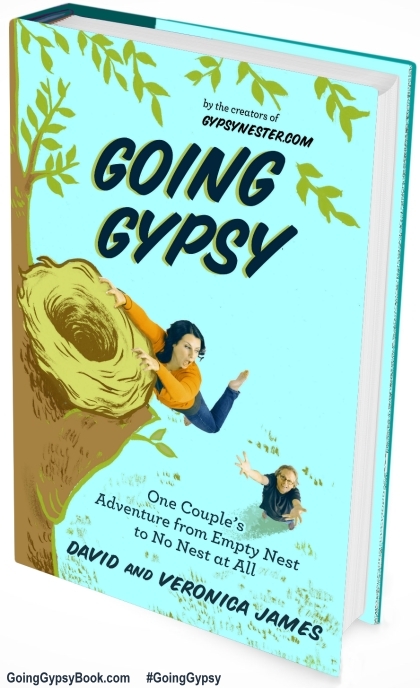
There are few words to describe our feelings about the outpouring of love and wonderfulness that was Going Gypsy‘s release party.

So, very unlike our wordy selves, we shall let pictures say the thousand words.

As if a thousand words could ever be enough… CONTINUE READING >>

The Going Gypsy book release party on the rooftop of the Library Hotel in NYC http://www.goinggypsybook.com
Gift bags ready to be given!

There are few words to describe our feelings about the outpouring of love and wonderfulness that was Going Gypsy: One Couple’s Adventure from Empty Nest to No Nest at All‘s release party.

So, very unlike our wordy selves, we shall let pictures say the thousand words. As if a thousand words could ever be enough.

From the instant we entered the Library Hotel, we felt like we were visiting an old friend.

Announcement of the Going Gypsy book release party at the Library Hotel in New York City http://www.goinggypsybook.com
The reception desk at Library Hotel!

The party added to that comfortable feeling, as well as giving us the opportunity to meet a bunch of new friends.

The view from the rooftop of the Library Hotel - Going Gypsy release party http://www.goinggypsybook.com
The incredible view from the rooftop of the Library Hotel as guests arrived.

Dan Battaglia from Audible, Jay Cassell of Skyhorse Publishing and Jenny Pierson, our editor at the Going Gypsy book release party http://www.goinggypsybook.comDan Battaglia from Audible, Jay Cassell of Skyhorse Publishing and Jenny Pierson, our editor/hero (click here to get just a tiny glimpse into what she puts up with whilst dealing with us)

We want to thank Skyhorse Publishing, Tony Lyons, and Jay Cassell for taking a chance on a crazy story like ours.

Jenny Pierson of Skyhorse Publishing, our editor, at the Going Gypsy book release party http://www.goinggypsybook.com
Jenny and her many admirers!

And our editor, Jenny, who rescued us from Unknown Writer’s Purgatory, raved about us to her bosses, championed our ridiculous ideas and held our hands as we baby stepped our way into the publishing process. Actually, she is still holding our hands.

Meghan Walker of Tandem Literary, our publicist, at the Going Gypsy book release party in New York City http://www.goinggypsybook.com
Meghan Walker of Tandem Literary, our publicist.
Veronica signs a copy of Going Gypsy at the book release book party at the Library Hotel in New York City! http://www.goinggypsybook.com
Caught on camera! Veronica signs her very first book! Not gonna lie, it felt rather awesome!

Meghan promised to crawl through windows for us, no matter how small the opening. She proved to be more agile than we ever could have dreamed.

We’d also like to thank everyone who agreed to let us write about them in our wacky way. You are good sports.

We had some real characters in attendance, including…

David with our daughters, The Piglet and Decibel, at the Going Gypsy book release party. http://www.goinggypsybook.com
David with our lovely daughters, The Piglet and Decibel in Going Gypsy. (The Boy couldn’t make it – he had to work)

Author and playwright, Arthur Wooten converses with Indy Stewart, Veronica's dad (G-Pa Larry in Going Gypsy) at the Going Gypsy book release party in New York City http://www.goinggypsybook.comAuthor and playwright, Arthur Wooten converses with Indy Stewart, Veronica’s dad (G-Pa Larry in Going Gypsy). Thanks Arthur for taking the time out from rehearsals for your current play to spend time with us! (here’s what Arthur had to say about Going Gypsy and our party!)

http://www.goinggypsybook.com

Sundance veteran and creator of the fabulously funny web series, The Louise Log, Anne Flournoy joined us! (click here for Anne’s thoughts on our release party – thanks Anne!)

Janet Neal of the Superb Woman joined the crowd at the Going Gypsy book release party at the Library Hotel in Manhattan! http://www.goinggypsybook.com
The always elegant Janet Neal of the Superb Woman made an appearance! (Veronica will appear on her show in May!)

Vocalist Tinatin Japaridze and choreographer Lesley Dockery at the Going Gypsy Release Party in NYC http://www.goinggypsybook.comVocalist and songwriter Tinatin Japaridze and choreographer Lesley Dockery

Dr. Susan Meyer and actress Susanna Baddeil at the Going Gypsy book release party http://www.goinggypsybook.com
Dr. Susan Meyer and actress Susanna Baddiel

Betty Newman and Phoebe Stout joined us at the Going Gypsy book release party in New York City! http://www.goinggypsybook.comTrend forecaster Betty Newman and textile designer Phoebe Stout

Dan Zukowski at the Going Gypsy book release party in NYC http://www.goinggypsybook.com
Photographer Dan Zukowski (this man gets WAY too close to polar bears for a living!)

Veronica and Zell Watson catch up at the Going Gypsy book release party http://www.goinggypsybook.comWe got to catch up with Zell Watson of Anglophiles United!

http://www.goinggypsybook.com
Alice Henry Whitmore, aka Lutheran Liar

http://www.goinggypsybook.comHarvey of H-Bomb’s Worldwide Karaoke

Richard Eisenberg of Next Avenue and Mary Dell Harrington of Grown and Flown also made it to the Library Hotel, but we somehow didn’t end up with pictures of them. :0 (Really, really, they were there!)

http://www.goinggypsybook.comLucky Susan Steshko took home the #GoingGypsy style package, including a gorgeous silver bracelet from Calico Juno Designs, wrinkle-free adventure pants from Bluff Works, and footwear from Thorlo.

http://www.goinggypsybook.comDan was over-the-moon excited to receive the luxury stay at Parador Resort and Spa in Costa Rica! (Here is our adventure at Parador)

Thanks to all in attendance and thanks to all of you for coming along on our wild adventure!

David and Veronica, proud authors of Going Gypsy: One Couple’s Adventure from Empty Nest to No Nest at All

Did you miss this event? Find out where your GypsyNesters are headed and how you can meet them!

A big time was had by all at the Going Gypsy book release party! https://www.gypsynester.com/going-gypsy-release-party.htmIf you see yourself, tag yourself #GoingGypsy!

Posted by GypsyNester-Celebrating Life After Kids on Friday, April 3, 2015

Where Do You Go to Recharge? Meet Me at Women at Woodstock!

We women over 50 have lost the stupid hang-ups and false competition of our early days; we have learned the impact that banding together for one another brings.

It’s quite spectacular! CONTINUE READING >> 

I wrote extensively about my first experience at Women at Woodstock last year, about how I agreed to go — kicking and screaming a bit — and the immediate benefits I received by attending.

“When was first invited, I literally thought UGH. Is a women’s retreat for me? It didn’t sound like my thing – at all.”

Yup, I said that.

Women At Woodstock

Long story short, I had a life-changing experience.

This is not an exaggeration.

Here are just a few ways my world has since been enhanced by the incredible women I met at Women at Woodstock:

— Our Going Gypsy Book Release Party in New York City was a smashing success, due in no small part to the WAW-ers who attended. I was really nervous to throw our release party in the Big Apple – and shouldn’t have been; these ladies had my back.

Victoria Zackheim at Women At Woodstock

— I’m always on the lookout to improve my writing skills and the workshops held by author Victoria Zackheim were fantastic.

Victoria’s speciality is personal narrative and my favorite output from the workshop is here. She also was generous enough to read Going Gypsy and give us an editorial review.

— I met the fabulous Adriane Berg and she invited me, along with David, on her radio show, Generation Bold on Biz Talk Radio.

— The Superb Woman herself, Janet Neal, had me on her show. It was so much fun!

Susanna Baddiel at Women at WoodstockSusanna Baddiel‘s Personal Impact Training was immensely helpful getting me ready for our media appearances, speaking engagements and book signings for Going Gypsy, I would have been hopelessly floundering without her, I had zero experience.

— Then there is the almost daily online and social media support and outreach. These woman are among the most selfless people I know.

We women over 50 have lost the stupid hang-ups and false competition of our early days; we have learned the impact that banding together for one another brings. It’s quite spectacular!

Will I be attending this year on November 6-8? You couldn’t keep me away!

I’d love for you to join me and, Ann Voorhees Baker, founder of Women At Woodstock, has graciously offered a discount of $60 off registration to my friends. Just use the code GYPSY60 when you click here to sign up.

Click here to see all of the fabulous speakers and the workshops that will be held this year (and, if you remember, my vow after attending last year was to find a way to give back to this incredible group of woman, so I’ll be holding a workshop as well!)

The uber-talented photographer Lisa Levart will also be holding a workshop…llgoe

…and I’m really excited to learn from author and media powerhouse Linda Lowen and the amazing, fearless, nervy, Patty Chang Anker!

WAW is held at the beautiful Emerson Resort and Spa, a peaceful place for recharging and personal growth.

All for ME? My fabulous room at Emerson Spa & Resort
All for ME? Here’s my glorious writing den of last year!
Dinner at Emerson Resort and Spa
The gourmet meals were incredible as well!

As wonderful as the workshops are, I found the social events just as soul feeding.

The inclusive dinners and evening salons are fantastic bonding adventures, and I surprised my socially awkward self with my comfort level of mingling prowess.

Ann Voorhees Baker

I corralled the very busy Ann Voorhees Baker to get her vision of these gatherings. Her answer?

“To contribute to the coalescence of the community of women over fifty, to create an environment where women help each other achieve goals they have had, but may never have pursued.”

What a woman!

Veronica, GypsyNester.com

Get your girl on and your goals in motion! Visit the Women at Woodstock website, use your coupon code GYPSY60 to join me in November, and be sure to sign up for the WAW newsletter while you’re there for exciting upcoming announcements on additional speakers and workshops.

YOUR TURN: Will I see you in November?