Search…

Cruising the Baltic and Beyond: Germany, Denmark and Norway – Live!


We’re still live and rockin’!

Chase us though an eye-opening jaunt through Berlin, a hippy colony in Copenhagen, the quaint, wooden towns of Stavanger and Bergen, and a ride in the fjords of Norway that you won’t believe… FOLLOW US LIVE >>

Written aboard the Viking Star on her voyage through Sweden, Finland, Russia, Estonia, Poland, Germany, Denmark, and Norway. Thanks to Viking Ocean Cruises for inviting us along and providing this adventure! As always, all opinions are our own.

DAY NINE: Berlin, in all Her History

See more about our time in Berlin here.

Morning: David the Train Nut is a Happy Guy!


David heaven: A train, a map, a cup of joe

Wait, Berlin is not on the sea, is it? Correct, it is over a hundred miles inland, so we take a Viking chartered, two-hour train ride into Germany’s capital where we will explore Berlin on our own.

We enter the East Berlin train station

Our first stop is at the East Side Gallery of the Berlin Wall. This is a nearly mile-long section of the Wall that has been covered with one hundred and five paintings by artists from all over the world.

We immediately gravitate to perhaps the most famous of those, a picture by Dmitri Vrubel of Leonid Brezhnev and Erich Honecker kissing.

Afternoon: Things are Beginning to Feel all too Real

From the Wall, we go to Checkpoint Charlie, the best known passage between the two German states created by the partitioning of the city at the end of World War II. After the East Germans built the wall in 1961 the allies had three crossing points: Alpha, Bravo, and Charlie.

This was the only one in the middle of the city. Unfortunately, what we see now is only a replica. In October 1990, the real guard house was removed and put on display in the Allied Museum.

See more about our time in Berlin here.

The barrier was built to keep people in, not out, after three and a half million East Germans had fled to the West between 1946 and 1961.

To stop the tide, an eight hundred and thirty-eight mile concrete border was erected.

The Berlin Wall was actually two parallel walls with a no-man’s land situated between them. We learned that towers were installed within eyeshot of each other and overseen by armed guards with orders to shoot to kill anyone who made it over the first wall.

Every morning, the dirt in the no-man’s land would be carefully raked, and if any footprints were found without a dead body nearby, the guards would be punished.

A few blocks from the checkpoint there is another section of the wall, one that is left without embellishment.

Finding the concrete surprisingly thin—and the overall height much lower than we had imagined—we look into the additional measures used to keep people from breaking through it.

In the patches where the concrete was worn we see tight interlacing of metal, making it impossible for tunneling. The top is rounded—then it was heavily greased—making it impossible to gain purchase with hands, or a ladder.

This section of the wall runs right along the place where the Gestapo and SS had their headquarters.

The buildings were completely destroyed by bombs at the end of the war, but the foundations have been used as a backdrop for a display detailing the history of repression under the Nazis.

The gravity of this site, along with the incredibly disturbing information unfolding before us, has us feeling overwhelmed and our next stop only adds to that.

Evening: We Press On

The stark reality of the Memorial to the Murdered Jews of Europe only increases the heaviness we are feeling.

The design of 2,711 concrete blocks of various heights is intended to show how a supposedly ordered system can lose touch with reason, but the creators also wanted the interpretation to be open to each individual.

To us it certainly captures the weight of the events that it memorializes.

We stumble upon yet another reminder of this city’s darker days just off the main street nearby, the last remaining watchtower from the days of the German Democratic Republic, better known as East Germany.

Of course, had it been actually democratic, or a republic, towers like this would not have been necessary.

In an attempt to lighten up our mood we stop for a quick bite, and in Berlin that means a currywurst.

Just as the name implies, this is a twist on the typical German sausage by smothering it with catsup and curry powder.

The snack became popular after the war as street stands began to pop up around town.

From the darker days of Berlin’s twentieth century history, we jump back to the more regal reminders of the imperial era of Prussia and Germany.

The most notable of these has to be the Brandenburg Gate.

As with almost everything in the city, the gate was damaged by bombing in World War II, but was restored at the end of the war, and again when the wall came down.

After that it became a powerful symbol of German reunification.

While walking through the heart of the city we come to Bebelplatz.

We stop at this seemingly insignificant plaza because this was the site of an infamous Nazi book burning.

A memorial is here but we have to look hard because it is easy to miss.

A window placed in the cobblestones looks down on empty bookcases that would have held the 20,000 destroyed books.

The effect is poignant, but by far the most powerful aspect of the memorial is a plaque with a scary, prophetic line from a play by one of the authors whose books were banned, Heinrich Heine.

He wrote: “Das war ein Vorspiel nur, dort wo man Bücher verbrennt, verbrennt man am Ende auch Menschen.”

Which means “That was only a prelude; where they burn books, they will in the end also burn people.”

Our train ride back to the Star was one spent in somber thought.

See more about our time in Berlin here.

DAY TEN: Mermaids, Free Spirits, and Sad Bears in Copenhagan

Morning: Hans, Weather Girls, and a short, fat, alchoholic

The Little Mermaid in Copenhagen, Denmark

Pulling into Copenhagen this morning, we dock right by a little statue that has become a symbol for the city, The Little Mermaid.

Sitting on a rock in the harbor, the bronze figure by Edvard Eriksen has been a famous tribute to Danish author Hans Christian Andersen since 1913.

From the port we make our way to Amalienborg Palace, which is actually four identical palaces surrounding an octagonal courtyard.

Amalienborg Palace in Copenhagen, Denmark

The royal family has been living on this site for about four hundred years, including the current Queen Margrethe II.

Our guide points out an equestrian statue of King Frederick V In the center of the square and explains how, even though this whole complex was his baby, it doesn’t really look like him.

It seems he wanted to be depicted as a Roman god-like emperor, when in the words of our guide, “the artist must have had quite the time of it; Frederick was a short, fat, alchoholic.”

A soldier of Amalienborg Palace in Copenhagen, Denmark

We love hilarious honesty in a tour guide!

Much like Buckingham Palace, Amalienborg is guarded day and night by Royal Life Guards.

These sentries are from an elite infantry regiment of the Danish Army, founded in 1658 by King Frederik III, and are much more than ceremonial.

When they are not wearing funny hats, they serve in a front-line combat unit.

The Weather Girls in Copenhagen, Denmark - statues the tell the weather!

Deeper into the center of town we come to City Hall Square, but unfortunately a massive reconstuction project has most of it hidden.

We do get to see The Weather Girls perched on top of the Richs building in one corner.

On a nice day, such as today, a sculpture of a girl with her bicycle rotates to the front, but when rain moves in another sculpture appears of her with an umbrella walking her dog.

Not exactly Accuweather, but fun nonetheless.

Another palace, Christiansborg Palace, is not far away. This spot has been the seat of Denmark’s government since 1167, when the first castle went up.

Unbearable statue - an impaled bear by Jens Galshiot in Copenhagen, Denmark

Two more castles and a couple of palaces later and we are looking at the home of the Danish Parliament, as well as the Prime Minister’s Office and the Supreme Court, making it the only building in the world that houses all three of a country’s branches of government.

That’s a whole lot of history, but it is a new addition to the courtyard that catches our eye, the artwork entitled Unbearable was just placed this spring.

In it an iron pipe portrays the levels of atmospheric carbon dioxide sky-rocketing into the belly of a polar bear like a spear.

The sculpture is by Jens Galschiøt, and was created in collaboration with the World Wildlife Fund.

See much more about Copenhagen!

Afternoon: A Contact High, Our Favorite Spire so far, and Some Serious Munchies

Colorful Nyhavn - Hans Christian Anderson lived in this neighborhood in Copenhagen, Denmark
We pass through colorful Nyhavn – Hans Christian Anderson lived in this neighborhood

Freetown Christiania in Copenhagen, Denmark

Breaking off from our tour group, we want to check out an area of Copenhagen that is not a part of the usual tourist programs, Christiania.

This unique oddity began back in 1971 when a group of oh, for lack of a better term, let’s call them hippies, moved into an abandoned military facility.

The counter culture squatters declared themselves an autonomous entity known as Freetown Christiania.

Freetown Christiania in Copenhagen, Denmark

It didn’t take long for a thriving cannabis trade to develop, and the business was generally tolerated and overlooked by the authorities for years.

The attitude seemed to prevail that keeping things confined to this area might not be a bad thing, but in 2004 there was a crackdown and the practice went undercover.

Now things have relaxed again, but with some odd twists that we encounter as we enter Pusher Street in what is known as the Green Light District.

Freetown Christiania in Copenhagen, Denmark

Booths are openly selling pot and hash but the proprietors are all wearing ski masks or scarves to hide their identities, and a no photos policy is strictly enforced.

Other than the somewhat dark underground feel of this small section, we find Christiania to be mostly groovy with folks enjoying the good vibes of the beautiful day while getting baked in a lovely setting.

Vor Frelsers Kirke has an outside staircase in Copenhagen, Denmark

Having dug the scene, we decide to split before we develop a serious contact high.

Besides, a very cool landmark had been guiding our path since we set out to find Christiania from across the bridge, the distinctive spire of the Vor Frelsers Kirke.

The church is just beyond the commune and tower stands out because the staircase to the top spirals around the outside.

Having found both the commune and the tower we are ready to reward ourselves with a Scandinavian lunch treat, a smørrebrød.

These are open-faced sandwiches meant to be eaten with a knife and fork.

Toppings are artistically arraigned on brown bread to create an edible work of art.

We go with chicken salad and shrimp on avocado, two classics.

Shrimp and chicken smorrebrod in Copenhagen, Denmark

See much more about Copenhagen!

DAY ELEVEN: Messin’ with the Mayor—and the Nazis in Ålborg, Denmark

Morning: Sticking your tongue out at Mr. Mayor, and Talented Pidgeons

Aalborg, Denmark

In the northern part of Denmark known as Jutland, we make a stop at Ålborg. For being Denmark’s fourth largest city, she sure has kept a small town feel. The Star docks right in the heart of town, so we simply step off the ship and find ourselves in front of the Utzon Center.

Utzon Center in Aalborg, Denmark

This captivating structure was the last building ever designed by famed architect Jørn Utzon, of Sydney-Opera-House-in-Australia fame.

Utzon grew up in Aalborg and intended the center to act not as a museum, but as a place for students of architecture to congregate and discuss ideas. Unfortunately he passed away before the project was complete, but his son Kim took the helm and finished up Dad’s vision.

Jens Bang House in Aalborg, Denmark

Moving into the city we stop by the Jens Bang House, said to be Denmark’s finest privately owned Renaissance building.

The ridiculously rich Bang, who was also a bit of an eccentric, built his home in 1624.

The story goes that he purposely put it next to city hall, where his half-brother the mayor worked, so he could maintain an ongoing feud.

Scupture of a face with its tongue sticking out in on the Jens Bang House in Aalborg, Denmark

At some point Bang upped the ante with a sculpture of his face was added on the side facing city hall, with his tongue sticking out.

No doubt that went over with a bang.

Try to get along boys.

The Budolfi Catherdral in Aalborg, Denmark

Around the corner we come to the Budolfi Cathedral, which is over six hundred years old and contains original artwork on the ceiling of the entry vestible.

Apparently the artist was unaware what a lion looked like. So he or she just jammed.

Funny lion on the ceiling of Budolfi Cathedral in Aalborg, Denmark

The town of Aalborg, Denmark used carrier pidgeons for the mail until the 1960s

Our guide points out the old post office across the plaza.

OK, nice enough building, but wait:

“See those holes up on the tower?” she asks. “Can anyone guess what they were for?”

We don’t have a clue so she explains, “carrier pigeons.”

Yup, the homing birds were used to deliver mail up until the 1960s.

We could just imagine folks up there in the tower tying little letters to little birdy legs.

Afternoon: There’s More than one way to Resist the Nazis

The Monastery of the Holy Ghost in Aalborg, Denmark where the Churchill Club fought against the Nazis

We continue on to the Monastery of the Holy Ghost, which was founded in 1451, making it the oldest social institution in Denmark.

It served as both a monastery and an abbey, and also as a hospital for some five centuries.

Our guide explains that it also had ties with the Churchill Club during World War II.

The club was a group of schoolboys from Aalborg Cathedral School who would sneak out at night to sabotage the Germans during the occupation of Denmark—on their bicycles.

Even after being caught and jailed, they still managed to escape at night and continue their covert activities before returning “home” for the day. These cheeky boys are Danish heroes now, with numerous books written about them (most recently, The Boys Who Challenged Hitler) and a movie based on their experiences.

Their exploits began a full-blown Danish resistance movement, and their hero and namesake, Winston Churchill, honored them after the war.

Vikings fight at Ålborghus Castle in Aalborg Castle, Denmark

Working our way back toward the waterfront, we come to Ålborghus Castle.

Lacking the look of a traditional castle, when King Christian III built it back in 1539 he did so intending it to be a fortification.

But no one ever showed up to attack.

It became more of a palace than a protection.

The structure does include a classic dungeon, and we squeeze and skulk around the dank, dark basement tunnels.

The creepy tunnels under Ålborghus Castle in Aalborg Castle, Denmark

The creepy tunnels under Ålborghus Castle in Aalborg Castle, Denmark

Whispering in our ears, our guide explains how one of the tiny cells was used to hold nine women who had been accused as witches back in the sixteen hundreds.

Next to the castle a group of modern day Vikings have set up a replica ancient market to show how the Norse traders lived, worked, played, and fought back in the days of yore a thousand years ago.

Oh, and drank – the mead and song is a flowin’.

The mead and wine is flowing with Vikings in Aalborg Castle, Denmark

DAY TWELEVE: Offshore Oil, Adorable Houses and Peaceful Footprints in Stavanger, Norway

Morning: Getting oily… and “the Colorful Street”:

The Viking Star docked in Stavanger, Norway

As with yesterday, once again we get to dock right in the center of the city, today in Stavanger, Norway.

We begin our exploration just a few steps away from the ship at the Norwegian Petroleum Museum.

The exhibits chronicle the history of off-shore oil operations on the Norwegian continental shelf since they began in the mid-1960s.

Model of offshore oil rig in Stavanger Norway

We walk through a timeline of models showing how drilling platforms were built as the technology progressed.

The first rigs sat on steel and concrete platforms permanently anchored to the North Sea floor, but over time flexible modern production ships and subsea systems were developed to allow exploration into deeper and deeper waters.

This can be dangerous work, as we see in a couple of the displays, with one showing the twisted wreckage of a support pipe from a platform that overturned, and another that has a real life boat open for us to crawl into.

We go inside and are shocked that it is meant to hold twenty-eight people in the cramped space.

Old flying saucer–type lifeboat used on the off-shore oil rigs in Stavanger, Norway

Proceeding through a walkway over the ocean, we enter a mockup of an off shore rig. This display shows the hand-on point-of-attack where the drilling takes place.

The oil museum in Stavanger, Norway is a replica offshore oil rig

As we leave to go back on shore we have to choose between two doors as a way to vote on whether we think that the energy industry can find a way to address and reduce carbon emissions enough to combat climate change. We both, and most of the people with us, optimistically choose the yes door.

Colorful street in a sea of white in Stavenger, Norway

As we work our way into the city, away from the pier, we walk up a street lined with brightly colored buildings in a sea of white-only-by-ordinance old wooden buildings in a historical district.

Colorful street in a sea of white in Stavenger, Norway

The cuteness factor is a happy over-the-top, and the strip has become quite a hangout with outdoor cafes being the order of the day.

When we asked what this hoppin’ little area is called, our guide simply says, “the colorful street.”

See more of wonderful Stavenger

Afternoon: Anything for the Children, and Little White Houses

Stavanger Cathedral in Norway's Oldest Cathedral

Next we stop at the Stavanger Cathedral, which is Norway’s oldest cathedral.

Construction is believed to have started around 1100, and finished about fifty years later.

That coincides with the founding of the city in 1125.

Unlike most of the old towns we have been visiting, Gamle Stavanger, or Old Stavanger, is not right on the waterfront.

Artwork dedicated to Lars H. Lende in Stavanger, Norway

Instead we walk a little way up the hill from the church, but first pause to look at a couple of whimsical statues in a small park.

The first is a giant top hat next to an anvil, with a parrot and a monkey standing by.

Our clever guide walks ahead to the next one, a man with a pair of Shetland ponies, and asks us how we think the two are connected.

Statue of Lars H. Lende in Stavanger Norway

The man is Lars H. Lende, David’s new buddy, who was renowned for his inventive ideas to make the world a better place for children.

His motto, “Alt for barna” roughly translates to “Anything for the children,” especially pony cart rides.

Gamle Stavanger, Norway

Through the gate at the end of the park we enter Gamle Stavanger, which has many of what are considered to be the best kept old wooden houses in Northern Europe.

Gamle Stavanger, Norway

What is interesting here is that after several centuries, most all of the homes are still used as private residences.

Gamle Stavanger, Norway

See more of wonderful Stavenger

Evening: How Lucky are we? A Food Fest and Footprints

Waffles in Stavanger, Norway

Our timing for our visit to Stavanger happens to be just about perfect.

We have a wonderful summer day and Gladmat, Scandinavia’s biggest food festival, is in full swing along the bay.

Over 200,000 people, or make that 200,002 including us, visit during the four days of the festival each year.

Matjes i lompe - a very traditional way of eating matjes, which is raw, slightly pickled herring, on lompe, a flat potato bread. The fish is topped with sour cream, beets, and diced onion

From the dozens of food stands and restaurants selling everything from gourmet fare to hotdogs, we decide to give some matjes i lompe a try.

This is a very traditional way of eating matjes, which is raw, slightly pickled herring, on lompe, a flat potato bread.

The fish is topped with sour cream, beets, and diced onions, then wrapped in the lompe.

While it may not be David’s new favorite food, Veronica loved it, and we can say it tastes better than it sounds.

As we wander through the festival, we stumble upon something completely unexpected, Al Gore’s foot prints. Yup, a bronze cast of the former Vice President’s bare feet is set right into the walkway along the harbor.

Footprints along the Path of Peace in Stavanger, Norway

They are part of the Path of Peace, an ongoing project by the human rights foundation Point of Peace, which incorporates the footprints of several of Nobel Prize winners and peace advocates to form a pathway along the Vågen.

Word on the street is that Bishop Desmond Tutu left his mark here too, but we can’t find it on our way back to our Viking Star.

See more of wonderful Stavenger

DAY THIRTEEN: Deep Exploration of the Fjords of Norway

Morning: Breakfast IN the Fjords

Breakfast in the Norway Fjords on the Viking Star
Breakfast outside on the Aquavit Terrace – in the fjords!

For a complete change of pace today, we will be visiting the tiny hamlet of Flåm, Norway.

The town of about four hundred people is not really the attraction here; it is the surrounding scenery that attract tourists from all over the world.

Norway Fjords on the Viking Star

The village sits at the end of the Aurlandsfjord. This is a branch of the famous Sognefjord, which is the longest in Norway.

The spectacular morning mountains rising right out of the sea make for unbelievable views from our balcony this morning.

Norway Fjords on the Viking Star

Afternoon: Seeing the Backside of the Fjords and Enjoying our Right to Roam

Beautiful Flam, Norway. The GypsyNesters

Many of the Viking Star passengers will be riding the spectacular Flåmsbana, or Flåm Railway, up the mountain to the town of Myrdal where it meets the mainline.

Obviously a good choice, since it has been dubbed “the world’s most incredible train journey” by Lonely Planet, and is on every railfan’s must ride list.

Since we did that on a previous visit here (in the wintertime, no less), we will be taking a hair-pinned-turned bus ride through the Laerdal River Valley to the Østerbø Mountain Farm.

We are fascinated to see what happens on the flipside of the fjords.

The fjord ends in Beautiful Flam, Norway

Above the Norway fjords from Flam on the road to Østerbø Fjellstove. GypsyNester.com

The trip up the incredibly steep slopes climbing from the fjord is truly a sight to see, with a constant conglomeration of towering waterfalls, beautiful lakes, impossibly long tunnels, and snowcapped peaks filling our windows.

Østerbø Fjellstove, Norway

At the top we reach the farm, Østerbø Fjellstove, next to a picturesque waterfall-fed lake nestled among the majestic mountains.

Years ago this was a year-round farm, but now it is a summer haven for city dwellers to escape for a vacation in a cabin or camping out.

Østerbø Fjellstove, Norway

Our guide explains the very Norwegian concept for camping that they call the Right to Roam, or more formally the Right of Public Access to the Wilderness.

A law passed in 1957 allowing everybody in Norway the right of access to, and passage through, any uncultivated land across the countryside.

Waffles in Norway

In practice it means that Norwegians can pitch a tent and camp almost anywhere they like, though it is based on respect for the land, and all visitors are expected to show consideration for farmers and landowners.

After a bit of exploring we head into the lodge for a snack of waffles, topped in the traditional way with sour cream and jam.

Evening: Not Gonna Lie, We’re the Luckiest People in the World Today

The Viking Star in the fjords of Norway

The sail away this evening should be one of the most breathtaking boat rides possible as we make our way back out of the Sognefjord to the North Sea.

This is the largest and best known fjord in Norway, and the second longest in the world.

It stretches well over one hundred miles inland from the ocean.

The fjords of Norway

Large ships seem like they shouldn’t fit in these tight confines, but the fjord is over four thousand feet deep in some places.

In the infinity pool aboard the Viking Star in the fjords of Norway. The GypsyNesters

In the hot tub aboard the Viking Star in the fjords of Norway. The GypsyNesters

From those depths, cliffs form the soaring shoreline towering another three thousand feet or more above the water.

So seriously, just how insanely unbelievable is it to be watching this magnificent vistas go by from the infinity pool and hot tub on the back deck of the Viking Star?

Pretty damn ridiculously unbelievably cool is our only possible answer.

Night: Get up and Dance you Dancing Queens!

To finish off our nearly perfect day the Viking Star Performers put on a tribute to ABBA as a farewell and a salute to Scandinavia’s most famous musicians. Mama Mia!

Viking Star presents Abba!

And because the sun never sets—and the fjords never end—we head to the very top of the Star to The Library to finish off our night in quiet bliss.

The Library of the Viking Star in the fjords of Norway

DAY FOURTEEN: Norway’s Harbor, Bergen

Morning: Hitting the Wharf

Bergen, Norway

For the fifth straight day we get to dock right in the middle of it all—just step off of the ship and let the serious sightseeing begin!

Barely past the end of the gangplank, we find the Bergenhus Fortress standing guard.

This was the site of the royal residence dating back nearly a thousand years, but the surviving buildings are slightly newer, from the middle of the thirteenth century.

The haakonshallen in Bergen, Norway

The Håkonshallen, named for King Haakon, is the largest structure in the complex, and though it looks like a church, it never was.

It was built as a festival hall, most likely for the wedding of the King and a Danish princess in 1261.

The Rosenkrantz tower next to it went up right after that, as Bergen was becoming a major shipping port and needed some protection.

Oddly, as time went on the canons were often not pointed out to sea but inward toward the Bryggen.

Bryggen, UNESCO World Cultural Heritage site in Bergen, Norway

The name just means wharf, but in Bergen, Bryggen became synonymous with the area along the waterfront where German traders from the Hanseatic League set up shop.

Sometimes the Norwegian authorities felt that a little firepower pointed their way would help to keep the foreigners in line.

Afternoon: What’s this Bryggen Business all About?

The Bryggen Museum in Bergen, Norway

The society of Hanseatic traders formed a city within a city, which has been restored and preserved as a UNESCO World Cultural Heritage site.

It has had to be restored because fires have ravaged the wooden warehouses on several occasions through the centuries, as we see firsthand at our next stop, the Bryggen Museum.

In the museum, we see the excavations that have revealed layer upon layer of buildings on top of the charred remains of their predecessors. After each fire the debris would be pushed into the harbor, creating new land to build on and expanding the district.

Vast collection of runic sticks in the Bryggen Museum in Bergen, Norway

Upstairs there is a fascinating exhibit of runic sticks used by the Vikings.

These were ways of sending messages by carving letters on a piece of wood.

By for our favorite, and just about everyone’s it seems, is a small note that reads, “Gyda says go home.”

We can only imagine what may have been going on but it looks like even a marauding Viking may have had a wife to answer to.

Bergen Norway's UNESCO world heritage site, Bryggen

The museum is right in the Bryggen, so we walk out and work our way through the maze of tiny alleys and walkways among the storehouses.

We begin to get a feel for what it must have been like seven hundred years ago when all of the fish and humans were piled in here on top of each other. More on the Bryggen here.

Thousands of pounds of fish were processed and shipped south from these cramped and chaotic buildings every season, and as we see when we reach the end of the Bryggen, selling fish is still a thriving business in Bergen.

Seafood at the market in Bergen, Norway

An open-air fish market has been a part of life here for hundreds of years.

We browse over booth after booth of delicious looking crab, shrimp, lobster, caviar, cod, scallops, and more, but at one the fish monger offers us a sample of something we have never seen before, smoked whale meat.

Now we know whale is not fish, but guess it must qualify as seafood.

Whale is sold at the seafood market in Bergen, Norway

Norway is one of only a handful of countries where eating it is even legal, so we figure in the spirit of trying something once , we take a tiny sample.

Not as smoky as the beaver back in Estonia, but not resembling anything tasty. It had a slight organ-y taste.

However, for reasons much more important than the taste, this is the first, and last, time we will ever eat whale. The practice of whaling is banned nearly everywhere and we don’t want to support it.

Evening: Ducking into the Alleys

The Floibanan funicular in Bergen, Norway

About two blocks up from the market is one of Norway’s most popular attractions, the Fløibanen.

This funicular railway carries people a thousand feet up to the top of Fløyen, one of the seven mountains that surround the city of Bergen.

As with the train in Flåm we have been there, done that (in the winter, nonetheless!), so we pass it by and climb the hill behind the station.

The alleys of Bergen, Norway

Earlier our guide recommended this neighborhood as his favorite part of town, and we have to say he didn’t steer us wrong.

He called the area The Alleys and we can see why.

The streets, more like paths and stairways, are mostly too narrow for cars and go up and down the steep slopes every which way.

The houses cling to the hillside in a way that makes the whole scene look almost like a cartoon. We keep climbing and are surprised to find a fairly large flat area about midway up the hill.

Huge fountain in the hills of Bergen, Norway

It strikes us as odd that this one piece of level ground anywhere to be found is taken up by a giant fountain, but on this warm, sunny day, a rarity in Bergen, lots of people are glad it is.

St. Mary's Church, the oldest building in Bergen, Norway

We try another way down since we can see the ship from up here as a homing device, and end up right in front of St. Mary’s Church.

At almost nine hundred years old, this is the oldest building in town and is the only one remaining of the twelve that were built at that time.

A far cry from the Viking Star that we have called home for over a fortnight, since she is barely over a year old, but we won’t hold her youth against her.

Quite the opposite, everything onboard went off like clockwork, with both ship and crew performing exceptionally.

This was our first time on a Viking Ocean cruise, but have found that they incorporate everything that we love about the river voyages, while adding some welcome extras such as more upscale dining choices and entertainment options.

We love it just as much as rollin’ on the river.

David & Veronica, GypsyNester.com

Written aboard the Viking Star on her voyage through Sweden, Finland, Russia, Estonia, Poland, Germany, Denmark, and Norway. Thanks to Viking Ocean Cruises for inviting us along and providing this adventure! As always, all opinions are our own.

YOUR TURN: Isn’t this a fantastic group of cities to visit? Any on your bucket list? What would you like us to report on?

Russia, Estonia, and Poland – Cruising Though the North, Live!

Astonishing architecture, spires that scrape the skies, medieval charm – that’s Northern Europe.

Join us in the land of the czars, of decedent royalty, and food we’d never dreamed of  eating… FOLLOW US LIVE >>

Written aboard the Viking Star on her voyage through Sweden, Finland, Russia, Estonia, Poland, Germany, Denmark, and Norway. Thanks to Viking Ocean Cruises for inviting us along and providing this adventure! As always, all opinions are our own.

DAY FIVE: St. Petersburg as it was Meant to be Seen, on the Water!

Morning: We can’t believe our luck! Our guide says St. Petersburg gets only thirty-two sunny days a year—and we got two of them!

Cruising the canals of St. Petersburg, Russia

St. Petersburg is thoroughly connected to the sea.

The reason Peter the Great wanted this particular spot was based solely on his desire for Russia to have a sea port and to build a navy.

As a part of this maritime vision he also designed the city to be structured around a system of canals, an idea he brought with him from his time spent in Amsterdam as a young man.

Cruising the canals of St. Petersburg, Russia

Today, hundreds of years later, we will get to see his city from those canals as we set out this morning on a boat tour. Even though we will be seeing many of the same highlights as yesterday, we are excited to be seeing them as Peter would have wanted us to.

Cruising the canals of St. Petersburg, Russia

We begin on the Fontanka River which was once just a small stream known as Anonymous Creek. Then Peter contained it with stonework embankments and used it to supply water to the fountains in his summer garden. That is why it was given the new name meaning fountain river.

Cruising the canals of St. Petersburg, Russia

The Fontanka embankments are lined with the former lavish residences of Russian nobility.

Anichkov Bridge is perhaps the most famous of St. Petersburg’s hundreds of bridges and just one of dozens of bridges we have to duck to get under, no standing up on this boat unless you are willing to lose your head.

Best known for the four bronze Horse Tamers statues on that frame the entrances, it was originally built of wood in 1715 and named after its engineer, Mikhail Anichkov.

Anichkov Bridge is perhaps the most famous of St. Petersburg's hundreds of bridges

Afternoon: Deeper into St. Petersburg

The Peter and Paul Fortress, St. Petersburg, Russia

Leaving the canal, we enter the Neva River just opposite the Peter and Paul Fortress that we visited yesterday. From the water it looks much more like an imposing fortress than the view we had entering on the land.

This spot where the Neva splits and flows into the Baltic Sea is the heart of the city. From our vantage point in the water we get a perfect panorama of all of St. Petersburg before turning around to retrace our path back.

The Church of Our Savior on Spilled Blood in St. Petersburg, Russia

Raccoon outside of Spilled Blood church in St. Petersburg

From the boat we make our way back to the Church of Our Savior on Spilled Blood.

A festive atmosphere greets us as we wait to go inside, with performers and several animal acts working the crowd.

One curious raccoon especially takes a liking to Veronica.

As impressive as the outside of the church is, it is the interior that truly sets it apart.

The walls and ceilings are covered with over 7500 square meters of mosaic tiles, said to be the most in the world, although folks in Missouri dispute this, claiming that the Cathedral Basilica of Saint Louis has it slightly beat.

The interior of The Church of Our Savior on Spilled Blood in St. Petersburg, Russia is completely covered in mosiac tiles

As with most all of the churches in Russia, during the soviet era this was stripped of any religious significance. The building was used as a storage facility and was even scheduled to be torn down before being saved and restored.

Looking up in to the dome of the Church of Our Savior on Spilled Blood in St. Petersburg, Russia
Looking up into the dome

From the cozy confines of Savior on Spilled Blood we head over to the largest Russian Orthodox cathedral in the city, Saint Isaac’s. Unlike the smaller church (in fact, St. Isaac’s is MASSIVE!), this time perhaps the exterior is more impressive. Still, the incredible gold gilding inside is a sight to behold.

St. Isaac's Cathedral in St. Petersburg, Russia is massive!

The cathedral is dedicated to Saint Isaac of Dalmatia, patron saint of Peter the Great who was born on his feast day, but more than anything stands as a monument to the czar that founded the city.

Looking up into the dome of St. Isaac's Catherdral in St. Petersburg, Russia

Evening: The Arts Come to us

Dinner at the Chef's Table aboard the Viking Star

Tonight is the night to partake in Russian arts, and many of our fellow passengers remain in St. Petersburg to attend the ballet or visit folkloric dancers. We decide to have a quiet dinner and enjoy singers from the world-renown Mariinsky Opera in the theater aboard the Star. Whoa, just WHOA.

The Mariinsky Opera Singers in the theater aboard the Star. Whoa, just WHOA.

This ship is just so… civilized.

DAY SIX: Tallinn it Like it is in Estonia

Morning: How to Sing Yourself to Freedom

Tallinn, Estonia

Can’t say that Estonia has ever occupied a spot on our bucket list, it’s barely on our radar and we knew woefully little about her, but today we are going to check it off anyway.

We start with a drive through the modern business district of this newly crowned European capital.

The Kadriorg Palace in Tallinn, Estonia

Tallinn has embraced the role and risen to the occasion, becoming one of the continent’s fastest growing economies.

The young country, only becoming independent twenty-five years ago, has one of the world’s highest literacy rates and best access to the internet, but our first stop takes us back to its past as Russian territory.

Good ol’ Peter the Great was here too, and built a small, by czar standards, palace for his wife, Catherine I in 1718.

The Kadriorg Palace was used as a summer residence and now serves as a museum and focal point of the beautiful Kadriorg Park.

David waits for the show with Gustav Ernesaks at The Song Festival Grounds in Tallinn, Estonia

The Song Festival Grounds in Tallinn, Estonia
David waits for the show with Gustav Ernesaks,
“Father of the Song”

Not far from the park we come to the Song Festival Grounds where every five years a huge singing extravaganza is held.

The venue also has hosted concerts from some of the world’s biggest stars, but the most important event ever was the singing revolution.

Believe it or not, songs set Estonia free from the Soviet Union in what is known as the Singing Revolution.

The Singing Revolution in Estonia started at the Song Festival grounds

One of the biggest musical protests of the movement took place right here as hundreds of thousands defiantly sang for freedom.

After several years of these peaceful protests, Estonia declared independence on Aug 20, 1991 and Tallinn became its capital.

Afternoon: Eating Estonian – Old School

Church of St. Alexander Nevsky in Tallinn, Estonia

From this modern history, we head over to the old town to see what life was like here in the Middle Ages.

We begin on Toompea, or Dome Hill, with the Church of St. Alexander Nevsky that put the dome in the name.

While St Alex’s may be the domiest, it is not the oldest church in Tallinn.

St. Mary's Cathedral in Tallinn, Estonia is decorated with family coats of arms

That honor goes to nearby St. Mary’s Cathedral.

Originally built as a Catholic church in 1229, it has been renovated and expanded many times through the centuries and became Lutheran in 1561.

It is often referred to as the tomb church because so many of the early parishioners are buried beneath the floor inside.

Oddly, for Lutheran churches are normally stark, St. Mary’s is coated with the entombed families’ coats of arms.

Before walking down to the main square we take a look over the lower old town from a vantage point that proves perfect for a photo op of the three spires that form the medieval skyline.

Tallin, Estonia

City Hall in Tallinn, Estonia

One of those prominent pinnacles doesn’t belong to a church, but rather to the Raekoda, or Town Hall.

The structure dating all the way back to 1371 dominates the main square.

No longer the seat of city government, it now houses the Tallinn City Museum.

The square is lined with restaurants, cafes, and bars, and looked to be the perfect spot for a bite of lunch.

We heard that Estonian restaurants are known for offering interesting, perhaps even exotic, game on the menu and we were not disappointed, ordering bear dumplings and smoked beaver.

Neither is a new favorite, but also nowhere near the worst thing we have eaten.

Bear dumplings in Tallin, Estonia

The bear comes wrapped in little ravioli type dumplings swimming in broth and has a strong flavor yet not over bearing (ba-dum-ching).

There are some unknown red berries and a dish of sour cream served alongside, which the waiter instructed us to use “as you wish,” so we did. They do seem to take a bit of the edge off.

Smoked beaver in Tallin, Estonia

The beaver is served with a stout garlic sauce and black rye bread.

It is hard to describe, a sort of dense meat yet tender, very smoky but the garlic, which Tallinn is also known for, wins the flavor battle hands down.

The garlic follows us throughout our day…

Later in the Afternoon: Old Town

Ancient tombstones line Katarina Kaik, St. Catherine's Passage in Tallinn, Estonia

Just off the square we duck into the medieval Katarina Käik, St. Catherine’s passage, leading to the ruins of St. Catherine’s Church that give the passage its name.

Along the wall there are several large, ancient tombstones that were moved from inside of the sanctuary.

The city wall in Tallinn, Estonia

The passage ends at a section of the old City Walls and we discover that for a small fee we are allowed to climb the dark, steep, and head-banging steps up to the top for a walk along the wall.

There are also two defensive towers open for even higher climbing and stunning views across both the old and new sections of the city.

The steep stairs up the wall tower in Tallinn, Estonia
The rope came in handy, let us tell ya!

The steeple of Tallinn, Estonia's St. Olaf's church was once the tallest building in the world

One sight we certainly can’t miss is the steeple of St. Olaf’s Church.

Back between 1549 and 1625 it was thought to have been the tallest building in the world, but records were somewhat less than exact back then.

No matter, even after at least ten lightning strikes and the ensuing rebuilds it still tops out at over four-hundred feet high.

Making our way out of the old city we pass through the walls at the Great Coastal Gate which is guarded by the whimsically named Fat Margaret fortification.

Fat Margaret in Tallinn, Estonia

Built five hundred years ago, the tower was meant to keep invaders at bay, and also to impress any visitors arriving by sea.

Later the tower was transformed into a storehouse for gunpowder and weapons, then a prison, but these days it serves peacefully as the Estonian Maritime Museum.

Now and then we come upon a place that was never even on our radar and it turns out to be a gem just waiting to be found, Tallinn is definitely one of those.

Tea Time

Tea Time in Viking Star's Wintergarden

Tea time in the Wintergarden has become one of our favorite pastimes. Listening to the strains of Star‘s classical trio while sipping from a wide selection of teas, nibbling on dainty finger sandwiches, tasty scones, and tantalizing sweets in a the airy, open “forest” of wood and glass… bliss.

DAY SEVEN: Serendity at Sea

The entire slow, wonderful relaxing day

Levels of light living space, the Viking Star
Levels of light living space, with live music wafting about

As we make our way from Estonia to Poland we will spend today day at sea.

We have been so busy visiting the fantastic ports of call that we haven’t had much of a chance to explore all of the inviting amenities of our ship, Viking Star.

We have of course noticed the understated elegance of the décor.

It’s not over the top—no Elvis at Graceland here—just very clean and classic Scandinavian lines.

Heated lounge chairs in the Spa on Viking Cruises Star
Heated lounges in the spa

The Snow Grotto aboard Viking Cruises Star
Serious brrrrrrrr

Speaking of Scandinavian, our free day gives us a chance to try out the Spa. We start off with a relaxing Swedish massage (mmmm, yeah), then move on to the Nordic hot and cold therapy of the steam room and snow grotto.

Yes, there is a room that snows on board, and yes it sounds crazy to go in it in nothing but a bathing suit, but it works.

After getting as hot as we could stand in the steam room we walk right in and sit right down on snow covered benches.

The bubble pool and hot tub in the Spa aboard the Viking Star

Spa manager Zsuzsanna explains to us that by repeating the process two or three times, our pores will be cleansed and our skin exercised.

From there, we move over to the much more relaxing bubble pool—which is kept at exact body temperature—and float away any remaining tension on the gentle jets stirring the water, before hitting the traditional hot tub.

Feeling like euphoric puddles of relaxation, we somehow find ourselves back to our stateroom for a nap.

There is a great deal of stimulation available for our minds as well.

Each evening our cruise director, Steve St. Peter (a fabulous name that we’re beginning to think is a pseudonym—the man is just SO well put together, we’re struggling for ways to find fault with him!), gives an informative talk about the next day’s port of call along with all of the tips we need to be sure not to miss a thing while ashore.

He even loves the quirky, as we do, and always has destination suggestions for quirk-lovin’ GypsyNester-types to root out. The man is a god. We must find a way to take him down a notch or two—lest we start kissing his feet.

There are also talks given by former Congressman Martin Frost, who served in as a Democrat in the Texas delegation from 1978 until 2004, about the changing demographics and partisan divide in American politics, and how it’s affecting the current election.

He is just one of several interesting lecturers that are traveling with us.

Geologist Dr. Helena Aves discussed plate tectonics, or continental drift, and how that created  the Baltic Sea along with the effects of glacial ice on the landscapes we are visiting, especially the fjords coming up in Norway at the end of our cruise.

The infinity pool and hot tub aboard Viking Cruises Star

Tonight, after celebrating Veronica’s birthday at the upscale Italian restaurant onboard, we’ll be watching Bridge of Spies at the Theater Under the Stars to get us ready for Berlin in a few days.

We may even hit the dance club, Torshavn—or not. A person can only relax so much.

Night: Veronica’s Birthday Celebration at Manfredi’s

Veronica celebrates her birthday at Manfredi's aboard the Viking Star! GypsyNester.com

Make a wish—53 and counting! We headed to the Star‘s upscale Italian restaurant to celebrate. Here’s dinner:

Dinner at Viking Ocean Cruises's upscale Italian restaurant

DAY EIGHT: You Can Gdańsk if You Want to in Poland

Morning: Sad History of a Beautiful City

The Oliwa organ in Gdynia at the Archcathedral in Poland

Today we visit Poland, and that’s no joke.

The Viking Star docks at the port of Gdynia, about fifteen miles north of Gdańsk.

The ride into the city gives us a chance to see a bit of Polish countryside and stop at the Gdańsk Oliwa Archcathedral on the outskirts of town.

Without a doubt the most remarkable feature of the church is the famous great Oliwa organ.

The instrument itself, with over five thousand pipes, is impressive enough, but the woodwork around the pipes is an awe inspiring piece of art.

Entering Gdansk, Poland through the city gate

We enter the historic old city of Gdańsk through the Green Gate which opens on to the Long Market.

This pedestrian only area is the heart of the rebuilt town. By rebuilt, we really mean rebuilt.

This city was completely devastated by World War II.

In fact this is right where the war actually began when Germany decided to take what was then known as the Free City of Danzig on September 1st 1939.

Within a few weeks the Soviet Union had invaded Poland too and within a couple of months the country was completely occupied by the opposing powers.

The Armory Building in Gdansk, Poland

By the end of the war, Poland was devastated and Gdańsk was nearly destroyed.

Almost every structure in the city was damaged, so what we see today has all been reconstructed.

The biggest landmarks, such as the Green Gate and Golden Gate that mark the opposite ends of the square, and St Mary’s Church, which is known as the largest brick church in Europe, were restored as accurately as possible.

Gdansk, Poland

Gdansk, Poland

The same cannot be said for many of the houses that line the sides of Long Market.

Many of these have been embellished to various degrees.

It seems that when reconstructing folks didn’t want to rebuild in the original German style, having suffered so much under them, so they instead went with Dutch and Italian motifs.

Neptune's fountain in Gdansk, Poland is one of the few things that survived World War ll

Many, if not most, of the fronts are actually only facades over communist era buildings.

One icon that did survive was the Neptune Fountain.

In large part, its fame now stems from the fact that this nearly five hundred year old statue miraculously came through the bombings essentially untouched.

The human driven crane in Gdansk, Poland

Afternoon: The Human Hamster Wheel, Haunting Hags, and Lech Walesa’s Movement

Just off of the main square there is an interesting artifact from when Gdańsk was a bustling port within the Hanseatic League, a huge crane.

This 14th-century device operated on human-power as treadwheels transferred the energy of workers to load and unload cargo from the Motlawa River.

The human driven crane in Gdansk, Poland

We had seen pictures of how this worked, but by seeing the giant wheels in person the ingenious machinery make sense to us.

Think people walking in a wheel like hamsters.

The turning moves a rope through pulleys that transfer energy so that thousands of pounds can be lifted.

As we climb higher and higher up the crane’s tower, we are astonished by the clever design and found ourselves happy that our walking skills aren’t needed to keep the ships below us stocked.

Though it might’ve been fun to give the wheels a whirl—maybe for a minute or two of rodent-like fun.

The human driven crane in Gdansk, Poland

Walking further down the waterfront pier, we are stopped in our tracks by a row of baba pruska—Prussian hags.

Baby pruska—Prussian Hags lined us in Gdansk, Poland

These odd, early medieval, anthropomorphic figures, carved in granitoid were used to mark boundaries by the peoples of the Old Prussian culture.

Dang, we’d hate to be harnessed by a hag after dark.

The monument to Lech Walesa and the Solidarity Trade Union Movement at the shipyard in Gdansk, Poland

A much more recent event in the city’s long history of shipping and ship building took place nearby.

On our way out of town, we pass the Gdańsk Shipyard where Lech Wałęsa shook the world by leading the Solidarity Trade Union Movement.

That opposition to the communist regime led to the downfall of the party in 1989, which in turn played a huge part in the dissolution of the Soviet Union.

The monument that stands at the entrance to the yard is in honor of protesters killed in 1970, and was erected as one of Solidarity’s early demands in 1980.

Wałęsa described its significance to bringing down communist rule as “A harpoon driven through the body of a whale.”

DAY NINE: Berlin, in all Her History

Morning: David the Train Nut is a Happy Guy!

Wait, Berlin is not on the sea, is it?

David the Train Nut on his way to Berlin. The GypsyNesters
David heaven: A train, a map, a cup of joe

Correct, it is over a hundred miles inland, so we take a Viking chartered, two-hour train ride into Germany’s capital where we will explore Berlin on our own.

Train station: East Berlin
We enter the East Berlin train station

Our first stop is at the East Side Gallery of the Berlin Wall. This is a nearly mile-long section of the Wall that has been covered with one hundred and five paintings by artists from all over the world.

Art on the Berlin Wall

We immediately gravitate to perhaps the most famous of those, a picture by Dmitri Vrubel of Leonid Brezhnev and Erich Honecker kissing.

Leonid Brezhnev and Erich Honecker kissing on the Berlin Wall. The GypsyNesters

Afternoon: Things are Beginning to Feel all too Real

From the Wall, we go to Checkpoint Charlie, the best known passage between the two German states created by the partitioning of the city at the end of World War II. After the East Germans built the wall in 1961 the allies had three crossing points: Alpha, Bravo, and Charlie.

Checkpoint Charlie in Berlin, Germany

This was the only one in the middle of the city. Unfortunately, what we see now is only a replica. In October 1990, the real guard house was removed and put on display in the Allied Museum.

The Berlin Wall

The barrier was built to keep people in, not out, after three and a half million East Germans had fled to the West between 1946 and 1961.

To stop the tide, an eight hundred and thirty-eight mile concrete border was erected.

The Berlin Wall was actually two parallel walls with a no-man’s land situated between them. We learned that towers were installed within eyeshot of each other and overseen by armed guards with orders to shoot to kill anyone who made it over the first wall.

Every morning, the dirt in the no-man’s land would be carefully raked, and if any footprints were found without a dead body nearby, the guards would be punished.

The Berlin Wall in Germany

A few blocks from the checkpoint there is another section of the wall, one that is left without embellishment.

Finding the concrete surprisingly thin—and the overall height much lower than we had imagined—we look into the additional measures used to keep people from breaking through it.

In the patches where the concrete was worn we see tight interlacing of metal, making it impossible for tunneling. The top is rounded—then it was heavily greased—making it impossible to gain purchase with hands, or a ladder.

The headquarters of the Gestapo and SS in Berlin, Germany

This section of the wall runs right along the place where the Gestapo and SS had their headquarters.

The buildings were completely destroyed by bombs at the end of the war, but the foundations have been used as a backdrop for a display detailing the history of repression under the Nazis.

The gravity of this site, along with the incredibly disturbing information unfolding before us, has us feeling overwhelmed and our next stop only adds to that…continue on for more Berlin (and Denmark and Norway!)

David & Veronica, GypsyNester.com

Written aboard the Viking Star on her voyage through Sweden, Finland, Russia, Estonia, Poland, Germany, Denmark, and Norway. Thanks to Viking Ocean Cruises for inviting us along and providing this adventure! As always, all opinions are our own.

YOUR TURN: Isn’t this a fantastic group of cities to visit? Any on your bucket list? What would you like us to report on?

How to Protect Your Travel Bucket List Investment

As our nests have emptied, a lot of us are seeing a world of new opportunities. 

But let’s face it, these endeavors don’t come cheap.

What if I get sick? What if my flight gets cancelled?

What if I have to rush home in the middle of my trip? What if I get abducted by space aliens?.. CONTINUE READING > >

Thanks to for sponsoring this post, providing travel coverage for the unexpected. GypsyNester.com received financial compensation from Allianz Global Assistance (AGA Service Company).

The GypsyNesters heading out on their next fabulous adventure!

As our nests have emptied, a lot of us are seeing a world of new opportunities.

We are looking at this new-found freedom as a gift of time, the time to pursue old interests or discover new ones.

Along with our invigorated independence, we might also have some increased financial freedom as the costs of raising kids drift into the past.

In our case, we may have taken things to the extreme by selling everything, buying a beat up old motorhome on eBay, and setting out on an open-ended vagabond adventure.  We certainly understand that such drastic measures are not for everyone — there’s not room for that much crazy in the world — but that longing for wanderlust is certainly not unusual.

Most of us baby boomers have the desire to see the world, explore new destinations, and discover what is over the horizon. Often we even have a list, and now that we have the time and resources, it is time to begin checking items off of it.

The GypsyNesters at Macchu Picchu

Usually the planning and funding for checking off an item entails a significant commitment of both the increased time and money that we just mentioned.

The time component can be fun and exciting as we while away hours imagining ourselves walking on the Great Wall of China, contemplating the ruins of Machu Picchu, frolicking among the animals of The Galapagos, or gliding along the canals of Venice, but the monetary investment can be a bit more daunting.

Let’s face it, these endeavors don’t come cheap. In fact, they are costing more and more every day. Just last month the Allianz Travel Insurance Vacation Confidence Index found that this year Americans will spend 11% more on vacations than they did last year.

That’s not the kind of money that anybody wants to put at risk, so when the time comes to book that bucket list vacation it pays to look into insuring our investments. As a part of Allianz Global Assistance USA, that is where can help.

Allianz is one of the world’s largest financial service companies and a worldwide provider of travel insurance and assistance.  Should a problem arise, one of their more than 10,000 employees at any of their offices in thirty-four countries across the globe will always be ready to assist.

Through their underwriters, BCS Insurance Company and Jefferson Insurance Company, Allianz Global Assistance insures twenty-one million travelers every year. With experience like that there are no surprises. Whatever obstacles or unforeseen emergencies may emerge, they have been there, done that, and taken care of it many times before.

There is no putting a price on that kind of peace of mind, it is simply invaluable. Because once the fun of planning for that once in a lifetime excursion transforms into the excitement of preparing for the journey, there can be a bit of stress that rears its head.

The GypsyNesters in Newfoundland

What if I get sick? What if a hurricane hits? What if my flight gets cancelled?

What if I have to rush home in the middle of my trip because of an emergency? What if I get abducted by space aliens?

With travel insurance all of those “what ifs?” can be put to rest.

With a sense of security like that, all that is left to do is to start making memories — and maybe think about that next item to be checked off of the old bucket list.

Connect with Allianz Global Assistance online at: or on Twitter @AllianzTravelUS and use the hashtag #TravelHappy


YOUR TURN: Did you know about travel insurance? Have you used it before? Tell us your story!

Cruising the Homelands of the Vikings – a Live-Blog

Viking Ocean Cruises. You read that right, Ocean.

We’re huge fans of Viking River Cruises and can’t wait to see what they have in store for us—in their homelands—and on the ocean!

Join us live as we board the brand new Viking Star and explore the spectacular Baltic Sea region of Northern Europe!.. FOLLOW US LIVE! >>

Written aboard the Viking Star on her voyage through Sweden, Finland, Russia, Estonia, Poland, Germany, Denmark, and Norway. Thanks to Viking Ocean Cruises for inviting us along and providing this adventure! As always, all opinions are our own.

Cruising through the homelands of the Vikings!

You read that right! Viking Ocean Cruises.

We’re huge fans of Viking River Cruises (you can see our exploits here, here, and here), and can’t wait to see what they have in store for us—in their homelands—and on the ocean!

Join us as we sail aboard the brand new Viking Star and explore the spectacular Baltic Sea region of Northern Europe!

DAY ONE: All Aboard the Viking Star in Stockholm—and a mind-foggy jaunt through the city!

Viking Star docked right in the heart of Stockholm, Sweden
Not too big, not too small; our home in the middle of Stockholm

Making a difference in the Dominican Republic - on a cruise! Learn more and find exclusive savings!

Morning: We Arrive

We arrive in Stockholm, Sweden bright and early, actually it never got dark as we flew over the arctic from New York, and as always Viking was waiting right there to take us to the ship.

The view of Stockholm's Old Town from the Viking Star
The view of Stockholm’s Old Town from the Star

The amusement park, Gröna Lund, in Stockholm, Sweden
The amusement park, Gröna Lund, from our private balcony

The Viking Star awaits us in the very heart of Stockholm.

After dropping our luggage and grabbing a bite to eat on board, we head out into the city to check things out before the jet lag completely destroys our ability to function.

Wish us luck!

Afternoon: Fantastic Views and Oddities in Södermalm

Södermalm, Stockholm, Sweden

Since we had been through the famous old town, Gamla Stan, when we visited the Swedish capital a year and a half ago we decided to look around the area near the dock known as Södermalm, or Söder for short.

Master Mikaels Gata (the street named after the city's famous executioner) in Stockholm, Sweden

We learn that this was once the roughest part of town as we explore Master Mikaels Gata (the street named after the city’s famous executioner).

The hill overlooking the rest of the city served as home to the gallows, but now the neighborhood has become trendy, described as the Brooklyn of Stockholm.

And what a view! We can’t imagine a better place from which to get hanged.

from Södermalm in Stockholm, Sweden

This new gentrified Söder seems perfectly comfortable with its past though, as shown by the preschool we find that bears the name of the old hangman.

How cool would it be to bring back these ladies?
Stockholm's Rowing Madam - hard working and foul mouthed old school transport!

Some other interesting characters that we discovered in Stockholm’s past were the Rowing Madams, or Roddarmadam, that carried people between the fourteen islands that the city is scattered upon back before bridges were built.

They were best known for the large “weather hoods” they wore for rowing in bad weather and their extensive use of foul, um, shall we say colorful language.

Accounts of women ferrying passengers in row boats go back over five hundred years, but as Stockholm’s famous fifty-seven bridges were constructed their numbers dwindled, and by the early nineteen hundreds they had disappeared altogether.

It’s not Sweden without a fika!

Before moving on, we could hardly let the day go by without a fika. This Swedish version of the coffee break has become an important part of the culture.

For fika in Stockholm we stopped for Kanelbullar or cinnamon rolls, a Swedish tradition

It’s a fun word, fika, both a noun and a verb.

So fika we did.

We popped into a bakery and fika-ed our little brains out with coffee and another Swedish tradition, Kanelbullar or cinnamon rolls.

The proper fika also involves socializing, which we did, and we learned how the practice has had an effect on business relationships in Sweden. Employees and bosses often fika together, and that leads to a more relaxed and better working environment.

Evening: Sunset over the Old Town

Sunset over Stockholm, Sweden's Old Town

We’ve been up for over twenty-four hours straight — having opted to race around town rather than nap and restore like most of the sane folks aboard the Star.

So we’ve decided to hang out on our private veranda (every stateroom on the Star has one!) and watch the sun set over Old Town’s many spires to finish our day in a civilized way.

DAY TWO: Stormin’ Stockholm!

Morning: A Spectacular Sunrise and our Spectacular Stateroom

In what seemed like minutes, the sun popped back up over the horizon. Seriously, it was only mere minutes of darkness between sunset and sunrise!

Sunrise over Stockholm, Sweden

To begin the first full day aboard our home for the next two weeks, the Viking Star, we have our steward, the fabulous Willy, walk us through all of the features of our supremely stately stateroom. As with their river cruise vessels, every room has a private balcony, which is great, but mostly we love the in-room coffee maker!

Watch Willy showing us around:

Also like the river cruises, every day has a tour of the port of call included, so today we board busses for a spin through Stockholm.

We can’t wait to get an up close and personal look at some of the spires we’ve seen off in the distance. You might say we are inspired by the spires.

The inspiring spires of Stockholm, Sweden

Traveling by motor coach we cover a lot more ground than yesterday, including a quick spin through several of the city’s islands, beginning with Södermalm and moving on to Kungsholmen, known as King’s Island, where we stop for a look at the City Hall which in addition to its government function hosts Nobel Prize banquet each December.

On the grounds of the City Hall in Stockholm, Sweden
On the grounds of City Hall

Afternoon: Island Hopping—Swedish Style

Our bus is way too big for any Rowing Madam to handle so we take bridges on to Helgeandsholmen, which serves as home to the parliament and government buildings, and to where we passed the Royal Dramatic Theater and one of many whimsical statues throughout Stockholm.

Statue of actress Margaretha Krook in front of the Royal Dramatic Theater in Stockholm, Sweden

This one depicts the actress Margaretha Krook standing beside the building at the spot she was famous for occupying before each show.

Even stranger, she wasn’t thrilled at the prospect of being depicted as a cold statue, so her likeness is heated, kept at actual body temperature year round.

We could see the rubbed off spots where folks have snuggled up against her to keep warm in the winter.

The Vasa Museum in Stockholm, Sweden

The Djurgården was originally the Royal Game Park, but now is home to the amusement park Gröna Lund.

Many of the city’s museums, most notably ABBA: The Museum, the Biological Museum, the Nordic Museum.

The Vasa Museum, which displays the incredibly well-preserved, and semi-hilariously ill-fated sailing ship Vasa that sank in the harbor in 1628. Read that story here.

The heart of Stockholm, Gamla Stam, the Old Town.

Our tour ends with a walk through the oldest part of town, Gamla Stan, on Stadsholmen.

We pass the massive baroque Stockholm Palace on our way to the main square and spend some time browsing through the shops and cafes that line the busy plaza.

Runestones, memorials for the dead, have shown up in buildings in Stockholm's Old Town in Sweden.

Along the way our guide pointed out a runestone that had been used constructing one of the buildings.

These inscribed rocks can be well over a thousand years old and are common across Scandinavia.

They were originally erected in honor of dead men, not as grave stones, but as memorials.

Veronica rubs Stockholm's smallest statue - Iron Boy - for good luck and fortune in Sweden! GypsyNester.com

We make one more stop to gather a bit of good luck for our journey.

As is the case in many cities, there is a statue that is said to bring good fortune if given a rub, so we stroke the Järnpojke, or Iron Boy, on our way back to the ship.

Sculpted in 1954 by the Swedish artist Liss Eriksson, at less than six inches high he is renowned as the smallest statue in Stockholm.

Let’s hope Iron Boy works his magic!

Evening: Sailing Stockholm’s Skärgård

Sailing through the Stockholm archipelago, known in Swedish as Stockholm's Skärgård in Sweden

We set sail for Helsinki by making our way through some of the 24,000 islands of the Stockholm archipelago, known in Swedish as Stockholm’s Skärgård.

The islands were once home to fishermen and farmers, but now are mostly inhabited by urbanites escaping from the city into the 50,000 holiday cottages that dot the coastlines.
Sailing through the Stockholm archipelago, known in Swedish as Stockholm's Skärgård in Sweden

Deciding that we didn’t want to miss a single moment of this thirty-seven miles stretch, we raced around the Star looking for every angle and took in view from…

Sailing through the Stockholm archipelago, known in Swedish as Stockholm's Skärgård in Sweden on the Viking Star

… above the pool’s retractable roof…

Sailing through the Stockholm archipelago, known in Swedish as Stockholm's Skärgård in Sweden on the Viking Star

… poolside in lounge chairs…

Sailing through the Stockholm archipelago, known in Swedish as Stockholm's Skärgård in Sweden on the Viking Star

… and our own private veranda.

DAY THREE: To Helsinki and Back

Morning: An Inspirational Breakfast and a Church that Rock(s)

Breakfast on our own private balcony on Viking Ocean Cruises

Veronica adores the hidden vanity in the desk in her stateroom on Viking Ocean Cruises! GypsyNester.com
Comfy robes and a hidden vanity: Veronica loves her new
morning ritual!

We start the day with breakfast on the balcony while the ship pulls into port at Helsinki, Finland greeted by a rainbow.

The rainbow proves to be a good omen as the sky clears for us to head into the city from the docks.

Our first stop is the unique Temppeliaukio Kirkko (Rock Church), which is carved into a block of underground granite and covered by a domed copper roof surrounded by a skylight laminating the interior in natural light.

This big rock…

The rock church in Helsinki, Finland

… blasted into this:

The rock church in Helsinki, Finland

Early Afternoon: Art and Architecture

This stunning piece of art is dedicated to Finland’s most famous composer Jean Sibelius, who is best known for his symphonies but is regarded as more than just a composer by most Finns.

The Jean Sibelius monument in Helsinki, Finland

He is more of a national hero because his music was inspirational in Finland’s fight for freedom from Russia.

The Jean Sibelius monument in Helsinki, Finland

The rest of our day is spent exploring the center of the city. The focal point of Finland’s elegant capital is definitely Senate Square where the massive Helsinki Cathedral is flanked by matching mirror images of the University of Helsinki and the Government Palace.

The green domed Cathedral of Helsinki, Finland

These surround a statue of Russian Czar Alexander II who is credited with building Helsinki into the grand city that it is today after Russia took control in the early eighteen hundreds.

Statue of Russian Czar Alexander ll in front of Helsinki Cathedral in Finland

It is said that he patterned much of the city after St. Petersburg, so it gives us a little preview of our next couple of days.

The magnificent golden-domed Eastern Orthodox Uspenski Cathedral in Helsinki, Finland

Perched on a hill on the other side of the Senate Square sits the magnificent golden-domed Eastern Orthodox Uspenski Cathedral.

While the church is dedicated to the Virgin Mary, it also commemorates Alexander II, who was the sovereign of the Grand Duchy of Finland during the cathedral’s construction.

Without a doubt the Finns liked Alexander, who they came to call “The Good Czar.”

A Tad Later in the Afternoon: What has to be the Most Surprisingly Elegant Burger King on the Planet

The most surprizingly elegant Burger King on the planet!

Working our way out from the square we come to the train station (and because David the Train Nut is such a, well, train nut, every station in every city must be visited).

For nearly one hundred years this has been the transportation hub of the country, but we found the Burger King inside to be the most curious feature.

The most surprizingly elegant Burger King on the planet!

It’s not every day we find a fast food joint with such elegance and style. A huge fresco designed by Eero Järnefelt was kept in place above the counter and protected from the kitchen grease and fumes by powerful air conditioning.

Even some of the original chairs have been incorporated into the décor.

The most surprizingly elegant Burger King on the planet!

Though the ambience looked lovely, we decline to eat here and head out to find ourselves some authentic summer street food. When in Helsinki, we do as the Helsinkians do…

Evening: Finnish Street Food!

Summer outdoor market in Helsinki, Finland

Below the cathedral on the edge of the harbor there is a big open air market that takes place in the very aptly named Market Square.

Since we are here in the middle of the short summer fruits and vegetables are the big attraction and the vendors were happy to offer free samples.

We snack on cherries, strawberries, and peas while strolling through the rows of stands.

Stirring up muikku vendace, whole fried fish, in an outdoor market in Helsinki, Finland

Clothing and trinkets are popular too, but food tents seem to be the big favorites of tourists and locals alike.

The choices run the gamut of traditional Norse country foods such as reindeer steaks and sausages, moose (which they know as elk in these parts), and a wide variety of seafood.

One thing we see at several booths is muikku, whole small fried fish. Being as adventurous as always, we order a plate, along with some salmon soup, and then ask what they are afterwards.

Luckily they are delicious little fresh water fish known as vendace and, served with garlic sauce, are considered a summer-time delicacy in Finland.

Muikku vendace, whole fried fish, and salmon soup in an outdoor market in Helsinki, Finland

Full GypsyNester seal of approval!

DAY FOUR: Can’t Believe We’re Actually in Russia!

Morning: You Can’t Swing a Cat Without Hitting a Czar

The Peter and Paul Cathedral, St. Petersburg, Russia

Due to some quirky visa laws here in Russia, we are only allowed off of the ship with a government certified tour group.

It is possible to get a visa that includes the freedom to roam about freely, but the process can take quite some time.

Cruise ship passengers are exempt from needing a visa, but were are restricted in our movements.

On this first of our two days in St. Petersburg we are taking an introductory tour.

This is an overview of the city touching many of the highlights.

We start at the place where the city began, at least as far as its Russian history is concerned, the Peter and Paul Fortress.

The Peter and Paul Fortress, St. Petersburg, Russia

The Peter and Paul Cathedral, St. Petersburg, Russia

Peter the Great began building his city here immediately after taking the land from Sweden during the Great Northern War in 1703.

Thus began the home of the czars and the capital of Imperial Russia that more than lived up to his vision.

The Peter and Paul Cathedral (the exterior pictured above and interior to the left), inside the walls of the fortress, also became the final resting place for all of those czars.

The alter of The Peter and Paul Cathedral, St. Petersburg, Russia

The interior is fairly small as cathedrals go, and is filled with tombs of the leaders and their families.

The tombs of the czars in St. Peter and Paul Cathedral in St. Petersburg, Russia

Perhaps that is where the old saying You can’t sling a cat in here without hitting a czar came from… oh wait, that’s not a saying.

Afternoon: Over-the-top oppulance and giant hunks of rock

We get a great view of the opulent lifestyle of those Russian emperors directly across the Neva River at Catherine the Great’s house, the Winter Palace.

Catherine the Great's house, the Winter Palace, is now the Hermitage Museum in St. Petersburg, Russia

Her penchant for collecting fine art has made it now one of the most impressive galleries on the planet, the Hermitage Museum.

Driving across the bridge we also get a look at Palace Square on the other side of the Winter Palace.

Palace Square, St. Petersburg, Russia

This huge plaza was built as a monument to Alexander I and the Russian victory he led over Napoleon. The square is centered around the huge solid granite Alexander Column, which at 150 feet high is the tallest of its kind in the world. It is so heavy, about 500 tons, that it stays in place with no support or attachments.

The mounted statue of Peter the Great in St. Petersburg, Russia

Speaking of huge chunks of rock, our next stop features the largest one ever moved by humans, weighing in at a mere 1250 tons.

Just for comparison sake, that is more than ten times as big as any of the Easter Islands figures and twenty times more than the largest stone at Stonehenge.

The equestrian statue of Peter the Great in Senate Square, commonly called the Bronze Horseman, stands atop this giant stone known as the Thunder Stone.

Catherine the Great had it made in an attempt to position herself as Peter’s rightful heir after taking the throne in a coup.

Deeper into the Afternoon: Spilled Blood Anyone?

Saint Isaac's Cathedral in St. Peterburg, Russia

We took a quick walk by nearby Saint Isaac’s Cathedral before boarding the bus to head over to our last stop of the day, the Church of Our Savior on Spilled Blood.

For today we will only see the outside of both churches, but we are planning to come back tomorrow to see the inside.

Saint Isaac’s is a landmark not only for its size—the fourth largest cathedral in the world—but also for the gold plated dome that can be seen all across St. Petersburg.

There are over two hundred pounds of the precious yellow metal spread out on the thing.

The Church of Our Savior on Spilled Blood in St. Petersburg, Russia

While that is most certainly impressive, the oddly named Church on Spilled Blood is even more eye catching with its wildly colorful onion domes and plenty of gold gilding of its own.

The name comes from this being the site where Emperor Alexander II was fatally wounded in March 1881, but it is not officially called this, it is formally the Cathedral of the Resurrection of Christ.

Night: The Jammin’-est “Buffet” We’ll Ever Encounter:

The World Cafe on the Viking Star Cruise Ship

We can’t talk about a Viking cruise without taking about the food aboard!

We’ve been hitting the World Cafe for breakfast, lunch, and dinner so far—just too much to see in the destinations and not enough time to sit down in the fabulous restaurants yet!

Though the Cafe is served buffet-style, it’s not your typical cruise ship offering—we’re blown away by the fresh seafood, the hot, made-to-order dishes, the gelato bar, and the sushi and pizza selections.

We’re going to attempt to drag ourselves away from the Cafe in the next few days and share other eateries—maybe!

DAY FIVE: St. Petersburg as it was Meant to be Seen, on the Water!

Morning: We can’t believe our luck! Our guide says St. Petersburg gets only thirty-two sunny days a year—and we got two of them!

Cruising the canals of St. Petersburg, Russia

St. Petersburg is thoroughly connected to the sea.

The reason Peter the Great wanted this particular spot was based solely on his desire for Russia to have a sea port and to build a navy.

As a part of this maritime vision he also designed the city to be structured around a system of canals, an idea he brought with him from his time spent in Amsterdam as a young man…Continue on to our second day in St. Petersburg and Estonia, Poland, Denmark, Germany, and Norway!

Written aboard the Viking Star on her voyage through Sweden, Finland, Russia, Estonia, Poland, Germany, Denmark, and Norway. Thanks to Viking Ocean Cruises for inviting us along and providing this adventure! As always, all opinions are our own.

YOUR TURN: Isn’t this a fantastic group of cities to visit? Any on your bucket list?

How We Use the Internet While Overseas (without going broke!)

How we get Internet access while on the road is probably the most common question we are asked.

Internet access is much easier to find now than it was when we started this crazy life we lead.

When we’re in the States, we have service with us all the time because our smartphone creates its own hotspot.

But overseas, it’s a whole different enchilada… CONTINUE READING > > 


David uses the wifi on Amtrak

Internet access is much easier to find now than it was when we started this crazy life we lead.

When we’re in the States, we have service with us all the time because our smartphone creates its own hotspot.

Catching up on Amtrak's Northeast Regional
But overseas, it’s a whole different enchilada.

If we tried to use the Internet in the style in which we are accustomed (think tons, then double, no, triple, that), we’d go broke – fast.

Most service providers charge an arm and a leg to add an international Internet package and we don’t have (m)any limbs to spare.

Keeping in touch in Queensland, Australia

So, we usually end up getting the cheapest prepaid package and hope to heck we don’t have to use all our precious bytes.

Even with severe Google withdrawals and refraining from checking our email until we’re at our hotel, we always end up using them, and more. Something inevitably comes up that chews them up.

We sometimes choose where we eat based on whether or not they have free wifi (and, trust us, that’s no way to decide on a restaurant!).

We’ve been known to stand outside a building with our tablet and glom on to random signals.

No matter where we are in the world, our first criteria in a hotel is that they have good wifi. And then, there is always that awkward request at check-in where we ask for the room closest to the wireless router.

Decibel's text reaction to Mommy paragliding in Lima PeruOur favorite text from Decibel right before we went paragliding

We don’t mess around when it comes to being connected.

It is imperative that we stay in touch with our loved ones and manage to keep our stories flowing.

Thanks to Tep Wireless for providing Internet for us for 10 days! As always, all opinions are our own.


Tweeting from our balcony on our cruise ship using Tep!

So when Tep Wireless contacted us to see if we’d like to give their pocket wifi rental a go, we leapt at the chance to test drive on-the-go Internet access while outside the US.

We decided to really put Tep through the paces as we live-blogged our way through Holland and Belgium. We would be visiting big cities like Amsterdam, but would also be passing through some remote areas as we made our way from place to place on a European river cruise.

The package you get in the mail when you rent a Tep Wireless device
The device comes with a universal power adapter, a handy-dandy carrying case, a pre-paid return envelope, micro-USB cable, and instructions.


Here’s how Tep works:

– We told Tep the days we would be needing our device on the Tep website

– The unit was delivered to us by mail before we left the USA.

– Once we were finished, we just popped it into the prepaid envelope that was provided and mailed it back.

Easy peasy.

Holland and Belgium

Here’s how Tep worked for us:

When we arrived in Amsterdam — before we even left the plane — we turned on our device, entered the password, and logged in on our tablet.

Our email downloaded quickly and we were able to send out a tweet and upload a photo of Holland from the air, all before heading to customs.

The speed was good – comparable to the 4G we receive on our phone.

Veronica holds her Tep Wireless device in Holland
The device is small enough to fit in a pocket!

As we traveled to more remote regions on our cruise, the speed varied greatly, as would be expected since the device delivers service using cell signals, the same way a smartphone does.

Service was much better in Holland than Belgium and there were a few times that we didn’t have a signal at all as we sailed, but never longer than an hour.

Using Tep Wireless in Holland and Belgium!
Enjoying a fine Belgian beer in a fancy glass!

All in all, we loved having Internet in our pocket wherever we went, and much of the time we had a laptop and a tablet logged in at the same time without a noticeable loss of speed.

Live-blogging was a breeze, we were able to post more often and didn’t have to wait until we arrived back at the ship to send out our dispatches.

We got to eat where we wanted, wifi or no, hang out at destinations a bit longer, and linger over a fine Belgian beer while emailing with loved ones.

You betcha we’ll be using Tep again!

In Ireland…
Our experience was so good on our prior trip, that we decided to use Tep on our own dime in Ireland. Here’s how it went.

Using Tep Wireless in Ireland!

We put Tep through the paces in Ireland!

Connectivity was strong in Dublin, as we expected it to be, but we were very pleasantly surprised as we headed out along the Wild Atlantic Way.

Some of the places we visited were remote — to say the least — and there were very few moments where we didn’t have service. Kudos Tep!

South Africa…

An angry male rhino in Kruger National Park, South Africa

We were a little hesitant to give our little Tep unit a go on our photo safari in South Africa, mainly because Kruger National Park is pretty dang remote.

By contacting Tep from their site with our concerns, we were sent a map with the locations we could expect to get service.

In Johannesburg, where we were staying before our safari, the map showed excellent service (and it was), but the Park showed up as very limited. Doing research showed us that cell service is spotty there in general as well.

Not having another option (the camp that we stayed at in the Park had no wifi either!), we decided to give it a shot anyway. We had varying service on the five (ish) hour drive between Johannesburg and Kruger, emulating an extremely rural drive just about anywhere in the world – great close to towns and villages, slower when not.

An elephant walks by a river in Kruger National Park, South Africa

In the Park, we got better than we expected. The service map told us that we wouldn’t get anything at our camp (but we got slow connections, and were sooooo happy to have it!) and nothing while driving around (it came and went – but it was there!).

Our advice is: If you are going on photo safari, just be in the moment and forget about wifi, but if you HAVE to have it, Tep worked for us. Contact them ahead of time and let them know where you’ll be when traveling in South Africa in general, just so you know what to expect.

In Sicily, Italy

Our bicycle tour of the coastal cities of Sicily was phenomenal – riding out trusty steeds all day – then eating as much Sicilian food as we wanted at night.

Then in the morning and noon too.

And, as we rolled along, the granita and gelato stops were frequent.

Our little Tep unit traveled along with us every step,

or should we say pedal, of the way – so we could share our culinary adventures with ease! Not one outage anywhere – Sicily’s covered!

We’ve been so pleased with Tep Wireless that we’ve decided to fully endorse the product and become an affiliate. We get a little bit of money if folks use the service from links on this page, just so you know. As always, all opinions are our own.

David and Veronica, GypsyNester.com

YOUR TURN: Questions? Comments? Tips to share? Let ’em fly!
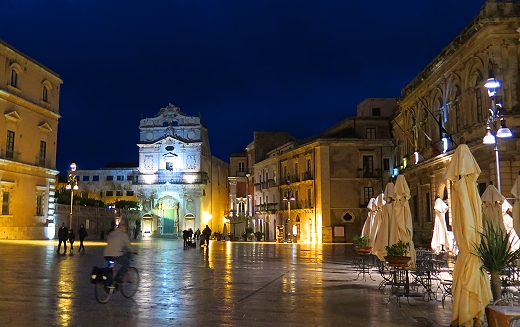
Seeing the Rainforest for the Trees, Reforesting the Dominican Republic

We got grubby — for good!

It was a dirty job to say the least, but it feels good to get really filthy sometimes. Ask any kid. Life rocks under the warm Dominican sun… CONTINUE READING >>

A big thank you to Fathom Travel for providing this impact + travel opportunity so we can share their good work. As always, all opinions are our own.

Planting trees in the Dominican Republic

On the island of Hispaniola, which the Dominican Republic shares with Haiti, deforestation is a huge problem.

The lack of trees can lead to soil erosion with dangerous runoff and pollution, as well as deadly landslides after heavy rains.

Even though the problem is much more serious on the Haitian side of the island, the Dominican portion also has many areas where the forests have been cut down.

Reforestation efforts in the Dominican Republic leads to clean water

Fathom has developed a program with the government’s Ministry of Environment and IDDI (Instituto Dominicano de Desarrollo Integral or Dominican Institute for Integral Development), that encourages volunteers from their cruise ships to have a definite impact on the future of the forests.

We took a day to join those groups and plant endemic tropical cedar trees along the slopes of the mountains in the Yasica region.

A gecko lizard in the rainforest in the Dominican Republic

Large swaths of rainforest have been cleared for agricultural purposes, and that has negatively impacted the river that gives the area its name.

The effects are felt downstream in the city of Puerto Plata because Rio Yasica feeds the municipal water supply.

Cows on the road in the Dominican Republic

The ride up into some of the highest mountains in the Caribbean gave us some spectacular views of the valleys and coastline below.

Flowers in the rainforest of the Dominican Republic

As we climbed higher we realized that an added benefit of the altitude was that it was a whole lot cooler too.

Hiking in the Dominican Republic

Hiking thru the rainforest in the Dominican Republic

We certainly came to appreciate that a little later while working in the sun.

After meeting with our team leaders, we hiked into a valley that drains into the river and passed by thousands of baby trees that had been planted by prior Fathom travelers.

Sticks are used to show where trees are planted in the rainforest
Thousands of sticks marked where trees had been planted before us!

Then, upon arriving at our area, we got a quick lesson in the planting procedure and set to work.

Planting trees in the rainforest of the Dominican Republic
Planting trees in the Dominican RepublicFirst we measured the distance between the spots for planting with a four-meter pole, so that the trees would not be too close together.

Each little seedling needs plenty of room to grow into a mature tree, so they start life by saying to each other, “I wouldn’t touch you with a four meter pole.”

Once the spots were marked, we dug holes and planted our babies, marking each spot with a stick so we could avoid stepping on them while we scurried around the hillside.

Not exactly high tech, but it got the job done.

Over the next few hours our crew spread across the valley, measuring, digging, and planting until we had three hundred and eighty new trees ready to grow in the warm Dominican sun.

Planting trees in the Dominican Repulic on a volunteeer vacation

A dirty job to say the least, but it feels good to get really filthy sometimes.

Ask any kid.

WATCH: It’s not exactly high tech, but gets the job done.

The GypsyNesters planting trees in the Dominican Republic

The fruit of our labors may not be apparent for several decades, but as the trees mature they will provide stability to the soil, habitat for wildlife, help clean the air, and perhaps even a shady spot for us to visit should we return in thirty or forty years.

How’s that for optimistic?

Amber Cove in the Dominican Republic
Amber Cove

A small village church in Maimon, Dominican Republic

All of that measuring, digging, and planting sure did work up an appetite, so after returning to the ship and cleaning up we ventured out on our own to the nearby little village of Maimon.

We debated walking, but our tired muscles decided on a quick taxi jaunt from our docking spot in Amber Cove.

We hopped out at the Pescaderia Los Primos, but decided to keep our legs limber and stroll around the neighborhood to see a bit of local life before dinner.

A typical home in the Dominican Republic

A gift shop in the Dominican Republic

While we walked we were greeted by many of the townsfolk, including the best saleswoman ever, who convinced us to take a look at her house.

Her casa also happened to be a gift shop, and we couldn’t help but buy a couple of items.

It was impossible to miss the fact that this was an election year in the Dominican Republic.

Election time in the Dominican Republic

Flora of the Dominican Republic

There were colorful signs everywhere and the mood festive with vehicles blaring music and candidate endorsements from speakers mounted on their roofs, along with spontaneous parades of flag waving supporters taking to the streets.

Back at the pescaderia we met a few folks from the ship and sat down to a beautiful meal of spiny lobster, a whole red snapper, luscious seafood soup, and tostones, and washed it all down with a couple of almost-frozen Presidentes.

Dominican seafood. a whole red snapper, a rock lobster, seafood soup, and tostones -- washed down with a couple of almost-frozen Presidentes

That just might have been the perfect end to a day of service.

David and Veronica, GypsyNester.com

See our entire volunteer cruise to the Dominican Republic here!

A big thank you to Fathom Travel for providing this impact + travel opportunity so we can share their good work. As always, all opinions are our own.

YOUR TURN: