
Search…

Best Ways to Travel the World and Still Study Well

Traveling for students can be really affordable; however, most students do not know and are not sure how they can at the same time finish their college duties and travel… CONTINUE READING >> 

Students more than others have the opportunity to travel, get to know the distant hidden and exotic places, especially with countless discounts and other opportunities offered to them such as student flight, online learning, and the like. In today’s modern times, travel opportunities for students are innumerable and open to all. It is not necessary to devote your time exclusively to studies if you want to be successful, or to earning money if you want to travel – it is not necessary to choose one of the two when you can definitely have both. Traveling for students can be really affordable; however, most students do not know and are not sure how they can at the same time finish their college duties and travel.

First, let’s talk about financing

If you think that the trip is expensive and that for every trip abroad you need to save the entire fortune – you are wrong. One of the most popular options is student travel scholarships, but if you are not interested in that, there are other ways. You should check out the https://www.couchsurfing.com – a site where after you decide through which countries and cities you want to travel, you can contact people who are offering you to stay in their home – for free. The essence is not at getting free accommodation, but in meeting the city and people, exactly as they are. Student travel is the most popular type on this site, so most users are young, vibrant people.

On a trip, try to spend between an hour to three hours each day studying and doing the tasks you have made in advance in order to achieve your deadlines. Student travel does not need to be stressful at all, and should be a great experience and should offer you a lot of fun. With tools that can be found online such as literature, research, online courses, and custom writing sites, you should be able to not just stay on top of your obligations, but be one of the better students in your class.

What about your college obligations?

The next step is to make a list of the obligations you need to do in order to achieve the deadline – studying, doing research, getting materials, and so on. This list will keep you in check no matter which part of the world you are in. What can help you in many ways is https://customwriting.com that offers professional and academic support to all students. This site is widely used on travel trips, and when you are unable to fulfill the deadline by yourself. It is one of the most popular services that have great and high quality solutions.

Be sure to make a timetable of all your commitments and plans in one place. Create a calendar and enter all the obligations you have regarding colleges, such as taking exams and submitting papers and assignments. These are the obligations that you must fulfill so plan around them, especially if you want to take student travel scholarships because being in a new city can greatly disrupt your previous learning rhythm. Your studies shouldn’t suffer while you are on the road, nor should you limit your fun in order to keep up with tasks. The key to everything is a good organization and a little bit of time management.

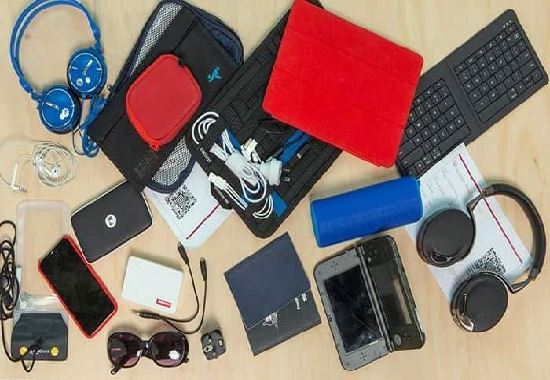
For the trip, you need to pack everything you will use in order to fulfill the academic obligations that are ahead of you. This includes literature, books, scripts, notebooks, pens, markers, but also a laptop, mobile, chargers, headphones and everything you normally use when learning and doing your assignments. It is also important not to take too much with you. Get rid of the fear that you will need some of the tools that you have never used before. Student travel is one of the most popular types because that form of freedom is rare later in life. It’s not a goal to bring with you your entire room, but just the basic things you will need.

See the things in the read about in class

It is imperative that every person meet and explore the world around us. Don’t forget to visit specialized websites where you can find cheap air tickets such as https://www.cheapflights.ca and many others that offer student flight options that you can take full advantage of and save money. Travel is a great part of getting to know not only other cultures, people, art and beauty, but also getting to know ourselves and acquiring experiences and skills that are invaluable. Students have countless opportunities to travel, not just through student travel scholarships, but also in their own organization like we discussed in this article.

Author’s Bio:
Susan Wallace is a world traveler, and she wrote several of her best texts during her travels, primarily as a college freshman and sophomore when she traveled through much of Africa and Asia. She considers her journey experience to be crucial for the development of a person both in a spiritual and academic way. Susan thinks that college is the ideal time to expand the horizons, not only through books, lessons, and literature but also through personal experience.

We are happy to present this collaborative post to offer valuable information to our readers.
Say Si to Seeing Spain

How many superlatives can we use for one country? If the nation we are describing is Spain, then we’d say an unlimited number. So, as our fellow travelers plan their coming adventures, we highly recommend looking into a Spainish fiesta…
CONTINUE READING >>
 

How many superlatives can we use for one country? If the nation we are describing is Spain, then we’d say an unlimited number.

Beautiful, seductive, historic, engaging, exciting, dramatic, enticing, delicious, charming, alluring, appealing, captivating, fascinating, intriguing, inviting, enchanting, beguiling, mesmerizing, and… OK, you get the picture.

So, as our fellow travelers plan their coming adventures, we highly recommend looking into tours of Spain 2019.

Over the past few years we have come to appreciate the advantages of taking a tour as opposed to exploring on our own. First and foremost, the planning is so much simpler. With one contact everything is taken care of.

It also means never missing the most important sites, and benefiting from the expertise of people who have “been there, done that” many times before. It is so much easier when we can relax and see the destinations we want to see worry free.

In Spain that means Barcelona and Madrid.

Barcelona:

The Catalonian capital city certainly tics off every one of those adjectives we named before, and one important one we didn’t, unique.

We know it’s a cliché, but there really is no other place like it on earth. Responsible for that as much as almost anything is the presence of so many structures by the famed architect Antoni Gaudí.

There is one that stands out above all the others, literally and figuratively, the Sagrada Família. This massive basilica is without a doubt the pinnacle of his work, and we do mean pinnacle.

Huge spires rise into the sky over fifty stories high. These frame three entry ways decorated with incredible facades depicting the birth, death, and glorification of Christ.

Inside the cathedral is equally as engrossing. Gaudí set out to make his columns rising to the heavens feel like giant trees in a forest that split like branches to support the ceiling. After some time of gazing up at the enormous tapered pillars we couldn’t help but conclude that he was wildly successful.

More of this master’s work is scattered throughout the city, with a concentration at Park Güell. In this garden not only the structures, but the entire layout of the park was his design. The result is an amazing dream-like urban getaway.

Of course Barcelona has much more to offer than eccentric architecture, a visit wouldn’t be complete without stopping by the Gothic Quarter.

This is the oldest part of the city, where there are still remnants of the ancient Roman wall and several structures dating back to the thirteen hundreds.

If this is the heart of Barcelona, then the boulevard La Rambla must be the aorta.

Much more than just a street, the promenade has become like a giant open air theater for performers, artists, and especially human statues.

Madrid:

Culturally quite different from Catalonia, Madrid is quintessentially Spanish. Touring the town means visiting plazas, a palace, and the Prado Museum, because it is famous for all of the above.

From the Puerta del Sol and the bear that represents the city, to the Plaza Mayor with King Philip III at the center, to Plaza Cibeles around the amazing City Hall, each is a veritable smorgasbord for the senses. Architecture and statues galore grace them along with incredible sidewalk cafes. Whenever possible we made a point of stopping for tapas to take time to soak in the atmosphere.

Speaking of eating, we may have never seen an array of tempting taste treats like what we found at the Market of San Miguel. Much more than a typical market, Mercado de San Miguel is a place for gourmet appetites, where more than thirty vendors sell a variety of tremendous tapas with olives, artichokes, seafood, and ham.

The ham! How could we almost forget to mention the ham? Please, please, we beg of you, please do not leave Spain without trying the Iberian ham. Cured pork products will never be seen the same again once you have.

Madrid is the Spanish seat of government, and has been since 1561, so the Royal Palace reflects the status of the time when the empire was perhaps the richest on earth. However, the current Palacio Real, which is the largest in Europe by floor space, was built after a fire destroyed the original in 1734.

The Palace, with the Almudena Cathedral directly across from it, makes for yet another wildly impressive square in this city with no shortage of them.

There are only a handful of museums around the world so well known that they help to define a city, and we would definitely include the Prado on that list. While the Louvre may be more famous, it is widely held that the Prado has the world’s finest collection of European art because of the centuries of collecting by the Spanish Royal family.

None of these attractions should be missed, and every single one is a stop on the tours that we mentioned above. It is also possible to add Cordoba and Seville to the itinerary, but we have not had the pleasure of visiting them yet.

Hmmm, looks as though we will need to book another trip to Spain soon.

David & Veronica, GypsyNester.com

We are happy to present this collaborative post to offer valuable information to our readers.
How To Wash Your Car Anytime At Home

When doing car wash chores a great protecting polish enhances your car’s paint and is also a good shine. The protecting agent is always the last step to achieve that great look… CONTINUE READING >> 

Practically you will not want to polish your car’s paint since washing and waxing is all you need to protect your cars beautiful finish. Since we do not live in a perfect world, your car still needs that deep and wet looking shine and this calls for a little more work on your side. This is part of your vehicle detailing for good looks and preserving the original paint work not forgetting car polish needs to be periodically done. When doing car wash chores a great protecting polish enhances your car’s paint and is also a good shine. The protecting agent is always the last step to achieve that great look. There are so many contaminants that come into contact with your car making your finish look less impressive. Car polish is therefore meant to remove defects like scratches, oxidation and swirl so as to enhance the car’s gloss that it deserves.

Car polishing process:

Car polish process depends on several variables which determine the polish you are going to use. There are some damages that can be repaired at your local garage and others are simply outside your individual skill set. Simply put, paint polish is basically used to work on your paint surface to remove unwanted substances and marks induced by the elements of nature. Note that, each polish is designed for different methods of application like repairing or refiningand may be applied using your hand or machine.With the evolution of buffing in vehicle detailing, the resulting finish is always perfect though continuous buffing removes some amount of paint during each stroke. This effect on your paint integrity film build might be compromised. According to experts of thanksforthehelp and bestonlineassignmenthelp paint polish removes small amounts of paint from your car surface though at microscopic levels and should not worry you much.The car polishing process is not as simple as you might be made to believe. To begin with you need to put into consideration your car paint condition and the paint hardness as this will require aggressive products thus more work. Some paint finishes are thicker than others and if yours is soft, you need less harsh car polishes. You should know that waxing can be the finishing touch of a long car detailing process. Check out a handy guide on the best car wax that will help you to choose the perfect one for your car.

Factors on applicators to consider:

My friends working with topassignmentexperts and essaywriter4u said, other factors to consider are the types of applicators or tools used. Some processes might end up messing up your car paint. Do not rush to polish before you assemble the right tools to commence the process and ensure you have ample time to get the best results possible. Your workspace should be enough to get the job done. The weather condition and your skill are other factors that contribute to the outcome of your car polish.There are various car polishes in the market and each come with different purposes. The best types naturally are the least abrasive ones. Some of these do not complete the job thus you may require a combination of two or more to do the job. Some commercials on TV purport to complete the job but you need to assess your need before settling on the correct product.

Steps you need to follow:

College assignment help companies paperdoers and onlineassignmentwriting majorly focused these points while writing automobile related assignment .First, for severe to moderate damages like heavy swirl, serious damages and scratches, you need to use moderately soft foam pad or soft leather which are available your local store as they do not damage your finish.Secondly, for normal swirl light to moderate water etching, oxidation and light scratches a foam pad will do the job and achieve the desired results.Thirdly for slight damages or normal car polish, soft clothes are recommended since you are not sealing any scratches or dents. As much as you can use your hands, dual polishers are better as they can work better than your hands.

Additional polishing tips:

Before polishing the whole car, do a spot test starting with the less aggressive car polish product and see if it gives you the expected results before moving to the more aggressive ones.
When you are positive about the spot results, replicate the process to the entire car.
Work on a small portion of your car body for maximum concentration at any given time.
If you are a beginner, move slowly thus making the polish works and sets in well.
Ensure the whole surface is covered by using slow and overlapping strokes either up and down or side to side; whichever you are comfortable with.
Keep your eyes on the pad not paint. The pad needs to be level for the best results.
Never attempt dry buffing as the results are not very pleasing Since now you have the basics at your fingertips, go out there and give your car the polish it deserves. When mastered, polishing is the best vehicle detailing you will love and you will enjoy it just like in wash car procedures.

We are happy to present this collaborative post to offer valuable information to our readers.
Delve Deeper: Tags

Stuff To Look Out For When Applying For AVE Canada

The AVE Canada is a type of travel document that you need if you want to enter the country for whatever purpose. When you are striving to get one, here are a couple of things to keep in mind… CONTINUE READING >> 

The AVE Canada is a type of travel document that you need if you want to enter the country for whatever purpose. This acronym stands for “Autorisation de voyage électronique”, which is French for Electronic Travel Authorization (more commonly known as the ETA Canada). When you are striving to get one, here are a couple of things to keep in mind.

Make sure you have all the necessary information

When you are applying for an AVE/ ETA, you need to do so in English (even if you are perfectly competent in French). You will need to state your name, date of birth, and the information about your passport (typically, your passport number).

There will also be questions meant to check whether or not you are eligible to travel: if you have any communicable diseases, and whether you have a criminal record involving certain kinds of offences, if you were arrested or convicted for anything, or if you have any history of deportation or your visa getting revoked in the past.

Finally, you will need to provide some of your credit card data, because the applicationfor an AVE does entail paying some predetermined fees. This expense will never exceed the sum of $7 Canadian (seven Canadian dollars), which is set by the government. If you are being asked to pay more, you are not applying via official channels and you may be in danger of a scam. Check out this link for some advice if you suspect that this may be your case.

Make sure to respect the deadlines for application

When you are planning a trip to Canada, you can submit your application forms for an AVE at literally any point before you set off. The general rule of thumb is – the sooner you do it, the better. Of course, you cannot always plan everything in advance and have it unfold the way you want to, and sometimes you will have to make a last minute demand for some emergency travel situation.

Do not worry, these are okay as well, and you will be covered, because an ETA request does not require that you have a specific travel plan in Canada. However, at the very least and if at all possible, you should at least provide the addresses of your destinations and your planned routes.

Be aware of the period of validity and re-application

To put it in more simple, everyday terms, your travel approval documentation has an expiry date stuck on it. In general, this will be five years, in the context of travel authorizations meant for Canada. If your passport should happento expire before those five years have passed, then your ETA automatically expires along with the passport and you will have to renew both.See this link for some advice on how to renew your passport: https://www.wikihow.com/Renew-a-Passport

There are five officially listed reasons for which you would need to re-apply for a new travel authorization through the ETA system. These are as follows: if your passport has expired and you got a new one, if you have changed your name, your nationality, or your sex/ gender, or if the circumstances that dictated your answers to the “yes or no” questions in your previous application have happened to change in the meantime.

However, while the validity period is still ongoing, you are completely free to come by repeatedly and visit Canada as many times as you like without putting in a new request.

Be aware that an ATE/ AVE does not guarantee you entry

Yes, we know, it seems counterintuitive. You were so careful to get all your papers right, and you got that authorized paper or emailed document, you planned your trip and survived horrible smelly feet in the airplane, only to be turned away a the border. Horrible image, right?

Unfortunately, a travel authorization will not necessarily guarantee you entry into Canada proper. It can only allow you to board a plane or get on a cruise ship without having a visa for Canada. Whether you will be considered eligible to actually enter the country is a decision made by the borderpost immigration agents.

We are happy to present this collaborative post to offer valuable information to our readers.
Food in Nepal is as Unique as its People

The dishes of Nepal are as unique as the backgrounds and ethnicities of the people, and there are major differences in regional cuisine. Here are a few dishes to try in the various regions of Nepal…. CONTINUE READING >> 

The dishes of Nepal are as unique as the backgrounds and ethnicities of the people, and there are major differences in regional cuisine. The three main geographical regions have a dramatic influence on what type of food is available. Here are a few dishes to try in each of the three topographic regions of Nepal.

Terai or jungle region of the south

The jungle lowlands in the south have the widest variety of agriculture due to the climate and abundance of water. Rivers provide fish, and steamy lowlands are striped with stacked terraces growing rice and millet. Fruit grows abundantly in this region, including mangoes, papayas, bananas, and jackfruit.

Dal Bhat

The true staple of Nepalese cuisine is dal bhat. The base of the dish is lentil soup with rice and a steamed seasonal vegetable, but it varies regionally based on what is available. In the lowlands, it’s served with sides like pickles, curry, yogurt, chutney, and fish.

Gundruk

Made by fermenting leafy green vegetables, this dish has an earthy flavor reminiscent of salty mushrooms. It is sometimes pickled and used as a garnish for curry or dal bhat.

The central hilly region

With a moderate climate throughout the year, the central hilly region diet is conducive to rice-based dishes. The original inhabitants of the valley have a distinct cuisine, architecture, and language. Agriculture varies wildly due to the microclimates, giving rise to many variations on a theme.  

Chatamari

A round crepe made from rice flour cooked with onions, meat, egg, and spices. Depending on the region and available crops, it can also contain local vegetables as a stuffing.

Mo mo dumplings

Steamed vegetables and meat make up the main ingredients of the dumplings, which are wrapped in a flour dough and steamed or fried. These tasty snacks usually come ten to a plate and are served with spicy chili dip. You’ll find these served alongside main dishes in restaurants or at street stalls as a standalone snack.

Himalayan and high-altitude regions of the north

The high-altitude growing conditions and food scarcity of the Himalaya area in the north shaped the dishes toward stews and other warm dishes and drinks. At the highest altitudes, food becomes limited due to short growing seasons and the lack of transportation. Potatoes and other root vegetables are staples in hot, nutrient-rich soups and appear fried with vegetables, cheese, and eggs.

Thukpa with mo mo dumplings

A thick noodle soup that can include meat, egg or just vegetables is indispensable in winter. Often served with an accompanying dish of mo mo dumplings, the soup starts with a carefully seasoned rich meat broth made from available meats. Visitors are encouraged to try garlic soup to battle the effects of altitude but should avoid meat because it’s unlikely to be fresh.

Pro tip

Taste the glorious flavors of each region on the Manaslu Trek. This unique circuit around the 8,000-meter peak takes visitors through each of the regions, allowing you to try each dish where it originated.

Conclusion

The influences of different cultures are best reflected in a country’s cuisine. Due to tourism and modern travel techniques, you may find each of these regional cuisines in a cultural center like Kathmandu but beware the temptation to sample these dishes before you arrive. The local preparation and ingredients add an element that can’t be duplicated elsewhere.

We are happy to present this collaborative post to offer valuable information to our readers.
10 of the Best Self-Guided Cycling Holidays

What makes a great cycling holiday? Immersing yourself in the rhythm of a place; trying to blend in as seamlessly as possible with the pace of local life, learning about culture, traditions, and gastronomy as well as getting to know the people and enjoying postcard-worthy scenery along the way… CONTINUE READING >> 

What makes a great cycling holiday?

The answer depends on what anyone wants from their cycling holidays. In this case, I’m talking cycling as a means of Slow Travel. Immersing yourself in the rhythm of a place; trying to blend in as seamlessly as possible with the pace of local life, learning about culture, traditions, and gastronomy as well as getting to know the people and enjoying postcard-worthy scenery along the way.

To do that it helps to have an itinerary which has been designed to take cyclists on a voyage which weaves through eye-candy landscapes and chocolate box villages, passing tabernas/tascas/hüttes which are perfect for a pause to allow time to reflect on the memorable highlights notched up. Slow Travel specialists, Inntravel, have created an irresistible selection of self-guided cycling holidays across Europe which tick all of these boxes and then some. These are ten of the best of them.

Idyllic Istria – Croatia

Exploring Istria’s coastal and inland cycle paths for the first time feels familiar and yet refreshingly different. Honey-coloured villages surrounded by olive and citrus groves bask on the edge of a sparkling Adriatic Sea.

At times there’s a laid-back Mediterranean vibe, at others the feel is distinctly northern European. This melange of influences extends to menus in cosy little konobes (taverns) where the seafood is excellent and so are the pizzas. The pastel-coloured facades of Venetian houses in Rovinjo old town, Istria’s shining star, squeezed onto a small oval-shaped peninsula, encapsulate the heady mix of visual treats this part of Croatia has to offer.

Salzburg’s Lake District – Austria

The journey takes in lakes whose surface are like glass, churches with onion-domed spires, cavorting rivers, and pristine meadows below saw-toothed peaks. It’s an area with a musical lilt, from Julie Andrews belting out numbers in the Sound of Music to a village where Mahler spent sultry summer months composing symphonies.

Getting around involves scenic boat trips and a cog railway, as well as on two wheels, whilst local specialities to try include gröstl; an ideal brunch dish of bacon, potato, and onion topped with a fried egg. The highlight is the village of Hallstatt, a pearl of a UNESCO World Heritage Site rising up from the shores of Hallstätter See.

Medieval Mantova to Romantic Verona – Italy

The problem with cycling in Italy is, unless you’re a cycling fashionista, you’re never going to blend in with locals who look as stylish on two wheels as they do sipping chianti in a wine bar. This is an Italian classic encompassing the Renaissance architecture of Mantova; cycle paths alongside the River Minicio and Lake Garda; vineyards; orchards; a bird reserve; and Sigurtà Garden Park (the temple of nature) – a fabulous spot for a picnic. The cycling comes to an end in the most romantic of cities, Romeo and Juliet’s Verona, where alluring restaurants serve taste-bud seducing plates of burrata cheese with crispy fried courgette flowers.

The Danish Riviera – Denmark

Denmark’s countryside is the domain of elves and goblins; a land which inspired Hans Christian Anderson to pen fantastical tales. There’s a literary theme running throughout this exploration of the Danish Riviera; from Kronborg Castle (the setting for Shakespeare’s Hamlet) to a museum dedicated to Karen Blixen, author of Out of Africa. Trails connect simple fishing villages of thatched-roof cottages to more opulent attractions like the Royal Palace of Fredensborg, ‘the Danish Versailles’.

Nature provides equally diverse surroundings, including forests, heathlands and sweeping white-sand beaches where sea views should be complimented by a lunch consisting of a crab sandwich and a sneaky shot of schnapps distilled by the monks of Esrum Abbey.

Impressions of the Camargue – France

Cycling through the Camargue rewards with an exhilarating roller-coaster ride of incomparable experiences. Whereas towns and cities en-route combine the historic (the Roman amphitheatre at Arles) with the artistic (St-Rémy where Van Gogh painted Starry Night). Camargue’s wetlands are wildly beautiful and home to black bulls, pink flamingos, and white horses ridden by gardians (cowboys), too.

Highlight piles up against highlight, commencing with the 15th-century castle of Tarascon (now a bizarre art gallery) and continuing to the point you find yourself soaking up sea views from a church roof in Saintes-Maries-de-la-Mer before dropping to street level, hopefully not literally, for a tiered-tower lunch of freshly caught seafood.

Lagoons & the ‘Silver Coast’ – Portugal

What destination has canals, gondolas, and a lagoon but isn’t Venice? The answer is Aveiro. Portugal’s ‘little Venice’ is known by the Portuguese but not so much by people beyond the country’s borders. It’s a place to relax and take it easy, whether reclining in a Portuguese gondola or cycling along trails beside the Aveiro lagoon, salt flats, endless beaches, and through the streets of Costa Nova whose stripey, clapboard houses look like they belong on a film set. This is an area favoured by fishermen and fishing birds, a clue as to what traditional dishes are likely to be – bacalhau (salt cod) is particularly good in Costa Nova.

Dutch Discovery – Holland

Any ‘best of’ cycling holidays must include the bicycle capital of the world, Amsterdam. However, the passion for cycling extends beyond the streets of the Netherlands’ capital.

Dutch Discovery includes Amsterdam, but also freewheels its way from Edam to Gouda (no need to suggest what culinary goodies to try in either), passing windmills, lakes and meadows. Intriguing sights to be seen include Stelling van Amsterdam, a 135-kilometre-long ring of fortifications, and Oudewater, one of the Netherlands oldest towns.

In the 16th century, women accused of witchcraft were brought to Oudewater to be weighed. Any woman deemed too heavy to keep a broomstick in the air couldn’t be a witch.

Bavarian Castles & Villages – Germany

If it’s dramatic cycling you crave, Bavaria is brimming with all the requisite ingredients, ranging from clifftop fairy-tale castles with Gothic spires and striking mountain lakes to villages whose houses have frescoed walls. Route highlights include being transfixed by the intensity of the colours of the lakes in Das Blaue Land (the Blue Land) and a visit to Hohenschwangau, an opulent castle designed by and for a king.

Embracing gastronomic tradition involves indulging in the daily German ritual of kaffee und kuchen – coffee and a wedge of cake.

Idyllic Menorca – Spain

Cycling around country lanes on a sunny island in the Mediterranean is akin to being given a shot of instant relaxation. Obviously, there are oodles of sandy beaches and cosy coves to discover, but there are also pine forests, wild moors and fishing villages with white-washed cottages and harbour-side restaurants.

In Cuitadella and Mahón, Menorca has two contrastingly and equally picturesque small, historic cities. Mahón was the capital when the island was under British rule, so a good place to try Mahón gin, a Menorcan snifter first introduced by English sailors in the 18th century, but maybe only after the day’s cycling is done.

In the Shadow of the Julian Alps – Slovenia

One of the most sought-after Instagram travel images is of a Medieval castle and church on an island in the centre of a cerulean lake. But whilst Instagrammers snap stunning Lake Bled and move on in search of their next trophy, cyclists can take their time to absorb more of Slovenia’s paradisiacal landscapes in depth.

Travelling through Slovenia by bike is to discover a world of limestone peaks dusted with snow, cascading waterfalls, walkways through gorges, and villages where hay is stored in wooden racks and bees buzz around hives of many colours. It’s not so much slow travelling as time travelling.

We are happy to present this collaborative post to offer valuable information to our readers.
3 Must Do Things In London

When you’re planning a trip to London, you’ll always want to make sure that you’re doing as much as you can. So let’s take a look at three must-do things for every London trip…

CONTINUE READING >> 

When you’re planning a trip to London, you’ll always want to make sure that you’re planning in and doing as much as you can. But what should your agenda include? Let’s take a look at three must-do things for every London trip.

1. Explore The Shops

First of all, when you’re in London, you’re definitely going to want to go shopping. Because with Oxford Street, Selfridges, Westfields, and even Bond Street, there’s so many incredible shops for you to explore in London. You could spend half a day, a full day, or even a few days doing this. So plan your route and shop ’til you drop!

2. Tick Off The Sites

And we all know that there are a ton of sites we all want to be able to see in London, so you’re going to want to create an itinerary of what you want to see. Maybe you’ve always wanted to see the M16 building or the Sherlock Holmes museum? Or even the V&A or Buckingham Palace? Make a note of this and tick off your must-see sights during your time in the city.

3. Enjoy A Night At The Theatre

The final thing that you might want to do when you’re in London, is enjoy a night at the theatre. Because the West End is home to some great theatrical productions and true entertainment talent. The only tough decision will be what to see! Take a look at the below infographic to decide exactly what you might want to see when you’re booking your tickets.


Infographic Design By theatre tickets

We are happy to present this collaborative post to offer valuable information to our readers.