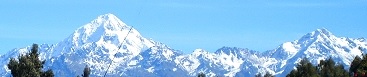
There is something extra special about ski resorts located in the highest regions of the world. It’s not just that they usually offer longer and more challenging ski runs. They also tend to have the most spectacular views. CONTINUE READING >>
There is something extra special about ski resorts located in the highest regions of the world. It’s not just that they usually offer longer and more challenging ski runs. They also tend to have the most spectacular views. With adequate ski travel insurance, at least some of these lofty resorts are now accessible to anyone.
This little-known resort in the Andes is the highest of all, at no less than 5,422 metres. That’s an impressive statistic, but this resort is not for the faint-hearted. The air is very thin because Chacaltaya is at an even higher level than the base camp on Mount Everest! It is closed most of the time, because the location is so difficult: weather conditions rarely provide sufficient snow. It can’t really be recommended as a holiday destination, but it deserves its place at the top of the list of the highest ski resorts in the world.
Aspen-Snowmass, Colorado
The Aspen-Snowmass resort in the Rocky Mountains of the USA, at 3,813 metres, is not quite as high as the Bolivian record-holder, but it makes up for this in the volume of snow available and the length of its spectacular slopes. This resort is huge, and it includes two towns and four mountains, with plenty of amenities for skiing and other winter sports. Transport to and from the resort is excellent, and there are dozens of attractive restaurants and shops for its many visitors.
Zermatt, Switzerland
The glory of the Alps accounts for Zermatt’s legendary status with European skiers through the ages. This picturesque Swiss town nestles among impressive, snowy peaks and boasts the longest ski lift in Europe. At almost 4,000 metres, it qualifies as one of the world’s highest resorts. It has cable cars, chairlifts, and 137 kilometres of slopes with very reliable snow. Most people remember the excellent hospitality, including delicious mulled wine and the local speciality: cheese and meat fondue.
Chamonix, France
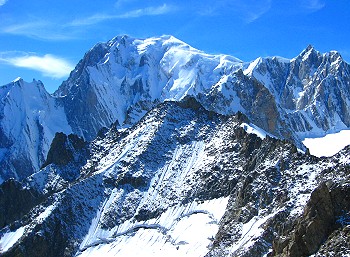
Another European resort with a fantastic reputation is Chamonix (3842 metres), in France. It’s not far from Geneva, with its convenient rail, road and airport connections, and it has stunning views of the Alps. The highest Alpine peak, Mont Blanc, is a notable feature of the view. The resort has a cable car running from the centre of town, right up into the mountains. As you might expect, the restaurants are excellent, offering the best in French cuisine and wonderful wines.
Gulmarg, Himalayas
Finally, an up-and-coming resort that is gaining in popularity is India’s Gulmarg at 3,980 metres. There is plentiful snow cover in the Himalayas and the resort is well organised, with graded slopes and several ski lifts. It may not yet be the most cosmopolitan ski resort, but it has amazing, unspoilt vistas and excellent tuition for beginners and experts alike. Skiers who are looking for something different are sure to appreciate this unique resort. Its Kashmiri food and fascinating culture make for a memorable experience.
We are happy to feature this post to provide valuable information for skiing readers.
They say that the world is a book and those who do not travel read only one page. The only problem with this is that the book in question happens to be a rather long read, with several pages to peruse and pore over at length.
Therefore, it can be somewhat difficult deciding where to visit next. A lot will depend on your location, budget, and time constraints, but apart from that you’ve quite literally got the whole world at your feet.
So, how on earth can you decide where to go on your next holiday?
First of all, consider the kind of holiday you want to take. For example, you may feel like a relaxing beach retreat to escape the stresses and strains of everyday life back home. Alternatively, you might want to explore the historical highlights of a celebrated capital city or experience the captivating culture of a far-flung destination.
Double check for attractions and activities
Think about the things you want to see and do while you are away. Travel is all about broadening the mind and expanding your horizons, so why not try something new like skiing in the French Alps or snorkeling the Great Barrier Reef? Make sure your destination of choice has plenty of attractions and activities to take advantage of.
Schedule your trip around an event or festival
Have you ever wanted to witness the colorful Carnival in Rio de Janeiro or dance the night away at Coachella in California? Well, now is your chance. By planning your next trip around an event or festival, you can revel in once-in-a-lifetime experiences, which are bound to create the longest lasting memories.
Image by jaaron used under Creative Commons license CC BY 2.0
Leave it until the last minute
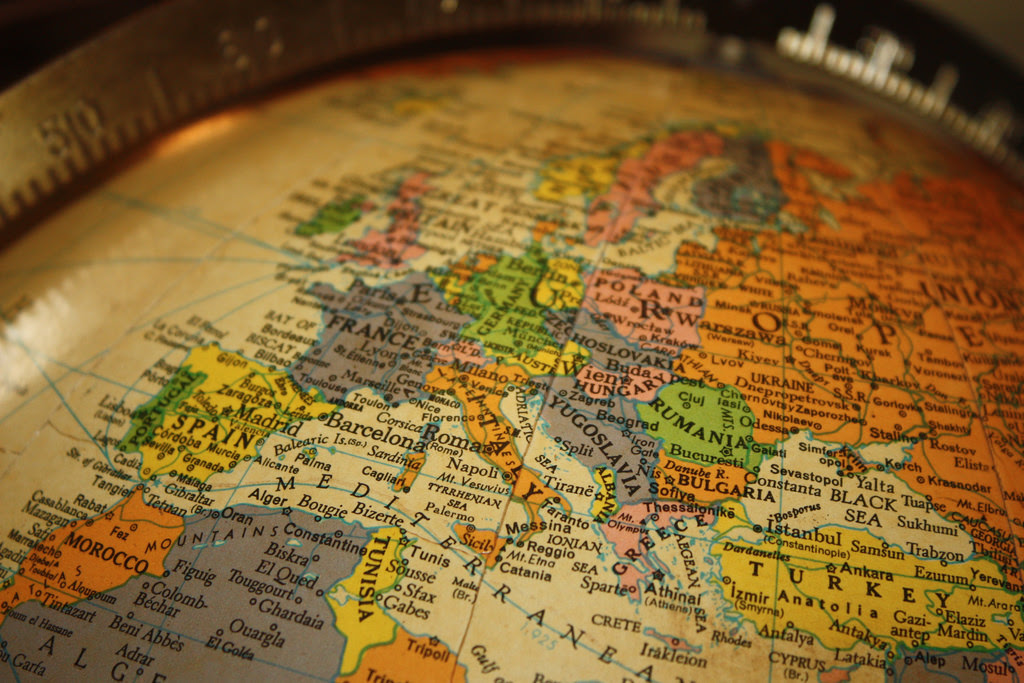
If you are an open-minded individual with a spontaneous streak, you could always leave your booking until the last minute and simply go wherever has the cheapest deal. This is the closest you will get to spinning a globe and stopping it with your finger, so a sense of adventure is advisable to say the least.
Don’t overlook the safe and sought-after
There is nothing wrong with going on holiday to a popular tourist trap such as Paris or New York. After all, millions of people choose to visit these destinations for good reason. What’s more, if you are a fan of the unusual or off-beat, these kinds of locations have many sights and sounds that go against the mainstream.
Embrace a limited budget
Just because you have a limited budget doesn’t mean to say you can’t enjoy yourself to the maximum. To save money, you can stay in a hostel and cook your own food, capitalize on free walking tours, and use public transport to rub shoulders with the locals.
For any traveler suffering from symptoms of wanderlust, deciding where to go on holiday is arguably the toughest choice in life. But by bearing the aforementioned advice in mind, you can narrow down the options according to your situation at that moment in time for the best getaway possible.
Jarvis Braithwaite is an adventurer who loves to travel. The sky diving trip excursion he went on in Zambia has been his most exhilarating travel experience so far.
In all of our previous visits to Canada, which number in the dozens, we had never been to her political heart.
Her capital city, Ottawa, proved to be eye opening in many ways to a couple of visiting neighbors from south of the border…CONTINUE READING >>
A big thanks to Ontario Travel and Ottawa Tourism for providing this rollicking adventure! As always, all opinions are our own.
In all of our previous visits to Canada, which number in the dozens, we had never been to her political heart.
Her capital city, Ottawa, proved to be eye opening in many ways to a couple of visiting neighbors from south of the border.
Going Underground — Cold War–Style
On our way into town we stopped for a trip back in time at the Diefenbunker, Canada’s Cold War Museum.
David enters the Diefenbunker though the blast tunnel
This underground bunker was constructed to be the shelter where senior members of the government and military could ride out a nuclear attack.
Luckily it was never put to the test.
David calls the shots
As warheads got more powerful the installation was deemed obsolete and decommissioned.
Then someone had the big idea to preserve it exactly as it was and allow the curious public to see what life would have been like if it had become necessary to hunker in the bunker to hide out from global destruction.
Nothing like a cigarette in an airtight room!
The Iron Curtain-era technology seemed almost comical and, making it even more anachronistic, nearly every desk had an ashtray on it.
Nothing like having five hundred frightened and frantic people packed into a sealed cellar seventy-five feet below the surface chain smoking.
The Changing of the Guard is a Seriously Big Change Here
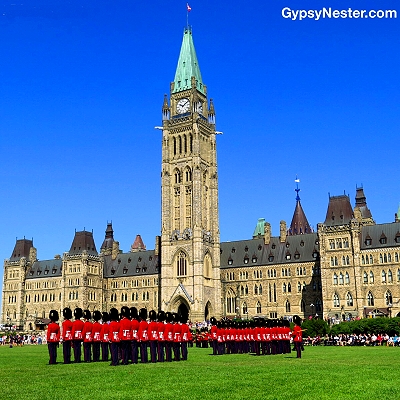
After seeing this, it seemed only natural to check out where all of the hunkered down dignitaries would have come from, so we made our way to Parliament Hill, home to Canada’s federal government.
All summer long, morning, noon and night, there are thrills to be found on Parliament Hill, none of them involving blueberries.
As we waited on the enormous lawn in front of the Parliament House with the soldiers of the outgoing guard standing at attention, we began to hear the sound of approaching drums.
Soon we saw troops, led by their regimental band and pipers, marching up Elgin Street.
The entire force was decked out in their royal finest for the Changing of the Guard Ceremony.
The Ceremonial Guard, even on this hot August day, wore heavy scarlet wool tunics and black bear fur hats.
Now that is dedication.
Drawn from the Governor General’s Foot Guards and the Canadian Grenadier Guards, to a man, or woman, no doubt they consider the honor more than worth it.
Also, it almost never gets this hot up here, so this was a rare hardship.
Wait… There’s a Queen of Canada?
With the sentries safely switched, we took the opportunity to get out of the heat and duck inside the Parliament House for a look around.
The classic Gothic structure was built beginning in 1859 and completed in 1927 and looks as though it would be right at home on the banks of the Thames in London.
The throne upon which the Queen sits when attending Parliament
While walking through building we got a condensed view of Canada’s political system.
We began in an ornate hall with portraits adorning the walls of every king or queen who has ruled the country.
Yes, Canada is a monarchy.
They recognize the royalty of England as the monarch of Canada and the official head of state.
The crown is represented by the Governor General, but the Prime Minister is responsible for almost all of the actual executive responsibilities.
With Parliament out of session we could look in at the House of Commons, where the bulk of the governing, and arguing, takes place.
The members are elected from across the country with the majority party picking the Prime Minister. They sit on opposite sides of the room and, depending on the issue, let each other have it across the floor.
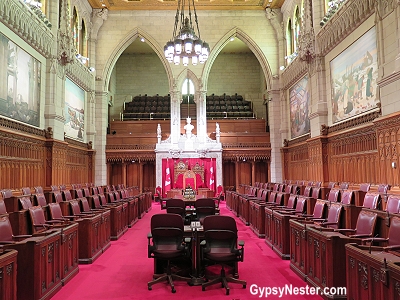
In the other legislative chamber, the Senate, we learned just how different Canada’s federal government structure is from ours.
First, the senators are not elected, they are appointed by the Governor General, and second, their duty is to carefully, and hopefully calmly, examine legislation rather than engage in the partisan infighting involved in creating the laws.
Watch: Get a load of the Most Beautiful Room in Canada!
This is why they are referred to as the chamber of sober second thought.
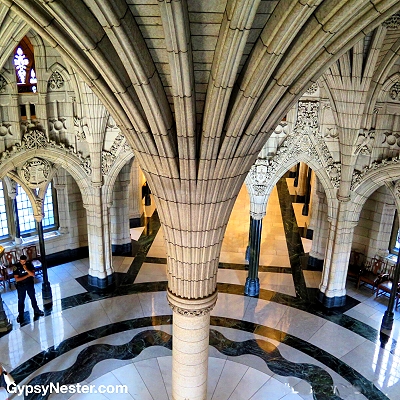
We couldn’t possibly leave Parliament House without seeing the library, widely known as the Most Beautiful Room in Canada.
This was the only part of the original structure to survive a disastrous fire in 1916, adding to its legend and renown.
And the view from the top is gorgeous!
Once the sun goes down, the front of the building becomes a giant screen showing a spectacular light and sound presentation to the crowds of thousands that have gathered every evening since 1984.
In honor of the country’s 150th Anniversary of Confederation in 2017, the show, Northern Lights, celebrated Canada’s physical, historical, and cultural landscapes.
Just off of Parliament Hill, a watering hole named for one of Canada’s founding fathers awaited us, D’Arcy McGee’s. McGee helped create the Canadian Confederation in 1867, but was assassinated in 1868.
His namesake restaurant lives on though, serving the politicos and regular citizens of the Canadian capital with an attitude much lighter than the story of his demise.
Don’t know how the murdered lawmaker felt about a pot pie and a pint, but the pairing certainly worked for us.
In order to prepare for our next day in Ottawa, a post political adventure, we needed a place to lay our heads. The Albert at Bay Suite Hotel was more than deserving of our vote.
Our enormous room was more like an apartment than hotel, complete with full kitchen, dining area, and a living room that we could have called a committee meeting in.
Rock us on the Water
Getting away from the government, we had a chance to explore two of Ottawa’s waterways.
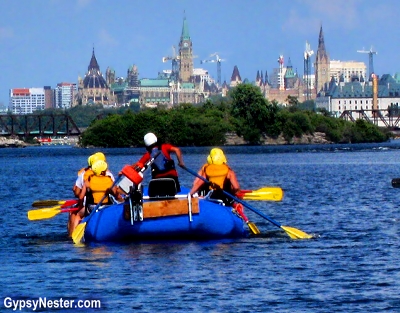
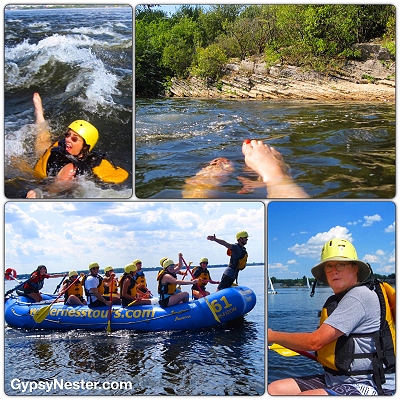
Our first stop took us on an utterly unexpected journey, river rafting in the heart of a city of over one million people.
While the whitewater may not have been as wild as a raging mountain torrent, the skyline views more than made up for it.
We also passed a cool and quirky Ottawa River tradition, a collection of Balanced Stone Sculptures.
Every spring for the last thirty years local artist John Ceprano has stacked river rocks in the shallows near Remic Rapids.
When winter arrives the ice and snow take their toll, clearing the canvas for him to start all over again.
For a more relaxing ride we hopped aboard a Rideau Canal Cruise.
The canal is North America’s oldest continuously operating waterway and a UNESCO World Heritage Site.
It was built after the War of 1812 in fear of another attack from the south.
The thinking was that an alternative route to Lake Ontario from the capital city was needed in case another war broke out.
That’s right, they were seriously concerned about America attacking, but then, they weren’t Canada yet, so perhaps they had good reason. Luckily tensions subsided and the waterway served only peaceful purposes, perhaps the most serene of those being each winter when it becomes the world’s largest naturally frozen ice rink.
We’re Flying Aces! Soaring above Ottawa in a Biplane
Having seen the city from land and water, we obviously had to take to the air.
The Canada Aviation & Space Museum just happened to have the coolest way we could accomplish that possible, a flight in an open-cockpit 1939Waco UPF-7 biplane.
After donning our goggles and leather helmets, we took off for a bird’s-eye view of Ottawa and couldn’t stop grinning the entire time.
This was unlike any flight we have ever experienced in so many ways, not the least of which was having to check our teeth for bugs once we landed.
Beam me up, Scottie!
From this ride back in time, we beamed ourselves across the parking lot and up to The Starfleet Academy.
Neither of us are Trekkies, but even the most casual fan couldn’t help but have a phasors-on-stun blast at this kitschy academy.
The hands-on exhibits allowed us to boldly go where no man has gone before, well… at least not that many men have.
Watch: Veronica gets Beamed Up!
Afterwards, we got a certificate and sent on our way to hopefully live long and prosper.
Mandatory Ottawa Eating…
We could hardly do either without some nourishment, and we found several sumptuous options in the Canadian capital.
No trip to Ottawa is complete without eating a BeaverTail.
No, not the hind end of a furry dam builder, an amazing sweet treat of fried dough covered with any number of mouthwatering toppings.
Since we were at the original stand at the Byward Market, we opted for a classic Cinnamon & Sugar and another with maple frosting.
Speaking of the market, this area has been a focal point of the city for nearly two hundred years.
Several fires have taken a toll, but merchants remained undaunted. One of them, Le Moulin de Provence, caught our eyes with an unexpected cookie.
In this political city perhaps we shouldn’t have been surprised, but seeing our President so prominently portrayed caught us off guard.
The maple leaf shaped shortbread he ordered on a 2009 visit has become known as the Obama Cookie.
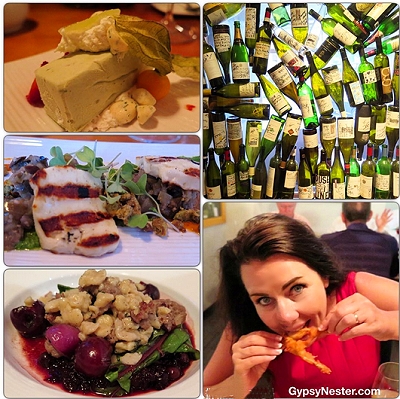
As tasty as these two treats were, man can’t live on pastry alone, so for some more substantial sustenance we checked out the trendy small plate restaurant play.
We absolutely love this new concept in dining because it gives us the chance to sample many dishes over the course of the meal.
With traditional portions we never would have been able to consume such a variety of entrées without exploding.
Over a couple of hours of leisurely indulging, we managed to consume frog legs with truffle and grilled endive relish, pork belly with green apple and fennel slaw, Spätzle with duck sausage, grilled halloumi with salsa verde, shrimp tostadas, onion pakora, and an amazing assortment of mushrooms.
Then we had dessert.
Getting the Snot Scared out of us!
Even though the portions were small, we still managed to stuff ourselves silly. In fact, it was scary how full we were, so we needed to burn some of it off.
Well, what better way to work off a few calories than a Haunted Walk?
As we strolled the streets of downtown we learned even more about the history of Ottawa, much of it from the viewpoint of the unjustly accused… and even executed.
No wonder their spirits continue to cry out for justice.
Touring the old Carleton County Jail – which, unbelievably, is a hostel for those who are brave enough to stay there – and especially the gallows where sentences were carried out, was more than enough to put a fright in us.
Thundering booms permeated the prison walls, punctuating the scary stories, so when we walked outside we were surprised to find no presence of precipitation.
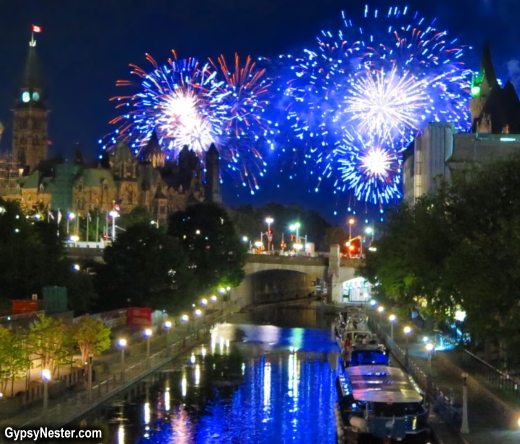
What we did find was a fantastic fireworks finale to our Canadian capital expedition.
Your GypsyNesters fly high above Ottawa, Canada in a vintage biplane! Your GypsyNesters fly high above Ottawa, Canada in a vintage biplane! Donning our goggles and leather helmets, we took off for a… SEE MORE ABOUT THIS INCREDIBLE EXPERIENCE!>>
Your GypsyNesters fly high above Ottawa, Canada in a vintage biplane!
Donning our goggles and leather helmets, we took off for a bird’s-eye view of Ottawa and couldn’t stop grinning the entire time.
This was unlike any flight we have ever experienced in so many ways, not the least of which was having to check our teeth for bugs once we landed.
Drawn from the Governor General’s Foot Guards and the Canadian Grenadier Guards, to a man, or woman, no doubt these soldiers consider the honor… YOU’VE GOTTA SEE MORE ABOUT THIS!>>
As we waited on the enormous lawn in front of the Parliament House in Ottawa, with the soldiers of the outgoing guard standing at attention, we began to hear the sound of approaching drums.
Soon we saw troops, led by their regimental band and pipers, marching up Elgin Street.
The entire force was decked out in their royal finest for the Changing of the Guard Ceremony.
The Ceremonial Guard, even on this hot August day, wore heavy scarlet wool tunics and black bear fur hats.
Now that is dedication.
Drawn from the Governor General’s Foot Guards and the Canadian Grenadier Guards, these soldiers to a man, or woman, no doubt they consider the honor more than worth it.
Also, it almost never gets this hot up here, so this was a rare hardship.
Evidence shows that people have been living here for over five thousand years, establishing it as one of the oldest seats of power in Northern Europe.
But it has only officially been the capital of the Republic since 1991 , making one of the youngest… CONTINUE READING >>
Thanks to Visitestonia for sponsoring this post. As always, all opinions are our own.
Estonia is filled with contrasts, and nowhere is that more on display than the capital city of Tallinn.
Evidence shows that people have been living in Estonia for over five thousand years, establishing it as one of the oldest seats of power in Northern Europe, while it has only officially been the capital of the Republic since 1991, making one of the youngest.
Passing through the modern business district, we easily understood why this has become known as the Silicon Valley of Europe.
Seems like we should have Skyped the folks back home, since this is where the Internet video chat app was invented.
Moving beyond the glass and steel towers, we discovered they only tell half of the story of the city’s skyline.
The other half belongs to the UNESCO World Heritage Site that has been called one of the best preserved medieval cities in Europe, Tallinn’s Old Town.
The ancient settlement is divided into two distinct areas. Toompea, or Dome Hill, is the original fortified city on a hill, which overlooks All-linn, the lower town below. Even though this high ground is home to Toompea Castle, the name is derived from the domed churches of St. Alexander Nevsky and St. Mary’s Cathedral.
The hilltop site of the castle has been a military stronghold for well over a thousand years, but now provides political protection for the people of Estonia as the home of the Parliament, the bright pink painted Riigikogu.
In a small park just a few steps from the refurbished palace we noticed a small crowd peering over a stone wall.
From this stunning hilltop overlook we got a great view of the three prominent pinnacles of St. Nicholas’ Church, the Town Hall or Raekoda, and St. Olaf’s Church, that form the medieval skyline of the town below. Even long ago this city was cutting edge, since the tower of St. Olaf’s is thought to have been the tallest building in the world between 1549 and 1625.
Eating Wild Game
After exploring the cobblestone streets, we stopped off for an unusual snack of beaver and bear at Raekoja Plats, the main square in the heart of the Old City.
Afterwards, we ducked through the dark and narrow ancient St. Catherine’s Passage that leads to a section of Tallinn’s old defensive walls and climbed up for a walk along the top of the ancient ramparts.
Wait a minute, beaver and bear?
Yup, that’s what we said.
Estonians have a long tradition of eating what we might consider exotic game, and many of the restaurants are more than happy to accommodate adventurous patrons willing to partake.
I guess we fell into that category.
Escaping the Urban
Escaping from the urban area we entered the lush, green scenery of Kadriorg Park.
Hidden away inside is a small, by czar standards, palace built by Peter the Great for his wife Catherine the First in 1718.
The park is only the beginning of the unspoiled natural beauty that extends throughout Estonia’s countryside.
With five National Parks, and dozens more protected Nature Reserves, the array of outdoor exploration possibilities can be anything from island hopping among the thousands of isles that dot the Baltic coastline, to a day at the beach, to hiking through ancient forests, or paddling through bogs.
Little did we know Estonia had been declared Lonely Planet’s best value destination for 2016 when we visited, but we certainly learned why it won the honor.
To learn more visit
Thanks to Visitestonia for sponsoring this post. As always, all opinions are our own.
Staying healthy isn’t always easy – especially if you’re from a country where healthcare isn’t free. While the NHS has ensured people in the UK are able to get help on demand, the same can’t be said of some of these countries.
Here’s the real cost of medical treatment in five different nations from across the world.
1. Germany
The Germans are an efficient bunch, having earned notoriety for their ability to get the job done swiftly, regardless of what it is.
Despite that, they’re actually surprisingly high up on the capita list – coming in as the 13th most expensive country in the world per person.
Things are very different when you hop over to Indonesia, with the Asian nation suffering a cost of just $107 per head for annual medical expenses.
The situation is a little different in Bali however, where hordes of monkeys are found to populate the area. The Ubud Monkey Sanctuary might be a wonder to behold, but the little furry fellas do bite.
The cost of one rabies vaccination can rise as high as $2,000 – so try your hardest to avoid letting one of these simians sink their teeth into you.
Cost per capita: $107
3. USA
It’s been well documented across the past few decades, perhaps no more apparently than by documentary maker Michael Moore in his film “Sicko”, that the US has a slightly flawed system when it comes to healthcare.
Prices are at times extortionate, with patients finding themselves in immense levels of debt for anything more than a couple of days in hospital.
Shockingly, an 18-day stay in hospital will see you wrack up costs in excess of a mind-boggling $800,000 in Houston, Texas. The moral of the story is: don’t get sick in America.
Cost per capita: $9,146
4. Japan
The Japanese healthcare system is probably one of the “fairest” around, with citizens being asked to pay for 30% of their medical costs and the government for the remaining 70%.
That’s a good thing if you’re facing a trip to accident and emergency, with a visit, a broken arm and follow-up surgery totting up to an overall cost of $25,000.
It’s not unlikely to snap the odd bone or two when you’re young, so it’s fortunate you don’t have to fork out for most of these costs.
Cost per capita: $3,966
5. Ghana
Concluded our list is a nation which is often devastated by the ravenous disease, Malaria. While healthcare in Ghana is one of the cheapest in the world, costs still mount up when dealing with this deadly bug.
An eight-day stay in hospital will set someone back as much as $8,000 – prices which, naturally, no natives in the country will be able to afford at any point of their lives.
Cos per capita: $100
You’ll now hopefully have a better understanding of how medical expenses compare around the world. Bear some of these in mind when you’re next out in any of these countries.

 In all of our previous visits to

 As warheads got more powerful the installation was deemed obsolete and decommissioned.
 After seeing this, it seemed only natural to check out where all of the hunkered down dignitaries would have come from, so we made our way to Parliament Hill, home to Canada’s federal government.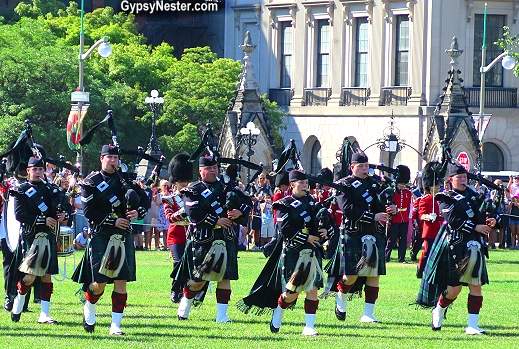
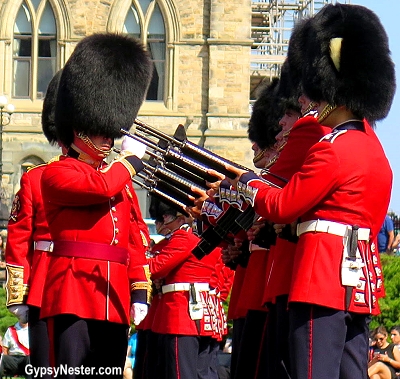 The Ceremonial Guard, even on this hot August day, wore heavy scarlet wool tunics and black bear fur hats.
 With the sentries safely switched, we took the opportunity to get out of the heat and duck inside the Parliament House for a look around.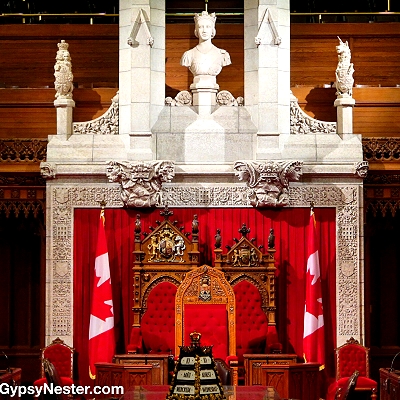
 With Parliament out of session we could look in at the House of Commons, where the bulk of the governing, and arguing, takes place.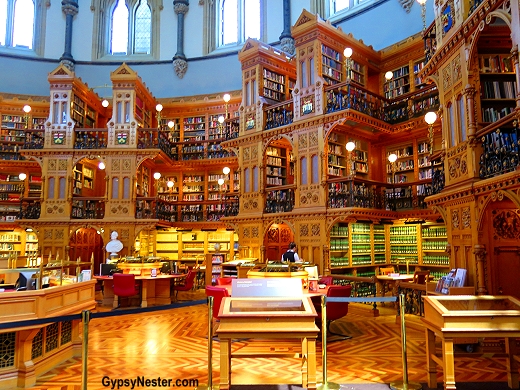
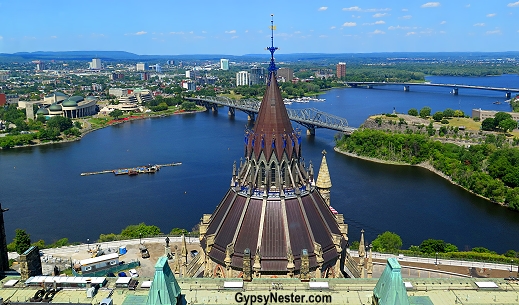
 Once the sun goes down, the front of the building becomes a giant screen showing a spectacular light and sound presentation to the crowds of thousands that have gathered every evening since 1984.
 His namesake restaurant lives on though, serving the politicos and regular citizens of the Canadian capital with an attitude much lighter than the story of his demise.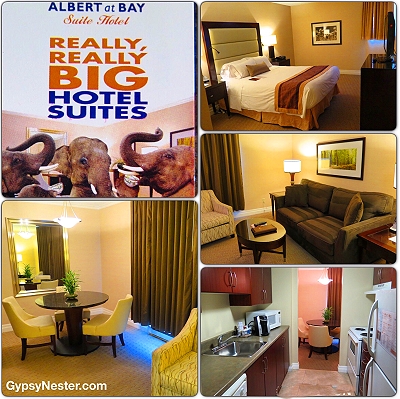
 Getting away from the government, we had a chance to explore two of Ottawa’s waterways.
 We also passed a cool and quirky Ottawa River tradition, a collection of Balanced Stone Sculptures.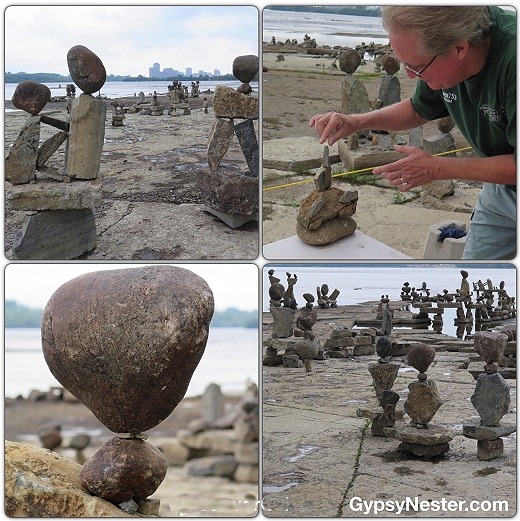
 For a more relaxing ride we hopped aboard a Rideau Canal Cruise.
 Having seen the city from land and water, we obviously had to take to the air.


 From this ride back in time, we beamed ourselves across the parking lot and up to The Starfleet Academy.
 We could hardly do either without some nourishment, and we found several sumptuous options in the Canadian capital.
 Speaking of the market, this area has been a focal point of the city for nearly two hundred years.
 As tasty as these two treats were, man can’t live on pastry alone, so for some more substantial sustenance we checked out the trendy small plate restaurant play.
 With traditional portions we never would have been able to consume such a variety of entrées without exploding.
 Even though the portions were small, we still managed to stuff ourselves silly. In fact, it was scary how full we were, so we needed to burn some of it off.
 Touring the old Carleton County Jail – which, unbelievably, is a hostel for those who are brave enough to stay there – and especially the gallows where sentences were carried out, was more than enough to put a fright in us.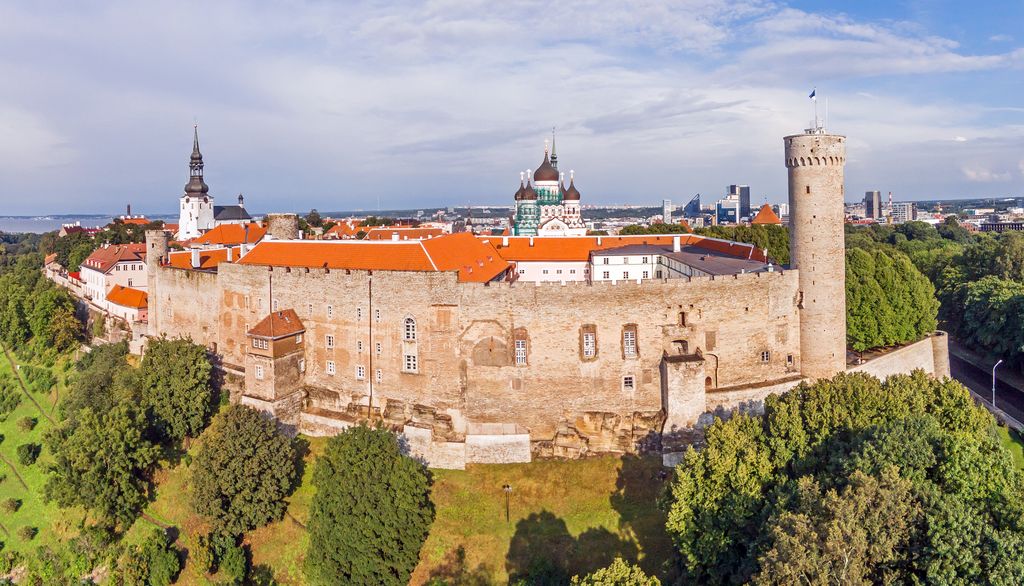


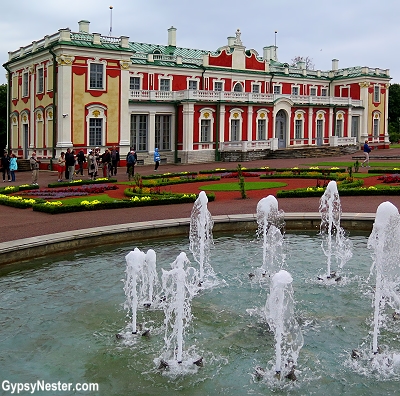 Escaping from the urban area we entered the lush, green scenery of Kadriorg Park.
 The costs extend all across the country, with even the Alps in Bavaria seeing sums rising to crazy levels. In that region,
  Prices are at times extortionate, with patients finding themselves in immense levels of debt for anything more than a couple of days in hospital.