We sat down with the fabulous Chloe Jeffreys of the aptly named Generation Fabulous and discussed helicopter mom recovery, staying connected with our adult kids, reinventing middle-age, and the importance of… CONTINUE READING or leave a comment! >>
We sat down with the fabulous Chloe Jeffreys and discussed helicopter mom recovery, staying connected with our adult kids, reinventing middle-age, and the importance of reinvesting in your marriage after your nest empties.
Interested in reading more about the subjects covered in our interview?
It’s small town America at her best – The Sycamore Pumpkin Fest! This little town’s population doubles each year – and rightly so – as they roll out the Halloween red carpet.
Join us as we attend the pumpkin weigh-in, get scared snotless while playing Zombie Miniature Golf, take in a great parade, and listen to spooky stories in a cemetery! And get awesome ideas for YOUR jack-o’-lantern at the humongous display on the courthouse lawn.
Oh – and watch what happens when Veronica enters the pie eating contest… CONTINUE READING >>
It’s small town America at her best – The Sycamore Pumpkin Fest! This little town’s population doubles each year – and rightly so – as they roll out the Halloween red carpet.
Join us as we attend the pumpkin weigh-in, get scared snotless while playing Zombie Miniature Golf, take in a great parade, and listen to spooky stories in a cemetery!
And get awesome ideas for YOUR jack-o’-lantern at the humongous display on the courthouse lawn.
Oh – and watch what happens when Veronica enters the pie eating contest… CONTINUE READING >>
Every once in a while, we are hit over the head by a ton of bricks. While this would normally be cause for concern, this particular brickload is one of gratitude.
We have been blessed with amazing accolades from amazing folks! We have done really fun interviews and have been included in some pretty prestigious publications. We are truly honored. Click in to see why...CONTINUE READING >>
Every once in a while, we are hit over the head by a ton of bricks. While this would normally be cause for concern, this particular brickload is one of gratitude.
We have been blessed with amazing accolades from amazing folks! We have done really fun interviews and have been included in some pretty prestigious publications. We are truly honored.
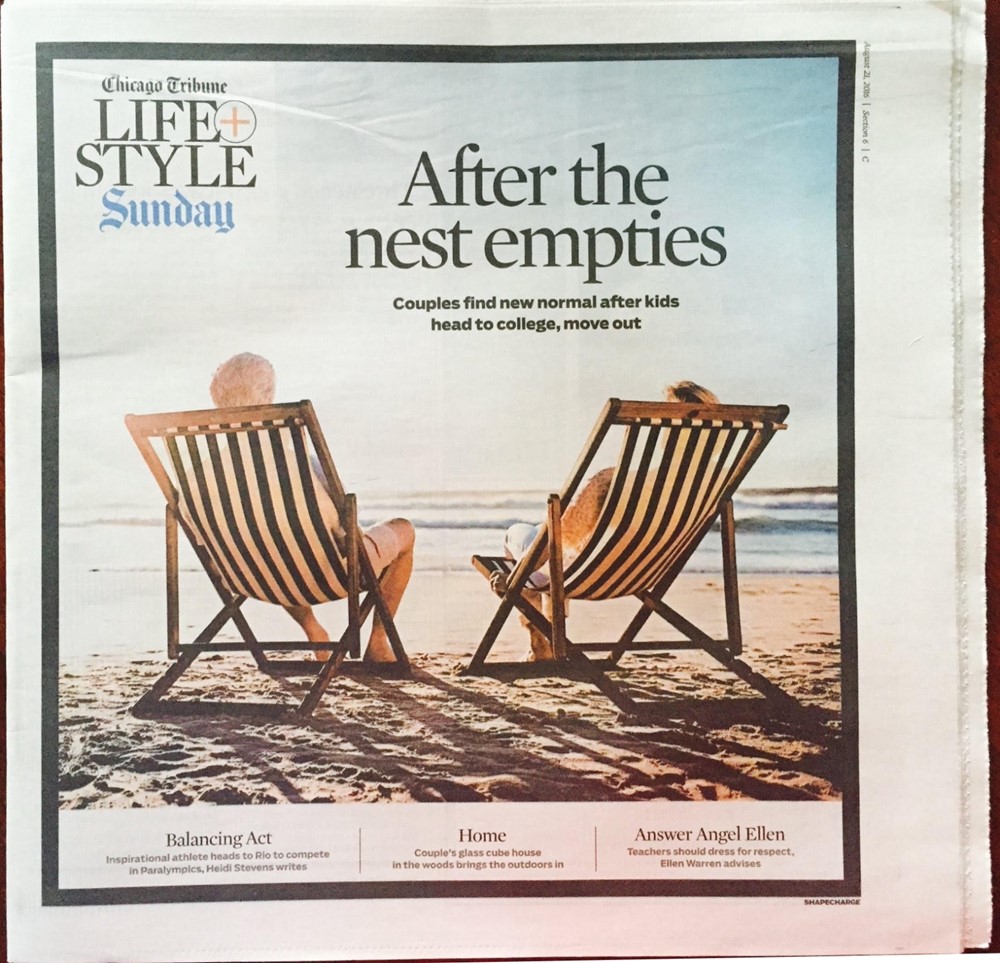
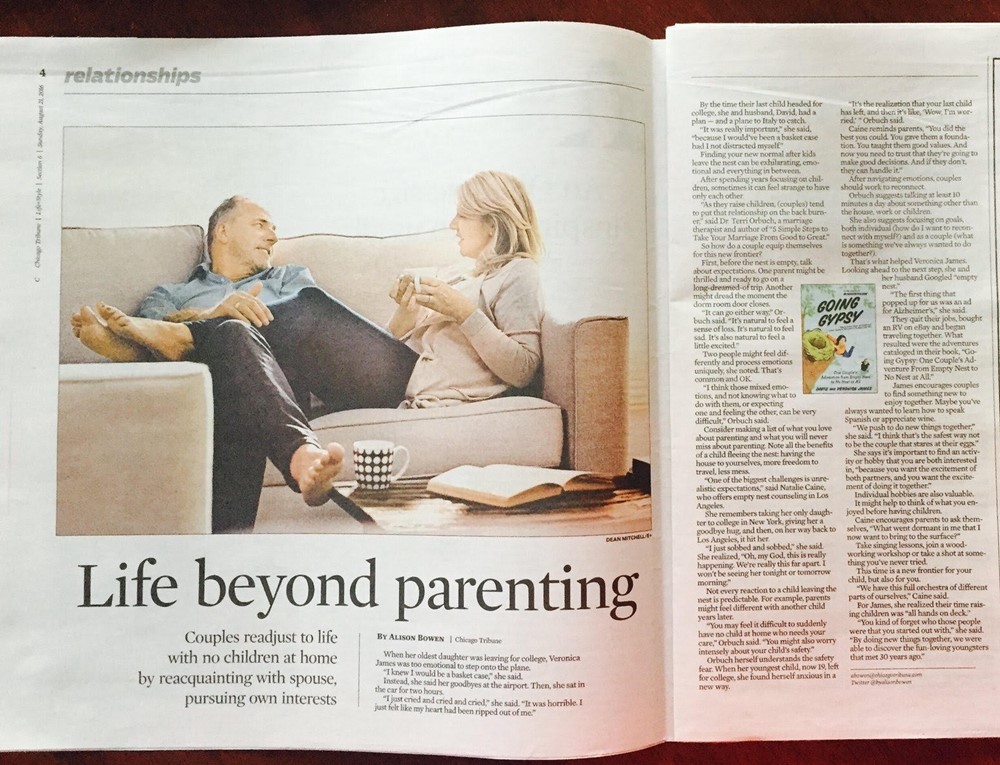
Pretty cool to be featured in one of America’s greatest newspapers, The Chicago Tribune! Okay, so we’re not sure who the people are in the photos—but we’re uber-excited to be in the text.
Click image to enlarge
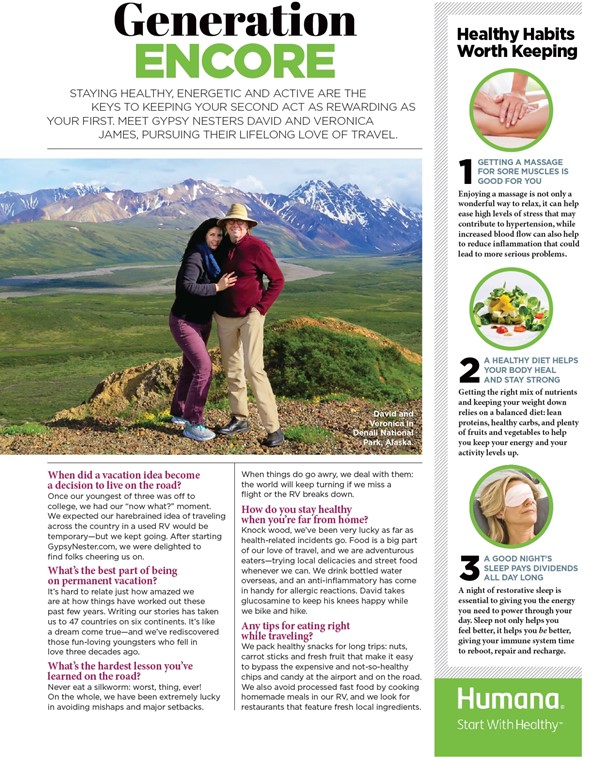
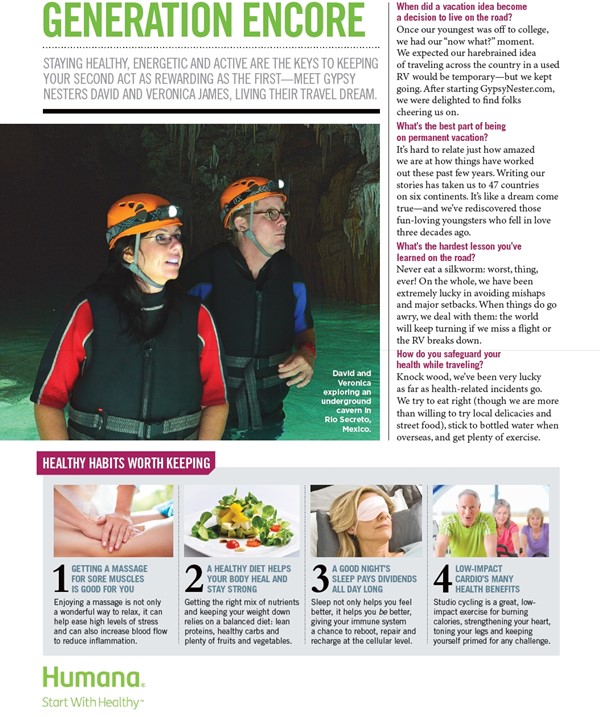
Click image to enlarge
We’ve teamed up Humana with tips on kicking YOUR Generation Encore into high, healthy gear with full page advertorial appearing in the August/September 2016 issues Real Simple, Cooking Light, Southern Living, Sunset, Coastal Living, Golf, and Money magazines!
What an honor it is to share our story and tips in top magazines:
“Who says millennials do it better? When it comes to travel, age is but a number. As you think about retirement and all that free time you’ll have, consider taking a different approach.
TripAdvisor rounded up 20 baby boomer travel bloggers as inspiration to get out there and travel”… SEE ‘EM ALL >>
We joined Nashville’s WSMV Channel 4More at Midday gang!
“Traveling throughout retirement may not be everyone’s idea of simple living, but David and Veronica say ditching the house was one of the best moves they ever made. ‘We are in a state of nearly constantly pinching ourselves… CONTINUE READING >>
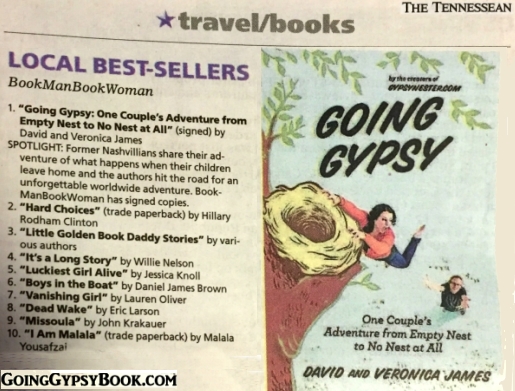
Thank you Nashville for Making Going Gypsy Your #1 Bestseller!
Veronica and David James were living on St. Croix in the U.S. Virgin Islands when the last of their three kids flew off to college. Some of us might have opted to stay in that tropical paradise, but the Jameses knew they needed a change… SEE THE FULL STORY
We had a blast with Kim Bailey of News Talk Florida – talkin’ our craziest food experiences!.. CLICK TO LISTEN!
We ended up on Australian TV and all we had to do was jump out of an airplane!
Veronica was introduced to the Australian public by way of the amount of saliva she didn’t have in her mouth. Classic Veronica!
Thanks WIN News!
“Who says millennials do it better? When it comes to travel, age is but a number. As you think about retirement and all that free time you’ll have, consider taking a different approach.
TripAdvisor rounded up 20 baby boomer travel bloggers as inspiration to get out there and travel”… SEE ‘EM ALL >>
Deseret News intrigued us with some interesting Boomer stats and asked us to weigh in with our thoughts and experience!.. SEE THE FULL STORY
USA Today asked us and some pretty weighty folks to weigh in on how we find ways to travel with purpose to enrich our experiences … See the full article >>
When your kids leave home, you may worry about how they’re going to handle their money. But don’t forget to worry about yourself, too… SEE FULL ARTICLE >>
An article about us landed on the front page of Huffington Post.
Click here to see the full write up.
Feature story on the Home page of AOL:
The uber-talented Sundance veteran Anne Flournoy of The Louise Log fame produced this hysterical 50-second short on her experience of reading Going Gypsy!
Psyched about this article in Medium!
“After packing their youngest off to college, the Gypsy Nesters hit the road and never looked back. ‘We’re going down in a ball of flames!’ says”… READ THE FEATURE HERE
Stephanie Mayo over at The World as I See it interviewed us about our favorite places, memorable moments, weird regional food disasters and how travel has changed us.
WOW! We were named #1 (!) on Indietravel’s Top 10 Travel Couples! Honored to be among this incredible talent! See the full list here.
And if that wasn’t enough, the embarrassment of riches continue – we were chosen as one of the Top 25 Travel Blogs of the Year!
See all of the honorees here
We sat down with the fabulous Chloe Jeffreys and discussed helicopter mom recovery, staying connected with our adult kids, reinventing middle-age, and the importance of reinvesting in your marriage after your nest empties.
Becca at Aging Insider calls us “5 Alarm Boomer Bloggers” and in this episode of her fabulous show, she says: “Richard Branson says, ‘Screw it, lets do it!’ and this is a couple who is embracing that motto. The kids left for college and this rockstar couple left for the world…”
A fun little publicity bump we did for BestDay.com while in Cancun, Mexico!
Ace reporter Pam Parker (is that a GREAT journo name or what?) of the Erie Times-News was kind enough to mention us in her hard-hitting write-up on the UFO house in Tennessee! See it here.
We are so grateful that 12most chose us as one of the Most Enjoyable Blogs for women.
50 Connect is one of Britain’s hottest sites! Known as “The Social Networking Site for Grown Ups.” Click here for the whole interview.
Those wacky kids over at Divergent Travelers asked us some fun and insightful questions when they interviewed us.
Check it out and learn some stuff about us that we’d never told you on our own!
Wow! We won the prestigious People’s Choice Senior Living Award as the Best Boomer Resource!
The competition was stiff – there were quite a few amazing sites that we were honored to be among – and the judges must have had quite a task making a choice.
Donna Hull is a freelance writer specializing in travel and human interest content for print publications and the web. At My Itchy Travel Feet, she writes about active travel for baby boomers. And, she should know because she is one.
Our first international interview was with the London-based Fab Over Fifty.
Founded by Ceri Wheeldon, Fab Over Fifty strives to redefine how women over fifty see themselves – and how they are viewed by others.
And, yes, she is fabulous!
Doris helps people let go of their fears of the unknown so they can travel and discover the exciting life they’ve always wanted by going abroad to travel, live, give, and learn.
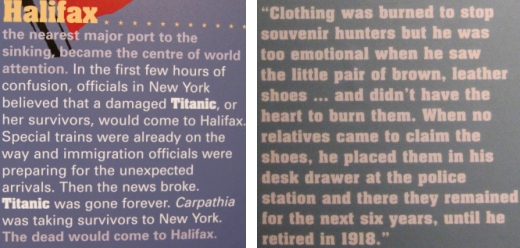
Shipwrecks are a big part of Halifax history and the Maritime Museum of the Atlantic, chronicles hundreds of them.
Salvaged artifacts from dozens of incidents are on display, including a few from the most famous, the Titanic… CONTINUE READING >>
We spent a full afternoon at the Maritime Museum of the Atlantic investigating the rich seafaring history of Nova Scotia – and still felt like we barely scratched the surface.
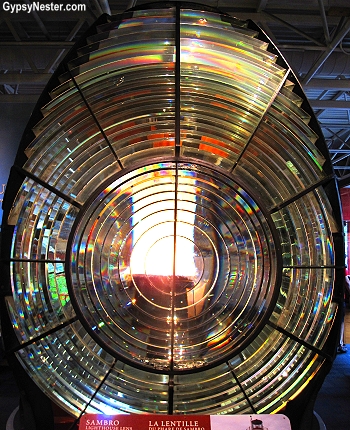
The collection includes a nine foot high lens from the Sambro Island Lighthouse, the oldest surviving lighthouse in North America.
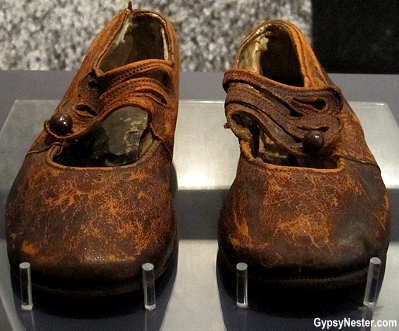
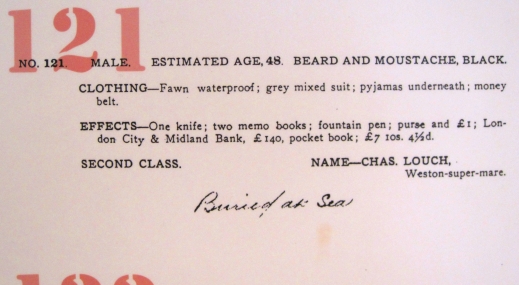
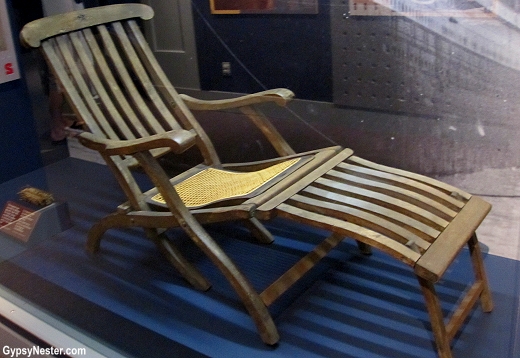
Shipwrecks are a big part of Halifax history and the Maritime Museum of the Atlantic, chronicles hundreds of them.
Salvaged artifacts from dozens of incidents are on display, including a few from the most famous, the Titanic. We were reminded of the many child victims of the disaster when we came upon these little shoes in one of the cases.
The museum also documents another catastrophe that struck the city just a few years after the sinking of the Titanic, the Halifax Explosion. On December 6, 1917 the SS Mont Blanc, a French cargo ship filled with wartime explosives, collided with the Norwegian vessel SS Imo in the harbor. The Mont-Blanc caught fire and the resulting blast was the largest ever until the atom bomb.
At least two thousand people perished, with thousands more injured or left homeless. Aid poured in from all around, but Boston stood out in the relief effort, sending many ship loads of supplies. To this day, every year the city of Halifax sends a Christmas tree to Boston as a continuing thank you gift. The connection is so strong that people here generally refer to the New England area as “The Boston States.”
We were shocked that we had never heard about this sad piece of history, and even more so when we found out about a true hero, Vincent Coleman.
Mr. Coleman was a station worker at the rail yards at Pier 6 the morning that the engulfed-in-flames SS Mont Blanc moved toward shore.
Instead of fleeing, he remained at his telegraph key warning all incoming trains to stay out of Halifax.
Knowing he was going to die his last words were,
“Hold up the train. Munitions ship on fire and making for Pier 6 and will explode. Guess this will be my last message. Goodbye boys.”
Vincent Coleman’s telegraph key. It was found with his body.
His bravery saved the lives of every soul on every train coming into Halifax and, because the Canadian Railway had been alerted so quickly, six relief trains were in Halifax that very day with medical supplies and fire fighters – saving countless more lives.
“Shipshape and Bristol Fashion”
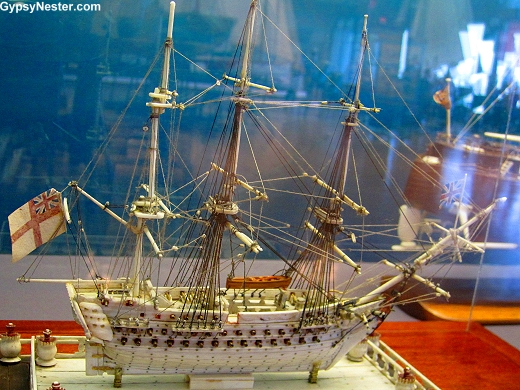
The ship exhibits are where we truly got lost in awe. Not only with the “real” vessels, but with the magnificent model ships.
The collection is so vast, we can’t imagine that there is a boat that hasn’t been recreated or restored by the volunteer Maritime Ship Modelers Guild.
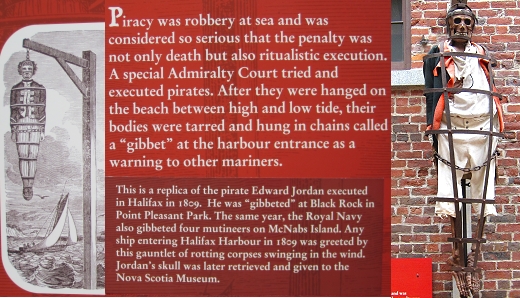
By the exit we came face-to-face with the gibbet, a particularly gruesome form of pirate punishment:
Were they trying to scare us out of the building? Maybe they just wanted to leave us with something that would really stick in our minds. Either way, there’ll no pirating for us, that’s for sure.
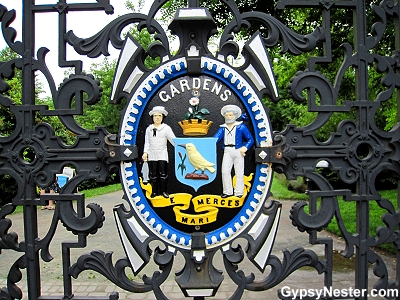
Typical of a Victorian garden, flowers and plants from many varied climates and exotic locales line the walkways.
We found all sorts of plant life thriving in this unlikely climate, from desert cactus and yucca, to towering trees from all over the globe, to roses that smelled so sweet it was like… CONTINUE READING >>
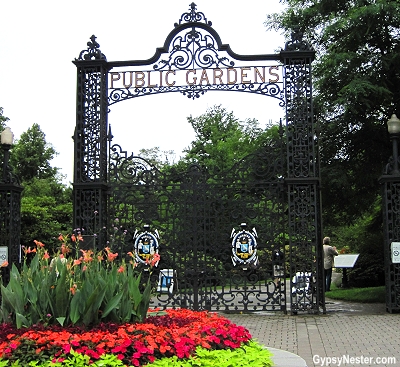
The Halifax Public Gardens harken back to the reign of Queen Victoria.
The Gardens were opened to the public in 1875, combining two existing private gardens. Landscape designer Richard Power and his family were the original architects and the original plans still remain.
Typical of a Victorian garden, flowers and plants from many varied climates and exotic locales line the walkways.
We found all sorts of plant life thriving in this unlikely climate, from desert cactus and yucca, to towering trees from all over the globe, to roses that smelled so sweet it was like walking in a cake. Sixteen acres of pure bliss.
Gazebos, fountains, archways and seating are also fundamental to a Victorian garden, and they are well represented here.
While the term Victorian may get overused, this park, and in fact a great deal of Halifax, certainly deserves the title.
How I shared my first inappropriate adult-to-adult laugh with my daughter. Not exactly a Hallmark moment – but I’ll take it.
There’s passion on Manhattan. I felt it as soon as I arrived on the island. For me, a major part of this enthusiasm radiates from my fast-walking, subway-chasing, black-wearing, taxi-flagging urbanite daughters, The Piglet and Decibel.
The New York I know is viewed through their eyes and it is a very youthful place. I have to say I’m a bit flattered that my girls felt they could drag this old T-Rex around everywhere they went. But, apparently, this dinosaur… CONTINUE READING >>
The New York I know is viewed through their eyes and it is a very youthful place. The Piglet had recently moved in to her first studio apartment (all by herself!), so it was decided I’d stay with her.
Between work and school, Decibel was fitting me in where she could. I was on my own during the day and, at night, we’d go out. I have to say I’m a bit flattered that The Piglet felt she could drag this old T-Rex around everywhere she went. But, apparently, this dinosaur can hang.
First it was off to Splash (holy crap, it’s a NYC gay bar!) for Musical Monday and a co-worker’s birthday party. I like musicals as much as the next guy, but I have to say that walking into a huge space with wall-to-wall video monitors featuring obscure song-and-dance numbers initially took me aback.
But as luck would have it, the DJ was masterful – he spun those show tunes in a way that no one could possibly deny the sing-a-long fever (I, proudly, was the only one in our group who knew all the words to “Age of Aquarius” – singing enthusiastically while the musical Hair played around me in its embarrassingly dated way).
One would think being in a group of mostly men that you’d get to sing the “Sandy” parts from Grease, but your thinking would be wrong. Whether it be Sandy, Evita, or even Cossette, any girl will be outdone by the men in Splash – these are seasoned professionals, ladies.
The Piglet’s friends were fantastic, charming me with the proper mix of “I can’t believe you’re The Piglet’s mom – you look better than I do” (I had stepped into some good lighting) and “What musical is this song from?” when anything black & white showed up on the screen.
The next night, The Piglet and I found ourselves at The Mercury Lounge for a concert. The Piglet had thoughtfully e-mailed me soundfiles and a link to the artist’s webpage in preparation for my trip. I did my homework and was ready.
We arrived and pushed our way up to the bar in the front room. Trying to be hip, I opted not to order coffee and chose red wine (I know, also not hip, but — hey –it’s the best I could do and it was surprisingly hearty, warm and delicious). I had been literally walking all day — taking in the City — and couldn’t wait to get my wine to a table, take a load off and enjoy some good music.
I followed The Piglet into the showroom and — bloody ‘ell — NO TABLES. Oh yeah, I remember this now. A big, dark room; lots of sweat and energy. And. No. Flippin. Tables. The blister on the back of my right foot toggled between whimpering for clemency and screaming for mercy. This was not good.
Thankfully, the band really delivered. By the second song Mr. Blister was all but forgotten. I was loving being in a mass of happy, swaying bodies and took up my old hobby of watching groupies. It’s sad, but I had let myself forget the fun of it.
Decibel, on the one night she was free to let loose with dino-mommy, decided on a comedy club. We arrived at the Laugh Lounge at 10:30 PM on a Friday. The college kids at the big table (YES! Tables!) in the corner were well lubricated and ready to rock. The place was packed and filled with energy.
Several comics took the stage, each one a bit more risqué than the next.
It’s a subtle thing, but there is that moment when you find that you are capable of having true adult-to-adult experiences with your grown children. For Decibel and I, it wasn’t your typical teary-eyed mother-daughter Hallmark card moment.
It was laughing together in a dark comedy club at off-color “microphone as penis” humor and finding that the embarrassment we were feeling wasn’t because the other was in the room.
Instead it was the embarrassment that all adults feel when they are hysterically laughing at something they should be shocked by.
Not exactly a Hallmark commercial, but I’ll take it.

 9 Things We Wish We’d Known BEFORE We Sent Our Kids to College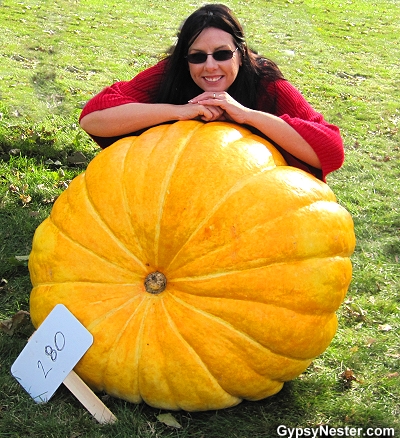






























 A big thank you to Peggy McGranahan from Shaped by the Waves for this