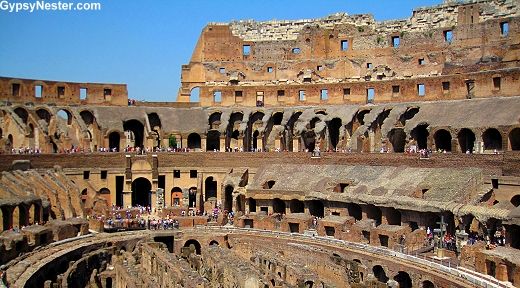
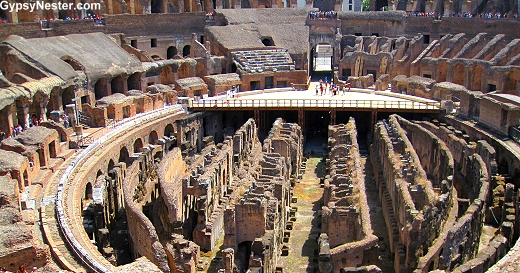
The famous name for the magnificent amphitheater is thought to stem not from its own enormous size, but from a colossal statue of Nero that stood nearby… CONTINUE READING >>
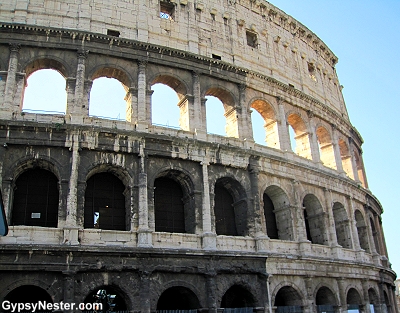
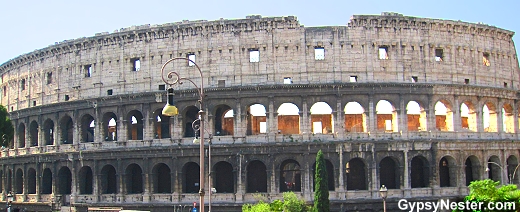
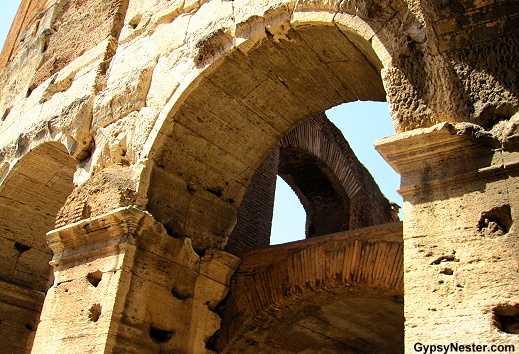
The Colosseum is one of the most famous landmarks anywhere on Earth.
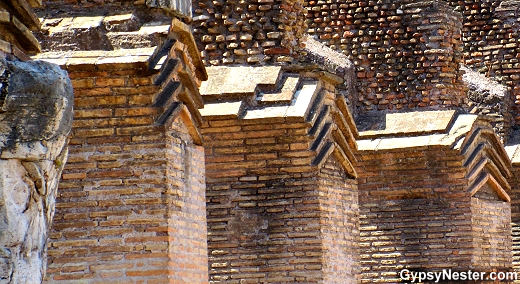
The famous name for the magnificent amphitheater is thought to stem not from its own enormous size, but from a colossal statue of Nero that stood nearby.
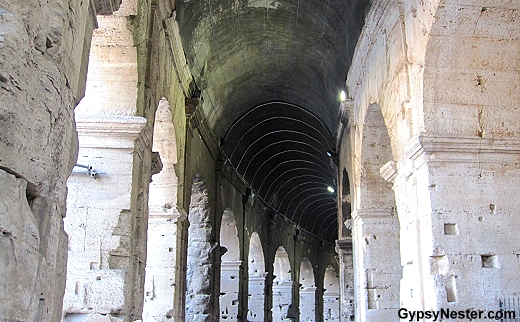
One thing that has always struck us about The Colosseum is how similar modern stadiums adhere to the design, right down to numbered sections.
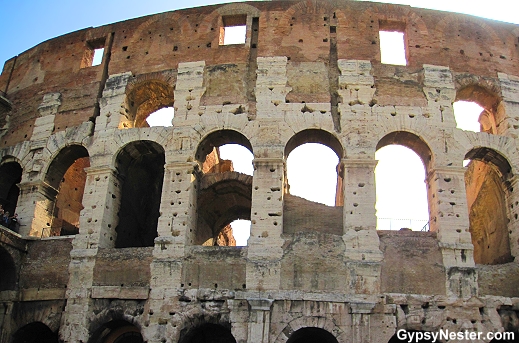
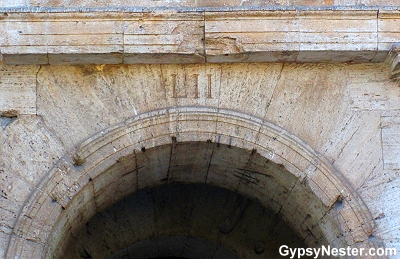
Of course it is Roman numerals above each of the archways mark the entries leading into the seating area at this old arena.
It was heading in to one of those archways that we discovered a huge advantage to joining a tour group from the Royal Princess, we got to jump right past the extensive line of folks waiting to get inside.
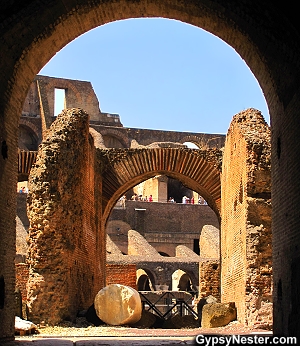
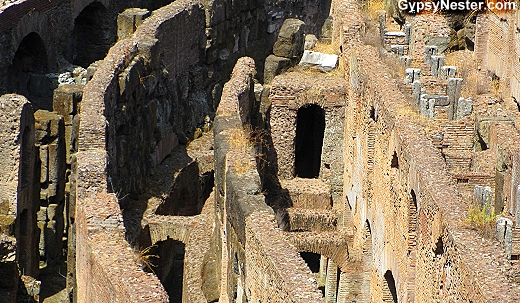
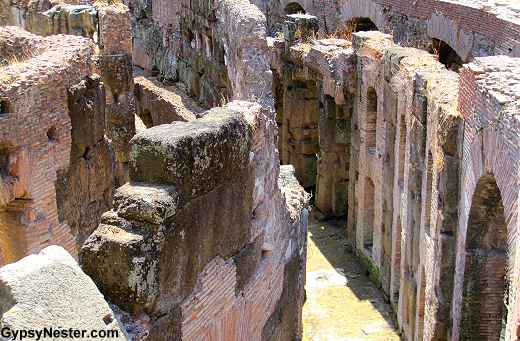
Even approaching its one thousandth birthday the place looks pretty good. In fact, although damage has been caused by earthquakes and age over time, the majority comes from scavenging when marble and bronze stonework clamps were taken to be used for other buildings.
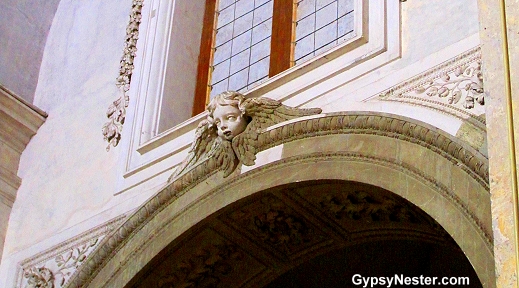
The small church is one of the oldest in Rome, dating back to 431 AD. What this little church lacks in grandiose size it more than makes up for in impressive artifacts… CONTINUE READING >>
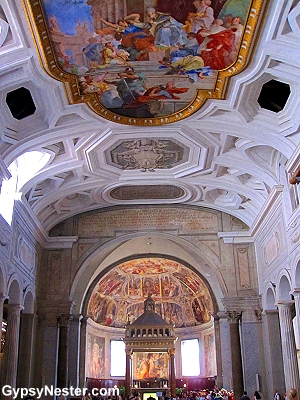
The small church is one of the oldest in Rome, dating back to 431 AD. What this little church lacks in grandiose size it more than makes up for in impressive artifacts.
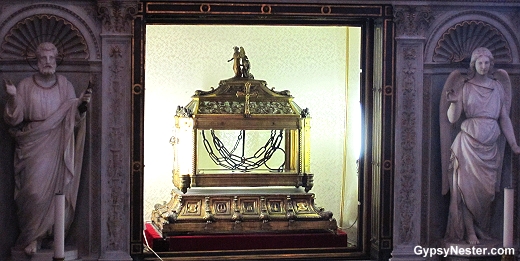
The church takes its name, meaning Saint Peter in Chains, from chains displayed below the main alter that are said to have been used to hold Saint Peter when he was imprisoned in Jerusalem.
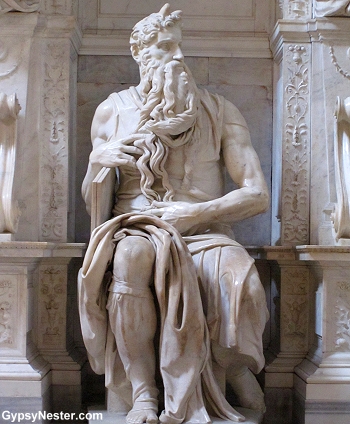
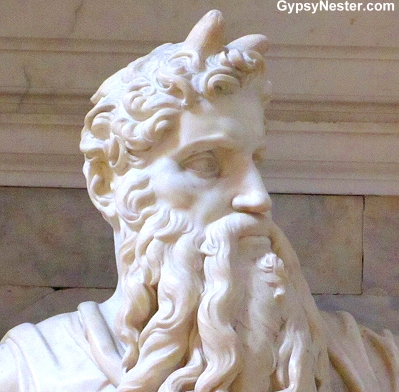
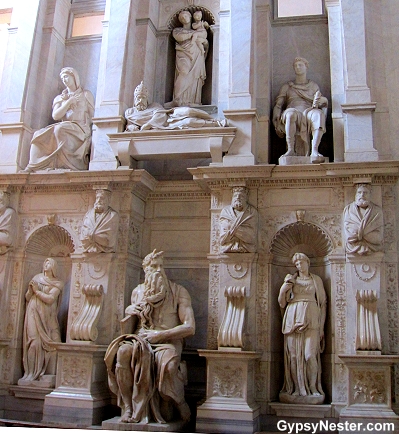
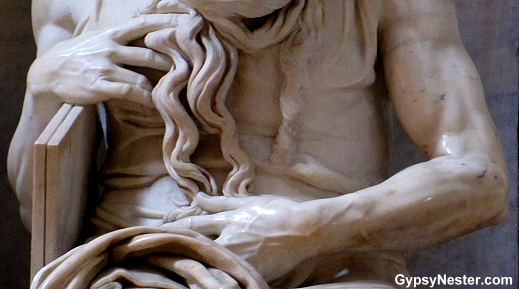
But perhaps even more interesting was the remarkable statue of Moses by Renaissance master Michelangelo.
Pope Julius II commissioned the statue in 1505 as a part of a massive sculpture for his tomb, but the pope died long before Michelangelo could finish the work.
Julius was buried in St. Peter’s Basilica, which he also commissioned, and Moses ended up in this lesser known San Pietro.
We noticed an odd feature to the prophet, small horns on his head.
There seems to be some debate as to why Michelangelo did this, some say that it is due to the Latin translation of the passage from Exodus where Moses comes down from the mountain.
In the Middle Ages the idea that his face was horned from his encounter with God was common, now the word for horn is usually translated as shining.
Another theory is that the horns were never meant to be seen. The statue was to be placed high enough that they would not be visible from the ground and would reflect light to give the prophet a heavenly glow.
Surrounded by government buildings, temples, statues and monuments, this was the epicenter of ancient Roman life… CONTINUE READING >>
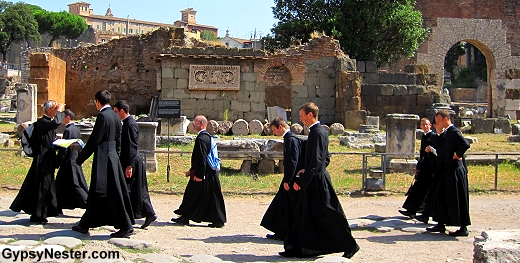
Most of the main attractions in Rome are close enough together that they can be easily walked from one to another so we hoofed it over to The Forum from The Colosseum.
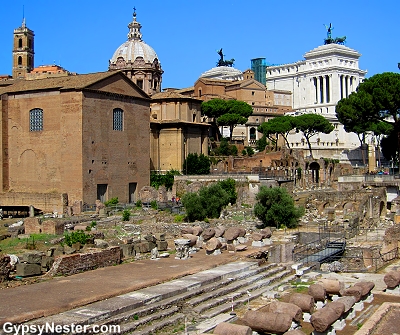
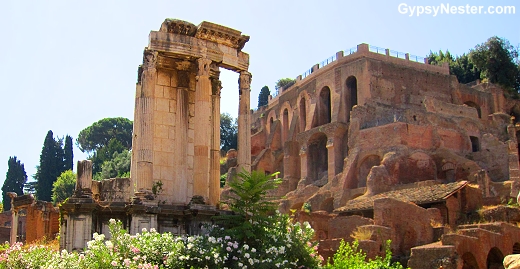
Surrounded by government buildings, temples, statues and monuments, this was the epicenter of ancient Roman life.
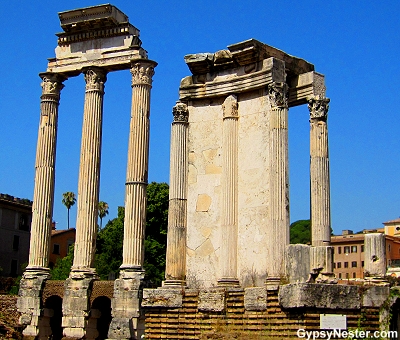
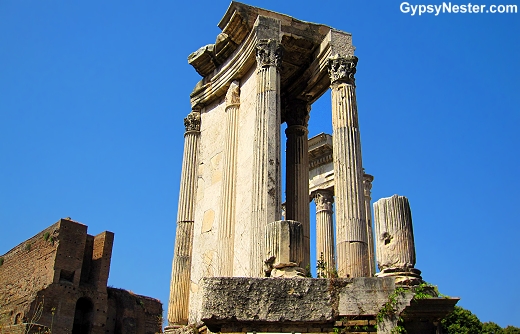
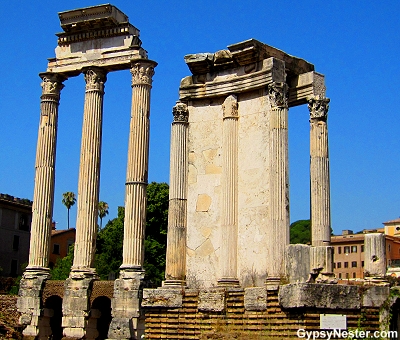
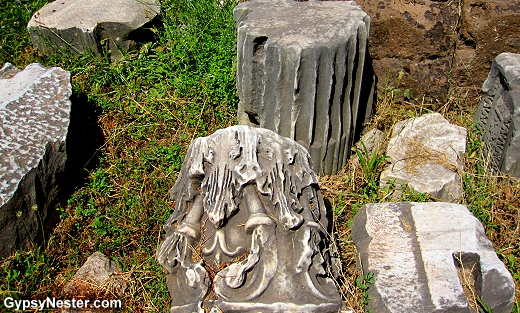
Very little remains of most of the magnificent temples, just a handful of columns stand from The Temple of Vesta, one of the earliest structures in the Forum . . .
. . . and the Temple of Vespasian and Titus, dedicated to these two emperors from the Flavian Dynasty.
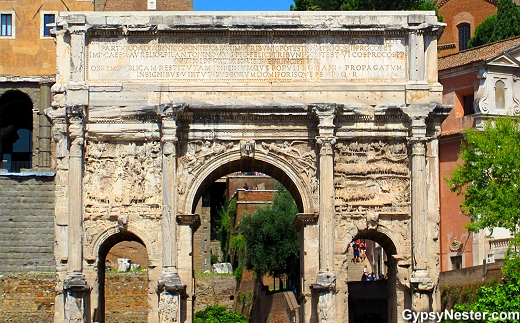
But the white marble Arch of Septimius Severus, a triumphal arch dedicated the Parthian victories of Emperor Septimius Severus, is remarkably well preserved.
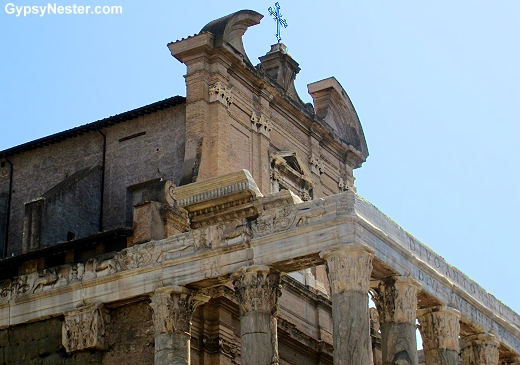
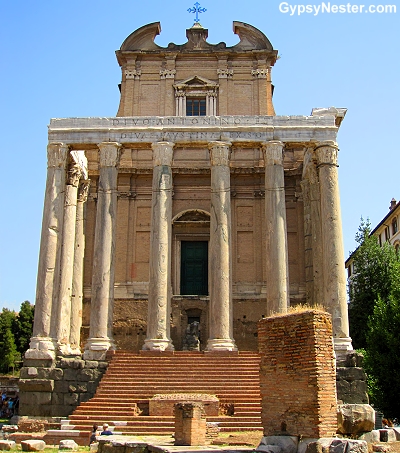
There are also a couple of temples that have been used as churches in modern times, The Temple of Antoninus and Faustina, which became the church of San Lorenzo in Miranda. . .
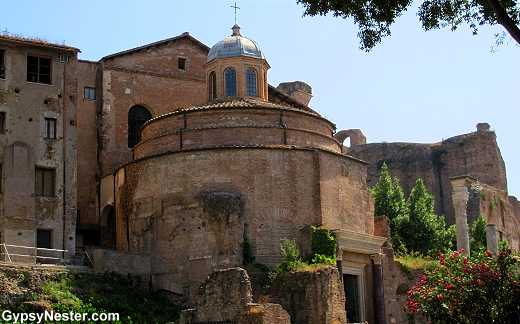
. . . and The Temple of Romulus, now known as Santi Cosma e Damiano, that are in good enough condition that they can still be used.
Men bounce back home at a rate of 40 percent, compared to just 32 percent for women.
As our offspring have grown older and more secure in their adult lives the idea of them returning to the nest as boomerang kids has become much less of an issue for us.
But a recent article in The Tribune, “How to deal with adult children who move back home,” reminded us that for many would be, no should be, empty nesters it is still an ongoing fact of life.
The first thing that struck us from the article were these statistics… CONTINUE READING >>
As our offspring have grown older and more secure in their adult lives the idea of them returning to the nest as boomerang kids has become much less of an issue for us.
But this story, “How to deal with adult children who move back home,” by marriage and family therapist Linda Lewis Griffith of The Tribune reminded us that for many would be, no should be, empty nesters it is still an ongoing fact of life.
The first thing that struck us from the article were these statistics:
According to the August 2013 Pew Research Center Report, “A Rising Share of Young Adults Live in their Parents’ Home,” 21.6 million millennials lived with their parents in 2012, a whopping 36 percent of all people that age. It represents a 40-year high.
Their numbers have been steadily climbing. Before the Great Recession of 2007, 32 percent of adult children in this age group lived at home. When the recession officially ended in 2009, 34 percent were doing so.
It is very common to blame the boomerang phenomenon on the economy, but this polling shows that it was in full swing before the economy tanked, rose only a couple of percentage points during the collapse, and continues to rise even as the economy shows signs of recovering.
Digging a little deeper into the numbers from the Pew Report, we discovered an extremely surprising fact – men bounce back home at a rate of 40 percent, compared to just 32 percent for women.
This directly contradicts the old thinking that girls stay home until they get married while boys go out and start careers.
Not that we didn’t already know that stereotype was ancient history, but these days more young women are attending and graduating from college than men as well. Fortune Magazine says, “Female grads now account for about 60% of U.S. bachelor’s degree holders.”
So more women are getting degrees and less of them are returning home after school. This came as a bit of a surprise to us, but after some thought it fit in with our theory that there are basically two kinds of boomerang kids.
Some of them, likely female from what we’ve seen here, may be effected by the economy but are seeking solutions, while others, more often young men, seek the path of least resistance. The Tribune article identifies the two types very well:
Many of these offspring return home with a specific plan. Perhaps they want to quickly pay off their student loans before getting their own apartment. Or they have a few more classes to finish up on their college degree.
Obviously these people are not the problem. These young adults have goals and no intention of staying in mom and dad’s house indefinitely. However, there are a whole bunch of less motivated boomerangs bouncing back to the old homestead, and the article hits the nail on the head about them:
Others have less direction. They may be unable to land a job in their field and, after a few month of trying, decide they no longer need to look. Some lack any goals for themselves or continually promise they’ll start looking for work. Others appear unable to fend for themselves and may use drugs or hang with friends who are equally underperforming.
These are the ones causing their parents to pull their hair out. The article goes on to offer some of the usual advice, charge rent, have rules, make them pay their own way, and set a departure date – all good ideas.
But we have heard from numerous folks frustrated by their boomerang brats ignoring these, or any reasonable boundaries. What to do then?
YOUR TURN: You’ve heard our thoughts – what’s your take? Were you as surprised at the male/female divide as we were? Why do you think this shift is happening?
Join your GypsyNesters in beautiful Twillingate, Newfoundland!
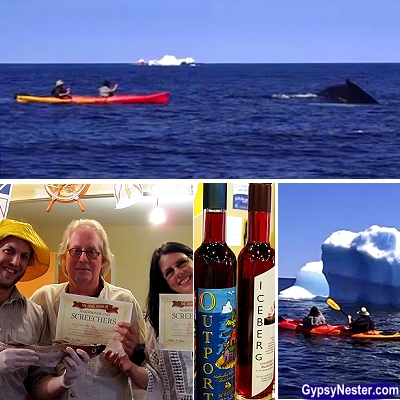
We kayaked with whales! And dolphins! AND icebergs!
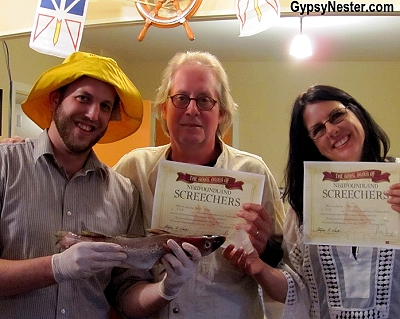
We became honorary Newfoundlanders by getting “Screeched In” – we kissed the cod, shot the Screech and took the oath (in varying degrees of success)!
Sample toutons and tea, check out a real-deal musical group and enjoy wine made from… CONTINUE READING >>
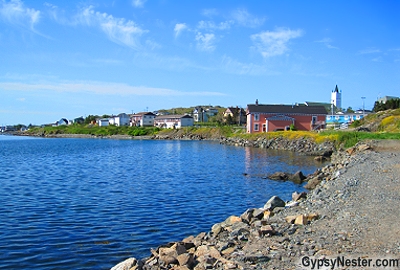
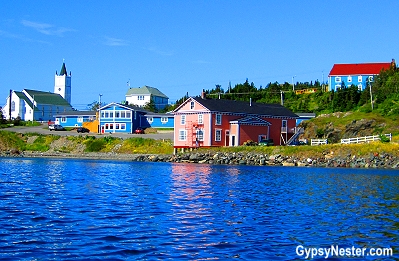
While we were no longer iceberg virgins after our tour of Newfoundland’s Great Northern Peninsula, we were far from experts. Twillingate, proclaimed as the Iceberg Capital of the World, could help us change that.
The town sits in the heart of Iceberg Alley, the path bergs typically travel along the Labrador Current on their way south from Greenland.
But before viewing some of the floating chunks of busted glacier, we wanted to taste them.
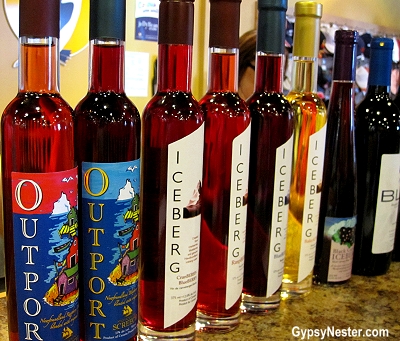
Having already sampled beer and vodka made from melted bergs, it was time to try wine.
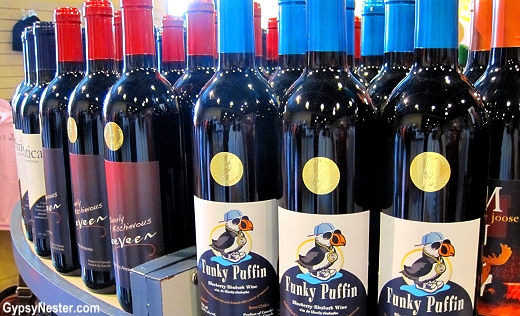
Getting Funky with the Puffin and Loose with the Moose Joose
Chief cook and bottle washer, Danny Bath, was kind enough to show us around the winery.
The wines are made from local fruits and berries in a building that was a school up until 1991, and Danny happily runs the show from the old principle’s office he once dreaded getting called into.
By strict definition these beverages are not technically wines, they are spirits, in that they are distilled, not fermented.
Our first taste showed us that didn’t matter, the Funky Puffin, Moose Joose, and Krooked Cod were all fruity, fun, and fabulous.
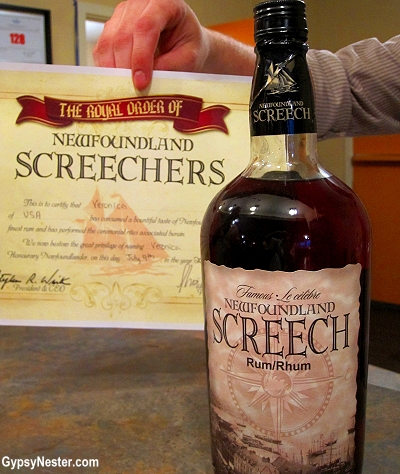
Auk Island even has a couple selections that contain Newfoundland’s notorious rum, Screech. The fire water seemed okay when mixed with the berries, but we had heard many tales of this treacherous libation.
This was our first encounter with the unofficial provincial potent potable, but it would not be our last. We had an appointment to be “Screeched In” later that night.
But before we faced that fate we sampled some tasty treats made from the expended wine making mash.
The leftover berries are used to flavor ice cream, and the result is a veritable taste explosion. Some of the best ice cream we have ever tried.
Now that’s some ingenious recycling.
Toutons and Tea
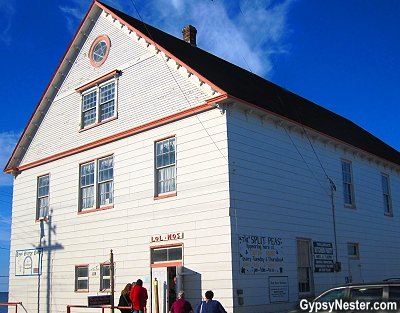
But we had to keep moving, we had one more stop before our date with destiny later that night, The Split Peas were performing at the Touton House.
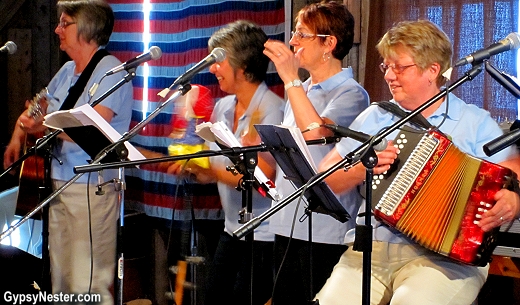
For over twenty years this group of women have been entertaining and fueling locals and visitors alike with authentic Newfoundland music, accompanied by toutons and tea.
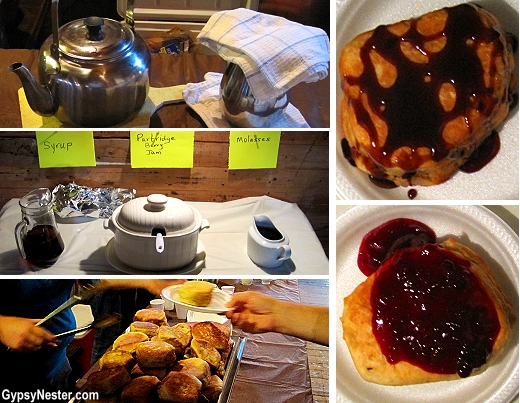
Toutons are a traditional fried bread, served with molasses or partridge berry jam and washed down with tea, while The Peas provide homespun humor and harmonies.
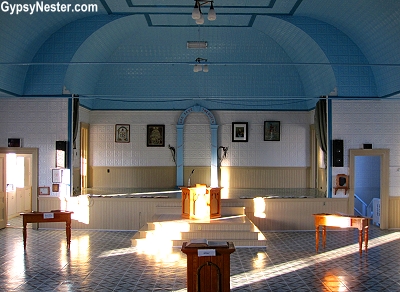
During our refreshment break we also learned a bit about The Orangemen while wandering around the Touton House, which used to be the town’s Orange Lodge.
The Orange Order was originally an Irish Protestant organization founded in 1796 in honor of King William of Orange.
It came to the new world with Irish immigrants and became quite popular in Newfoundland, and to a lesser degree eastern Canada and the northeastern United States.
Back in their heyday they were known to get a bit unruly from time-to-time in their opposition to all things Catholic. Over the years membership declined and they settled into a more run-of-the-mill fraternal order.
Becoming Honorary Newfoundlanders by Getting Screeched In
After the show our time had come, we could no longer avoid our fate. Truth is we were both looking forward to it, even a little giddy at the prospect of getting Screeched In.
As a couple of what the locals call “Come From Away,” we relished the opportunity to become honorary Newfoundlanders.
We would gladly accept, but there are rules, the ceremony must be performed properly.
Wilma at The Anchor Inn was kind enough to provide all of the necessary arrangements, so at 9 PM sharp we stepped up to the bar for our initiation.
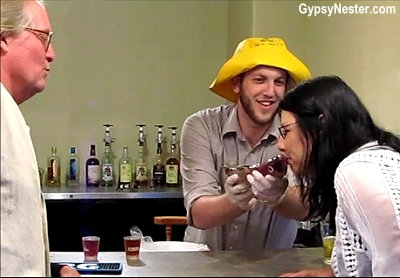
Dressed in full fisherman regalia, our presiding officer swore us in by having us repeat an oath, kiss a cod, and take a shot of Screech rum.
WATCH: Your GypsyNesters get Screeched In – one did a WAY better job than the other!
Then our presiding officer made it official by asking, “Is ye a Screecher?”
To which we replied (in varying degrees of success), “deed I is, me ol’ cock, and long may your big jib draw,” meaning indeed we were old friend and may your sails always be filled with wind. At that point we were issued certificates confirming our new found (land) status.
We don’t know the origin of the name Screech, but our theory is that it is from the sound one makes the first time they try it.
No doubt that is also the last time for most of them.
It seems safe to assume that if not for use in these services Screech rum might have gone out of business years ago.
All we knew is that we wanted to make sure to sleep off any lingering effects because we had an early morning cruise scheduled to get crazy close to some icebergs, and hopefully whales.
Kayaking with Whales, Dolphins and Icebergs! One of the best days of our lives!
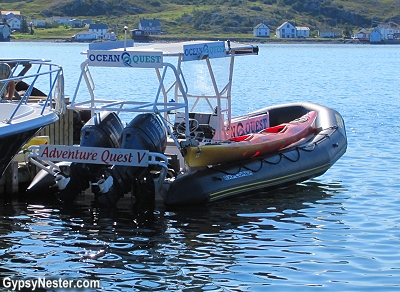
We met Grant of Ocean Quest Close Encounters on the dock bright and early and loaded a couple kayaks onto a motorized zodiac.
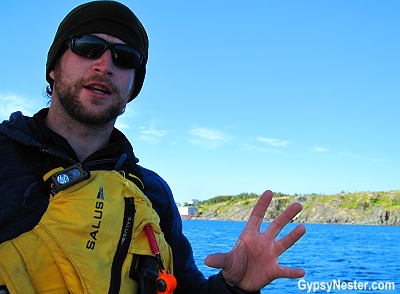
On our way out of the bay Grant gave us an overview of the history and geology of the area and took us into a small cove where thousands of capelin were bunching up in their annual spawning ritual.
After reviewing our underwater camera footage we revised our estimate, there must have been millions.
Interesting as they were, we came to see the big suckers, so onward to the huge hunk of ice.
Grant knew right where the berg was, they don’t move too fast, but whales could be anywhere.
So the ice would be our first stop, but before we got to the iceberg he got to do his best “Thar she blows.” We looked up excitedly, just in time to catch a fluke sliding back into the sea.
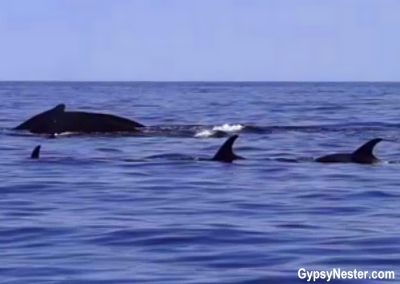
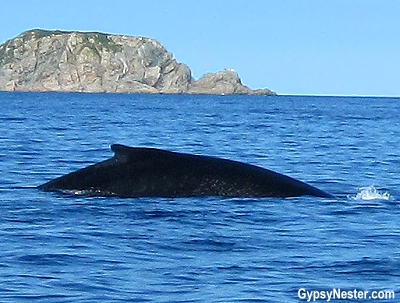
As excited as we were about bergs, we were even more pumped to spot some humps, humpback whales that is, so Grant set a course for the giants and mashed the motor.
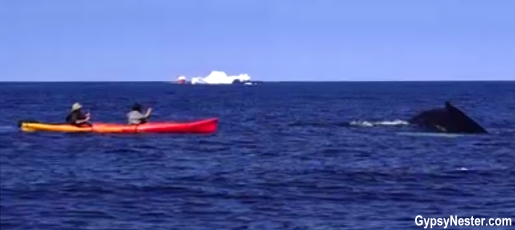
Next thing we knew he was putting the kayaks in the water and asking if we were ready. Ready? Is anyone ever really ready to approach an animal that dwarfs a Greyhound Bus in a small plastic boat? You bet we were ready!
WATCH: Seriously, one of the best days of our lives! We were right in amongst a serious amount of sea creatures – and icebergs!
Something must have snapped in our brains because we jumped in and started madly paddling directly toward a pair of the mammoth sea mammals.
We rowed and gawked while the humpbacks breached, spouted and splashed, but we never caught all the way up to them because they are much better swimmers than we are kayakers.
We did get close enough that one took a dive and swam right under us. All David could think was don’t come up, don’t come up.
Veronica, however, was thinking about the viral video she could film – Crazy Old People Get Taken Out by Humpback Whale!
After humoring us by hanging around for a few minutes the pair moved on. Try as we might there was no keeping up with them, so we turned our attention to the ice.
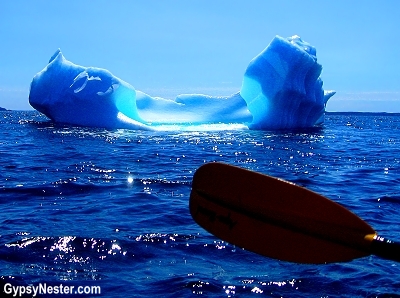
This had to be the only way in the world that sitting in a kayak just a few feet away from an iceberg could ever seem anticlimactic.
That feeling evaporated in a matter of seconds though, once we became mesmerized by the beauty of the blue ice.
Grant warned, “don’t get too close, it looks a little tippy,” but we weren’t concerned.
In fact, every care in the world disappeared while we stared into 10,000 years of frozen history.
Finally the frigid water, and Grant’s need to meet his next group of lucky explorers, forced us back aboard the zodiac for the ride back to Twillingate.
We were downright babbling with excitement all the way in, but with good reason, this had been a truly unbelievable morning.
We had just done two of the coolest things we’d ever done in our entire lives in the span of a few minutes.
We’re so honored! Check us out getting “Screeched In” – we kissed the cod, took a shot that put hair on our chests and recited the solemn oath… See more about the ceremony here! >>
We’re so honored! Check us out getting “Screeched In” – we kissed the cod, took a shot that put hair on our chests and recited the solemn oath… See more about the ceremony here! >>
An AMAZING day! Watch it full screen (click the bottom right on video) for full awesomeness… see more here! >>
One of the greatest experiences of my life was when our guide let us loose in a kayak in whale-infested waters outside of the picturesque town of Twillingate in Newfoundland. The area is called “Iceberg Alley” and, when the sun is bright, the sea dances with light and more shades of blue than a mind can process.