Search…

Secrets of the Sacred Valley of the Incas

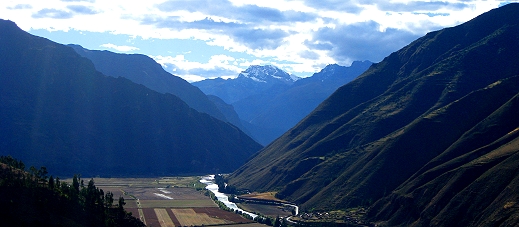
Anyone making their way to Machu Picchu must first traverse The Sacred Valley of the Incas (Valle Sagrado de los Incas), and we were no exception.

But this was no tedious trek, it was a fascinating adventure in its own right.

Join us as we visit the people, the food, the culture and the spectacular natural and ancient beauty of… CONTINUE READING >> 

The Sacred Valley of the Incas, Peru

Anyone making their way to Machu Picchu must first traverse The Sacred Valley of the Incas (Valle Sagrado de los Incas), and we were no exception. But this was no tedious trek, it was a fascinating adventure in its own right.
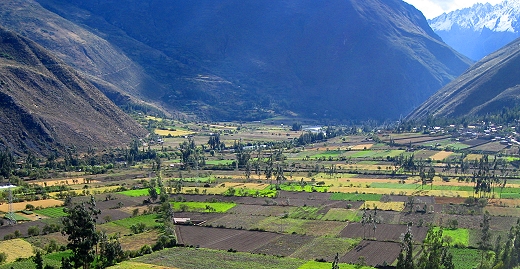
Farming in The Sacred Valley, Peru

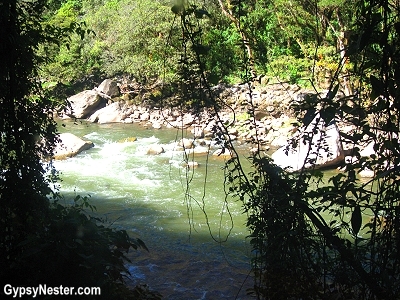
The valley was formed by the Urubamba River, which is part of the headwaters of the Amazon, and has a wealth of both natural and agricultural resources. This, and the proximity to the Inca capital Cusco, made the region the heart of The Inca Empire.
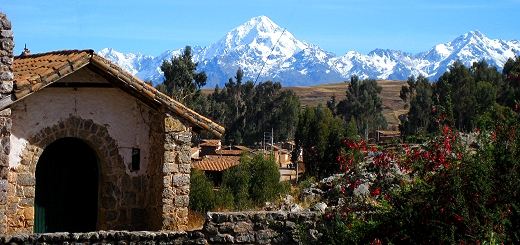
Chincheros, Peru

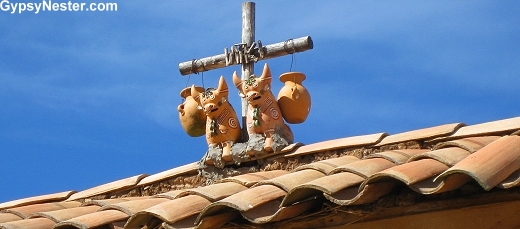
Roof shrines in The Sacred Valley, PeruOn the roofs of most of the houses in the Sacred Valley are small shrines that include a cross indicating the family is Christian, ceramic bulls for strength and fertility, a cask of corn beer to tie them to their ancestors, and a vial of holy water to sanctify the house. (This shrine was in the town of Chincheros)
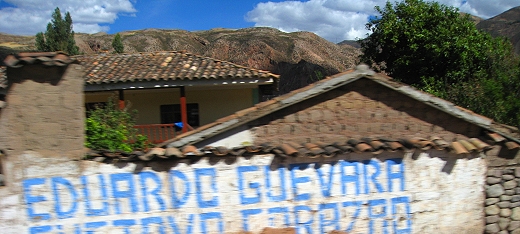
Many homes sport advertising on the outer walls facing the road. Signs for politicians seem to be most prevalent.
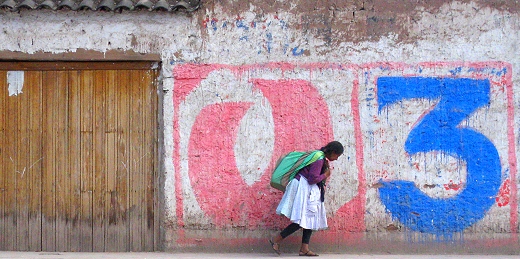

A woman carries her belongings on her back in the Sacred Valley of the Incas, Peru
The people of The Sacred Valley prefer to get around on foot. However, buses do run up and down the valley, as well as trains.
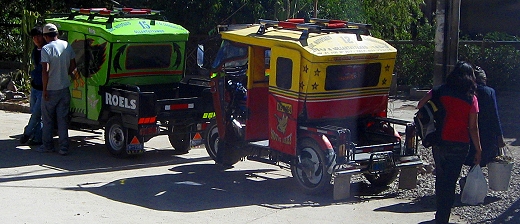
Visitors can catch a cab, colorful, tricked out, modified motorcycles.
Taxis – colorful, tricked out, modified motorcycles – ferry visitors and residents alike around the towns.
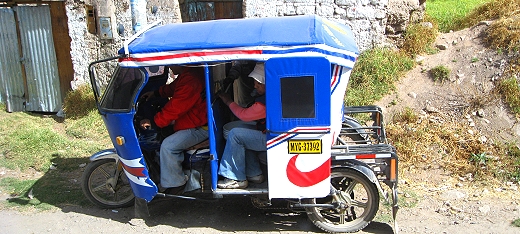
Visitors can catch a cab, colorful, tricked out, modified motorcycles.

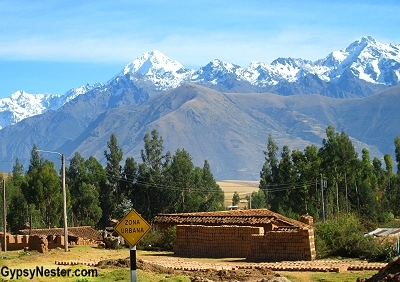
Zona Urbana in the Sacred Valley, Peru

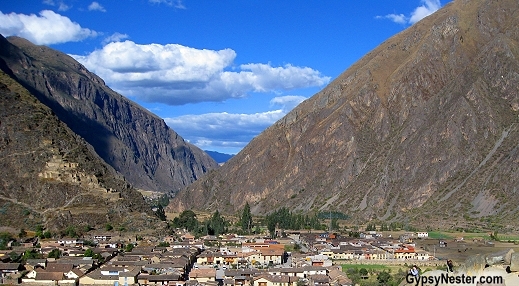
As we followed the river toward our ultimate goal we came to Ollantaytambo, a town that sits at the foot of enormous ruins that share the same name.

The town dates back to the late 15th century, contemporary with the ruins, and has some of the oldest continuously occupied dwellings in South America.
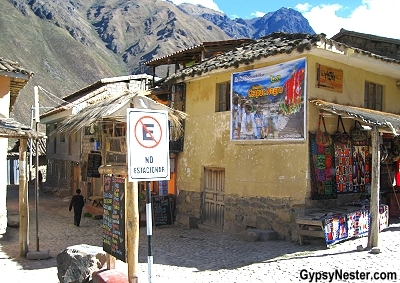
The village of Ollantaytambo

It also serves as the gateway to Machu Picchu, since this is the starting point for the famous Inca Trail (for backpackers) and the narrow gauge railway (for the oh-my-aching-back crowd) that are the only ways to reach the legendary Lost City.

Click here to learn how we dealt with altitude issues while in Peru
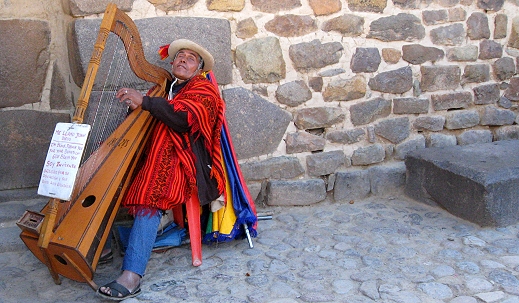
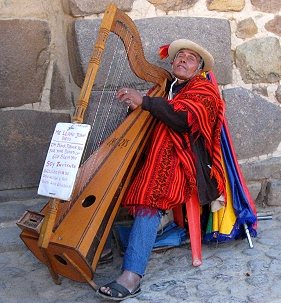
A street performer in the Sacred Valley of the Incas

open air market in the town of Pisac, Peru

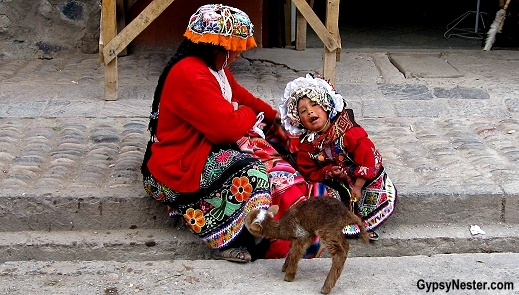
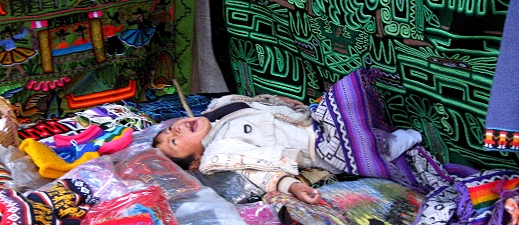
A child plays among her mother's wares in the Sacred Valley of Peru

Ollantaytambo, the archaeological site

As remarkable as the village of   may be, the archaeological site is the main attraction.

We entered the site, gawking up at the stonework that covers the entire side of a mountain, and our guide, Eddy, gave us some background.

Originally the royal estate of Emperor Pachacutin, it became a bustling agricultural center, and then during the Spanish conquest, served as a fortress for Manco Inca Yupanqui while leading the Inca resistance.

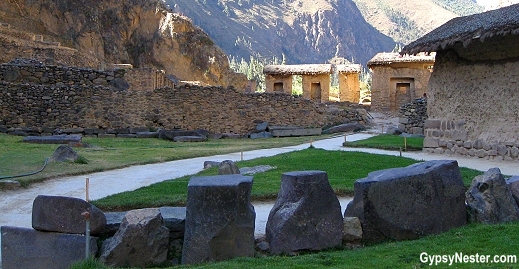
He went on to point out the many stones left sitting where ever they happened to be at the time that work was abandoned, showing how this site was still unfinished when the Spanish arrived in the 1500s.

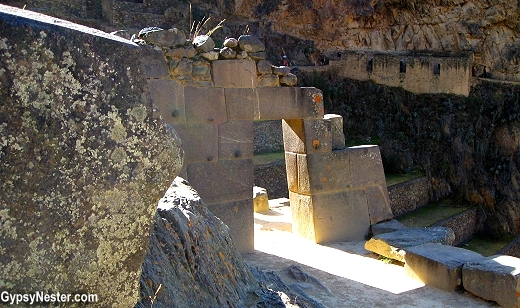
The freestanding stones gave us a close up look at some of the amazing stone cutting and shaping involved in the construction.

Ollantaytambo, Peru

Eddy also took this opportunity to explain something that he says has been misunderstood for centuries. The name of the people who lived in this area when the Spanish arrived was not the Incas, but the Quechua, pronounced Ke-chu-wa.

This name is now routinely used only for the language the people spoke, and many still speak, but that is not totally correct, it also identifies a people. Inca does not.

It was only the name for the ruler, as in the Inca ruled over the Quechua.

Ollantaytambo, Peru

See more Ollantaytambo Ruins

Inca Kola

In order to diminish these rulers in the eyes of the people and take their place, the Spanish began to call everyone and everything Inca, taking away its royal standing.

“You’re Inca, you’re Inca, that building is Inca, it’s all Inca.”

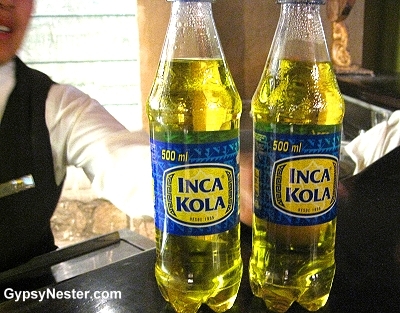
It was a strategy that worked so well that the original meaning has been all but lost. In fact even a popular yellow, overly sweet soda has usurped the once imperial title.

The Ollantaytambo Ruins, Sacred Valley, Peru

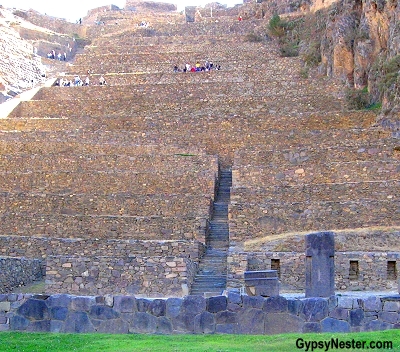
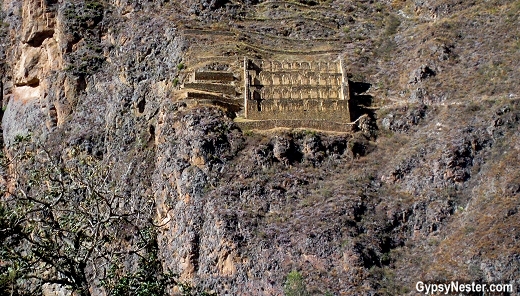
The bulk of the Ollantaytambo archaeological site is covered by huge stone terracing that was specially designed to transform the impossibly steep hillside into usable crop land. This not only provided level ground for farming, but also prevented landslides and flooding in times of heavy rains.

Grain storage buildings at Ollantaytambo, Peru

See more Ollantaytambo Ruins

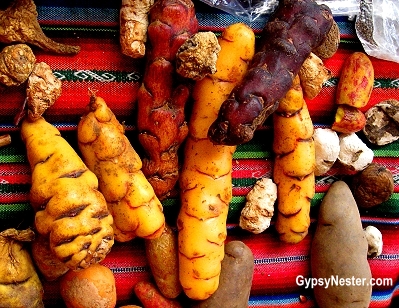
There is a huge variety of potatoes in the Sacred Valley of Peru

Alongside these stair-stepped growing areas are granaries built to store up to five years supply of food as preparation in case of drought, blights or freezes.

This was just one of the methods used to guard against a poor harvest.

Crops were also planted at different altitudes to insure proper growing conditions, and many varieties of each crop were developed. For example, hundreds of different types of potatoes would be sown. Each cultivated for certain characteristics such as resistance to insects, cold, heat or dry conditions.

This was all fascinating stuff, but our natural inclination was to climb, so we did, up over 9000 feet. It’s a bit hard to breath up there, but we huffed and puffed, and I-think-I-can, I-think-I-canned our way to the top.

Click here to learn how we dealt with altitude issues while in Peru
Ollantaytambo, Peru

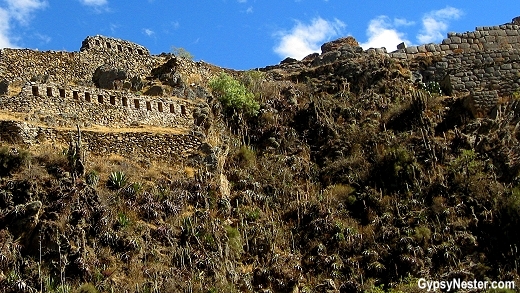
Above all of the agricultural structures is a temple. This was the part still being worked on when Ollantaytambo was abandoned, so it is not overly impressive, but some of the massive stones are, and the view certainly is.

From the top we could see for miles in every direction and make out the path across the valley to the quarry where the stones were originally cut.

View from the top of Ollantaytambo ruins

From there the giant rocks were hauled down that mountain, over the river, and back up this mountain, all without the use of wheels. One of the many mysteries that surround the building abilities of the Quechua people when ruled by the Inca is the lack of the wheel.

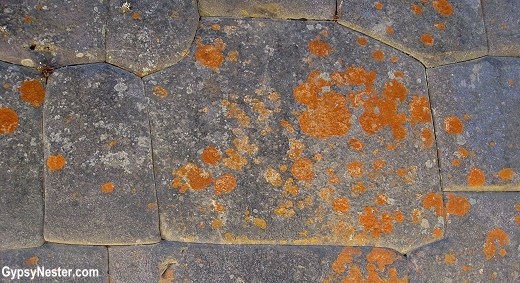
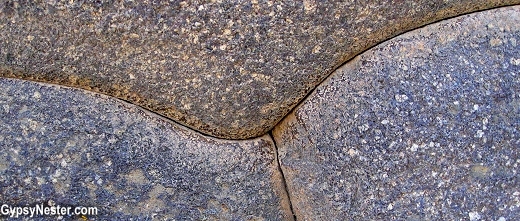
The massive stones fit together tightly at Ollantaytambo, Peru

Eddy offered the theory that the round shape represented the sun and moon and therefore was sacred, so it could not be used for such mundane tasks as moving rocks. Possibly, but no one knows for certain why they didn’t use wheels.

The massive stones fit together tightly at Ollantaytambo, Peru

Another of the mysteries of Ollantaytambo is exactly how the stones were cut, because no metal hard enough to cut granite was available at that time. Since the Quechua language was not written, and the Spanish destroyed most evidence of methods used in construction, we may never know the answers.

See more Ollantaytambo Ruins

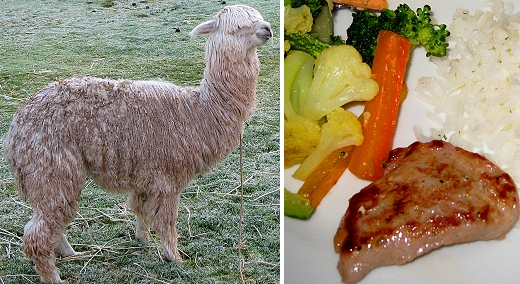
Alpaca in Peru
After our climb we had worked up a pretty good appetite. Dinner at Posada del Inca, our headquarters and hotel during our stay in the Sacred Valley, gave us a chance to try some alpaca.

Our first real culinary adventure on the trip, alpaca is basically a smaller version of the llama.

Although they look somewhat like sheep, alpaca are actually a relative of the camel.

Can’t say we ever had a hankering to try any roasted dromedary, but the alpaca looked quite good. Tasted like chicken, just kidding, more like veal but with a texture a bit like liver.

The next morning promised yet another blue-skied beautiful day. As much as we had seen on our visit to The Sacred Valley, this was still a stepping stone for us.

A warm up for the main event of Machu Picchu. And since our days of hiking four days over rough terrain are probably behind us, The Inca Trail was out.

We needed to make our way to the train station.

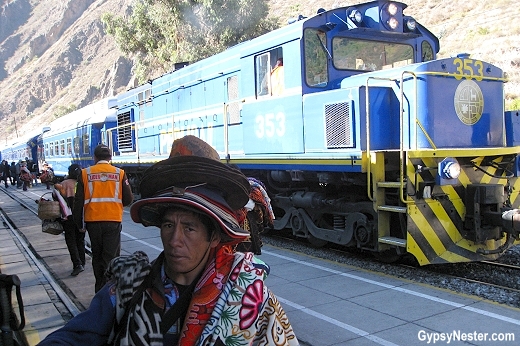
Train Station in Ollantaytambo, Peru on the way to Machu Picchu

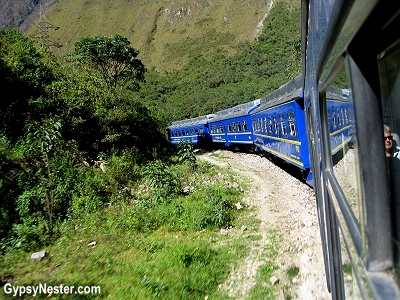
PeruRail operates several trains a day to the town of Aguas Calientes along track originally laid in 1928.

The town sits in the valley below Machu Picchu and the narrow gauge ride down the Urubamba River, through spectacular Andes mountain scenery, took us on the second highest railroad in the world, after the Qinghai–Tibet Railway.

Watch: The train to Machu Picchu is a trip! There is even entertainment!

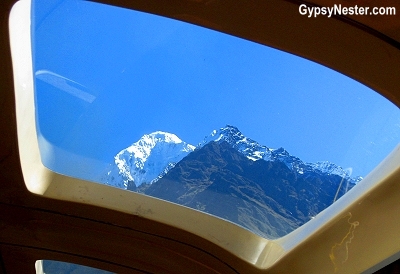
The mountain, Veronica, through the dome car window in Peru

About 15 minutes out of Ollantaytambo, we spotted an enormous snow covered peak, only to find that it was named Veronica.

How about that? We just got here and they’re already naming mountains after us.

And not just any old mountain either, Veronica sports a summit over three-and-a-half miles high.

View from the Excursion Train in Peru

As we rode along we saw more of the agricultural terraces on the valley slopes, many which are still in use.

Descending downstream, the environment changed as we moved from alpine meadows into tropical rainforest.

By the time we reached the end of the line every inch of land was covered by thick jungle.

The excursion train to Machu Picchu in Peru

At that point we were close enough to our goal of Machu Picchu to feel the excitement, but it was still one arduous bus ride away… continue on to Machu Picchu

David & Veronica, GypsyNester.com

Delve Deeper:
Click here to learn how we dealt with altitude issues while in Peru
Click to see all of our adventures in Peru!

Click here to see our full adventure with Road Scholar – a not-for-profit organization – through Ecuador, Peru, The Galapagos Islands, Machu Picchu and much, much more!
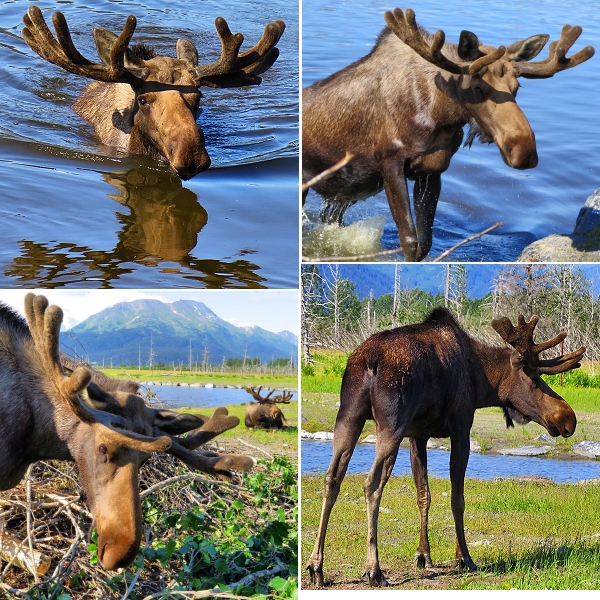
Time to Eat Crow. I Now Believe in Moose!

I stand corrected. I apologize, I couldn’t have been more wrong.

Moose exist.

It was less than a week upon our arrival in Anchorage, Alaska that I spied my first moose while traveling along the Seward Highway south of town.

AND he was swimming. I am now fully obsessed with moose, as demonstrated… CONTINUE READING >>

I stand corrected. I apologize, I couldn’t have been more wrong.

Moose exist.

It was less than a week upon our arrival in Anchorage, Alaska that I spied my first moose while traveling along the Seward Highway south of town.

AND he was swimming. I am now fully obsessed with moose, as demonstrated… CONTINUE READING >>

We’re Unorthodox! What are YOU Going to do with Your Empty Nest?

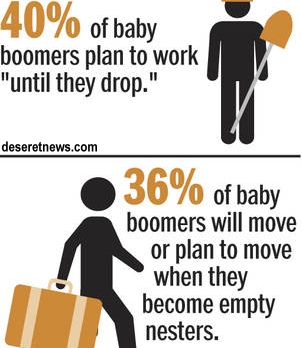
Deseret News intrigued us with some interesting Boomer stats and asked us to weigh in with our thoughts and experience!

“With a son who is a pilot and is able to fly and see them often, as well as two daughters who can both be visited by traveling to the same city, the family is reunited often.

‘I’m fairly certain we see our kids more traveling a lot more than if we were in one place’”

What have been YOUR empty nest solutions? Are you “unorthodox” too?.. Read the full article and leave a comment here

Deseret News intrigued us with some interesting Boomer stats and asked us to weigh in with our thoughts and experience!

“With a son who is a pilot and is able to fly and see them often, as well as two daughters who can both be visited in two of the world’s greatest cities, the family is reunited often.

‘I’m fairly certain we see our kids as often traveling than if we were in one place’”

What have been YOUR empty nest solutions? Are you “unorthodox” too?.. Read the full article and leave a comment here

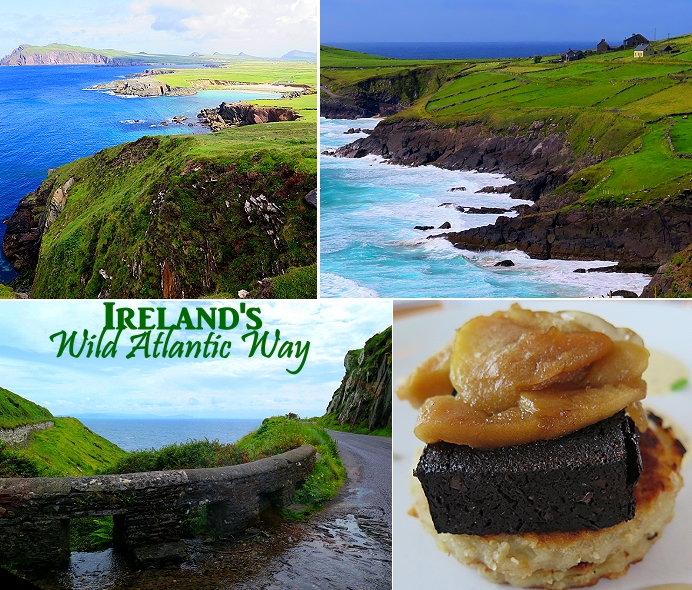
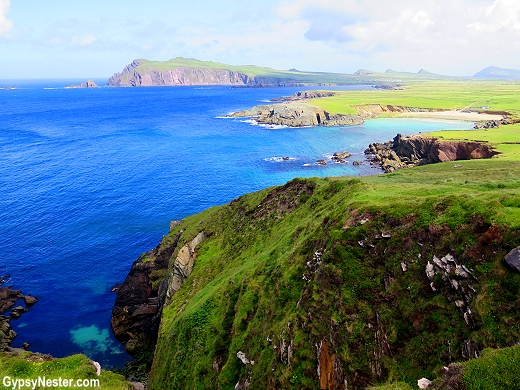
Living on the Edge of Ireland’s Wild Atlantic Way

Where is the edge of the world?

In the literal sense there obviously cannot be one on this sphere we inhabit, but figuratively, and also in a very real way, several spots where the last bit of land holds forth against the sea certainly feel like the brink.
The Dingle Peninsula on Ireland’s Wild Atlantic Way thoroughly captures this sensation… CONTINUE READING >>


A big thank you to Ireland.com for providing this cliff-hanging adventure. As always, all opinions are our own.

The Wild Atlantic Way of Ireland

Where is the edge of the world?

The Wild Atlantic Way of Ireland

In the literal sense there obviously cannot be one on this sphere we inhabit, but figuratively, and also in a very real way, several spots where the last bit of land holds forth against the sea certainly feel like the brink.
The Dingle Peninsula on Ireland’s Wild Atlantic Way thoroughly captures this sensation.

The Wild Atlantic Way of Ireland
Heading west, this is the last piece of land until North America, so the locals like to say, “The next parish over is Boston.”
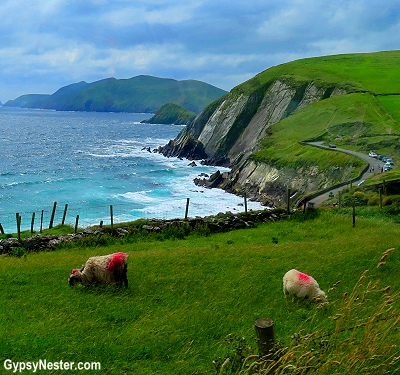
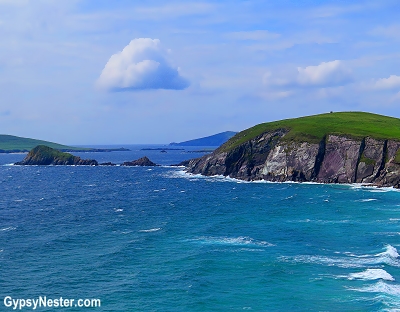
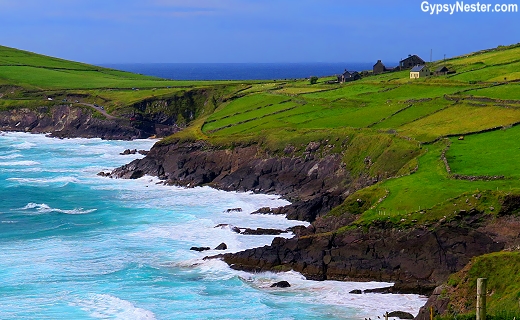
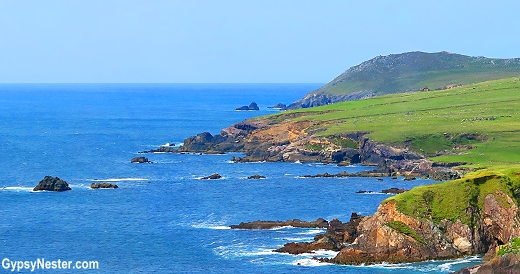
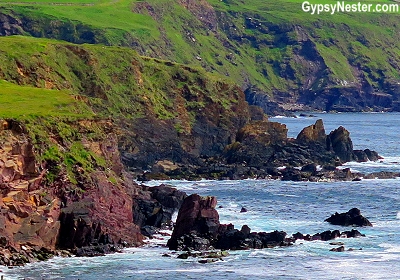
But it is more the landscape than the location that gives the sensation of living on the edge. The rugged slate cliffs and crashing waves see to that.

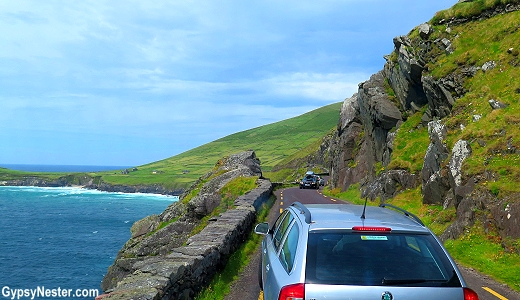
The road on Ireland's Wild Atlantic Way gets quite hairy at times!
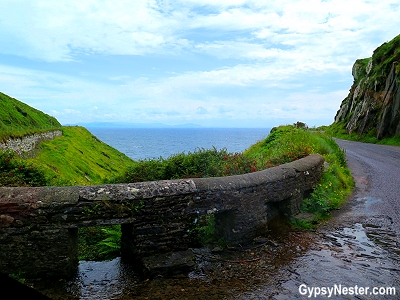
The road gets a bit hairy at times!

From our base in the town of Dingle, we headed out Slea Head Drive, Slí Cheann Sléibhe in the local Gaelic tongue, for a closer look at the western most tip of Europe.

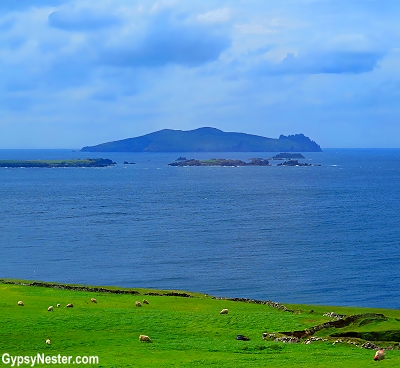
The rocky point of Slea Head juts out into the surf offering a stunning view up and down the coast, crowned by the Blasket Islands to the north.

The road on Ireland's Wild Atlantic Way gets quite hairy at times! This is a two-way road?!
Wait. This is a two-way road?!

Just beyond the head our guide and font of lore and information, Fiona, pointed out the beach where parts of the Robert Mitchum movie Ryan’s Daughter were filmed.

No doubt the scenery helped it win the 1970 Oscar for Best Cinematography.

The Wild Atlantic Way of Ireland

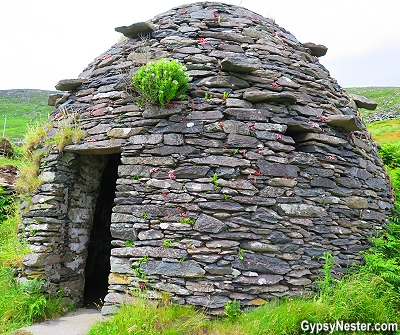
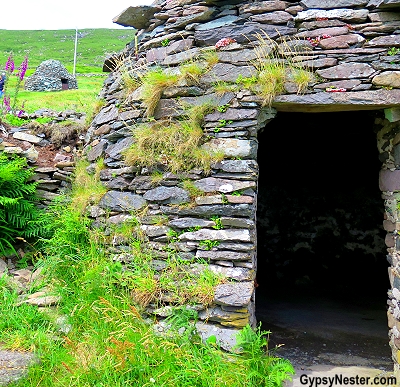
Along Slea Head Drive on the Wild Atlantic Way in Ireland, these little dwellings, known as beehive huts, are a source of some mystery. Since they are made of nothing but stone, it is nearly impossible to accurately place a date on their construction.

Slightly farther up the tiny path that serves as a road we noticed several small stone huts.

These little dwellings, known as beehive huts, are a source of some mystery.

Since they are made of nothing but stone, it is nearly impossible to accurately place a date on their construction. Guesses go anywhere from a few hundred to well over a thousand years old.

Along Slea Head Drive on the Wild Atlantic Way in Ireland, these little dwellings, known as beehive huts, are a source of some mystery. Since they are made of nothing but stone, it is nearly impossible to accurately place a date on their construction.

Locally they are referred to as Clochán, and the prevalent thinking is that they were built by hermit monks who were followers of St. Patrick.

This would place them well to the older side of the age estimates, perhaps even dating back to the seventh or eighth centuries.

Superstition may be the reason the huts have survived so long; without the mystery — and a bit of fear — the stones would most likely been taken from the huts to be used in building more modern structures. In this case, we’re happy that fear prevailed!

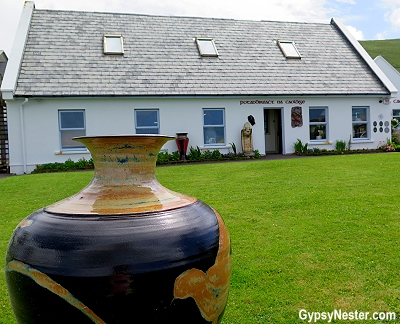
Louis Mulcahy Pottery on Ireland's Wild Atlantic Way

The Dingle Peninsula is known for its stunning views, green pastures, fantastic food, and recently pottery.

A stop at Louis Mulcahy Pottery managed to encompass all of those in one spot.

Before getting a tour of the facilities, and trying our hand at the wheel, we went upstairs for a bite.

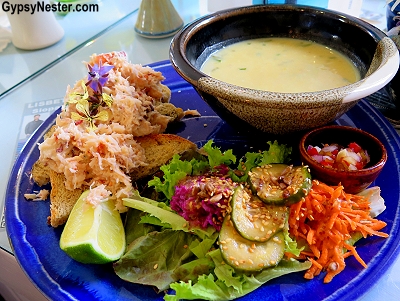
Lunch of crabmeat and potato leak soup at the cafe in Louis Mulcahy Pottery in Ireland's Wild Atlantic Way

The little café isn’t elegant but, in situations where eating is involved, we will always take tasty over fancy.

Our lunch of seafood bisque and crab sandwiches would have been right at home in any five-star establishment, but the relaxed atmosphere made it even more enjoyable.

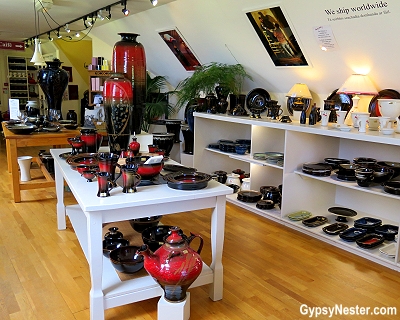
Louis Mulcahy Pottery

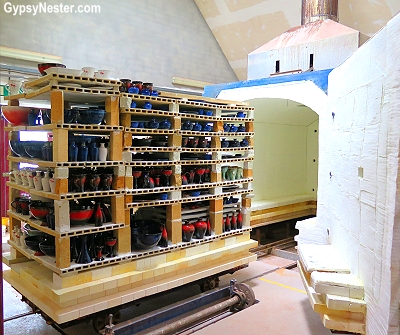
Back downstairs we took a walk through the workshops where the beautifully crafted ceramics are all made, then glazed and fired in the two thousand degree kiln.

Many of the items are created by pouring liquid clay into molds, but most are still turned by hand at a potter’s wheel.

Louis Mulcahy Pottery

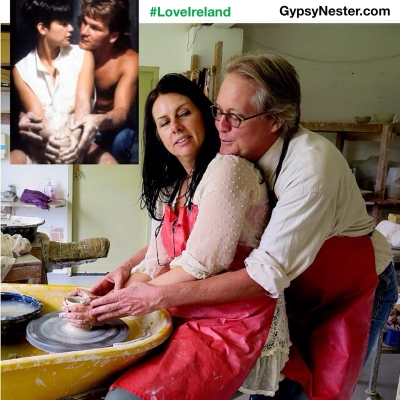
We found it to be nearly impossible to watch the turning process being done and not want to try it ourselves.

Well, we were in luck, this was our chance. We felt pretty special when we were allowed behind the barrier and inside the workshop, but it turns out that anyone can give this a try.

The GypsyNesters reenact a famous scene from the movie Ghost at Louis Mulcahy Pottery along the Wild Atlantic Way in Ireland

One of the resident expert potters, Susie, walked through the process step by step, right up until the time that we broke form and reenacted the famous scene from the movie Ghost.

Even with our goofy detour, we managed to make a couple of somewhat respectable cups.

WATCH (and decide!): Which of us created the better cup?

Ireland's Wild Atlantic Way

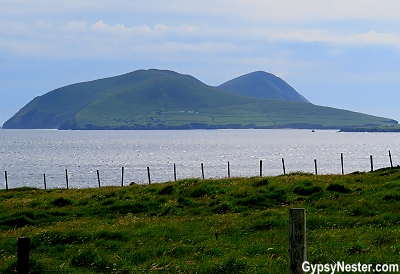
As we drove on the Blasket Islands loomed larger and larger, until we crested a hill and they spread out right before us.

The northernmost of the Blasket Islands in Ireland along the Wild Atlantic Way, Inishtooskert, is often called the sleeping giant.

From our angle it was abundantly clear why the northernmost of the islands, Inishtooskert, is often called the sleeping giant.

The silhouette certainly brought the big man taking a wet nap in focus.

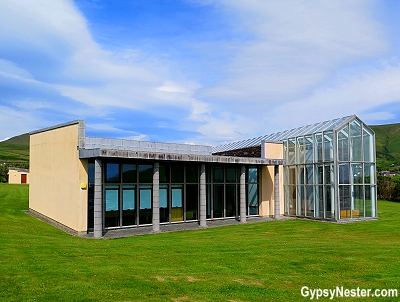
Dropping down to the shore, just across the narrow strait from Great Blasket Island, we stopped in at the Blasket Centre for a closer look at these remote islands.

View of the old settlement from the Blasket Centre of Ireland's Wild Atlantic Way

We could see the remnants of the settlement where a handful of hardy souls held out from the early 1800s until 1953.

At that time an evacuation was ordered by the Irish government because they couldn’t provide for services or the safety of the residents.

In a strange quirk, the small band of settlers, there were never more than a couple of hundred, produced some of Ireland’s best known and beloved literature, The Islandman, Twenty Years A-Growing, and Peig were all penned on the island and are classics all across the country.

The Blasket Centre of Ireland's Wild Atlantic Way

The center mainly focusses on the history of the island’s inhabitants with films, photos, and artifacts telling the story, but there is a wealth of information on the geology and ecology of the Blaskets too.

Like many oceanic outposts, seabirds love these islands.

Rocky cliffs along the Wild Atlantic Way of Ireland

The rocky ledges reminded us of the incredible bird rock at St. Mary’s in Newfoundland, and many of the same species have made a home here.

We saw familiar gannets, razorbills, terns and gulls, but just like our visit on the other side of the Atlantic, we missed the puffins. The little guys just spend way too much time out at sea for our liking.

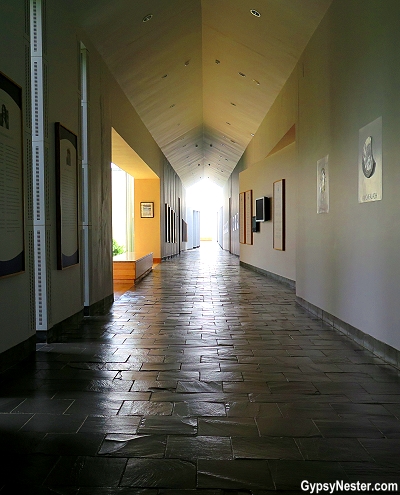
The Great Hall of the Blasket Center in Ireland's Wild Atlantic Way
The Centre’s great hall is like an arrow pointing to the
Blasket Settlement and has a wonky, ocean-like floor

Fiona filled us in on another story from this area that might also involve a bit too much time on the open ocean.

On the northern shore of the peninsula, at Cuas an Bhodaigh or Brandon Creek, legend has it that St. Brendan set sail in search of Eden, but actually found America instead.

This would have been nearly a thousand years before Columbus got lost on his journey to find the Far East, and a good five hundred before the Vikings landed at L’Anse aux Meadows on Newfoundland’s northern tip.

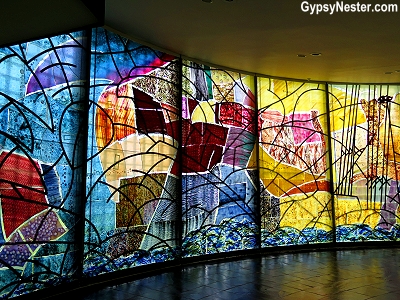
The beautiful stained glass mural depicts life on the Blasket Islands along the Wild Atlantic Way
Beautiful stained glass mural depicts life on the Blasket Islands.

The saint’s quest was immortalized in many writings throughout the middle ages, but there is no definitive evidence of the voyage; nothing but folklore to back up the tale.

Still, what may be a folktale to the rest of the world is held as fact by many in these parts. Just ask anybody “who discovered America?”

Gorman's Clfftop House on Ireland's Wild Atlantic Way

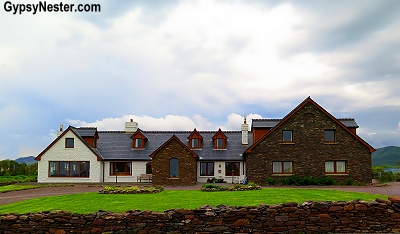
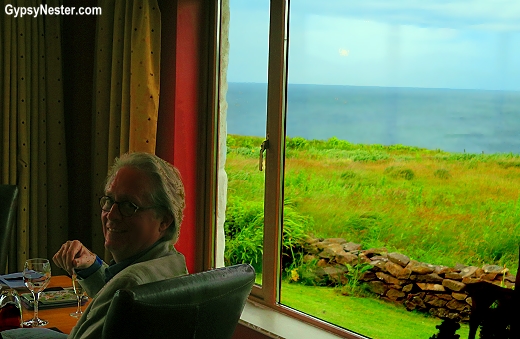
While we may have our doubts as to whether St. Brendan ever set foot on North America, we are certain that we found the best possible spot for dinner at Gorman’s Clifftop House.

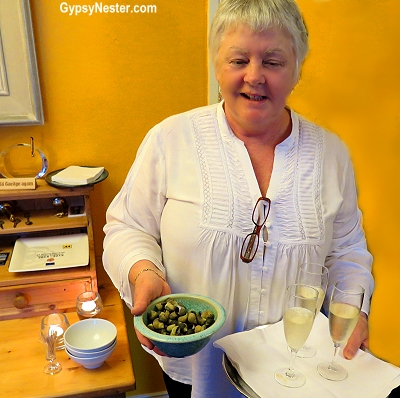
At Gorman's Clifftop House. Our hostess, Sile, greeted us at the door with sparkling wine and steamed periwinkles along the Wild Atlantic Way.

Our hostess, Sile, greeted us at the door with sparkling wine and steamed periwinkles.

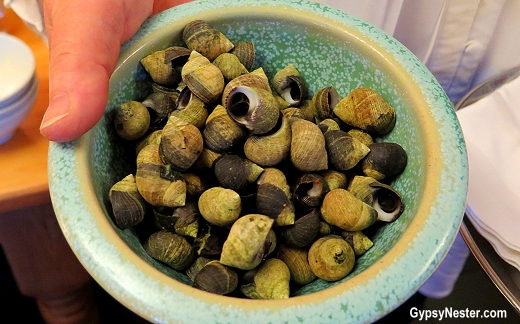
We only knew the word as a color, turns out it is also a small edible sea snail.

Sile demonstrated how to tease the little guys out with a toothpick and, after a sharp learning curve, we were soon eating ’em like champs.

Periwinkles, a small edible snail, in Ireland

Black pudding atop a potato pancake with glazed apples at Gorman's Clifftop House along the Wild Atlantic Way in Ireland

Periwinkles would be only one of many treats from the sea during the evening, but not before we tried a true Irish staple, black pudding.

The closest thing we could compare it to would be blood sausage, but it includes oats and is fried on a griddle.

Black pudding is often a part of a traditional Irish breakfast, but as an appetizer we enjoyed it served on a potato pancake with glazed apples and a mustard sauce.

Gorman's Clfftop House on Ireland's Wild Atlantic Way

This was definitely something new to our American palates, but delicious nonetheless.

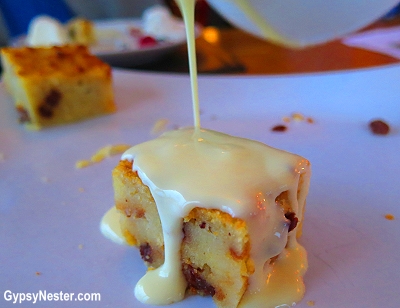
Bread and butter pudding with thick Irish cream at Gorman's Clifftop House on the Wild Atlantic Way in Ireland

The main course featured a selection of seafood from the nearby waters, filets of hake, John Dory, and monk fish served with Dingle Bay crab claws and prawns, but the real star of the evening had to be the dessert.

The bread and butter pudding was fantastic, made even more so by smothering it with thick Irish cream.

This delicious dolce transported us right past the edge-of-the world to out-of-this world.

Pretty much the perfect way to end a day on the Wild Atlantic Way.

David & Veronica, GypsyNester.com

See all of our adventures in Ireland!

A big thank you to Ireland.com for providing this cliff-hanging adventure. As always, all opinions are our own.

YOUR TURN: Isn’t the Wild Atlantic Way spectacular?

Living Like an Empress Dowager at Beijing’s Summer Palace

The Summer Palace lies on the northwest edge of Beijing, China by Kunming Lake, in what used to be countryside.

As the name implies, it was the imperial getaway from summer in the city, but palace only describes a part of this place… CONTINUE READING >>

The Summer Palace of Beijing, China

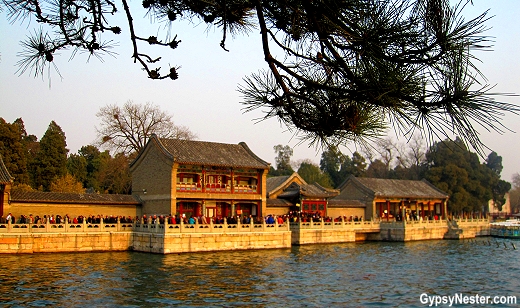
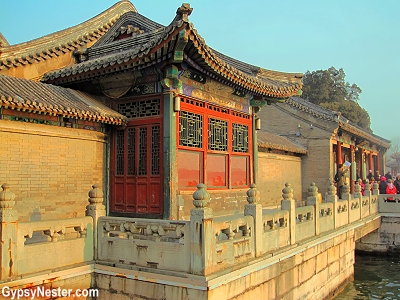
The Summer Palace lies on the northwest edge of Beijing, China by Kunming Lake, in what used to be countryside.

As the name implies, it was the imperial getaway from summer in the city, but palace only describes a part of this place.

The Summer Palace of Beijing, China

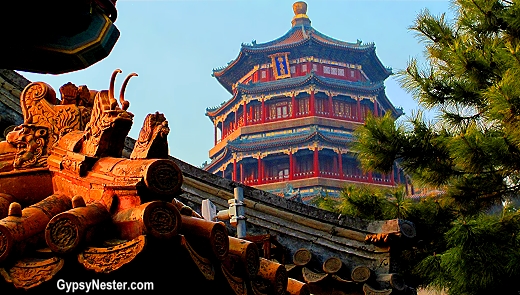
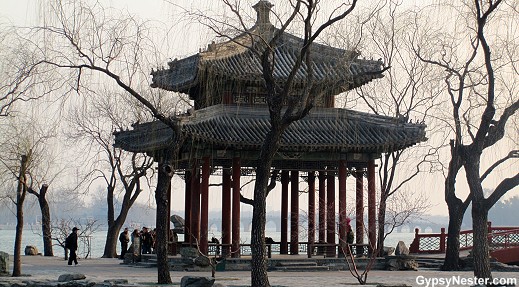
What we found was hardly a summer cottage for the emperor, there are nearly three square miles of gardens, statues, and temples surrounding the lake.

All the culmination of centuries of emperors adding to the splendor since the Jin Dynasty, when emperor Wányán Liàng chose the site back in the middle of the twelfth century.

The Summer Palace of Beijing, China

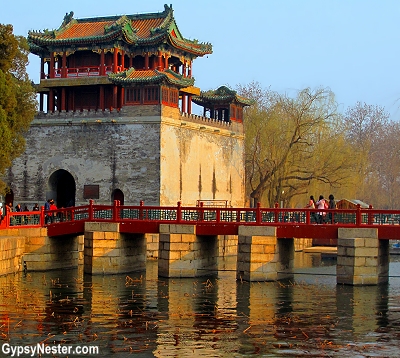
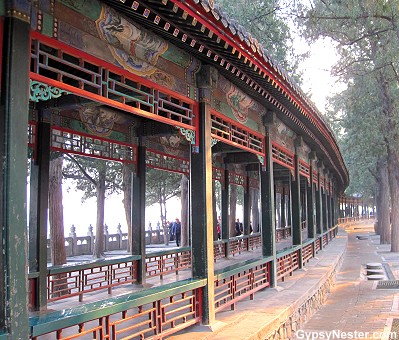
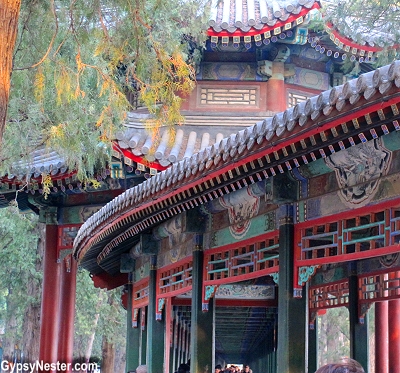
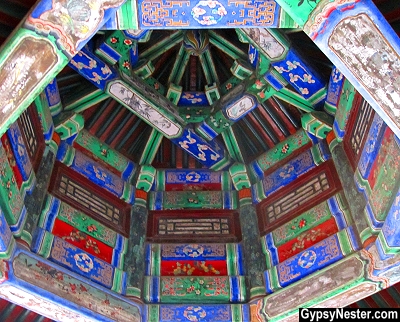
The covered walkway of The Summer Palace of Beijing, China

By walking about a mile around the shore of Kunming Lake and the amazingly ornate covered walkway, we got a great vantage point for looking up Longevity Hill at the palace.

The landscape here is very flat, so the hill is actually made from the earth that was removed while digging out the lake.

Delve deeper into Beijing!

The Summer Palace of Beijing, China

The covered walkway of The Summer Palace of Beijing, China

Perhaps the best known of these leaders was one of the last, the controversial Empress Dowager Cixi.

In 1862 she declared herself empress by command of her six year-old son, the Emperor Tongzhi.

When her son died at only eighteen years-old, she appointed her nephew emperor and “retired” to The Summer Palace.

The Summer Palace of Beijing, China

But she was hardly out of the picture, continuing to rule from behind the scenes.

During this “retirement” she spent what would now be hundreds of millions of dollars on refurbishing the palace and grounds, nearly bankrupting the Chinese military.

The Summer Palace of Beijing, China

There is little doubt that this led to defeat in the Sino-Japanese War in 1895.

The fall of China‘s dynasty system, along with drastic changes, soon followed.

When our guide was telling us this story it was hard to determine whether he felt this was a good thing or a bad thing.

Sunset at The Summer Palace of Beijing, China

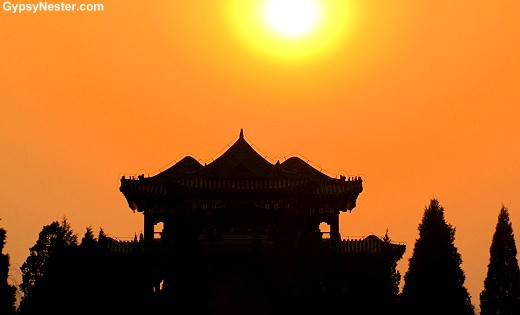
Either way,  Cixi got herself some nice digs. It’s good to be empress dowager.

But we’d hate to have to keep up with the housework!

David & Veronica, GypsyNester.com

See more of our adventures in China!

Delve deeper into Beijing!

Click here for our full live-blog as we traveled with Holland America aboard the ms Volendam – through Hong Kong, China, South Korea and Japan

What My Special Needs Niece Has Taught Me about Life and Laughter

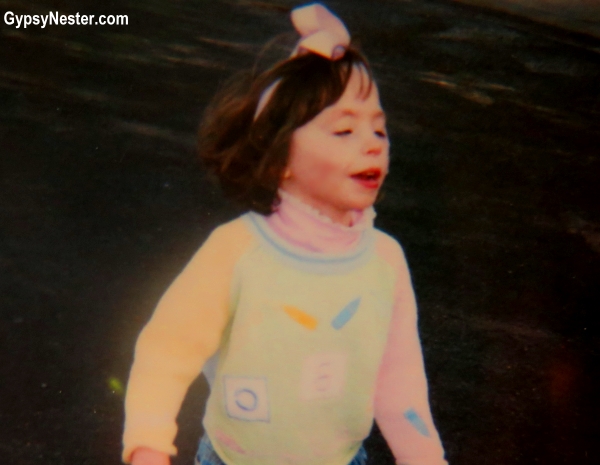
My niece is a totally unique individual. 

Not in that “everyone’s a snowflake” kind of way. She’s truly unique.

Because of a wonky chromosome, each cell in in Anna’s little body is different from every other cell in the world. There is no one else like her.

At birth… CONTINUE READING >>

What My Special Needs Niece Has Taught Me about Life and Laughter

My niece is a totally unique individual.

Not in that “everyone’s a snowflake” kind of way.  She’s truly unique.

Because of a wonky chromosome, each cell in Anna’s little body is different from every other cell in the world. There is no one else like her.

At birth, she was given less than a week to live – she surpassed it.

At three months, she was in so much pain from simply trying to digest nourishment that my brother and sister-in-law had to make the unbearable decision to have Anna undergo a surgery that she most likely wouldn’t survive – but she did.

Since that first surgery, she has had at least a dozen more. I can’t begin to imagine the pain she has endured simply to live, but somehow she has.

What My Special Needs Niece Has Taught Me about Life and Laughter

We were told she’d never live past six months, a year, then every subsequent year since – but she has.

We were told she would never eat without a feeding tube, but she does.

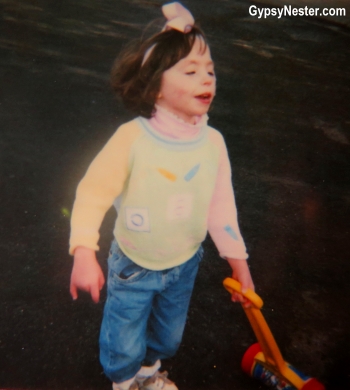
We were told she would never walk, but she does (and climbs and dances and shoots hoops).

We were told she’d never be able to communicate, but she does.

She’s developed her own special sign language, yet still shows her love to us mere mortals in ways we can understand. With a quick hug or a pat on the head.

Anna is determination embodied.

What My Special Needs Niece Has Taught Me about Life and Laughter

Since the day she was born, I’ve learned from Anna.

She has a grace that I will never have. No challenge in my life will ever come close to what she has taken on.

And through it all, she has maintained a wicked sense of humor. When we want to hear her beautiful laugh, all we have to do is rap a knuckle, trip over a toy, or get bonked with a rubber ball.

Life with Anna is like a Three Stooges movie (my sister-in-law vows to never allow her to see an actual Three Stooges movie, she’s sure Anna would literally die laughing. I should add that S-I-L is the best mom I know).

Anna has done what I could never do – flip pain over and spank it on the rear.

What My Special Needs Niece Has Taught Me about Life and Laughter

David and I wrote a lot about what a great time we had in St. Louis, but nothing could compare to the joy we had celebrating Anna’s 20th birthday on our visit.

Yep, 20th birthday.

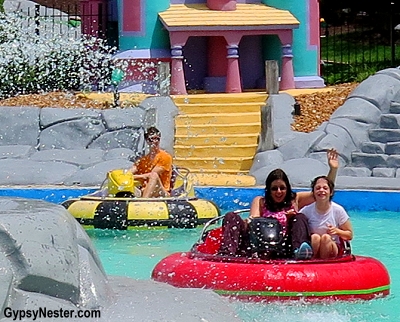
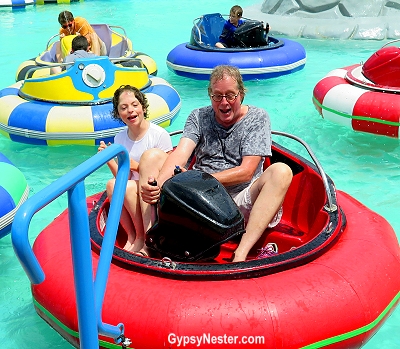
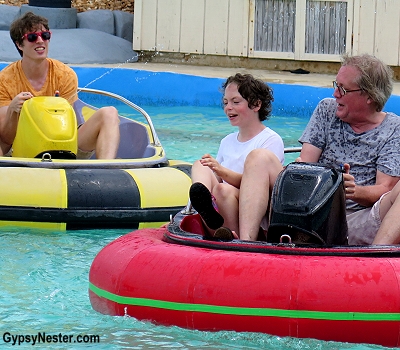
Thinking long and hard about how to celebrate this blessed occasion, we decided to take Anna on her first bumper boating adventure.

What My Special Needs Niece Has Taught Me about Life and Laughter

What could be more fun than bashing into unsuspecting strangers in a rubber boat?

Happily, our suspicions were confirmed.

Still, having never bumper boated ourselves, we didn’t realize how perfectly equipped they were for pure Anna pleasure.

Yes, there was bumping (double Anna-laughter points for bashing into her older brother and dad!), but there were fountains to splash ourselves under and, best of all, a trigger to push that launched a super-soaker stream for long-range drenching.

What My Special Needs Niece Has Taught Me about Life and Laughter

Trust me, there aren’t many things greater than being able to push a button and watch your Uncle David get annihilated by a high powered stream of water (not gonna lie, I found pleasure in that aspect too!).

Anna has taught me to live in the moment and find joy in the unexpected.

To laugh when things aren’t going my way.

She tells me that every day is a blessing, Aunt Roni, so quit yer whining.

And that it really is funny when Uncle David forgets to duck and hits his head when climbing into BAMF.

Veronica, GypsyNester.com

YOUR TURN: You’ve met my sweet niece, isn’t she the greatest? Who do you have in your life that inspires you like Anna inspires me?

Keeping Koalas Safe, Sound, & Cuddly

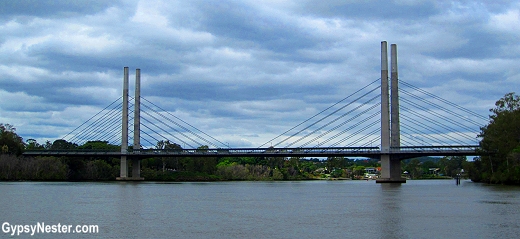
Some of the most readily recognizable Australian icons are animals, and we found more than a double dose of them in Queensland at The Lone Pine Koala Sanctuary outside Brisbane.

As the name suggests, we got up close and personal with koalas, but we also got to feed kangaroos right from our hands… CONTINUE READING >>

Huge thanks to Tourism and Events Queensland and Lone Pine Koala Sanctuary for providing this cuddly adventure! As always, all opinions are our own.

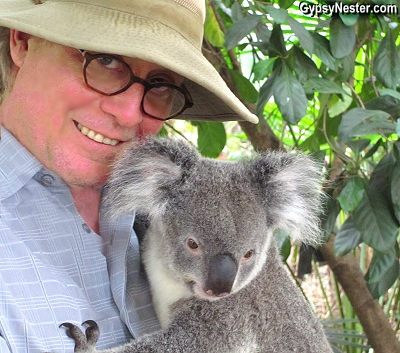
David cuddles with a koala at Lone Pine Koala Santuary in Brisbane, Queensland, Australia

Some of the most readily recognizable Australian icons are animals, and we found more than a double dose of them in Queensland at The Lone Pine Koala Sanctuary outside Brisbane.

As the name suggests, we got up close and personal with koalas, but we also got to feed kangaroos right from our hands.

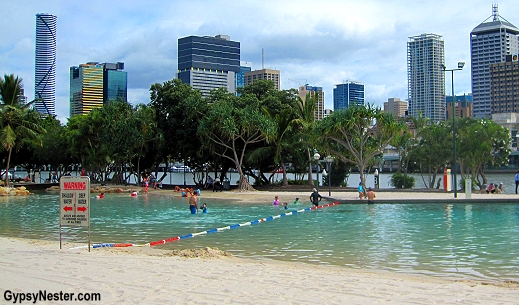
The downtown beach on the Brisbane River at The South Bank Parklands, Queensland, Australia
The downtown beach on the Brisbane River at The South Bank Parklands
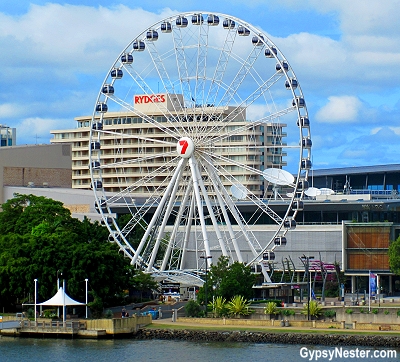
The Wheel of Brisbane in Queensland, Australia
The Wheel of Brisbane

We began our trek with an easy stroll from our downtown hotel, over the Victoria Bridge, to The South Bank Parklands.

The park stretches about half a mile along the the Brisbane River with trails, pools, beaches, shops, and cafes.

But the highlight of the park is the ginormous Wheel of Brisbane towering two hundred feet above it all.

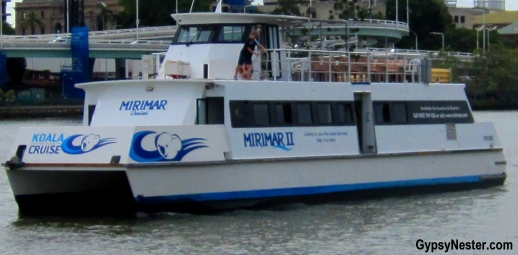
Mirimar Koala and River Cruise in Brisbane, Queensland, Australia

At the dock just below the wheel we caught the Mirimar Koala and River Cruise and were really on our way.

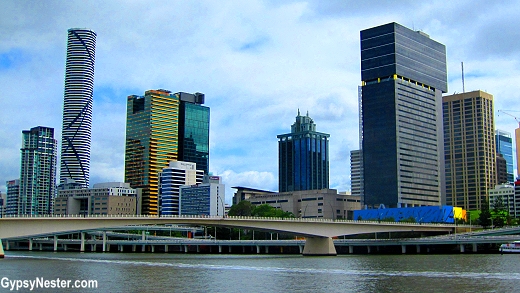
Downtown Brisbane from the Koala Cruise in Queensland, Australia

The sights along the river, beginning with the city’s towering, modern skyline, then winding through swanky suburbs, made for a thoroughly enjoyable morning.

Sights from the Koala Cruise in Queensland, Australia

For seventy years The Mirimar and Mirima II have been making this run and we can’t imagine a better way to see the city, but knowing that the opportunity to cuddle a koala awaited at the end had us eagerly anticipating our arrival upstream.

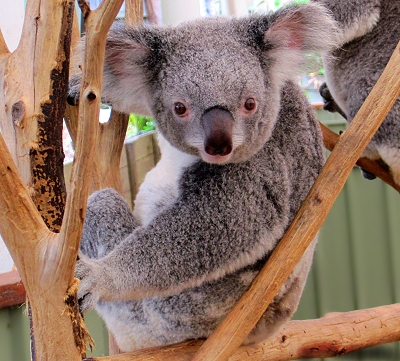
Adorable koala at the Lone Pine Koala Sanctuary in Brisbane, Queensland, Australia

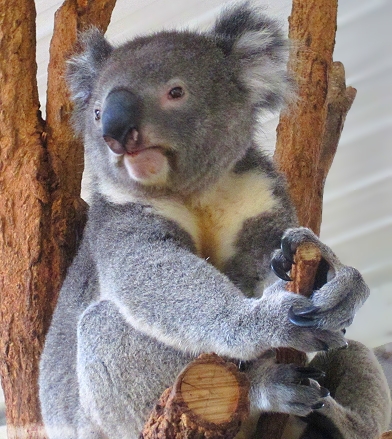
Lone Pine is the world’s oldest and largest koala sanctuary. It has steadily grown since 1927 when the first pair, Jack and Jill, arrived.

Now over one hundred and thirty of the fuzzy fellows are living safely and happily on site.

It is also one of the few places in the world where visitors are allowed to hold koalas.


Click the pic for a quick introduction to Bec the Koala!

The process is very well supervised, with the care of the animals being of utmost importance.

Each koala is never handled more than half an hour a day, and the keepers are never more than a step or two away.

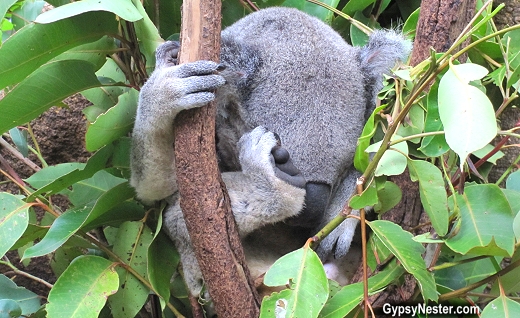
Holding one of these adorable animals was nothing less than an amazing experience. Koalas are generally lethargic, and often sleep up to twenty hours a day, due to the lack of energy in the eucalyptus leaves that make up their diet.

A koala sleeps high in a tree at the Lone Pine Koala Sanctuary in Brisbane, Queensland, Australia

So they seemed perfectly happy to sit on our arms and take a little rest up against us.

A beautiful koala at the Lone Pine Koala Sanctuary in Brisbane, Queensland, Australia

That extraordinary feeling has drawn celebrities and world leaders from every corner of the globe. While we ate lunch we looked over the dozens and dozens of photos of those famous faces.

Over the years Queen Elizabeth, Cher, L.B.J., John Travolta, Eric Clapton, Mikhail Gorbachev, Pavarotti, and even Pope John Paul II couldn’t resist the allure of the koala.

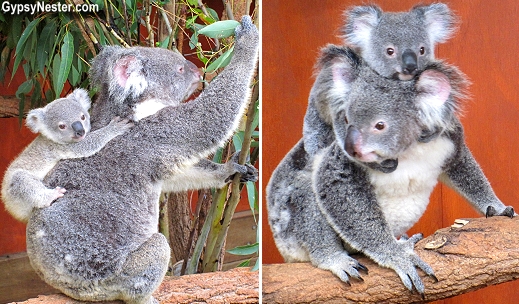
A baby koala rides his mommy's back at the Lone Pine Koala Sanctuary in Brisbane, Queensland, Australia

Unfortunately, with human encroachment on their habitat, the number of koalas in the wild has dropped drastically in recent years, due mostly to cars and attacks by house pets.

So the work that sanctuaries like Lone Pine are doing is imperative to the endangered little guys’ survival, otherwise captivity might be the only place left to see them.

A kangaroo at the Lone Pine Koala Sanctuary in Brisbane, Queensland, Australia

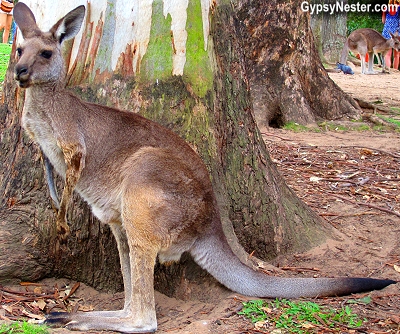
As cute and cuddly as the koalas were, there was still much more to see. After all, no trip to Australia would be complete without a kangaroo sighting, and we were about to go one-up on that and feed them.

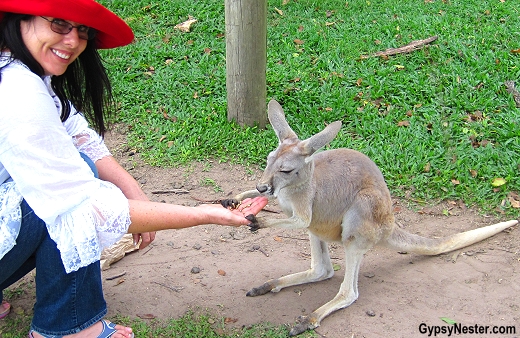
Armed with nothing but a small bag of roo chow, we entered the enclosure.

Veronica hand feeds a kangaroo at the Lone Pine Koala Sanctuary in Brisbane, Queensland, Australia


Click the pic to see this guy come to life!

We have to admit we were a bit wary at first, some of these guys were big!

A few of the roos didn’t seem to want anything to do with us, but before long several were literally eating out of our hands. As powerful as some of these specimens were, they have a gentle quality about them.

Some would even rest their front paws on our hands while they ate, perhaps the ultimate Australian experience.

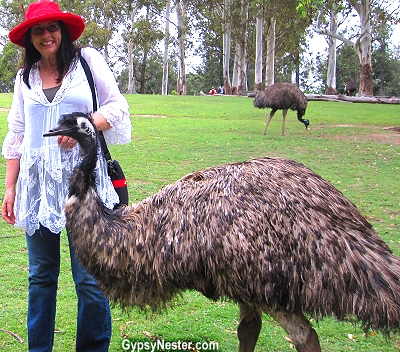
Veronica among the emus at the Lone Pine Koala Sanctuary in Brisbane, Queensland, Australia

There was one more uniquely Australian animal we were hoping to get a look at.

A critter so strange that when the first specimen was sent back to England scientists were fairly certain it must have been a prank.

Aboriginal legend holds that it was created when a duck mated with a water-rat. The offspring hatched with its mother’s bill and webbed feet, and the father’s legs and brown fur. That could only describe a platypus.

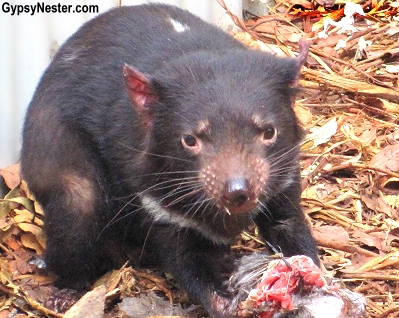
A Tazmanian Devil at the Lone Pine Koala Santuary in Brisbane, Queensland, Australia
A REAL Tasmanian Devil! Don’t think this guy spins. 😉

These peculiar egg laying mammals are nocturnal and spend most of their time under water, so they are hard to get a good look at.

But in 2010 Lone Pine built a special million-dollar platypus house where night and day have been reversed, so we had a pretty good chance of spotting them. And spot them we did!

WATCH: Our wonderful experience frolicking with the animals – including platypus footage!

A baby koala rides his mommy's back at the Lone Pine Koala Sanctuary in Brisbane, Queensland, Australia


Click the pic for some over-the-top cute mama and
baby koala action!

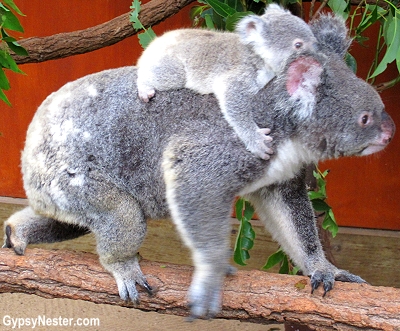
At that point we were feeling like we had pretty much seen it all, until right outside the platypus house we found a couple mama koalas… and their babies. Like all marsupial offspring, these little guys start off life in their mother’s pouch, and go by the name joey.

Once they get too big for the pouch, many marsupial young will climb onto mama’s back. At this point they are known as back joeys, and we would be hard pressed to think of any more adorable critter than a koala joey taking a little ride on mom.

Now we knew we were finished, there was no way to top that.

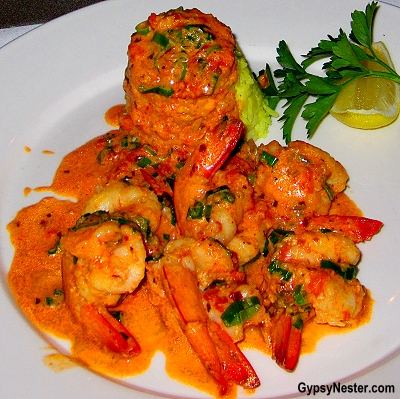
John's Prawns at Gambaro Seafood in Brisbane

Back in Brisbane we were getting that growly feeling in our bellies, and by all accounts the place to remedy that situation is Gambaro.

Since opening a simple fish & chips shop back in 1953, three generations of Gambaros have been serving up Queensland‘s finest fresh catches, and earning a well deserved reputation as one of the city’s enduring institutions.


Click the pic to set John’s Prawns aflame! Fantastic!

The tradition was properly on display as our “John’s Prawns” were prepared tableside, fully flaming.

Absolutely phenomenal with garlic, butter, cream, and just enough chilies to give it a kick.

Click here to see more photos of Gambaro

But we had yet another surprise in store for us.

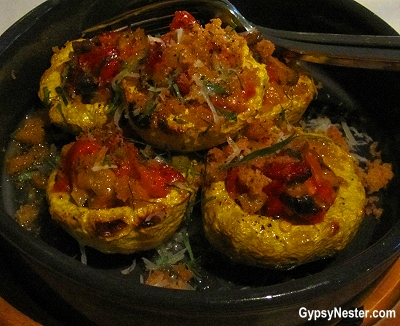
Stuffed squash at Black Hide Steakhouse in Brisbane, Queensland, Australia
Farm-to-table goodness: Squash stuffed with tomato, parm, olives and parsley

Already famous for seafood, Gambaro has taken on the world of beef with the opening of Black Hide Steakhouse right across the street.

After our shrimp we crossed over to feast on some prime cuts from 100% Queensland Stanbroke cattle. Rather than limit ourselves to trying just one each, we decided to share a sample of both Angus and Wagyu steaks.

Click here to see more photos of Black Hide Steakhouse

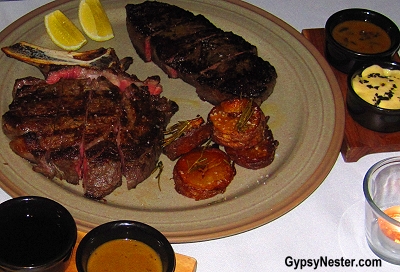
Angus and Wagyu steaks at Black Hide Steakhouse in Brisbane, Queensland, Australia

We were not familiar with the term Wagyu, but learned that it is the breed of cattle best known for Kobe beef.

Tender and delicious, the only thing tough about these steaks was missing them when they were gone. Served with potato and asparagus, this was a meal to satisfy even the hungriest koala cuddlers and kangaroo wranglers.

A fulfilling finale to a day we will long look back on as our incredible introduction to Australia, Queensland, and marsupials.

David & Veronica, GypsyNester.com

Delve Deeper:
Go to the Lone Pine Koala Sanctuary website
Check out Mirimar Koala and River Cruise
Drool over Gambaro and Black Hide
Bucket list check! We snorkeled the Great Barrier Reef!
Watch us skydive above beautiful Queensland – yikes!
Follow us into the Australian Hinterland and kayak the Noosa Everglades!
Go for the Gold Coast of Queensland and watch us feed crocs!
Find out how we saw all of the bizarre Australian animals in one place!
Let Us Introdoos-ya to Noosa and Spread a Little Sunshine Coast

Huge thanks to Tourism and Events Queensland and Lone Pine Koala Sanctuary for providing this cuddly adventure! As always, all opinions are our own.

Click here to see all of our adventures in Queensland!