A big thank you to Discover Corps for providing this moving voluntourism opportunity so we can share their good work. As always, all opinions are our own.
| See part two of this adventure | See part three of this adventure |
We are truly blown-away grateful for the life we lead. Everyday.
When we were approached by Discover Corps to partake in a volunteer vacation in Tanzania, we couldn’t say YES! fast enough.
We do our best to volunteer as we travel, but have never formally participated in a voluntourism experience – something we’ve always wanted to do. This is our big chance!
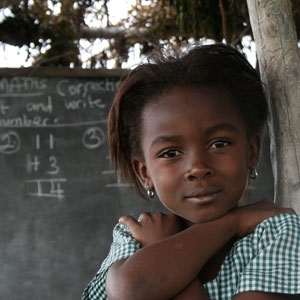
We are honored that we will be teaching children and making structural improvements to their school — in a little town at the foot of Mount Kilimanjaro — and we are so excited to meet them!
In addition to our duties at the school, we will be learning too! Learning about the customs and traditions of the people of the area while visiting nearby villages with our host families.
We’re especially excited to take in this knowledge though the arts; song, dance, music, painting, beading, and textile arts of the Maasai and Chagga people.
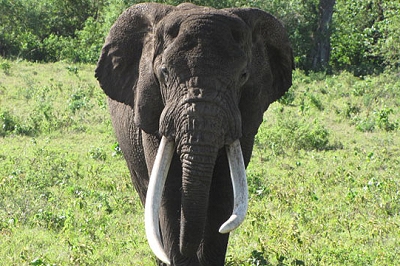
And then there are the animals!
On weekends, we will be taking field trips to photograph the wildlife of the area, hoping to spot the elephants, giraffe, gazelle, lions, and zebra that make Tanzania their home.
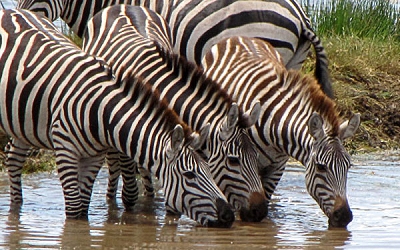
We’ll also be climbing Mount Kilimanjaro!
Well, a little bit.
One can’t stay at the foot of the largest free-standing mountain in the world and not want to climb up a little bit, right?
DAY ONE: Meeting our team, getting settled into homebase, and Mama Simba
Afternoon: Welcome to homebase!
Mama Simba picks us up at our hotel in Moshi and we are whisked away to homebase, the nearby compound where we will live for the next two weeks.
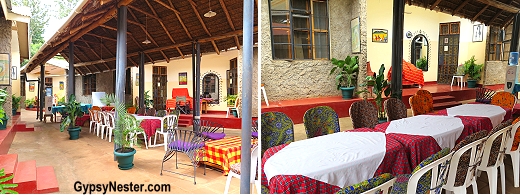
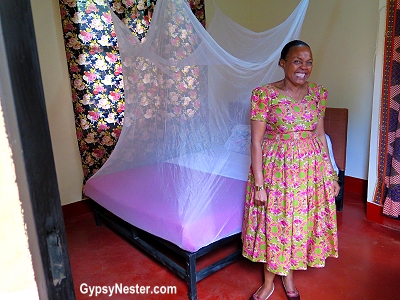
Mama Simba shows us our room
We are greeted by our new family and make introductions while walking around the facility.
After a snack and fresh mango juice, we drift off for a nap in our mosquito-netted bed to the strains of children playing and a rooster who seems to think it is still daybreak.
When we awake, we will meet the rest of our team when they arrive from the airport.
Evening: Tour of our new home, our first meal together and meeting the young women of homebase
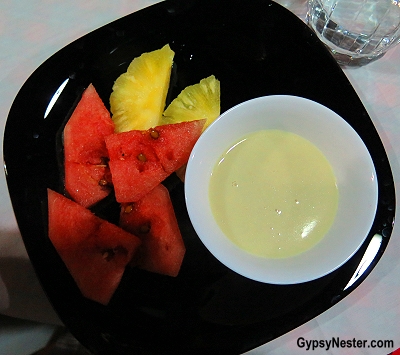
During our tour of homebase we learned that all of our food is gathered daily from local farmers.
Produce is used fresh and never refrigerated, and meat is fresh and cooked quickly.
The flavors are incredible! We start with a warm cucumber soup spiced with ginger and our main plate is rice, spiced ground meat and a lovely vegetable sauce.
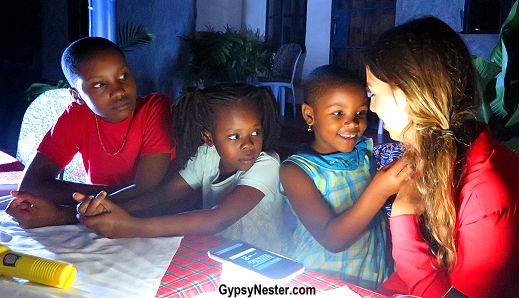
Fast friends: Furaha, Melinda, Gladys and Hannah get to know each other
The power went out right after dinner, providing a rustic camaraderie and giving us a chance to play with the young women of homebase by lantern light.
DAY TWO: Spreading our wings, learning about family and life in our surrounding village
Morning: Learning Swahili niceties, then putting them to use

We awake to the call to prayer from a nearby mosque, and jump out of bed to meet the team members who arrived after we fell asleep.
Over breakfast, we get caught up to speed, then settle into cultural immersion with Mama Simba.
She explains traditional village life in the rural Moshi area.
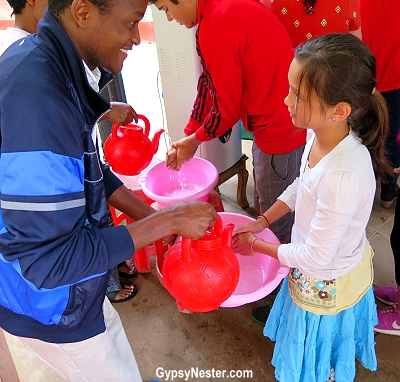
Before each meal, we wash our hands. Our team members
range from age 9 to 75
Society revolves around the belief that everyone is of one family, so a mother is mother to all, and a father looks out for the entire village.
Because this is the part of Africa where humans were first known to exist, we must all be descendants of those ancestors as they scattered across the globe.
This makes the entire world the same family. We will be accepted as such, and also should treat each other accordingly.
We’re already feeling right at home!
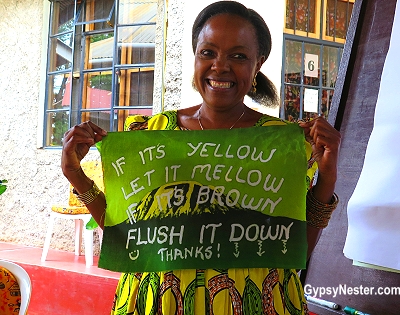
Next we take a crash course in Swahili – how to greet members of our new family, how to dress (women rarely wear slacks and never while teaching), and some basic housekeeping notes.
The housekeeping notes boil down to this: This is your home. Do whatever it takes to make it home for you.
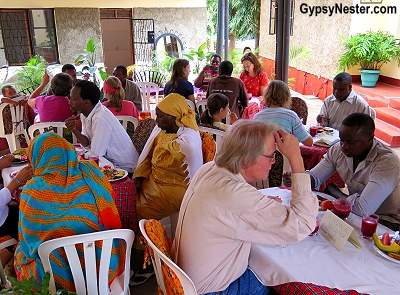
We are treated to a meal with host families – folks that will later introduce us to village life.
We have an amazing cross-cultural discussion over lunch. Mama Simba instructed that no topic was off the table, and we learn more about each other by the questions asked than the answers given!
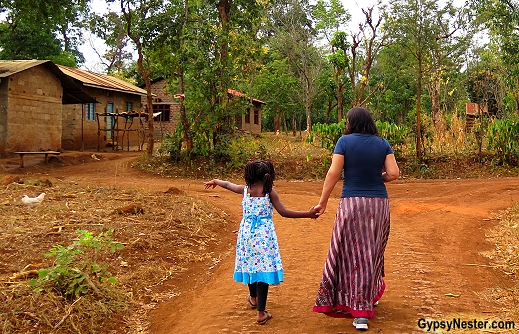
Then our new friend and homebase ambassador, Melinda, grabs us by the hand and we leave to visit the home and family of Robert and Andrew…
Afternoon: Village life
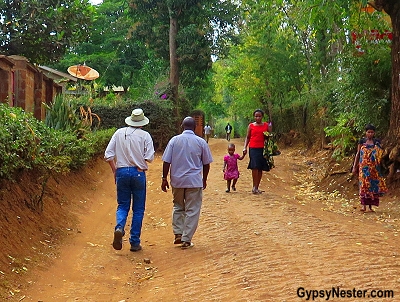
As we walk through the village of Rau, we are getting to know each other better, and we learn that Robert works as an engineer for the Tanzanian Agricultural Ministry in the capital city of Dodoma, about a hundred miles away, and Andrew just graduated from university a few weeks ago.
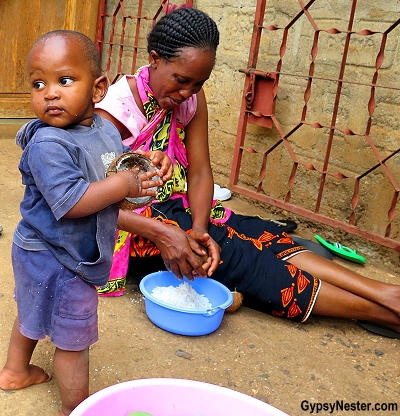
Our first stop is at Robert’s mother’s house, where several generations of the family share chores in the courtyard.
One group is sewing, while others are washing dishes and grating coconut.
The youngest member is having quite a time feasting on the tasty remnants left in the shells, sort of the tropical version of licking the cake batter spoon.
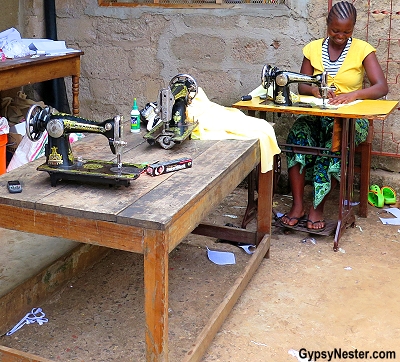
We pass the house of Robert’s brother before stopping to meet the immediate family, Robert’s wife and daughter, along with Andrew’s nieces and nephews.
Like many of the homes we have seen walking through the village, the yard serves as a small farm, growing vegetables and fruit trees while raising a few animals.
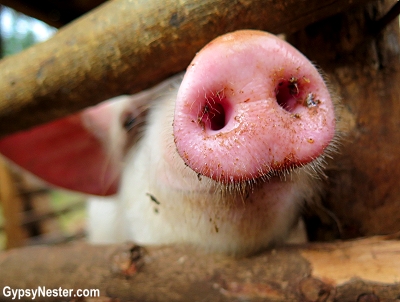
These are only for personal use, but the operation at Robert’s is larger than most.
A fair amount of corn is being harvested and a few goats, two cows, and several pigs are housed in various outbuildings on the property.
Learn more about the Chagga people of Rau
Evening: A walk through Rau
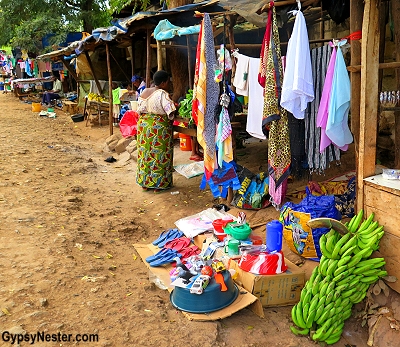
For a look at the rest of the village, and hopefully a peek at the peak of Mount Kilimanjaro, we set out for a hilltop park by the hospital.
The walk takes us through a busy marketplace, with open air shops selling almost anything from colorful clothing, to basic housewares, to the latest electronics, to banana bunches right off the trees.
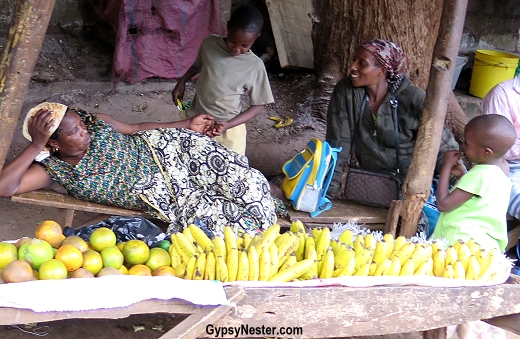
The clouds aren’t cooperating, so our climb doesn’t yield a view of the mountain…
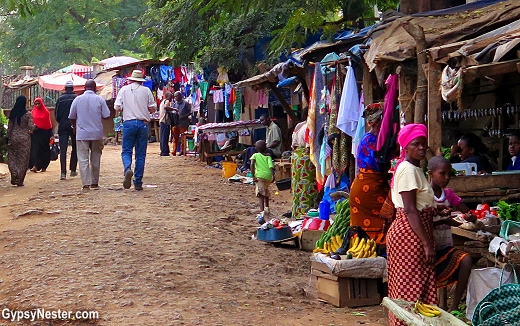
… but we hardly notice because we have spent most of our time talking, doing our best to answer all of the questions we all have about each other’s home countries and cultures.
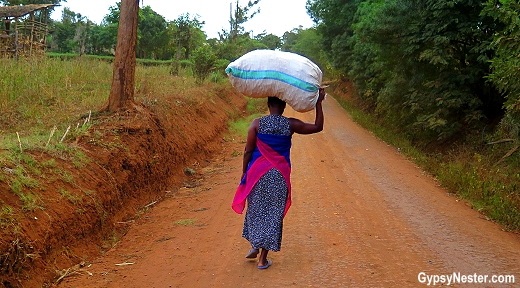
On the road back down we come face to face with a small cattle drive.
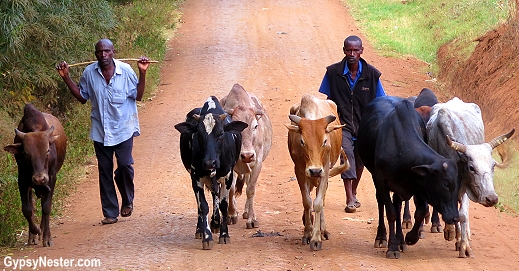
We step aside to let the herd pass and continue on our way. Git along little doggies.
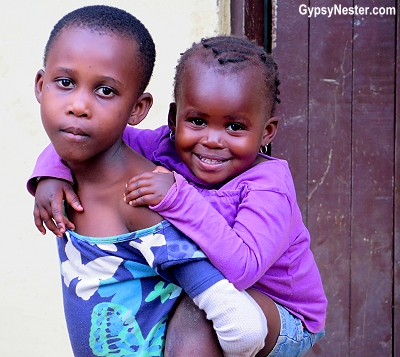
Just before reaching homebase, Robert takes us into a small orphanage and we meet the kids and volunteers.
Our greeting quickly takes the form of a dance circle with singing and clapping while everyone takes turns showing off their dance moves in the center.
We will be returning to spend more time with the children later in a few days…
Learn more about the Chagga people of Rau
DAY THREE: Our first day of school, meeting our kids, and a dreamy afternoon with the Chagga people
Morning: Diving into the classroom
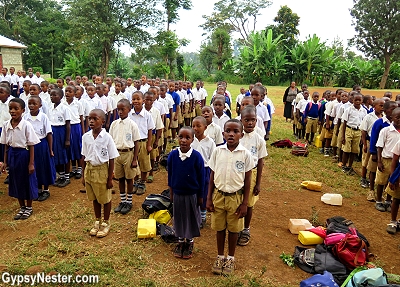
Today we get our first look at the Lunguo Primary School, which will be an integral part of our lives for the next two weeks.
The entire student body has assembled to welcome us with song.
We introduce ourselves and student representatives from each grade do the same.
From the parade we go into the office to meet the staff and learn more about our roles from a teaching standpoint.
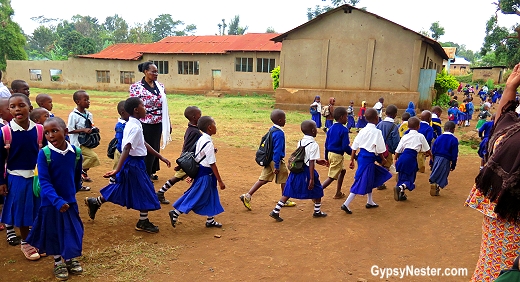
Later we will find out how we can lend a hand with as much repair and maintenance as possible.
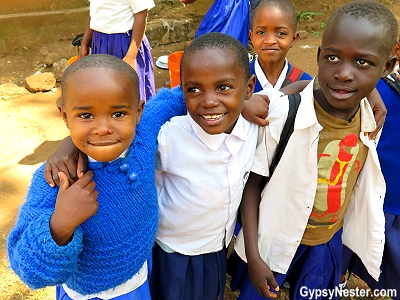
Our Discover Corps team splits into four groups and we head out to meet and observe our classes.
We join our fellow teammate, Jeff, and his daughter Annie in third grade English, but the teacher is out sick and the school doesn’t have substitute teachers available, so we get to jump right into teaching.
Sixty pairs of third-grade eyes look to us for guidance.
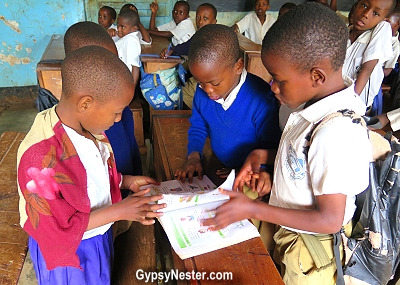
There is a woeful lack of supplies and workbooks (our class has one raggedy book for every six students), but Jeff takes charge by using visual aids while Veronica writes out the sentences from the book on the blackboard.
In no time Mama Simba finds drums, Annie picks flowers, and a pair of buckets appear from somewhere, so we use the items to demonstrate the articles discussed in the lesson.
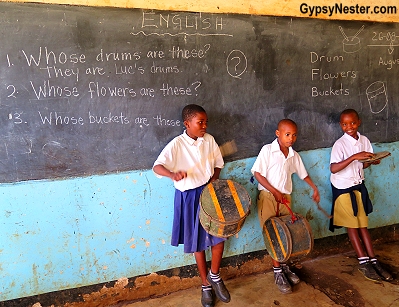
By replacing the fictitious characters from the workbooks with their classmates, the kids really seem to enjoy the task of repeating and writing the questions and answers, with remarkable penmanship.
“Whose drums are these? These are Luc’s buckets.”
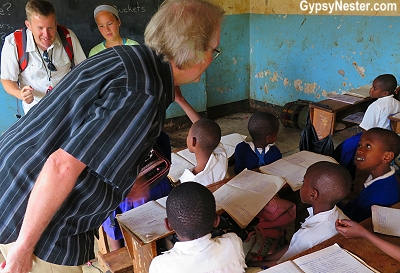
That hypothetical inquiry became real because a friend was acting out the scene.
Hopefully we can keep the students this engaged over the coming days.
We are amazed at the dedication of the teachers here, doing so much with so little.
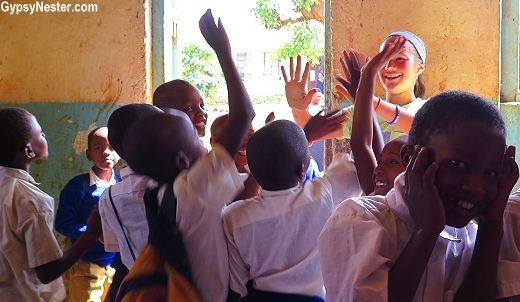
Annie congratulates her students for their hard work on their way out to recess
But our awe is about to grow exponentially…
See more about our time working at the school!
Afternoon: Our service project
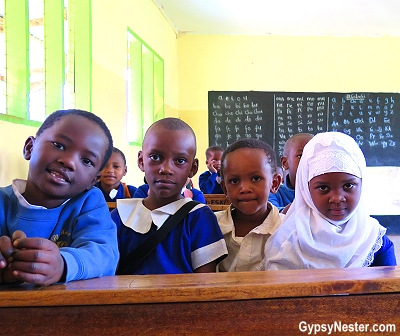
The “baby class” received a refurbished classroom through the
hard work of last year’s Discover Corps team
After our impromptu teaching debut, we tour the school and come face to face with the overwhelming needs of our school.
There is so much, but we try to focus on a single chore first.
One classroom has been chosen for us to refurbish, so we will tackle that task before addressing more.
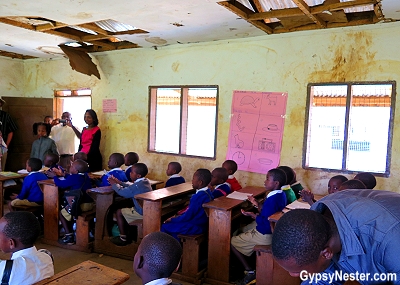
After assessing the needs for our classroom, we tour the rest of the campus.
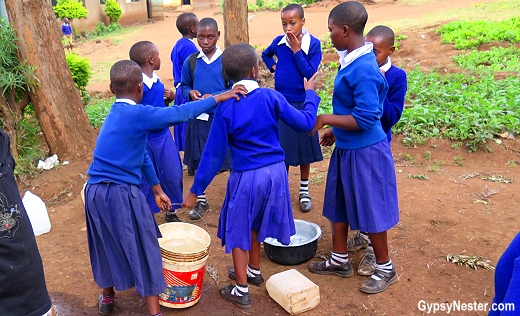
The school has no electricity or running water; tiny children carry heavy buckets of water to their classrooms and to water the school’s vegetable garden every morning.
We don’t even want to get into the toilet situation – we’ll let it stand as heartbreaking.
See more about our time working at the school!
Evening: Chagga culture, creating coffee, and a peek (peak?) at Kilimanjaro
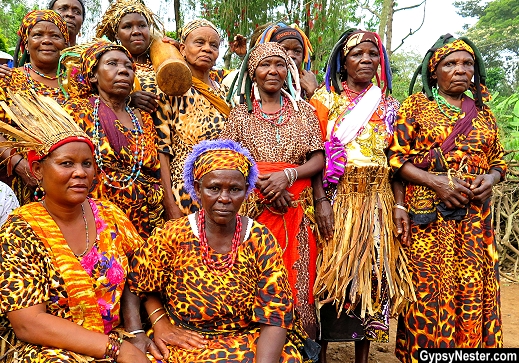
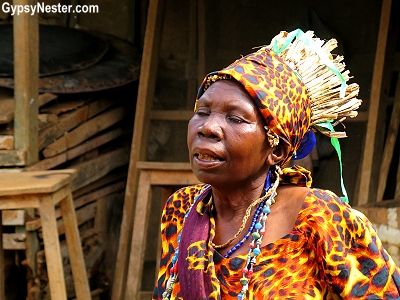
A short way up the mountain, but a world away from Rau, we travel to a small coffee farm.
This is Chagga country.
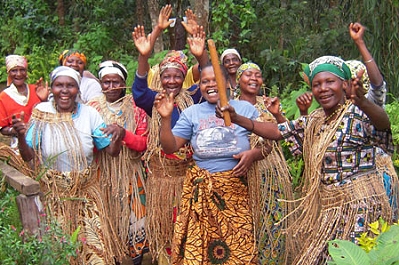
A group of colorful Chagga dancers and drummers greet us upon arrival.
We are mesmerized by the traditional garb and the rhythmic beat.
And the hugs. Lots and lots of warm hugs.
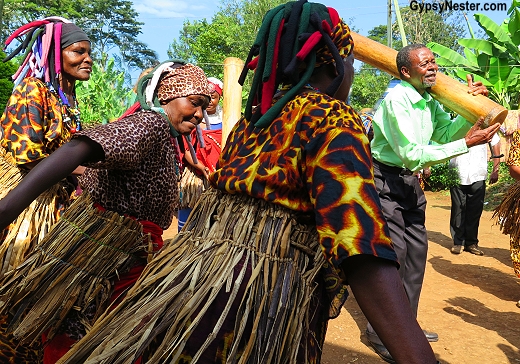
Learn more about the Chagga people
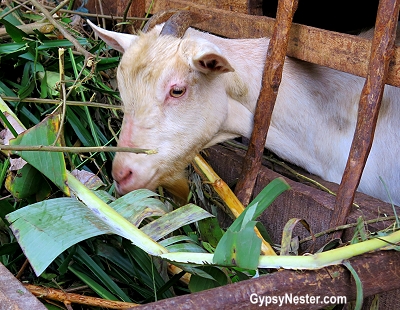
The farm itself is a wonder of nature, we walk into a balanced grove of giant banana trees and coffee bushes.
The banana trees provide shade, shelter, and ground moisture for the coffee bushes.
The onsite goats eat the banana leafs and, in turn, provide the plants with nourishing manure.
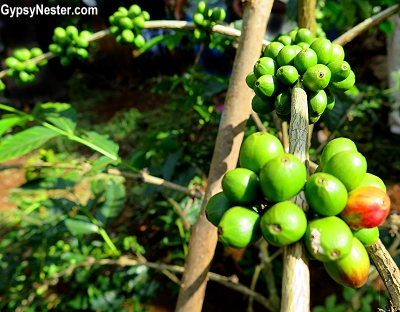
When the beans are ripe they turn dark red and are ready to pick.
Then they are washed and set out to dry for a day.
The dried beans are mashed in a large wooden mortar and pestle to break off the husks, poured into a shallow basket, and winnowed, leaving only the dried inner bean.
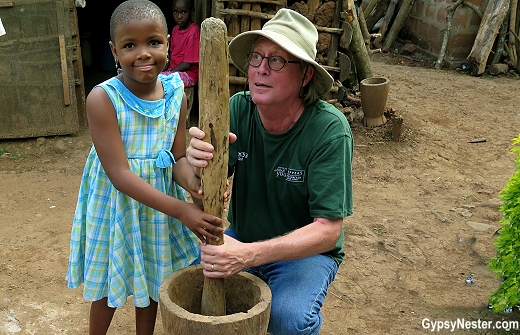
David and homebase ambassador, Gladys, show us how it’s done!
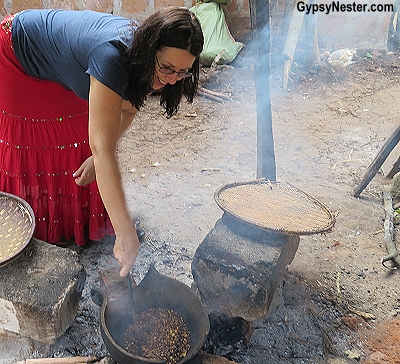
This is what is roasted and becomes the coffee we are familiar with.
The roasting is done over an open fire until the desired darkness is reached, then back to the giant mortar and pestle to grind the final product down for brewing.
Back to the fire for some boiling water and in a few minutes we a have delicious, mild, cup of joe.
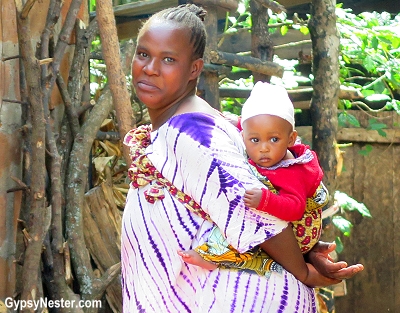
For Veronica, the most captivating part of this field trip is the people around her.
As the drummers and dancers continue to play, the music and revelry draws a small group of curious local children.
Veronica is drawn to them like a bee to a flower.
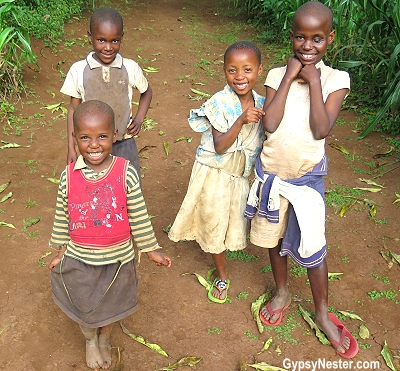
Shy at first, these cuties run and hide in the bush until she woos them with her camera and a promise of playback of video snippets of themselves playing.
Soon the game turns into a rollicking good time and friends are called for to join in the fun.
Props are then brought out by the children for more and more dramatic footage.
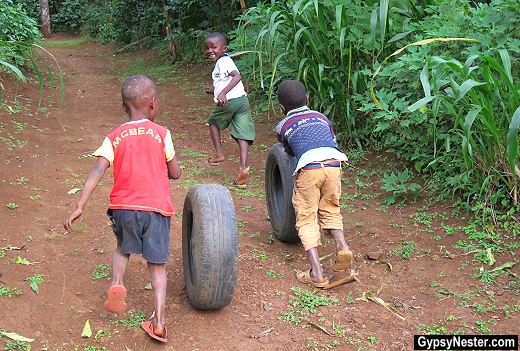
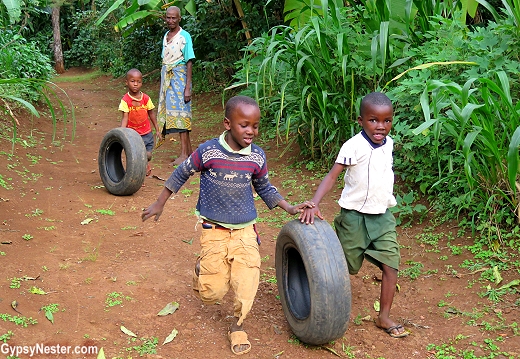
When it’s time to leave, Mama Simba has to drag Veronica away from the children and onto the bus.
Learn more about the Chagga people
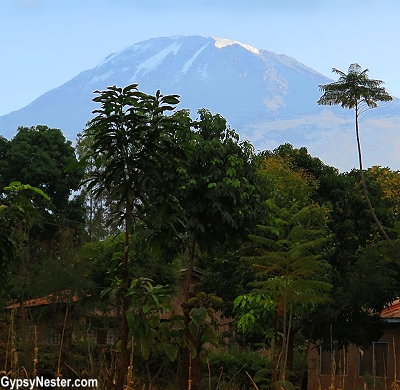
Kilimanjaro has been shrouded in clouds since we arrived in Tanzania, but we are in the habit of looking in its direction every so often just in case we might catch a glimpse.
That routine reaps rewards as the summit briefly looms above while we are driving back to homebase.
It is really just a teaser for us, making us want to see the mountain in all of its glory even more.
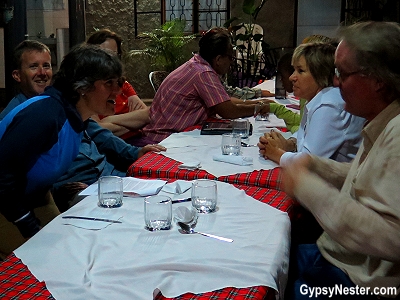
As night falls, we gather at homebase — under the soft glow of lantern light — to plan tomorrow’s lessons and to discuss the best strategy for tackling the restoration of the classroom we’ve been put in charge of…
DAY FOUR: Hitting the books, getting dirty, and a bit of wizardry!
Morning: Back to school
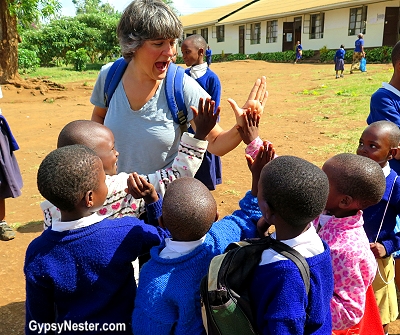
Students race out to greet team member, Margaret, before class
As we start our second day of teaching, we have more of an idea of what to expect – and we are ready to rock.
The children love to sing, and they greet us with song.
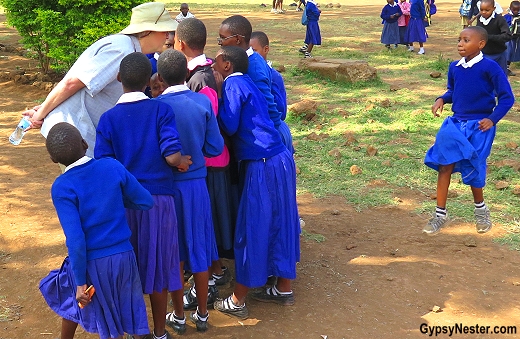
The kids are beginning to know us a bit better, and the natural leaders (and class clowns!) are stepping up in their roles. With their examples, the more timid students are coming out of their shells.
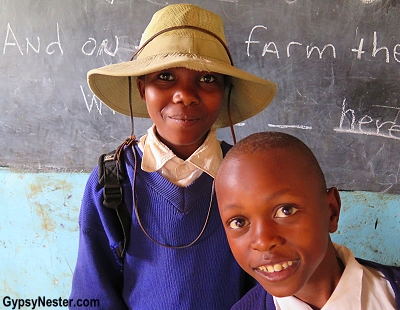
David’s hat is a hit!
After another few rounds of writing questions and answers on the chalkboard and in the workbooks the little guys are getting a tad restless, so we decide that a spirited rendition of Old MacDonald’s Farm might burn off some excess energy.
After a bit of a pronounciation snafu (we wrote “e i e i o!” on the board, rather than “i e i e o!”), acting out the animal sounds is a big hit, especially when Jeff leads a procession of chickens around the class. Clucking and flapping abounds!
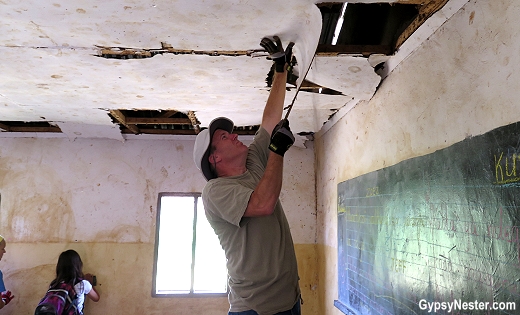
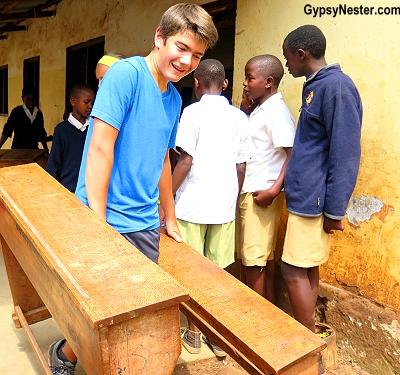
Discover Corps team member, Peter, clears the classroom
After a tradional tea break, we begin work on our classroom repair project.
The first item on the agenda will be the easiest, and cleanest task we are likely to undertake until we finish the job, take the “before” pictures.
We can hardly wait to see the “after.”
The old saying, it’s a dirty job but someone’s got to do it, certainly describes our initial efforts today.
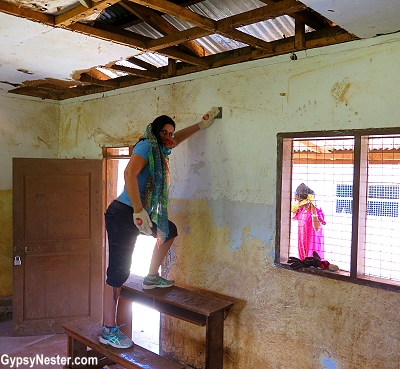
Tearing out the old ceiling and sanding down the walls is kicking up a Grapes of Wrath-worthy dust storm.
We achieve a state of grubbiness that has rarely been reached in our lives up until this point.
There must have been an equal sometime, most likely as a mud-covered kid, but nothing springs to mind.
It feels good.
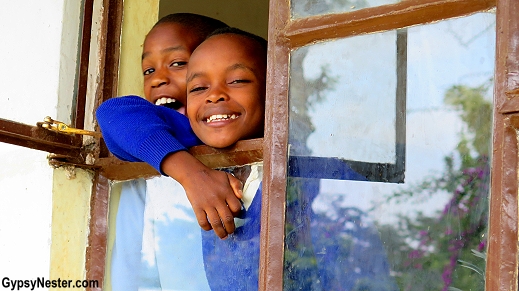
Our students run to the classroom windows to say goodbye as we drive away in the bus. We’re a little disruptive. 😉
See more about our time working at the school!
Afternoon: High energy, fire eating wizards!
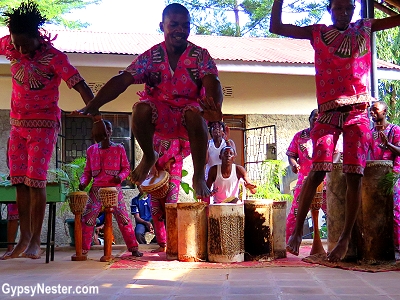
We have visitors to homebase this afternoon.
The dancers from yesterday’s coffee klatch have come to join us for a rousing recital by another troupe, the Kilimanjaro Wizards Arts Group. Accompanied by a drums and marimba, the dancer’s performances portray story lines.
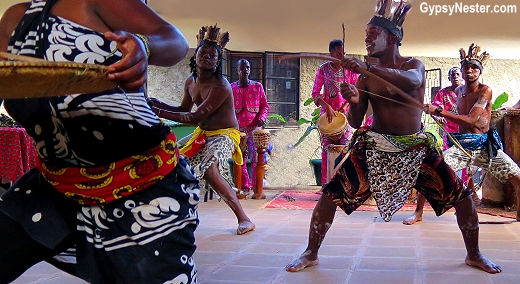
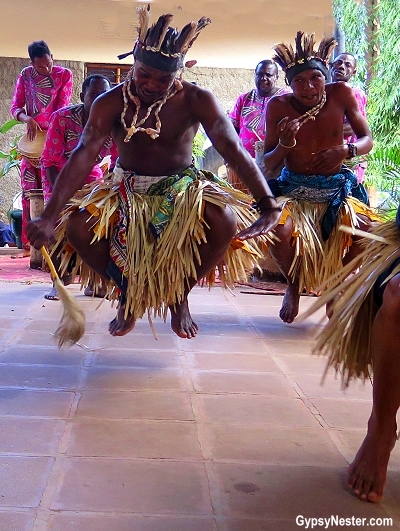
An intricate hunt is played out before our eyes with the men taking down their prey, celebrating and slaughtering the kill, then eating the flaming internal organs.
Afterwards, the women come to congratulate the men and carry away the butchered meat.
Song and dance is the common thread throughout our activities so far; it is an integral part of life of life in Tanzania.
Whether it is part of a planned performance such as this, or completely spontaneous as it was at the orphanage, it always ends with everyone invited to participate.
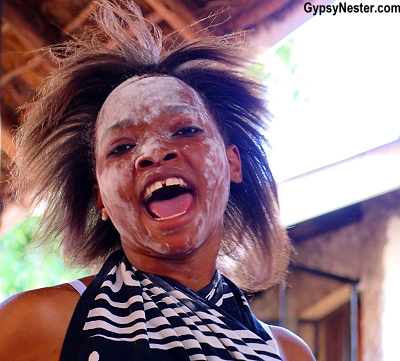
Jumping up to dance is well outside of our usual day-to-day norms, especially for David, who has always compared his dancing skills to those of a circus bear balancing on a ball.
But after only a few days here we are learning to let go of our inhibitions and join in the joyful gyrations…Wait! There’s more! Continue along with us on our adventure…
| See part two of this adventure | See part three of this adventure |
David & Veronica, GypsyNester.com
A big thank you to Discover Corps for providing this moving voluntourism opportunity so we can share their good work. As always, all opinions are our own.
Delve Deeper:
Click to see all of our adventures in Africa!
YOUR TURN: Can you believe the color and energy of Tanzania? Are you as mesmerized as we are? Have you taken a volunteer vacation? Tell us about it!








 Before too long, the structure covered an entire city block.