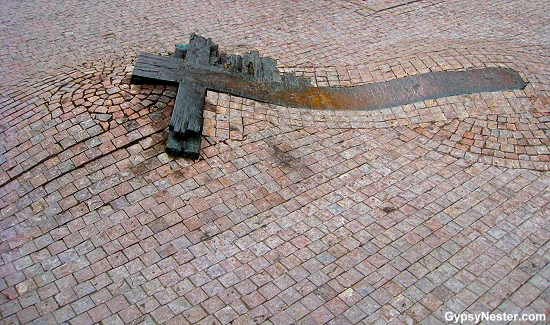
This is one of my favorite monuments because it is so unusual. It is a memorial to Jan Palach and Jan Zajíc, martyrs of the Velvet Revolution, on the ground in Wenceslas Square in Prague.
Veronica, GypsyNester.com
 ORDER NOW -
Wherever Books Are Sold!
ORDER NOW -
Wherever Books Are Sold!Boomer Travel. Food. Laughter. Breaking the Empty Nest Rules!
This is one of my favorite monuments because it is so unusual. It is a memorial to Jan Palach and Jan Zajíc, martyrs of the Velvet Revolution, on the ground in Wenceslas Square in Prague.
Veronica, GypsyNester.com
Download our interactive media kit
To view media appearances by The GypsyNesters, click here.
Please send all media inquiries to [email protected]

From Conor O’Shea of Road Scholar:
“You really brought the program to life for all of our readers. I’ve worked with this particular program for over a year but you and David made me feel like I was actually taking it for the first time. The entries were so illuminating, informative and entertaining- we couldn’t have asked for more! The videos and photos complemented your blog posts so well and you utilized your social platforms like pros. Whenever anyone asks about the program now, I know exactly where to send them.
I cannot impress enough how wonderful you two have been throughout this project. You’re exceptionally kind, warm, adventurous and hard-working people.”

From Jane Webster, Tourism & Events Queensland:
“I had the pleasure of hosting The GypsyNesters to Queensland, Australia as part of the #Room753 social media project and they did not disappoint. They delivered excellent Queensland exposure and are still to this day engaging their audience with Queensland experiences and travel stories.
They were a buzz from the time they arrived to the time they left and not only did they connect with their social media audience but with the Queensland people themselves. They scored coverage on the state news with their skydiving activity on Valentine’s Day. Enthusiastic, excited, passionate, friendly, hardworking, welcoming, funny the list goes on. Thank you for taking the time to visit Queensland, Australia and we look forward to your return.”

From Willemijn van den Broek, Eurail:
“It was a great pleasure to work with David and Veronica.
With their enthusiasm they know how to take their audience on their journey, by sharing their fun stories and pictures. We received some great coverage on their blog and on Social Media channels, and reading the comments show that they truly inspired their readers.
We were lucky to meet them for a lunch in Amsterdam and I am sure their fun stories will go beyond their online platforms. If they ever consider to explore more of Europe by rail, we are to partner up with them again!”
From Richard Genovese, VBT Bicycling and Walking Vacations:
“It was a pleasure having the Gypsy Nesters on our Sicily Biking trip this past October. Both David and Veronica were able to capture the true essence of the VBT experience and share it in a fun, playful way with their readers.
The active nature and immersion into the food and culture of Sicily really came through in the photos, video and images that were posted throughout and even after the trip. Thank you both for choosing VBT and taking the time to enjoy VBT’s award-winning service and amazing quality with us and sharing it with your followers!”

From Emilia Geijer, Visit Stockholm:
“Working with Veronica and David is nothing but a joy. They are a outgoing and fun couple who take their blog very seriously. They will arrive in your destination well prepared and curious, eager to start exploring.
The content they produce is of high quality and with a lovely personal touch, both in text and in photos. When working with the Gypsy Nesters you can be sure that they will deliver on their promises and that you will be very happy with the result.”
From Lydia Gregory of NovaVision Marketing:
“We hosted the Gypsynesters for part of their Costa Rican adventure in Manuel Antonio with a stay at our client’s property, Parador Resort and Spa. Their wonderful combination of enthusiasm and professionalism is reflected in everything they do, whether it’s writing about the hidden treasures of the rain forest at night or their visit to a one-room schoolhouse to donate supplies for local children.
Between the great photography, the (very) entertaining stories and the attention to detail they truly know how to engage their audience again and again. Their extensive reach across social media and beyond is a huge plus for any PR/marketing agency and their fun personalities make them a real pleasure to work with. We look forward to collaborating with David and Veronica again on future projects! ”

From Pamela Edwards of GolinHarris:
“After hosting The GypsyNesters at two media events for Toyota we know that they will engage their readers with lively coverage that tells the brand story yet is authentic to their experience.
They have great ideas and look for opportunities to enhance their experience and ultimately the type of story that they will tell their readers, which is truly helpful from a PR person’s point-of-view. We look forward to working them on future events and product launches.”

From Cody Thompson of MSLGROUP for Ensure Active:
“Veronica and David were absolutely amazing to work with. They were extremely enthusiastic and consistently brought creative, fun ideas to the campaign. They worked product key messages into videos and blog posts flawlessly and honestly.
The content they created was engaging and high-quality – our clients were thrilled! I look forward to the next opportunity to partner with the Gypsy Nesters again.”
From Gabriella McNamara of GMAC Communcations:
“It was an absolute pleasure hosting The GypsyNesters onboard the new Princess Cruises’ ship, Royal Princess. Their enthusiasm and fun-loving nature translates so effectively to their various mediums. They communicate with their audiences in such an honest and open way that it gives authenticity to the stories they are sharing. They are great storytellers, and engage their audiences in their adventures, bringing them to life and encouraging them to take part as well.
We were really impressed with the level of engagement they have with their fans and followers. Beyond their creativity and ability to produce, they are wonderful company and I enjoyed spending a week with them traveling and look forward to doing so again in the future!”

From Sarah Rhodes of Think! Social Media:
“I met David and Veronica as the project manager for the #Room753 project, working on behalf of Tourism and Events Queensland. As the conduit between TEQ and 22 different influencers participating in this project I was delighted to work with such a professional duo. Correspondence was easy and efficient and David and Veronica were organised and proactive. They seeded content out early and talked through their approach with the project team.
We established content expectations early on, and all of them were greatly exceeded! As a result, I would embrace the opportunity to work with this wonderful couple again.”

From Josh Chaney, Public Relations Account Executive, sbc advertising:
“When working with The GypsyNesters, it doesn’t take long before you realize their enthusiasm and fun-loving approach to life are infectious. It spreads like wildfire. They are quite simply a joy to partner with.
But they’re also excellent storytellers, particularly skilled at bringing their adventures to life for their audiences in a very authentic way, on a variety of mediums. They truly understand their readers and that translates well on social media, where they receive impressive levels of engagement from their followers. By the end of any trip with the GypsyNesters, you’ll be wishing you could tag along on their next adventure.”
From Holland America Line Public Relations:
“It was an absolute pleasure hosting the GypsyNesters on board one of our Asia cruises. They were proactive in providing creative ideas to provide coverage of the cruise, offering various ways to engage their readers and our social media audience. As seasoned travelers, they were open and eager to trying new experiences, and through their entertaining storytelling and great visuals, allowed us as readers to live the experiences with them. We truly appreciate the work the GypsyNesters put into developing their stories and look forward to working with them again.”
From Laura Walbourne, Director Travel Trade & Media Relations, Western NL Destination Management:
“It was an absolute pleasure hosting the GypsyNesters tour Western Newfoundland. I feel through their detailed and animated descriptions of their experiences shared through their social media outlets it really provided readers with a true feeling of the exciting activities they were experiencing in western Newfoundland.
It made you excited and wanting to experience the fun they were having!”

From Meaghan Haddenhorst of FleishmanHillard:
“The GypsyNesters are wonderful partners to work with. From their fun-loving spirit to their willingness to try just about anything, they have the ability to bring their travel adventures to life through the power of social media.
The GypsyNesters were truly instrumental ambassadors in the Illinois Office of Tourism’s Mile Markers program. We would like to personally thank them for helping us bring some of Illinois’ destinations and attractions to life and encouraging others to explore the state.”

From Simone Rigoni of Tep Wireless:
“Since day one I was carry over by the enthusiasm David and Veronica put in all their work. With Tep they have been a top notch ambassador, deeply understanding the service and describing it very well in their blog.
It is very helpful for a young brand to be escort by experienced “gypsy” like David and Veronica. We are very happy about the partnership we have.”
Download our interactive media kit for more info
To view media appearances by The GypsyNesters, click here.
Please send all media inquiries to [email protected]