Search…

Hey Mr. Spaceman!

For many of us the moon landing in July 1969 holds a prominent place in our memories. The scratchy black & white images are burned indelibly into our minds. We were children of The Space Age. We drank Tang, ate Space Food Sticks, watched The Jetsons and dreamed of Jeannie.

This made our visit to The John F. Kennedy Space Center on Florida’s Space Coast as much a trip down memory lane as an exploration of current… CONTINUE READING >>

The John F Kennedy Space Center

For many of us the moon landing in July 1969 holds a prominent place in our memories. The scratchy black & white images are burned indelibly into our minds.

We were children of The Space Age. We drank Tang, ate Space Food Sticks, watched The Jetsons and dreamed of Jeannie (yes, gentlemen, there were astronauts in I Dream of Jeannie).

Space Food Sticks

This made our visit to The John F. Kennedy Space Center on Florida’s Space Coast as much a trip down memory lane as an exploration of current space exploration.

In fact, American manned space flight really has become just a memory, since last year, forty-two years after we first set foot on the moon, the final manned mission left from here.

John F. Kennedy Space Center

But that disapointing lack of activity didn’t diminish the story of perhaps the most epic journey in human history that departed from this place back in the summer of ’69.

It is that project that still dominates this place. When we rode the bus out to the launch site viewing area, it was pretty easy to imagine an Apollo rocket sitting on the empty pad 39-A.

The Vehicle Assembly Building at JFK Space Center

From there we were taken past the iconic Vehicle Assembly building, one of the largest structures in the world – so huge it looks surreal – to The Apollo / Saturn V Center where the massive missile that took man to the moon is on display.

The Saturn V is the largest rocket ever made, and in this exhibit we got to look one over from ground level. The real thing, this very rocket was ready to go into space as Apollo 19 when the program was cancelled.

Now it has been separated into its various sections and laid out on its side for up close viewing.

F-1 launch engines on Apollo 19

Starting at the enormous F-1 launch engines, we worked our way past the next two stages, that would have lifted the mission into Earth orbit, then finished at the top where the command, service and lunar modules are housed.

Apollo 14 Command Module

To get an even better look at these “brains” of the rocket we walked across for a peek at a command module that had actually been in outerspace on Apollo 14.

We knew from history that the quarters were tight, but to see it in person made the tinyness really hit home.

A lunar module at The John F Kennedy Space Center

An actual lunar module, that would have landed on the moon had the mission proceeded, was also on display, as was a lunar rover.

It was very cool to see the giant bug-like LM and funny little dune buggy-esque rover up close, but the highlight of our excursion through The Saturn V Center had to be the opportunity to chat with a real live rocket scientist.

Retired NASA engineer Roy Whitson was ready, willing and able to answer any questions that we (or anybody else for that matter) could throw at him. Incredibly personable and knowledgeable, Mr. Whitson happily relayed first hand accounts of some of the innermost workings of the space program, all the way from the early days in the 60s to the present.

Mr. Whitson was there through it all, designing systems for the Gemini, Apollo and finally the Shuttle programs.

He knew all of the astronauts personally, and referred to these pioneer explorers in the most familiar, nonchalant manner of a trusted colleague and friend.

Our favorite story had to be how Neil Armstrong, the first man on the moon, nearly botched the lunar landing by overtaxing the computers on the landing module.

The technology of the day was so primitive by today’s standards, that handling two tasks simultaneously was causing the on-board flight computer to shut down. We literally carry around more computing power in our pockets these days than was available for man’s first landing on a celestial body in space.

It was incredibly difficult to tear ourselves away from Mr. Whitson’s engaging insights and recollect-ions, but we really had to move on if we were going to manage to see everything before closing time.

Veronica waiting on the launch pad at the JFK Space Center
Veronica waits on the launch pad!

From the Apollo exhibit we made our way through the Rocket Garden, a forest of launch vehicles from the Mercury, Gemini and Apollo programs.

Surrounded by the behemouth rockets we were again struck by how huge a vehicle is needed to launch a tiny capsule out of the earth’s gravety. By weight only about one percent of the craft returns. Scale models of some capsules allowed us to get a true feel for just how cramped things were.

The Shuttle Launch Simulation Facility

After the garden we mosied on to the Shuttle Experience. Here we got to go inside a full scale mockup of the spacecraft, but the highlight was a simulated blast off in a shuttle. We were definitely sceptical, the possibility for extreme cheezyness seemed high. Boy were we wrong!

This “ride” was executed to perfection, it would seem that NASA knows a thing or two about simulators. From the fake G-forces at liftoff, to the feeling of weightlessness as we entered space, every sensation felt completely real. So much so that we turned around, got right back in line and did it again.

The second time we tried to pay closer attention to how the combination of sight, sound and motion fooled our senses, but even with knowing what was coming, it still felt real. Pretty amazing and probably the closest we’ll ever get to going into space.

Space Shuttle Astronaut John Fabian

After our second shuttle mission we felt like we were ready to see a real astronaut. Why not, we practically were old hands ourselves now.

Colonel John Fabian, veteran of Shuttle missions #7 and #51 was the day’s guest speaker at The Astronaut Encounter. He spoke for a few minutes before opening the floor to questions, which included the classic, “How do you go to the bathroom in space?”

No doubt every spaceman has fielded that one many more times than they would ever care to, but he handled it with an informative mix of facts and humour. Obviously not his first time.

WATCH (it’s GREAT!):

After the question and answer session we decided to take one more trip into space. Back to the Shuttle Experience! Still felt real. We found out that the simulator is nearly identical to the ones used to train the astronauts, and even this tourist version set back NASA sixty million dollars. Wow, it should feel real for that kind of dough.

On our way out of the the visitor area we ran into Colonel Fabian as he was leaving too. He was great, very gracious and happy to talk to a couple old space-aged kids, and took the time for a couple more questions in a one-on-one situation.

In our chat we learned that he was in the very first group of trainees chosen for The Shuttle program. He also told us that the simulator ride really does feel like the real thing, especially “the first three seconds.” There we had it, straight from the astronaut’s mouth, wow, what a day!

I Dream of Jeannie Lane

There was one last thing we had to check out before we could feel like we had the full 1960s astronaut experience, the town of Cocoa Beach, home of Major Nelson, Major Healey and of course, Jeannie. The two bumbling TV spacemen didn’t rate any acknowledgement from the town, but the city did have the wisdom, refinement, class, culture, enlightenment, tastefulness, dignity and grace to name a street after Jeannie. Good to see they have their priorities straight.

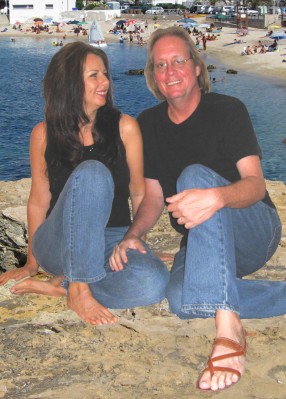
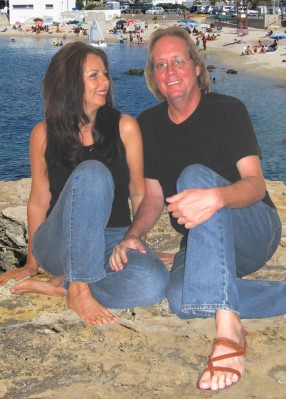
David & Veronica, GypsyNester.com

How Do You Poop in Space?


enlarge video
A little girl asks astronaut John Fabian how one poops in space. Mr. Fabian not only answers the question we’ve all been wondering about – but… CONTINUE READING >>

A little girl asks astronaut John Fabian how one poops in space. Mr. Fabian not only answers the question we’ve all been wondering about – but have been afraid to ask – (thank you little girl!) but with GREAT humor!

For more on Mr. Fabian and Kennedy Space Center: https://www.gypsynester.com/spacecoast.htm

Visit our GypsyNester YouTube Channel!

A NASA Engineer Talks Neil Armstrong & Early Computers


enlarge video

NASA engineer Roy Whitson was ready, willing and able to answer any questions that we could throw at him! He told us how Neil Armstrong, the first man on the moon, nearly botched… CONTINUE READING >>

Retired NASA engineer Roy Whitson was ready, willing and able to answer any questions that we (or anybody else for that matter) could throw at him. Incredibly personable and knowledgeable, Mr. Whitson happily relayed first hand accounts of some of the innermost workings of the space program, all the way from the early days in the 60s to the present.

Mr. Whitson was there through it all, designing systems for the Gemini, Apollo and finally the Shuttle programs. He knew all of the astronauts personally, and referred to these pioneer explorers in the most familiar, nonchalant manner of a trusted colleague and friend.

Our favorite story had to be how Neil Armstrong, the first man on the moon, nearly botched the lunar landing by overtaxing the computers on the landing module. The technology of the day was so primitive by today’s standards, that handling two tasks simultaneously was causing the on-board flight computer to shut down. We literally carry around more computing power in our pockets these days than was available for man’s first landing on a celestial body in space.

For more on our trip to the Kennedy Space Center and the Space Coast: https://www.gypsynester.com/spacecoast.htm

Visit our GypsyNester YouTube Channel!

Jellyfish!


enlarge video
It was absolutely mesmerizing! Lit by ultraviolet light, the hypnotic jellies glowed while they bobbed and flowed across… CONTINUE READING >>

We got an up close look at life in The Indian River Lagoon at The Smithsonian Marine Ecosystems Exhibit. We wandered through the many displays detailing the reefs, seagrass beds and mangroves of the lagoon until we came upon a tank filled with jellyfish. Then we were stuck, it was absolutely mesmerizing! Lit by ultraviolet light, the hypnotic jellies glowed while they bobbed and flowed across the aquarium. Once we finally pulled ourselves away, we turned around and went back a few minutes later for another view. It was addictive.

For more: https://www.gypsynester.com/manatee.htm

Visit our GypsyNester YouTube Channel!

Following the Freedom March in Alabama

It was a difficult few days for us as we were forced to confront thoughts and feelings that we would have much rather avoided. We addressed issues that many of us Americans would like to think have been completely resolved. But it seems to us that turning a blind eye is not the solution.

The lesson we learned is that the light of day is best, because as much as this is fairly recent history, we were taken aback by how little we knew about the details. In Birmingham, the details are on display – front and center – and in Montgomery… CONTINUE READING >>

The Capitol Building in Montgomery, Alabama

As we continued our journey across The South, our trek led us to The Heart of Dixie, Alabama.

Our first stop was Montgomery. As the capital of the state and former capital of The Confederate States of America, this city is steeped in history, but for people of our generation the more recent history is burned more indelibly in our memories.

Montgomery might be the epicenter of the modern civil rights movement, beginning back on the first of December 1955, when Rosa Parks refused to give up her seat on a segregated bus.

Our knowledge of these events was sketchy at best, so we decided to seek out some of the sites of these historic events with a bit of our usual spur-of-the-moment tourism.

The Rosa Parks Library and Museum

Without any advanced plans, The Rosa Parks Library and Museum on the Troy University campus was the first of these sites that we came upon.

After chatting with a few of the students that staff the museum, we headed inside to the focal point of the presentation, a re–creation of the bus Mrs. Parks was riding.

We entered a darkened room they call the Cleveland Avenue Time Machine, climbed aboard, and were taken for a ride through the years from Jim Crow in the 1800s to the Montgomery Bus Boycott in 1955 and 1956.

The Rosa Parks incident triggered the boycott, which began as a one day event but ended up lasting over a year, before being settled by an agreement that nobody could be forced to give up their seat based on race.

The success of the boycott led to more efforts to end segregation and secure voting rights. The story of those struggles led us to The Southern Poverty Law Center and The Civil Rights Memorial Center.

The Civil Rights Memorial

The Memorial captured our attention as we walked up the street toward The Center.

The smooth granite circular slab is engraved around the outside edge with the names of people killed in the struggle for equal rights. Water washes over the stone as a constant reminder of Dr. Martin Luther King’s words, “We will not be satisfied until justice rolls down like waters and righteousness like a mighty stream.”

The Civil Rights Memorial

The Memorial was created by Vietnam Veterans Memorial designer Maya Lin, who envisioned the plaza as “a con-templative area — a place to remember the Civil Rights Movement, to honor those killed during the struggle, to appreciate how far the country has come in its quest for equality, and to consider how far it has to go.”

The Civil Rights Memorial

Inside The Center there is a tribute to each of the victims and information on many of the cases The Law Center has fought through the years.

After we browsed the exhibits and watched a film in the theater, it was hard not to let anger be our overriding emotion, but then we came to The Wall of Tolerance just before the exit.

Tolerance and nonviolent resistance were the hallmarks of the movement, certainly we should carry on that tradition today.

The twenty by forty foot wall is an electronic display of the hundreds of thousands of visitors who have pledged to stand up for equality.

After seeing the stories of so many brave souls who gave their lives in the fight for basic American rights, it was not a difficult decision to take the pledge and add our names.

“By placing my name on the Wall of Tolerance, I pledge to take a stand against hate, injustice and intolerance. I will work in my daily life for justice, equality and human rights – the ideals for which the Civil Rights martyrs died.”

It was a deeply emotional moment watching our names appear on the wall, we’re sure we were not alone in walking out the door with tears in our eyes. Actually, Veronica was openly sobbing and the nice volunteer at the exit had kleenex at the ready, so we’re absolutely positive we weren’t the first.

Click here for more pictures of The Civil Rights Memorial Center

Dexter Avenue Baptist Church

The Dexter Avenue Baptist Church, where Dr. King served as pastor, stands just around the corner, literally in the shadow of the capitol building that was the birthplace of The Confederacy and site of George Wallace’s famous “segregation now, segregation tomorrow, segregation forever” speech.

Obviously the atmosphere was pretty charged around here back in the early sixties when advocates began to arrive from around the country to stand up to segregation and register African Americans to vote.

This led to some of the most extreme violence perpetrated during the entire movement, most notably the beating of Freedom Riders as they arrived in Montgomery to integrate bus service and depots in 1961, and Bloody Sunday at the Selma to Montgomery Marches for voting rights in ’65.

The Memorial for Viola Liuzzo

One of the lesser known participants in the marches was Viola Liuzzo. After the final march Viola volunteered to drive people back to Montgomery from Selma and committed the unforgivable act of being a white woman in a car with a black man. Nothing got a bigot’s blood to boiling like that.

So four Klansmen chased the car down Highway 80 and about halfway between the two towns, pulled up beside the car and shot Viola four times in the head. Even though one of the shooters was a known FBI informant, not one of the murderers was convicted by their all white juries.

In 1991 the Women of the Southern Christian Leadership Conference placed a marker for Mrs. Liuzzo near the highway at the site of the shooting.

The Memorial for Viola Liuzzo

We felt that we should see it, so we stopped on our way to Selma. We wanted to cover the exact route of the Selma to Montgomery Marches (though we were going backward), to get a real feel for what happened there.

We had to watch closely, the marker can be easy to miss, as we did on our first pass. But after doubling back we found it. In a sad commentary as to how far we still have to go, the marker has been knocked down and defaced, often by painting Confederate flags on it, many times.

The Edmund Pettus Bridge, Selma Alabama

We entered Selma at the Edmund Pettus Bridge, scene of Bloody Sunday, when 600 marchers were beaten and gassed as they tried to cross the bridge on their first attempt at marching to Montgomery.

The Edmund Pettus Bridge, Selma Alabama

Two days later Dr. King led another march, this time only planning to go as far as the bridge, to prove the point that they had the legal right to do so on the authority of a Federal District Court Judge.

The third march left Selma two Sundays after the first try, with just over three thousand people. They walked about twelve miles a day, sleeping in fields along the way, until they reached Montgomery four days later. By the time they marched up to the capitol building the group had grown to 25,000. But later that night the murder of Mrs. Liuzzo marred the success.

Before we crossed the bridge into Selma, we pulled off to see the small memorial below the eastern entrance, but it was in a sad state of repair. Once across we were a little surprised by the lack of acknowledge-ment the town of Selma seems to have for these events and the civil rights movement in general.

With banners hanging from the lampposts reading: “Historic Places, Social Graces,” the city seemed to want to play up its Southern charm more than any of its more recent history. I guess we can’t blame them too much, it wasn’t pretty, but it still struck us as strange after seeing the beautiful tributes in Montgomery.

Brown Chapel African Methodist Episcopal Church in Selma, Alabama

The two biggest landmarks from the movement in Selma, the Edmund Pettus Bridge and the Brown Chapel African Methodist Episcopal Church, have not changed much over the decades, so we parked and set out on foot to retrace the route of the marchers from the bridge back to the church that had served as the starting place for all three of the Selma to Montgomery Marches.

As we walked up Martin Luther King, Jr. Street we were struck by how much everything looked like the pictures taken fifty years earlier. Other than the street being paved, The George Washington Carver Homes where many of the marchers lived and took in participants from out of town, including Viola Liuzzo, looked exactly the same.

Sometimes progress isn’t readily visible. We were ready to move on.

Housing projects in Selma, Alabama

16th Street Baptist Church in Birmingham, Alabama

Our exploration into the history of the civil rights movement would not have been complete without seeing the 16th Street Baptist Church in Birmingham, the site of the lowest, most cowardly act ever perpetrated by the segregationists.

On a September Sunday morning in 1963 four Klansman planted a bomb in the basement of the church and set it to go off during a youth meeting at the morning services.

Four young girls were killed in the blast, but only one of the perpetrators was arrested. He paid a small fine for illegal possession of dynamite. No one else was arrested, tried or convicted for the murders until many years later.

The church is still active and it seemed a bit unseemly for us to treat it as a tourist attraction, so we went across the street to The Birmingham Civil Rights Institute. The Institute, an affiliate of the Smithsonian, had by far the most extensive exhibition about the civil rights movement that we had seen in our travels.

Set up as a walking journey, multimedia exhibits took us through the turbulent decades of the fifties and sixties while the powerful Oral History Project told us the stories from the actual participants, in their own voices.

Across from The Institute is Kelly Ingram Park, which served as a staging ground for many of the demonstrations in Birmingham. Even though it was a bit chilly it felt good to do some walking outside, so we followed the park’s Freedom Walk which circles the four acre green space.

Police and Dog Attack Sculpture

The Walk is lined with several statues, including four that we found had particular impact, by sculptor James Drake.

Drake’s works put us right in the middle of the situations he depicts.

None more so than Police and Dog Attack. The sculpture completely captures the ferociousness of three attack dogs lunging. It was a powerful statement, giving us the feel of what it must have been like to have the dogs turned loose back during the May 1963 demonstration.

Firehosing of Demonstrators

Elsewhere along the path we encountered Firehosing of Dem-onstrators, depicting water cannons being turned on protesters, and Children’s March (“I ain’t afraid of your jail”), where we stopped to look through the steel bars of a jail cell window at two youngsters who represent the children that were arrested during the protests.

Click here to see more photos of Freedom Walk

The last of Drake’s works along The Freedom Walk is Foot Soldier Tribute. This serves as a memorial to all who struggled with “gallantry, courage and great bravery” in the civil rights movement. Mayor Richard Arrington Jr. dedicated the tribute with those words in 1995.

Birmingham was so violent during the civil rights era that it became known as Bombingham, but now the city seems to have come to terms with itself by commemorating its sordid history and celebrating the outcome more openly than either of our previous stops.

It was a difficult few days for us as we were forced to confront thoughts and feelings that we would have much rather avoided. We addressed issues that many of us Americans would like to think have been completely resolved. But it seems to us that turning a blind eye only leads to a situation like Selma, where our eyes could not see much progress.

The lesson we learned is that the light of day is best, because as much as this is fairly recent history, we were taken aback by how little we knew about the details. In Birmingham, the details are on display – front and center – and in Montgomery the good fight continues every day to defend the civil rights of all Americans.

So perhaps we all shall overcome.

David & Veronica, GypsyNester.com

Delve deeper:
The Freedom Walk in Birmingham
The Civil Rights Memorial in Montgomery
The Martin Luther King Memorial in Washington, DC
Following Dr. King’s Footsteps Though Travel

Freedom Walk, Birmingham, Alabama


The Walk is lined with several statues, including four that we found had particular impact, by sculptor James Drake. Drake’s works put us right in the middle of the situations he depicts… CONTINUE READING >>

Freedom Walk, Birmingham, Alabama

Kelly Ingram Park served as a staging ground for many of the demonstrations in Birmingham. Even though it was a bit chilly it felt good to do some walking outside, so we followed the park’s Freedom Walk which circles the four acre green space.

Police and Dog Attack Sculpture

The Walk is lined with several statues, including four that we found had particular impact, by sculptor James Drake. Drake’s works put us right in the middle of the situations he depicts. None more so than Police and Dog Attack. The sculpture completely captures the ferociousness of three attack dogs lunging. It was a powerful statement, giving us the feel of what it must have been like to have the dogs turned loose back during the May 1963 demonstration.

Firehosing of Demonstrators

Elsewhere along the path we encountered Firehosing of Dem-onstrators, depicting water cannons being turned on protesters, and Children’s March (“I ain’t afraid of your jail”), where we stopped to look through the steel bars of a jail cell window at two youngsters who represent the children that were arrested during the protests.

One of the most powerful works along The Freedom Walk also happens to be one that is not Drake’s, Foot Soldier Tribute is by Tuskegee University art professor Ronald McDowell. This serves as a memorial to all who struggled with “gallantry, courage and great bravery” in the civil rights movement. Mayor Richard Arrington Jr. dedicated the tribute with those words in 1995.

Birmingham was so violent during the civil rights era that it became known as Bombingham, but now the city seems to have come to terms with itself by commemorating its sordid history and celebrating the outcome.

Peace Be Stil, Freedom Walk, Birmingham, Alabama
“Peace Be Still” depicts Reverends N.H. Smith, John T. Porter and A.D. King in 1963. During a sympathy march they knelt to pray as the marchers were met by police dogs and billy clubs.

David & Veronica, GypsyNester.com

Read more about our trip through Birmingham, Montgomery and Selma with more photos and videos by visiting “Following the Freedom March in Alabama.”

Delve deeper:
The Civil Rights Memorial in Montgomery
Retracing the Freedom Walk from Selma to Montgomery
The Martin Luther King Memorial in Washington, DC