Of course we took the cheesy Leaning Tower of Pisa photos – we think it’s a law!
Traveling as GypsyNesters — often and low to the ground — has given us a some insight into the most efficient (and the lightest) ways to smooth out the bumps in the road.
Things tend to go awry from time to time, so we are more than willing to share some of our more stupid mistakes for the benefit of the greater good (and perhaps a laugh). Here’s what we’ve learned about Italy:
Electronics In Italy
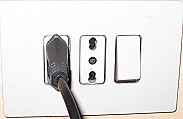
The electrical system in Italy — and throughout Europe — delivers 220 volts, which is double the amount we are used to in the States. Also, the outlets differ from country to country. You will need an adapter to be able to plug anything in. But, WAIT. Don’t just start plugging things willy-nilly into that adapter.
It is important to know that travel adapters do not convert the power, they just allow the plug to fit into the outlet. So, never, ever plug in an American device, unless it is dual voltage, directly into a travel adapter unless you want a pyrotechnics show worthy of an AC/DC concert (not GypsyNester approved).
You need a TRANSFORMER to convert the power. But, alas, transformers are costly and heavy. We dragged one around for years, nicknamed Frankie…short for Frankenstein, because of its terrifying look and staggering heft.
Save money and pounds of weight in your luggage by using electronics the GypsyNester way:

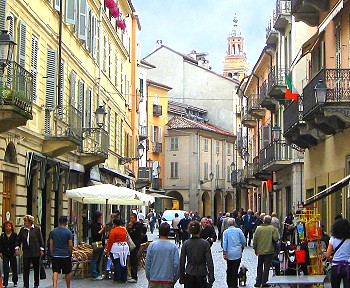
View from the Castle in Casale Monferrato – see more!
Most laptops are dual voltage. Look at the excruciatingly small print on your charger (usually on the “box” on the cord) or better yet, call the manufacturer’s tech support to see if your lapto+p is dual voltage.
If it can handle both 220 and 110, your laptop will become your personal power station.
We use a small travel adapter and use our dual voltage laptop to charge our cell phone, camera, I-pod and the like via USB cords. Cool, eh?
Make sure you assemble the adapter BEFORE you plug it in. David, Mr. Read the Instructions AFTER the Disaster, learned about this first (smoldering) hand. Several different plug plates attach to the body of the adapter and if you don’t attach them before plugging in, you might get the distinct pleasure of learning what 220 volts jolting through your body feels like.
We can tell you this — it will wake you right up! Gets the old heart a beating, that’s for sure. Yup, now David knows what it feels like to get brought back by the paddles of life. Clear! BZZZZZ.
Another option, if you rent a car, is an adapter that plugs into your car’s lighter. It will convert 12 volts DC to 110 volts AC or USB. This also works back in the States where you can run all kinds of things to distract you from your driving.
See more about driving in Italy
Some electric razors, hair rollers or hair dryers are dual voltage, but if they are not, plugging it into your handy-dandy travel adapter will involve very bad things happening, including sparks, smoke and possibly shooting flames. To avoid this, get dual voltage appliances. Veronica’s absolute favorite travel pal is her dual voltage travel hot rollers. She has one that weighs practically nothing and heats up so fast it will make your hair curl!
See all of our adventures in Italy!
Cell phones — Call your cell phone service people ahead of time to be sure that your phone is Italy-friendly and what charges will be incurred. We typically use text messages rather than phone calls because we will inevitably end up chatting about how wonderfully our trip is going and get hit with a elephant of a phone bill.
If you use your phone for e-mail or internet, be sure you know how to turn off data roaming. Manually switch it on as needed. Don’t have your phone constantly downloading e-mail! Wean yourself down to once a day or, better yet, check it on your laptop or at an internet cafe. You can easily run into hundreds of dollars on your cell bill. The scam e-mails and special body-part enlargement offers can wait while you are on vacation!
Get a USB cord to charge your phone. They are cheap and you can safely charge your phone from your laptop. NEVER plug your phone directly in an outlet, things could get ugly, fast.
Cameras — If you take tons of pics as we do, purchase an extra battery for your camera and charge it before you leave for your trip. They last surprisingly long. Do some home testing prior to your Italian Adventure. Same goes for your rechargeable electric razor, many of which will run about two weeks before running out of juice.
Light Switches — These can be a trip. Up is down, down is up — sometimes they slide in mysterious ways. Many times there is a secret button to push and they are often not in the same room as the light that they control (especially bathrooms). The only consistent thing is that the are rarely the same one time to the next. Experiment
a little, relax. Learn to pee in the dark. Better yet, make a joke of it. Italians are probably just as baffled when visiting the States.
See all of our adventures in Italy!
Locks: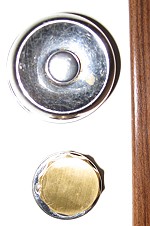 One would think that this would be a no brainer, but Veronica spent an hour trapped in a hotel room when she could have been eating pizza, seeing Pisa or ANYTHING ELSE. These locks can be menacing.
In the States the knob turns and the button in the middle, if pushed, locks the door, right? Now get this — this hotel door is ALWAYS locked — the knob does not turn at all. In order to open this door one must pull on the knob while PUSHING in the button to unlock it. The little dial underneath it turns and clicks, locking the deadbolt and adding to the confusion.
After lots of pulling, (swearing) pushing, (a bit more swearing) turning (with swearing in Italian), trying the hotel phone (a whole ‘nother story) and even panicky (swearing in unknown tongues) knocking and banging on the vile portal, then finally texting, Sir David rode to her rescue and let her out. Good times.
Adventures in il Bagno
Toilets — Flushing situations are as varied and as strange the light switches. Many times it’s a button on the top of the tank, sometimes it’s two buttons (Get it? Number 1 and number 2?). Other times it’s a cord under an elevated tank (good old gravity).
If you find yourself unable to flush a toilet, count yourself lucky it wasn’t just a hole in the floor that you
squat over (yup, every once in a while you’ll run into one in a public bathroom in Italy). But hey, they DO have handy nonskid foot pads.
Showers — Sometimes water ends up all over the entire bathroom because, for no apparent reason, shower curtains are optional in many moderate-priced Italian hotels.
Be sure to cover, or better yet, move the toilet paper to a safe refuge before attempting this sort of Euro showering. Do not pull the cord in the shower unless you feel like having the bellman scurry into save you while you are rinsing the shampoo out of your hair, it is to signal in case of an emergency.
Bidets — Are tricky little things. In Italy, they are mostly just little basins, but every now and again you get the French style which squirts a stream of water up like Old Faithful. Check out the bidet carefully before using. There’s nothing like leaning down to fill up the bidet and getting a face full of water.
Also, don’t use the bidet as a urinal — only heathens and rock-n-roll musicians do that.
See all of our adventures in Italy!
Getting your point across
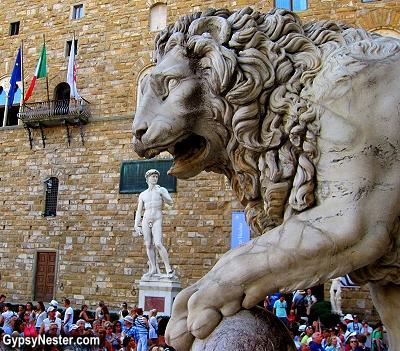
Check out all the fun to be had in Florence!
Carry a pocket dictionary — Always carry a translation dictionary with you. It’s helpful to be able to look things up on the fly.
Looking up tricky words and pointing to them is great when dealing with desk clerks, waiters, shop keepers and taxi drivers.
Language Help — Really, don’t be afraid to immerse yourself in the language — Italians are very patient and appreciate your efforts. We’ve screwed up many times and now we have great stories to tell. A few years
back, in mixed company, David was inquiring for help with a large blister he was having trouble with — only to find that the word for blister and scrotum way too similar!
It’s become one of Veronica’s favorite Italian yarns to spin.
Food
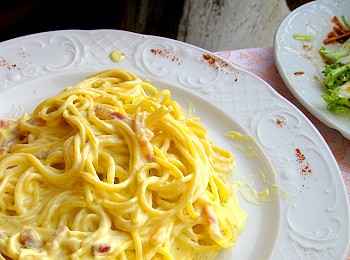
Delicious dinner in Venice – see more!
The food is AMAZING in Italy! Take your time, relax and enjoy as the natives do.
Breakfast — Most hotels offer breakfast with your stay. This consists of great coffee, wonderful bread, and sometimes meat, fruit and cheeses.
If you order coffee, expect to get a straight up espresso. Order a cappuccino or a “long coffee” (caffe lungo) for a more American style coffee. Decaf is usually an alternative, so enjoy! You can always get a quick jolt of caffeine at any “bar” along the way. If you stand up to drink it, it’s usually cheaper.
Ordering in restaurants — You are probably familiar with a lot of what you’ll find on the menu in Italy and your pocket dictionary comes in very handy for the rest. Food names are the first words we learn in any new language. We are definitely adventurous eaters when we travel but still, it’s best not to end up with the chopped
spleen when you had your heart set on ravioli.
The Basics: Italians love to eat and they do it in waves. First, the bread and wine (or water) arrive, followed by the many stages of the full, traditional Italian meal. Antipasti are appetizers, usually meats and olives, peppers or other assorted gems. Next, comes the Primo Piatti or “first plate” which is usually pasta or risotto, then the Secondo Piatti (yup, the second plate) of meat or fish. With your Secondo, you may order a Contorni, or side dish, of potatoes or veggies. You’d think that should do the job, but wait, you still need a salad. Then a dolce (sweet) or cheese. Finally, it is nearly impossible to leave the table without having caffe.
Before you recoil in horror at the thought of having to eat like this at every meal, rest assured it’s only on special occasions that all of the courses are laid out. But then, in Italy any meal can be a special occasion. Other times you’ll have to learn to get by on just bread, wine, mass quantities of pasta, dolce and caffe. It’s a struggle but we soldier on.
Joking aside, if you a looking for a less heavy meal, feel free to order a Primo and a side dish or salad, rather than a Secondo. This is a nice option for vegetarians, as well.
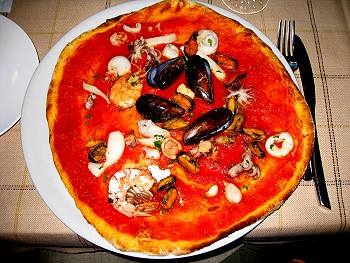
We really couldn’t address eating in Italy without a few words on pizza. Forget everything you think you know about pizza, in Italy it’s completely different and wonderful. First, it’s an individual experience, one person, one pie.
The thin crusted, wood baked masterpiece is plopped down in front of you on a big old plate, no cut up pieces here, just grab a knife and fork and dig in.
Mozzarella or tomato sauce are not always included since almost anything and everything you can imagine is a possible topping… from all the basics; ham, olives, pepperoni (which is peppers, not salami, in Italy) to corn, tuna, squid and of course “con uovo” with an egg cracked right in the middle just before being slipped into the wood-fired oven. Perhaps pizza is the perfect provision.
When you are finally ready to roll out of a restaurant, you must ask for the check as your waiter will not bring it until you indicate that you are finished.
Really good things to know
Credit Cards — Call your credit card company before you leave home. Let them know that you will be traveling abroad. You don’t want to be stuck dealing with the fraud department while on vacation!

Pharmacies — Look for the signs with the green or red crosses that say “Farmacia.”
Be sure you know how to ask for what you want (or at least be able to point to it in your translation dictionary) before you arrive at the pharmacy. In Italy, everything is behind the counter, so you need to know how to ask.
Trust us on this one, you don’t want to repeat our famous “finding an enema through hand gestures in a crowded Farmacia in Rome” story!
Cobblestones — Make sure you wear comfy shoes if you are going to be walking (though beautiful, ancient cobblestones will wear you out — hard on feet, knees and backs). Or try out Veronica’s favorite way to combat cobblestones (seriously, it will change your life!)
Also, high heels are a no-no. You will wobble around like a drunken circus bear. Add wine on top of that and you’ve got a dangerous situation indeed. Veronica always carries a flat, light pair of shoes in her bag if she wants to wear heels to dinner.
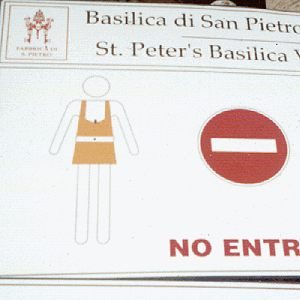
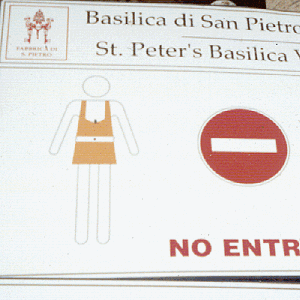
Visiting Holy Areas — Proper dress is required, no shorts, women cannot show cleavage or bellybuttons. Be respectful. Churches are not Disneyland.Grappa — Grappa is dangerous stuff. Then again, you can always
keep some handy in case you run out of gas. It’s the smoothest rocket fuel we’ve ever tasted.
This grape based “shooter” is a traditional Italian after dinner drink. It varies greatly in quality from wonderfully smooth to FIAT fuel but it is all really, really strong.
Be very, very careful or you might find yourself singing “That’s Amore” in the middle of a fountain.
Packing for Italy the GypsyNester Way
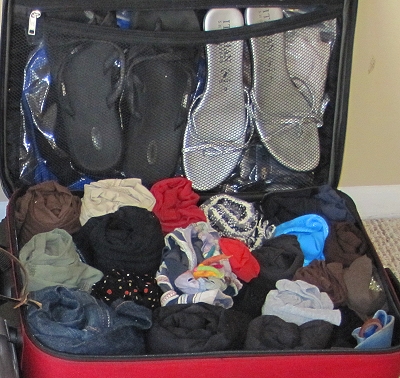
In your carry-on rolly bag — Start with a rolling carry-on and a briefcase/small backpack. This set up is perfect for getting around in airports.
Once on the plane, you have everything you need (and if your have checked luggage and it’s lost, you are still in good shape).
Roll, don’t fold, your clothes and place them “vertically” in your luggage. This way there is less wrinkling and everything is easily seen.
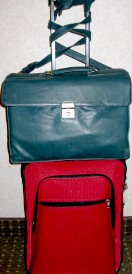
In your briefcase/backback — Electronics, tickets and passport, important documents, prescriptions (in original bottles, with medication name and your name clearly printed), books, sleep mask, travel pillow, lip balm (planes are DRY!), gum, snacks (bought BEFORE you get to the airport!), hair and tooth brushes and a flat travel-sized pack of baby wipes.
Pull your handle on your rolling carry-on bag to its highest position, then affix your briefcase or backpack on top, wrapping the shoulder strap around the carry-on handle. It all rolls along very nicely.
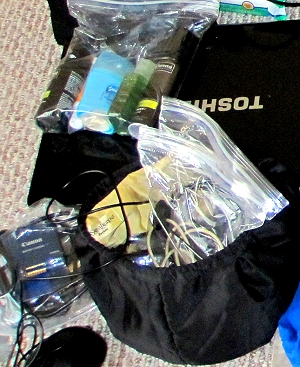
Large zip-lock sandwich bags are our friends! For many reasons:
– Convenience. Having a bag just for travel-sized toiletries is easy and convenient for on-the-fly packing and getting though security.
– Moisture and sand. Having a small cache of baggies help keep our belongings dry and clean.
– Cord management. We always have a soft cord bag with us. Inside the bag, we separate cords into plastic baggies. Camera, phone, airplane headsets, laptop and wireless accessories all have separate baggies. Keeps cords from tangling!
On yourself — Be comfy. Jeans and a light shirt. Your tennis or walking shoes. And to avoid swollen ankles on flights, wear these. Carry your coat with you since it makes a handy pillow or a much better blanket than the static-y little wads of nothing they hand out on the plane. You can also use your carry-on/briefcase configuration as a coat rack.
Don’t wear anything that will set off the metal detector. It’s just not worth having to take out earrings, remove belts and jewelry, or to get strip searched because you have some fabulous beading sewn onto your clothes. That stuff is terribly uncomfortable on the plane, as well. Keep it simple. All the dolled up people on the plane will be incredibly jealous of you when you arrive in Italy, rested and ready to rock!
In your checked bag — For the items you can’t carry on, use a rolling, medium-sized check bag. We use only one for the both of us. In the spring and fall or anytime the weather is unpredictable, bring leggings (they can go under your jeans too!), boots and a open front sweater or hoodie.
Pack large toiletries items in plastic ziplocked bags (hotels generally provide soap and shampoo, but we always bring hair conditioner and face wash). Include a purse or daypack and a pair of heels/dress shoes. Top it off with a sheet of paper with your contact information in case your luggage tags disappear and snap a quick pic with your phone. Again, RELAX, you can always buy hairspray or a toothbrush in Italy!
Don’t check anything you are going to absolutely need, like prescriptions. Make sure you leave lots of extra room to bring back souvenirs from your trip.
The GypsyNester One Trip Rule — Don’t leave
luggage lying about. Stick with a strict one trip rule.
Whether it’s from the hotel lobby to your hotel room or baggage claim to your rental car, the ability to move all of your belongings in one trip makes life so much easier.
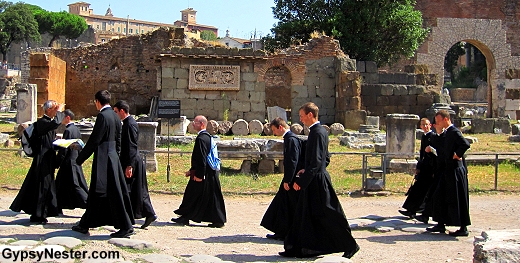
Check out our Roman Holiday!
On the Plane
We LOVE our inflatable travel neck pillow. Takes up very little space in your carry-on, and is really easy to blow up. We are fully aware that travel pillows look like your dog’s “cone of shame” when you are wearing it, but really, what’s the point of arriving in Italy with your neck killing you? We also use ours to prop up our laptop
to a reasonable height on our tray table.
It’s also great for trains, automobiles, hotel rooms and back rubs. Hoarding airline pillows is also good move — it’s every man for himself! One can never really have too many pillows now can one?
Scope out your surroundings. If the plane is not very full, grab as many consecutively empty seats as you can. Eat your dinner, watch the movie, then lift up those armrests and stretch out!

On the way home, make sure you use a sleep mask, as the sun never goes down and you’ll be kicking yourself for not having one. Especially if you had one of those going away celebrations the night before that involved singing and fountains.

Or a leaning tower of grappa.
David & Veronica, GypsyNester.com
Learn more about how we pack and our always-adhered-to “One Trip Rule”!
See all of our adventures in Italy!
YOUR TURN: Did we help you any? Do you have any travel misadventures to share?



 About thirty thousand souls reside around an ancient center with a wonderfully preserved medieval castle, several spectacular towers dot the skyline and at least one unique food item calls Casale home.
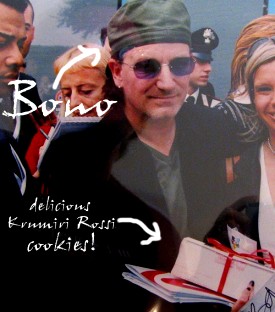
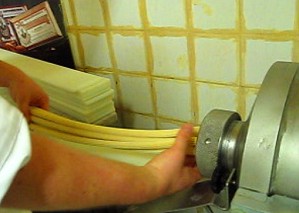
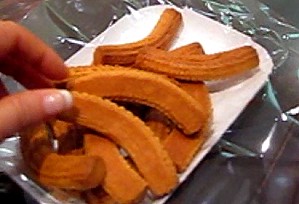
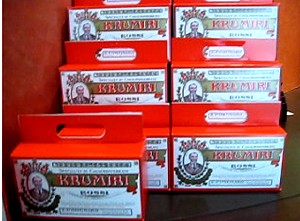 We have been huge fans of Krumiri Rossi since our friends, Paolo and Claudia, sent us a tin of these cookies that rolled our eyes back for the holidays several years ago.