The Maritimes is a region rich in history — involving sailors and fishermen, pirates and generals, battles and treaties, shipwrecks and rum running, and the birth pangs of two great nations.
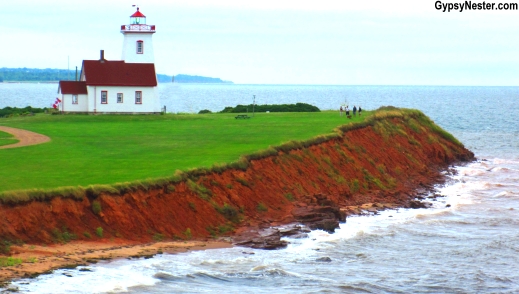
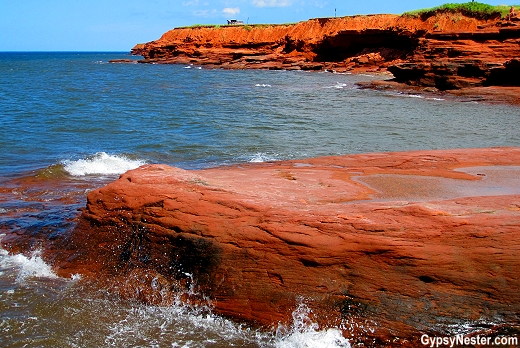
Our journey sets out where Canada began, on the stunning red cliffs of Prince Edward Island…CONTINUE READING >>
The Maritimes is a region rich in history — involving sailors and fishermen, pirates and generals, battles and treaties, shipwrecks and rum running, and the birth pangs of two great nations.
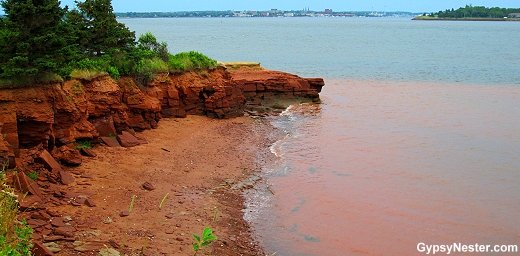
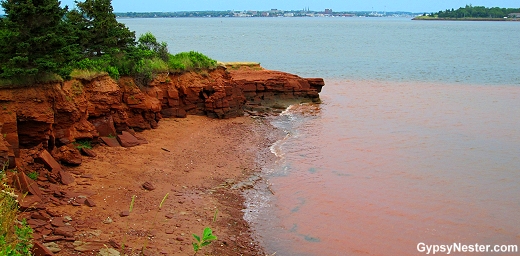
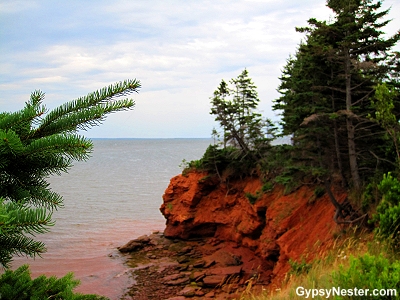
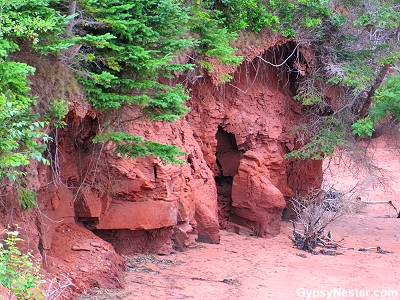
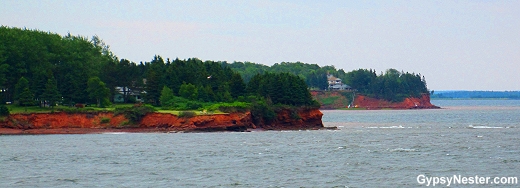
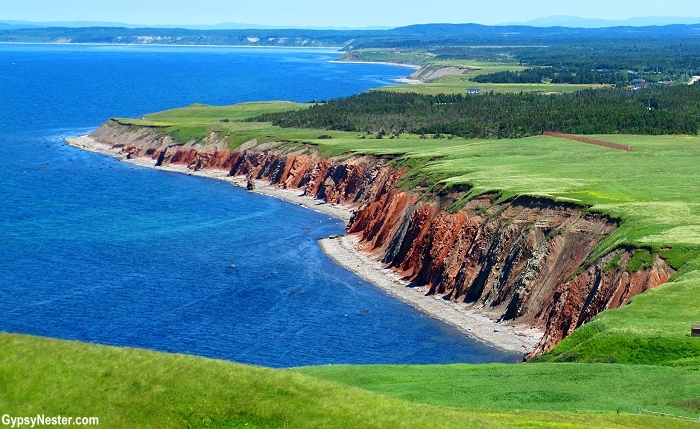
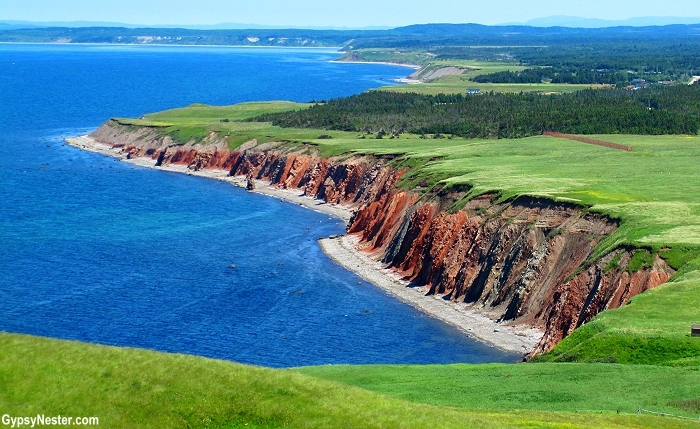
We could hardly wait for our Road Scholar program to start so we’re kicking off our day with a stop at the red cliffs at Cavendish. We have just finished re-readingAnne of Green Gables and couldn’t wait another second to visit these cliffs that Lucy Maud Montgomery wrote of. This soft sandstone shoreline is ever changing, as it erodes away at a rate of three feet per year. Beauty in motion.
We can’t believe how incredible the weather is – and it’s supposed to hold all week!
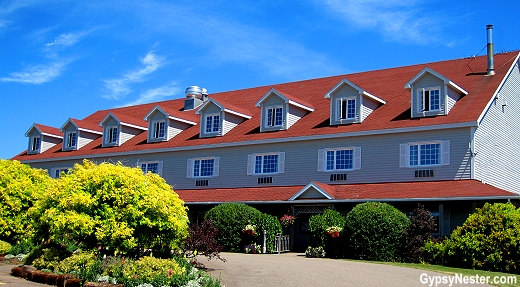
We’re all checked in to our room at Stanley Bridge Country Resort – our home base for the next few days. Headed out to explore a bit on foot before meeting our fellow Road Scholar participants after dinner. Excited!
Day Two: Shipwrecks, storms and a little girl named Anne
Morning: Our morning starts with Boyde Beck, Curator of History for the Prince Edward Island Museum and Heritage Foundation, for an informative and (very) funny presentation about the history, culture and colorful characters of the Maritimes.
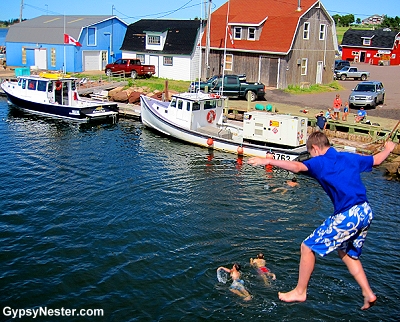
Kids jumping off the bridge into the Stanley River.
Stay tuned for an action packed day – we will be visiting Green Gables National Historic Site to learn the facts behind the fiction of Anne of Green Gables, heading to French River (the most photographed spot on PEI) and exploring the Yankee Gale and the organic farming movement. This evening we will be
attending a community ceilidh.
Afternoon:
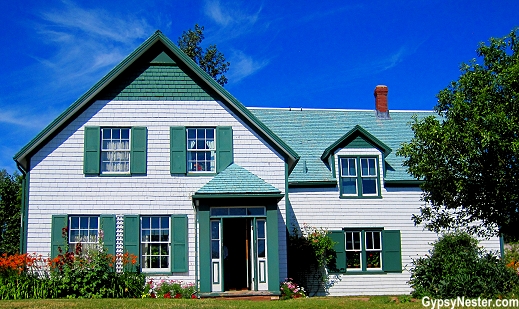
GypsyNesters of Green Gables
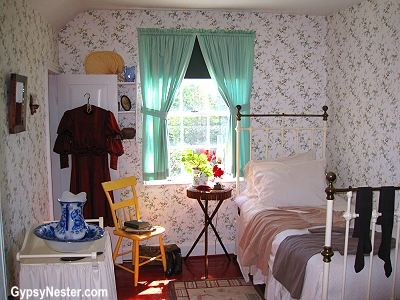
Green Gables, the house that inspired the novels
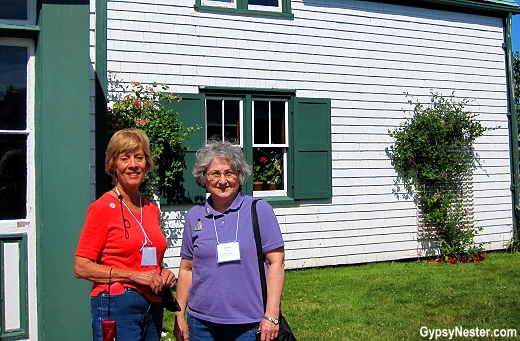
So happy: Fellow Road Scholar participants Nancy and Debby have dreamed of Green Gables since childhood!
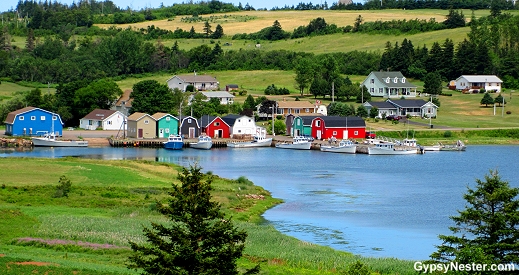
French River has been a quaint fishing village along New London Bay on the north shore for over 300 years. Known for tranquility, it was anything but when the fiercest storm in Prince Edward Island‘s history blew in the night of October 3, 1851. The storm became known as The Yankee Gale because a huge contingent of fishing vessels up from New England was working off shore. When calm returned after two days of blowing, some one hundred ships had gone down and hundreds of sailors perished.
Agriculture is the island’s biggest business, with potatoes being the leading crop. In fact, one third of all of Canada’s potatoes are grown on this small island. We pass fields of the spuds, plus barley, beans, hay, and oats on our way to meet Raymond Loo at his Springwillow Farm.
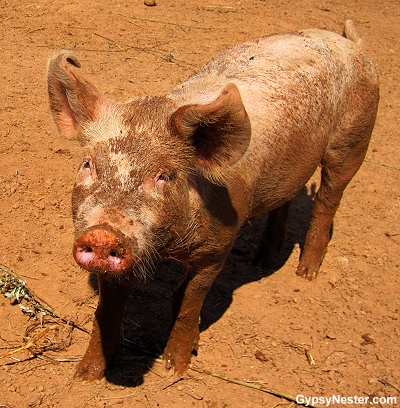
Springwillow stands out from the surrounding farms as an organic operation. Crops are naturally fertilized, and plots rotated between crops and use as pasture… even pig pens.
Veronica was very enamored, but luckily just as she was thinking “Wilbur,” Raymond announced “we don’t name them.”
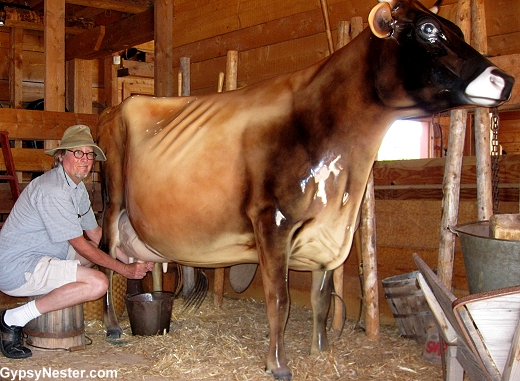
David has never had the opportunity, much less the desire, to milk a cow… well he finally got the chance in the barn at Green Gables National Historic Site.
Evening:
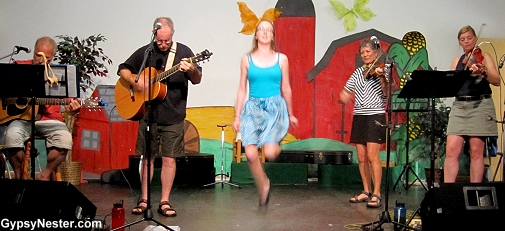
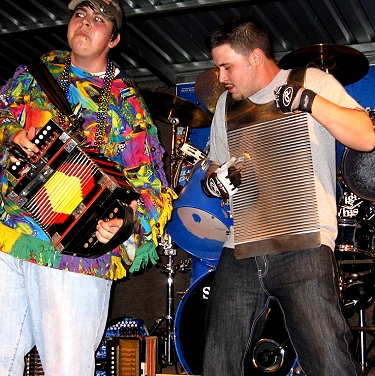
We stop in for a Céilidh (pronounced Key-lee) in the town of Kensington, where the Long River Players keep the musical traditions of Scotland and Ireland alive. Céilidhs serve up community entertainment and, in the past, facilitated courtship for the young folks. One of our guides, Pete Blanding, leads the players on guitar and vocals as fiddle, banjo, whistle, and the traditional hand drum a bodhrán, round out the group.
Day Three: Fox Fur, a French Fort and Frozen Cow Chips Morning:
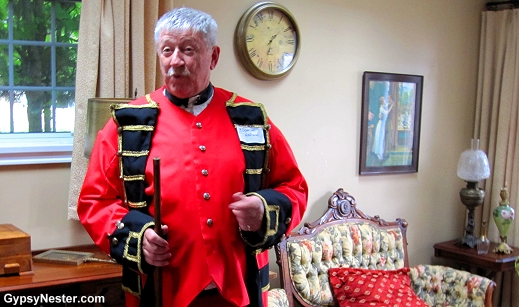
We begin Day Three in Summerside, the second largest city on the island with a visit to our guide George Dalton’s family home. We look over the furnishings and heirlooms while he gives us a brief history centered on the work of surveyor Samuel Holland.
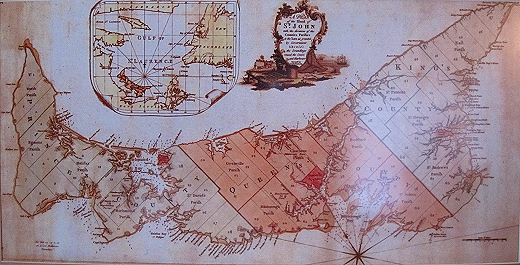
Holland was sent by King George in 1764, after England had defeated the French in North America, to survey the newly aquired British holdings beginning with Prince Edward Island. He divided the island into 67 lots of 20,000 acres each, then the lots were distributed to nobility and aristocracy as farms in order to populate the island.
Recently his two hundred fifty year-old maps were compared with satellite photos and proved to be remarkably acurate. His original lines overlay perfectly with many of the current roads, and since he had no interest in drawing these borders with any desire to get from one part of the island to another, the roads based on Holland’s work make for some interesting driving routes.
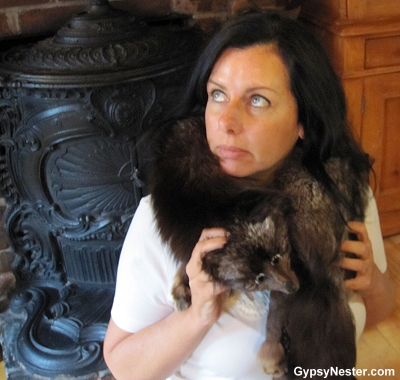
Veronica attempts to model a fox stole, but is quite
creeped out because the head is still on it!
We also learned about the turn of the century fox business that played a huge part in Summerside history. When Charles Dalton and Robert Oulton came up with a viable way to breed silver foxes in captivity, the boom was on.
Fortunes were made as pelts and breeding pairs were sold for higher and higher prices, until war provided the pin to pop the bubble.
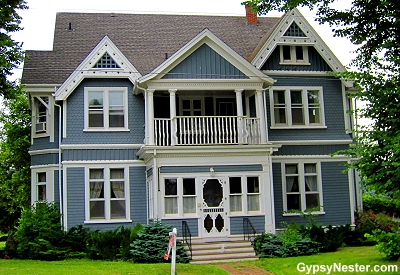
A fox house in Summerside
The prosperity gave rise to the term “fox house.” This does not refer to a place where little furry fellahs live, but the mansions that their owners built with the new found wealth.
Afternoon:
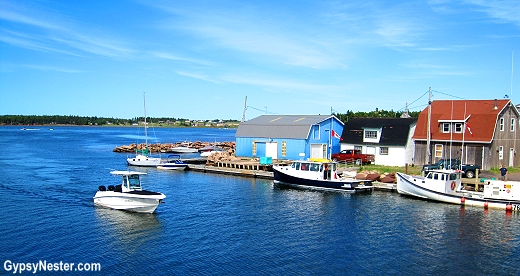
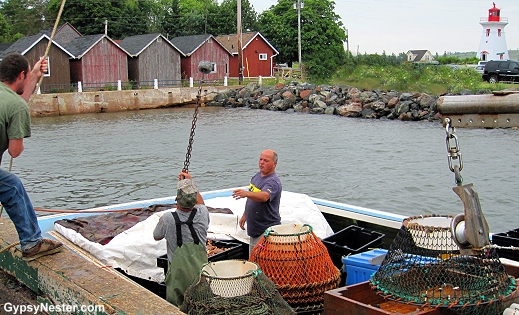
We make a quick stop in Victoria-by-the-sea and take a walk out on the dock, just in time to watch a crab fisherman unload his catch for the day.
Once again Boyde Beck brings history to life with his description of how Port-la-Joye was captured in 1745 by New Englanders from the colonies to the south, who built a new fortification called Fort Amherst. British rule ultimately led to renaming the island in honor of Prince Edward.
Fourteen years later this was the site of a second Expulsion of the Acadians, the French settlers in the Maritimes, when three thousand were sent away during The Seven Years’ War. Perhaps even more tragic than the first, only half about half made it to France due to shipwrecks and disease.
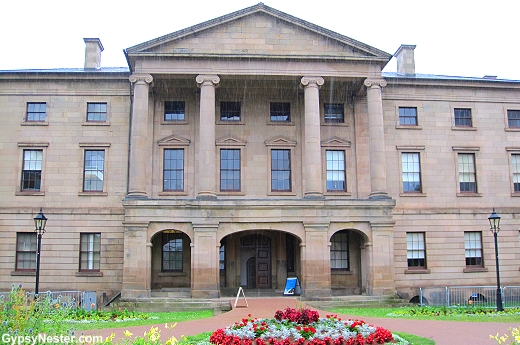
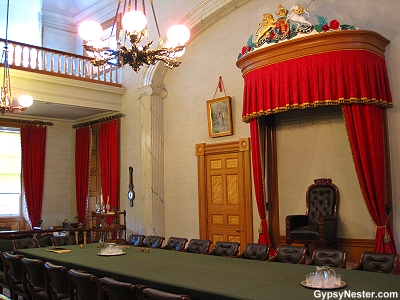
Just across the harbor, in Charlottetown, we find some slightly more recent history in the very room in Province House that hosted the Charlottetown Conference. This housed the first meeting in the process leading to the creation of Canada in 1867, the cradle of the confederation so to speak.
The provincial legislature still convene in a room at the other end of the second story hall.
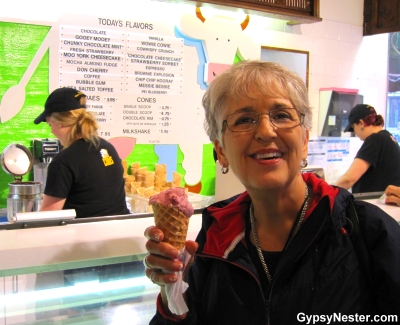
Charlottetown is also home of arguably the world’s best ice cream at Cows Creamery. By using only premium ingredients, upping the butter fat content to 16%, and reducing the air content to nearly zero, they have created the richest dairy dessert we’ve ever had the pleasure of licking off a cone.
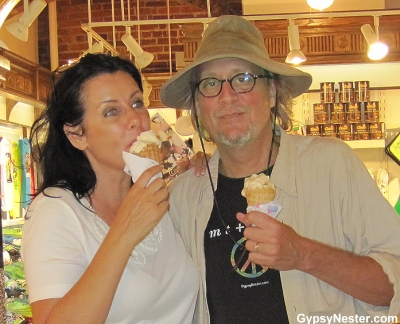
Ignoring the calories and just goin’ with it. Mmmmm.
The names for the flavors are an absolute hoot, like Wowie Cowie, Moo York Cheesecake, and Messie Bessie. We indulge in Gooey Mooey, with burnt sugar ice cream, English toffee, caramel cups, and chocolate flakes; along with Chip Chip Hooray, featuring their “cow chips” – P.E.I. potato chips dipped in chocolate.
Day Four: Lobster, A Really Long Bridge and New Brunswick Morning:
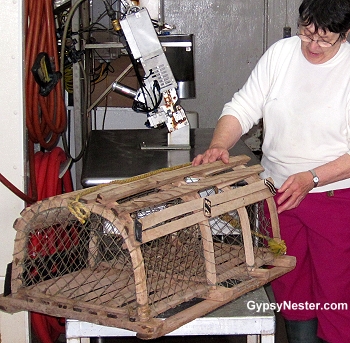
Loretta Jollimore, the “L” of L & C Fisheries since it began in 1978, gives us the low down on lobsters.
How to catch them, band their claws, measure them, tell the sex, store them, ship them, and most importantly… cook and eat them.
WATCH: Loretta shows us how a lobster trap works and explains the difference between the boys and the girls!
L & C also farms mussels, grown on lines out in the bays, and ships them on ice all over the world under the brand name Green Gables Mussels. Cultured mussels is a rapidly growing business on Prince Edward Island with about forty million pounds produced each year.
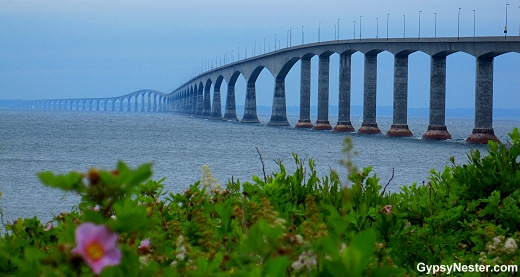
To make our way to New Brunswick, we cross eight miles over the Northumberland Strait on The Confederation Bridge.
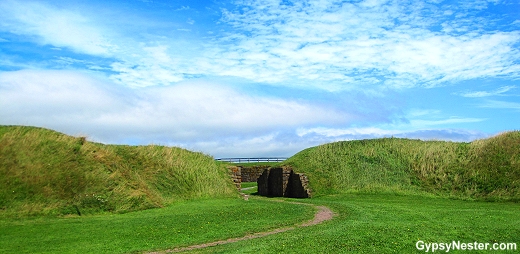
Our first stop in New Brunswick is Fort Beauséjour, built by the French to protect the route to Quebec. It was still unfinished in 1755 when the British attacked and captured it in what was a key battle in Father Le Loutre’s War.
The defeat ultimately led to France losing control of Acadia, and finally all of its colonies in North America except the tiny islands of St. Pierre and Miquelon just off the coast of Newfoundland. After the victory the fort was renamed Fort Cumberland and was the site of the proclamation that led to the deportation of thousands of Acadians.
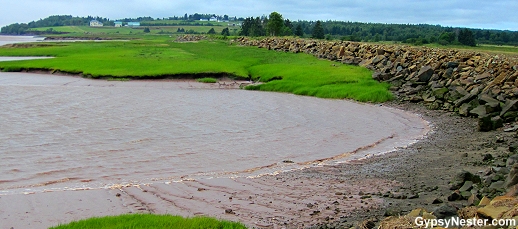
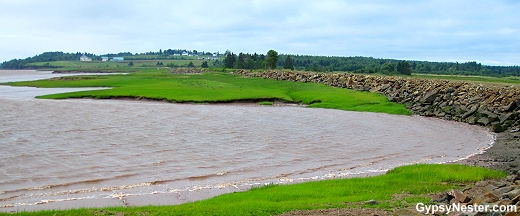
Nearby, we make a stop on the shore of the Bay of Fundy, renowned for the highest tides in the world. During just a few minutes while listening to our guide, Al Smith, explaining the phenomenon the water rises several feet on its way to a high tide of about forty-five feet.
The shape of the bay, like a funnel and, its length out to the open Atlantic, combine to cause the giant tidal fluctuations.
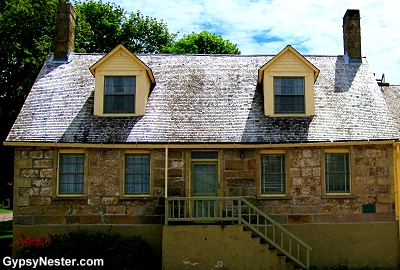
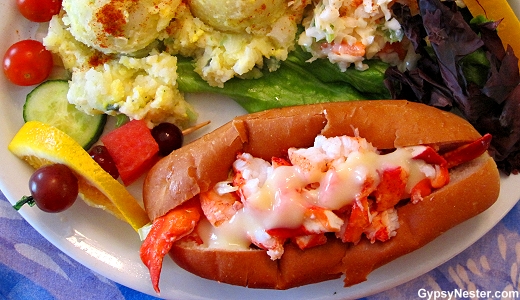
We stop for lunch just off the bay at The Bell Inn in the town of Dorchester. The inn is housed in New Brunswick‘s oldest stone building, and served something that tied in nicely with this morning’s activity at the fishery, lobster rolls.
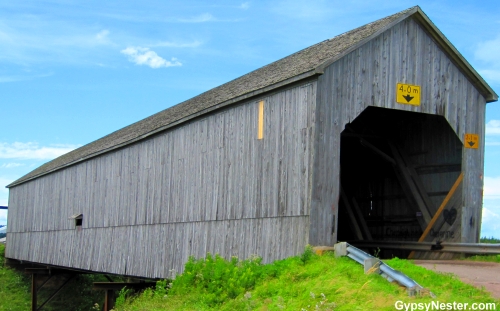
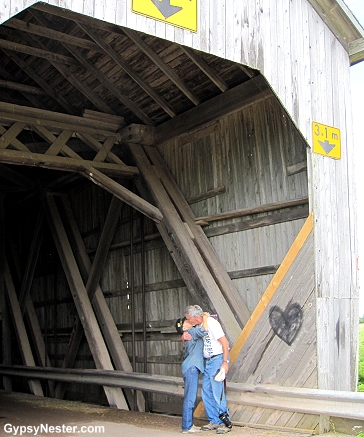
The Wheaton Covered Bridge is the last left of the covered bridges in the Tantramar Marshes and traditionally lovers have been kissing under it since the horse and buggy days. We caught fellow Road Scholar participants Dottie and Jerry living up to the custom.
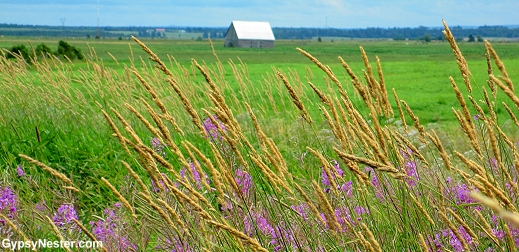
The area takes its name from the Acadian French word tintamarre, meaning din or racket, in reference to the noisy flocks of birds living in the swamp land that is now a National Wildlife Area and bird sanctuary.
The Acadians built earthen dykes throughout this region to reclaim the salt water marshes from the sea. Once the new land was blocked off from the tide and exposed to fresh water it became fertile farmland.
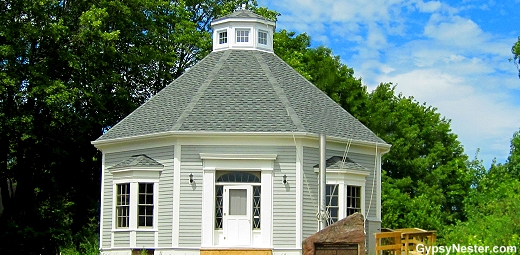
In the town of Sackville, known as Pré des Bourgs to the Acadians, we pass by the last octagonal house in New Brunswick. The home, in the once popular style, was built in 1855 by Captain George Anderson.
Day Five: Blueberries, The Great Upheaval and Nova Scotia Morning:
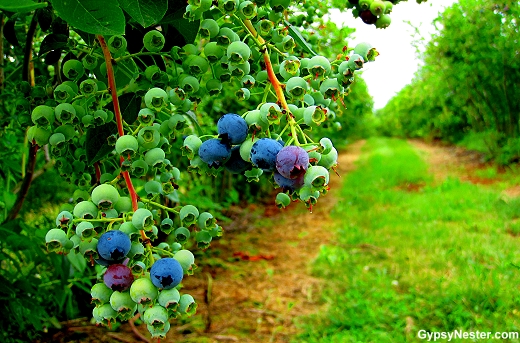
Leaving New Brunswick we make our way into Nova Scotia, Latin for New Scotland, and the Annapolis Valley. At Blueberry Acres we are in the middle of two hundred acres of high bush blueberries, and get an introduction to the business of growing berries, from planting, to picking, to packing.
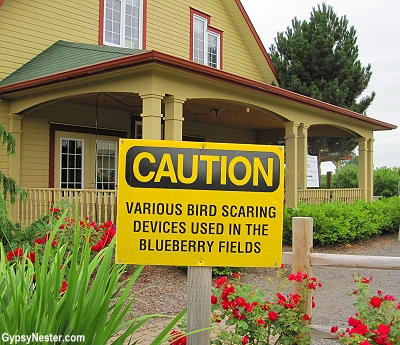
Meanwhile — randomly — a canon goes off in the never ending effort to keep birds from eating all the profits. Our guide describes the various ways this is done – the canons, piping in predatory bird sounds (a walk through the bushes sounds like a jungle excursion!) and statues of swooping “eagles” in strategic locations.
Between the Bushes Restaurant is also a part of the complex, situated smack in the middle of the farm, and blueberries are incorporated into many dishes.
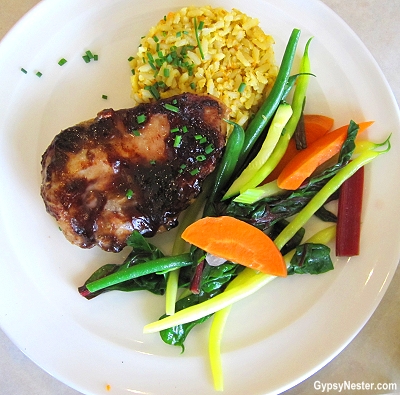
We start off with pure, sweet blueberry juice, then move on to their signature blueberry barbeque chicken. Somehow, even with a blueberry dessert, we felt not an inkling of overload.
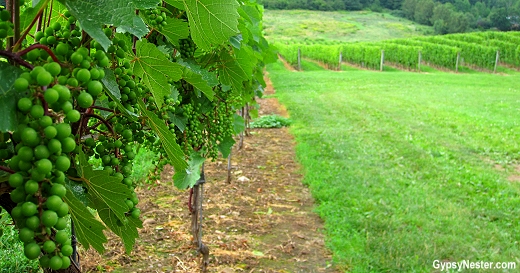
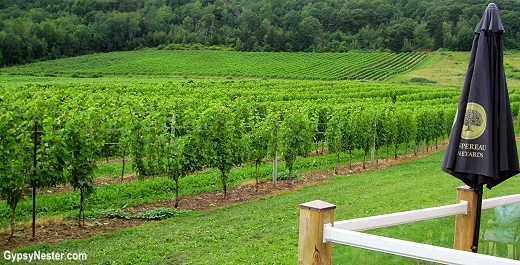
Our final stop of the day is Gaspereau Vineyards, the first of several wineries that have sprung up in the Annapolis Valley since 1996. They’ve planted thirty-five acres up the side of a south-facing hill that provides the sun and drainage ideal for growing grapes.
The white wines are the stars at Gaspereau, especially L’Acadie Blanc, named in honor of the local Acadian culture, and Tidal Bay, in a nod to the nearby Bay of Fundy. Both are crisp, light, and refreshing. Another unique, and very Canadian, ingredient is used in their port — maple syrup. Makes for a tasty after dinner drink… or it could be poured over pancakes. 😉
Day Six: Halifax. Titanic Tales and an Epic Explosion Morning:
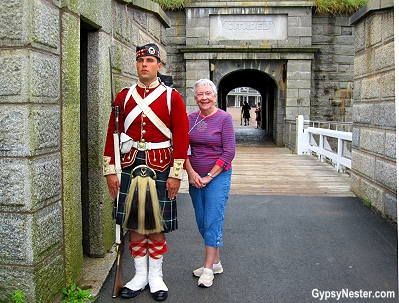
Fellow Road Scholar participant, Barbara, poses with
a very handsome (and very serious) Highlander
Overlooking downtown and the harbor, our first stop is Fort George, named for King George II, on the summit of Citadel Hill. What we see is a reconstructed version of the forth incarnation of the fortress that has been on this spot since 1749. No longer a military installation, it is a part of Parks Canada and guarded by re-enactors of the famous 78th Highlanders Regiment.
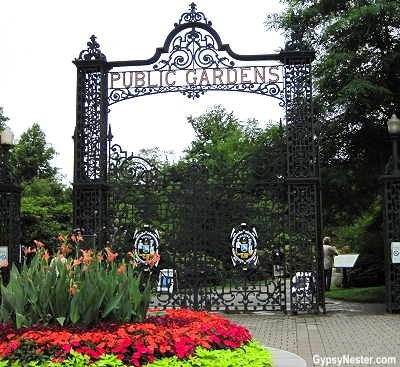
We continue with a stroll through the Public Gardens. This is truly a Victorian garden since it dates back to 1867, during Queen Victoria’s reign.
Flowers and plants from many varied climates line the walkways, with everything from cactus, to yucca, to roses, to towering trees represented. The roses smell so sweet, it’s like walking through a cake!
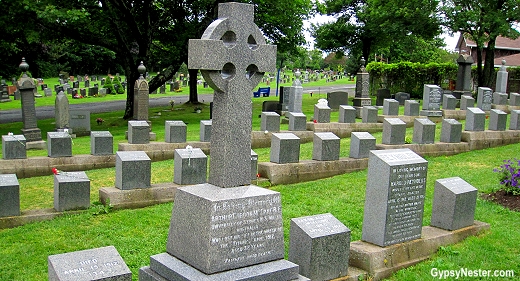
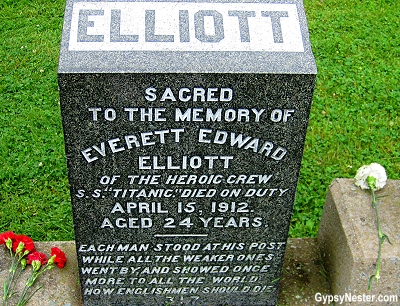
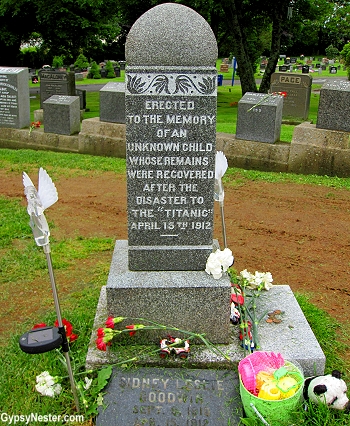
On a more somber note, we stop by the Fairview Lawn Cemetery to pay our respects at the graves of over one hundred of the casualties of the Titanic. Many of the headstones are marked with only numbers, as the identities of the victims remain unknown.
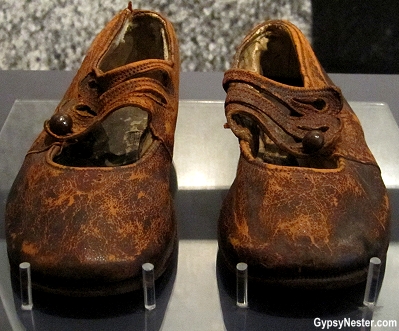
Perhaps the most poignant is an unknown grave of a two-year-old child brought back aboard the MacKay-Bennett, one of three ships sent out from Halifax to retrieve the deceased from the site of the disaster.
Just recently the boy was identified through DNA samples, but his family prefers that he continue to be a remembrance for all of the other unknown victims.
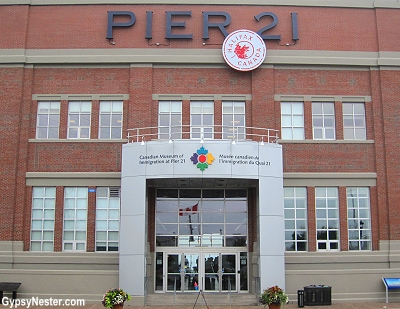
At Pier 21, sometimes called Canada’s Ellis Island, we learn about how over one million immigrants entered the country. Many were fleeing wars or oppression, others seeking economic opportunity, and still another group reuniting with spouses met during World War II. These were known as war brides, and nearly 50,000 arrived here to enter their new home.
We spend the remainder of the afternoon in the Maritime Museum of the Atlantic investigating the rich seafaring history of Nova Scotia.
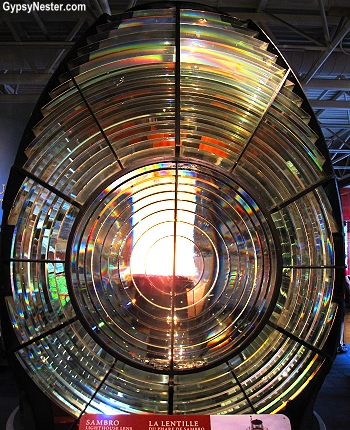
The collection includes a nine foot high lens from the Sambro Island Lighthouse, the oldest surviving lighthouse in North America.
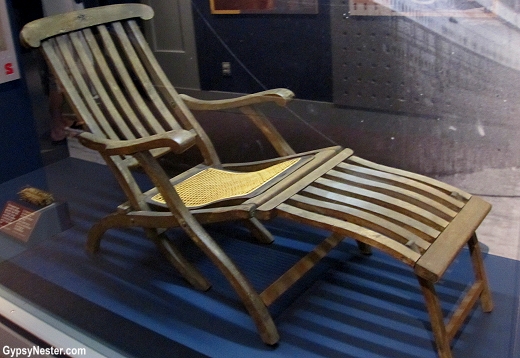
Shipwrecks are a big part of Halifax history, and the museum chronicles hundreds of them. Salvaged artifacts from dozens are on display, including a few from perhaps the most famous ever, the Titanic.
Once again we are reminded of the unknown child victim of the disaster when we come upon his little shoes in one of the cases.
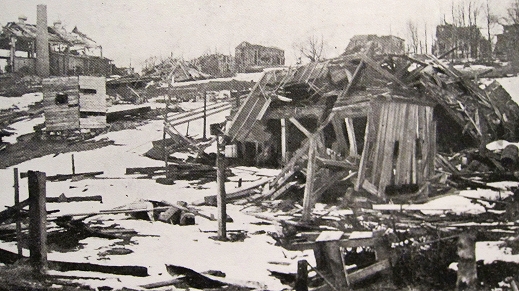
Another disaster struck the city just a few years after the sinking of the Titanic, the Halifax Explosion. On December 6, 1917 the SS Mont-Blanc, a French cargo ship filled with wartime explosives, collided with the Norwegian vessel SS Imo in the harbor. The Mont-Blanc caught fire and the resulting blast was the largest ever until the atom bomb.
At least two thousand people perished, with thousands more injured and left homeless. Aid poured in from all around, but Boston stood out in the relief effort, sending many ship loads of supplies. To this day, the city of Halifax sends a Christmas tree to Boston every year as a continuing thank you gift.
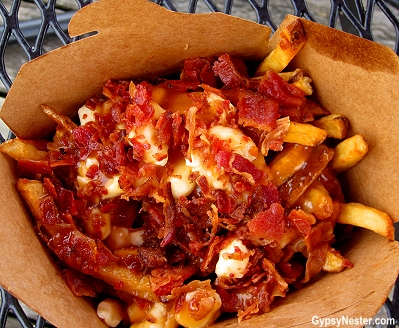
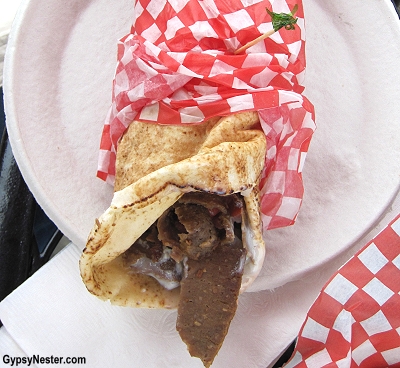
On the pier we have some free time for a bite, and we set out alone, GypsyNester style, to find some quintessentially Canadian street food. Good old poutine, french fries with gravy and cheese curds, which typically doesn’t include bacon (but bacon is always good!) and is more common inland around Quebec and Ontario; and a new item for us, donair, which is like a pita wrap of gyro meat served with a sweetened condensed milk sauce, and is unique to the Halifax area.
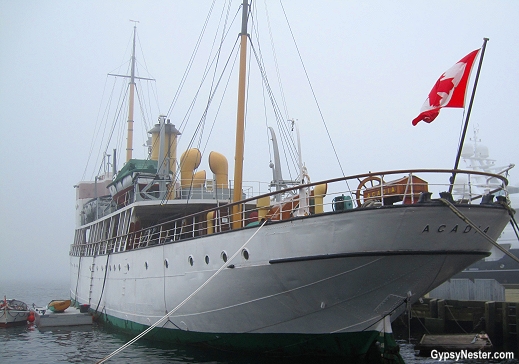
We sit and eat in the shadow of the tall ship Acadia. As always, poutine may not sound great, but no matter who we are with or where we try it, we never seem to see any leftover in the basket.
As for donair, the blend of spicy meat and sweet sauce works, but the sweet could be dialed back a notch or two without any complaints from us.
Day Seven: Scottish Settlement, Crossing the Strait and Fond Farewells in Lobster Bibs
Morning:
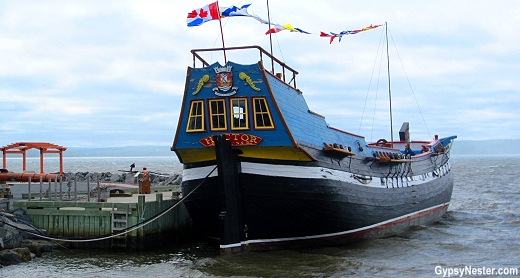
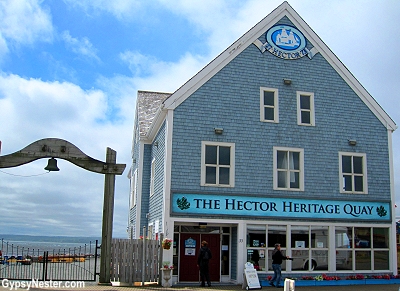
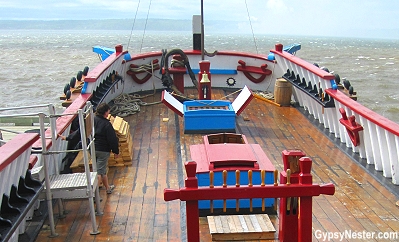
At Pictou we stop to see the Hector, famous for being the ship that brought the first Scottish settlers to Nova Scotia in 1773. A perfect replica of the ship, made from the original blueprints, highlights the museum. The exhibit chronicles the Scots fleeing the Highland Clearances in Scotland and making the arduous journey across the Atlantic to start new lives in Nova Scotia.
Aboard The Hector, we get a small sample of just how crowded two hundred people would be on a one hundred foot ship. In the holds there was only room for one bunk per family, so everyone had to take turns sleeping. Because of a horrific storm, the trip that should have lasted six or seven weeks ended up taking eleven, and eighteen passengers died out at sea.
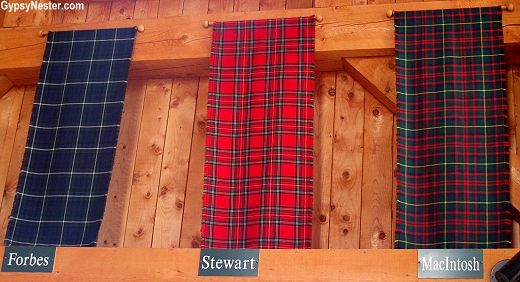
Scores of tartans line the walls of the museum, representing the clans of the families aboard. Veronica’s maiden name is Stewart… perhaps a relative?
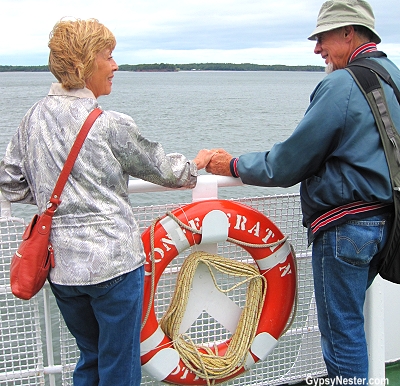
Fellow Road Scholar participants, Nancy & Floyd,
find the romance of the sea
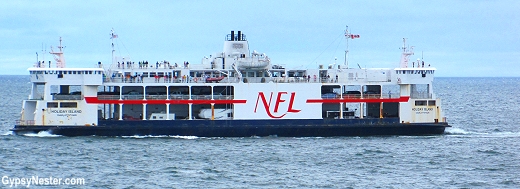
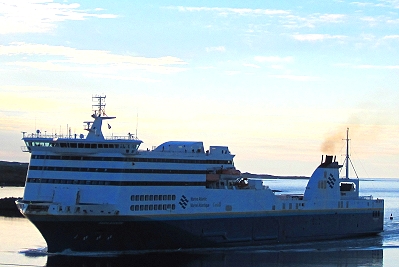
Straight from that harrowing story to a crossing of our own, without any of the hardships of course, the The MV Confederation ferries us across the Northumberland Strait back to Prince Edward Island.
To make the trip especially enjoyable, we are treated to live, local music as we watch the red cliffs dreamily come back into view.
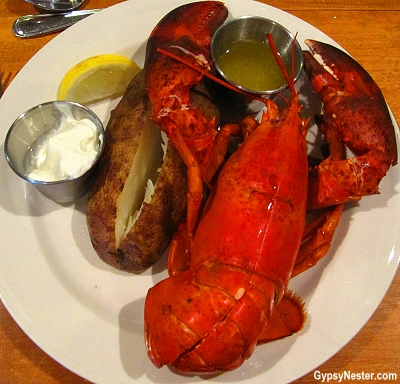
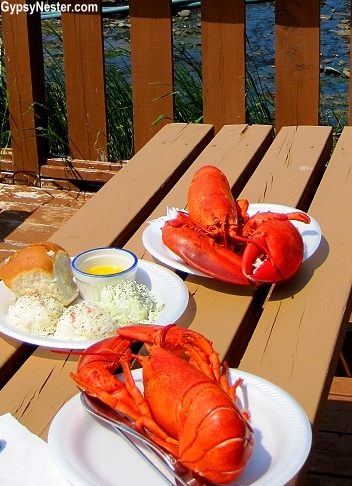
We finish our amazing adventure through Canada’s Maritime Provinces with a traditional island lobster supper. Since we are back on Prince Edward Island, potatoes are also an important part of the meal. Over our delicious dinner we look back over our phenomenal experiences of the preceding week, rehash, recount and, after lingering as long as we could over dessert, bid fond farewells to all of the amazing new friends we have bonded with along the way.
Bon voyage to wherever the travel bug takes us all next!
Port-la-Joye was captured in 1745 by New Englanders from the American colonies to the south, who built a new fortification called Fort Amherst. British rule ultimately led to renaming the island… CONTINUE READING >>
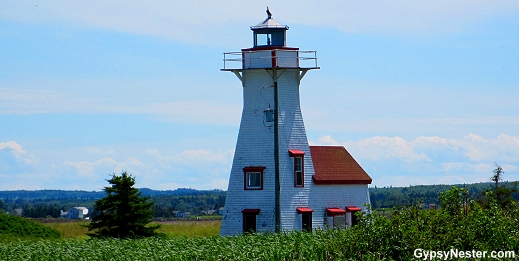
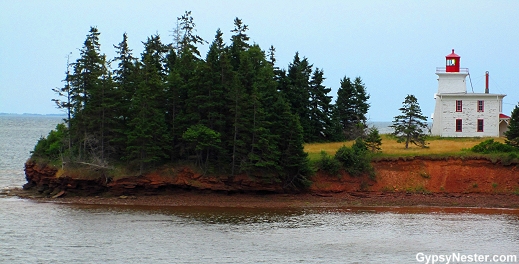
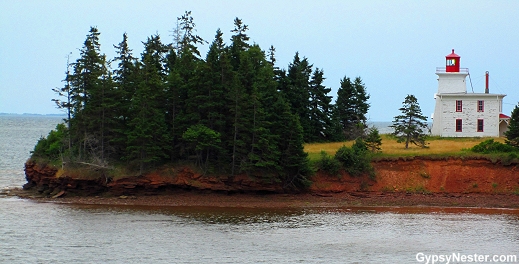
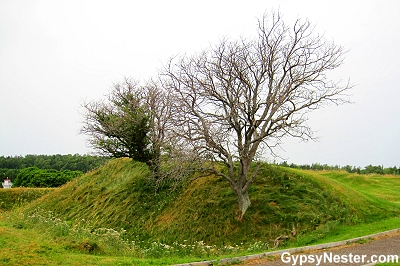
Lighthouse on Port-la-Joye, Prince Edward Island. Port-la-Joye was the capital of the island when it was under French control and called Île Saint-Jean.The fort is grown over.
Port-la-Joye was captured in 1745 by New Englanders from the American colonies to the south, who built a new fortification called Fort Amherst.
British rule ultimately led to renaming the island in honor of Prince Edward.
Red cliffed Port-la-Joye / Fort Amherst (Charlottetown is seen in the background)
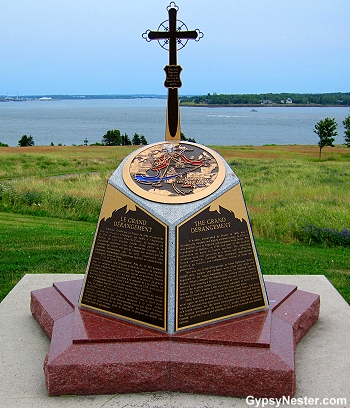
Fourteen years later this was the site of a second Expulsion of the Acadians, the French settlers in the Maritimes, when three thousand were sent away during The Seven Years’ War.
Perhaps even more tragic than the first expulsion, only half about half made it to France due to shipwrecks and disease.
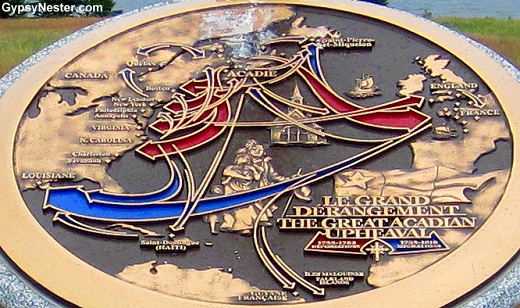
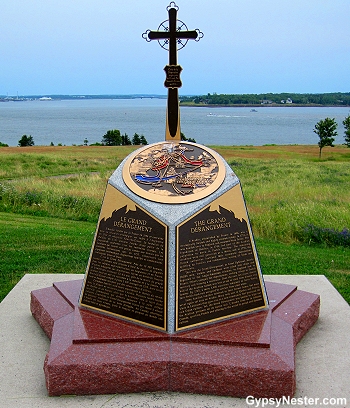
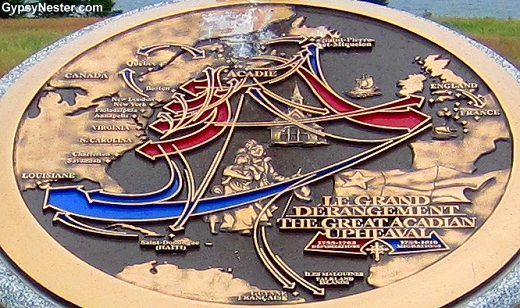
The deportations took place over several years and from a number of locations, including Grand-Pré. Thousands of Acadians had their possessions confiscated, their homes and farms burned, and were shipped south to the American colonies.
But they were not welcomed there, so they were sent off and scattered across the globe winding up in Europe, Haiti, The Faulklands, Saint Pierre and Mequelon, and Guyana.
After years of exile in foreign lands, some managed to assimilate into their new surroundings, some found their way back to Canada, and many ended up migrating to Southern Louisiana where they kept much of their heritage alive.
Once again we are preparing for a journey with the remarkable outfit Road Scholar. As a not-for-profit organization, their mission is continuing education through travel for those of us who have reached a certain age.
AND starting on Sunday we will be live-blogging the entire adventure!
As we found last year on our trip to The Galapagos Islands and Machu Picchu with Road Scholar, this philosophy brings together like-minded travelers who…CONTINUE READING >>
As we found last year on our trip to The Galapagos Islands and Machu Picchu with Road Scholar, this philosophy brings together like-minded travelers who are interested in experiencing and learning about destinations in depth.
Local experts and guides provide insights way beyond anything the typical tourist would ever see.
This time Road Scholar has been kind enough to provide an excursion for us through Canada’s Maritime Provinces of Prince Edward Island, Nova Scotia, and New Brunswick.
We won’t need as much preparation as we did for South America — we won’t be snorkeling in the ocean or climbing a mountain — but we have been happily studying the background of the regions we will be visiting.
And a rich history it is, involving sailors and fishermen, pirates and generals, battles and treaties, shipwrecks and rum running, and the birth pangs of two great nations.
Our journey sets out where Canada began, on Prince Edward Island. In 1864 the Charlottetown Conference led to forming the British North American Union, now the Canadian Confederation, so P.E.I. is known as The Birthplace of Confederation.
The island has also been called the Garden of the Gulf, for its lush, green lands surrounded by the Gulf of St. Lawrence.
Perhaps this inspired Lucy Maud Montgomery to set Anne of Green Gables on the island, guess we’ll find out when we visit Green Gables Heritage Site in Cavendish. We just finished re-reading the classic novel in preparation.
Next, we travel to areas in New Brunswick and Nova Scotia that were once settled by the Acadians. We are excited to learn more because it involves the history of the people who became known as Cajuns, after they were driven out of Canada.
We have been enamored with Cajun culture for years and are really looking forward to discovering their roots.
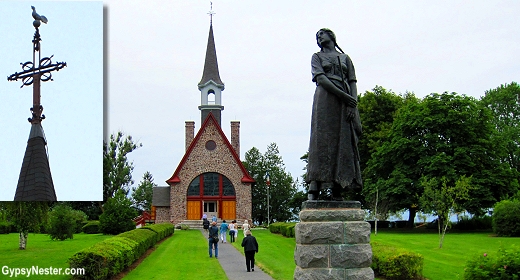
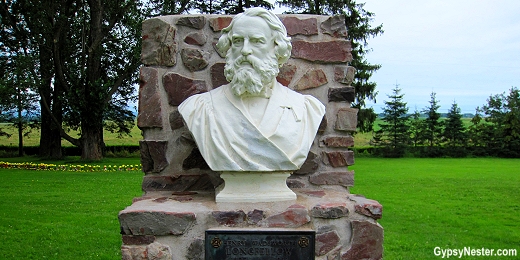
As a part of our investigation into this history we will be stopping off in Grand-Pré, made famous by Longfellow’s poem about the expulsion, Evangeline.
After our adventures with the Acadians we will be heading over to Halifax, the capital and biggest city of Nova Scotia, and the unofficial capital of The Maritimes. Halifax was also the entry port for millions of immigrants into Canada.
We will be visiting the former ocean liner terminal Pier 21, sometimes called the Ellis Island of Canada to learn more about the history of the country’s population.
We will also be examining Halifax’s role in two of the early twentieth century’s biggest disasters, the sinking of The Titanic, and The Halifax Explosion.
When The Titanic sunk in April 1912 the survivors were taken to New York, but for those that perished, at least those that could be found, the bodies were brought to Halifax.
We will be stopping by the Maritime Museum of the Atlantic to see their permanent exhibit on the role Halifax played in the disaster.
Lesser known, but every bit as tragic, we will also examine the Halifax Explosion.
We had no idea, but on December 6, 1917 a French ship filled with explosives bound for the war in Europe, collided in the harbor with Norwegian ship resulting in the largest blast in history until the invention of the atomic bomb.
Of course no visit is complete without sampling local delicacies, and in our experience Road Scholar does a great job of making sure we will get to partake in authentic fare. Atlantic Canada is world renowned for seafood.
There is no better place on the planet to get lobster, mussels, or cod, and we will have the opportunity to learn about how these are caught.
More important, we will get to enjoy the catch. In fact, after a ferry ride from Nova Scotia back to Prince Edward Island, we cap off our expedition with a traditional P.E.I. lobster dinner.
A boat ride AND lobster? Okay, now we are really getting excited!
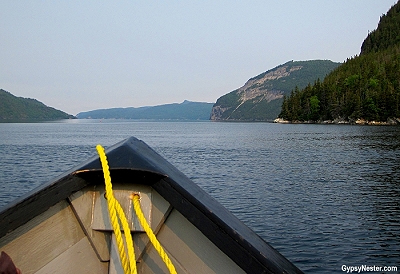
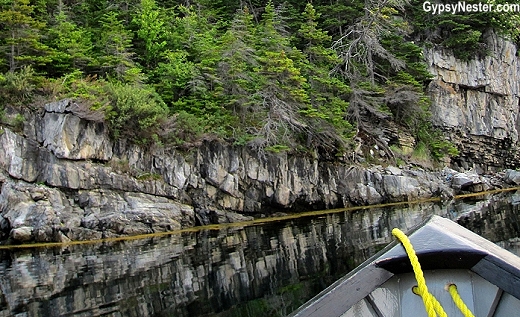
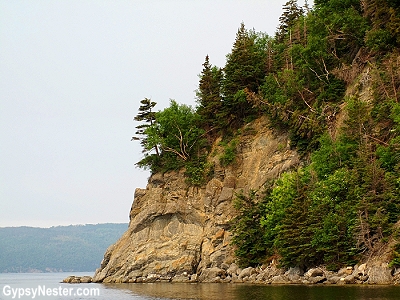
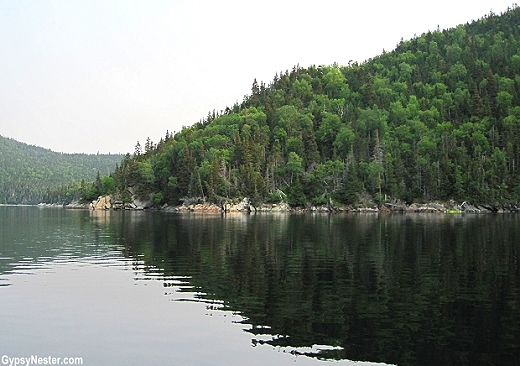
One of the most beautiful spots in Newfoundland is Bay of Islands and Cox’s Cove.
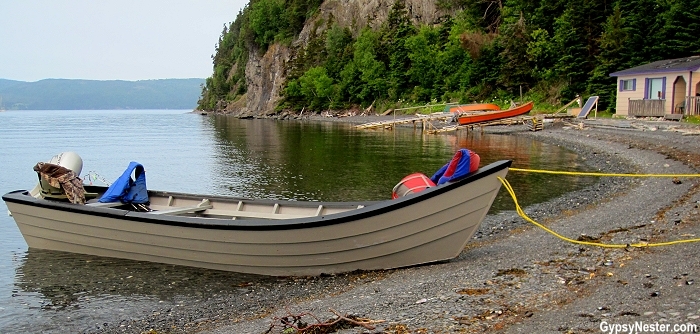
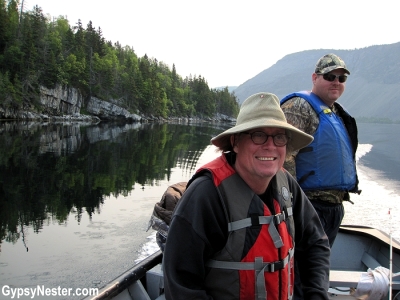
We met Darren Park, who runs Four Seasons Tours, for a spin around the bay in his traditional dory.
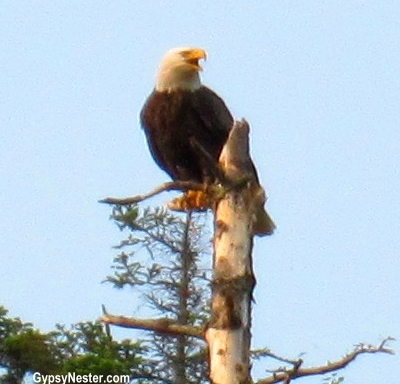
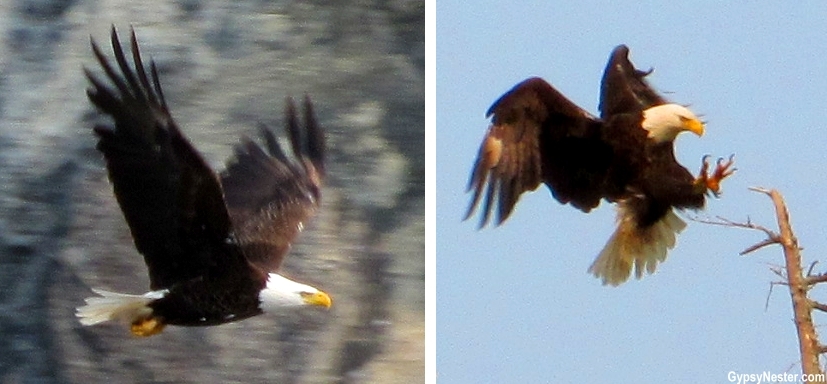
Darren knows his home cove like the back of his hand and immediately took us to a nesting sight with two baby eagles. Two adult birds were standing guard and watching the water.
Then Darren gave us a show. He tossed a fish out for the birds, but before they could swoop down a seagull snatched it. The chase was on!
Mama eagle was not about to allow some gull to steal her baby’s food, so she honed in on the gull like a fighter jet.
After a brief attempt to escape, the gull made the smart choice of dropping the fish. Mama picked it up and flew right over us to the nest.
From there we made our way to a few of Darren’s favorite fishing spots to try our hand at jigging a cod.
He made it look simple, just drop the line all the way to the bottom, (nearly three hundred feet!) then reel it up a couple turns and give it a few good tugs. Next thing we knew he had a big ole cod on the line.
WATCH: Eagles, cod jigging, wild land-and-seascapes and a visit to Darren’s fish cabin – all in a traditional Newfoundland dory!
Needless to say, it took us a bit longer to hook one, but we did get the hang of it and before long everyone had caught a good sized fish.
Well, this way we were ready for it when the time came.
After our lip smacking with the fish we were surprised by the salty taste left behind. We had to keep reminding ourselves that this was the ocean, because the bay looked for all the world like a freshwater lake up in the North Woods.
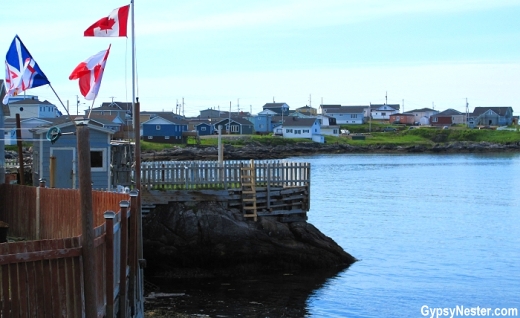
Our first glimpse of Newfoundland! Entering the harbor at Port aux Basques.
We didn’t really know what to expect of Newfoundland even as we were approaching the island on the ferry from Nova Scotia.
We knew about the crazy half-hour-later time zone, and had heard tell of whales, icebergs, and Vikings, but had no solid idea what day-to-day life or the landscape might be like.
Most everyone we talked to on the ship was heading straight from the dock to Gros Morne National Park, Newfoundland’s best known attraction.
The fine folks at the province’s Go Western Newfoundland had other plans for us though, and boy are we glad they did. They had several stops before the famous park on the itinerary they set up for us.
Had we blazed up the highway we would have missed some things that ended up being among the highlights of our visit, beginning with the town of Port aux Basques where we came ashore.
Once again that good ole GypsyNester dumb-luck played in our favor, as Canada Day celebrations had been postponed for a night due to weather, and were just kicking off as we entered the town.
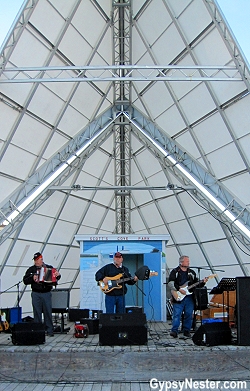
A crowd was gathering as a band set up in Scott’s Cove Park by the harbor, and vendors had booths with crafts and treats.
We ambled about for a few minutes, getting introduced to Newfoundland, then walked up the hill for dinner at the St. Christopher’s Hotel. We were greeted like old friends by Lloyd Whitehorn at the front desk. Lloyd also gives tours of the area, so he was the perfect guy to give us a few pointers.
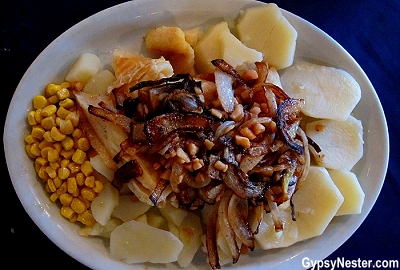
We had heard about fish and brewis before arriving on the island, and understood that this was a must-have meal if we were to get the full Newfoundland experience.
Salt cod and hardtack are soaked, then boiled, chopped up, and combined for a plate of stick-to-your-ribs seafaring rations. The menu listed Fisherman’s Brewis, but we figured it must be the same thing.
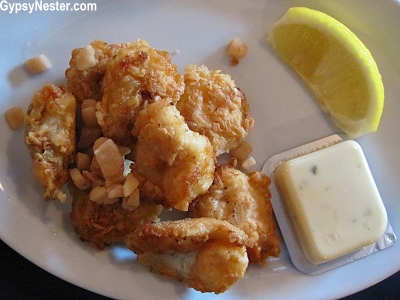
But first we had to try the true delicacy of the North Atlantic, cod tongues. Fried tidbits straight from the fish’s mouth, served with scrunchions, deep fried pork fat bits. The tongues just tasted like cod, with a very slight gelled consistency.
And everything’s good with a little pig fat on it. Scrunchions were also used to dress up the fisherman’s brewis.
Might not sound like gourmet dining, but it sure hit the spot after our crossing. Later in our trip we discovered that St. Christopher’s kept the fish and bread in bigger pieces than the more traditional versions.
It seems that can be the difference between calling it fish and brewis, or fisherman’s brewis. After dinner we watched the Canada Day fireworks over the bay, then drifted off dreaming of what awaited us on this intriguing island at the edge of North America.
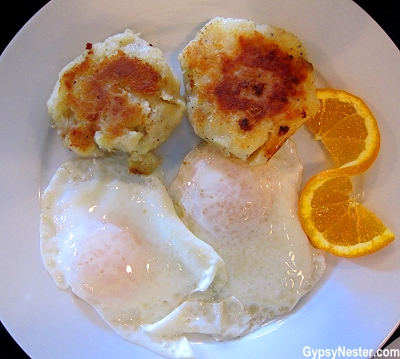
Sunrise found us learning much more about the island over breakfast of cod cakes and eggs with Stella Pittman, manager of St. Christopher’s.
She explained how so many folks miss the incredible beauty of the southwest portion of Newfoundland by driving through without stopping.
Stella, and several others, told us about visitors who thought the island was small enough to see the whole thing in three or four days.
Considering it is over six hundred miles from top-to-bottom, and end-to-end, that would mean non-stop driving. We sure are glad we booked the extra time to explore a little more in depth.
A Pirate’s Life for Me
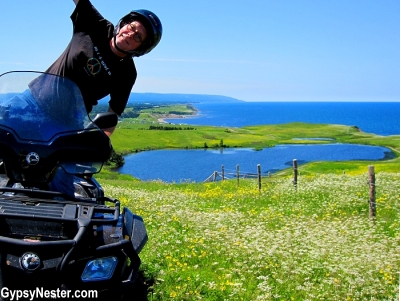
On our way north we stopped off at Pirate’s Haven, in the tiny west coast town of Robinsons, where Paul and Ruth Gale took us on the ATV ride of our lives.
They have set up a park with a campground, chalets, and a restaurant on a huge plot of land perched atop the cliffs overlooking the Gulf of St. Lawrence.
We rode the bikes, as they called the four-wheelers, to the edge for a view beyond compare.
The view from the hilltop chalets at Pirate’s Haven.
Their park is an amazing project that they have taken on singled-handedly over the past ten years, and it rivals any public lands we’ve seen for natural beauty.
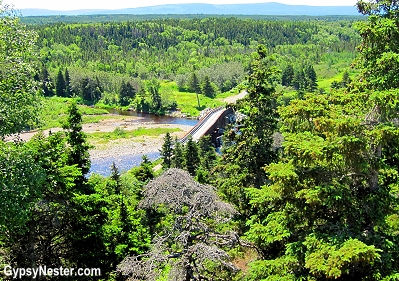
Riding back for a bite at their restaurant we crossed the Robinsons River on a trestle from the old Newfoundland Railway that went out of service in 1988.
The Gales helped save the crumbling bridge and now it has new life for hikers, bikers, skiers, and snowmobilers as part of T’Railway Provincial Park multi use trail that spans the entire island.
WATCH: A rip-roarin’ ATV ride in beautiful Newfoundland!
Our next stop was Bay of Islands and Cox’s Cove. We met Darren Park, who runs Four Seasons Tours, for a spin around the bay in his traditional dory.
Darren knows his home cove like the back of his hand and immediately took us to a nesting sight with two baby eagles. Two adult birds were standing guard and watching the water.
Then Darren gave us a show. He tossed a fish out for the birds, but before they could swoop down a seagull snatched it. The chase was on!
Mama eagle was not about to allow some gull to steal her baby’s food, so she honed in on the gull like a fighter jet. After a brief attempt to escape, the gull made the smart choice of dropping the fish. Mama picked it up and flew right over us to the nest.
From there we made our way to a few of Darren’s favorite fishing spots to try our hand at jigging a cod.
He made it look simple, just drop the line all the way to the bottom, (nearly three hundred feet!) then reel it up a couple turns and give it a few good tugs. Next thing we knew he had a big ole cod on the line.
WATCH: Eagles, cod jigging, wild land-and-seascapes and a visit to Darren’s fish cabin – all in a traditional Newfoundland dory!
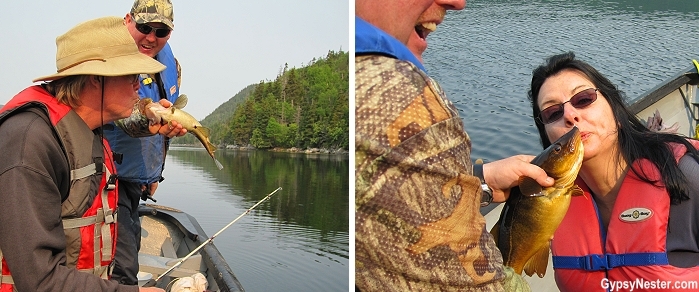
Needless to say, it took us a bit longer to hook one, but we did get the hang of it and before long everyone had caught a good sized fish. We had heard about kissing the cod, and for some reason Veronica thought it was a great idea, so we puckered up and smooched our catches right on the lips.
After our lip smacking with the fish we were surprised by the salty taste left behind. We had to keep reminding ourselves that this was the ocean, because the bay looked for all the world like a freshwater lake up in the North Woods. At least until we started seeing jellyfish.
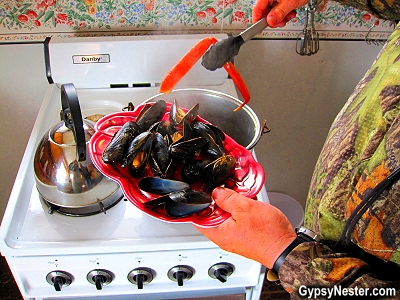
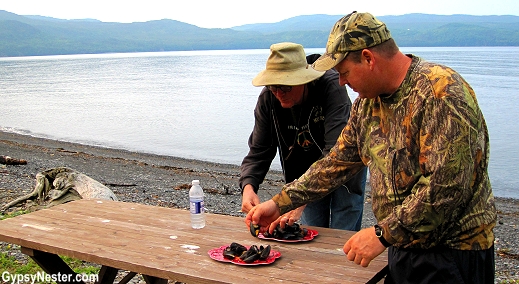
Once we were all successful cod fishermen it was time for a little sustenance, shellfish boiled in sea water.
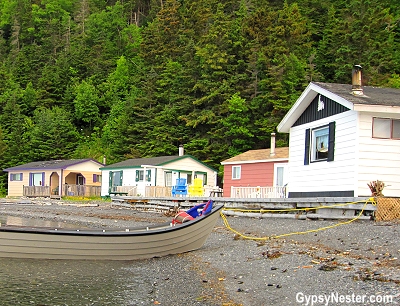
We beached the boat right in front of Darren’s fishing cabin and he grabbed a bucket of mussels and scooped some water from the bay into it.
The mussels came from right there. At low tide he just walks along the shore and picks them up. With some fresh snow crab tossed in, and a few minutes on the stove, we were ready for a feast.
In Cox’s Cove we learned about the real Newfoundland. From people like Darren, who has lived there all of his life, and Joan Oxford of True North Tours, who invited us over to her house where we discussed all things Newfoundland…
Music, history, food, and traditions all went round the table. It seemed like no one we met was a stranger. Easy conversations were struck up with almost everybody. We found a great example of what to expect on the rest of our journey across Newfoundland.
Beautiful scenery, unbelievable fresh seafood, gorgeous water, and most of all, fantastic people.
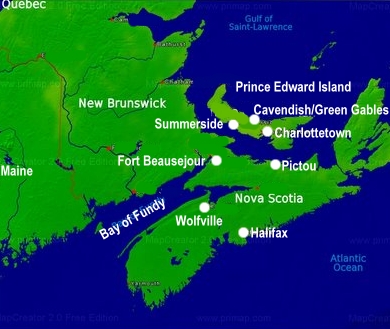 The Maritimes is a region rich in history — involving sailors and fishermen, pirates and generals, battles and treaties, shipwrecks and rum running, and the birth pangs of two great nations.