Search…

Whirlpools, Wings, and Northern Lights in Bodø, Norway

Who in their right mind plans a trip above the Arctic Circle in December?

Our answer? Who ever said we were in our right minds?

Chase us around Bodo, Norway as we visit the whirlpools of the Saltstraumen, marvel at midnight blue skies, and dance under the northern lights… CONTINUE READING >>


A big thank you to Visit Norway and Visit Bodø for this illuminating adventure – and to Eurail for the 15-day rail pass that inspired us to undertake it!

Bodo, Norway

Who in their right mind plans a trip above the Arctic Circle in December?

Our answer? Who ever said we were in our right minds?

So we found ourselves in Bodø, a Norwegian city whose name we struggled to pronounce until we arrived and heard the residents saying it. It sounds a lot like “Buddha,” yet somehow we could tell that they were not referring to an Eastern mystic.

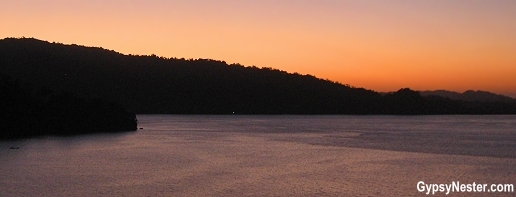
The view from our room at Scandic Havet in Bodo, Norway

Our room at Scandic Havet

It was an easy walk from the train to our hotel, which was hard to miss since the Scandic Havet is the tallest building in town.

While we were walking, David mentioned how great it would be if we were high up and facing the ocean.

He must be the mystic, because that’s right where our room was.

Pulling out all the stops

The Bodo Cathedral in Bodo, Norway

We didn’t waste any time, or what little daylight there is way up north in the winter, getting out to see some of the city’s landmarks, beginning with the Bodø Kathedral.

The cathedral, like almost everything in Bodø, was built after World War II because nearly the entire town was destroyed in a German bombing raid in 1940.

The free standing bell tower of the Bodo Cathedral in Bodo, Norway

The church has a classic style, with an eye-catching free standing bell tower, but the most fascinating part of our tour was a demonstration of the remarkable pipe organ.

Organist Brian Hepworth took us up to the loft and explained the inner workings of this incredible instrument.

He began by showing us the different tones and qualities of the various types and sizes of the thousands of pipes.

Then, like icing on the cake, he gave us a bit of a private concert.

Organist Brian Hepworth shows us around Bodo Katherdral in Bodo, Norway

The organ at the Bodo Cathedral in Bodo, Norway

We could feel the movement underneath us when he pulled out the various stops that control which pipes are sounding.

Then he pulled out all of the stops (yup, that’s where that old saying comes from) and we really felt the power.

We know that the word is wildly overused, but awesome is about the only way to describe it.

The importance of aviation in Norway

The Norwegian Aviation Museum in Bodo, Norway is housed in two propeller blades

Perhaps the town’s most recognizable building is the Luftfarstmuseet, which is the Norwegian Aviation Museum and is cleverly designed in the shape of a giant propeller.

One blade houses historic displays of civilian aviation, and the other showcases military flight. In the middle there is a control tower overlooking the active Bodø airport.

The distance from Bodo to other parts of the world

We started in the tower and watched (yes, we sat at the console and pretended to assist) a couple of Scandinavian Airlines jets come in to land.

As with many remote outposts like Bodø, aviation played a big role in recent history, because flying makes the far corners of the globe so much more accessible. Although, we must say that we enjoyed arriving by rail.

The Norway Aviation Museum in Bodo has a large collection of vintage planes

For many years sea planes were the usual aircraft throughout Norway, until landing strips began appearing around the time of World War II. The museum features a large collection of these classic aquatic planes.

The Norway Aviation Museum in Bodo has a large collection of vintage sea planes

Most are of the pontoon variety, with floats in place of landing gear, but there are a couple of the old “flying boats” as well. These are designed just as the name implies, like a boat with wings over the top.

Wreaked German war planes are on display at the Norwegian Aviation Museum in Bodo, Norway

The military side has several Nazi-era German warplanes that crashed in the nearby mountains on display.

There is also a beautifully preserved Supermarine Spitfire, which is often mentioned as one of the best fighters the Allies had.

The Norwegian Air Corps flew several of these while operating out of Great Britain while Norway was occupied.

a beautifully preserved Supermarine Spitfire at the Norway Aviation Museum in Bodo

After our history lesson we walked across the street to the Bodø Spectrum, a huge indoor waterpark and swimming complex which includes the Spectrum Spa. No way were we passing up the chance for some sauna action in the arctic.

So we steamed and basked under a sunlamp for a while, then soaked in the outdoor hot tub before heading back to our fabulous high-rise room overlooking the harbor.

The night view from our room at Scandic Havet Hotel in Bodo, Norway
The view from our room at Scandic Havet!

One of our biggest reasons for venturing into the arctic at this time of year was the hope of seeing the northern lights, but alas, it was not to be on this night.

The clouds were not going to break and give us a clear view of the sky.

But what spectacular clouds!

Going with the Flow, the World’s Strongest Flow

Just after sunrise, which happened around eleven AM at that time of year, we hopped on a bus to the Saltstraumen.

The Bodin Church in Bodo, Norway

This narrow channel between two fjords forces the tide waters to rush through, forming incredible, massive whirlpools and eddies as the sea levels desperately seek to equalize.

On the way we passed one of the few remaining medieval structures left standing anywhere in the area, the Bodin Church. The little white church was built around the year 1240 in a typical stone design for that time, and is still in use today.

The bridge over the Saltstraumen, the world's strongest tidal flow, near Bodo, Norway

The Saltstraumen creates massive swirls outside of Bodo, Norway!

When we reached the Saltstraumen, our driver took us over the bridge that spans the straights to get an aerial view of the swirling designs that the wild currents form in the water.

Then for a closer look, we pulled off under the bridge and walked to the water’s edge.

WATCH: You’ve got to see the video to get the full idea of the crazy speed!

The Saltstraumen creates massive swirls outside of Bodo, Norway

The Saltstraumen creates massive swirls outside of Bodo, Norway

Clinging to the rocky shore, we could feel the water rushing by as the tide was rising.

When the tide turns and heads back out to sea there will be a brief time that the straights are calm as the levels are equal, but soon after the process will reverse itself and the water rushes just as fast in the other direction.

Saltstraumen, the world's strongest tidal flow, near Bodo, Norway

Fishing in the Saltstraumen near Bodo, Norway

All of this churning makes this a prime feeding spot for fish, and the local fishermen know it.

It was quite a show to watch as they threw lines out into the rushing current and reel in coalfish and cod.

Those fish had to be pretty dizzy by the time they made it to the surface.

Fishing in the Saltstraumen near Bodo, Norway

See more about our adventure at the Saltstraumen!

As we rode back to Bodø, our bus nap ritual was set aside. The scenery was too damned stunning to risk missing by nodding off:

Beautiful scenery outside of Bodo, Norway

Beautiful scenery outside of Bodo, Norway

So did we see the Northern Lights?

The view from our room at the Scandic in Bodo, Norway

The sun was already setting as we rode back into town, and seeing a few breaks in the clouds was giving us high hopes that tonight might be the night for some momentous Aurora action.

It had better be, because it is was last chance before heading back down below the circle.

The seawall in Bodo, Norway

In preparation for our sighting (we were thinking positive) we took a stroll out to the end of the seawall that protects the harbor.

We had heard stories that this is a popular spot to stand and face the wind and surf when storms blow in off the Norwegian Sea.

The seawall in Bodo, Norway

The storm warning sign on the seawall in Bodo, Norway

There was a pretty brisk breeze as we made our way to the lighthouse at the end, but nothing close to the crashing waves washing over people we’d seen in photos.

Maybe we aren’t quite as brave as they are, but then they do it in the summer.

The seawall in Bodo, Norway

Weak northern lights in Bodo, Norway

Around ten o’clock we headed down from our room to the dock beside the hotel to scan the northern heavens, and lo and behold a greenish glow began to appear.

As it grew brighter, our doubts that it might just be a reflection, or something else, were removed.

Northern Lights in Bodo, Norway

This was most definitely the aurora borealis, not a spectacular display, but certainly one nonetheless. We even managed to capture some of it on camera.

Yet with the cold and fatigue from the trip, even this excitement couldn’t keep us from crawling into bed.

Northern Lights in Bodo, Norway

Veronica didn’t stay down though, she ventured back out after midnight, just in time to catch a much better aurora episode.

This time there were some waves and even various colors. After clicking her brains out on the camera, and trying every possible setting, she felt confident enough that she had captured the moment to go inside and wake me up.

Northern Lights in Bodo, Norway

When I saw the photos I jumped out of bed and threw on my clothes and a coat. I had to see this!

But alas, by the time we got back out only a faint glow remained. We waited and watched for a while, but it was getting seriously cold — like arctic cold – so we went back inside.

So who in their right mind plans a trip above the Arctic Circle in December?

We do, and we’re glad we did.

David and Veronica, GypsyNester.com

See all of our adventures in Norway!

See our full journey through Norway by rail – spectacular!

A big thank you to Visit Norway and Visit Bodø for this illuminating adventure – and to Eurail for the 15-day rail pass that inspired us to undertake it! As always, all opinions are our own.

Wow! We are Enormously Grateful to…

Going Gypsy on PBS's Next Avenue PBS’s Next Avenue recommended Going Gypsy!
Going Gypsy on Johnny Jet Our interview with the wonderful
Johnny Jet
Going Gypsy in the Poughkeepsie Journal Going Gypsy in the Poughkeepsie Journal Going Gypsy on Examiner.com Examiner.com
GypsyNesters on My Lifestyle Career My Lifestyle Career
Going Gypsy on My Itchy Travel Feet My Itchy Travel Feet Going Gypsy on Time of Your Life Now Time of Your Life Now
Going Gypsy on Momentum Nation MOMentum Nation Going Gypsy on Aging Abundantly Aging Abundantly
Going Gypsy on Travels with Tam Travels with Tam Going Gypsy on A Satisifying Retirement Satisfying Retirement
And that’s not all! See more Going Gypsy News!
Going Gypsy on PBS's Next Avenue PBS’s Next Avenue recommended Going Gypsy!
Going Gypsy on Johnny Jet Our interview with the wonderful
Johnny Jet
Going Gypsy in the Poughkeepsie Journal Going Gypsy in the Poughkeepsie Journal Going Gypsy on Examiner.com Examiner.com
GypsyNesters on My Lifestyle Career My Lifestyle Career
Going Gypsy on My Itchy Travel Feet My Itchy Travel Feet Going Gypsy on Time of Your Life Now Time of Your Life Now
Going Gypsy on Momentum Nation MOMentum Nation Going Gypsy on Aging Abundantly Aging Abundantly
Going Gypsy on Travels with Tam Travels with Tam My Faces
+ Places
And that’s not all! See more Going Gypsy News!

Fear Conquering & Skydiving Over Queensland


Jumping out of a perfectly good airplane has become one of those ultimate bucket list items.

Like living to 120 years old or climbing Mount Everest.

Of the three, the most feasible to me was the jump.

Which turned out to be a bit odd, because there was no… CONTINUE READING >>

Huge thanks to Tourism and Events Queensland and Skydive Ramblers for providing this exciting adventure! As always, all opinions are our own.

The Cessna 182 used by Skydive Ramblers, Queensland, Australia

Jumping out of a perfectly good airplane has become one of those ultimate bucket list items.

Like living to 120 years old or climbing Mount Everest.

Of the three, the most feasible to me was the jump. Which turned out to be a bit odd, because there was no jumping at all on my part – but I’m jumping ahead of myself.

My tandem instructor captures a moment of pure panic at Skydive Ramblers in Queensland, Australia
I’m so glad my tandem instructor, Julian caught this moment right before the door was opened. Until now, I never knew what I looked like in pure panic mode. Most of the photos and video are taken from a camera mounted on the (thankfully) multi-talented Julian’s wrist.

When we first spoke to Tourism and Events Queensland about heading to Australia, they asked if there was something special we would like to do.

Without hesitation, I mentioned that I always like to face a fear conquering event – something that inspires others (and myself) to step outside of our comfort zones.

It felt like we sat on the edge of the plane forever. Filmed at Skydive Ramblers in Queensland, Victoria
This is me – not looking down. It seemed like we sat here on the edge of the plane for two hours. Video evidence (see below) proves it was a lot closer to two seconds.

I should have known better, Australians are — by nature — an adventurous people, and I am not. I’m trying — and growing — but I’m not even close to Aussie level.

When skydiving was mentioned, I wholeheartedly said yes, drawing an evil glare from David. In a bit of role reversal,I was the one chomping at the bit while he was the one hemming and hawing.

The initial jump over Queensland, Australia on the Sunshine Coast with Skydive Ramblers
Thankfully, I somehow kept my eyes open. And my mouth. And my nostrils. I wasn’t aware that nostrils could get so big.

Catching on to his hesitation, the gang at TEQ suggested an alternative for David – a day at a spa.

He liked that idea, relaxing on terra firma, perhaps enjoying a massage, while I fell from the sky.

But there was a catch – if he chose the spa day, he would have to partake in a full body wax.

Suddenly, he was all-in for skydiving.

It wasn’t until the night before the Big Jump Day that I started to freak out. Not terribly, but just enough that my panic mantra (people do this every day and don’t die… people do this…) was necessary. I slept, but barely.

The initial jump over Queensland, Australia on the Sunshine Coast with Skydive Ramblers
Smile or grimace? We will never know.

With the moment at hand and panic mode setting in, I could certainly appreciate some humor, and the folks at Skydive Ramblers didn’t fail to deliver.

While getting harnessed in, my supersonic onslaught of questions (what happens if?… why do we need that?… how come you just?…) was cleverly answered or jokingly deflected by my tandem instructor, Julian.

Arm position while sky diving at SkyDive Ramblers, Queensland, Austraila
Arms out to embrace the earth coming up at me!

My first jolt of actual terror came when I saw the plane.

For some stupid reason I had envisioned a huge cargo plane full of enthusiastic jumpers standing in a large doorway while Ride of the Valkyries played in the background.

A semi-military situation with white chutes drifting over the target zone.

Nope. Instead a bright yellow Cessna 182 was on the runway. There would be no standing up in it, sitting was even tight.

Once we were in flight, I mentioned to David that six years ago – prior to my decision to face my fears head-on – I would have NEVER gotten into this kind of plane at all.

See how brave I am?

Or not, since I was (not so) subtly suggesting that maybe the flight alone was enough to get me off the hook. Maybe I should just fly around a bit and that would be plenty for the day.

David watches as I parachute over Queensland, Australia with SkyDive Ramblers

There were two problems with this strategy.

1) If I didn’t jump, David would be stuck, unable to get around me to jump, or more accurately fall, out the door himself.

2) David had, all of the sudden, become really excited about the prospect of hurling himself out of the plane. Damn.

So when we reached 10,000 feet, I jumped. Or dropped. Or fell. Whatever it was, I did it.

WATCH: I am visibly terrified.

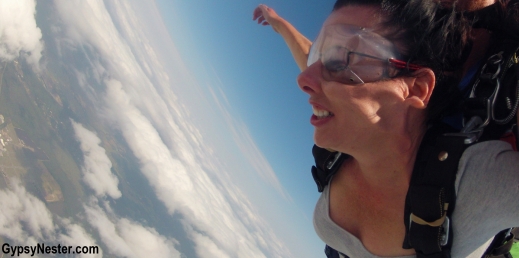
I can’t really explain the feeling of free-falling. There is nothing natural that can prepare a human for the sensation; I don’t think we’re mentally equipped to process plummeting to the ground at 130+ miles an hour.

It isn’t like a roller coaster. I didn’t feel the sensation of the ground coming up at me. My brain must have gone into something akin to shock, because the entire thirty-second free-fall portion took on a slow-motion, dreamy quality.

Skydiving over Queensland, Australia on the Sunshine Coast with Skydive Ramblers

The opening of the parachute was my favorite part (mostly because I was pretty sure it meant I was far less likely to die by the end) and, for me, the biggest rush. That is where the roller coaster feeling happened, and I like roller coasters.

Once I let go of Julian (I had somehow clawed onto his arm) and realized that my white-knuckled hanging-on to the harness made no difference safety-wise (not that I stopped doing it), a peacefulness set in. It really was beautiful and serene up there.

But not calm enough to truly settle a panicky person such as myself. So I began to fire off questions about the landing. Seems I had to have something new to freak out about. Sorry Julian – it’s how I roll. Man, Julian’s a good guy.

Picture perfect landing onto Coolum Beach
Picture perfect landing onto Coolum Beach!

Landing was mercifully uneventful, I simply stood up when Julian said “stand up.”

Ambushed by a news crew!
Shoes are optional for this news crew! Love it!

Then the news crew came racing over.

We had no idea they were going to be there and I was too wigged out to do anything but babble.

Luckily, our segment was short, David quickly came to my rescue and the reporter was really, really nice!

WATCH: I am introduced to the Australian public by way of the amount of saliva I don’t have in my mouth. Classic Veronica!

The best of David's face whilst skydiving!
Bonus Fun! The best of David’s face whilst skydiving!

Fear conquered. Will I do it again?

Ask me again on my 120th birthday.

Veronica, GypsyNester.com

Veronica Gives Skydiving a Go!


Who knew nostrils could stretch so far? Watch as Veronica “jumps” from 10,000 feet over what has to be the most beautiful place to “fly”!… Read the whole, crazy adventure here! or enlarge video>>

Who knew nostrils could stretch so far? Watch as Veronica “jumps” from 10,000 feet over what has to be the most beautiful place to “fly”! And see what I look like when I’m completely petrified… Read the whole, crazy adventure here!>>

Click here to see all of our adventures in Australia!

Visit our GypsyNester YouTube Channel!

Why Do People Like Us Even Have Kids?

“Tell me why when a person says they enjoy the empty nest another person counters with – Oh, but I am close to my kids. ARGH”

Receiving this sort of frustrated tweet is not uncommon for us, this one came while sitting with our morning coffee in a hotel cafe.

I had just returned from using the lobby bathroom where I overheard a cell phone conversation in the stall next to me.

Yes, I admit I was eavesdropping – but I have two lame excuses.

1) We had just… CONTINUE READING >>

Hey! It's Veronica!

“Tell me why when a person says they enjoy the empty nest another person counters with – Oh, but I am close to my kids. ARGH

Receiving this sort of frustrated tweet is not uncommon for us, this one came while sitting with our morning coffee in a hotel cafe.

I had just returned from using the lobby bathroom where I overheard a cell phone conversation in the stall next to me.

Yes, I admit I was eavesdropping – but I have two lame excuses.

1) We had just arrived back to the States from Europe and my ears were trained to zero in when English was spoken and

2) This woman – we’ll call her Dorothy – was not trying to keep her voice down.

As we sat side by side with just a thin metal barrier between us, I was made privy to Dorothy’s life and woes. She was laying it all out to some poor set of ears on the other end of the phone line… complaining about her son, his lack of ambition, the fact that he was living in her home at 30-years-old and on and on and on.

Next came a plethora of excuses for Boomerang Boy…the ill-fated college attempt, the series of jobs he’d been fired from, the mean ex-girlfriend and on and on and on.

I had finished my business in my stall but remained quiet-as-a-mouse seated – I was hooked. My own little personal soap opera, no TV required!

Then came the kicker. Dorothy began to bad mouth her sister-in-law for having the audacity to suggest that Dorothy kick Boomerang Boy out of the house.

“She said that he needs to stand on his own two feet – I told her that I didn’t agree at all. After all, I love my son. I feel sorry for her kids.”

And there it was. I hightailed it out of there before I could hear any more.

Back in the lobby as I was retelling Dorothy’s story to David, the aforementioned tweet came in. It got me thinking.

What causes this leap of logic? Why are folks so quick to jump to the conclusion that we who embrace the “empty” nest are somehow bad parents?

A while back, we were profiled in the Huffington Post and were giddily overwhelmed by the discussion the article created. The comments were by far more positive than negative, but an interesting little theme popped up here and there:

“Why do people like this even have kids?”

“Doesn’t sound like they were very close at all. How sad for the kids.”

“It almost seems like they just wanted to forget they even had kids.”

Are those of us who choose to be defined as GypsyNesters – rather than empty nesters – selfish, unloving parents? Have we forsaken our children for our own dreams?

We have met some incredible GypsyNesters on this journey of ours, people going back to college, volunteering in their communities, writing that novel that has been percolating for years, reconnecting with their spouses in new and exciting ways. They are embracing this new chapter of their lives.

For these wonderful folks will I make this argument:

As parents we want to raise moral, self-sufficient, happy adults. That’s our job. When that job is finished, it’s a reason for celebration. It is not time to sulk, it’s not time to burden your offspring with tales of your woe – THAT’s selfish.

“The kindest thing you can do for the people you care about is to become a happy, joyous person.”
– Brian Tracy

Not that I’ve been exceptionally perfect in this regard. I’ve got plenty of growing to do.

As a Recovering Helicopter Mommy I’ve had my hideous backslides. I’ve stuck my big pointy nose in where it doesn’t belong. I’ve struggled with allowing my own fears to interfere with my Spawn’s growth. I made WAY too many relentless phone calls when I thought The Piglet and Decibel were in danger. I still find my self-righteous teachable moments.

And, yes, I cried like Tammy Faye Bakker on the second day of her period when each of my children left the nest. As a matter of fact, I still go into a days-long pity funk every time I have to say good-bye to one of them.

My job as a mother is never actually finished – I will always be there for The Spawn. But I have to let my children go to grow. When my time here on earth is done, I will not have done my job well if The Spawn can’t make it without me.

Veronica, GypsyNester.com

YOUR TURN: What are your thoughts on embracing the “empty” nest? Am I selfish? Should I have left the task of procreation to others? Leave a comment!

Cruising Holland and Belgium, A Live Blog


Our live-blog continues – through Holland and Belgium – we’re having a blast out here! Join us LIVE… CONTINUE READING >>

Written aboard the Longship Skadi on her voyage through Holland and Belgium with stops in Amsterdam, Kinderdijk, Antwerp, Bruges, Veere, Hoorn, and Arnhem. Thanks to Viking River Cruises for inviting us along and providing this adventure! As always, all opinions are our own.

Did you miss Dispatch One of this adventure? Click here to catch up!

Day Five: Bruges – Quaint Doesn’t Even Begin to Describe Her

Late Afternoon: A Steep Climb and a Giant Music Box

View of Bruges, Belguim from the Belltower
We can see where we had lunch from here!

Strengthened by our repast, we are ready to ascend the tower and must say that seeing the clockworks, bells, and the carillon drum that controls the bells is well worth the sore legs we will have tomorrow.

Not to mention the view from the top.

The bells atop the belltower of Bruges, Belgium

The forty seven bells of the carillon toll every fifteen minutes, so we make our first stop at the top and within a minute or two the bells are pealing.

It is certainly an eye, or more appropriately an ear, opening experience, but not as loud as we expected.

The clockworks in the belltower of Bruges, Belgium

As the last of the bells reverberate, we take in the view from all angles before heading down one level to the drum room.

This is where the clockworks tick away, and soon the the nine-ton brass drum (the largest in the world!) that controls the ringing of the bells begins to turn.

The mechanics are like a giant music box.

The cylinder has more than 30,000 holes where pins are arraigned to operate the hammers that strike the carillon bells.

The drum of the belltower in Bruges, Belgium

The huge wheel rotates as the bells ring out, but it only moves about a quarter of a turn.

Four songs are placed onto it, one for each quarter hour, and the pins can be moved and replaced to play different songs whenever it is desired.

We are simply fascinated, but time is running short. We need to scurry, but not too quickly, down the spiral staircase and catch the bus back to the good ship Skadi. Haste must be combined with care because if we started rolling down these stairs, we might never stop!

See more about our adventure in Bruges!

Evening: A Taste of Holland and Belgium

An according player came aboard Viking River Cruises' Longship Skadi for a taste of Holland and Belgium

Back on board we are thrilled to discover that tonight’s dinner is a Taste of Holland and Belgium.

On each cruise, the chef prepares regional favorites from the area we have been sailing through.

On our past Viking excursions we have experienced a Taste of Austria while cruising the Danube, and a Taste of Germany while on the Rhine.

Herring on Viking River Cruises

Tonight we sample several seafood dishes, including the typical Dutch herring, Dutch stew, meat & fish pies, Belgian fries, and even a bitterballen or two.

Fish and meat pies are presented at the Taste of Holland and Belgium on Viking River Cruises

This is all accompanied by Belgian and Dutch beers, and traditional music from the Netherlands. We even spot wooden shoes on crew members!

Night: A Towel Animal! We LOVE Towel Animals!

An elephant towel animal on Viking River Cruises!
Hand made by our wonderful steward, Monika!

We’re not done yet! Continue along with us

Day Six: Veering into Veere and How the Dutch Do Dry

Veere, Holland, The Netherlands

Morning: First, the Veer into Veere

Today our mission is to learn more about how the Dutch protect themselves against the ocean’s onslaught because over half of their homeland sits below sea level.

So we jump off the ship and on to the buses for a tour of the Delta Works, an ingenious system of enormous doors that hold the North Sea at bay.

But first we stop off for a quick look at the little village of Veere.

Once a prosperous fishing and trading port town, it is now a sleepy hamlet that can only be described as charming as all get out.

The little drawbridge in Veere, Holland, The Netherlands

A home with a lovely garden on the main square of Veere, Holland, The Netherlands

We are happy to simply stroll along the water by the marina that has replaced the old harbor, with a wonderful collection of private yachts and vessels on one side, and beautifully restored buildings on the other.

Many of these buildings housed small warehouses or guilds back in the old days, but have now been converted into stylish homes. These houses line the town square as well, and the whole hamlet is overseen by an ornate bell tower that would certainly do justice to a much larger community.

Stones we're hung around the necks of people who misbehaved in Veere, Holland, The Netherlands

In the olden days – or days of yore – folks who misbehaved were made to walk around town with heavy-chained stones around their necks. Not wanting to be the guys that brought back the tradition, we are on our best behavior in Veere.

Afternoon: A Giant Project

Viking River Cruises' bus in Holland

Riding bikes on the dikes of Holland

The Delta Works, or Deltawerken in Dutch, came about in response to a tragic flood throughout the Netherlands province of Zeeland in 1953.

The earthen dams and dikes protecting the islands and peninsulas gave way during an intense storm and over eighteen hundred people perished.

The hydraulic doors of the Delta Works in Holland

David holds the water back with his finger in a dyke in Holland!

Huge hydraulic doors that can be closed when the weather turns nasty were built at three openings to the North Sea, preventing flooding tides from inundating the Lowlands.

The original idea was to simply dam the channels, cutting them off from the sea, but this would have destroyed the tidal ecology and ruined the shellfish industry that is vital to the area. By controlling the flow without stopping the tides, the mussels and oysters are thriving.

Jan survived the floods in Kortgene, Holland in 1953
Jan shows us the people of his village who were lost

Near the giant sea doors, there is a museum about the history of the flood and solutions to the problems of keeping the seawater at bay.

We descend inside a caisson underneath one of the dikes, to get a truly inside look at the defenses built after the flood. In a stroke of amazing luck, and a rare, personal brush with history our guide, Jan, is a survivor of the disaster. Giving us a firsthand account, he described the night when he was eleven years old and the flood waters hit.

The tribute for the lost of the 1953 floods in Zeeland, Holland at the Delta Works Museum
Beautiful memorial to the lost

Lucky for him, his family, and the entire town of Kortgene, his older brother and friends were up late celebrating a birthday and noticed the water rising.

Thinking fast, they saved almost all of the town’s residents by breaking into the church and ringing the bells to awaken them.

With the alarm sounded, people had a little time to climb to upper floors or roofs and survive. Across the low country many others were not so fortunate, as the water rose over ten feet in the middle of the night.

Driving atop the Delta Works in Holland
Driving along the top of the Delta Works

The tragedy gave birth to the huge Delta Works project, which was designed to withstand floods so severe that they are predicted to occur only once every four thousand years.

Hopefully those tolerances won’t be tested; so far the doors have only needed to be deployed a few times, other than the usual testing that is done four times a year. It is the largest storm barrier in the world and is the basis for several similar projects worldwide.

Evening: What do you do with a Drunken Sailor?

Sunset at Rotterdam

A Dutch Shanty Choir

After dinner, the Skadi makes a stop in Rotterdam to pick up a little entertainment for the evening.

A Shanty Choir of about thirty seafaring mates sets up shop in the lounge and begins belting out a bevy of classic sailor songs, singing in multiple languages… sometimes it seems, all at the same time.

Just what does one do with a drunken sailor? They have plenty of ideas.

A Dutch Shanty Choir

Day Seven: Opulence, Stroopwafels, and A Bridge Too Far

Morning: Market day and making stroopwafels

John Frost Bridge in Arnhem, Holland, The Netherlands

This morning we are docked below the bridge over the Rhine River at Arnhem.

The spot was the site of some of the fiercest fighting in the Netherlands during World War II. In September of 1944, Allied paratroopers were dropped into the occupied territory with the task of securing the bridge.

Many were off course and landed too far away to make it, but a small band succeeded in taking one side of the bridge.  Without reinforcements, they could only hold it for a few days and ultimately had to surrender. The struggle was immortalized in the 1977 movie A Bridge Too Far.

The Jacob Groenewoud Park in Arnhem, Holland, The Netherlands

A few months later, the Allies returned to liberate the city and destroyed the bridge to keep the enemy from crossing the river. When it was rebuilt it was named the John Frost Bridge in honor of the commander of the paratroopers.

We walk under the bridge on our way into town and stop at The Jacob Groenewoud Park, named for the only Dutch officer involved in the operation, and linger for a few minutes over the photos and relics from the two separate attempts to free Arnhem.

Winged Diesel Man-Headed Turbo Chicken statue in Arnhem, Holland, The Netherlands

Near the park we spot Winged Diesel Man-Headed Turbo Chicken (not its proper name). We can only assume that the artist intended this as an metaphorical piece to represent something.

After asking numerous guides and failed Google attempts, we can only find out that it is very new.

A lot of speculation is bantered around on our walk into town. Is the the wing for paratroopers? The diesel engine for rebuilding? But why it was given a man’s head and put in the shape of a turbo chicken is beyond our comprehension. We love it when art prompts conversation.

The city gate of Arnhem, Holland, The Netherlands

Continuing along the river, we come to the old city gate and hang a right into town.

This is the only one remaining of the four gates in the old walls, and it has been superbly restored. It feels like we are walking through a portal into the Middle Ages.

Unfortunately, very little is left in Arnhem from that era. Wars have ravaged the town, so most of the buildings are relatively modern.

Cheeses in the Saturday Market in Arnhem, Holland, The Netherlands

The square in front of the obscured Eusebiuskerk is buzzing with the weekly market in full swing.

As usual, within minutes we are wishing we had access to a kitchen so that we could cook up some of the fantastic looking meats, seafood, sausages, and vegetables offered at the dozens of booths.

Cheeses in the Saturday Market in Arnhem, Holland, The Netherlands

We have to settle for some cheese. Settle is probably not the right word, because the Dutch make some of the best cheese on the world.

We sample several varieties and choose an herb seasoned goat cheese and a classic Gouda, named for the nearby town.

As we wander deeper into the town we find a little shop with stroopwaffles being made in the front window. Our new friend and waffle master, is kind enough to demonstrate the process for us from start to finish. She begins with a small ball of dough, presses it in an iron, and in minutes creates a delicious treat.

We love stroopwafels!

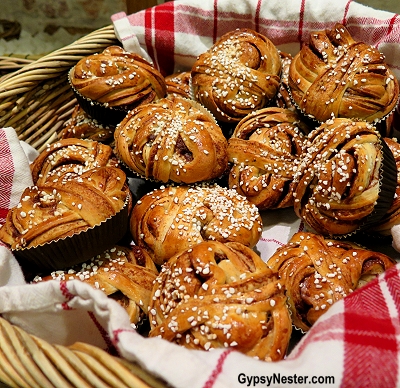
The final result is more of a cookie than a breakfast item, with caramel spread between two crispy waffle layers, that easily puts the average sandwich cookie to shame. Oreos won’t even dare to venture out of the bag in the presence of these babies.

Turns out that these amazing tongue ticklers originated in Gouda too, back in the 1800s, and that was the only place they were made for nearly one hundred years. Time was, when you wanted a stroopwafel, you had to go to Gouda.

Cheese and stroopwafels, Gouda must be Dutch for heaven.

Do you love cooking classes like we do? Click here to see our classes from around the world!

Afternoon: Into the Woods, but Hardly Roughin’ It

Paleis Het Loo in Holland, The Netherlands

For the afternoon’s adventure we are heading inland a few miles to Paleis Het Loo, which means The Woods Palace. From 1684 until 1962 the House of Orange-Nassau, the Dutch royal family, used this as a residence and summer retreat. It is a museum now, but there are still official functions held from time to time.

The gardens of Paleis Het Loo in Holland, The Netherlands

The design is classic European country palace, it certainly brings to mind Versailles, but on a smaller scale. Before going inside we walk around to the garden, which is also laid out in the typical royal residence style.

The main difference we immediately see is that the hedges forming the patterns are all very low. Our guide explains that a blight took a terrible toll on the plants, so they all had to be replaced.

The early spring weather we have enjoyed the past few days has given them a good start, but they still have a long way to go before anyone will be getting lost wandering among these hedgerows.

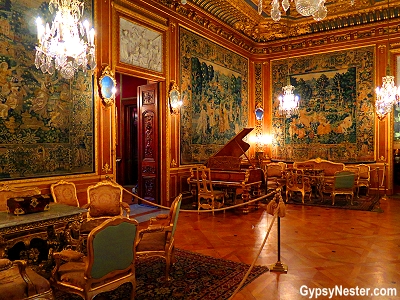
Opulant room in the Paleis Het Loo in Holland, The Netherlands

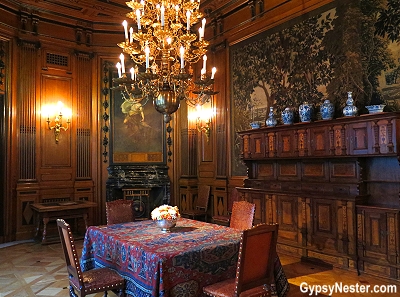
Inside the palace we find ourselves walking through what feels like a time capsule.

The rooms are perfectly preserved and, unlike Versailles, the furnishings were not destroyed or stolen away during a revolution, so opulent seventeenth century life is well represented.

King Willhem III often worked from his bed chamber at Paleis Het Loo in Holland, The Netherlands

Many of the rooms show a working residence; the business of running the kingdom was addressed not only in studies and libraries, but even from the bedroom.

King Willhem III often suffered with ill health so he held meetings and did much of his ruling from his chamber.

As we proceed, we seem to be moving forward in time. The rooms start to show some modern conveniences, such as indoor plumbing with a shower and tub, and even heated towel holders in Queen Wilhelmina’s bathroom from 1904.

Little fur lined childs car at Paleis Het Loo in Holland, The Netherlands
A little fur lined child’s car

We find some of the most interesting items of our tour in the old coach house next to the stables.

There are, of course, several very nice horse drawn carriages, including one that looks like Cinderella should be stepping out any second before it turns into a pumpkin, along with sleighs and automobiles.

The cars date back nearly a hundred years, but surprisingly they are very practical models. There’s not a fancy luxury car in the collection, mostly Fords, with a Fiat and Volvo or two.

We have heard many times on this trip how the folks from Holland are renowned for their thriftiness, and the family made efforts to connect with the populace, often seen riding their bicycles. What could be more Dutch?

Baby carriages with protection for gas attacks at Paleis Het Loo in Holland, The Netherlands

Right next to the cars we find a big surprise, two anti-gas kinderwagens.

The baby buggies were set up to protect child passengers in case of a gas attack. These were made during World War II because of the fear that gas would be used again, as it was in the first World War.

Happily, they were never put to the ultimate test.

Evening: The Way Things Work

The pilothouse of the Viking River Cruises' Longship Skadi

While we pass through a lock, we have a chance to check out the nerve center where all of the navigational functions of the Skadi are controlled.

Viking River Cruises' Longship Skadi passes through a lock in Holland

While the second officer skillfully pilots us through the narrow passage, the first officer walks us through all of the instruments.

Everything is computerized and state of the art. We can see the power applied to each of the ship’s four engines, and pinpoint our exact location on satellite GPS. The radar screen takes center stage to serve as the eyes of the ship in the dark of night or heavy fog.

We certainly feel that we are in good hands, and that is right in our wheelhouse.

Day Eight: Blowing our Hoorn, a Home Visit and Herring

Morning: Sunrise and dodging cannonballs

Sunrise over Lake IJsselmeer in Holland, The Netherlands
The view from our balcony

This morning we awake to a rare occurrence on a river cruise, there is no land in sight.

We are sailing across a former arm of the North Sea known as the Zuiderzee that is now a freshwater lake called IJsselmeer.

As part of their never ending battle against the water the Dutch dammed the bay in 1932 and within a few years water from the river Ijssel had replaced the saltwater.

The tower of Hoorn, Holland, The Netherlands

We dock at the town of Hoorn, which was a major port for the Dutch East India Company back when the sea was still accessible.

Now, instead of fishing boats and cargo vessels, the harbor is filled with cruise ships and private yachts.

The harbor is dominated by a defensive tower situated where any approaching enemy could easily be fired upon.

The stronghold and the side facing the water is curved into a semicircle to deny cannonballs a flat surface to crash into, and is covered with natural stone that is much better withstanding the sea. It has stood for centuries because it was ideally made so that both armaments and elements bounce off.

Afternoon: Pass the Herring Please

Statue of ship boys in Hoorn, Holland, The Netherlands

While Hoorn was a seaport herring was huge, and the salted fish has remained a staple of the Dutch diet for a long, long time.

We were willing to give it a try, so joining about a dozen of our shipmates we hit a little fish shop right on the harbor.

The shop had just about anything that comes from the sea available, but in order to get the full Dutch experience we would have to try the Dutch sushi… raw, salted herring.

How a real dutchman eats a herring!

Traditionally, it is served with onion and pickle, which are we hoping will hide some of the fishy flavor, but the old salts will eat a whole fish with no accompaniments at all.

Our guide and former Hoorn mayor, Jos, shows us how it’s done by a true Dutchman.

Not feeling that brave, we opt for a couple of small pieces topped with pickle and heavy on the onion.

The fish is not that strong and is easily overpowered by the onion, but the texture, cold and raw, leaves a lot to be desired.

Herring in Holland

All in all we think we’ll stick with the stroopwafles!

See more about wonderful Hoorn!

Late Afternoon: Home and Punishment

Inside a skinny house in Holland

The folks at Viking have set up an interesting surprise for us today; the chance to visit a host family in their home.

This is an opportunity to see everyday Dutch life in a personal way, with people who are happy to meet travelers from around the world.

For us it was an exciting chance to see inside one of the skinny houses that have captured our attention all through Holland.

A visit to a home in Hoorn, Holland, The Netherlands

We are separated into small groups (can’t have the entire ship descending upon one house) and sent off to various houses.

Our group is introduced to our hosts, Steef and Lia (Veronica thought about smuggling out her new buddy, Lola the lap dog, but then thought that it might be considered rude), and welcomed in to sit down for coffee, dog petting, apple pie, stroopwafels, and great conversation.

Our Dutch home visit host, Lia, and her two snuggly dogs

When we heard about this idea we were a little wary that this could be uncomfortable or seem forced, but within a few minutes we are all happily chatting about our families, travels, backgrounds, and even home improvements.

The two hundred year-old house is wonderfully remodeled, and Steef and Lia are pleased to show us their handiwork.

The view from our host family's house in Hoorn, Holland, The Netherlands

Time flies by and before we know it over an hour is passed and we need to clear out and let the couple enjoy the rest of their day.

Steef and Lia’s grandbaby will be coming by soon, so we say thank you and goodbye and go on our way with a much better understanding of what it is like to live in Hoorn.

See more about wonderful Hoorn!

Hoorn, Holland, The Netherlands

Hoping to continue that feeling, we walk over to the town’s main square, Roode Steen, to watch the afternoon activities and soak up some sun.

The name means red stone, as in blood red, because this was the site of public punishments for criminals.

Rood Steen Square in Hoorn, Holland, The Netherlands

Often those judgments included removal of body parts, up to and including the head, and the stone took on the color of the spilled blood.

The round rock marking the spot today is a replica of the original, but that doesn’t stop David from mimicking a criminal about to lose his hand for thievery.

Veronica is too chicken to try, just in case the authorities have caught on as to how much she was coveting Lola the Lap Dog. It’s doubtful that justice is currently dispensed like this in Hoorn, but we’re not taking the chance.

See more about wonderful Hoorn!

Evening: Wooden Shoes are More Dangerous than we Imagined!

Wooden shoe demonstration aboard Viking River Cruises' Skadi

Back aboard the Skadi, we find a demonstration that looks as though it could easily include severed body parts as well – carving wooden shoes.

Very large, very sharp blades are involved, so we are glad to be interested observers but will stay at least an arm’s length away from the chopping.

In a surprisingly short time, a block of poplar takes the rough shape of a shoe.

Using various sized augers wood is removed to create a space for a foot, but as fast as the process is, it still would take a few hours to arrive at the finished product.

The wooden shoemaker workshop aboard the Viking River Cruises' Skadi

So using an old cooking show technique, a finished shoe magically appears from behind a counter. While we examine the shoes, we also learn more about wooden footwear.

In one form or another wood has been used as a shoemaking material for centuries.

There are several reasons for its popularity in Holland, it was much cheaper than leather, lasted longer, and proved to be better suited for the wet conditions.

Water can simply be poured out, and the shoe dries much faster. And everybody knows that dry feet are happy feet.

Wooden shoe making in Holland

Dinner: A Happy Occasion

One of the best things that we’ve done on this sailing (so far) is to help celebrate this lovely couple’s 50th wedding anniversary!

Celebrating a 50th wedding anniversary with Viking River Cruises

Day Nine: Soooooo Many Flowers and a Farewell to Amsterdam

Morning: The Largest Flower Garden in the Europe

Today we are back in Amsterdam to finish our journey, but the bulk of our day will be spent just outside of town at the Keukenhof Gardens in Lisse.

The beautiful flower fields of Holland, The Netherlands

The area around the garden is filled with commercial bulb producers, so we were treated to fields of daffodils, hyacinth, and tulips as we ride in on the bus. The sun on the patchwork of scarlet, violet, and gold gives us a preview of what’s to come, but even they pale in comparison to the riot of color we find inside.

Fun van Gogh themed photo ops at Keukenhof Gardens in Holland, The Netherlands

Keukenhof is Europe’s largest flower garden and each year millions of bulbs are donated by the local growers and arraigned in a theme.

This year’s motif is Vincent van Gogh. Or as our guide pronounced it in the native tongue, van Gzchogqkthgh, she really puts the phlegm in Flemish.

Fun van Gogh themed photo ops at Keukenhof Gardens in Holland, The Netherlands

Since bulbs bloom for a short time, the garden is only open to the public for eight weeks each spring, from mid-March to mid-May.

Once again our timing is impeccable, oh wait, perhaps Viking planned it this way. Yeah, that’s probably it.

Fun van Gogh themed photo ops at Keukenhof Gardens in Holland, The Netherlands

In keeping with the annual theme, the first exhibit features life sized creations of some of van Gogh’s famous works, and visitors are encouraged to step inside the art.

No way are we passing up a chance to be in a van Gogh, so we jump in with both feet.

Afternoon: Tiptoeing Through the Tulips. And Roses. And Daffodils. And…

The tulips of at Keukenhof Gardens in Lisse, Holland, The Netherlands

In the center of the garden there is an enormous greenhouse with an astounding array of every possible color of tulip we could ever imagine.

As we gawk our way through the rows, it is not only the variety of hues that is so phenomenal, but the assortment of sizes and shapes as well.

We spend the better part of an hour just going from one planter to the next examining all of the possibilities and combinations.

 at Keukenhof Gardens in Lisse, Holland, The Netherlands

Tulips rule the day, but there is an impressive selection of daffodils and other bulbs flowers – many with multi-colored blooms.

These seem to be more plentiful outdoors though, since the tulips outside of the hothouse are not quite in full swing yet, whereas the others, which bloom a little earlier, are at their blossoming best.

Experimental flowers (rainbow and chocolate roses) at Keukenhof Gardens in Lisse, Holland, The Netherlands
Rainbow and chocolate with sprinkles? Yes, please!

The windmill at Keukenhof Gardens in Lisse, Holland, The Netherlands

For an aerial view of the grounds, we climb up in the windmill.

While this may not be a working model like we have seen before, it does make for a mighty good viewing platform.

Keukenhof actually means kitchen garden, that is how it got its start, and there is still a small section of herbs growing beneath the windmill.

 at Keukenhof Gardens in Lisse, Holland, The Netherlands

Our final stop, Tulipmania, gives a quick look at the history of the flowering bulbs, especially the incredible market bubble early in 1637.

Before the price crashed, a single bulb was selling for ten times an average worker’s salary. While it is hard to compare today’s dollars with seventeenth century guilders, that is easily over one hundred thousand dollars now.

A few months later, prices had fallen so far that people were eating the bulbs.

We’re happy to see that things have balanced out a bit.

See more photos of this incredible garden! 

Gardening is very important but when you have a greenhouse it can be a pain to keep replacing the greenhouse glass, there are now alternatives to greenhouse glass which is great news as that means greenhouses will begin to look more modern.

(click the graphic to see larger version)

Evening: Reflecting on Amsterdam

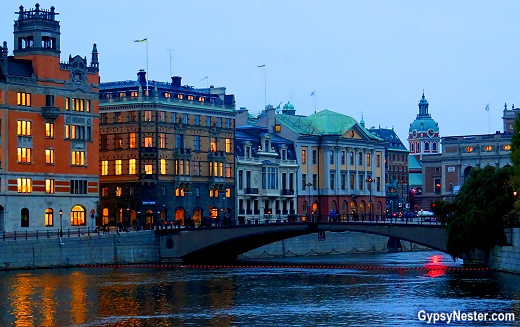
Amsterdam at night

Before we leave Holland, we want to take a parting stroll through Amsterdam.

As with any city, the impression it leaves after dark is very different from the daylight hours. The city’s extensive system of canals become a series of reflective mirrors doubling the images of modern neon and illuminated ancient towers alike.

Even though the streets are still active, there is a much calmer air to the city, and a significant reduction in the number of bicycles whizzing by. This certainly makes us feel a little safer while we wander.

The view of the Skinny Bridge from the deck of our beautiful houseboat bed and breakfast on the Amstel River in Amsterdam, Holland

The Palace in Amsterdam at night

At a sidewalk café in Dam Square, the original site of the dam that gave the town its name, we linger over one last brew and watch the menagerie of people from all over the world pass by.

This is an incredibly international city, with an amazing array of languages being spoken at any one time.

That is just one of the many, many things we have come to love about it.

Hanging out at the Iamsterdam sign! GypsyNester.com

We return to the Skadi ready to bid adieu to the low country of both Holland and Belgium, with so many memories of so much that we saw and learned along the way.

Perhaps it is better that instead of farewell that we say, “till we meet again…”

Did you miss Dispatch One of this adventure? Click here to see it from the very beginning!

David & Veronica, GypsyNester.com

Written aboard the Longship Skadi on her voyage through Holland and Belgium with stops in Amsterdam, Kinderdijk, Antwerp, Bruges, Veere, Hoorn, and Arnhem. Thanks to Viking River Cruises for inviting us along and providing this adventure! As always, all opinions are our own.

This post may contain sponsored links.