
Search…

4 CBD Products to Take Your Workouts to the Next Level

Cannabidiol, or CBD for short, is taking the gym by storm. As a natural health supplement, it has numerous medical benefits to help health issues both minor and serious. When it comes to gym goers, its appeal comes from its ability to reduce pain and help assist your workout recovery.

More people who exercise regularly are taking CBD for muscles and bones to keep themselves feeling fit, limber and pain-free. If you want to know what kinds of CBD products you can use to take your workouts even further, you can try one of these four:

#1) CBD Protein Powder

One of the best benefits of CBD for workouts is its ability to help with your recovery. This is because CBD is a strong anti-inflammatory supplement since it is loaded with omega-3 fatty acids. After a hard workout your muscles and joints will be sore and become inflamed, making you feel stiff and aching. You can drink high-protein smoothies with CBD before or after their workouts to help speed up their muscle recovery so they feel 100% in time for their next session.

#2) CBD Protein Bar

It always helps to have a snack before your workout. A full meal can leave you feeling bloated or tired, but a small snack that gives you some extra energy is very useful. One option is a CBD protein bar. The protein helps you start your recovery before you even start exercising. It also usually comes with nuts and healthy carbs to give you that boost of energy to power your workout. It’s a great way to kickstart your workout and your recovery at the same time.

#3) CBD Skin Patches

CBD skin patches are similar to Icy Hot patches. It applies a changing mix of hot and cold temperatures to an area of skin that is experiencing pain so you get relief in the targeted area. CBD patches use the same principle, but mix in CBD’s pain relief and anti-inflammation. The benefit of this is having up to 24 hours of pain relief with one patch, which is why they’re so popular among athletes and people who exercise.

#4) CBD Roll-On

Roll-on pain relievers work like pain relief creams or lotions that you rub into your skin. The difference is that it is applied with a roll-on ball, so you don’t get any of it on your hands. CBD roll-ons add CBD to the same pain relief ingredients in other similar products, so you get the best of both worlds. You can apply it to however wide an area of your body or muscles is feeling sore after a workout. They don’t last as long as the pain patches, but are better for on-the-go use for multiple muscles.

These are by no means the only CBD products you can use specifically to help your workouts, but they are the most popular as there are popular products like Delta 8 vape oil to ease the pain caused by excessive workouts.. As we learn more about the applications of CBD and how it can help with things like pain and inflammation, there will undoubtedly be more lines of products created for that purpose. In the meantime, you can also just try taking CBD oil in its pure form along with whatever products and supplements you normally use.

These are by no means the only CBD products you can use specifically to help your workouts,  As we learn more about the applications of CBD

Difference and Similarities Between Spinning and Casting Rods

Casting rod enables the thumb, or finger to control the line during fishing. The rod is 4-8ft long to be fitted with its respective fishing reel. Have a glance at the features of the rod-

    • They are designed according to the type of fishing reel.
    • The rod is manufactured to be used with casting reels.
    • Casting rods are known as baitcasting rods. The rods are designed for a better angling accuracy.
    • For making them durable, and lightweight, their frame is made up of graphite, carbon fiber, and fiberglass.
    • The rod has the baitcasting reel on the top. This enables them to cast long distances with highaccuracy.
    • They are costlier than spinning rods
    • Greater casting distance than other rods
    • Casting rod has a longer period
    • They possess a great drag system due to their rotation pool
    • Experienced hands are required to deal with them

Spinning rods-

The rods are ideal, and perfect to be used on some specific surfaces.

-Contrary to casting, they have the reel mounted on the bottom

– They are made from durable materials like-graphite

– The rods are ideal for fishing. Commonly used for catching catfish, and panfish.

– They are not suitable for heavy, and large fish.

– More accessible than the competitor

– Professional handling not required

For making the rods to fulfill your expectations, use them wisely after understanding their capacity, and power.

Here is a list of important parts in a spinning reel, and rod-

The spinning reel-

    • Spool-

The fishing line is wound around the spool

    • Handle-

The handle forces the line back into the reel

    • Bail

This metal arm stops the line to come out of the spool

    • Reel Foot

A puzzle piece that connects the rod to the reel

    • Line Roller

The component guides the line from the spool to the rod

The spinning rod-

    • Rod Tip

The tip is the last 4 inches of the rod. Moreover, the thinnest part of the rod

    • Guides

They are the circles that the line passes through.

    • Handle

The handle is what you hold the entire time while fishing

Choosing the best fishing rod?

Selecting the 1 from casting, and spinning rod can be a challenge for new anglers. They both have their different pros, cons, and scope.

Casting rods are designed for the bait casting reels. Whereas spinning is for spinning reels.

Which fishing rod is the best, and to be preferred is depended on your skill-level and, the species of fish you enjoy catching.

A wide variety of light, medium, and heavy action rods are available in the market. The rods are available in casting, and spinning models. Your selection helps to have the right fishing rod for the right scenario.

Several factors may impact your choice of spinning vs casting rods. But your final choice should be made after comparing the factors like-

    • Choose a length- The length of the rod is measured from the tip. The measurement is based on where you will be fishing, and for what purpose?
    • Shorter rods cast shorter distances. They are used for lightweight lures.
    • Longer rods cast further distances. They are used for surfcasting, and flyfishing.
    • Weight is to be decided wisely- The weight indicates how strong it is. Secondly, how much weight it can carry
    • Decide the material- The material of the rod is related to its functionality. The rods are made up of graphite, and fiberglass. Maybe, it can contain a mixture of both.
    • Graphite rods are lighter
    • Fiberglass rods are heavier
    • A combination is a perfect choice for a fisherman. Moreover, who deals with a variety of fishes, and locations
    • Choose a reel Reel is the backbone for highlighting the rods. They can be either spinning or casting.
    • Spinning reel allows a great rate of success. So, it is perfect for beginners
    • Casting reel is difficult to use, as it allows more control for controlling the accuracy of the cast

Similarities between spinning vs casting rod-

After a long discussion on dissimilarities here are some common facts between them.

    1. Available in various shapes, and sizes- Both the rods are measured between 4-14 feet. However, the experienced fisherman uses the range of 6-8ft.
    2. They have an array of action, slow, fast, and medium. It depends on the type of fish you are trying to capture.
    3. Same durable handle materials are used by both the rods.

Final words-

The basic difference between them is the type of reel attached to them. The spinning reel allows making longer cast by casting lighter lures. Whereas, casting reels are more powerful, and used for accurate casting. The pros and cons of spinning vs casting rod.

    • Spinners handle the wind better
    • Spinners can be accurate as a casting rod without any extra cost
    • Baitcaster unreels in the direction of reel. Contrary to it, the spinner spins
    • Casting reels are capable to land big fishes
    • Casting rod can cast with anything.

Note- The pros, and cons are the personal preference of the angler.

Spinning, and casting rods are essential to casting. For freshers, it is advisable to go for spinning as it requires less practice for getting expected results.

By Popular Demand – How We Became Travel Bloggers

We’ve never formally talked about being travel bloggers on our website. But we’re being asked about it more and more, so we thought we’d open a dialogue.

In truth, we’ve always felt like we kind of stumbled blindly into our recreated lives – and by no means consider ourselves experts (in travel or blogging).

And, seriously, we thought, who wants to hear us talk about what goes on behind the curtain?

When we hit the road … CONTINUE READING >>

Since this is one of the most common questions we get asked, here is a recap of our story:

We’ve never formally talked about being travel bloggers on our website. But we’re being asked about it more and more, so we thought we’d open a dialogue.

In truth, we’ve always felt like we kind of stumbled blindly into our recreated lives – and by no means consider ourselves experts (in travel or blogging).

And, seriously, we thought, who wants to hear us talk about what goes on behind the curtain?

How to Become a Travel Blogger - GypsyNester.com
In Australia

When we hit the road in 2008, we were vaguely aware that travel blogging even existed.

For the first year, we were simply out in the world, enjoying each other’s newly empty-nested company and writing about what we were discovering so family and friends could keep up with where we were.

Our early posts were all over the place – and inconsistent. We posted photos that we would never post now because we had no idea what we were doing.

How to be a travel blogger. GypsyNester.com
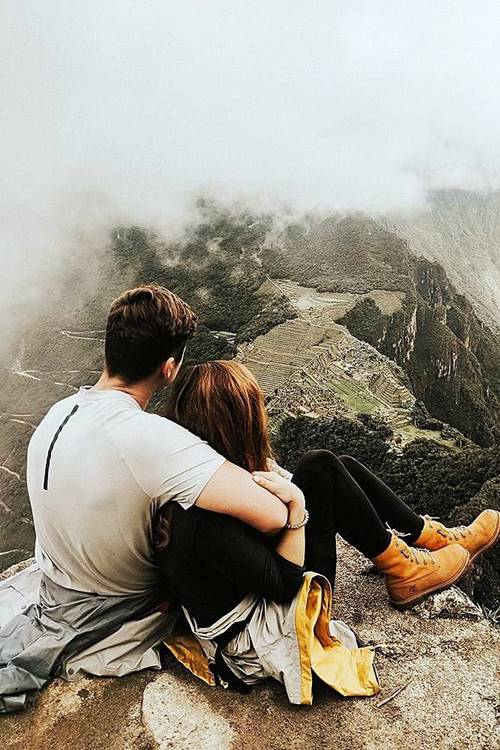
In Peru

But we kept on writing. And writing. And writing.

Eventually our posts became less cringe-worthy and had more focus.

We discovered what we liked and didn’t like about our travels, and how to relay it in a (hopefully) engaging manner. We researched how to make our photos suck less.

How to be a travel blogger. GypsyNester.com
In Newfoundland

But it wasn’t until we learned to be authentic, when we found our voice, that people started to like our little website.

Still, it was very strange to us when folks began emailing with questions about how to do what we are doing. It still seems strange. Stranger yet, we’ve been asked to wax poetically on the subject in public.

WATCH: We join Michael of Time Travel Turtle, Elia of Blame the Monkey, Malini of MissMalini.com and Chris from Tourism and Events Queensland for “How to be a World Famous Travel Blogger.” (Forgive us if we seem ditzy, it was 3:00 AM in our time zone!)

All travel blogs are different and we highly suggest that you watch this video before reading on. There is certainly more than one way of approaching travel blogging, as this diverse group shows. What follows is OUR story more in depth.

If that’s not enough information, here’s (more of) our two cents (yes, we admit our lives are a happy accident, but we really do have some hindsight insights):

We Wish We Could Tell You a Big Short Cut, but there is no Big Short Cut
Keeping in touch in Queensland, Australia
In Queensland

We had to do the work. Period.

We had to write, write, write. And we had to love it because it never stops. Sometimes we had to find help, such as translation services.

But yes, we love it. We feel like we have the best life in the world – for us.

Because we also love to travel, we wrote about travel. A lot.

We Started out Small
Our RV, Bamf!
BAMF

Before we traveled, we wrote about travel.

Confused?

First, we wrote about things going on in our hometown. We home exchanged and wrote about that. Then we quit our jobs, sold our house and bought an RV for $3,000 that we named BAMF on eBay and wrote about that.

Then we drove all around the United States and wrote about that. Then we branched from the US borders and wrote about that.

And had a blast doing it. So we never stopped.

We Became Social
How to be a travel blogger - GypsyNester.com
On our amazing Asian cruise

There’s a reason it’s called social media.

We had gotten a few comments on our site and our oldest daughter, The Piglet, decided that we were on to something. She suggested that we start putting some effort into social media.

So we started a Facebook Page, thinking that was that. We’d post stuff and check it occasionally. It was fun. Then The Piglet dragged us kicking and screaming into Twitter.

So we sucked it up and tweeted our first tweet – we think it was something really fascinating like “Drinking coffee.” Then we wondered why no one tweeted us back (seriously).

Once we realized that social meant social, and we began being social, something wonderful began to happen – people started following us.

The Piglet kept at us – start creating videos, she said. There’s this new site called… So now we’re on YouTubePinterestGoodReads, and Instagram  – each with their own merits and each with varying success.

But posting videos of squirrels (yup, we did that) and tossing up photos of what we were eating for dinner was not cutting it, and we made mistakes and learned from them, but thankfully…

…Somewhere in There We Found Our Voice, We Became Authentic
The Maglev Train in Shanghai, China!
David now embraces his inner train nut!

We finally learned NOT to write what we thought people wanted to read.

This was THE big epiphany for us.

Taking a hard look at our posts, we realized they contained very little of ourselves in them. Even when we had been writing for our family and our friends, we were writing generic little pieces.

There was nothing in them that were uniquely us. Actually there was no uniqueness at all.

How to be a travel blogger - GypsyNester.com
Veronica is crazy for ALL animals – even this guy in Costa Rica!

So we decided to be ourselves, we started being authentic. At first it felt at like oversharing (still does sometimes) to talk about the real us, and perhaps it is oversharing.

But immediately writing became easier, even more fun, and began flowing out of us freely.

Now we discuss how destinations make us feel, let our innate goofiness fly, and write as we speak in real life. We admit our history nerdly-ness, we aren’t afraid to confess when we’re scared.

David now embraces his inner train nut, Veronica isn’t embarrassed that she happily squeals, bounces, and claps like a little kid whenever an animal comes into view.

We Have Support and Give Support
The GypsyNesters as Mae West and WC Fields
Dressed to the nines as Mae West & WC Fields at TBEX.

We are not alone.

As wonderful as we find our Nation of Two, we are part of a some very generous communities.

Like any well functioning community, we help and are helped.

We meet, learn, network, and have a blast at TBEX conventions – an excellent resource for travel bloggers and aspiring travel bloggers, highly recommended by us. We also read the TBEX blog.

As folks of “a certain age,” we also gather inspiration at AARP’s Life@50+ Expos (we’ve attended in Atlanta and Boston so far), and are members of the Facebook group Boomer Travel Bloggers (the criteria to join the latter are people who are travel bloggers with their own blogs and were born between 1946 and 1964 – but, if you don’t fit the demographic there are similar groups out there to join).

Once We Became Fairly Established, We are Diligent That…
…We Don’t Let Our Community Down
How to be a travel blogger - GypsyNester.com
On a boat in the Galapagos Islands

Now that we are a part of a community, we take our responsibilities seriously.

We are no longer an outpost in the desert.

We keep in mind that if we publish shoddy posts, our entire travel blogging community suffers.

From time to time we are offered sponsored trips by folks within the travel industry. In doing so, we have been able to bring stories to our GypsyNester community that we would not have been able to otherwise. And for this, we are very grateful.

When we do accept these trips, we are careful to act professionally, to work hard and do our research. Most nights on these adventures, we happily fall asleep while typing mid-sentence with our laptops on our laps.

For further reading on the subject of deportment and ethics while on sponsored trips, see this commentary from a travel blogger’s perspective and this one from an industry person’s perspective.

…We Remember to Give Back
How to become a travel blogger - GypsyNester.com
Delivering supplies to a little school in the Costa Rican jungle with Pack for a Purpose and Hotel Parador.

One of the most joyous parts of being a travel blogger is the ability to do good.

We have found ways that our little website can help others and inspire the GypsyNester community to find the joy in helping, too.

We have begun to Pack for a Purpose, and have a dedicated “how to help” section of our site. We can’t express the joy that has come into our lives by sharing ways to help others.

It’s highly recommended. 🙂

David & Veronica, GypsyNester.com

YOUR TURN: We’re sure we didn’t cover everything – so let your questions fly and we’ll do our best to help out! If you are a travel blogger and you have tips about subjects we covered (or didn’t cover) – please share!

This post may contain sponsored links.

3 Key Health Tips for 2021

Believe it or not, 2020 is almost over. Here are three essential health tips that everyone should keep in mind for next year…
CONTINUE READING >> 

Believe it or not, 2020 is almost over. In just a little more than a month, 2021 will be upon us. And while the COVID-19 pandemic has cast a long shadow over public health for the past few months, promising vaccine developments have offered people around the world hope for a better tomorrow. Yet, just  because better days may soon be around the corner, it doesn’t mean anyone can afford to overlook their own health and wellness. To that end, here are three essential health tips that everyone should keep in mind for next year.

Follow Public Health Guidelines

While some experts are optimistic that one or more COVID-19 vaccines may be widely available by the spring of 2021, the reality is that it could be many more months before the pandemic has subsided completely. As such, it’s imperative that individuals continue to follow public health guidelines about COVID-19 for the time being. Wearing a face mask, washing your hands, and socially distancing when possible can make a huge difference for your own health, as well as the health of those closest to you. If you want to be extra protected, you can wear a pair of latex gloves so you’re shielded from anything you touch while you’re in public. Do make sure to never touch any part of your body and face while wearing gloves, wash your hands before and after use, and dispose of used gloves properly.

Speak to Your Doctor

Speaking to your doctor is a smart thing to do now, next year, five years from now, and beyond. Plain and simple, your doctor can give you meaningful health advice and help you deal with numerous health conditions. Remember that medical experts have access to sophisticated equipment like the 1ml deep well plate, for example, that they can use to diagnose and then treat a number of issues. Even if you “feel fine,” make it a point to schedule a checkup with your doctor in 2021.

Try New Workout Routines

The nature of the COVID-19 pandemic has forced many people to cut back on many of their favorite activities. Indeed, depending on where you live, you may not be able to go to the gym or meet up with others for a yoga session. If this sounds familiar, then trying out new workouts might be the perfect way to enjoy a post-COVID-19 world. Of course, that may not happen until we’re well into 2021. But if you get the chance to try new exercises out in a safe manner, you should jump at the chance to do so.

Conclusion

While we all look forward to the day when COVID-19 won’t dominate the headlines, and while we all hope that 2021 will be a better year than 2020, it’s nevertheless important to look after your own well-being at all times. No one can predict how the next six months –– let alone several years –– will play out. So make it a point to look after yourself no matter what!

We are happy to present this collaborative post to offer valuable information to our readers.

Five Things You Need To Know About Backpacking Around Peru

South America is a backpacker’s paradise. It’s home to some of the most beautiful and dramatic scenery in the world, and there are wonders both old and new to look at almost everywhere you go. You can find some of the most magnificent of those sights and wonders in Peru. It sometimes gets overlooked by holidaymakers in favor of Mexico, and that’s a shame. We have nothing against Mexico – in fact, we’d suggest that everyone who has the time and money visits both places – but you’ll find a lot of travel tips for backpackers heading to Mexico all over the internet. There’s less information available for those headed to Peru.

We’re going to do something about that with this article, in which we’ll highlight five things about the country that every backpacker ought to know before they set off. We’ll focus on the practical rather than the obvious. Everyone knows about Peru’s numerous historical and archaeological sites. They’re so famous that slot Game providers have inspired games like “Inca’s Treasure” at online slots websites including RoseSlots.com. That isn’t something you can say about the ancient history of most countries. When a region’s ancient history is a big enough draw to persuade people to spend money on online slots, it will lure people in without any help from us or anybody else! The companies who design and develop online slots put a lot of thought into the themes they use to attract customers. If there’s Peruvian history in there, it’s because it sells.

We’ll take for granted that you know the main attractions and give you a little ‘insider knowledge’ instead. Here are five things you definitely need to be aware of in advance when you’re planning to spend time on the road in Peru.

You Need To Pack Altitude Tablets

The shape of Peru might be quite long and thin when you look at it on a map, but it’s far from flat. In fact, Peru is one of the most mountainous countries in the world, and many of the things and places you’ll want to go and see exist at high altitudes. The heights can be a struggle for even the most experienced travelers and climbers, and there’s a real risk of altitude sickness. You wouldn’t want that to spoil your visit, so you’ll want to pack some tablets with you. If you visit Huaraz, you’ll be ten thousand feet above sea level. Take tablets before you set off, and try to plan routes that don’t involve a lot of sudden ups and downs. Climb gradually and descend gradually, and you’ll hopefully avoid the worst of the possible effects.

Stock Up On Essentials

When you run out of essential goods at home, you walk or drive to the nearest store and stock up on them again. That probably won’t be an option for you at a lot of places you might stop for a night or two in Peru. Supermarkets and large stores are confined to the biggest cities and the biggest cities only. You won’t struggle if you’re in Lima, but if you spend your entire vacation in Lima, you’re not getting a true picture of the whole country. Head to the smaller towns, and you’ll find that you’re reliant on local food stalls selling little more than fish, meat, cheese, and a few vegetables. That’s fine if you don’t mind going rustic for a while, but if you want something more specific, you’ll probably have to bring it with you. This is especially important to remember if you have a specific diet.

Bring Towels

Peruvian hotels generally don’t give you towels in your rooms. We don’t know why, but that’s just the way things are. You might not even have the option of visiting reception and getting towels from there either – it’s likely that they won’t have any to give to you. It’s expected that guests will bring their own with them. That’s not ideal given how bulky towels are when you’re packing a suitcase, but needs must. As with the ‘essential goods’ problem, this won’t be an issue if you’re staying in a chain hotel in a big city, but that’s not what backpackers tend to do. We imagine you’ll be staying somewhere more remote, like a hostel, and you have no chance of getting towels there. You probably won’t get any breakfast either. It’ll be cheap, but you’ll get what you pay for.

Wear Headphones On The Bus

One way to travel across large distances in Peru is on the bus, which is cheap and convenient. You might also think that it’ll be a scenic and relaxing way to see the Peruvian countryside. You’ll be right about the ‘scenic’ part of that, but wrong about the ‘relaxing’ aspect. Peruvian long-haul buses show movies to pass the time, much in the same way that planes do. The difference is that you won’t get any say in which movie is being shown or whether you want to see or hear it (unless you’re traveling on one of the luxury buses). The audio is played loud enough to be heard no matter where you sit, so you’ll need to bring headphones and your own entertainment if you want to avoid it. Given that the films in question are often strange B-movies or horror movies (a bizarre choice for travelers), it’s more likely for most people that you won’t want to see them than you will.

Check Your Change Carefully

One of the positives for American travelers in Peru is that US dollars are accepted as alternatives to the Peruvian sol almost everywhere you go. The downside is that a lot of the American currency you might be offered as change is counterfeit. Always look very carefully at any US banknote you’re handed while you’re there because once you’ve got one, you’re stuck to it. To make matters worse, Peruvian business owners are obligated to destroy counterfeit currency on sight, so if you accidentally hand one of them a counterfeit $100 bill, it’ll be ripped up in front of your eyes rather than handed back to you so you can take it back to its place of origin and try to argue your case. While you can pay in dollars, it might be easier to stay out of trouble if you use the local currency instead.

A Nomad’s Guide To Staying Safe In The City

Nomads of all kinds, will at some time or another find themselves venturing into the City. The good news is that nomads can minimize this risk by following this advice. Safe travels people…
CONTINUE READING >> 

Nomads of all kinds, will at some time or another find themselves venturing into the City. Indeed, there are many reasons to experience the delights that the urban environment has to offer from stocking up on supplies, to enjoy a little luxury now and then. Not to mention all the delicious food, music and culture you will find in the more built-up areas.

However, as well as all these wonderful things that Cities have to offer, there is also an issue of risk that cannot be ignored. The good news is that nomads can minimize this risk by following the advice laid out below. Safe travels people!

Company

The first way to reduce the level of risk you may be facing when exploring a city you are unfamiliar with is to stay in the company of others. There are several ways you can do this from traveling in a group with friends to booking yourself space on an organized tour. Indeed, with the latter, you are also very likely to stay within the safer places in the city, another factor that can help reduce any risk of theft, assault, or mugging.

Another option and one that is particularly useful for the more introverted or solo traveler is to make sure even when you are on your own, you are sitting among people. That is if you are waiting for a train, pick a platform that is bustling with families and commuters rather than standing alone in a less well-lit area. The same goes for when you are eating outside, and even when you are on a bus or train. The best idea being to always choose a carriage that is full of ‘regular-looking’ people. The reason being that with a large audience, the opportunities for anyone with criminal intent to strike are vastly reduced. While the chances of someone intervening to help you if you do get into distress are much higher.

Attitude

Attitude when exploring an unfamiliar city is also hugely important for staying safe. The idea here is that you want to look as confident and as comfortable as possible, something that can help you from being identified as a ‘visitor’ or ‘tourist’ and so as a mark for those with nefarious intentions.

One way to do this is to pass on the maps and tourism guides. Instead, program your itinerary into your phone and use the audio function with headphones to guide you to your next location. Some people choose to keep only one headphone in here, so they retain awareness of what is going on around them.

Additionally, you may want to look into these skills often known as adaptive urban self-integration in more detail before your trip. Luckily, you can visit sites like tradecraft to do so. There you will find expert advice on how to blend into urban locations as seamlessly as possible.

Awareness

Awareness is also hugely important when it comes to staying safe in an unfamiliar urban area. What this means is that you need to be aware that there could be some risks, and remember to be on guard for them.

Of course, that doesn’t mean you cannot enjoy your trip, or have to be on edge all of the time. It’s just about remembering to not be so relaxed that you allow yourself to become a target.

Preparations

Finally, if you are exploring a city in Europe such as Barcelona, or Paris, or whether your travels take you a little further afield to far-flung places like Cancun, and Nairobi, one thing remains the same. That one thing is that if you want to stay safe you need to do your preparation and research beforehand.

In particular, choosing the routes you will take to get around the city before you leave your accommodation is vital. In fact, with all the information now available online you can check to see where the riskiest locations are and do your best to avoid them during the planning process.

Lastly, it’s pretty vital that you don’t set out without at least three things. The first of these is your smartphone, and the second is a power bank and cable for said phone. Then even if the worst does happen and you run out of juice you can charge up on the go.

The third and final item is the number or app of a taxi service that operates in the city you are using. After all, if you get lost, it can be as easy as calling an Uber to your location, which will then take you quickly and safely back to your accommodation.

We are happy to present this collaborative post to offer valuable information to our readers.

Vape Device Travel Tips

Gone are the days of blurred etiquette surrounding vaping. The eagle-eyed among us may recall people in doorways, looking like a statue. A moment later, the person would surreptitiously un-pocket a hand, raise it to their dipped head, and disappear behind a wall of vapour. Then the statue would return. This bizarre behaviour would continue for some minutes. Eventually, the person would puff their last (for now) and walk back indoors.

Whether people were conscious of avoiding conversations about giving up cigarettes or whether they would have always put their lit cigarette in their pocket between puffs if they could, is not clear. The fact is, public perceptions have caught up, and vaping is not the solitary doorway hobby it once was for some people.

Nowadays, the vaping community is out in force. And that means travellers and the authorities alike must adapt to the throngs of travelling hopefuls who arrive at airports with vape devices in tow (see 88vape.com for more info). Here’s what you need to know.

Air Travel & E-Juice

Your airline may have different carry-on restrictions regarding the amount of liquid you can bring on board. For example, British Airways states “Each liquid must be in its own container of no more than 100ml (3.4oz).” However, standard e-liquid bottle sizes (i.e. 10 ml and 30 ml) typically fall below the upper liquid limit for most airlines, so you should be OK.

Keeping your e-liquids dry and cool is essential. Don’t travel with e-liquids to hot destinations without making provisions for heat protection upon arrival (heat and direct UV light from the sun can spoil your e-liquid).

Vape cases are widely available and relatively inexpensive. If you have run out of time and you do not have a vape case to hand, wrap your device in a cloth and seal it inside a plastic bag. The cloth will not only help to provide a layer of heat protection but will also help absorb leakages. The pressurised plane cabin can sometimes force a small amount of e-liquid to escape the atomiser chamber (that is why some vapers prefer not to travel with a fully-refilled device).

Other travel tips include:
    • Fully charge your device before travelling. Airlines do not permit you to charge your device on board. Do not rely on any charging facilities beyond your home and the hotel.
    • Switch off your vaping device while travelling. By turning your device off, you remove the risk of accidentally firing your device. You can’t use it on board the plane anyway, so powering down should not be a problem….
    • …remember that secretly vaping onboard a plane (so-called “stealth vaping”) can be met with fines and even jail time depending on the airline and according to any domestic foreign laws. Switch your device off.
    • Don’t vape inside the airport upon arrival. Not only is indoor vaping inconsiderate to other travellers, but you may be breaking the law. Some countries have banned vaping altogether – entering a country where vaping is banned while carrying a vaping device is not advised.