Search…

Uncharted Paths: A Traveler’s Guide to Inner Exploration and Release

By approaching our inner landscape with the curiosity and openness of a traveler, we can navigate the terrain of our minds and hearts with greater ease and understanding…
CONTINUE READING >>

In our fast-paced world, the concept of travel often conjures images of exotic destinations and bustling cities. However, the most profound journeys we can embark upon are those that lead us inward. This guide explores how travel, both external and internal, can be a powerful catalyst for personal growth, helping us navigate the challenging terrain of letting go and self-discovery.

The Luggage We Carry: Identifying Our Attachments

Before embarking on any journey, it’s crucial to take stock of what we’re carrying. In life, our luggage often consists of emotional attachments, outdated beliefs, and fears that weigh us down. These might include past traumas or unresolved conflicts that we’ve been avoiding, limiting beliefs about ourselves and the world that hold us back, or a paralyzing fear of change and the unknown.

Many of us also carry the heavy burden of perfectionism and unrealistic expectations, constantly striving for an ideal that may be unattainable. Recognizing these attachments is the first step in our journey towards inner release. By acknowledging what we’re holding onto, we can begin to discern which items in our emotional luggage are truly necessary for our journey, and which can be left behind.

Mapping the Inner Landscape: Self-Reflection Techniques

Just as a traveler consults a map, we must learn to navigate our inner world. Self-reflection techniques serve as our compass in this exploration. Journaling, for instance, provides a powerful way to externalize our thoughts and feelings, allowing us to observe patterns and gain insights that might otherwise remain hidden.

Meditation and mindfulness practices offer another avenue for self-discovery. By learning to observe our thoughts without judgment, we can gain a clearer understanding of our mental habits and emotional responses. Spending time alone in nature can also be a profound tool for self-reflection, allowing us to disconnect from the noise of daily life and connect more deeply with our inner selves.

Creative expression, whether through art, music, or dance, can serve as yet another map to our inner landscape. These practices help us understand the terrain of our minds and hearts, revealing paths we may not have noticed before and offering new perspectives on our internal journey.

Packing Light: Strategies for Letting Go

The art of travel often involves packing light, and the same principle applies to our inner journey. Learning to let go of unnecessary emotional baggage is crucial for personal growth and well-being. One effective strategy is the practice of gratitude. By focusing on what we have rather than what we lack, we can shift our perspective and loosen our grip on materialistic attachments or unfulfilled desires.

Challenging our beliefs is another powerful tool for letting go. Many of the thoughts that hold us back are based on assumptions or outdated information. By questioning these beliefs and seeking evidence that contradicts them, we can begin to release their hold on us.

Embracing the concept of impermanence can also aid in the process of letting go. When we recognize that change is the only constant in life, we can learn to hold onto things more lightly, appreciating them in the moment without becoming overly attached.

Forgiveness, both of others and ourselves, is perhaps one of the most powerful ways to release emotional baggage. By letting go of resentments and grudges, we free ourselves from the weight of the past and open up space for new experiences and growth.

Embracing New Horizons: The Power of New Experiences

Travel exposes us to new cultures, ideas, and ways of living. Similarly, seeking new experiences in our daily lives can shift our perspective and loosen our grip on old patterns. Learning a new skill or hobby, for instance, challenges our brain to form new neural connections and can boost our confidence and creativity.

Volunteering for a cause we care about can expose us to new communities and perspectives, fostering empathy and a sense of purpose. Engaging with people from different backgrounds broadens our worldview and challenges our assumptions, much like traveling to a foreign country.

Even trying new forms of physical activity or movement can be a powerful tool for personal growth. Our bodies often hold emotional tension and memories, and exploring new ways of moving can help release these stored experiences and open us up to new ways of being.

The Transformative Journey: Integrating Inner and Outer Exploration

While physical travel can be a powerful catalyst for change, the most profound transformations often occur when we combine outer exploration with inner work. This is where practices like meditation retreats or even psychedelic retreats (under proper guidance and in legal settings) can play a role, offering intense periods of self-reflection and insight.

However, it’s important to remember that transformation doesn’t require extreme measures. Daily practices, combined with an open and curious mindset, can lead to significant personal growth over time. The key is to approach both our inner and outer journeys with intention and awareness, always remaining open to the lessons and insights they offer.

Returning Home: Integrating Insights into Daily Life

The true test of any journey lies in how we integrate our experiences once we return home. Maintaining a regular practice of self-reflection can help us continue to process and apply the insights we’ve gained. Staying connected with like-minded individuals who support our growth can provide encouragement and accountability as we navigate the challenges of daily life.

Continuously seeking opportunities for learning and new experiences keeps the spirit of exploration alive, even in familiar surroundings. And regularly reassessing and letting go of what no longer serves us ensures that we continue to travel light on our ongoing journey of self-discovery.

Conclusion: The Ongoing Adventure

The path of inner exploration and release is not a destination but a lifelong journey. Like any great adventure, it will have its challenges and rewards. By approaching our inner landscape with the curiosity and openness of a traveler, we can navigate the terrain of our minds and hearts with greater ease and understanding.

As you embark on your own uncharted path, remember that the most valuable souvenirs are the insights you gain and the layers you shed along the way. Happy travels on your journey of self-discovery and release.

How to Properly File for Divorce When Facing Abuse From Your Spouse

The American Psychological Association reveals that about 40 to 50% of marriages in the United States end-up in divorces. Further, in almost 20% of all marriage settings, there’s been one or more cases of intimate partner abuse.

Marriages work best when tranquility and bliss abound. However, when physical and emotional abuse sets in a marriage, divorce and getting out of the home is generally the safest way out of the situation.

Have you found yourself in an abusive marriage and are considering taking legal action? You may need the help of a divorce lawyer Oklahoma City. You can file for divorce and emerge out of the abusive marriage with your head high. Here’s how to file for divorce when dealing with an abusive intimate partner.

Your Safety Comes First as You File for Divorce 

You don’t want to become part of the deadly statistic in the long-haul. If your partner slapped you once, they will probably do it again. Your sanity (and safety) and that of your children is at stake when dealing with a violent partner.

While deciding to quit is never easy, you need to find the courage to choose the legal way out. Has your spouse been violent? You need to take immediate action.

But first, you need to vacate the current residence if you feel that you might be in danger.

Talk to a Lawyer 

Attorneys handle many cases related to abuse and divorce. If you plan to file for divorce, it is essential that you consider advice from a divorce lawyer Barrington IL office. Counseling may cover concerns such as whether it’s okay to leave the house based on security reasons.

You want to gain as much as possible from the divorce. As such, working with a reputable divorce lawyer will be critical. A knowledgeable divorce lawyer can help you navigate the complex legal processes, ensuring your rights and interests are protected throughout the proceedings. They can also provide valuable guidance on matters like asset division, child custody, and alimony, helping you achieve a fair outcome.

You don’t want to end up making choices that may affect the divorce process so it is a bad idea to even think of filing for divorce without a lawyer.

If Need Be, File Criminal Charges

While focusing on the divorce process, you may also need to consider filing criminal proceedings against the violent partner. Your estranged spouse may stand accused of rape, sexual offense, and assault in case of trespass during the divorce proceedings. You can learn more here on sex abuse survival during divorce proceedings.

Additionally, you can think about legally changing your name back as well as changing your kids’ surnames. You can seek help from experts if you want to learn how to change your name in California.

Prepare a Complete Complaint

If you have experienced any form of abuse as you file for divorce, it is essential to prepare a complete complaint detailing the violence. Your divorce proceeding may benefit from a brief domestic violence complaint from listing all the facts about the recent incidents of violence.

You can file a complaint form yourself without having to involve a lawyer. Such arrangements are available through the clerk of the superior court. However, you should reconsider filling these forms if matters such as custody, child support, or alimony are at issue.

Consider the Best Alternative 

Ultimately, the best outcome in a divorce process is the welfare of your children. As such, you need to work closely with your lawyer to find a solution that will keep you safe but also guarantee you a good end to the divorce proceedings. The good thing about working with seasoned lawyers is that they know their way around domestic violence and divorce rights.

You Don’t Have to Live in Fear during the Divorce Process

Dealing with an abusive spouse is traumatizing and emotionally draining. It’s worse if such abuse unfolds as you file for divorce. If you have been a victim of spouse harassment during divorce proceedings, then you should consider filing a complaint against the estranged intimate partner.

Keep checking our site more informative articles. We have plenty of advice on a wide variety of topics for you to learn more about.

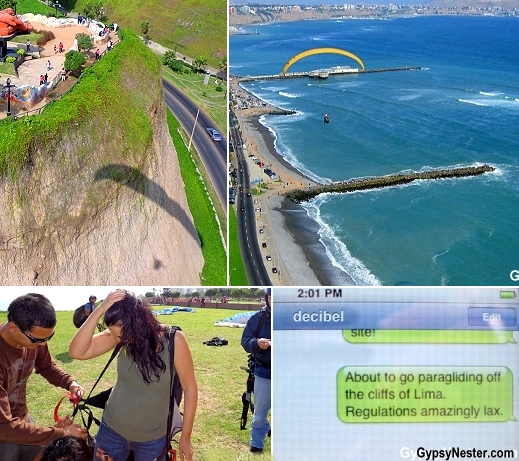
Fear Conquering & Paragliding in Lima, Peru

Our day began with what (we thought) was going to be a leisurely stroll along the sea cliffs of Lima. 

We had heard about the veil that hangs over the city, we were pleasantly surprised at the beautiful blue day ahead of us.

Reaching the cliffs, the first thing we noticed was not the view, but the … CONTINUE READING >>

Has the election got you feeling like you’re on the edge?
Well here’s a way to step off and fly!

Paragliding in Lima Peru

Our day began with what (we thought) was going to be a leisurely stroll along the sea cliffs of Lima.

We had heard about the veil –the Garúa — that hangs over the city, a veil that makes it seem that rain is always impending even though it literally never does rain. So we were pleasantly surprised at the beautiful blue day ahead of us.

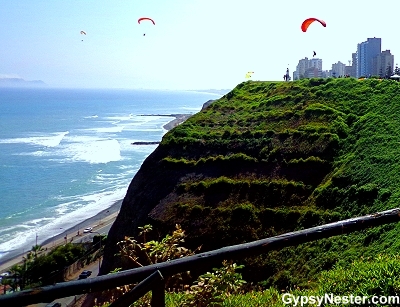
Reaching the cliffs, the first thing we noticed was not the view, but the paragliders sailing high above the sea. Surprisingly, it was me, not David, who began the “I dare yous.”

David was not biting. Even when I triple-dog-dare him, he insisted he’d be more valuable “filming me safely from below.”

Right. I was on my own on this one.

After inquiring at the ticket booth, I was handed the most incredibly scary waiver I’d ever seen. In a nutshell, it read:

If you die, we are not to be held responsible. By signing this you agree that you were not coerced in any way to do this terrible thing.

Feeling it was too late to turn back – I had already goaded David too much and I had face to save – I signed my name and got in line.

The waiting was the hardest part. I watched the launching/landing area with rising fear. Most of the launches were as smooth as Mary Poppins’ sensible-shoes-and-umbrella takeoffs, but it was windy enough that some of the parachutes would prematurely catch air, causing some disturbing (and painful looking) backwards pulling action.

I was starting to panic. (People do this every day and do not die, people do this…)

Decibel's text reaction to Mommy paragliding in Lima Peru

To inject some humor into the situation, I fired off a text to middle daughter, Decibel — it’s important I keep The Spawn on their toes.

It’s getting harder and harder to faze them.

Decibel’s text provided the comic relief I needed to calm down. I turned to share it with David and lo, there was Triple-dog-dare Boy next to me in line. He had caved! Yes!

As I always do, I insisted on going first. I KNEW if anything went off the rails with David’s takeoff, I would never have the guts to get off the ground.

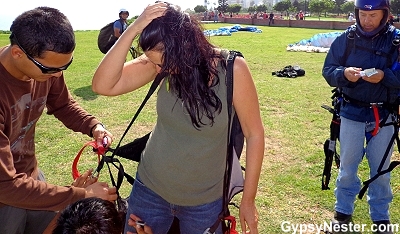
Getting ready to paraglide in Lima Peru

I persistently peppered the pilot and prep team with questions while they harnessed me in.

What is this strap for?

Did you double check the buckle?

Why is this so loose?

How am I attached to the pilot?

What keeps me from going upside-down?

And the kicker:

To my pilot: You’re going to be holding on to me, right?

Pilot Jorge: No, I will be steering.

Oh. Right.

It was no wonder that, with all of my questions, David ended up taking off before me. And it was as bad as I had imagined it.

I don’t know much about the science behind paragliding, but it looked as though his parachute prematurely caught the wind and that intense, rapid counteraction proved necessary.

RUN! Yelled his pilot. RUN!

But David’s feet were no longer on the ground. Not having a language in common with his pilot, he did the only thing he could (RUN!), in a very Wile E. Coyote-off- the-side-of-a-mountain fashion.

He was RUN!ing like a maniac in mid-air with two guys hanging on to his harness trying desperately to pull him back to Earth!

His feet touched the ground just long enough to run right off the cliff.

And disappear.

My breath caught in my throat as I imagined him cartwheeling down the cliffs attached to a stranger, stopping only for those brief moments when his parachute needed to untangle itself from the occasional twig. I couldn’t shake the Looney Tunes imagery.

Then, like the phoenix rising from the ashes, first the parachute, then David rose into view. Sweet relief was quickly followed by blinding fear.

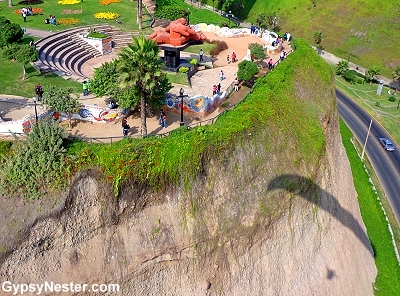
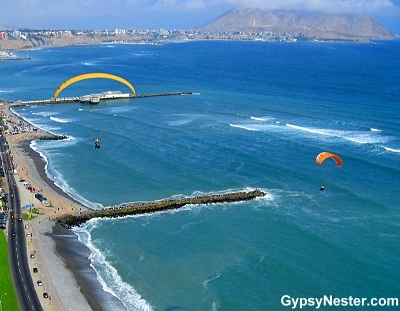
Lima's Parque del Amor from above on a paraglider

To my pilot: I don’t want to do this anymore. Let me go back to the line.

Pilot Jorge: We already fly Berrrrronica.

Oh. Right.

WOW!

My feet were firmly off the ground.

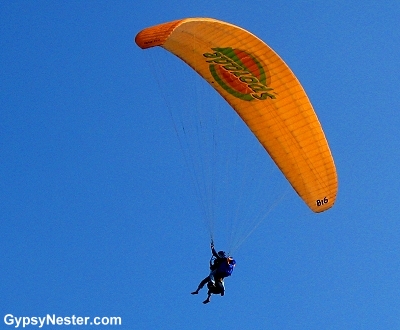
Paragliding in Lima Peru - I got the orange one!

It was amazing. Lima spread out before me in a way that could only be seen by paraglider.

Or seagull, I suppose.

I can’t say I ever fully relaxed (my legs were sticking stiffly straight in front of me the entire ride), but it was easily one of the most exhilarating things I’ve ever done.

Paragliding in Lima Peru

And surprising.

Everything I experienced up in the air was the exact opposite than I expected (leading to more persistent peppering of questions to my pilot); the faster we went, the smoother the ride.

The higher we went, the safer I felt.

It was actually quite tranquil up there.

The landing, however, was everything I expected.

Pilot Jorge, now catching on to my fear level (you can watch this all go down in the video above): We will be landing now. All you have to do is standing.

Me: So I don’t do anything, I just stand up.

Pilot Jorge: Yes. And we will be okay.

Me: I feel like we’re sideways, are we sideways?

Pilot Jorge: No. We are okay. We are going very slow.

Me: What? It doesn’t feel slow. (petrified laugh) No. Ayhhhhhh!

Ground crew: (something really fast in Spanish)

Me: Do you have me? Ayhhhhhh! (to myself): STAND UP! I can’t stand up!

Pilot Jorge: Is okay, is okay.

Me: THAT WAS SO FUN!

Veronica, GypsyNester.com

Want more Lima? Click here to see more of our antics!

YOUR TURN: How’d I do? Are you ready to give paragliding a go?

From Recovery to Renewal: How Active Wellness Travel is Helping Boomers Manage Pain and Stay Sober

By choosing travel experiences that prioritize health and well-being, boomers can find relief from physical discomfort, nurture their sobriety, and rediscover the joy of living in the present moment… CONTINUE READING >>

As the baby boomer generation ages, many are finding themselves grappling with the dual challenges of addiction recovery and chronic pain management. Traditional methods of recovery and pain relief, such as medication and therapy, are often supplemented by newer, holistic approaches that focus on overall well-being. Among these, active wellness travel has emerged as a powerful tool for boomers looking to manage their pain and support their recovery journey.

By engaging in gentle physical activities like hiking, water therapy, and guided nature tours in serene environments, boomers can experience physical renewal, mental clarity, and an enhanced sense of sobriety.

The Rise of Wellness Travel for Boomers

Wellness travel is increasingly appealing to boomers who are seeking more than just a typical vacation. Instead of lounging on a beach or participating in high-energy tours, many are opting for travel experiences that prioritize health, relaxation, and personal growth. This shift reflects a broader desire among boomers to take control of their well-being in a holistic way, addressing not just their physical needs but also their mental and emotional health.

For those in recovery, this approach offers a unique opportunity to focus on sobriety while managing the physical pain that often accompanies aging. The blend of physical activity, peaceful settings, and mindfulness practices inherent in wellness travel creates a supportive environment that nurtures both body and mind, making it easier to maintain sobriety and manage chronic pain without relying on medication alone.

The Benefits of Active Wellness Travel

Active wellness travel emphasizes gentle physical activity that is accessible to people of all fitness levels. Activities such as light hiking, nature walks, and water therapy are designed to be low-impact, reducing strain on the body while still promoting movement and flexibility. This is especially beneficial for boomers who may be dealing with joint pain, arthritis, or other age-related conditions that can make more strenuous exercise difficult.

Engaging in these activities not only helps to alleviate physical pain through natural movement and increased blood flow but also releases endorphins, the body’s natural mood elevators. Endorphins play a crucial role in addiction recovery as they help boost mood and create a sense of well-being, which can be particularly valuable for those trying to manage cravings and maintain sobriety.

Nature’s Role in Recovery and Pain Management

One of the key elements that makes active wellness travel so effective is the natural environment itself. Being in nature has been shown to have a calming effect on the mind, reducing stress, anxiety, and depression—common challenges faced by those in recovery. Natural settings like forests, mountains, and lakes provide a peaceful backdrop that encourages mindfulness and reflection, helping individuals reconnect with themselves in a meaningful way.

For boomers, spending time in nature can also serve as a powerful reminder of the simple joys of life that are often overshadowed by pain or the struggles of recovery. Activities like bird watching during a gentle hike or listening to the rhythmic sounds of waves during a beachside walk can ground individuals in the present moment, offering a reprieve from daily stresses and helping to reset the mind.

Water Therapy: Healing for the Body and Mind

Water therapy is another popular aspect of active wellness travel that offers both physical and emotional benefits. Engaging in activities like swimming, water aerobics, or even simply floating in a calm body of water can help reduce pain by taking pressure off the joints and muscles, providing relief that is difficult to achieve through land-based exercise alone.

The therapeutic properties of water also extend to mental health. Water has a naturally soothing effect, often associated with feelings of calmness and tranquility. For those in recovery, spending time in or near water can be particularly restorative, offering a meditative experience that enhances mindfulness and promotes a deep sense of relaxation. This type of environment is ideal for individuals looking to find balance and maintain their focus on sobriety while also managing physical discomfort.

Mindfulness in Motion: The Power of Guided Nature Tours

Guided nature tours combine gentle physical activity with mindfulness, providing a structured yet relaxing way for boomers to explore their surroundings and stay engaged. These tours are often led by guides who emphasize the importance of staying present, observing the details of the environment, and tuning into one’s own body. This approach encourages participants to move with intention, connecting physical movement with mental awareness.

For those in recovery, this mindful engagement with the environment helps redirect thoughts away from stressors or cravings, allowing individuals to experience a sense of peace and presence. Guided tours can also foster social connections, offering a safe space to interact with others who share similar health and wellness goals, creating a supportive community atmosphere that is invaluable in the recovery process.

Creating Lasting Change Through Active Travel

The benefits of active wellness travel extend far beyond the trip itself. For boomers in recovery, these experiences can serve as a catalyst for lasting lifestyle changes. Exposure to new ways of managing pain and supporting sobriety can inspire individuals to incorporate similar activities into their daily routines at home, such as regular walks, light exercise, or mindfulness practices.

The sense of accomplishment and personal growth gained from engaging in active travel can boost self-esteem and reinforce the belief that recovery is not just about abstaining from substances, but also about actively creating a healthier, more fulfilling life.

Booming Down the Road to Wellness

Active wellness travel offers boomers a unique path to managing addiction recovery and chronic pain through gentle movement, mindfulness, and connection with nature. By choosing travel experiences that prioritize health and well-being, boomers can find relief from physical discomfort, nurture their sobriety, and rediscover the joy of living in the present moment. As more individuals embrace this holistic approach to recovery and pain management, active wellness travel will continue to play an essential role in helping boomers transition from recovery to renewal.

Stone Surface Protection for Commercial Spaces: What You Need to Know

Protecting stone surfaces in business settings increases their lifespan and keeps them looking good. It also saves you money on repairs…
CONTINUE READING >>

Stone surfaces give elegance and longevity to any commercial setting. However, without sufficient protection, they can be easily damaged, resulting in costly repairs.

This article will explain why it is critical to maintain stone surfaces in business spaces, the best techniques to do so, and the importance of doing so for the long-term viability of your investment.

Whether you have a busy office lobby or opulent worktops in a high-end restaurant, protecting your stone surfaces is essential. This allows you to avoid regular repairs, keep their stunning appearance, and ultimately save time and money.

It’s also worth noting that for major repairs, DIY may not be the ideal solution. For intricate tasks such as marble restoration or mineral stone repairs in Sydney or anywhere else, hiring a professional is usually the better option

Why Protect Stone Surfaces in High-traffic Areas

High-traffic locations, such as entrances, corridors, and reception rooms, are especially prone to wear and tear. Daily foot activity can develop abrasions and stains, reducing the stone’s natural attractiveness.

There are various reasons why it is crucial to protect these surfaces.

    • A well-maintained stone surface exudes richness and creates a lasting first impression.
    • Protected surfaces are easier to clean and require less regular upkeep. In business settings, this implies less downtime for cleaning, which helps keep productivity high.

Preventing Physical Damage

Unprotected stone surfaces are susceptible to physical deterioration such as chipping, cracking, and scratching. Over time, these flaws can make a room appear outdated and uninviting.

Protective sealants and coatings operate as physical wear barriers, increasing the stone’s durability.

Another nice tip is to place mats or rugs in the entryways. These can catch dirt and debris before they damage the stone surface. Regular cleaning also helps to reduce wear and tear, keeping the stone in good condition for longer.

Preventing Chemical and Stain Damage

Chemical spills and stains can cause significant damage to exposed stone surfaces. Many commercial cleaning products can harm the porous surface of natural stone if they are absorbed.

Using a specific sealant forms a barrier that repels most liquids, making spills easier to clean up. For example, at restaurants, regular spills of acidic chemicals such as vinegar or lemon juice can be hazardous.

Sealed surfaces are less prone to absorb these spills, allowing them to keep their appearance for longer. Quick cleaning methods might also help to prevent permanent stains.

Effective Stone Surface Protection Methods

There are various efficient methods for protecting stone surfaces, each with its own set of benefits.

Choosing the Right Sealant

Sealants for various stones, such as granite, marble, or limestone, may differ.

    • Penetrative sealants penetrate the stone, offering extensive protection against liquids and grime. These are ideal for places with high liquid exposure.
    • Topical sealants settle on the surface and form a hard layer to protect against abrasions and small impacts. While not as long-lasting as penetrative treatments, they improve luster and color, making them excellent for decorative stones where appearance is important.

Coatings and Treatments

Aside from sealants, specialty coatings can provide further protection.

Epoxy coatings, for example, are very resistant to chemicals, wear, and ultraviolet radiation. These are frequently utilized in demanding situations such as pharmaceutical labs and industrial kitchens.

Nanotechnology-based treatments are also beneficial since they seal microcracks and pores. While these procedures may be more expensive initially, the long-term advantages frequently justify the expense.

Maintenance Procedures for Longevity

Even with preventative measures in place, regular maintenance is required to ensure long-lasting stone surfaces.

Regular Cleaning

Regular cleaning procedures unique to your stone type are required. Avoid using harsh chemicals and instead use natural stone-specific cleaning agents. Use mild cloths or mops instead of abrasive instruments.

Periodic Resealing

Depending on traffic and usage, surfaces may require resealing every 1-3 years. Routine examinations can assist in determining when to reapply protective coatings.

Conclusion

Protecting stone surfaces in business settings increases their lifespan and keeps them looking good.

Whether through cautious sealant selection or meticulous maintenance routines, these measures ensure that your investment lasts and retains its appeal. It also saves you money on repairs.

7 Reasons to Experience Fall in Another City This Year

Autumn brings a refreshing change that many people look forward to all year. With cooler temperatures, vibrant colors, and a general shift in the atmosphere, fall is the perfect time to explore new places. While staying in your hometown has its comforts, experiencing fall in a different city can provide a whole new perspective on the season. For example, New York, known for its busy streets and towering skyscrapers, transforms into a beautiful landscape of orange, yellow, and red with its famous fall foliage.

Let’s dive into the reasons why you should experience fall in another city this year.

1. Discover New Seasonal Events

Each city has its own traditions and many host unique seasonal events that you wouldn’t experience at home. Whether it’s a small-town harvest festival or a large-scale city fair, these events bring communities together and offer visitors a taste of local culture. Many cities use autumn as a chance to celebrate the harvest season, with farmers’ markets, craft fairs, and seasonal activities such as hayrides and pumpkin patches. These events are often deeply rooted in local history and traditions, which makes them even more enjoyable to attend.
By traveling to another city, you open yourself up to discovering new traditions and seasonal festivities that can provide a richer, more varied experience of autumn. Whether it’s attending a harvest festival in a small rural town or enjoying a big city’s autumn food fair, these events give you a fresh way to celebrate fall.

2. Enjoy Stunning Fall Foliage

One of the highlights of autumn is the transformation of nature, and fall foliage is a true spectacle during this season. When you travel to New York, for example, you’re met with the breathtaking beauty of its fall landscape. The New York fall foliage paints Central Park and other green spaces with a rich palette of reds, yellows, and oranges. Walking through Central Park in autumn feels like stepping into a painting, where the hustle and bustle of the city fades into the background, and the peaceful atmosphere of the park takes over.
Whether you’re admiring the towering trees along the avenues or sitting on a bench beneath a canopy of colorful leaves, New York in the fall offers a serene escape within the city. Experiencing this seasonal beauty firsthand is a compelling reason to visit New York in autumn, giving you an unforgettable visual treat that’s hard to match.

3. Experience Cooler Weather Without the Chill

While the summer heat can be overwhelming, fall brings cooler, more comfortable temperatures that make it ideal for exploring new cities. The cool weather allows you to enjoy outdoor activities without feeling too hot or too cold.
Many cities experience a perfect balance of warmth and coolness during autumn, making it one of the most comfortable times of the year to travel. You can stroll through parks, explore city streets, or enjoy outdoor markets without the discomfort of summer heat or the chill of winter. This mild weather gives you the perfect excuse to get outside and explore the best that a city has to offer in the fall.

4. Sample Local Seasonal Cuisine

Fall is known for its rich, seasonal flavors, and each city has its own unique way of showcasing these delicious dishes. Traveling to another city during autumn gives you the opportunity to try local seasonal cuisine that you may not find at home.
From pumpkin-spiced desserts to warm, comforting soups, fall is a season that celebrates hearty, flavorful food. Whether you’re enjoying street food from a local market or dining at a high-end restaurant, cities often feature special fall menus that highlight local ingredients and seasonal dishes. Exploring these culinary delights can be one of the best parts of visiting another city in the fall.

5. Visit Iconic Landmarks Without the Crowds

One of the best-kept secrets of traveling in the fall is that it’s considered an off-peak season for many destinations. This means you can visit iconic landmarks without the large crowds that often gather in the summer months.
Whether it’s museums, historic sites, or popular attractions, fall offers a quieter, more relaxed atmosphere to take in the sights. You’ll be able to explore these famous spots at your own pace, with shorter lines and fewer people. This gives you the chance to fully appreciate the beauty and significance of these landmarks without the distractions that typically come with tourist-heavy seasons.

6. Immerse Yourself in Cultural Events

Autumn is not just about the changing leaves and cooler weather; it’s also a season for rich cultural experiences. Many cities host special festivals and cultural events during this time of year, celebrating everything from local history to art, music, and food. By visiting another city, you can dive into these unique cultural traditions, which vary from place to place.
For instance, some cities might hold film festivals, outdoor concerts, or street art events that only happen in the fall. Others might celebrate their heritage with parades, historical reenactments, or seasonal theater performances. These events offer a wonderful way to explore the local culture, meet new people, and enjoy the city in a festive atmosphere.

7. Take Advantage of Travel Deals

Fall is typically considered an off-peak travel season, which means fewer tourists and more affordable prices. Many hotels, airlines, and attractions offer deals to encourage travel during this time of year. This can make your fall trip not only enjoyable but also budget-friendly.
Whether you’re booking flights, looking for accommodations, or planning activities, you’re likely to find discounts and promotions in the fall that aren’t available during the busier summer or holiday seasons. This gives you the opportunity to experience a new city without breaking the bank, making it a perfect time to plan a getaway. You’ll be able to stretch your travel budget further, allowing for more experiences, dining, or shopping during your trip.

In conclusion, fall is a season full of opportunities for exploration, relaxation, and discovery. Traveling to another city allows you to experience the beauty, culture, and unique events that make this season special. Whether you’re after vibrant foliage, exciting festivals, or a simple change of scenery, there’s no better time to plan a trip. Embrace the chance to experience fall in a new place this year and create lasting memories that will stay with you long after the season has passed.

Is Scuba Better in Gili or Nusa Penida?

Are the Gili Islands losing their charm, or is Nusa Penida the top spot for scuba diving in Indonesia? Diving fans often compare these places to find the best underwater adventure.

The Gili Islands, with Gili Trawangan, Gili Meno, and Gili Air, offer different vibes. Trawangan is lively, while Meno is romantic. But, they faced big challenges like the 2018 Rinjani eruption and earthquakes, damaging 70% of Trawangan. Nusa Penida, on the other hand, is known for its amazing marine life, including manta rays and Mola Mola. It’s often seen as better than the Gili Islands for diving.

We’ll explore more about the marine life, diving conditions, and other key points to help you choose your next diving spot. Stay tuned!

A Quick Comparison

    • The Gili Islands offer diverse atmospheres, from lively Gili Trawangan to quiet Gili Meno.
    • Dive sites in Nusa Penida are considered better than the Gili Islands for diving, thanks to its rich marine life.
    • The Rinjani volcano eruption hurt Gili Trawangan, making some tourists rethink their plans.
    • Nusa Penida has healthier coral reefs and is a top choice for diving.
    • Boats connect Bali and Nusa Penida easily, making it a convenient spot for diving.

Marine Biodiversity: Gili vs Nusa Penida

For scuba lovers, Gili and Nusa Penida are top picks. Each place is known for its unique sea life and stunning underwater scenes. If you love coral reefs or want to see a variety of sea creatures, these spots are a must-visit.

What Sea Creatures are in Nusa Penida?

Nusa Penida is famous for its amazing marine life. The island’s waters are full of sea creatures like big manta rays and rare ocean sunfish. Divers come here to see these incredible animals, especially during the Mola Mola season.

Scuba diving Nusa Penida is consistently ranked as Indonesia’s third-best dive spot, surpassing many other popular scuba destinations.

Legend Diving in Nusa Penida also offers PADI courses. This lets visitors get certified while diving at one of Indonesia’s top spots.

What sea creatures are in Gili?

The Gili Islands, including Gili Trawangan, Gili Air, and Gili Meno, are known for their beautiful scuba diving. You can often see sea turtles near Gili Air. These islands are in the coral triangle, an area with a huge variety of marine life.

But, tourism and harmful fishing have hurt the coral reefs in Gili. This has caused some damage. Still, the islands have vibrant and colorful underwater scenes. Snorkeling and diving in Gili Air is very popular.

Destination

Key Marine Life

Highlight

Nusa Penida Manta Rays, Mola Mola Ranked Indonesia’s third-best dive spot
Gili Islands Sea Turtles Exceptional biodiversity in the coral triangle

What are The Best Conditions for Diving?

When we think about the best diving conditions, several factors matter. Warm water and clear skies make for ideal diving weather. This improves water clarity and the diving experience. Nusa Penida is a top spot for scuba diving, beating the Gili Islands with its rich marine life.

Nusa Penida has some of Indonesia’s best dive sites. Crystal Bay and Manta Point let divers go as deep as 40 and 25 meters. The water is warm, between 23 and 25°C, making it comfortable to dive. From July to September, Crystal Bay is home to Mola-Mola sunfish, making it even more special.

Gili Air is great for learning to dive. It’s perfect for beginners to improve their skills in warm water. The water is crystal clear, showing off the colorful sea life. Divers can see turtles, tropical fish, and even sharks.

Here’s a quick look at which spot might be right for you:

Dive Spot

Location

Maximum Depth

Temperature Range

Highlights

Crystal Bay Nusa Penida 40 meters 23-25°C Mola-Mola sunfish (July to September)
Manta Point Nusa Penida 25 meters 23-25°C Swim with manta rays
Gili Air Gili Islands 30+ meters Warm and comfortable Learning courses, diverse marine life

Weather and water clarity are key to finding the best diving spots. Always check the current conditions and forecast before diving. This way, you can have a safe and exciting underwater adventure.

Which Beach is Best for Scuba Diving?

Choosing the best beach for scuba diving depends on what you want. Let us see which beach is best for scuba.

Manta Point Nusa Penida

Exploring Nusa Penida’s underwater world is a unique adventure for scuba lovers. Manta Point is famous for its rich marine life. It’s a top spot for divers from all over the globe.

Best Time to Visit

The best time to see manta rays in Nusa Penida is during the dry season, from May to October. This period has clear skies and calm seas. It’s the best time for diving with mantas.

During this time, mantas are more likely to appear due to upwelling. It’s ideal for diving at Manta Point.

How do I get to Manta Point?

Getting to Manta Point is easy. You can take a short boat ride from Nusa Penida or join a guided tour from nearby islands. Fast boats connect Bali and other areas to Manta Point in 30-40 minutes.

How much does it cost?

A diving day trip with Blue Corner Dive costs about 1.300.000 IDR. This includes two dives at different sites. Diving at Manta Point will cost 3.900.000 IDR per person in 2024.

Diving here is pricier than at Manta Bay, almost twice as much.

Swim with manta rays

Swimming with mantas at Manta Point is unforgettable. Snorkeling lasts 45-60 minutes before moving to other spots. It’s crowded, but seeing these huge mantas is amazing.

Divers often see many mantas. Manta Bay offers calm waters and great chances to see mantas too. It’s a stunning part of Nusa Penida that will amaze you.

Bounty Wreck Gili

The Bounty Wreck is a top spot for divers in the Gili Islands. It’s near Gili Meno and is known for its vibrant corals and marine life. It’s perfect for both new and seasoned divers, offering an unforgettable dive.

Best Time to Visit

The best time to see the Bounty Wreck is from September to November. The diving conditions are great, with fewer people and clear water. The water is about 28°C, making it comfortable for diving.

How do I get to Bounty Wreck?

To get to the Bounty Wreck, take a boat from Gili Trawangan or Gili Air to Gili Meno. Dive centers there offer daily trips. Once in Gili Meno, places like Blue Marlin Dive or Manta Dive can show you the way.

How much does it cost?

Diving at the Bounty Wreck costs vary by dive center and package. A single dive usually costs between $35 to $50. Some packages include equipment and more dives, which can save money.

Take a photo with a shipwreck

Taking a photo with the Bounty Wreck is a must. The wreck is covered in soft corals and is often visited by whitetip reef sharks. It’s a great spot for underwater photography and a key highlight for divers.

Where is better to have a PADI certificate Nusa Penida or Gili?

Getting a PADI certification opens up a new world under the sea. Both Nusa Penida and Gili are great for learning to dive. But they offer different experiences. Let’s look at what makes each place special to help you choose.

Nusa Penida PADI Course

Nusa Penida is thrilling for those getting their PADI certification. It has some of Indonesia’s best dive spots like Manta Point, Crystal Bay, and SD Point. The water temperature is nice all year, ranging from 16°C to 28-29°C.

Dive trips here last about 2-3 hours. This gives students plenty of time to practice and improve their skills.

Legend Diving offers a great Nusa Penida PADI course. It mixes tough dive training with seeing amazing marine life. You might see Manta Rays, Mola Mola, dolphins, and sharks, making learning exciting.

Gili PADI Course

Gili Islands, especially Gili Air, are great for diving courses. The water is warm and clear, perfect for all divers. You can see up to 30 meters underwater, which is great for learning.

Dive centers in Gili offer top-notch scuba education. They prepare students well and let them enjoy beautiful underwater views.

Both Nusa Penida and Gili offer amazing diving courses. Your choice depends on whether you like adventurous reefs or calm, beautiful dives. Either way, you’ll have a great time getting your PADI certification.

Ease Trip: Gili vs Nusa Penida

Travelers have different options when moving around Nusa Penida and the Gili Islands. Knowing the best ways to get around can make your trip smooth and fun. Whether you want adventure or just to relax, there’s a way to get there.

What is the best way to get around Nusa Penida?

Nusa Penida is exciting because of its tough terrain and big size. You’ll need motorized transport to get around because of the long distances and rough roads. Renting a motorbike lets you move freely and easily. Or, you can hire a driver for comfort and to learn about the island from a local.

Transportation in Nusa Penida

In Nusa Penida, you can choose from motorbikes, cars with drivers, or cycling for short trips. Fast boats connect Nusa Penida to Bali, making it easy for day trips or longer stays. Planning your trip well will make your visit better while you navigate Nusa Penida. You can stay in many places, from cheap homestays to fancy resorts.

What is the best way to get around Gili?

The Gili Islands are very different. They don’t allow cars, so it’s peaceful and perfect for relaxing. You can walk, bike, or take a horse-drawn cart to see the islands. This makes your Gili Islands commute easy and stress-free.

Transportation in Gili

You can rent bikes on the Gili Islands for a low price, about 100k for two bikes for a day on Gili Trawangan. Biking lets you see the islands quickly—Gili Trawangan takes an hour, Gili Air 30 minutes, and Gili Meno 15 minutes. Horse-drawn carts, or Cidomo, are a fun way to travel. Each island has its feel: Gili Trawangan is lively, Gili Air is balanced, and Gili Meno is quiet, and great for couples and families.

Aspect

Nusa Penida

Gili Islands

Main transport Motorbike, car with driver Biking, walking, horse-drawn cart
Travel time from Bali 45 minutes by fast boat from Sanur Harbour Approximately 2 hours by fast boat from Padang Bai Harbour
Accommodation Wide range from homestays to resorts Primarily bungalows, affordable private rooms
Unique features Cultural experiences, adventure activities Car-free environment, relaxed atmosphere

Both Nusa Penida and the Gili Islands offer unique experiences. You can choose between adventure or peace. Knowing your island transport options is key to a great vacation.

Which is Better Gili or Nusa Penida for Scuba?

Choosing between Gili and Nusa Penida for scuba diving depends on what you like. Gili Islands are great for beginners with their calm waters and beautiful reefs. You’ll see turtles and enjoy a peaceful dive in this car-free area.

The north side of Lombok’s Gilis is full of colorful reefs. The south has stronger currents and big marine life like barracudas and rays for those who seek adventure.

Nusa Penida, on the other hand, is an adventure. It has stunning views and a strong cultural feel. Diving here means seeing manta rays and the huge mola mola. It’s perfect for both expert divers.

When comparing Gili and Nusa Penida, it’s all about what you want from your dive. If you want a calm, easy dive with beautiful reefs, go to Gili Islands. But if you’re after an exciting dive with big marine life and amazing underwater scenery, diving Nusa Penida is a great choice. Both spots offer unique and memorable diving experiences, making Indonesia a top spot for diving.

Gili or Nusa Penida FAQ

Is Scuba Better in Gili or Nusa Penida?

It depends on what you’re looking for. The Gili Islands offer a laid-back diving experience with frequent turtle sightings. Nusa Penida provides a more adventurous experience with manta rays and Mola Mola, set against dramatic landscapes.

What sea creatures are in Nusa Penida?

In Nusa Penida, divers can see manta rays, Mola Mola (sunfish), colorful tropical fish, and many coral species. Seasonal sightings of the elusive Mola Mola make diving here unique.

What sea creatures are in Gili?

The Gili Islands are known for sea turtles, which divers often see while snorkeling or diving. Divers can also spot tropical fish, and reef sharks, and unfortunately, some areas have coral damage due to tourism and fishing.

What are the best conditions for diving?

The best diving conditions include warm water, clear visibility, and minimal currents, especially for beginners. Both Gili and Nusa Penida offer such conditions. The dry season (May to October) is ideal for diving.

Best time to visit Manta Point in Nusa Penida?

The best time to visit Manta Point is during the dry season, from April to October. This is when you’re most likely to see manta rays.

How do I get to Manta Point?

You can get to Manta Point by a short boat ride from Nusa Penida. Guided tours are also available from nearby islands, making it easy and informative to explore this famous dive spot.

Best time to visit Bounty Wreck in Gili?

The Bounty Wreck is accessible all year, but diving is best during the dry season. This time offers better visibility and calmer waters.

How do I get to the Bounty Wreck?

The Bounty Wreck is near Gili Meno and can be reached by boat. Most dive centers on the Gili Islands offer trips to this popular site.

What is the best way to get around Nusa Penida?

Due to its rugged terrain, motorized transport is needed for Nusa Penida. Renting a motorbike or hiring a driver is advised for exploring the island.

What is the best way to get around Gili?

The Gili Islands are car-free. Visitors can walk, bike, or use horse-drawn carts (cidomo) for transport, enhancing the peaceful island vibe.

Which is better for scuba diving, Gili or Nusa Penida?

Choosing between Gili and Nusa Penida for diving depends on what you prefer. Gili offers a relaxed beach vibe with easy dive certification, while Nusa Penida has adventurous dives with manta rays and dramatic landscapes. It’s up to you whether you want relaxation or adventure.