
Search…

In Dry Heat

There seemed to be a crossroads to our Arizona fun, Tucson. We kept passing through on our way from one place to another, so we decided to stop and check it out.

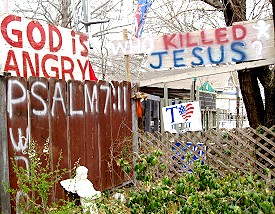
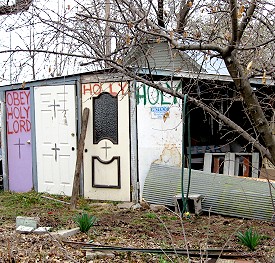
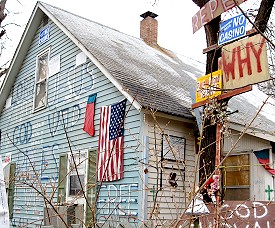
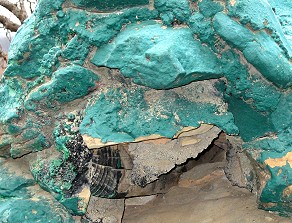
We started our excursion at the Garden of Gethsemane. This odd collection is the work of Felix Lucero and some divine inspiration. Wounded in World War I, Felix thought he was dying and he called on The Virgin Mary to make a deal. If she would save his life, he would dedicate it to creating Christian art. Mary held up her end and so did Mr. Lucero.

Times were… CONTINUE READING >>

Pima County Courthouse, Tucson, Arizona

There seemed to be a crossroads to our Arizona fun, Tucson. We kept passing through on our way from one place to another, so we decided to stop and check it out.

Back in 1692 Jesuit missionary Eusebio Francisco Kino explored this area, and a few years later founded a mission near what became Tucson.

Soon after, the Spanish built a walled fortress, Presidio San Agustín del Tucsón, and the town was on its way.

Even though growth was slow out here in the arid boonies, Tucson became the largest settlement in Arizona. The territory changed hands between Spain, Mexico, The U.S. and even The Confederacy before becoming a state. But when Phoenix was named the capital, it quickly outgrew Tucson.

Several factors kept the town growing, most notably the establishment of the University of Arizona and then the Veterans Administration hospital, originally made for World War I gas victims to recover in the clean, dry air.

The fresh air and that famous “dry heat” have continued to keep both Phoenix and Tucson among America’s fastest growing cities.

Garden of Gethsemane

We started our excursion at the Garden of Gethsemane. This odd collection is the work of Felix Lucero and some divine inspiration. Wounded in World War I, Felix thought he was dying and he called on The Virgin Mary to make a deal.

If she would save his life, he would dedicate it to creating Christian art. Mary held up her end and so did Mr. Lucero.

Garden of Gethsemane, Tucson Arizona

Times were tough in 1938 and Mr. Lucero found himself living under Tucson’s Congress Street Bridge, but he nevertheless decided that this was the place to hold up his end of the bargain with The Mother of God.

He started sculpting, using damp sand and debris from the Santa Cruz river. Over time Felix created his masterpieces, including a life sized crucifix and last supper.

It really is quite impressive.

The works have suffered over the years, since they were not made of the finest materials. But they have been restored several times and are now displayed in this lovely little park.

Cathedral of Saint Augustine in Tucson

Across the river is the oldest part of Tucson and we figured that warranted a look. The historic district around the Presidio is home to some of the city’s finest examples of the adobes from days gone by.

The Cathedral of Saint Augustine shares this neighborhood with them as it has in one version or another for nearly three centuries. The latest incarnation, in a “Mexican baroque” style should stand for centuries because if it ain’t baroque, don’t fix it. Ba-da-ching!

Further into the heart of the city we found The 4th Avenue Shopping District, which basically everyone we talked to told us not to miss.

The area around Fourth Avenue was originally known as Barrio Tiburón and was once Tucson’s red light district. We found an artsy shopping strip, not a red light in sight, other than for traffic control.

We parked and walked along 4th between 9th Street and University Boulevard to take it all in before deciding which spots to hit.

4th Ave Trolley in Tucson

Several things grabbed our attention. It was impossible not to notice the clanging antique trolleys as they rumbled down the avenue.

We followed the tracks to an old garage just off 4th that houses the Old Pueblo Trolley Museum. The idea is for the museum to be an operating transit method and it is working. The restored old street cars run to the University on weekends, with a Sunday special of rides for just a quarter.

Tucson has a long trolley history, dating back to 1906 when the first electric street cars began to run here. Unfortunately, these aren’t those original cars, but ones of the same type that the museum has bought from all over the world to restore and put back into service.

We both agreed that they add to the overall groovyness of the district.

Back on Fourth Avenue catchy signs are the order of the day, but we were getting a little hungry so one “had to check out” sign really caught our eyes, Solar Pizza. That’s right, pizza cooked by solar power at the Brooklyn Pizza Company. Tucson is a very “green” city, so this doesn’t seem out of place at all.

Great Shop Names on Fourth Ave, Tucson

We had visions of an old science fair tin foil oven barely warming up some unlucky pile of dough and cheese, but the pie was quite good. It is not cooked in a solar oven, the electric ovens run on solar power.

Nearly 25,000 kilowatts of solar power per year generated by panels on the pizza parlor’s roof. This saves about 25,000 pounds of coal and 12,000 gallons of water per year. Now that’s pretty groovy, too.

Sky Bar

With our bellies filled, we dropped in next door at the Sky Bar. In the dry, clean air of the desert the stars are amazing. So much so, that even in the middle of a big city like Tucson, great views are obtainable on a telescope.

That’s what the Sky Bar is all about.

Inside, astronomy programs and deep space images from Sky Bar’s own telescopes are displayed on large screens. Outside on the patio, local astronomy buffs set up telescopes for live viewing of celestial objects.

While we waited for it to get dark enough for viewing, we grabbed a seat and a beer and caught a set from one of Tucson’s troubadours. Behind the stage, galaxies, nebulae and star clusters floated by. Before we knew it, it was viewing time.

Oh My Stars!

A six foot reflecting telescope was set up in a fenced in courtyard, not twenty feet from Fourth Avenue. Big polished mirrors inside the scope magnify the distant objects hundreds of times.

We waited for our turn at the eyepiece and in spite of streetlights and headlights, we got great views of The Moon and Jupiter.

Back inside we found that the coolest aspect of the viewing was the conversations about space, life, creation and our place in the universe that it sparked. Groovy. We went back out for another look.

Mt. Lemmon Ski Valley, Arizona

The next day was the kind that draws the snowbirds to Arizona, warm, sunny and dry. The sort of mid-winter day that we could spend by a pool somewhere, but we had a different idea.

Skiing, not water, but snow. How could we do that on an eighty degree desert day? By driving the short stretch up Mount Lemmon to America’s southern most ski area, Ski Valley.

High enough in the Santa Catalina Mountains that it gets several feet of snow each year, the ski area opens whenever conditions are right. Fortunately a big storm had just dumped about three feet of the white stuff a few days ago.

So much that the road up the mountain had been closed for a while and this was the first day that skiers could get to the fresh trails. It was packed. But packed for Mt. Lemmon is not like most ski areas, it just means a few hundred folks showed up.

Snow above Tucson

The drive up the mountain is gorgeous, going from hot arid desert to alpine winter wonderland in less than an hour. At the top, the views are spectacular, stretching out hundreds of miles.

Veronica could hardly wait to revisit her fear conquered skiing prowess but fate threw her a curve ball. At 9,000 feet above sea level, it can be a little tough to breath.

Never having done too well with high altitude, before she could finish her first run down the bunny slope she was dizzy and seeing stars. This time without a telescope. She decided that being a snow bunny with a toddy by the fire at the Iron Door lodge might be a good idea for her.

Mt. Lemmon Ski Valley

David, who grew up at over 8,000 feet high, didn’t seem to notice the altitude and took a run down the slopes.

It’s a small area, just one main lift and a half dozen runs, so he had covered the mountain in time to join Veronica back at the lodge for a late lunch.

The Iron Door takes its name from a legend that buried gold hidden by the seventeenth century Jesuit missionaries in an underground vault behind an iron door is somewhere in this vicinity. The treasure hasn’t been found yet, but we did find some pretty good soup.

David took one more schuss down the slopes before we headed back down the mountain and back into summer-like climate. It was like passing through all of the seasons in one day.

Now that’s groovy.

David & Veronica, GypsyNester.com
Cliff Dwellings at Tonto National Monument


enlarge video
By building high in the cliffs, looking out over the entire valley, the Salado, a branch of the Anasazi, or ancient ones, had… CONTINUE READING >>

Our guide led our small group up the steep mile and a half climb to the ruins, with plenty of information about the area, plants and history of the Salado. They were a branch of The Anasazi (the ancient ones) that came down from the north around eight hundred years ago trading and interacting with The Hohokam, but formed their own villages higher in the mountains. By building high in the cliffs, looking out over the entire valley, they had… read more at https://www.gypsynester.com/ir.htm

Visit our GypsyNester YouTube Channel!

Vincent Price Narrates Tombstone’s Historama


enlarge video
The best attraction ever in the history of the Wild West, Tombstone’s Historama. A technological marvel appeared before our eyes. Scenes from… CONTINUE READING >>

The best attraction ever in the history of the Wild West, Tombstone’s Historama. A technological marvel appeared before our eyes. Scenes from Tombstone’s early days, depicted with toy cowboys, indians, miners, model houses, trees, tee pees, and little light bulb campfires on a paper mache mountain were magically rotating on the stage. The piece d’resistance was the fact that the whole thing is narrated by Vincent Price. For more: https://www.gypsynester.com/ts.htm

Visit our GypsyNester YouTube Channel!

Gunfight at OK Corral


enlarge video
The gunfight at the OK Corral reenactment is so LOUD! Watch the camera shake as Veronica tries not… CONTINUE READING >>

The gunfight at the OK Corral reenactment is so LOUD! Watch the camera shake as Veronica tries not to be startled by the gunfire!

For more on the gunfight and Tombstone, Arizona: https://www.gypsynester.com/ts.htm

Visit our GypsyNester YouTube Channel!

Picture This: Prague’s Jewish Quarter

Prague’s Jewish Quarter, known as Josefav, has gone from settlement, to walled ghetto, to near extinction, to tourist attraction through the ten centuries of its existence… CONTINUE READING >> 

The Jewish Quarter in Prague, Czech Republic

Jewish Quarter, Prague, Czech Republic

Prague’s Jewish Quarter, known as Josefav, has gone from settlement, to walled ghetto, to near extinction, to tourist attraction through the ten centuries of its existence.

When the Nazis invaded Prague during WWII, it was expected that they would destroy Josefav altogether, instead they decided to preserve the cemetery, town hall, ceremonial hall and several synagogs as an “exotic museum of an extinct race.”

Fortunately their plans were foiled.

See all of our adventures in Prague!

Want more Czech Republic? Click here.

Jewish Quarter, Prague, Czech Republic

Jewish Quarter, Prague, Czech Republic

We became obsessed with The Golem of Prague.

The Golem of Prague

The Golem of Prague

The Jewish Quarter in Prague, Czech Republic

Legend says in the late 16th century, the Golum (a being made from clay and brought to life) was created to order to protect the people of Josefav.

The rabbi that called him forth wasn’t as careful as he should have been with the Golum and the creature turned violent. He had to be killed.

The Golum’s body is said to be kept in the attic of the Synagogue in Josefav, and can be reanimated if he is needed again (windows of the attic are seen in the photo below).

The Golem of Prague lives here

David & Veronica, GypsyNester.com
See all of our adventures in Prague!

Want more Czech Republic? Click here.

The Inexplicable Stairway to Heaven

As the legend goes, when the chapel was built without stairs up to the choir loft. Monks used ladders, but since this chapel was for nuns, a staircase was needed. Conventional stairs would take up nearly half the space in the little chapel, so the nuns decided to pray a novena for some divine assistance. On the ninth (and final) day of the devotion, a mysterious man with a few simple tools appeared and informed the sisters that he could fashion a suitable staircase, but he must be left completely alone. Locked in the chapel for three days, he finished the stairs and disappeared without asking for pay. Nobody knew who he was or where he went, so naturally …CONTINUE READING >>

Nothing says southwest like Santa Fe.

The combo of scenic mountains and mesas with the native Pueblo, Spanish and cowboy cultures defines this quadrant of the country.

The area was claimed as the “Kingdom of New Mexico”
by Francisco Vásquez de Coronado for Spain in 1540.

By the early 1600s La Villa Real de la Santa Fé de San Francisco de Asís, the Royal Village of the Holy Faith of St. Francis of Assisi, was founded and became Spain’s provincial capitol for the region.

The city kept its status as capital through Mexican independence and then statehood.

Santa Fe, New Mexico

The recommended starting point for a big dose of Santa Fe flavor is the Plaza, so naturally that’s where we headed. This is a classic colonial town square.

A small park with the usual benches, trees, monuments and gazebo, surrounded by centuries old historic buildings.

The Plaza in Santa Fe, New Mexico

We started at the original Palace of the Governors, which occupies an entire side of the Plaza.

The palace is the oldest public building in the US, dating back to 1610.

By most standards, this sprawling one story adobe residence would hardly qualify as a palace, but back in the 1600s in the frontier desert, it was the finest accommodation for hundreds of miles in any direction. Today it serves as a market place for native jewelry and artwork.

The Plaza in Santa Fe, New Mexico

Walking the perimeter of the square is an easy stroll so we continued along the Plaza’s other three sides. Traditional crap shops mingle with high-end galleries, hotels and boutiques.

In the structures where Conquistadors and cowboys once shook off the trail dust, now tourists shop for designer clothes and Jackalopes.

The Cathedral Basilica of Saint Francis in Santa Fe, New Mexico

Looming over the Plaza, The Cathedral Basilica of Saint Francis of Assisi has stood since the 1870s, but a church has occupied this spot from the earliest days of Santa Fe.

Walking up to the church we felt like we somehow warp traveled across the Atlantic into a European village.

The French-born Archbishop Lamy intentionally had the Cathedral built in Romanesque Revival style so that it would stand out from the surrounding adobe buildings.

He was highly successful in his attempt. In what seems to have been a huge event, on October 4, 2005 Pope Benedict XVI elevated the cathedral to basilica status. We don’t really know what difference that makes to the church, but it sounds pretty snazzy.

The Inexplicable Staircase of Santa Fe, New Mexico

While we were in church exploration mode, we headed a few blocks over to the Loretto Chapel. This is home to the famous “Inexplicable Staircase.”

As the legend goes, when the chapel was built without stairs up to the choir loft. Monks used ladders, but since this chapel was for nuns, a staircase was needed.

Conventional stairs would take up nearly half the space in the little chapel, so the nuns decided to pray a novena for some divine assistance.

On the ninth (and final) day of the devotion, a mysterious man with a few simple tools appeared and informed the sisters that he could fashion a suitable staircase, but he must be left completely alone.

Locked in the chapel for three days, he finished the stairs and disappeared without asking for pay. Nobody knew who he was or where he went, so naturally the nuns assumed that the carpenter was St. Joseph sent in answer to their prayers. A miracle.

At the chapel, which is privately owned these days, a recorded message plays this story on a never ending loop. Celestial choirs rise to a crescendo as the tale unfolds.

Then our narrator adds to the mystery by claiming that the design of the staircase defies physics and that no one can explain its construction.

The actual story is that the staircase was more terrifying and dangerous than miraculous. So much so the nuns had to crawl up and down it on their hands and knees until a railing was added ten years later.

The spiral design, while very unique, still falls within the laws of nature.

There even seems to be some evidence that the sisters knew who the carpenter was and kept a record of it.

One Francois-Jean “Frenchy” Rochas was actually credited as the builder in his obituary. The legend of St. Joseph appearing to the nuns didn’t crop up until decades later.

Of course now that this is a private business it pays to keep the myth alive and we made these discoveries elsewhere. Though the reality may be somewhat less than mystical, the staircase is truly magical.

The craftsmanship is superb and the finished product absolutely beautiful. Both the original stairs and the railing are gorgeous examples of fine woodworking, worth every bit of the $2.50 entrance fee.

After our believe-it-or-not experience, our minds turned to our bellies.

Imagine that!

Just off the Plaza, in an historic pueblo adobe, we found Cafe Pasqual’s. The casual cafe was named in honor of the patron saint of Mexican and New Mexican kitchens and cooks.

The intimate little dining room seats a mere fifty folks, but luckily we arrived early. Much of the seating is communal, so we joined the big table in the middle of the room and proceeded to get acquainted with our fellow guests.

As we are prone to do, we stayed on the appetizer side of the menu. The offerings at Pasquale’s are inspired by the desert southwest and the chefs try to use local ingredients whenever possible.

But as our first selection showed, some bending of this rule is necessary, since there are very few halibut swimming around in New Mexico.

The Halibut Ceviche was marvelous, and considering how well it was matched with lemongrass, avocado, jalapeños,
cucumber, tomato, and crispy tortilla triangles, maybe some of those halibuts should consider swimming up the Rio Grande.

My Tacos Barbacoa featured famous Niman Ranch beef and Chile d’Arbol Salsa. The Niman Ranch began near San Francisco, but now is a network of sustainable natural meat producers all over the country.

And yes, non hormone and antibiotic laced meat does taste better.

We continued our crawl through the menu with Pigs & Figs. Veronica can’t resist anything figgy, even if it is piggy. This tasty treat is pretty much what it sounds like, sweet figs wrapped in Applewood smoked bacon. Sweet and salty… delicious!

The cloaked little Newton fillers came on a bed of mizuna greens with balsamic vinaigrette, and topped with cabrales, the Spanish version of blue cheese.

We also gave the tamale a try. A little bit of Caribbean meets New Mexican, since the corn meal masa stuffed with green chili and Jack cheese is wrapped in a banana leaf as opposed to the traditional corn husk.

The only item that we tried in our prowl through Cafe Pasquale’s appetizer menu that wasn’t stellar was the Caesar Salad. The attempt to make it unique was a swing and a miss as far as we were concerned.

Dressing poured over whole Romaine leaves with crispy baked Parmesan on the side wasn’t bad, but didn’t hold up in comparison to some of the jammin’ Caesars we’ve experienced elsewhere. But it was more than made up for when the dessert platter arrived.

Every bit of it was delectable, but the chocolate torte with olive oil and sea salt was beyond believable.

There’s a lot of that going on today. All in all, a phenomenal evening of food and fun.

The large communal table allowed us to get to know some of the locals and enjoy good conversation while learning a little about Santa Fe. Great tidbits like, only two cities in America can claim to be older, San Juan, Puerto Rico and St. Augustine, Florida.

Albert Einstein used to hang out in the Plaza while working on the atomic bomb at nearby Los Alamos. Looney Tunes legend Chuck Jones came up with The Roadrunner & Wile E. Coyote while living here. Georgia O’Keeffe spent her later years living and working here and the Georgia O’Keeffe Museum houses a huge collection of her work.

All of this combines to make Santa Fe one of America’s coolest cities. Even better than Atchison or Topeka… we think.

David & Veronica, GypsyNester.com