enlarge video
Walking along the decks and peering into the Cairo’s inner workings, it wasn’t too hard to feel transported back to Civil War Era. The display is made all the more interesting because… CONTINUE READING>>
Walking along the decks and peering into the Cairo’s inner workings, it wasn’t too hard to feel transported back to Civil War Era. the display is made all the more interesting because rather than replace the original wood with a replica, it has been braced and supported in its current condition. This allows visitors to complete the restoration with their imaginations and travel back in time 150 years. See more at: https://www.gypsynester.com/vb.htm
enlarge video
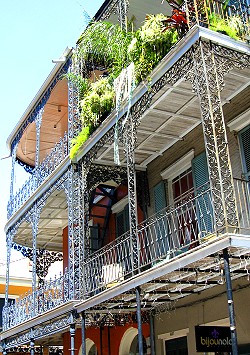
New Orleans is filled legends and lore. Even the architecture reveals romance and mystery. One of the city’s most storied citizens… CONTINUE READING>>
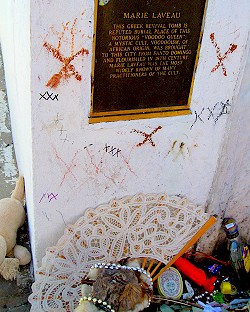
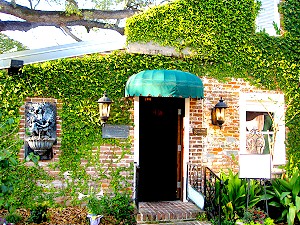
New Orleans is filled legends and lore. Even the architecture reveals romance and mystery. One of the city’s most storied citizens was Marie Laveau, New Orleans’ famous Voodoo Queen. Her house is now a shop where strange and mysterious items lurk. Madam Laveau’s grave is frequently visited by true believers asking for intervention in their lives. For more: https://www.gypsynester.com/no.htm
Mention New Orleans and most folks conjure up visions of Mardi Gras, jazz bands, Bourbon Street or maybe even the world champion Saints, but we think of food. Crazy good food.
An incredibly diverse, yet unique style cooking has developed through the combination of several cultures down here at the bottom of The Mississippi River. Elements of French, Spanish, Caribbean, Cajun, German and Italian cuisine are all represented in what has come to be known as Creole.
Several of Creole’s signature dishes are very similar to typical Cajun recipes and can share the same names and ingredients. Most start with “the holy trinity” of Louisiana cooking, bell pepper, onion, and celery. The names jambalaya… CONTINUE READING >>
Mention New Orleans and most folks conjure up visions of Mardi Gras, jazz bands, and Bourbon Street but we think of food. Crazy good food.
An incredibly diverse, yet unique style cooking has developed through the combination of several cultures down here at the bottom of The Mississippi River.
Several of Creole’s signature dishes are very similar to typical Cajun recipes and can share the same names and ingredients. Most start with the holy trinity of Louisiana cooking, bell pepper, onion, and celery.
The names jambalaya, gumbo and étouffée are found in both styles, but there are subtle differences between the refined urban Creole versions and the more rustic Cajun.
Some folks say that Creole cooking is more tomato-based. We have found that to be generally, but not always, true. Another difference can be the intensity of the seasoning or the darkness of the roux — Cajun food tends to be spicier and darker than the Creole counterpart.
However, through the years the two have blended and overlapped and they can be hard to differentiate.
We’ve found identifying them to be a little like Supreme Court Justice Potter Stewart said about pornography — it’s hard to describe but he knows it when he sees it.
Perhaps the best rule of thumb is if you’re eating in New Orleans it’s probably Creole, if you’re out in the bayou country, it’s Cajun.
We most certainly have many favorite eateries when visiting The Big Easy, but if we only had one day to eat our way through The French Quarter it would go something like this:
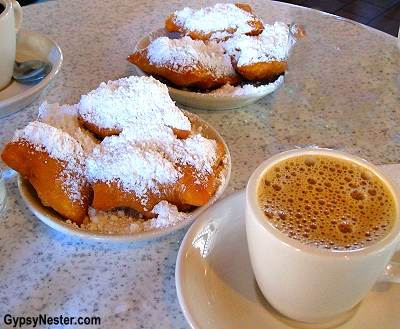
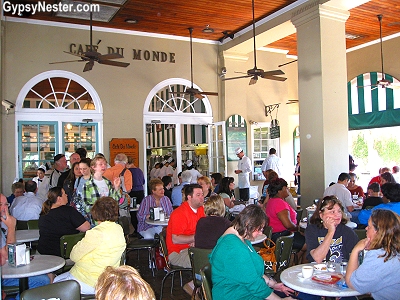
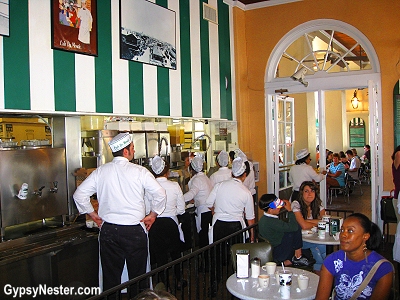
Neither Cajun or Creole, world famous Café du Monde’s beignets are our favorite way to start — or end — the day since it’s open 24/7.
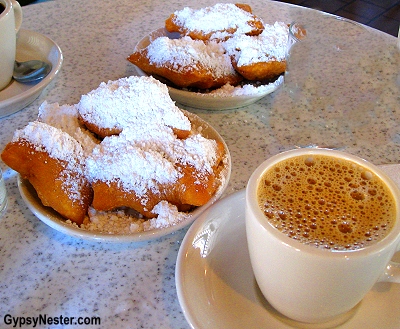
Almost every culture has a version of sweetened deep fried dough — donuts, sopaipillas, elephant ears, johnny cakes, spritzkuchen, zeppole, youtiao, oliebollen, chrusciki fat balls, and beaver tails to name a few — beignets belong to the French. Café du Monde utilizes heaping piles of powdered sugar as their sweetener of choice.
We love them, but have learned to shake a good bit of the pulverized crystals off before biting.
It is of utmost importance not to inhale right as the beignets pass under the old schnozola on their trip to the pie hole.
Otherwise massive, sticky, sugary sneezing fits are sure to result.
We washed down our delectable dough balls with cups of café au lait. The coffee, in typical New Orleans style, is blended with chicory and mixed with warmed milk. Très magnifique!
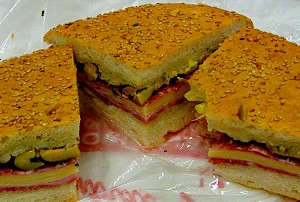
For us, lunch in New Orleans can only mean one thing, muffulettas.
The mere thought of a muffuletta, generally pronounced “muff-uh-let-uh,” will get us doing a Fats Domino impression, we’ll be Walking to New Orleans from wherever we might be.
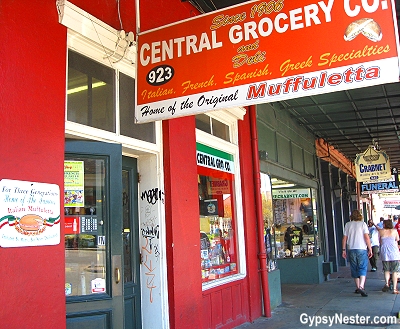
Legend has it that the sandwich was invented by Signor Lupo Salvadore to feed the local Sicilian dock workers when he opened Central Grocery on Decatur Street back in 1906.
We’re not exaggerating — this truly is the best sandwich ever in the entire history of the known universe, and the unknown as well.
Two secrets make the original Central Grocery version almost impossible to duplicate.
The bread, a round loaf of Italian, that somehow seems impossible to bake outside the city limits of New Orleans, and the olive salad spread which no one has ever managed to match.
Without these a muffuletta is merely a salami, Italian ham and provolone cheese sandwich.
We took our spot in the ever-present line at the back of the store to await the delivery of our round mound of deliciousness.
Muffulettas are cut into quarters (a French Quarter Pounder!) and sold by the whole or half loaf.
That’s it, no menu, no substitutions (what are you crazy?), just paper wrapped, ready-to-chow heaven. A handful of chairs line a counter, but most of the muffs leave the store to be consumed elsewhere.
When God wants a sandwich, Central Grocery is where he gets it. Yes, there are copycat muffulettas all over town — some of them pretty good — but we have yet to find one that measures up to the original.
When suppertime rolls around, there are any number of extraordinary restaurants to choose from.
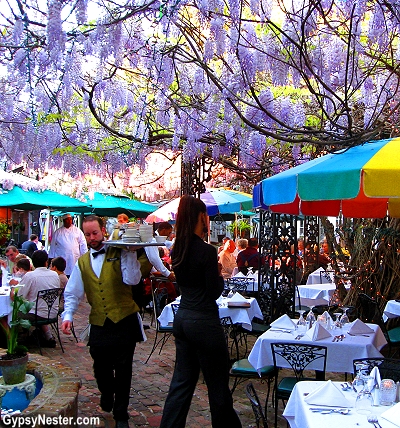
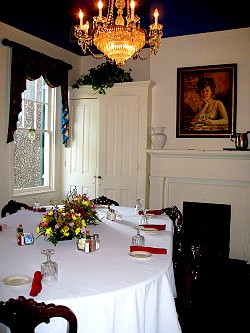
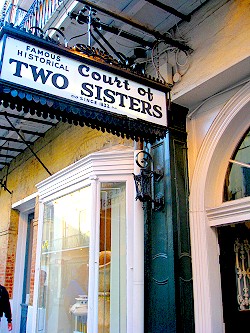
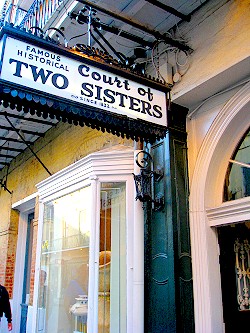
But for old-style New Orleans ambiance to go along with some outstanding food, we had to hit the Court of Two Sisters in the heart of The French Quarter.
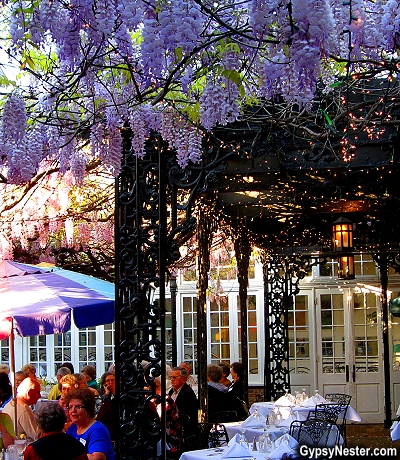
The outdoor seating is a phenomenal setting for fine dining.
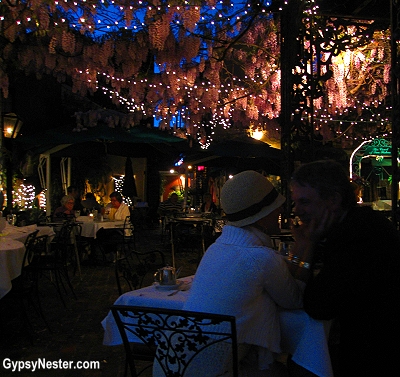
On a lovely spring evening, the in-full-bloom wisteria formed a fragrant, flowery canopy overhead.
Add to that the original gas lights and fountains decorating the largest courtyard in The Quarter and, though it might sound trite, magical is the only adjective to describe the surroundings.
The restaurant is named for Creole sisters Emma and Bertha Camors, who opened a notions shop at this location back in the late 1800s.
The Camors girls provided many of the city’s finest ladies with formal gowns, lace and perfumes imported from Paris.
Today, brothers Joseph and Jerry Fein carry on that tradition of only the finest for their customers.
The Table d’Hote offers plenty of choices from hors d’oeuvres, salads, entrees and desserts, but there are à la carte selections available as well.
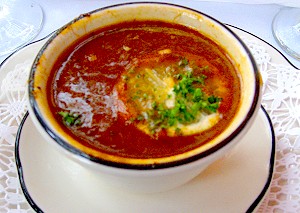
We started with the turtle soup au sherry. It may sound a bit daunting to be consuming turtle, but rest assured, with a dollop of sherry added tableside just before our spoons dug in, it’s a chance well worth taking.
Next, the Caesar salad, prepared tableside, is not to be missed. Not only is it a good show, but the end result is quite tasty.
Another highlight was the shrimp and grits. Shrimp poached with andouille sausage in a Creole meunière reduction over a mound of melt-in-your-mouth grits really captures the diversity of New Orleans.
Creole meunière is a delectable sauce made with fish stock, butter, Worcestershire sauce, lemon, chopped parsley and a dash of cayenne pepper that blends perfectly with the main ingredients of the dish.
Though we hardly had room to stuff in another bite, we had to end our meal with a New Orleans favorite, bananas foster.
The waiter brought a cart up to the table and began setting things aflame, always one of our favorite pastimes. Butter, brown sugar, cinnamon and bananas blazing in brandy, what’s not to like?
Once the flaming booze had done its thing, vanilla ice cream got involved and we nearly hurt ourselves.
A stomach can only hold so much.
So there it is, our idea of a perfect day of eating across New Orleans.
Though all three of these places can be a tad touristy, many locals frequent them too — a sign of a good place to strap on the old feed bag.
enlarge video
The waiter brought a cart up to the table under the hanging wisteria and began setting things aflame, always one of our favorite pastimes. For more on New Orleans food: https://www.gypsynester.com/nola.htm
The waiter brought a cart up to the table under the hanging wisteria and began setting things aflame, always one of our favorite pastimes. Butter, brown sugar, cinnamon and bananas blazing in brandy, what’s not to like? For more on The Court of Two Sisters and New Orleans food: https://www.gypsynester.com/nola.htm
Every visitor with a soul develops a soft spot for New Orleans. The charm, history, music, food and mischief that define The Big Easy make it impossible not to be captivated.
As we always do, we began the day at Cafe Du Monde. Megadoses of sugar, grease and caffeine — what more could we need to fuel the day’s explorations? Beignets devoured and coffee swilled, we proceeded to take on the town.
Admittedly, some of the French Quarter’s appeal isn’t as … CONTINUE READING >>
Every visitor with a soul develops a soft spot for New Orleans.
The charm, history, music, food and mischief that define The Big Easy make it impossible not to be captivated.
As we always do, we began the day at Cafe Du Monde.
Megadoses of sugar, grease and caffeine — what more could we need to fuel the day’s explorations?
Beignets devoured and coffee swilled, we proceeded to take on the town.
Admittedly, some of the French Quarter’s appeal isn’t as charming in the cold hard light of day as it is by the soft neon glow of night.
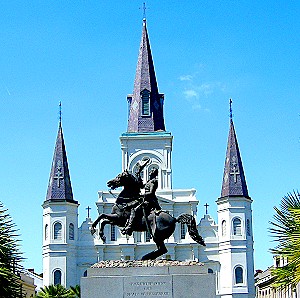
We figured a daylight tour might look better from the splendor of a mule-drawn carriage.
Nearby Jackson Square hosts more mules than you could shack a stick at — lined up and ready to haul ass around the Quarter.
A mule is only a half-ass, but we wanted to use our feet for carousing later that night.
Our teamster/guide, Jan, proved to be a veritable treasure trove of artful narratives about the history and architecture of The Quarter.
The accuracy of these yarns ran the gamut from factual to fanciful, but that’s part of the fun. Jan pointed out many of the best known landmarks, offered up historical information and threw in a sprinkling of ghost stories for good measure.
Whether they be legend or genuine is left to the beholder to ascertain.
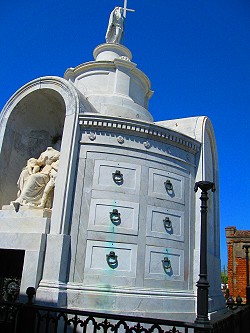
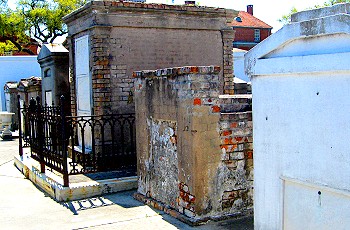
New Orleans is well-known for its cemeteries, with crypts built above ground instead of the usual subterranean graves.
The reason for this was commonly thought to have been that the city sits below sea level, making grave digging impractical. The caskets might even float up to the surface.
But it is likely that there is a less disgusting explanation.
Traditions of the French and Spanish that settled this area, and the ability to show off wealth and station in life by building ornate tombs may have had more influence on the development of these glorious graveyards than the water table.
Families built fabulous mausoleums used for generations.
For those without the means to afford an elaborate entombment, benevolent societies were formed, usually exclusive to people in a certain occupation or ethnic group, to pool resources for building a respectable resting place.
Several of these burial grounds are just outside The French Quarter, the closest, oldest and perhaps best known being St. Louis Cemetery #1.
Jan and our mule dropped us off and we took a stroll through history. Dating back to 1789, the cemetery holds several of New Orleans’ earliest dignitaries, both famous and infamous.
The most storied resident, Voodoo Queen Marie Laveau, attracts hundreds of pilgrims to her tomb everyday.
The believers draw three Xs on the tomb or leave offerings, always in threes, of candles, flowers, dolls, coins, even cigarettes and cigars, in hopes of having the famous priestess grant their petitions.
On occasion, the sacrifices will include chickens. The more urban of the worshipers have been known to offer up a bucket of KFC, perhaps believing chicken comes like that in its natural form, to fulfill the ritual’s requirements.
Having had enough of the spooky side of The Crescent City, it was time to see some of the splendor of the old South in The Garden District.
The best way to do this, from our point of view, is to jump on the St. Charles street car on Canal Street at the edge of The French Quarter.
The clattering old trolleys run right down the middle of St. Charles Avenue through the heart of the district.
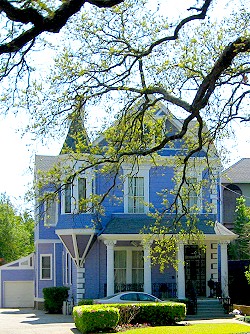
Stately manors line the boulevard on either side, and the gardens are, well, it is called The Garden District for a reason.
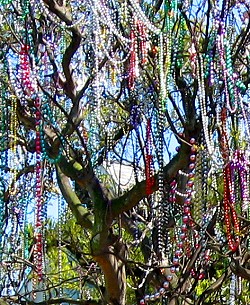
The trees along St. Charles were draped with thousands of Mardi Gras beads from the parades of Carnival.
No, we were not crazy enough to venture into New Orleans during Mardi Gras, these baubles were the remnants from several weeks prior to our visit.
A good place to get off the trolley and turn around to head back into The Quarter is the Audubon Zoo and Gardens, named in honor of the famed naturalist and painter John Audubon who lived in New Orleans in the early 1800s.
With a bit of time before the nightlife kicked in, we took a little stroll through the gardens, then thought what the hey, and gave the zoo a quick once over too.
It’s not huge, but is well appointed and gives an interesting nod to the local flora and fauna, including a couple of white alligators that should not be missed.
With darkness approaching, we headed back to The French Quarter.
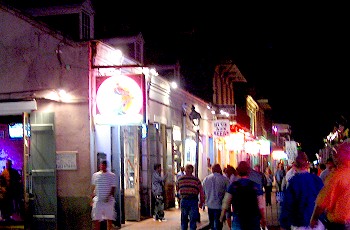
Wandering about The Quarter is a study in street theater, one of our favorite diversions. The show consists of all types of performers practicing their acts for the audience of passersby with varying degrees of proficiency.
The performances ranged from unique and fantastic diversions to talentless, don’t-look-just-keep-walking tragedies. Most were the former variety, fortunately, and largely musicians drawn to the birthplace of jazz.
Though it’s been a long time since the labor pains, blue notes still fill the air of The Big Easy, both on the streets and the stages.
Drifting out of the dens and dives along Bourbon Street, jazz is just one of the many musical styles one might hear. Rock, rhythm & blues, soul and zydeco are just as likely to tickle the eardrums of The Quarter’s revelers.
The most famous of these music venues is Preservation Hall. Just off Bourbon Street, folks from all over the world line up and wait for hours just to have a chance to hear some of the old masters rip a riff or two.
Although the building dates all the way back to 1750, it wasn’t used for musical performances until 1961 when Allan and Sandra Jaffe opened it as a place for aging musicians to play and preserve the art form. Hence, the name.
The hall is a sanctuary to honor and protect New Orleans jazz.
You can’t swing a dead cat without hitting music fans and revelers in the French Quarter. They can be seen roaming the streets after dark, complete with giant goofy glasses of vile, brightly colored potent potables.
There’s something about New Orleans that makes otherwise reasonably sane people want to drink mass quantities of concoctions that they would never touch back home.
What follows degenerates into displays of flesh, or more often, requests for any passing female to display some. Once Veronica had been so propositioned, we decided it might be time to mosey on.
Besides, we thought we should make it to bed before the ghosts came out to play.
enlarge video
I spotted Beuscherl and without the slightest idea what it might be, I ordered it. Our waitress asked, “You do understand that this is heart and lungs of baby… CONTINUE READING>>
A day in the life! — Jazz duo outside Cafe du Monde, solo soprano sax in the French Quarter, water tuned goblets in Jackson Square and blazing hot Zydeco on Bourbon Street! New Orleans is magic! The music of New Orleans is as diverse as the many cultures that created the city itself. More here! https://www.gypsynester.com/no.htm
The Gulf Coast has taken more than its share of beatings, Katrina was no doubt one of the worst. We were intimately acquainted with the destruction she caused in New Orleans from our daughter’s, 23, ill-fated attempt to attend Tulane University. But the worst of the storm’s fury was felt on Mississippi’s shores.
The damage was still evident as we drove along the coast toward Biloxi. Massive broken pilings that…CONTINUE READING >>
The Gulf Coast has taken more than its share of beatings, Katrina was no doubt one of the worst.
But the worst of the storm’s fury was felt on Mississippi’s shores.
The damage was still evident as we drove along the coast toward Biloxi.
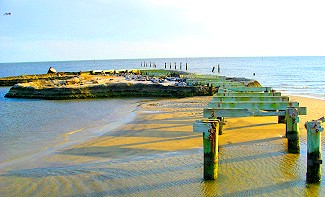
Massive broken pilings that once held extravagantly themed casinos housed on barges, stand like lonely skeletal dinosaurs on the water’s edge.
Most of the casinos have been rebuilt on shore now. But plenty of open lots scattered along the beach road now sit empty. These were prime real estate occupied by grand oceanfront homes and flashy tourist attractions prior to Katrina.
There was a fair amount of “remember when The Treasure Bay was there” or “I think that was where the hotel we stayed at used to be” conversations while we walked along the beach our first evening.
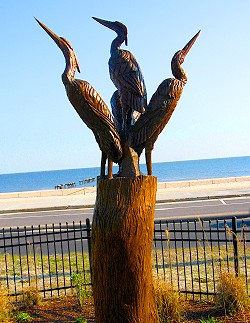
From some of the devastation, lemons were made into lemonade in a most unusual way. In 2007, chainsaw artist Dayton Scoggins carved egrets, seagulls, pelicans and dolphins out of the stumps of broken trees left behind by the storm.
A few years later another artist, Marlin Miller, was inspired by these original carvings and added over a dozen more. Now twenty Katrina Sculptures stand in the median of Beach Boulevard.
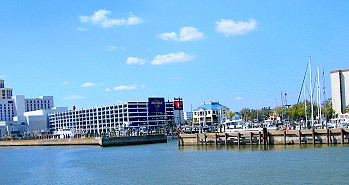
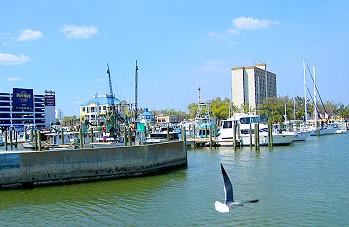
Just up the boulevard from the sculptures is the Biloxi Small Craft Harbor.
That’s where we found The Sailfish, billed as a “Living Marine Adventure Cruise.” While it may not be a genuine shrimp boat, it is a fun and educational way to spend an afternoon.
The fact that it is not a commercial fishing vessel allows them to do a little unregulated fishing closer into shore. And it gave us tourists a first hand look at just what comes up out of the sea when the nets are pulled in.
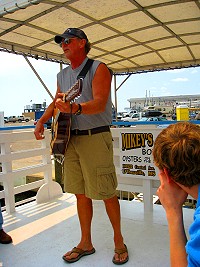
The crew of The Sunfish, Captains Brandy and Mike Moore — along with Steve Cason the shrimper / singer / songwriter — love their work and it shows.
The cruise kicked off with a few songs from Steve before casting off. Captain Brandy expertly guided the vessel out of the cramped harbor while Captain Mike, gave the obligatory safety talk / bathroom instructions, then switched hats from sailor to tour guide.
We got the scoop on the history of this part of the gulf as well as a full briefing on just how the shrimping industry works around these parts.
Once we were sufficiently filled in, and away from shore, it was time to do a little shrimpin’.
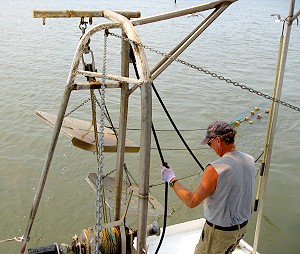
The nets are weighted so they will sink, then let out a few hundred feet behind the boat and simply drug along for awhile.
At this point there was nothing to do but wait and enjoy a beautiful day at sea.
As the nets were drawn back in, the ever present squawking seagulls and patiently waiting pelicans let us know that
our catch was successful.
Mike and Steve slowly pulled the nets aboard, being careful not to tangle them, and removed the various critters for our observation as they went along.
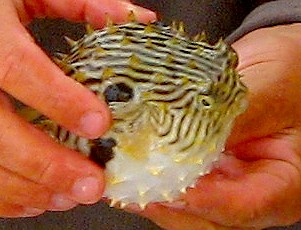
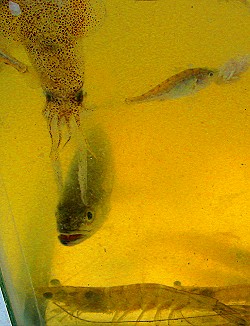
The Sunfish is equipped with an aquarium on the stern, near the rigging. Steve and Mike tossed in crabs, squid, jellyfish, trout, sardines, pufferfish — and of course shrimp — so we could see them swim about rather than flop around on the deck.
The remaining catch was turned loose for the seagulls to have at. The gulls were more than ready for a seafood dinner — and fought valiantly for the goods.
Hmmm, seafood dinner sounded pretty good. Captain Mike kindly pointed us in the right direction.
Just across Beach Boulevard from the harbor, Mary Mahoney’s Old French House Restaurant is a must on any visit to the Mississippi Gulf Coast.
This Biloxi tradition has been serving incredible Creole dishes since 1964, when Bob and Mary Mahoney converted the oldest house in town into this remarkable restaurant.
The building dates back to 1737 and our walk around the courtyard was an historical journey in and of itself.
Changing out of the old boat duds is a good idea though, because Mary’s is definitely a few cuts above the typical come as you are beachside eatery.
We didn’t plan ahead for this, (What? Plan ahead? Us?) and since it was only four in the afternoon when we got off the boat, we decided to order a few appetizers and take them to the beach.
The shrimp remoulade featured huge shrimp, right out of the water, with a perfect French-style remoulade sauce on a bed of greens.
Like crab? When Mary Mahoney’s makes a crab cake, they make a CRAB cake. Not a crab flavored cake, but a cake made out of crab. Yeah, baby.
Then there’s the Shrimp & Crab Au Gratin. Words failed us, we just shut up and ate. Had a bit of a gull-like battle.
Growling stomachs held at bay for a bit, we decided to use this beautiful spring evening for a drive into New Orleans to see how The Big Easy had come along since Katrina.

 Legend has it that the sandwich was invented by Signor Lupo Salvadore to feed the local Sicilian dock workers when he opened Central Grocery on Decatur Street back in 1906.