

Search…

We are All for a 4 Star Hotel on Gran Canaria

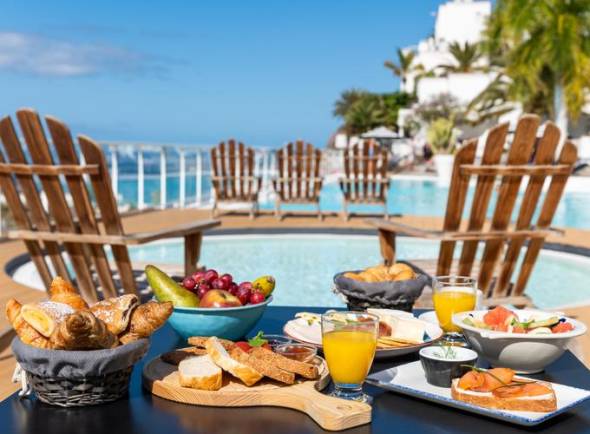
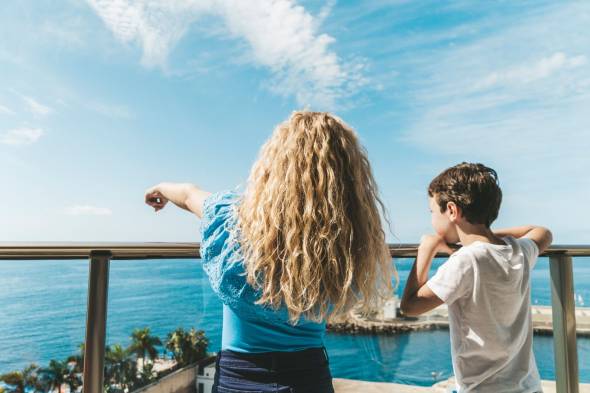
The Marina Bayview Hotel in Puerto Rico on Gran Canaria will not break the budget. And they have absolutely everything that we look for when we planning a vacation getaway… CONTINUE READING >>

I think most all travelers are familiar with the star system for rating hotels. We first learned about it traveling around Italy years ago. And it is certainly more commonly used in Europe than North America, but it seems to be catching on most everywhere now.

I’m not sure if we have ever stayed in a 1 Star, but no doubt some of the motels we’ve stopped in along the way would probably qualify. We have found that often a 2 Star is just fine for a short stay or while going from one place to another. In fact, sometimes they are quite nice and, in our experience, the difference between 2 Stars and 3 Stars can sometimes be hard to tell. So, by far the most of our nights spent in hotels have been in 2 or 3 Star accommodations.

But we have noticed a very big difference between 3 Star hotels and 4 Stars. That seems to be where the jump between common, decent, just fine, OK accommodations and luxury, high-end, lavish, first class lodging takes place.

Just in case anyone is wondering, I don’t think that we have ever stayed in a 5 Star. It’s not that we wouldn’t like to try it sometime, it’s just that we really can’t see spending what would amount to a house payment for one night in a hotel. And honestly, how much better than this great 4 star hotel in Puerto Rico could it be?

And rest assured, unlike those fancy five stars, The Marina Bayview Hotel in Puerto Rico on Gran Canaria will not break the budget. Sure, we could find a cheaper hotel in the Canary Islands, but not a nicer one. So why not splurge a little?

They have absolutely everything that we look for when we planning a vacation getaway. More than just rooms, Marina Bayview offers outfitted luxury apartments with secluded balconies that are more like a vacation home than a hotel. This means that there is a fully functional kitchen, a well appointed bathroom, and plenty of living space to spread out and relax.

Like most people, we love hanging out in a hot tub by the sea… or almost anywhere else. But hot tubbing at Bayview is definitely a big step up because we can have our own exclusive, private jacuzzi with amazing views of the Atlantic Ocean and the Puerto Rico marina. That sounds pretty five star to us.

We can also always count on a first rate gastronomic experience that tastefully combines local island ingredients with cuisines from all around the world. Best of all, we can have it all without ever leaving the hotel grounds.

With all of that luxury and indulgence, we can almost hear lots of you asking the question… “How can we possibly afford this?”

Well, we have an answer, by taking advantage of fantastic hotel offers in Gran Canaria.

The Marina Bayview’s BemyGuest program can save a bunch of money starting with the very first booking. Just sign up for BemyGuest Classic before you book your room and receive a 5% discount for all of your stays, including your first visit! Then, get an additional 5% special discount for your birthday.

The savings keep building up the more you use them so that after a few nights you can be getting fifteen percent off on every booking, plus another ten percent off for your birthday.

Hey, I think I might have a pretty good idea for where we might be spending some of our upcoming birthdays…

David & Veronica, GypsyNester.com

This Place Rocks

The introductory warmup walk of our Cornwall walking tour was destined to rock. There was just no way around it, because it would begin and end in the town of Rock. In order to accomplish this rockin’ trek, we would need… CONTINUE READING >> 

The introductory warm-up walk of our Cornwall walking tour was destined to rock. There was just no way around it, because it would begin and end in the town of Rock.

In order to accomplish this rockin’ trek, we would need to cross the River Camel from our base in Padstow.

No big deal, except for the interesting challenges faced by the ferry in negotiating the enormous tides that occur along this north facing coast on the Celtic Sea.

The variance from low to high tide is often over 20 feet. This leaves many boats in the harbor stranded high and dry at the low point, and requires a temporary disembarking spot for the ferry out on a sandbar far from the usual shore.

Once across the bay, we climbed to the high tide shoreline from our makeshift docking location and proceeded along England’s famous South West Coast Path toward the tiny village of Trebetherick.

This bit of trail would be our first of many walks along the country’s longest marked footpath. We wouldn’t come near covering the over six hundred miles of coastline that it spans along the South West Peninsula, but the sections we saw proved to be as scenic as we could have possibly imagined.

The stretch along the bay ran over and through large sand dunes that have been covered with grassy growth so that the seemingly solid ground beneath our feet was actually continually shifting.

Before long we came to the enduring little Saint Enodoc Church. This stone chapel became known as Sinking Neddy because it looks as though it has sunk into the ground. But looks can be deceiving, actually it has been battling the relentless encroachment of the dunes that have continually conspired to cover it for nearly nine centuries.

Today the grass covered dunes rise almost to the roof line, but it would be completely covered if not for  a big dig back in 1864 that unearthed the building and stabilized the dunes. For three hundred years before that Neddy was nearly invisible and the only way in was to drop in through a hole in the roof.

This peculiar procedure had to be completed at least once a year for the church to remain a valid parish, so priest and parishioners would make an annual climb down a ladder to attend services.

We have always been fascinated with cemeteries, the older the better, and St. Enodoc’s was mesmerizing. Not only for the markers, some of which date back to the sixteen hundreds, but for the scenic placement overlooking the bay.

Another interesting feature of the church, which was new to us but that we would encounter many more times again on this trip, was the lychgate we passed through to enter the yard.

The word lych, meaning corpse, has survived from Old English and stems the Middle Ages when the dead were brought to the lychgate until a funeral service could be performed. The little structure kept the rain off of, and provided seating for folks keeping vigil.

As we moved off into the countryside we encountered a couple of other new gateways that enabled passage between farmer’s fields. These were both designed to permit people, but not livestock, to pass through.

The first, a kissing gate, works by allowing a person to enter inside an enclosure with a gate that can be pushed one way to enter, walked around, then pushed back to permit an exit.

The other, called a stile, is simply a few steps placed so that people but not animals can climb over a fence or wall. We immediately associated the name with the word turnstile, which was correct. The contraption we know from crowd control at stadiums originally was a form of stile used to keep sheep or other livestock penned in.

Following our curiosity down an internet rat hole led us to learn that the first use of a turnstile to control the flow of humans was in a Piggly Wiggly store in Memphis, Tennessee.

Passing along hedgerows, and through the meadows and glades, also offered us the opportunity to discover a flower that we had never seen before, the foxglove. Turns out that these beautiful purple bloom covered plants are the source of a medicine called Digoxin that is used to treat heart conditions.

The plant’s medicinal qualities have been known for centuries, with the first published description dating back to the 1785 book An Account of the Foxglove and some of its Medical Uses with Practical Remarks on Dropsy and Other Diseases by physician William Withering.

Mostly we noticed that bees love them. Guess the little bumblers will never have to worry about an irregular heartbeat.

Leaving the flora and fauna behind we returned to human habitat in the pastoral village of Pityme.  The name is said to come from a tragic tale of loss at sea.

The skipper of a fishing vessel set despite despite threatening weather, resulting in all hands being lost. The grieving women of the town went to the widow of the captain and berated her for her husband’s irresponsibility. However, she was distraught as well and explained: “I have lost my husband too, so you should also pity me.”

Whether the legend contains a grain of truth or not we may never now, but it does make for a good story. Certainly better than the account of how Rock got its name. Some seen hundred years ago it was known as Blaketorre, or Black Tor, meaning black rock, which was eventually shortened to just plain Rock.

Entering the town along the beach we could see some of the namesake stones along the shoreline, even with the tide rising rapidly. Clearly, we didn’t have time to dawdle or we would be the ones asking for pity while we washed away to sea.

So as much as we enjoyed our exploration of the area around Rock, we had to roll if we were going to catch our ferry back across the bay.

David & Veronica, GypsyNester.com

See more from our Cornwall walking tour here.

A big thank you to Country Walkers for providing this adventure, as always, all opinions are our own.

Power Pedaling from Paris to the Sea (and back again)

For us biking is the best way to see the sights up close and at a speed where we can cover more ground than walking yet still take everything in. Our recent ride through the Normandy region of France certainly accomplished that…

CONTINUE READING >> 

We love to ride our bikes.

However, we are not deck out in Lycra and knock out a hundred miles kind of cyclists. We are more in the stop and smell the roses (or restaurants), snap a few photos, and enjoy the view camp.

Perhaps some of this attitude stems from David’s deep-seated determination to avoid becoming a MAMIL (a term we learned in Australia that stands for Middle Aged Men In Lycra).

Through the years we have pedaled across countless countries on three continents. For us, this is the best way to see the sights up close, at ground level,  and at a speed where we can cover more ground than walking yet still take everything in.

Our recent ride with Backroads Travel along the Seine River through the Normandy region of France certainly checked everything on that list.

And to make the whole thing even more enjoyable, we were aided by riding bikes that included pedal assist from BionX e-bike systems.

These don’t turn the bike into a motorcycle, we still had to provide the pedal power, but it definitely helped out up the hills. That made a big difference over the course of the 162 miles we covered during the week.

The assistance comes in several levels, ranging from 1 through 4, with 1 being hardly noticeable and 4 powering us up almost any incline as if we were cruising on flat ground.

We must admit, at first we felt a little guilty passing our cycling cohorts as they huffed and puffed up a grade, but after a day or two we realized that our legs were still reasonably fresh, so we got over it.

Of course we could have turned it off, or way down, which we did sometimes, but by the end of the tour we were pretty much maxed out on 4 anytime there was a slight slope.

As we set out through the outskirts of Paris to Versailles we cautiously tested the system to get a feel for the power. Then, over the next few days our confidence grew while we made our way across the countryside checking out castles, abbeys, historic sites and the homes of legendary artists.

History came alive as we climbed up to Richard the Lionheart’s Château Gaillard built in 1196, stood where Joan of Arc was burned at the stake, and rode right through the center of the D-day invasion at Omaha Beach.

We even had the energy left to climb 396 steps up to the top of the tower at Château de La Roche Guyon, where Field Marshal Rommel commanded the Axis forces as they fought to hold off the allied invasion.

By the time we made it to the garden that inspired many of Monet’s most notable paintings, and Vincent van Gogh’s last home just outside of Paris, we were firm believers in assisted living, or should we say pedaling.

Got to say, it made riding a whole lot easier, which freed us up to take photos, look around, get lost a couple of times, and just generally lollygag and still be able to catch up to the rest of the group in time for lunch.

Which brings us to a word about lunch.

We have always felt that one of the big upsides of these biking adventures is the guilt free chowing down (even more so in France) due to the energy exerted to make it to the meals. The pedal assist didn’t change that.

As we mentioned at the outset, it doesn’t do all of the work, just makes it a bit easier. So we felt warranted to partake of all of the excellent luscious local delicacies made available by our amazing Backroads crew.

We even felt that an ice cream break was perfectly acceptable… and justified.

Another cool feature of the system that we grew to seriously appreciate was the ability to use the charging mode as a braking device on downhill stretches.

Kick it up to full blast and not only was the battery filling back up, but the brakes almost never needed pumping.

Of course regular unassisted bikes were available for the serious cyclists, who made up the majority of our group, and our helmets are off to them, but for weekend warriors such as us, a little push made our journey just that much more enjoyable.

David & Veronica, GypsyNester.com

A big thank you to Backroads Travel  for providing this adventure, as always, all opinions are our own.

For those of you inspired by our experience and curious about how the latest technology can turn you into a fitter, faster cyclist, check our Dave Henly’s Reviews.

Here’s a look back at all of our entire adventure.

This post may contain sponsored links.

Padstow Proves to be Practically Perfect

For the first two days of our Cornish explorations we made the charming town of Padstow our homebase. This little fishing port on the north coast of Cornwall was perfect for an introduction to this part of the United Kingdom. The first evening we walked around the harbor… CONTINUE READING >> 

For the first two days of our Cornish explorations we made the charming town of Padstow our homebase. This little fishing port on the north coast of Cornwall was perfect for an introduction to this part of the United Kingdom.

The first evening we walked around the harbor and got a feel for the town, then enjoyed a fabulous meal at restaurateur Rick Stein’s The Seafood Restaurant.

After feasting on fresh scallops and lobster, we didn’t have far to go to settle in at the inn because our accommodations for the night were actually part of the Restaurant.

The next day found us crossing the bay to the town of Rock where we began our walking tour. With that introduction under our belts, we were ready to move on, on foot of course, to St. Ives the following morning.

The route would take us on a tightrope type of walk traversing the edge of the cliffs that jut above the Celtic Sea along Stepper Point. But before we reached the perilous part of our journey we got a little warm up by walking along River Camel leading out to the open water.

As Padstow disappeared behind us, we came to a Celtic Cross overlooking the city. This was erected as a monument to the soldiers lost in The Great War, or what became known later as World War I. The poignant tribute stands in a beautiful setting, and we learned as we traveled across Cornwall that nearly every town has one.

From the memorial it was just a short walk to the high point on the edge of the bay formed by the river, where we noticed a lookout post perched above us. As we curiously, and cautiously, worked our way up toward it the two men inside waved for us to come on in.

They were happy to have the company it seemed, but they were also performing a part of their duties as volunteer members of the National Coastwatch Institution. Besides watching for trouble at sea, the patrollers take a description of every hiker that passes by to aid in search and rescue should it become necessary.

The crew of NCI Stepper Point Lookout Station was glad to explain their mission of watching over the entrance to the Camel estuary and the port of Padstow and, perhaps most importantly, keeping an eye on the notorious Doom Bar. This sandbar that blocks the entrance at low tide has caused over six hundred vessels to wreck or run aground so a close watch is of primary importance.

Local legend has it that the Doom Bar was created as the dying curse of the Mermaid of Padstow. Some knucklehead supposedly shot her when she refused to marry him, so she cursed the harbor with a “bar of doom.”

No matter the folklore, navigation has been tricky in these parts for quite a while, as evidenced by the stone tower near the coast guard station. Known simply as the Daymark, this navigation tower was built centuries ago to help guide ships around this treacherous point. It was originally lime-washed white to make it visible out to sea, but most of that has long since faded away.

From the tower we excitedly proceeded along the South West Coast Path, England’s longest and perhaps most scenic long distance trail. Onward to the cliffs!

The shoreline dropped off nearly straight down about one hundred feet, making it a little disturbing to get too close to the edge. However, there were a couple of places where we just couldn’t resist going in for a closer look.

The first of these was Pepper Hole. This collapsed sea cave has become a small arch, but it takes a bit of daring to get a good look at it. Coping a careful squat allowed for a peek at the ocean through the hole.

Ambling along a little farther we exchanged intrigued glances with several sheep and learned to climb over the old stone fences that keep them in.

Most of the time we kept a healthy distance between us and the sheer drop off that ran along the coast, but before long we spotted another formation that had us headed for the edge once again.

The rock pinnacles at Gunver Head insisted on closer inspection, so we inched our way over to the precipice for some cautious consideration of the formation.

These cliffs are made of Devonian slate, a sedimentary rock which is extremely brittle and breaks along its layers leaving large flat surfaces.

This characteristic is why this coastline is so craggy and, in the case at Gunver, the crashing surf has created sharp peaks that stand like sentries along the shore.

While we gawked the wind began to kick up, making our precarious perch feel all the more dicey. Before being blown over, we decided to get moving toward the town of Trevone.

When we reached the seaside village, we were wind-blown and ready to take a little break. Spotting an ad for tea at a tiny beachside café, we knew that the time was right, even if it wasn’t officially teatime.

In Cornwall the classic British afternoon ritual is called cream tea, because clotted cream is a star of the show. This butter-like whipped cream is liberally laid out on scones that are lighter than most, in fact they reminded us of good ole southern biscuits.

It is proper to plop a good dollop of strawberry jam down on top of that delicious combination, then wash the whole thing down with hot tea. While we partook the rain did not materialize, so we headed back out and while we walked along the cliffs relented.

The steep coastline gave way to a sandy beach at Harlyn Bay while the sky once again took on an ominous tone. The threatening skies didn’t discourage the handful of surfers and small crowd of beachcombers though, still we made the call to proceed on to our final destination by bus.

When we jumped off at our stop in Constantine Bay, the sky opened up and chased us inside the Treglos Hotel for our second tea of the afternoon.

We inquired as to the lack of etiquette involved with partaking in a double feature when it comes to taking tea, and were assured that it was allowed as long as one was on holiday.

Still, we were fairly certain that this is not what they mean when they say tea for two.

David & Veronica, GypsyNester.com

See more from our Cornwall walking tour here.

A big thank you to Country Walkers for providing this adventure, as always, all opinions are our own.

Ambling Around St. Ives

We couldn’t very well have a walking tour without walking, so we set out on foot from our base of explorations in Carbis Bay toward the quaint English seaside resort town of St. Ives. CONTINUE READING >> 

We couldn’t very well have a walking tour without walking, so we set out on foot from our base of explorations in Carbis Bay toward the quaint English seaside resort town of St. Ives.

The name comes from St Ia’s cove, and the legend that is so intertwined with this region in Cornwall.

Many of the historic fourth and fifth century Cornish saints came from Ireland, and the story is that Ia was planning to join some of them on that voyage across the sea, but was left behind. As she prayed for a way to make the journey, a leaf floating up to shore and as she watched it began to grow bigger and bigger. Finally she climbed aboard the leaf and floated to this cove.

As we approached the city, we certainly saw that she had picked an ideal spot. The village is nestled around the little bay with several golden beaches that have led it to be twice named Best UK Seaside Town by the British Travel Awards.

Entering on the high road, for a better view, we came to the first of many encounters we would have with the works of Barbara Hepworth. Her bronze sculpture, Epidauros II, adorns the Malakoff overlooking the harbor, so we stopped for a look at both the art and the panorama.

Heading down to the waterfront, we made the church dedicated to St. Ia our first stop. The church was built during the reign of King Henry V from 1410 and 1434 as a chapel of ease, so parishioners would not have to travel several miles to Lelant for services.

It’s eighty-foot high tower served as a landmark for our finding our way around, and inside we found another Barbara Hepworth sculpture, her 1954 Madonna and Child, Bianco del Mare. The stark statue was her dedication to her son Paul who was killed while flying with the Royal Air Force in 1953.

Leaving Saint Ia’s we made a loop around the town, beginning and ending at the waterfront. Among the myriad of shops, inns, and restaurants along the water, The Sloop Inn stood out. Dating back to 1312, this classic fisherman’s pub lays claim to being one of the oldest inns in Cornwall.

From there we walked along the coast of what the locals refer to as The Island, but it is really a peninsula. The point is crowned by the St Nicholas Chapel, which is thought to predate St. Ia’s, but no records survive giving the history of the old stone church. What is known is that it was often used to keep watch for smugglers and for storage by the War Office over the.

Our circular route took us onward to Porthmeor Beach along the way to the Tate Gallery. As a hub for artists form more than a century, St Ives seemed the perfect location for second of the Tate’s regional galleries. Opening in 1993, now nearly half a million people visit each year.

For us, the building, built on the site of an old gasworks, was nearly as interesting as the artwork within it. And the view out over the beach back toward the chapel was even better.

A few blocks through the narrow streets we stopped off for one more encounter with Barbara Hepworth’s work at her Museum and Sculpture Garden.

The pioneer in modern sculpture lived and worked here from 1949 until she passed away in 1975 and it was always her wish that it would become a museum.

Barbara Hepworth’s workshop.

The small house and garden is managed by the Tate, but has been left very much as it was during her life. She chose most of the positions for the artwork displays and her workshop remains basically untouched.

By the time we completed our leisurely stroll through the grounds we had put a good ten or twelve miles on our feet for the day, so after an ice cream back at the waterfront we opted to take the train back to Cardis Bay.

Cheating? Maybe, but we easily talked ourselves out of that foolish notion.

We felt like we were simply keeping the self in our self-guided tour.

David & Veronica, GypsyNester.com

See more from our Cornwall walking tour here.

See all of our adventures in England.

A big thank you to Country Walkers for providing this adventure, as always, all opinions are our own.

How to Find a Hotel with Free Parking in Gran Canaria

We found a distinctive place that is a not only unique, it’s a lot of fun. We usually try to find a hotel that is more than just a place to stay, and the best have enough to do that they can be an attraction as well as a hotel… CONTINUE READING >>

Most of the time when we travel it is by planes, trains, boats, or busses. Oh sure, there is an occasional taxi cab or Uber, but it is not very often that we have a car, either rental or our own. The reason I brought this up is because, due to this circumstance, we hardly ever have to think about parking.

But lately the situation has come up more often, because we seem to be renting cars in far away places quite a bit these days. While parking is very seldom a problem at hotels in the United States, finding parking at hotels in many other parts of the world can be a challenge sometimes. That’s one of the reasons that we were so happy to find a Hotel with free parking in Gran Canaria.

Marina Bayview Hotel not only has easy, free parking, they have just about anything anybody could want in a vacation accommodation. There are a few basic amenities that we always look for in any place we stay, and Marina Bayview has them all.

From the don’t sweat the small stuff like a coffee maker in your room, or an iron and ironing board, to the exceptional items that make a vacation truly memorable, like private balconies with stunning sea views, and an amazing infinity pool that appears to flow right into the Atlantic Ocean.

The rooms are much more than a typical hotel, these are fully furnished apartments specifically designed with every comfort in mind. The result is a feeling more like we found a home in Gran Canaria than a like staying in a hotel room.

At Marina Bayview, we found a distinctive place that is a not only unique, it’s a lot of fun. We usually try to find a hotel that is more than just a place to stay, and the best have enough to do that they can be an attraction as well as a hotel.

Marina Bayview definitely fits that description. In fact, there is so much to do that they are now the hotel with day pass in Gran Canaria. That means that even guests who are not staying at the hotel can still partake in all of the attractions.

With the pass, anyone can enjoy a day of sun and fun at the Marina Bayview pool, or perhaps lounging luxuriously in one of the Jacuzzis. Of course The La Ballena Pool Bar is right there to quench your thirst, or even feed your hunger, because the day pass also includes your choice of either breakfast or lunch by the pool.

We also appreciate the power of a cocktail to help with relaxing by, or even in, the infinity pool. So let’s see, swim, lunch, Jacuzzi and a cocktail. What’s missing? How about a sauna? Seriously, who wouldn’t love a sauna that includes panoramic vistas of the sea and the island? Sounds like a recipe for total relaxation.

But all relaxation and no play isn’t our idea of the perfect vacation. Which brings us back to another reason to make use of the free parking, so we can leave the car behind and rent bikes or take a hike with the car safely tucked away at the hotel.

At the Marina Bayview Hotel, finding free parking can be as easy in the Canary Islands as it is playing a game of Monopoly.

C’mon Free Parking!

David & Veronica, GypsyNester.com

Your Dream New Zealand Holiday—Designed Just for You

Whether you’re fully retired or simply making the most of your holiday time, we’ll help you experience New Zealand in a way that feels effortless and enriching…
CONTINUE READING >>

At Amazing New Zealand Itineraries, we specialise in creating personalised holidays for mature international travellers—including those who are retired or approaching retirement—who want to explore New Zealand in comfort, at their own pace, and without the hassle of planning it all themselves.

Whether you’re celebrating a milestone, ticking off a long-held bucket-list adventure, or simply seeking a relaxing escape, we’ll craft a trip that reflects your interests, travel style, and desired level of activity. From coastal charm and alpine beauty to cultural gems and wildlife encounters, we make New Zealand easy and unforgettable.

You choose the pace. You choose the style. We take care of the rest

Why Mature Travellers Choose Us

 Tailor-Made Itineraries
No one-size-fits-all packages. Every journey is created from scratch based on your pace, interests, mobility, and preferred level of activity.

  Premium Accommodation
Stay in a handpicked selection of 4-star and luxury hotels, boutique lodges, or self-contained apartments. We match comfort and charm with your individual preferences.

  Self-Drive or Chauffeur-Driven
Want the freedom of the open road or the ease of a private driver? We offer both—and can blend the two to suit different regions or stages of your journey.

  Enriching Experiences
Think wine tasting, scenic flights, cultural tours, glowworm caves, wildlife cruises, art galleries, gardens, or even relaxing spa stops. We’ll include experiences that suit your style.

  Locally Based Support
We’re based right here in New Zealand. You’ll benefit from local insight, trusted contacts, and reliable support while you’re travelling—giving you peace of mind throughout your trip.


Travel at Your Own Pace

Many of our clients tell us they’re not interested in group tours. They want something more personal and more comfortable—something thoughtfully designed just for them. That’s exactly what we offer.

Whether you’re fully retired or simply making the most of your holiday time, we’ll help you experience New Zealand in a way that feels effortless and enriching.

See an example: 21-day itinerary created for mature travellers

It’s just one of the many bespoke journeys we can create.

If you’re dreaming of a personalised New Zealand holiday that blends scenery, culture, comfort, and flexibility—we’d love to help.

Learn more: www.amazingnz.com

Enquire here: www.amazingnz.com/contact-us

E: [email protected]

Jane Coutts
Travel Specialist
We know New Zealand – We live here!