Search…

Heading Abroad in a Post-Covid World? Don’t Forget these Travel Essentials!

Remember when travelling seemed so simple? Travellers who are excited to jump on a plane and enjoy exploring the world once again may find the travelling experience a little different to how they remembered it post-covid.

With tests and quarantines to consider, as well as traditional pre-flight security checks, baggage requirements and airport transfers, it’s a miracle any of us get on a plane without forgetting about something! Travelling is usually a stressful experience, no matter how excited you are about reaching your destination. Therefore, some forward planning can help keep stress and worry to a minimum. In this post, we’ll explore the travel essentials everyone should bring in a post-covid world, read on to find out more.

Travel Insurance

Travelling overseas shouldn’t mean taking a risk, and while many people believe that travel insurance is a waste of money, in reality, no one should be travelling without it. UHC Travel insurance ensures you and your loved ones are covered in the event of a medical emergency abroad and in an event where an evacuation is required. The last thing you need is to be stuck and completely stranded thousands of miles away from home, with mounting medical bills and problems with your treatments. Buying this kind of travel protection means you can enjoy your holiday, safe in the knowledge that if you or one of your party falls ill, has an accident or you need to be evacuated from the country quickly, this is all taken care of. Don’t risk your holiday – ensure you have travel insurance in place before you travel.

Masks and Hand Sanitiser

Flyers are currently required to wear face coverings when flying on planes and in airports. So, it’s worthwhile taking multiple masks to ensure their longevity and efficacy, especially on those long haul flights. You may also prefer to wear a face-covering in the airport, in taxis or on other methods of public transport. Using hand sanitiser regularly can help keep covid and other germs and bacteria at bay!

A Valid Passport

It’s easy to think that you don’t need reminding about your passport. However, a staggering number of fliers reach the airport before realising that their documents are out of date – throwing their entire holiday into chaos. Ideally, you should be checking the expiry date on your passports before you book your flights, as some countries won’t allow you to enter if you have less than six months left on your current passport.

Emergency Numbers

Do you know the emergency numbers of the country you’re visiting? For the USA, it’s 911, but what about mainland Europe, or the Far East? Arming yourself with this kind of knowledge will help keep you and your family safe whilst you travel overseas.

Your Prescriptions

If you’re currently taking medications, then not only should you take your medicines, but a copy of your prescription also. If you need medical assistance or run out of your medication, you’re more likely to find what you need at a local pharmacy.

Final Thoughts…

Travelling successfully takes time and careful planning. Don’t leave home without these helpful additions!

Taking Your Business With Your When You Fly The Nest

Taking your business with you when you travel the world is a challenge, but you can make it work if you follow these tips… CONTINUE READING >>

If you want to leave home behind and travel the world full-time, you need to make some big decisions about your lifestyle. This is a big problem for business owners that are fed up with their 9 to 5 and want to see the world. Do you just sell the business and find another way to make money while you travel or do you give up on your travel dreams and stick with the business?

What if you could do both? If you love running your business but you also have dreams of traveling the world, you’re in luck. Modern technology makes it possible to run your company from anywhere in the world, so you can take the business with you. However, there will be a lot of extra challenges along the way, so you shouldn’t dive into things without thinking about it. If you want to take your business with you when you travel the world, here are some great tips to keep in mind.

Make Sure That It’s The Right Time

Many business owners assume that it’s always the right time to leave. However, if you don’t have a lot of cash saved up and you aren’t getting any ideas on how to grow your company, you might not want to jump ship just yet. Make sure that you’re in a good position financially and that there is growth potential for your business before deciding to take things on the road with you.

If you make the move at the wrong time when your business is already struggling, it will only make it harder to keep things afloat. But if the business is in a strong position, it’s easy to keep things ticking over.

Do A Trial Run

Before you think about taking your business with you when you travel, try out a trial run. Take a few weeks or months off and see how easy it is to run the business remotely. If it’s still running okay without you there all the time, then there’s no reason not to continue your travels.

But if things don’t go well, you need to have a rethink and make some changes to the business before you head off.

Put A Trustworthy Management Team In Place

If you want to travel the world, you need to know that your business is in good hands. This means putting together a management team that will help things run smoothly while you’re away.

However, it isn’t just about finding people who can take on your duties for you. You need to choose people who are capable of making good decisions for the business and improving it as well as following your instructions to a T. You want to be able to enjoy your travels without worrying about the state of the business, so hire managers that you trust before you leave.

Outsource Important Areas Of The Business

If you want to travel the world and take your business with you, you can’t do everything yourself. You need to focus on the overall decision making and let other people handle the rest.

Outsourcing is a great solution here because you get access to an expert team for a fraction of the cost. Hiring a digital marketing agency, for example, will ensure that you are always attracting new customers and strengthening your brand, even while you are away. Outsourced accounting services can make sure that you are on top of your finances. By outsourcing certain areas of the business, you can manage your workload a lot easier.

Invest In The Right Communication Tools

If you want to take your business with you when you travel, then it’s time to think about investing in the right communication tools.

These days it is easy to stay connected thanks to modern technology so taking your business with you is now easier than ever before. However, if you want things to run smoothly, you need to invest in the right tools for the job. Video conferencing software will help you stay in touch with your team so you can manage things remotely. You should also look into project management and organization tools. These will help you manage teams, stay productive and track workflows wherever you are in the world, so you can make sure that projects are coming in on time and everybody is working efficiently. Unless you invest in the right tech tools, you will struggle to manage your business remotely.

Taking your business with you when you travel the world is a challenge, but you can make it work if you follow these tips.

We are happy to present this collaborative post to offer valuable information to our readers.

LED lights; which ones are the best for your home?

Lighting is a very under-rated aspect of every home. Unfortunately, not many people know much about lights and particularly home lighting. All they would talk about is the types of lights and the most common ones are the LED lights.

However, choosing the right LED lights is necessary. Currently, the elongated LED tube light is considered the best for homes, as it can be used both indoors and outdoors. Moreover, they throw more light than the bulbs, which is primarily because of their size and lighted surface area.

Whenever you plan to upgrade the lights at your home, or are building a new home, you must consider some expert advice too. It is necessary even when you feel that you know enough about the lights. Firstly, there are plenty of them, and secondly, every room requires a different lighting setup.

Some would need cold lights, while others will require warm shades. Without considering the details, you will only waste your time, and end up buying the poor lights, that are not even required at your place.

Choose the accurate color temperature

The light’s color temperature varies from 2400k to 6000k. The higher the figure, the colder the color temperature will be. Now, it solely depends on the need of the space owner. If you are searching for lights for your art studio, then the higher range will be better, as it will give a charged look to the studio. These are often used in a museum or for unique art pieces.

On the other hand, if it is for the bedrooms, or areas where you wish to lie down and relax, such as the dining hall, then the warm shades are the ones to go by. The range for color temperature for bedrooms should be between 2400K to 3000K. Lastly, some people prefer neutral environments, so they should consider the 4000K for them.

The brightness level

The brightness level of Lepro LED tube lights is measured in terms of lumens. The higher the lumens, the more the watts and power will be consumed. Thus, if it is okay to have lesser brightness, then you should consider that too; otherwise, you will have to pay the bill. It is one of the main factors not many people consider, but it plays a huge role when choosing the lights for your room or house.

The temperature of the lights

Many people tend to have limited numbers of lights in their room, only because they cannot bear the increase in the room temperature. It is a fact, but the competent companies have worked out alternatives, and have created fabulous LED lights, which will not increase the temperature of your room.

Therefore, to get the best LED lights one must first understand how much temperature they will produce. One more thing, that many LED lights buyers will not consider, is the covering on the lights. To increase the aesthetics of their rooms, they tend to cover the lights with some attractive plastic hoods. It undoubtedly makes them look great. However, at the same time, it damages the LED lights.

One should not cover the LED lights that are emitting extra heat, it will destroy the lights, and then you should not cover them.

The budget

Would you like to spend all your money on the lights? No one will. Thus, one should consider the money too. You can choose different cheap level LED lights for the attic, and basements, and spend money on the lights for the main areas of your house.

Size of the panel

The size of the panel must be checked before buying. You should first consider the area where you will have the lights. You need to measure the size of the area, and then compare it with the panel size.

Smart LEDs or not

You need to go with the flow. Today, smart LED lights are the best for a convenient and easy lifestyle. No one wants to get up every time he wishes to turn on or off the lights. Purchasing smart LED lights is necessary, even if you do not want to, still one must buy a few smart lights too just to give their home a better space.

A Guide to Choosing the Best Free Invoicing Application for Small Businesses in the UK

If you are a small business owner, you must know how generating and managing invoices can be tedious. Invoicing may be a headache; however, it is also very essential. Without an invoice, it would be impossible to pay your employees and keep a record of it.

Free online invoicing solutions offer various features. You need to assess your needs as a small business owner to find the perfect invoicing application. Factors like whether or not you want to customize your invoices according to your brand and your budget determine an ideal invoicing application for you.

Customizing Invoice Templates

Some business owners prefer to customize their invoicing templates. It is a helpful feature because inculcating your brand’s image into your invoices strengthens your business’ reputation. In addition, it gives off a conscientious and professional impression to your clients.

Free online invoicing applications offer various templates and invoice designs. Users can add their UK company logo at the top of the invoice. They can also keep track of their invoices by adding the invoice number.

Adding important details to create efficient invoices

One of the crucial items in invoices must be the issue date and the due date. If your brand is associated with a particular color scheme, you can go the extra mile to customize your invoice accordingly.

Users can also write in different languages when generating invoices. If it is something that suits your brand’s image, you can try it out. Moreover, there are multiple other features like adding currency and payment options.

Essential Invoicing Tools

The software and multiple tools offered by invoicing applications are essential. If a small business owner wants to make invoicing more efficient and less cumbersome, studying the tools available on a particular invoicing application is vital.

One helpful tool for business owners with busy schedules is ‘invoice automation.’ This tool allows the user to set the rules for automated invoicing and then leave it all to the invoicing software.

Once the user specifies what the invoice should look like and when it should be sent out, the automated system follows it religiously. This is a remarkable, time-efficient tool for businesses.

Other essential tools include payment tracking and credit/delivery notes. Users can also communicate with their clients using the invoice application’s common inbox.

Conclusion

Conclusively, small business owners need to study these invoicing trends and choose an application that meets their needs.

7 Helpful Travel Tips For First-Timers Visiting Chichen Itza (Mexico)

When you visit the ruins at Chichen Itza, you can make your trip more enjoyable by knowing what to expect…
CONTINUE READING >>

You couldn’t call your trip to Mexico complete without visiting Chichen Itza, the Mayan ruins. Without making too many “The Arrival” jokes, “Have you seen the ruins, my friend?”

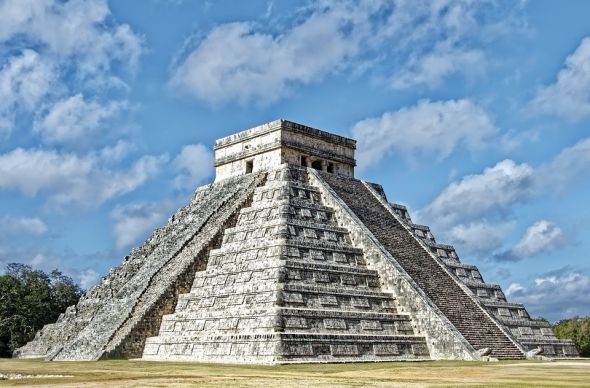
When you visit the ruins at Chichen Itza, you can make your trip more enjoyable by knowing what to expect and how to get the most out of visiting. What you see in photos online and in travel books typically shows the main pyramid but there’s so much more to see.

1. Be ready to explore

The ruins take about three hours to tour. If you had the notion that it would just be a quick stop on your day, know that it takes several hours.

You’re visiting the ruins of a town, not simply a religious site. You should explore the entire site to enjoy the ancient sports complex, for example. The Mayans loved sports and the ball courts survived. Although you can’t ball on them, you can photograph them and explore their perimeter. Imagine your favorite athletes competing in this Mayan megaplex.

Also, don’t miss the temple or the observatory also located in town. The excavated townsite is massive. You should wear sneakers or loafers, so you can stay comfortable while hiking around it. Also, wear a hat and plenty of sunscreens. There’s no shade at the ruins and it gets hot.

2. You can no longer walk on the pyramids or the other ruins

Until a few years ago, tourists could schlep up the steps and take selfies atop the pyramid. The government no longer allows walking on the pyramids. A rope encircles each of the ruins and you’ll find yourself at least 10 yards away from each structure. You can just use a zoom lens for a cute photo.

3. The nearby towns of Pisté and Valladolid provide context and comfort

You can stop for lunch here or spend the night. While you can’t camp at the ruins, you can stay overnight in the nearby towns. This lets you soak up a bit of modern culture in the area, too. While the ruins represent what was, you can experience what is in Pisté or Valladolid. An overnight stay in either location provides you with an opportunity to experience what those Mayan cultures developed into. You can find comfortable hotels and delicious casual and fine dining restaurants in both towns.

4. Pack some pesos

Withdraw money from your bank at the hotel ATM. While there is an ATM, also known as a money machine in Mexico, at the site, it often runs out of cash to dispense. You will need about 250 pesos just to get into the site. Entry requires two tickets, and they equal about that in cost. You must pay in cash. You will also need pesos for the food vendors just outside of the ruins and the souvenir vendors. Forget using your credit cards or Apple Pay, Google Wallet, PayPal, etc.

5. Hire a tour guide

You will miss a lot if you simply read the informational pamphlets. The well-trained tour guides on a private Chichen Itza tour can explain the historical significance of the site and astronomical theories on the site’s construction and layout. This would make your visit memorable.

6. Timing means a lot to the success of your visit

The perfect times of year to avoid include major holidays and Sundays. On these days, Mexican nationals receive free entry to the site. Locals flock to this significant religious and cultural site. Time of day matters, too. You should arrive before the gates open at 8 am for the best results. If you beat the crowds, you can enjoy the site. Alternately, you can wait until 3 pm when the tours leave. The site closes at 5 pm though, so this may not leave you time to explore fully.

7. You cannot swim or wade in the cenote, the local wetland

This portion of the site was used in Mayan times, not for sports, but for human sacrifice. The people who lived at Chichen Itza practiced human sacrifice as a part of their religion and the cenote near the pyramids was sacrificial water where they would throw the bodies of their sacrifice. Besides the fact that it is a religious site, many years of dead people are in the waters. You should not swim in that type of environment. If the lime-green water isn’t enough to put you off, the thought of hoards of dead people having been thrown in there and swimming in their ancient remains should do it.

Cliff Dwelling on the Past

We are heading to Mesa Verde next week, so we thought that this would be a good time to take a look back at some of the other outstanding ancient dwellings of the American Southwest… CONTINUE READING >>

The Ancient Native American Cliff Dwellings of ArizonaThe Old West is a lot older than gunfights, Tombstones, and Boot Hills.For our journey back in time, we rode off into the sunset, heading west.

South Central Arizona is generously sprinkled with ancient ruins left behind by the Native Americans of the area, the Hohokam, Salado, and Sinagua peoples.

They covered vast areas as they moved from one place to another following game or the rains, inhabiting this region from over a thousand years ago until, for reasons still unknown to us today, they moved away in the 1400s. If you need to make a move the movers of the company Seka will help you get to Arizona, or anywhere else, while taking all the difficulties out of transporting your things.

We Spent Time in The Big House
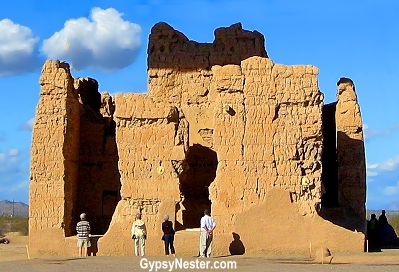
Casa Grande in Arizona

We began our exploration at the big house, no, we didn’t wind up in the slammer, we went to Casa Grande.

Named by the missionary and explorer Father Eusebio Francisco Kino when he came upon it in 1694, this is the pinnacle of Hohokam society.

By far their largest dwelling, it is thought to be the largest remaining ruin in America.

But by the time the good priest stumbled upon it, the great house had long since been abandoned.
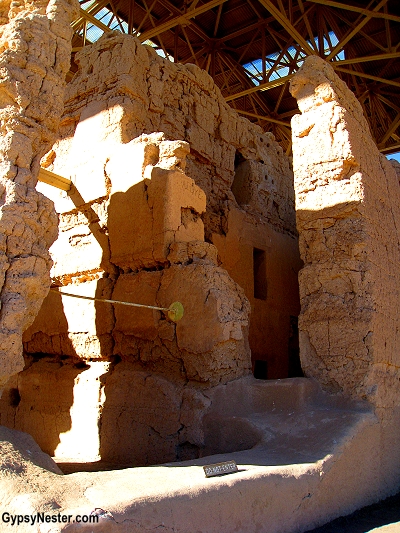
Casa Grande in Arizona

The Hohokam tamed this desert with an elaborate system of irrigation canals and became successful farmers, growing corn, cotton, tobacco, beans and squash.

Their society grew and thrived for centuries, building settlements all along the Salt and Gila Rivers.

These villages grew until finally the four story tower, Casa Grande, was built near the end of their time in this area.

As much as we wanted to run straight over to the huge house, we decided to learn something first, so we took a look through the park visitor’s center.

In there we discovered that this is the first archeological site ever preserved by our government. President Benjamin Harrison set it aside in 1892, well before there even was a National Park Service.
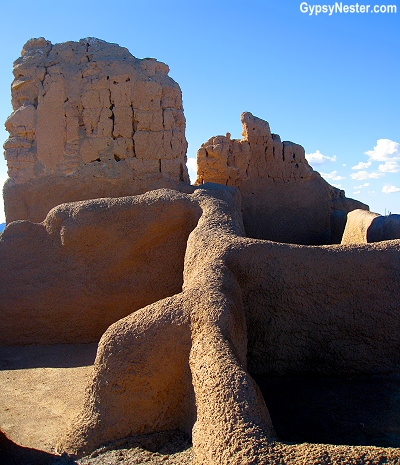
Later Woodrow Wilson designated it a national monument.

The center is full of information and artifacts, but wanting to get up close and personal, we jumped in with a group that was being led out to the ruins by a park ranger.

The ranger explained how the giant structure is built basically of mud.

As with most natives, the Hohokam used what was readily available as building material.

In the Sonoran desert that meant caliche, the calcium rich local mud that works almost like concrete.
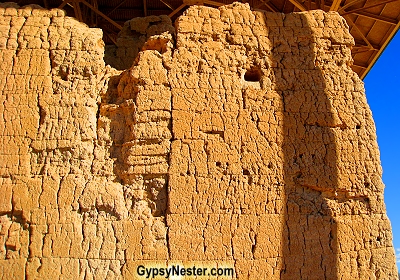
Casa Grande in Arizona

Thes ingenious builders laid layer after layer of the mixture upon itself, tapering the walls from four and a half feet thick at the base to about a quarter of that on the top.

Looking out from the upper levels we could see numerous smaller structures dotting the desert all around the main building. Houses, storage buildings, and ceremonial ball courts have all been uncovered, while many more still await excavation.
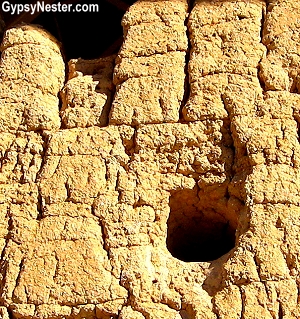
Lunar Standstill at Casa Grande

Casa Grande is obviously the center point of the surrounding village but it is not known what exact purpose the building served.

There are several windows that line up with the sun and moon throughout their cycles, including a small opening that aligns with the so-called “lunar standstills” that happen only once every eighteen and a half years.

That is the time it takes for the moon to go through its entire cycle of positions within the night sky.

So we know that Casa Grande was used as an observatory at least to some extent. It may have also been a temple, a center of government or some other sort of meeting place.

Or perhaps it was Arizona’s first high-rise condos.
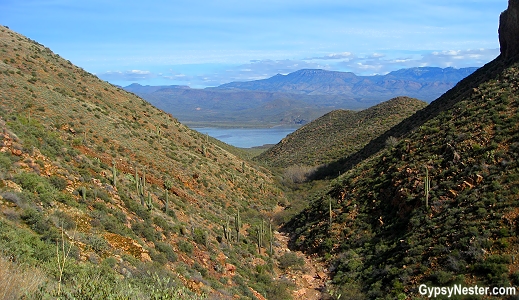
The hike to Tonto National Monument

It’s Tanto, Kemo Sabe. Our Poor (Lone) Ranger.
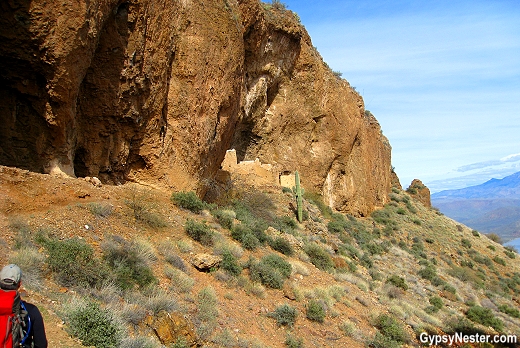
Tanto National Monument

Tanto National Monument

The next stop on our ruins ramble was up into the mountains at Tonto National Monument.

It took all of the restraint we could muster, but we managed to get checked in with the ranger without once asking him if he was “Lone” and we never called anyone Kemo Sabe, except maybe each other a time or two.

Perhaps we were each being Tonto, since it is actually the Spanish term for foolish one.
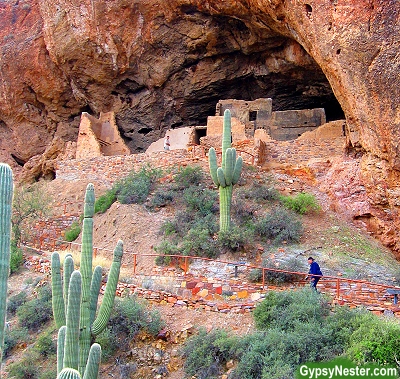
Saguaro Cactus

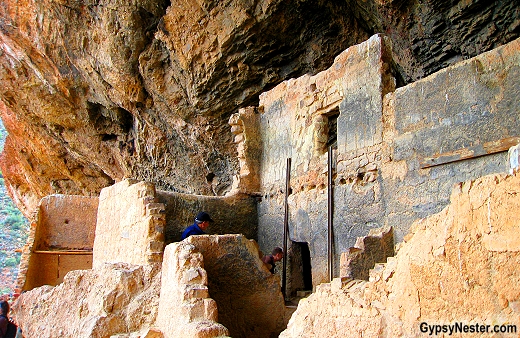
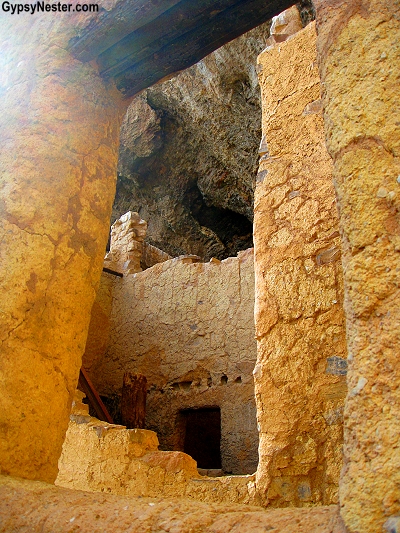
But seriously, the Tonto ruins are a fine example of the cliff dwellings that are common in the Southwest.

The largest and best example is Mesa Verde in southern Colorado, but these structures are found throughout the four corners region.

At Tonto, there are two of these villages tucked into the cliffs.

The remote ruins are far off the beaten path, which has helped them stay remarkably well preserved.

The upper dwellings are accessible only with a guided group and reservations must be made in advance.
Tanto National Monument

Tanto National Monument

In this case a little planning paid great dividends.

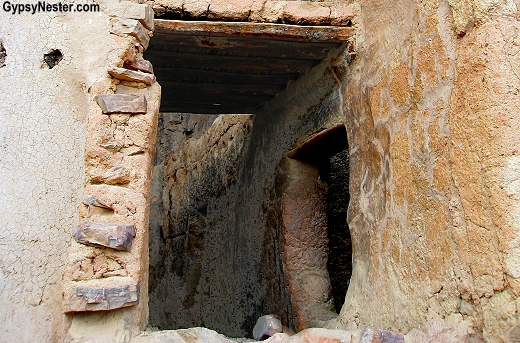
Our guide led our small group up the steep mile and a half climb to the ruins, with plenty of information about the area, plants and history of the Salado along the way.

They were a branch of The Anasazi (the ancient ones) that came down from the north around eight hundred years ago.

The Salado traded and interacted with the Hohokam, but formed their own villages higher in the mountains.
Tanto National Monument

Tanto National Monument

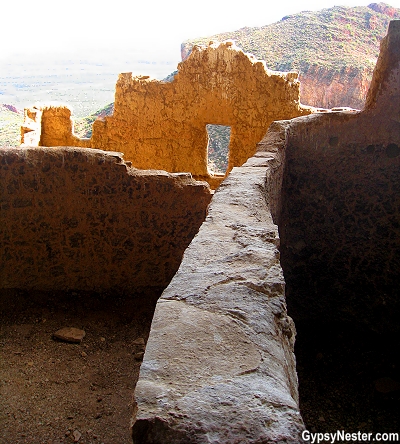
By building high into the cliffs, looking out over the entire valley, they had natural protection.

After some time exploring the upper ruins, we climbed back down, much faster than going up, we must add.

At the bottom, we decided to walk up the short, paved trail to the lower dwellings.

These are open to the public without a guide, but unlike the upper site, visitors are not allowed to go inside the rooms.

Still, they were definitely worth a look.

Without Water at Tuzigoot
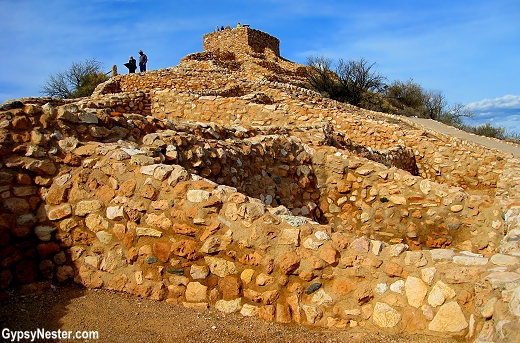
Tuzigoot National Monument

Tuzigoot

Our journey into the past continued with a trip to see what the Sinagua had left behind.

The Sinagua were so named for the lack of water in the region.

The name translates from the Spanish sin agua, meaning without water, but in the Verde Valley they found some.

We began this leg of our expedition at Tuzigoot (pronounced 2-Z-goot) National Monument.

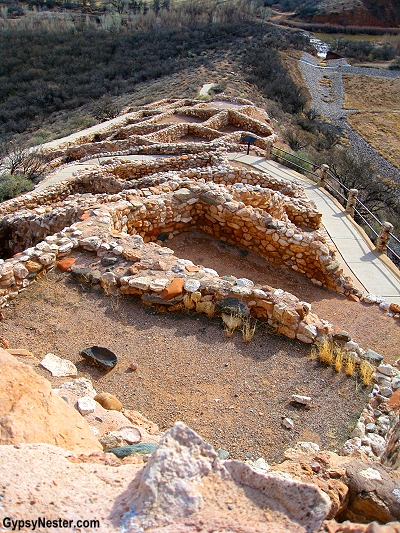
Tuzigoot means crooked water, and is an Apache word given to this sprawling pueblo that housed hundreds of residents covering a hill along the Verde River.

Not much is left of the structures, mostly low walls, but there is a good collection of artifacts from the site on display.

Storming the Castle (to the best of our ability)
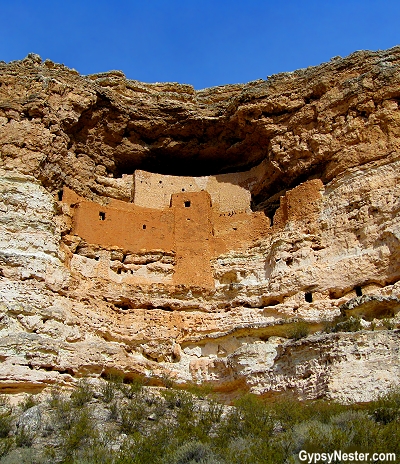
Montezumas Castle

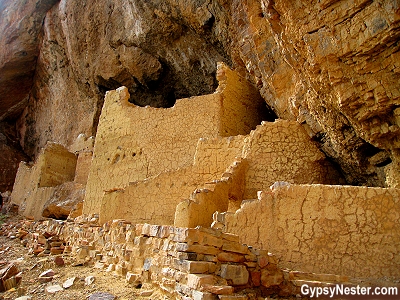
Just down the valley the Sinagua built the fantastic cliff dwelling, Montezuma Castle, erroneously named for the Aztec ruler by early settlers.

They were way off the mark, since this sight was abandoned for almost one hundred years before the famous Aztec was even born.

The five story, twenty room cliff dwelling is stunning, although much of it is not original, having been restored several times.

We could only gaze upon it from below and across the river, because visitors are not allowed in the castle.

Up until 1951 people were allowed to climb ladders up to the ruins, but this practice was discontinued to prevent further tourist damage.

Snack Stop
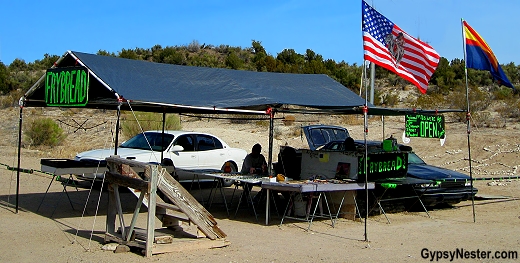
Fry Bread stand in Arizona

Native American fry bread in Arizona

Fry bread stands dot the landscape and, after our hikes, we decided to quench our hunger with the sweet variety.

Similar to a flour tortilla, the bread is fried and topped with salt for a savory treat or a honey, sugar, or cinnamon combo to satisfy a sweet tooth.

Local variations depend upon which tribe is offering up the goods.

The Revenge of Montezuma. Hmmm…
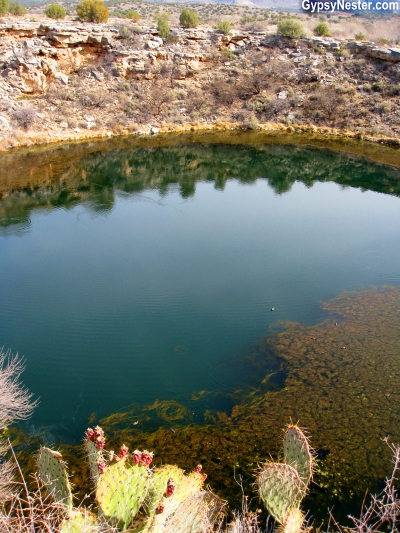
Montezuma's Well

A few miles from the castle, but still part of the same National Monument, we found the Montezuma Well.

In reality this is not a well, but a cenote, or sink hole, naturally flowing with over a million gallons of water a day.

Both the Sinagua and the Hohokam used this “well” to irrigate crops using some of the ancient irrigation ditches are still flowing today.

The well might be questionable as a drinking water supply, since the water contains a high concentration of carbon dioxide and a dash of arsenic to boot.

It would most likely bring on a pretty good case of Montezuma’s revenge.

Hey, maybe that’s where it got its name.
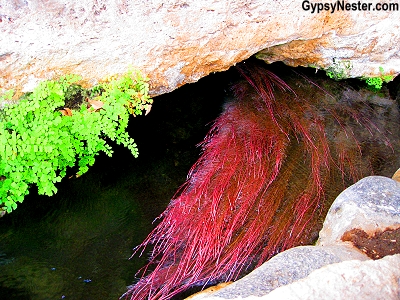
Plant life at Montezumas Well

Because of the chemical content, no fish can live in the well, but the spring is home to several species that can only be found here.

Tiny shrimp-like critters, water scorpions, and leeches thrive in the fifty-five feet deep mineral rich water, as well as several interesting plant varieties.

For our last look into the past, we walked among the ruins of large pueblos around the outside of the “well” and climbed down for a closer look at the tiny cliff dwelling apartments built right into the walls of the sink hole.
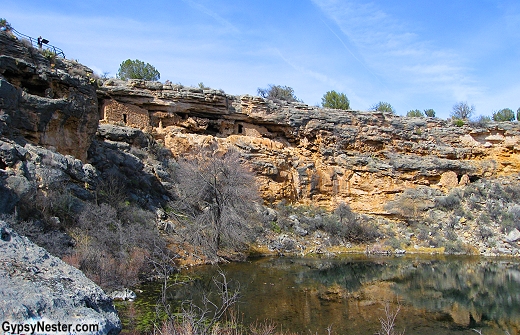
Montezuma's Well in Arizona

At the bottom, we got a close up view of the inside of one of the waterfront homes.
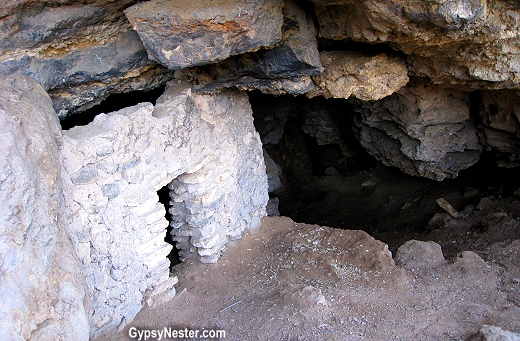
The cliff dwellings at Montezuma's Well in Arizona

This provided a centuries-old peek into the lives of the native societies that used this oasis to bring the desert to life, and closed our chapter on the Old — or should we say Ancient — West.

David & Veronica, GypsyNester.com

DELVE DEEPER:
Find out more about Native Americans in the Americas (as we do)
See all of our adventures in Arizona!
Let us show you around the Southwest
Check out our full United States travels!

YOUR TURN: Aren’t these cliff dwellings fascinating?

This post may contain sponsored links.

Marijuana Grow Calendars and How to Use Them

With some basic knowledge, good soil, clean water, and an open, well-lit space, it’s easy to grow a healthy cannabis crop…
CONTINUE READING >>

With some basic knowledge, good soil, clean water, and an open, well-lit space, it’s easy to grow a healthy cannabis crop. These plants are photoperiod-dependent, which means they move from the vegetative stage into the flowering phase as the nights get longer and the days get shorter. Using a grow calendar will help maximize your plants’ exposure to light before fall comes.

Dates to Remember

The vernal or spring equinox is a great day to start an outdoor crop by germinating some seeds. As the sun reaches its highest point in the sky, your plants will strive for that, too. If you’re growing outside, be sure all your plants are in place by the time the summer solstice arrives. After that, the sun will descend in the sky and the weather may start to cool—but your plants will fatten up with sticky, sweet buds. Though it may be tempting to do it earlier, try to wait for the fall equinox to harvest your crop.

By the time of the winter solstice, your crop should be harvested, cleaned, dried, and cured. Winter is a good time to make tinctures, topicals, and edibles with the trim from a bountiful harvest. Kick back, relax, and use winter’s downtime to make a marijuana growing calendar for next season.

Growth Phase Notes

It’s important to note that the times we’ve suggested are appropriate for locations in the Northern Hemisphere. You’ll want to adjust the calendar based on your climate, local weather, and geographical area.

Along with a grow calendar, it’s a good idea to track your plants’ progress. Taking notes and referring to them will help you learn from your mistakes and maximize crop quality and quantity.

Take detailed notes on how and when each step is performed, as well as weather conditions. Other notes may include how much water the plants get, when they are watered, and how they’re fed. Pictures may give a sense of how your plants are doing as they grow.

Buying Seeds: Timing is Everything

Deciding which strains to grow, where to buy weed seeds online, where you’ll plant the crop, and planning around your local climate and weather all take time and effort. And, once the seeds are ordered, it may take several weeks for them to come. When building a cannabis grow calendar, do your homework early so you’re not rushed—and so you don’t miss the right time to grow your crop.

Germinating and Sowing Seeds

It takes three to seven days for a cannabis seed to germinate. Many growers do it indoors because seeds are quite delicate, and it is easier to control the climate and temperature inside. However, if you live where it’s warmer, it’s possible to germinate seeds outdoors. Some growers even use small greenhouses to keep their seeds warm.

When you start the germination process depends on how big the plants are expected to be at harvest time. If high yields are the goal, the earlier the plants are grown, the bigger they will be. Keep in mind, though, that smaller cannabis plants are easier to prune, top, and manage.

Time to Step Outside

If you’re germinating and growing seeds indoors at first, the time between Mother’s Day and the summer solstice is the right time to move the seedlings outside so they can get more light. It’s best to have the plants six inches to one foot tall before transplanting them, so they’ll be strong and large enough to stand up to tough weather.

The Moment You’ve Been Waiting For: Harvest Time

The strains you’re growing and the local climate will determine the right time to harvest a crop. While indica-dominant strains usually grow bushier and stouter, they’re more susceptible to mold growth, so they are often harvested earlier in the season. On the other hand, sativas are taller and not as dense, so they can safely be harvested later.

Which Seeds Are Best for Your Calendar?

Now that you know a bit more about the cannabis calendar, which type of seeds are best for your schedule? Feminized seeds are great for growers who want big plants, high yields, and elevated cannabinoid levels. Autoflowering seeds, though, allow time-crunched growers to take a hands-off approach without sacrificing quality or quantity.

No matter your choice in cannabis seeds, following our basic calendar will provide you with great results and a sense of satisfaction. Once you’ve had a successful crop, it’s time to look to the future—and start planning your next growing season.

We are happy to present this collaborative post to offer valuable information to our readers.

Delve Deeper: Tags