We’re often asked how we stay in touch with our adult kids as we travel.
Yes, our phone conversations with family and friends almost always begin with the question, Where are you guys?
Honestly, in the days before cell phones and the internet, we’re not sure how anyone would have been able to stay connected while leading the lifestyle we’ve chosen… CONTINUE READING >>
We’re often asked how we stay in touch with our adult kids as we travel.
Honestly, in the days before cell phones and the internet, we’re not sure how anyone would have been able to stay connected while pursuing the lifestyle we have chosen.
Mostly because our phone conversations with family and friends almost always begin with the question “Where are you guys?”
Those of us who have reached a certain age remember the days of sky-high long distance rates. Heck, I still pick up the cell phone and listen for a dial tone on a regular basis.
But the times are not only a-changin’, the sci-fi future of our black-&-white-TV childhood is here.
Back in the B.C. (Before Code-a-phones) days — no answering machines or voicemail — calling our folks involved setting a time during the cheaper late-night or weekend rates and then having fast-paced conversations highlighting only the most important news. Always with a clock ticking in the back of our minds to remind us of the fortune it was costing us.
Ma Bell may have charged by the minute (and the mile) at home, but it was always way worse when traveling. I seem to recall little cards by the hotel phones that said “Dial 9 to double your bill.”
That may be a bit of an exaggeration. But the fact remains that these days staying in contact while away from home is not only much easier, it’s way cheaper too.
Dragging Ourselves into the Modern World
Now we never have to be out of touch just because we’re on the road. Our phone is always there, with us wherever we roam, and can do much more than just place a call.
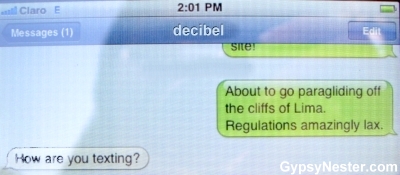
We can send a text message or an e-mail right from the palm of our hand.
Oftentimes we simply send a photo of something funny we see along the way.
If that’s not personal enough we also have live video chat capability through serves like Skype or Facetime, so seeing our adult kids while wandering the globe is not only possible, it’s simple.
These services are generally reliable for us throughout The States, but can vary depending on the provider. One thing to remember though, it is very important to check with your service provider before any foreign trip because fees for using your U.S. phone outside of the U.S. can be crazy high.
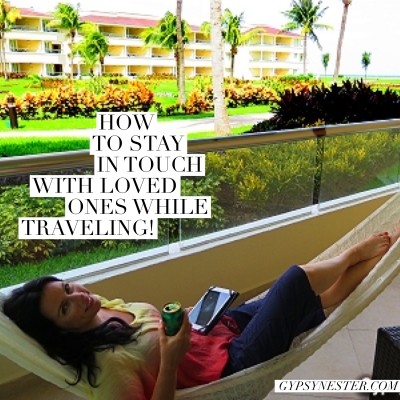
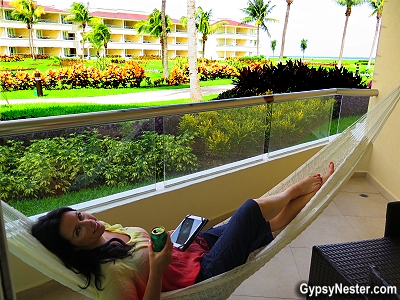
Keeping in touch from a hammock in Mexico.
Most providers offer add-on packages for various countries, so it is definitely worth checking to be certain your destination is on the plan you chose.
Be sure to ask exactly what is covered, because text and web usage are not always included in a phone plan – an extra data package is often required.
Then, double-check because the charges, especially for Internet services, can make for a very unpleasant welcome-home surprise.
How We Use Our Phones Overseas
If we are on a longish overseas trip, we sometimes buy a pre-paid phone for in-country calls. It’s usually cheap, and it gives us a local phone number. Another method is to buy a sim card, but be sure to check that your phone isn’t locked to your at-home provider before you go. They almost always are.
We generally don’t go the sim card route because we prefer to keep our U.S. cell phone available if The Spawn or our parents want to contact us. When you change cards you get a new number and your old phone number won’t work anymore.
While smart phones are little modern marvels, for typing out emails we prefer a bigger keyboard and screen. Our tablets are small enough to fit in our carry-ons and to take on the go, yet still do everything the big behemoths do. Including worldwide video link-ups for face-to-face chats.
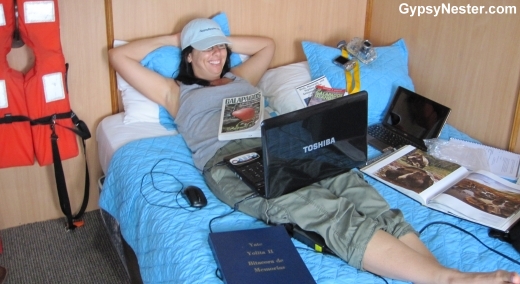
Staying in touch in The Galapagos Islands.
But video can have its drawbacks. The comfort factor isn’t always there. Veronica still can’t do it without getting all dolled up first. So things must be prepared for and planned with the precision of a live television broadcast. There are camera angles to lay out, lighting scenes to test, sound levels to check, and hair and makeup touch ups, until we end up with production values somewhere between a broadcast of the evening news and the Academy Awards show.
Just kidding, but seriously, nobody wants to be seen by anybody, on any camera, in any time zone first thing in the morning. Still this Star Trekesque technology of global video connections is nothing short of amazing, and ready for our close ups or not, we love it.
How We Always have Wifi Domestically and Overseas
Keeping in touch in Queensland, Australia.
But we need WiFi to take advantage of these capabilities.
Not a problem, as most hotels and airports, many restaurants, and even airplanes now have WiFi available.
And if there’s no WiFi around in the States, several providers offer portable hotspots that create a wireless connection from a cell phone signal.
Ours does it right from our iPhone — talk about don’t leave home without it — we never do.
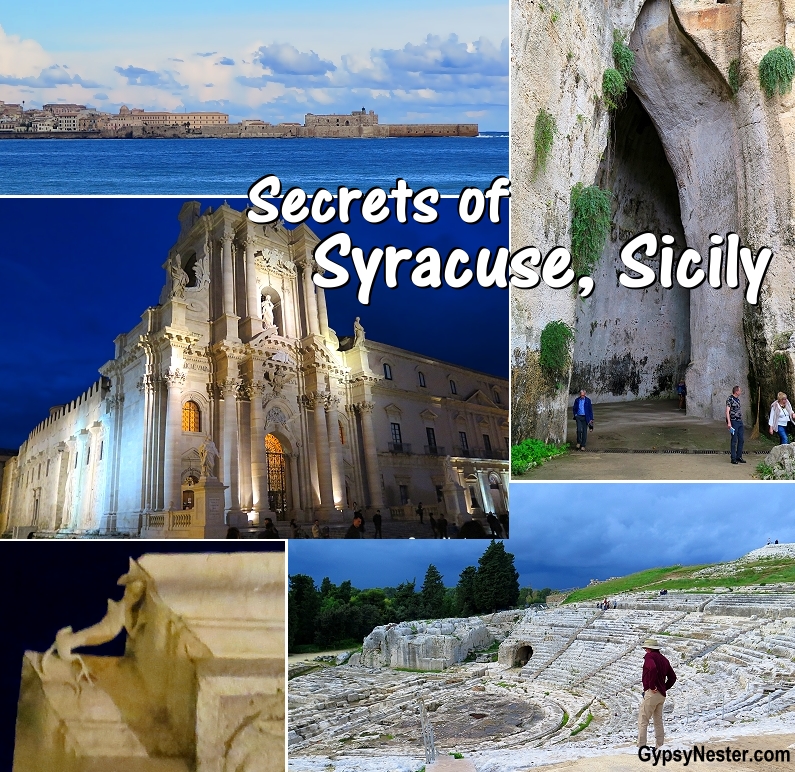
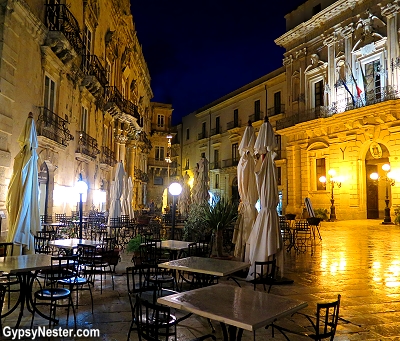
Syracuse holds many secrets… layers upon layers of history have seen to that.
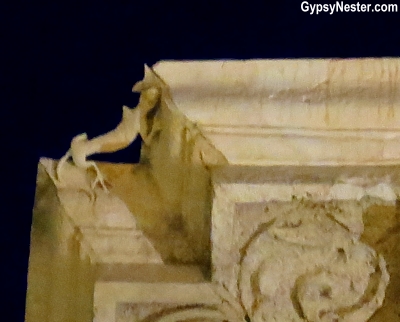
Jutting out far into the ocean, Siracusa has been held close by the ancient Greeks and Romans, gathers beauty from her artists (and a guy who left a secret lizard behind!)…
So many secrets that it takes a god’s ear to hear them all… CONTINUE READING >>
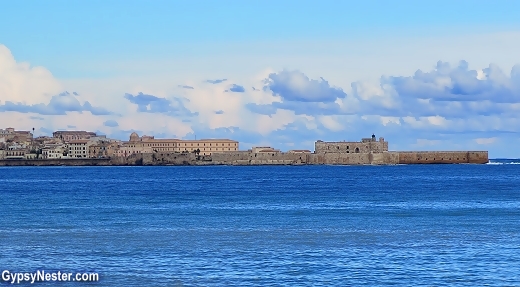
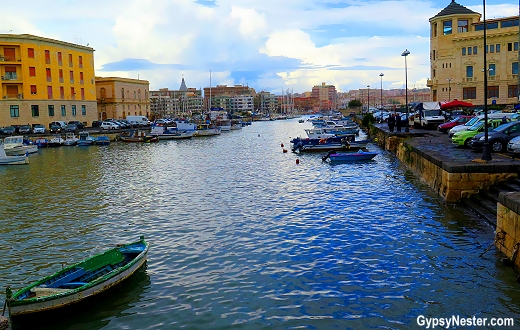
Siracusa jutting out to sea from across the gulf.
While riding our bikes around southeastern Sicily we saw Siracusa from inside and out. The name is the same as the city in New York, which uses the Anglicized version, Syracuse, but the two couldn’t be more different.
Our first views of what was once one of the Mediterranean’s most powerful cities came when we rode across the peninsula that forms the southern edge of the Gulf of Siracusa. Rounding the point revealed fantastic views of the ancient fortifications across the bay.
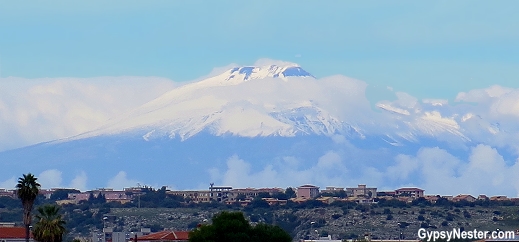
Snow covered volcano: Mount Etna
The old city, located on the island of Ortygia at the opposite tip of the bay, was stunning.
It stood out starkly against the backdrop of snow covered Mount Etna, and a foreground of the Ionian Sea.
On that day we would only see it from afar, much like its founding Spartan and Corinthian Greek sailors when sailing in and out.
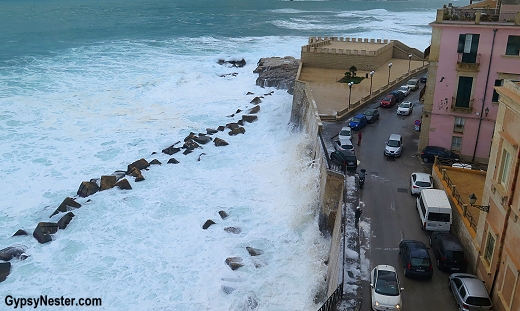
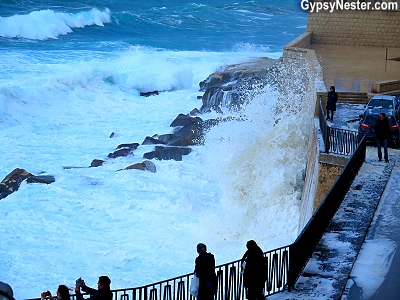
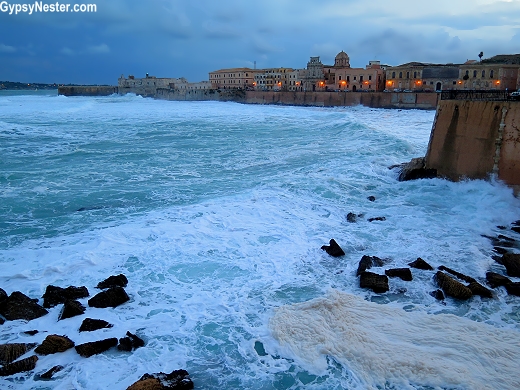
The view from our balcony at the Livingstone Hotel with waves crashing against the seawall.
The next morning we would enter and stay a while.
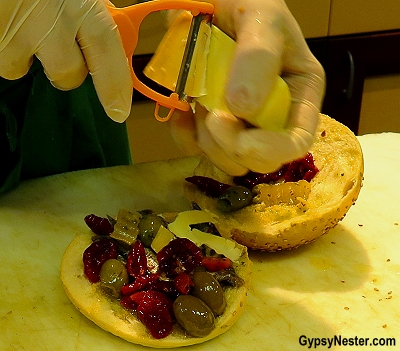
Muffalettu: Sardines, olives, sundried tomatos and ricotta salata.
After riding about 150 miles on our trust steeds over the past ten days, our VBT bikes were safely tucked away for the last day of the tour.
We set out walking and it felt good for a change, a break for our backsides.
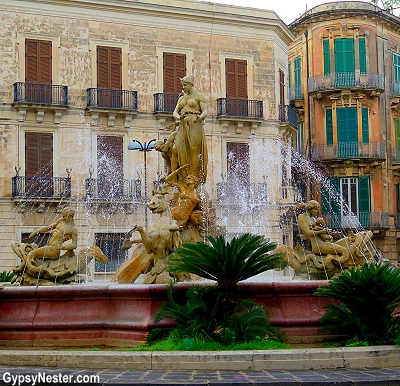
Our goal was the Neapolis Archaeological Park on the mainland, which contains several of Sicily’s most famous historic sites, but in just a few blocks came to a square and decided to sit for an al fresco coffee and sandwich.
As we took in the fountain and surroundings, we noticed that this unassuming little piazza was dedicated to perhaps the greatest Ancient Greek mathematician, physicist, engineer, inventor, astronomer, and engineer in history, Archimedes.
Wonder if he feels like he got screwed, while a cute little piazza, we think he might have expected to get a little more for all of his gifts to mankind.
Digging Down to the Old Stuff
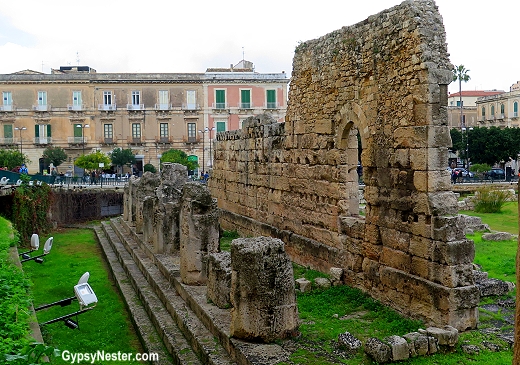
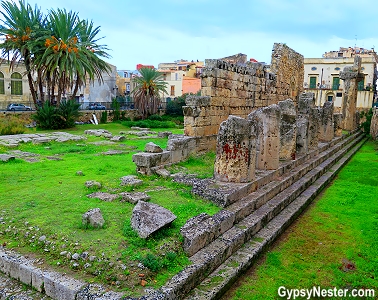
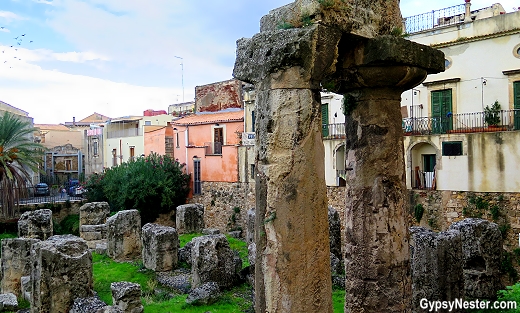
Before reaching the Neapolis, we found another important site just before we crossed the bridge to the mainland, The Temple of Apollo.
This Greek temple dates all the way back to the sixth century B.C., making it the oldest on Sicily.
Now the ruins stand surrounded by city, but with a little imagination we could almost see the toga-wearing worshipers weaving among the columns.
Mainland Treasures
Crossing the bridge to the mainland.
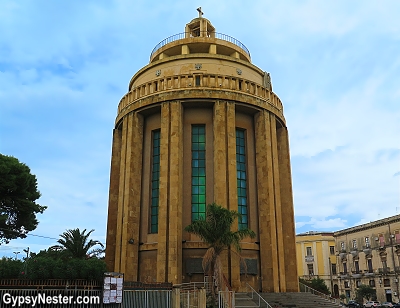
We couldn’t help but notice another place of worship looming across the bridge, the Church of St. Thomas.
This octagonal tower is commonly called the Pantheon by the locals and was built just after World War I as a monument to the fallen of the war.
Many of the soldiers that perished are entombed inside the chapel.
Roman Ruins
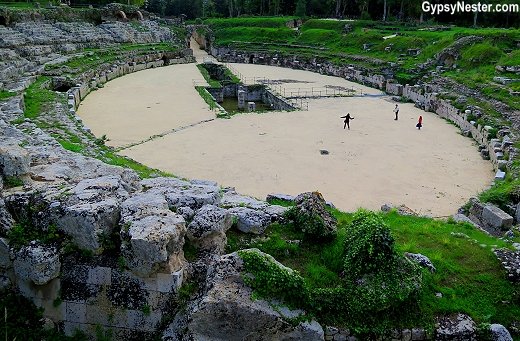
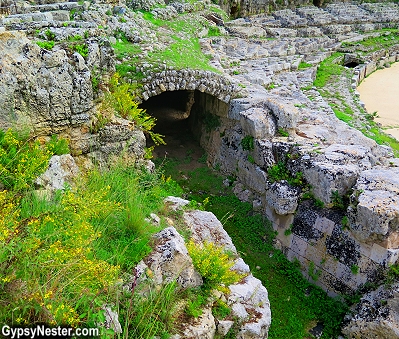
Walking a another kilometer or so, we began our exploration of the Archaeological Park at the Roman Amphitheatre, built nearly two thousand years ago in the time of Nero.
Although much of the stone was taken away over the years and used on other buildings, at one time this looked much like the famous colosseum in Rome.
It was also used in the same way, for gladiators and spectacular shows.
Get us to the Greek
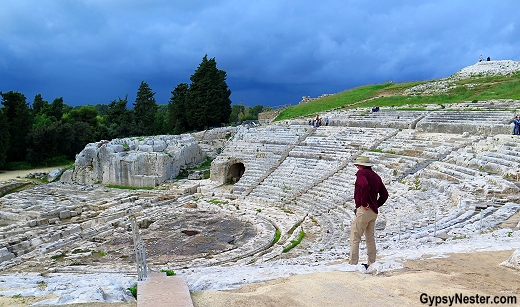
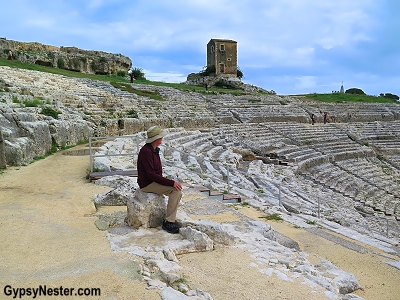
Wanting to stay in the theater district, we climbed to the Greek Theatre – built some five centuries before the Roman ruins.
This is one of the largest such venues ever made by the ancient Greeks.
Again much of the structure has succumbed to the ravages of time, but enough remains intact that it is still used for performances on a regular basis.
Listening In
Near the theater is an ancient quarry known as the Latomia del Paradiso.
As stone was cut away for construction projects, caves were cut into the rock walls.
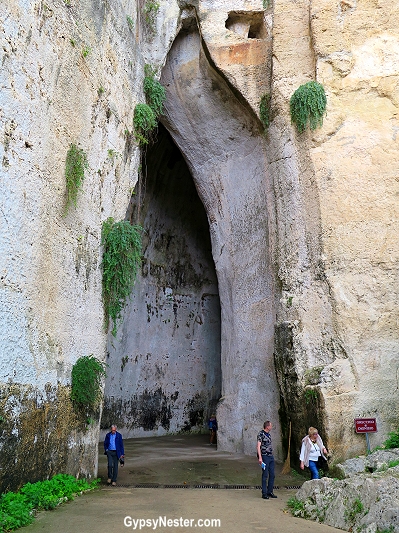
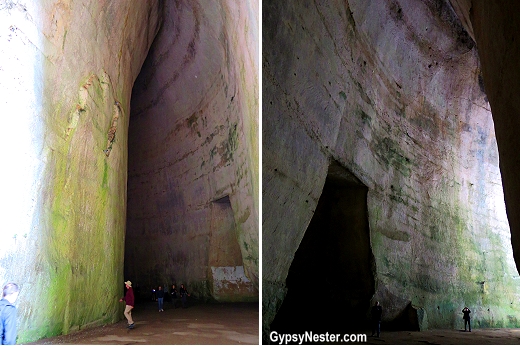
Many of these were used as prisons, with the most famous being the Ear of Dionysius.
The enormous cavern is 76 feet high and 214 feet deep, but only 25 feet wide.
The name may come from the shape of the cave but, having heard the acoustics from the inside, we think that it has more to do with the amazing sound qualities of the cave.
Either that, or it was a great coincidence!
While we were standing all of the way inside, at the very back — in the pitch dark — a guide for one of the visiting groups began to sing an aria. Her reverberating voice was nothing short of incredibile, and the cave sounded like a cathedral.
Back on Island
An approaching afternoon rain shower gave us a good excuse for a nap, so we grabbed a cab back to our hotel.
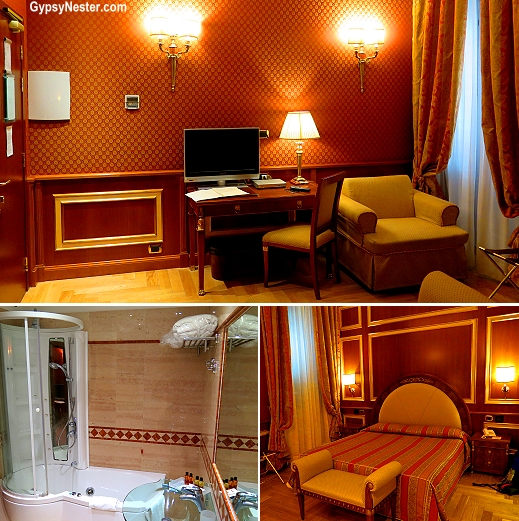
Just what we needed after a week on bikes – Hotel Livingstone
After relaxing in the much-appreciated jacuzzi tub — which David was praying for on a daily basis during our bike tour — and watching folks braving the angry seas on the sea wall from our balcony, we made our way deeper into the old city.
With darkness falling we walked along the sea wall — dodging puddles and great mounds of seafoam accumulated on the path — for a great view of the Castello Maniace on the tip of the island.
Huge waves were crashing against the walls, but not to worry, they’ve been doing it for centuries. The fortress was built in 1232 by the Holy Roman Emperor Frederick II, but the name comes from the original fort that was built in 1038 by the Greek general George Maniakes.
Making a half circle around the southern side of Ortygia Island, we walked on and passed the Fonte Aretusa. This fountain strangely produces freshwater only a few meters from the seashore.
Building upon Buildings
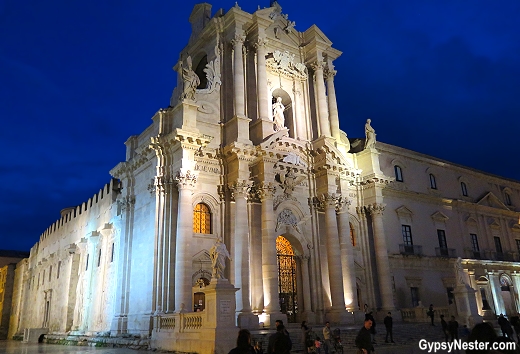
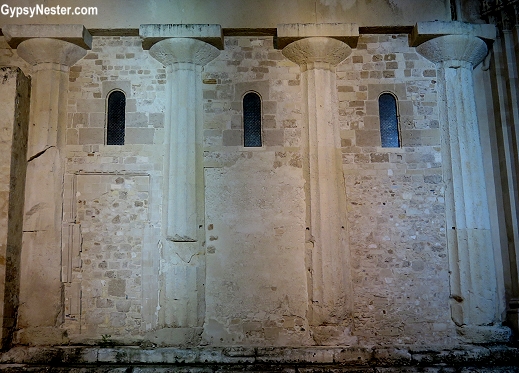
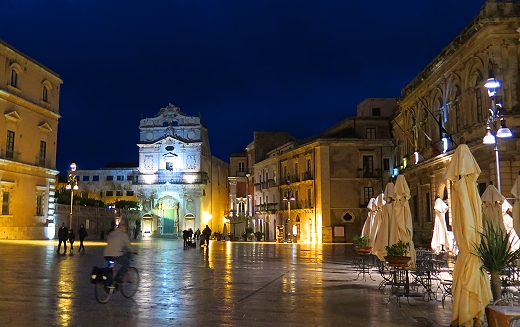
The main plaza of Siracusa, the Piazza del Duomo’s cathedral dominates the square was built in the seventh century by bishop Zosimo on top of the Temple of Athena that had stood on the spot since the fifth century BC.
Poking around the corner to the left side, we found columns from the original temple that were incorporated into the walls of the church.
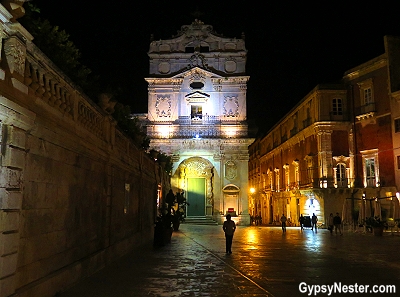
We couldn’t help but notice that, unlike most piazzas, this one features two churches.
On the far end of the plaza stands the Church of Santa Lucìa alla Badìa.
This, as with so many structures in Sicily, was constructed in the Baroque style after the huge 1693 earthquake. Santa Lucia is the patron saint of Siracusa, and the church is home to the masterpiece The Burial of St. Lucy by Caravaggio.
The architect, Juan Vermexio, was involved in building both churches, but we were more intrigued by a little secret friend that he left hiding in the plaza.
Juan’s nickname was Il Lucertolone which means the lizard, and many times he would carve a small stone likeness on his buildings.
Now it was our job to find him. A quest!
In 1629 Vermexio built the Palazzo Municipale, the city hall, so we knew where to start.
Scanning the carving along the cornice we found him, a little lizard just below the roof in a corner.
The whole building is hiding another secret too; it stands on top of a temple known as the Couch of Artemis, the god that Ortygia was dedicated to.
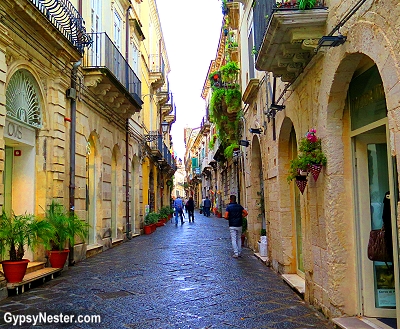
From the piazza we began working our way through the maze of tiny streets – hopefully in the general direction of our hotel. We could hardly wait to close our eyes and let our dreams float us through the centuries of history we had seen.
Our senses were filled with the secrets of Siracusa.
A big thank you to VBT Bicycling and Walking Vacations for providing this adventure where we could tour AND eat all the delicious Sicilian food we wanted to without worrying about the calorie count!As always, all opinions are our own.
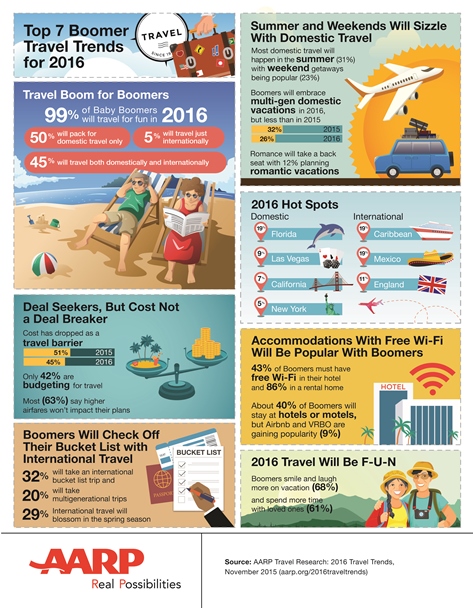
We are passionate about travel for so many reasons, but had no idea how many of our fellow Baby Boomers and empty nesters were on the same page.
It’s crazy!
99% of Boomers are going to travel this year… ninety-nine percent!
We almost spit-took coffee all over our keyboard when we saw that number.
Click in and look what your fellow Boomers are up to – and our thoughts about the many surprises we found – and let us know about your upcoming travel adventures… CLICK IN HERE >>
We are passionate about travel for so many reasons, but had no idea how many of our fellow Baby Boomers and empty nesters were on the same page.
It’s crazy!
99% of Boomers are going to travel this year… ninety-nine percent! We almost spit-took coffee all over our keyboard when we saw that number.
55% of survey respondents said cost was not a factor when planning their vacation. This is a sharp contrast to Millennials and Gen Xers, more than half of those respondents said cost was a barrier for leisure travel.
Baby Boomers tend to have a bit more money than their younger counterparts (70% of our nation’s disposable income is held by Boomers – makes sense, we’ve worked hard for a long time!). But your GypsyNesters seem to be tighter with a dime than the majority. We go out of our way to find travel discounts whenever we can.
43% of respondents said they must have free Wifi in their hotel and 86% said they must have complimentary Wifi in their vacation rental home.
Wifi is very important to The GypsyNesters while traveling, but we didn’t know how across the board this was for Boomers. When we are traveling, we’re so addicted to internet that we sometimes choose where we eat based on whether or not they have free wifi (and, trust us, that’s no way to decide on a restaurant!).
We’ve also been known to stand outside a building with our tablet and glom on to random signals. No matter where we are in the world, our first criteria in a hotel is that they have good wifi. (And then, there is always that awkward request at check-in where we ask for the room closest to the wireless router.) We’re a little nutty that way.
What Warms Our Hearts:
68% of Boomers say that when they’re on vacation, they do more smiling and laughing.
YOUR TURN: Were you surprised by any of these stats too? What’s most important to you about travel? Now that we KNOW you’ll be traveling soon – tell us about your next trip!
We looked up the many definitions of “twerp” – including some seriously weird ones – trying to find how this fabulous city got its name.
Turns out the weirdest definition by far is the answer!
Join us in the land of severed hands, giants, odd stone lions, and incredible beer…CONTINUE READING >>
Before visiting Antwerp a thought struck us — maybe the city had something to do with the term twerp.
Our investigation revealed several suggested ideas that we could try to pin on Antwerp.
Perhaps it came from T. W. Earp back in the early twentieth century, or the Low German word for dwarf, Twarg.
Or, according to Kurt Vonnegut, a twerp is someone who shoves false teeth up his rear end to bite the buttons off of the back seats of taxi cabs. Funny, but we found that one pretty unlikely.
We did not find a single reference to the city in Belgium, and didn’t see any reason why there would be, since there is nothing twerpy about Antwerp.
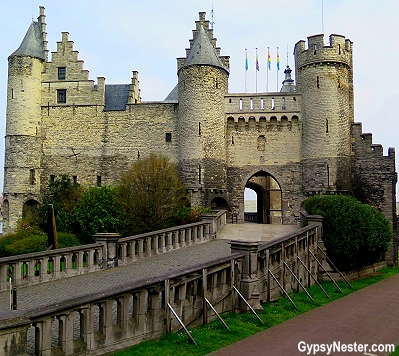
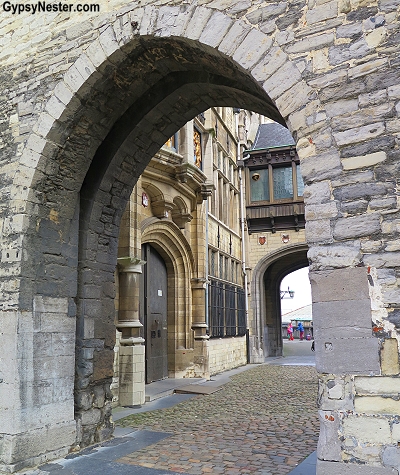
Our Antwerpen adventure began at the Steen, a medieval gate in the ancient city wall.
The Steen, which means stone, is a part of the original thirteenth century fortifications of Antwerp.
The name refers to the foundations, but the defenses were upgraded up until the eighteen hundreds.
They Might be Giants!
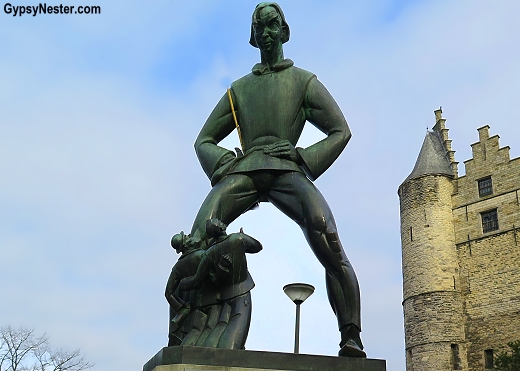
Just before entering through the gate, we met the first of the two legendary giants that are said to have terrorized the city through the ages, the Lange Wapper.
While tales of this shapeshifting nuisance go back as far as anyone can remember, the statue depicting Lange Wapper annoying two townsfolk who look to have consumed a bit too much Belgian beer was placed relatively recently, in 1963.
The Castrated Keystone
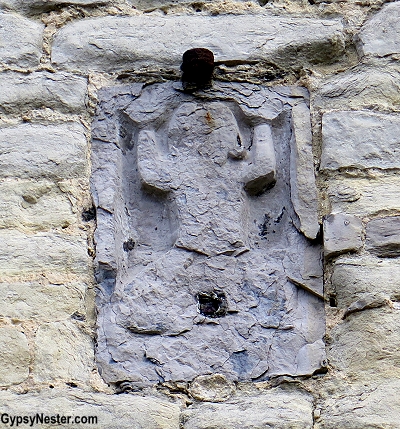
The keystone of the gate is said to be the oldest artifact in Antwerp, a Roman fertility figure whose manhood has seriously suffered over the centuries.
In the Middle Ages, the city placed the already ancient carving over the entrance as a show of masculinity, but soon women were snatching off bits of his endowment and feeding it to their husbands in hopes of improving their love lives.
Later the Jesuits completely castrated the poor little idol as a statement against the pagan nature of the entire ordeal.
Ouch!
A House of Meat
Once inside the wall, we headed directly into the historic center of the city.
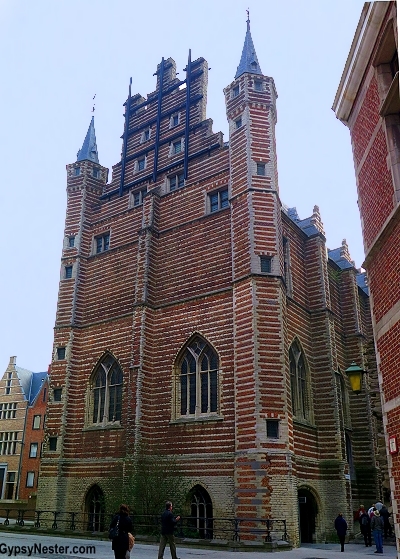
The first building to catch our eyes was the Vleeshuis, or Meat House, which was built in 1504 as the meeting hall for the butcher’s guild.
The claim is that the masonry was made to resemble stacks of bacon by using layers of white stones and red bricks.
We’re thinking that this was perhaps a happy coincidence and took that information with a grain of salt pork.
Oddly, we were craving bacon for the rest of our stay.
Politics as Usual
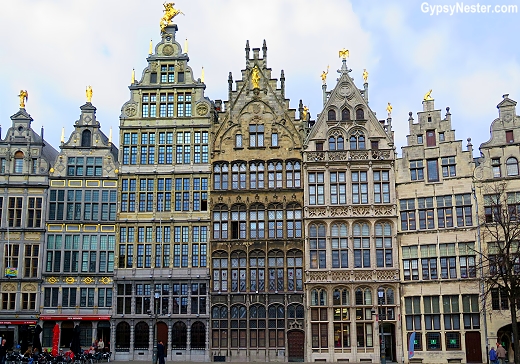
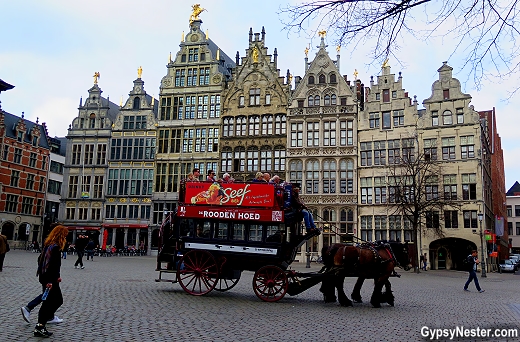
As we moved into the city center, we found the guild houses that played a big part in Antwerp’s development. These groups of merchants and tradesmen met in ornate buildings surrounding the main square, and were instrumental in the politics of the city for hundreds of years.
Each building is topped with golden statues signifying the business that the guild represented.
They chose to build near City Hall because they petitioned the council for favorable rulings for their businesses.
It struck us that these must have been some of the world’s earliest lobbyists.
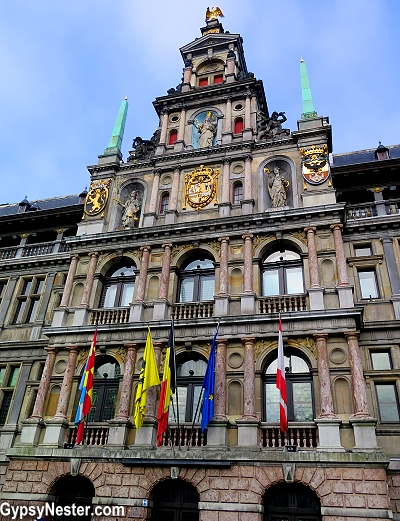
The impressive Renaissance-style City Hall was built as a symbol of Antwerp’s power in the city’s golden age.
However, by the time it was completed in 1565, time was running short for this prosperity.
Ten years later Spain took over and the heyday was over.
Lucky for us, the remarkable structure survived.
The Tale of the Severed Hand
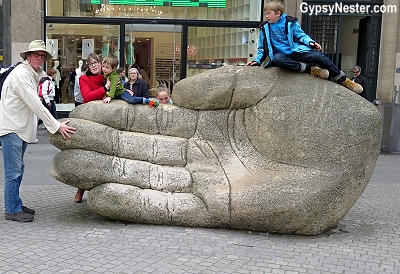
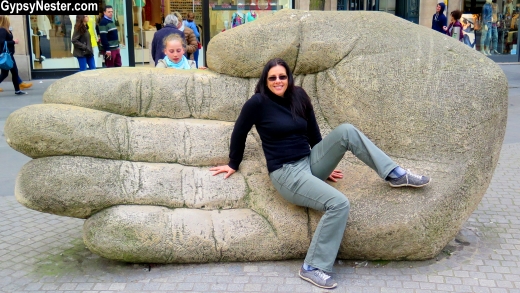
It’s not every day we see a statue chucking a severed hand!
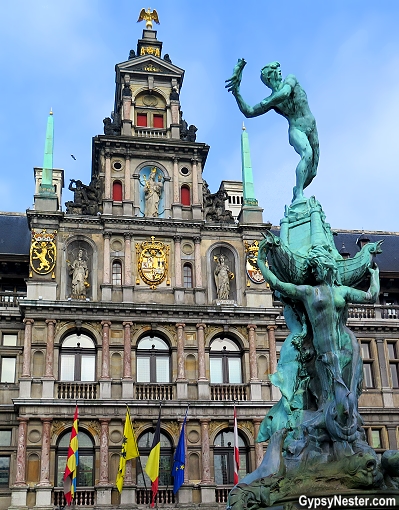
The square is also where we met the second of Antwerp’s legendary giants, Antigoon.
It seems that he had the habit of extracting a toll from anyone wishing to cross the river, or cutting off the hand of those who refused and tossing it into the water.
Finally, after years of Antigoon’s antics, a young Roman soldier named Brabo stepped up, slayed the giant.
Turnabout is fair play: Brabo then chopped off Antigoon’s hand and chucked it into the river.
According to the tale, that was how Antwerp got its name, from the Dutch words for hand (hand) and to throw (werpen).
The square in front of the city hall is dominated by an enormous statue depicting Brabo standing on top of Antigoon and holding the severed hand over his head, ready to fling into the river.
There’s also the hand itself further down the road.
No word on whether the Roman hero called the giant a ‘twerp while removing his appendage.
There’s Something About Mary
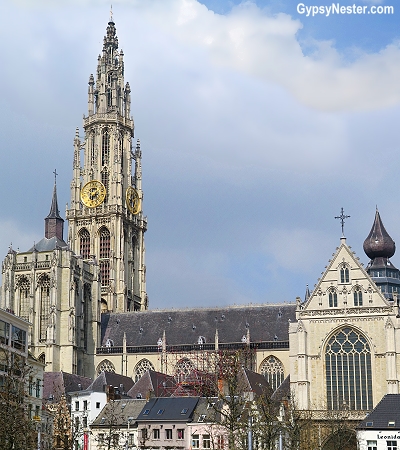
One square over, we came to the Cathedral of Our Lady.
Actually, at over four hundred feet tall, we couldn’t help but see the church, or at least the tower, all day.
It is the tallest structure in the city, and shall remain so by law.
Construction began in 1352, and ended in 1521, but that one hundred and ninety years wasn’t long enough for the church to be officially completed.
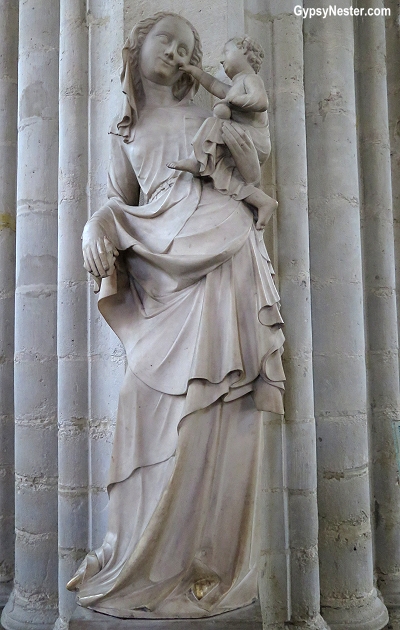
We adored this wonderfully playful version of the usually stoic Madonna.
Inside, we found an unusual conglomeration of styles because the church has served as both Catholic and Protestant over the years – often suffering serious damage in the process of converting.
Restorations are continuing, and we were very pleased to find that the altarpieces, The Raising of the Cross and The Descent from the Cross by Belgium’s best-known artist, Peter Paul Rubens, have been returned to their rightful place in the cathedral.
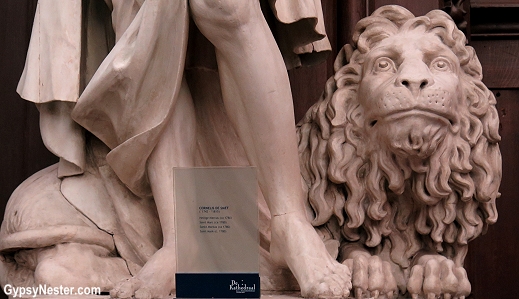
Loved this guy too – our guide told us that the artist didn’t know what a lion looked like. So he just jammed.
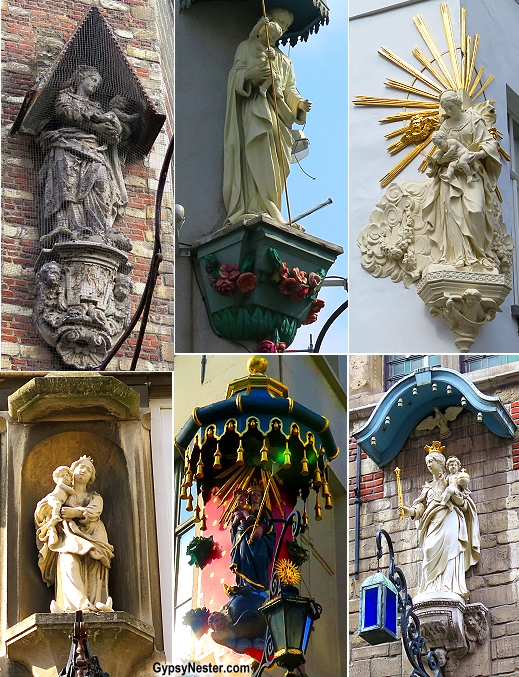
Our guide regaled us with the legend of the giant Lange Wapper and how the wily people of Antwerp thwarted his bizarre mischief. Apparently, one of the shapeshifter’s pranks was to disguise himself as an infant, sneak into homes, and steal breast milk from nursing mothers.
Knowing that Lange Wapper hated the town’s patron saint, Mary, the townspeople affixed statues of Mary on the outside of their buildings for protection.
Everywhere we stepped in the old city we saw these wonderful works of art. The Marys must have worked their magic because we never caught a glimpse of Lange Wapper inside the city gate.
Trains and Diamonds
After lunch we waded deeper into the city.
Lucky for us Antwerp’s a great walking city, so we didn’t need any taxi-seat-button-biting dentures in our bums to go check out the rest.
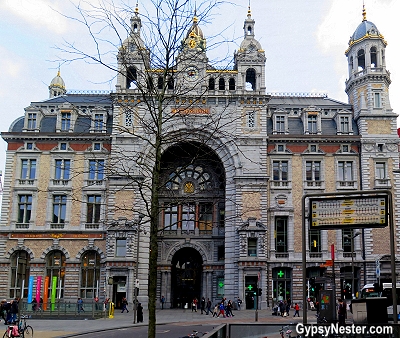
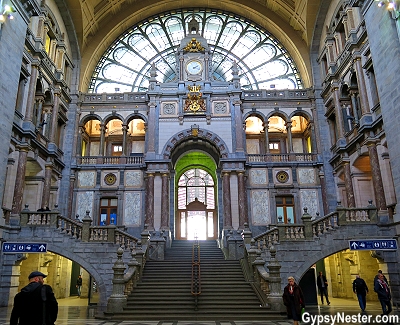
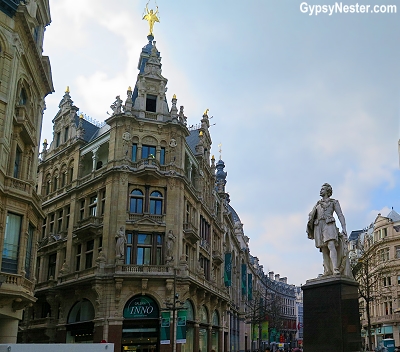
A leisurely stroll to the Centraal Station took us along the Meir, the city’s main shopping boulevard.
The fantastic domed depot was constructed at the turn of the twentieth century and pays tribute to Belgium’s pioneering history of rail travel.
The country proudly claims to have had the first railroads on the European continent.
The area is also famous for diamond merchants, with about half of all of the diamonds sold in the world passing through at one time or another.
Needless to say these transactions are not public, but there are certainly plenty of jewelry stores along the promenade.
After our walk we were more interested in another of a girl’s best friends, the fabulous Belgian beer.
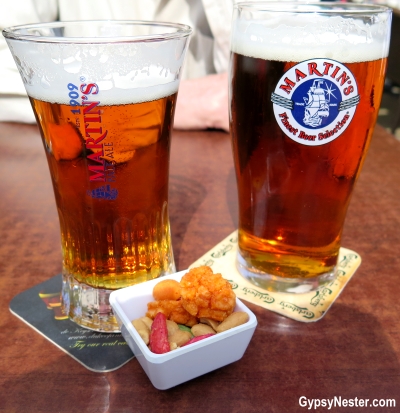
We grabbed a seat on the sidewalk at The Duke of Antwerp, and ordered a bit of one of the city’s famous brews, Martin’s pale ale.
Our Introduction to Belgian Beer. Hello Belgian Beer!
It didn’t take long to notice that beer is an integral part of life in Belgium.
Nearly two hundred breweries are brewing their brains out in this country that is only about the size of Maryland.
On our way back to the ship we stopped off again at the main square to try two more of those brands.
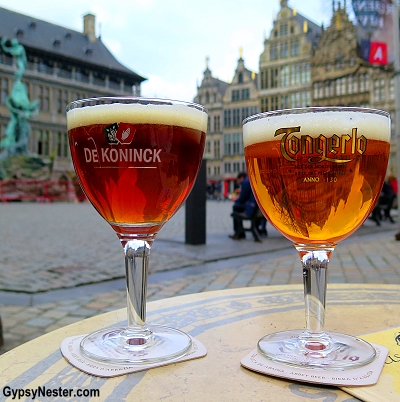
Our waiter recommended DeKoninck as the perfect example of a local libation, and Tongerlo, which has been awarded as the best beer in the world.
It was there that we observed that each brand of beer must be served in a glass unique to its style and name. Some looked similar to classic German beer steins, but others not so much.
Belgians deem this to be of prime importance, going so far as to refuse a beer if an establishment has the audacity to serve it in the wrong glassware.
We noticed that the DeKoninck was properly representing Antwerp because the logo on the glass featured a detached hand.
As far as the Tongerlo’s claim—it was very good, but we will need to do much more research on fermented beverages from around the world before we are anywhere near ready to declare it the best on the planet!
Here’s to hoping there are no twerps along the way.
For years we had our very own backyard tropical paradise in the Virgin Islands, so now when the gloom and chill gets us wondering if spring will ever arrive, we can’t help but long for those sun drenched days again.
There’s no better way to beat the winter blues than a visit to the tropics, especially a tropical getaway without spending an arm and a leg…. CONTINUE READING >>
The following article was written by me on behalf of Choice Hotels and I was paid to write this post. However, the opinions are entirely my own.
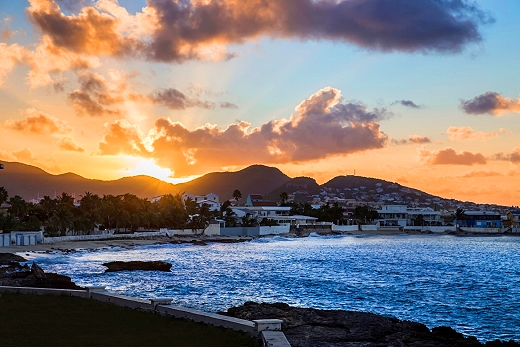
For years we had our very own backyard tropical paradise. Life in the Virgin Islands meant warm, sunny days, crystal clear turquoise water, palms swaying in the breeze, and simply stepping out of our backdoor for a lime, coconut, or guava fresh off the tree.
It also meant that we would often hear from family and friends ready to come for a visit after a few months of clouds and cold made it seem like winter might never end up in the states. Who could blame them? There’s no better way to beat the winter blues than a visit to the tropics, and we were happy to play host so they could have a tropical getaway without spending an arm and a leg.
Now that we’re back on the mainland, when the gloom and chill gets us wondering if spring will ever arrive, we can’t help but long for those sun drenched days again. While we may not be able to play the host in our own backyard anymore, we can recommend an affordable alternative that is even better, Choice Hotels.
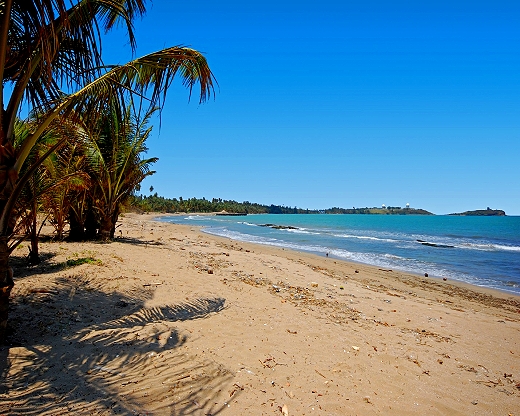
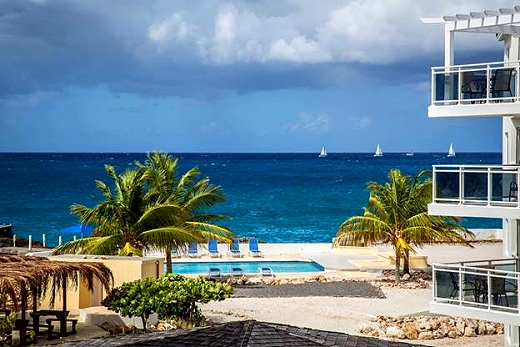
Believe it or not, even while living in paradise we liked to sneak off for a break now and then, and two of our favorite destinations were the islands of St. Maarten and Puerto Rico. Both were near our home on St. Croix, and both offer unique experiences beyond their beautiful tropical beaches.
Beautiful St. Maarten
We loved St. Maarten because it was like getting two vacations for the price of one, since the island is split into two jurisdictions, French and Dutch. We liked to eat on the French side, with its myriad of choices for gourmet dining, and stay on the Dutch side, with its lively casinos and nightlife alongside incredible white sand beaches.
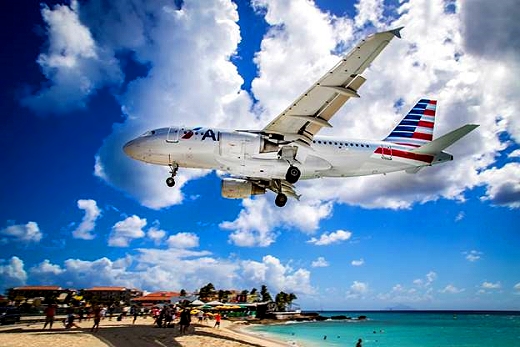
One of those beaches, Maho Beach, is about the coolest, and craziest, we have ever come across. The sandy strip is famous for up-close encounters with the airplanes landing at Princess Juliana International Airport, because the runway begins only a few feet from the water. We had to see it to believe it.
The rush of watching jumbo jets roaring right above us was beyond intense. It’s exhilarating, and sometimes a bit terrifying, to have these monstrous machines pass only a few feet overhead. Our natural inclination was to duck, or dive headlong into the sea, but we braved it out and after a few landings almost got used to it. Almost.
One thing’s for sure, there is no place else like it, and the Alegria, An Ascend Hotel Collection Member is only footsteps away. We could feel right at home in this peaceful refuge with ocean view rooms and a seaside pool, or step out onto any of the more laid back beaches nearby for a more relaxing adventure.
When suppertime rolled around we liked to head over to the French part of the island, especially the village of Grand Case. This little seaside settlement brings a real touch of Europe to the tropics. Step into almost any restaurant for a meal that rivals the best in Paris, and get the bonus of waves caressing the shore just beyond your table.
Talk about dinner and a show!
Caribbean Urban
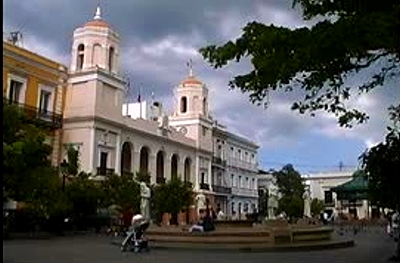
For a more urban setting, we found a few days in San Juan, Puerto Rico to be another great escape.
A visit to historic Old San Juan is like a trip back in time.
Founded by Ponce de León in 1508, this was the hub of Caribbean activity for centuries. Much of the original town has been preserved along the harbor.
The enduring old city’s narrow, cobblestone streets are lined with eclectic little shops and cafes, but the highlight for us was the Castillo San Felipe del Morro.
This Spanish fortress stands guard over the waterfront, just as it has for almost five-hundred years.
Walking along the remarkably preserved ramparts, it’s easy to imagine magnificent clipper ships sailing in and out of the port with their cargos of gold and silver bound from the New World to Europe.
We could almost hear the thunder of cannons fending off an attack.
Of course San Juan has world class shopping and restaurants too, along with gorgeous beaches.
So when the snow flies for the umpteenth time this winter, and we find ourselves missing our old home, we are sure glad to know that making the right Choice for a Caribbean getaway without breaking the bank is only a click away.


 When we’re