Search…

Cuba’s Viñales Valley: Cycling, Cigars, & Salsa

Two-wheeled transportation was a perfect choice for traversing the Viñales Valley in western Cuba. The route took us through some gorgeous scenery and inspired us…

CONTINUE READING >> 

We have long been believers in the idea that the seat of a bicycle is the best seat in the house when it comes to exploring a new destination. The ground level observations are much more accessible than a car, train or bus, yet we can cover much more real estate than on foot.

This meant that two-wheeled transportation was a perfect choice for traversing the Viñales Valley in western Cuba’s Pinar del Rio province. This lush region consists of rich farmland dotted with abrupt buttes known as mogotes. These karsts were left behind when the limestone that surrounded them dissolved and eroded away.

We began our ride near the base of one of these unusual mounts at Restaurante El Cuajaní, which opened a few years ago on a tobacco farm.

The valley has ideal soil and weather for growing the famous Cuban crop, and the very best cigars are said to originate from its unique landscape.

What a backdrop for a day on our cycles! All we needed was a little sustenance to get us ready.

That worked our perfectly, because while we explored the tobacco fields and barn, chef Jose was preparing fish roasted in a brick oven with veggies and mashed malanga, which is very similar to taro and is the go to starch of the island.

The down home stick to your ribs meal was just what we needed to tackle the hills and dales that awaited us.

Being our first day, we only set out for a shake-down ride of around fifteen miles to make sure everything was A-OK with the bikes. The route took us through some gorgeous scenery and inspired us for the next day when we would return for an all-day affair.

Afterwards, we checked in to our room at Hotel Los Jasmine and discovered what has to be one of the all-time great balcony views.

The entire valley was spread out before us. We soaked it in for quite a while, but wanted to check out the shop to see if any of the local tobacco we rode by made it in there.

We don’t claim to be experts, in fact we can count the stogies we’ve smoked in our lives on one hand, but we did feel the need to at least give one a try.

After buying half a dozen of the real ones for David’s dad (they are legal to bring back into the US now, for personal use only) we asked for the mildest version and bought a small box of the Guantanamera minis. Mild is the perfect description, like nothing we have ever had.

It also insured that the song of the same name would remain firmly implanted in our brains for the next few days.

That’s okay, because even though we related it to mariachi bands in Mexican restaurants, the tune originated from, and is wildly popular in Cuba.

Cigars secured, our agenda turned back to one of our favorite topics, food. Dinner would be at the nearby organic farm Finca Agroecológica Paraíso, and we would get a tour before feeding.

We got to see the methods up close that have been perfected over centuries, incorporating some of the stair step landscaping from the Inca, as well as tried and true non-chemical pest controls from around the world.

Every bite was as farm to table as it could possibly be, since the table was actually at the farm. One of the many great things about a bike tour is the guilt-free eating. After our day riding everyone was ready to seriously chow down.

The next morning found us back among the mogotes for a longer ride. Making our way through a couple of small towns, we climbed over the Cordillera de Guaniguanico mountains in the Viñales National Park toward Cuba’s northern coast.

The old adage what goes up, must come down proved to be perfect for the day. Some steep climbs were rewarded with freewheeling glides down the other side. The final goal was a gorgeous stretch along the seaside leading to the tiny island Cayo Jutías.

At the end of the causeway over to the island we came to a lighthouse. The Faro de Cayo Jutías is the only surviving tower of four built by the United States between 1898 and 1903, and is still operational.

After a quick stop to talk with some fishermen casing nets in the shallows beneath the light, we rode the final few miles to the Playa deCayo Jutías.

This beach is widely considered one of Cuba’s finest, and most beautiful.

While we bobbed in the surf, we were certainly not going to argue with that assessment.

A few of us chose to spend a bit of extra time at the beach in lieu of riding back to the hotel, and got the added bonus of  an unexpected spin in a 1957 De Soto Diplomat.

It seems the legends about classic old American cars still going strong in Cuba are true.

Before dinner we worked up even more of an appetite with some salsa lessons.

Let’s establish this fact up front, David can’t dance.

He says he looks like a circus bear balancing on a ball… and he’s right. So it took a little extra time just to get him through the most basic steps.

But as with his attempts at the Tango in Argentina, he actually had a couple of brief, very brief, moments that almost looked as if he was getting it. Then toes would be stomped and his tenuous balance on the ball would break.

Luckily, no one got hurt.

David & Veronica, GypsyNester.com

A big thank you to Backroads for providing this adventure, as always, all opinions are our own.

Check this out for more ideas on things to do in Cuba.

How to Get the Best Travel Insurance for Your Holiday

There are several important steps to take when planning your holiday. Besides choosing your destination, getting the best price, and planning your itinerary, you also need to make sure of 2 key things: that your financial investment in your trip is protected and that you have medical coverage when you are traveling… CONTINUE READING >> 

There are several important steps to take when planning your holiday. Besides choosing your destination, getting the best price, and planning your itinerary, you also need to make sure of 2 key things: that your financial investment in your trip is protected and that you have medical coverage when you are traveling.

Luckily, these 2 things can both be covered with the right travel insurance. And how do you know you are getting the best travel insurance for your money? By knowing exactly what you need.

Analyze Your Trip Realistically

In order to get started, you need to analyze your trip as objectively as you can. What does this mean?

• Look Ahead: How far in advance are you planning your trip? The further you are planning ahead, the more likely it is that something might come up and cause you to have to cancel your plans or change your itinerary. The further in advance your trip is, the more likely you will need this coverage, and you want to make sure the limits on the policy will cover the real cost of modifying or canceling your trip.

• Look at the Seasons: Remember, if you are crossing the equator, the weather will be the opposite of where you are. Summer in Australia is winter in the northern hemisphere, and so delays or airline related cancellations are more likely in that case.

• Look at Where You are Going: When it comes to medical coverage, you want to think about where you are going. Even if the country you are visiting has a great health care system, an overnight hospital stay can really cost you, and if you need to be moved back home for treatment, costs can be exorbitant. Be sure your travel insurance covers this possibility.

• Look at What You are Doing: Are you engaging in extreme sports, doing things where there is the possibility you will be injured? The medical part of your policy is even more important in this case.

By analyzing your trip realistically, you can move on to the next step and determine what coverage you need.

Determine What Coverage You Need

There are several types of travel insurance, and knowing what you want or need based on your travel plans is very important.

• Basic: This is often a medical-only insurance plan, popular with backpackers or those doing extreme sports who are not really concerned about airline cancellation expenses, travel delays, or the potential cost for alternate transportation.

• Middle Ground Plans: These plans cover your uninsured medical expenses, but also offers some limited cancellation and delay coverage along with limited coverage for lost luggage and personal items.

• Comprehensive Plans: These plans cover every aspect of your trip, from medical to cancellation and delays, and your lost luggage and alternate transportation if needed.

For most travelers, especially if you are traveling internationally, opt for some form of comprehensive coverage. Even that coverage comes in several levels, depending on the limits on certain benefits, and whether you have a deductible to pay before the insurance kicks in.

Compare Travel Insurance Plans

Once you have determined what you need, you can get down to making comparisons of various travel insurance options. From basic plans to the most comprehensive, there are still differences. Some companies are more reliable than others.

Inexpensive plans can be tempting, but before you impulsively purchase them, be sure to compare benefits and the coverage limits of each policy. Within the coverage limits are sub-limits as well. For instance, you might have a single trip limit on your policy, but under that is also a limit on the amount of money your personal luggage will be covered for.

Make sure you have the coverage you need. For example: If an Australian is reading travel insurance reviews before his big snowboarding trip to Aspen, he’ll need to make sure that his travel insurance plan extends into medical coverage.  Without it, a funny story about a broken leg on the slopes could turn into an expensive international medical bill.

Make Your Purchase

Once you have chosen the right travel insurance, make your purchase. Be sure you have disclosed to the insurer all the aspects of your trip such as where you will be traveling, where you will be staying, and what activities you will be engaged in.

Also be sure they have the right flight information, and everything they need to provide you with good medical coverage. If you need any special instructions, be sure you have them with you, and carry all policy information with you in your carry on luggage.

Don’t rely on electronics. If a phone or computer is stolen, you still want to have all of your policy information and the phone numbers you need to contact the insurance provider. Have this information printed and with you at all times, and have at least enough information to contact the insurance company.

Once you have made your choice about the best travel insurance for your holiday and you know you are covered, you can get ready for a great trip.

We are happy to present this collaborative post to offer valuable information to our readers.

5 Reasons to Fall in Love With Madrid on Your Next Royal Holiday Vacation

If you’re looking for an adventure that offers old-world charm and modern amenities alike, you really can’t go wrong with a stay at the luxurious Apartamentos Plaza Basilica in Madrid, Spain. CONTINUE READING >> 

With the holidays past and the new year upon us, it’s once again time to start thinking about where you want to travel in the coming year. Royal Holiday Vacation Club members have almost unlimited options when it comes to exploring the globe and recently one the RCI Gold Crowne Award an absolutely prestigious honor. If you’re looking for an adventure that offers old-world charm and modern amenities alike, you really can’t go wrong with a stay at the luxurious Apartamentos Plaza Basilica property in Madrid, Spain. Here are just a few reasons you’re sure to fall in love with this glorious city on your next Royal Holiday Vacation.

1. Sunny climes

With an estimated 300 days of sunshine annually, you’ll have no trouble getting outdoors and soaking up some vitamin D on your vacation. Winters are mild, with average temperatures in the mid-40s, while summers are blazing hot, with temperatures commonly soaring to over 100 degrees Fahrenheit. Just be aware that everything shuts down in August, which is basically vacation month for Europeans.

The best time to visit this fabulous city if you’re looking to enjoy balmy climes is spring or fall, when temperatures tend to linger in the 70s, providing you with perfect weather for lounging on a terrace or exploring the city.

2. Foodie fare

There’s no way to describe the wealth of fabulous food you’ll find when you visit Madrid. International eats are easy to come by in this cosmopolitan city, but you’ll want to try traditional Spanish treats, as well, from simple huevos rotos (eggs on fried potatoes), to hearty cocido Madrileno (a pork and chorizo stew), to heavenly churros con chocolat (crispy churros dipped in melted chocolate).

Don’t forget to try Madrid’s signature sandwich, the bocadillo de calamares (fried squid sandwich), as well as the many seasonal delights that pop up throughout the year. Pair your meals with some local wine, sangria, cava, craft brews, or agua de Valencia.

3. Museums galore

You’ll have to go to Paris for the Louvre, and fight some serious tourist traffic to get a glimpse of the Mona Lisa. When you visit Madrid, you’ll have access to world-renowned art without necessarily battling the madding crowd to get a peek.

In addition to the Museo del Prado and the Museo Nacional Centro de Arte Reina Sofia, you’ll find public works of art and dozens of galleries to peruse. Make sure to get a gander at the work of Picasso, including his famous depictions of the Spanish Civil War.

4. Old and new

Madrid may be a bustling modern city, but it retains a lot of its old-world charm by carrying on ancient traditions. When lunchtime hits, many small businesses still take a break for food and siestas during the hottest part of the day.

You can grab a beer and tapas at a bar during soccer games and get in on the excitement. You can walk the city, enjoying ages-old architecture and cobblestone streets. Of course, there’s no shortage of modern amenities to be had, as well, with a vast network of subways to ferry you around and plenty of shopping and entertainment options.

5. Apartamentos Plaza Basilica

This centrally located Royal Holiday Vacation Club property gives you the opportunity to enjoy a truly memorable vacation in Madrid. While you’re probably excited to explore the many nearby attractions, including the famous Paseo de la Castellana, the Plaza Mayor, the Toledo Bridge, and countless museums, you can also enjoy the on-site restaurant or lounge, or simply kick back in your studio apartment, complete with a full kitchen. This Royal Holiday property provides all the comforts of home, paired with proximity to the many attractions offered by the beautiful city of Madrid.

We are happy to present this collaborative post to offer valuable information to our readers.

To Do List When Going on an Irish Tour

The nation of Ireland is blessed with numerous places of interests. Indeed a visit to the nation at least once in a lifetime is a must for any traveler…

CONTINUE READING >> 

The nation of Ireland is indeed blessed with numerous places of interests. These confer great opportunities for sightseeing, tourism, and vacationing. Indeed a visit to the nation at least once in a lifetime is non-negotiable for any tourism enthusiast.

In the discussions below, we are going to explore those activities that you just have to do while on your tour of Ireland.

TO DO LIST WHEN GOING ON AN IRISH TOUR:

Sightsee at the Cliffs of Moher
  • The Cliffs of Moher is an 8 km stretch of cliffs that have a maximum height of 214m. They also have a viewing tower and overlook the Aran Islands. It offers great sightseeing opportunities for the surrounding ambiance. You will get to see the breathtaking panorama of the adjacent environment and ocean.
Explore Ireland’s Past at the Blarney Castle
  • This medieval stronghold that is situated on the banks of River Martin will grant you a sneak review of Ireland’s past. It is basically a ruined castle that has the famous Blarney Stone. This stone is alleged to grant those who kiss it the gift of eloquence.
Drive around the Ring of Kerry
  • This is a famous and scenic ring that encircles the Iveragh Peninsula in Ireland’s southwest county, Kerry. It is 179 km long and is nearly circular in shape. It traverses rugged and verdant coastal landscapes as well as rural seaside villages. To get the best of the route, you, by all means, have to contract a reputable vacationing company such as Go Irish Tours.
Discover Ireland’s Christian Heritage at the Kylemore Abbey
  • Ireland has a rich Christian past. Your visit to the nation is therefore incomplete without some taste of its Christian legacy. While in the nation, consider spending some time in this Benedictine monastery. It was erected in 1920 to shelter the Benedictine nuns who fled Belgium during the World War I.
Pay a Visit to the Phoenix Park
  • Located around 2 km west of downtown Dublin, this park provides you with various opportunities. You may view the city’s skyline, rest, take an afternoon siesta, take a selfie, or relax from the hustles and bustles of congested city life, among others. Being one of Europe’s largest and most magnificent parks, your visit to it will also bring along a sense of prestige to you.
Appreciate Ireland’s Topography at Rock of Cashel
  • Apart from a rich history, the nation of Ireland also has great and breathtaking panorama. The most outstanding of these is the Rock of Cashel. It is a prominent green hill that is banded with limestone outcrops. It rises from a grassy plain and contains several ancient fortifications. While in Ireland, consider squeezing some time and take some photographs at the site.
Take Some Photographs at the Powerscourt Estate
  • Powerscourt Estate is a large country estate that is adorned with landscaped gardens. It occupies 19 hectares and is located in Enniskerry, County Wicklow. Its breathtaking architecture, well-maintained lawns, beautiful fountains, and elegant appearance offer great photography resources. It is great for honeymoons. So, if you are planning a wedding, purpose to incorporate it in your itinerary.

CONCLUSION

Of course, the nation of Ireland has plenty of other tourist attractions to offer. Due to the limited time and space available, a good number of them had to be left out. It is therefore in your best interest to consider carrying out further research to find out those left out. It is only then that you will accrue the highest levels of satisfaction from an Ireland tour.

What Happens During Rhinoplasty Surgery?

If you’re considering having a rhinoplasty surgery, you may be curious about what exactly happens during the procedure…

CONTINUE READING >> 

Rhinoplasty, a procedure aimed at correcting functional or cosmetic problems of the nose, can be categorized into two main types: the traditional surgical approach and the non-invasive option. Traditional surgical rhinoplasty is effective for addressing a wide range of issues, such as adjusting the size, shape, and symmetry of the nose, correcting lumps, bumps, flared or pinched nostrils, and rectifying crooked or asymmetrical features. On the other hand, the non-invasive approach offers a less intensive alternative, using techniques that can enhance the appearance of the nose without the need for surgery. This option is particularly appealing for individuals seeking improvements with minimal downtime.

If you’re considering having a rhinoplasty surgery, you may be curious about what exactly happens during the procedure. The rhinoplasty surgery usually takes one or two hours, but more complex work will require a longer surgery time. With the time needed to prepare and recover after the procedure, you should expect to spend a whole day at the surgical facility. You can either have the surgery at a hospital or at an outpatient clinic. The procedure will be mostly the same at both locations.

There are two main types of rhinoplasty: open and closed. Open rhinoplasty is typically used for more complex or extensive procedures, but there are very few differences between the two types. You should expect the same surgical procedure for both open and closed rhinoplasty. The surgery can usually be divided into five steps.

Step 1: Preparing for Surgery

You’ll have to check in at the surgical facility a couple of hours before your procedure. Before the day of the surgery, you’ll be given instructions on what to wear and what papers or forms to bring. You should wear loose, comfortable clothing that doesn’t need to be pulled over your head.

Before the surgery, you’ll wash your face thoroughly with a cleanser to remove any makeup, dirt, or oil on your skin. You shouldn’t apply any moisturizer or other creams. Your doctor will instruct you not to take any medication the day of your surgery, and you may have to stop taking some medications a few days or weeks before the procedure.

In the pre-operative holding room, the nurse will probably start an IV line to prep you for surgery. They may also administer a relaxing medication before you go into the operating room.

Step 2: Anesthesia and Sedation

When you arrive in the operating room, your doctors will administer general or local anesthesia. General anesthesia is more common for a rhinoplasty and will make you sleep through the surgery. It’s often administered both as a gas and through your IV.

With local anesthesia, your nose will be numbed, and you’ll be given a sedative. You’ll be awake for the surgery, but you’ll be very relaxed and feel no pain. You and your doctor will discuss which form of anesthesia is best before you go into surgery.

Your surgical team will use a pulse oximeter and an EKG throughout the entire surgery to monitor your vitals. They’ll be equipped to quickly handle any emergencies.

Step 3: Opening Up the Nose

Once the anesthesia has taken effect, your surgeon will make some incisions in your nose to open it up. If you’re having an open rhinoplasty, the surgeon will make incisions on the inside of your nose and on the columella, which is the strip of skin that separates the nostrils. If you’re having a closed rhinoplasty, your surgeon will only make incisions on the inside of your nose.

After making the incisions, your surgeon will raise the skin and other tissue on your nose to expose the bone and cartilage. This will let them rearrange and alter the structure of your nose.

Step 4: Rearranging the Tissue

Your surgeon will remove or rearrange the bone, cartilage, and tissue in your nose to achieve the desired shape. To smooth out a bump or to make the nose smaller, your surgeon may shave off some of the bone or cartilage. In some cases, they may have to break your nose and reset it to make it straighter or more symmetrical.

Your surgeon may need to add tissue to your nose to achieve the right shape. In this case, they may use a synthetic tissue or take tissue or cartilage from somewhere else on your body. Usually, they’ll remove some tissue from your ear, but they may also take some from your rib cartilage.

Step 5: Closing the Nose

When your surgical team has finished reshaping your nose, your doctor will close the incisions and stitch them up. Then, they’ll apply a bandage and splint to help with bleeding, bruising, and swelling. Before closing the surgical area, your surgeon may have to place some tubes inside your nose to support the nasal structure while it heals.

Most people are able to go home the day of their surgery. However, you may have to stay overnight in the hospital if there’s a risk of bleeding or complications. Once you’re ready to leave, a responsible friend or family member will have to drive you home and stay with you for a few days to assist you while you recover.

Dr. Andrew Jacono of the New York Center for Facial, Plastic, and Laser Surgery is a dual certified plastic surgeon. He is one of only a few surgeons to become board certified in both facial plastic and reconstructive surgery and in head and neck surgery. His New York facility offers a wide variety of surgical and nonsurgical cosmetic procedures.

If you’re interested in rhinoplasty or another surgery, you can learn more at his website: http://www.newyorkfacialplasticsurgery.com

We are happy to present this collaborative post to offer valuable information to our readers.

Fabulous Night Attractions in Singapore

When going for an evening walk out in Singapore, one is never short of options. The island city-state is full of tantalizing night tourist attractions that you can’t afford to miss… CONTINUE READING >> 

When going for an evening walk out in Singapore, one is never short of options. The island city-state is full of tantalizing night tourist attractions that you can’t afford to miss. You can get singapore visa online to go and enjoy some of the world’s iconic night attractions on your next holiday.

Night Safari Singapore

The Night Safari is one of the top night attractions for lovers and families. If you wish to visit the only night wildlife park in the world, then the Night Safari Singapore is the ideal place. Be part of the thrilling experience of nocturnal animals provided in the zoo and displayed through their unique lighting techniques. This is understandably one of the most popular tourist attractions in Singapore.

Mount Faber Cable Cars

Riding high above sea level is no doubt a thrilling evening experience. A 13-minute ride in a cable car from Mount Faber to Sentosa Island will give you and your loved one a 360-degree view of Singapore’s harbor. Besides, the ride comes with a bottle of champagne.

The Singapore River Night Cruise

If your visit to Singapore doesn’t include an evening cruise along the Singapore River, then you definitely will miss a lot. Cruising on a bumboat in the early evening in the cool air gives you a tantalizing experience. The Esplanade Theatres on the Bay venue also provides a free glimpse of indoor performances before completing your evening tour.

Clarke Quay

Just in case you are worried about finding a place to spend a night out in Singapore, the Clarke Quay is a great place for you. The Clarke Quay gives you a charming experience with its cool night breeze while stargazing upon the blue night sky. Before ending your romantic evening at the Clarke Quay, the Jumbo restaurant offers you the ideal chance of enjoying a plate of mouthwatering chili crab for a more fulfilling evening trip.

Bugis Trishaw Ride

Bugis gives shoppers one of the best shopping experiences with its famous night bazaar market, which gives shoppers the opportunity to enjoy browsing in the alleys and stalls with bargains at every turn. Shoppers and bargain hunters maneuvering the stalls on trishaws are drawn time after time to the variety of fashion wear and accessories.

The St James Power Station

Are you a trendy clubber wishing to enjoy the taste of some night entertainment? St James Power Station is the place to be for classic music and dance. The venue hosts nine unique outlets that will have you coming back for more.

The Night City Tour

Going on a night tour is also one of the unique night attractions in Singapore. The tour is often aboard open-top double-decker FunVee buses. You can visit some places like Bugis, Clarke Quay, or the Gardens by the Bay.

Chinatown Night Market

An evening shopping outing to Chinatown Night Market gives you exposure to one of the most iconic night attractions in the country. While shopping at Sago and Pagoda Street, you can buy yourself extremely beautiful and decorative souvenirs. Chinatown Food Street also provides a taste of great local food for the shoppers who wish to enjoy their dinner.

Merlion Park

The Merlion Park hosts the iconic Merlion, which is half-fish and half-lion. It has the head of a lion and the body of a fish. The place also offers you the best spot to take a picture with the Marina Bay Sands integrated resort as a background.

Zouk Singapore

If you happen to be a night clubber, Zouk Singapore is the place to visit for everything from the best jazz to techno music. The nightclub is specially designed into four unique music warehouses for all kinds of clubbers.

We are happy to present this collaborative post to offer valuable information to our readers.

Interview with Gypsynesters for some Serious Travel Goals

We are thrilled to reprint this interview that first appeared on Obsessory.com. Thanks guys, we had a blast doing this!

CONTINUE READING >> 

We are thrilled to reprint this interview that first appeared on Obsessory.com. Thanks guys, we had a blast doing this!

What was the inspiration behind stepping out of your nest and becoming Gypsynester?  

Initially what got us wandering around the U.S. was as a way to catch up with family and friends. We had lived on the Caribbean island of St. Croix all through our children’s high school years, so it was hard to visit relatives and friends up in the states. When our youngest graduated, we figured a good way to reconnect with overdue visits was to get a motorhome and make our way across country. Once everyone was visited, we liked it so much that we just kept going. Veronica had worked in tech for years and had started GypsyNester.com while we roamed around, mostly as a way to keep our loved ones posted on our adventures, but when we decided to continue our travels we thought that we should also focus on the blog. Along the way we wrote the book Going Gypsy: One Couple’s Adventure from Empty Nest to No Nest at All (Skyhorse 2015)(http://goinggypsybook.com/) and visited all fifty states and over fifty countries on six continents.

What was your most recent trip?

We just finished a week on the big island of Hawai’I, where we got to see an erupting volcano, walk through lava tubes, and of course spend some time on the beach.

What has been both of yours favorite memory so far?

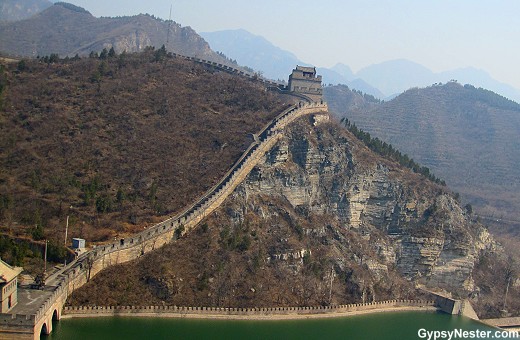
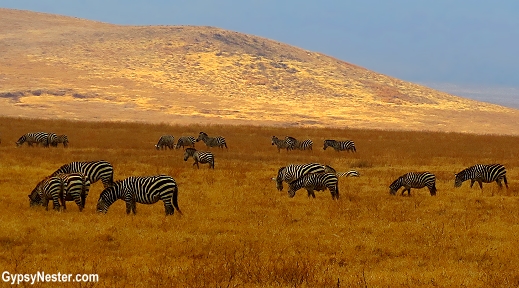
There have been a ton of amazing moments for us, walking on the Great Wall of China, visiting Cuba, snorkeling the Great Barrier Reef, teaching and going on safari in Africa, and seeing the northern lights above the Arctic Circle in Norway, but the most exhilarating had to be Skydiving Over Queensland in Australia. Jumping out of an airplane 10,000 feet above the Coral Sea was a rush like none other in our lives. Can’t say it’s one we are in any hurry to repeat either.

What is your typical daily budget whilst travelling?

These days most of our trips are sponsored so we really don’t spend much. When we do travel on our own we definitely try to keep the cost down, which is a lot easier with proper planning. A good trip planner can not only save money but really help find the best places to travel.

We are not really into the fancy restaurants and high-end resorts, we like to look for a more local flavor, often opting for food trucks or funky neighborhood joints so we can usually get by on less than a hundred dollars a day for both of us.

Which place stands high on your bucket list and why?

Antarctica, because that would be the last of the seven continents for us to visit. New Zealand, Egypt, Iceland, India, and Southeast Asia also stand out as places we would love to see someday. There are dozens more, and untold new places we want to explore, so our journey continues because we are constantly looking ahead, beyond the horizon and over the next hill.

How do you determine where to go next? what kind of places appeal to you?  

Now that GypsyNester.com has become popular our plans are usually set by who asks us to travel with them to write a story. We like active adventures and have been lucky enough to work with several companies that specialize in them such as bicycling and walking tours with Backroads, VBT, and Country Walkers, voluntourism with Discover Corps., and continuing education with Road Scholar.

How do you pack for a trip?  What are the key-points you keep in mind?  

We travel so much that we have it down to a science. Truly, we hardly even think about it. The same basic things come on every trip, then the weather at the destination makes for the biggest variables. We hate to check bags, so cold climates make packing harder to fit everything in. No matter what, we adhere to what we call the One Trip Rule. This means that we must be able to carry all of our bags at one time. It makes it so much easier to keep track of everything, and our belongings never get left unattended while moving between airports, taxis, trains, shuttle buses, and hotels.

What are your 5 must have travel essential items?  

Obviously the camera and computer are indispensable, but we love our iphone with the built in wifi hotspot, it would be hard to get along without it. Also, on trains, planes, and automobiles, the inflatable neck pillow is a must. Is that five? No, only four, let’s see then, got it, plastic bags to protect those things when we get caught in the rain.

How do you manage to keep your skin healthy and fresh while traveling? What is your everyday beauty routine like?

Wow, that’s hard because every day is so different for us. Mostly I just try to keep my face clean. I always carry face wipes with me and use face-wash and a tinted moisturizer with sunblock in it.

How you both manage travelling to new places, not knowing their local languages?  

We do know a bit of Spanish and Italian, not fluent by any means, but enough to get by. Otherwise, English is definitely a good language to know worldwide. In the travel industry, such as hotels and airlines, we can almost always find someone who speaks a little. Beyond that, we have become quite adept at pointing and pantomiming, and sometimes even drawing pictures, in order to make our intentions known.

Do you follow travel blogs? If so, name some bloggers that you personally like.

When we were just getting started we met Donna Hull from My Itchy Travel Feet, The Baby Boomer’s Guide to Travel. She was so nice, and also helpful, really got us to see the possibilities. She never felt that there was any competition between bloggers either, saw that we can all help each other, and we have tried to continue that attitude. We also like McCool Travel a lot along with The Food Travelist, Luggage and Lipstick, Lifestyle Fifty, Sand in my Suitcase, and our friend Suzanne Fluhr at Boomeresque.

Is there any travel tip you both would like to share with us?  

Don’t think of reasons you can’t, think of reasons you can. You can never plan for every possibility, so be flexible. We actually adopted the motto: The plan is no plans and it has made traveling so much less stressful.

Big thanks to Obsessory for asking us about our crazy GypsyNester lifestyle!

This post may contain sponsored links.