

Khardung La
Popularly known as the Pass of Lower Castle, Khardung La is one of the highest mountain passes in the world located at an elevation of about 5359 meters above the sea level. It is situated at a distance of 39.7 km from Leh and the construction of road was started in the year 1976 and it took almost 12 years to be opened to the public. The pass acts as a point of entry to the Nubra and Shyok valleys in Ladakh. The pass was mainly used by traders in the past and it was crossed by the help of horses and camels. At the present time, travellers and adventure seekers love to take on the challenging roads on their ladakh bike trip.
Magnetic Hill
Magnetic hill happens to be a road that stretches on the Leh – Kargil National Highways. Located at an elevation of about 14000 km, this place is known for its panoramic viewpoints of the mighty Himalayan Mountain Ranges. The hills are also known as the gravity hills as it provides an illusion of the downhill slope appearing to be an uphill slope. Heading over to this place, if you keep your vehicle in neutral, it will start rolling uphill against gravity at a speed of 20 KMPH. This phenomenon is mainly caused by the magnetic force.
Pangong Tso Lake
Pangong Tso Lake which is known as the high grassland lake happens to be a spectacular natural beauty that is located at a height of about 4350 meters above the sea level. The peculiar fact about the lake is that it changes its color from blue to green and to unusual red. The change of color that occurs in this lake is due to the retention of the minerals and salts in the water as its flow is terminated before it reaches the ocean. If you wish to make the most of your visit, then you can come over to this place in the winter season to witness the completely frozen lake.
Nubra Valley
Also known as Ldumra which means a valley of flowers, is located in the north east of the famous Ladakh Valley. Nubra is best known as a cold desert that is located at a high altitude featuring minimal vegetarians. The best part of this place is the scenic Shyok and Nubra River. Heading over to this place, you will get to witness extensive landscapes, serene lagoons, vibrant monasteries, incredible nature trails and native village scenes, and much more. Taking the trip, you will also be able to collect a number of souvenirs such as almonds, apples, woolen socks, Tibetan and Kashmiri artefacts, and much more.




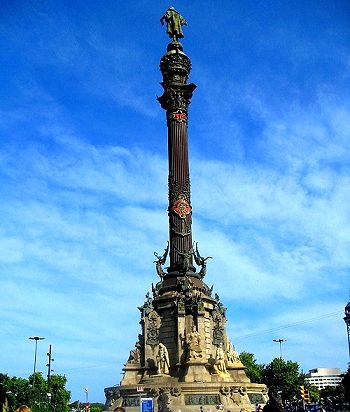 We began at the famous Christopher Columbus Monument, which stands in the center of a circle by the waterfront. He was placed there for the Exposición Universal de Barcelona in1888 on what is said to be the spot where Columbus returned to Spain after his first voyage to the New World.
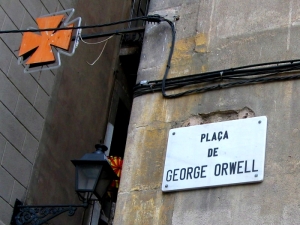 This seemed like a great spot for a cool drink and a quick bite of tapas, but when we asked our server why the square was named after the famous writer he didn’t know. This meant we were forced to check with Google. It turns out Orwell came to Barcelona in 1936 to fight in The Spanish Revolution, saying he had “come to Spain to join the militia to fight against Fascism.”
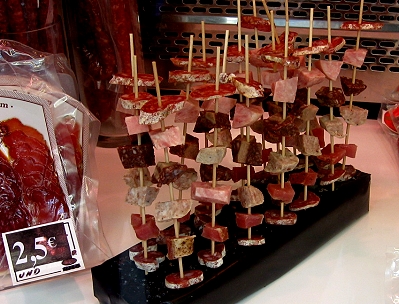 A little farther up we came to the Boqueria. This is perhaps Barcelona’s main market and dates back to 1217, when an open-air meat market sprang up near the city gate. The name is believed to come from the Catalan word for goat, boc. So, a boqueria would be a place where goat meat is sold.
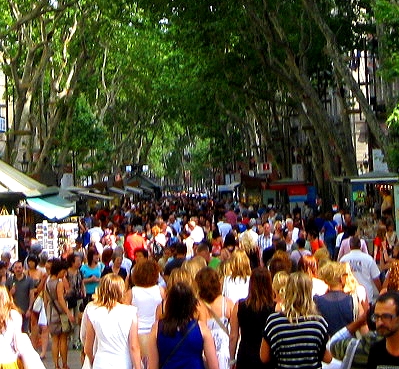 La Rambla comes to an end at the Plaça de Catalunya, or Catalonia Plaza, which is often considered the unofficial dividing line between the old city and the new. This open square has several interesting statues, along with numerous cafés and restaurants, so it is a great spot to take a little break.
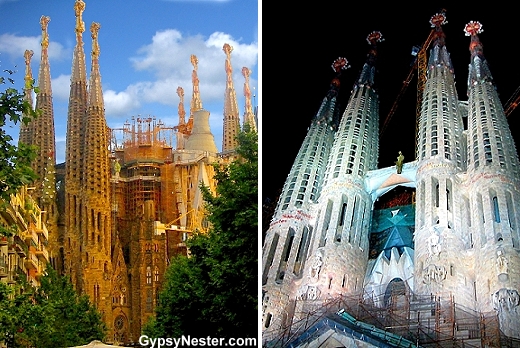
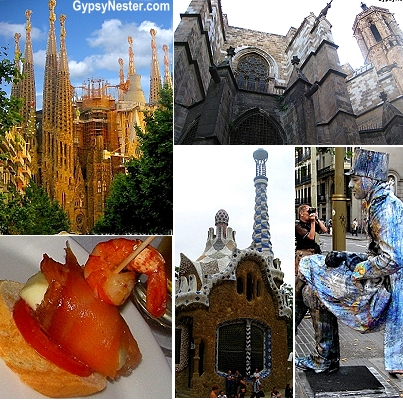
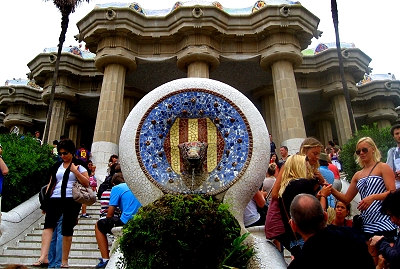 So we walked over to the Park Güell and up several hundred steps into one of the world’s strangest parks. It was originally meant to be part of a housing development, but that failed to take off and it became something of a testing ground for some of the famed architect’s ideas. The result is somewhat surreal, but certainly enjoyable.