
Search…

Hitting the Wall in Berlin

Berlin is not all that close to the sea, so as cruise passengers sailing the Baltic we had to ride the rails to visit the German capital.
We immediately gravitated to perhaps the most famous part of the Wall, Dmitri Vrubel’s picture of… CONTINUE READING >> 

Thanks to Viking Ocean Cruises for inviting us along and providing this adventure! As always, all opinions are our own.
See all of our exploits aboard the Viking Star through the Baltic Sea here.

Berlin is not all that close to the sea, so as cruise passengers sailing the Baltic we had to ride the rails to visit the German capital.

We generally jump at any chance (at least David does) to see some countryside through the window of a train, so off we went.

The train pulled into the Berlin Ostbahnhof, or east station, which is right by the East Side Gallery of the Berlin Wall.

This is a nearly mile-long section of the Wall that has been covered with one hundred and five paintings by artists from all around the world.

We immediately gravitated to perhaps the most famous of these works, Dmitri Vrubel’s picture of the one-time head of the Soviet Union Leonid Brezhnev and former East German leader Erich Honecker in full smooch mode.

The Wall, a sympton of the partitioning of the city at the end of World War II, would play a primary role in the first part of our explorations, so we paralleled it toward the center of the city

The barrier was built to keep people in, not out, after three and a half million East Germans had fled to the West between 1946 and 1961. To stop the tide, an eight hundred and thirty-eight mile concrete border was erected.

The Berlin Wall was actually two parallel walls with a no-man’s land situated between them. We learned that towers were installed within eyeshot of each other and overseen by armed guards with orders to shoot to kill anyone who made it over the first wall.

Every morning, the dirt in the no-man’s land would be carefully raked, and if any footprints were found without a dead body nearby, the guards would be punished.

After the East Germans built the wall in 1961, the allies were allowed three crossing points: Alpha, Bravo, and Charlie. Checkpoint Charlie, being the only one in the middle of the city, became the best known passage between the two German states.

Unfortunately, what we saw was only a replica, since the real guard house was removed and put on display at the Allied Museum in 1990.

Moving on a few blocks from the checkpoint we found another section of the wall, one that has been left without embellishment. The concrete struck us as surprisingly thin—and the overall height much lower than we expected.

This meant that additional measures were needed to keep people from breaking through.

In the patches where the concrete was worn we could see tight interlacing metal mesh, making it difficult to tunnel through. The top of the wall was rounded—then heavily greased—making it nearly impossible to climb over.

Another reason that this section of the wall was exceptionally interesting to us was because it runs right along the place where the Gestapo and SS once had their headquarters.

The buildings were completely destroyed by bombs at the end of the war, but the foundations have been used as a backdrop for a display detailing the history of repression under the Nazis.

The gravity of this site, along with the incredibly disturbing information unfolding before us, created an overwhelmed feeling and our next stop only added to that.

The stark reality of the Memorial to the Murdered Jews of Europe served to increase the heaviness of the atmosphere, if that was possible.

The concept of 2,711 concrete blocks of various heights was designed to show how a supposedly ordered system can lose touch with reason, but the creators also wanted the interpretation to be open to each individual.

To us it certainly captured the weight of the events that it memorializes.

Walking toward the Unter den Linden, the main boulevard through the center of town, we stumbled upon yet another reminder of this city’s darker days.

Down a side street stood the last remaining watchtower from the days of the German Democratic Republic, better known as East Germany.

Of course, had it actually been democratic, or a republic, towers like this would not have been necessary in the first place.

With all of the dark history we had consumed this morning, we decided an attempt to lighten up our mood was in order, so we stopped for a quick bite.

In Berlin that means a currywurst.

Just as the name implies, this is a twist on the typical German sausage by smothering it with catsup and curry powder.

The snack became popular after the war as street stands began to pop up all around town.

Feeling revived and ready to move on from the darker days of Berlin’s twentieth century history, we jumped back in to find the regal reminders of the imperial era of Prussia and Germany.

The most notable of these has to be the Brandenburg Gate.

As with almost everything in the city, the gate was heavily damaged by bombing in World War II, but was restored after the end of the war, and then again once the wall came down. Since then it has become a powerful symbol of German reunification.

Another important symbol of prewar history and the reunification stands very near the gate, the Reichstag.  After opening in 1894, it housed the government until 1933 when it was severely damaged in a highly suspicious fire.

Hitler, who had been appointed Chancellor just one month earlier, used the blaze as justification to suspend most rights and begin an effort to eliminate communists and increase state security throughout Germany.

The building sat empty and fell into disrepair until it was partially refurbished in the 1960s, and then fully restored after reunification. Following that, it once again became the seat of the parliament.

Forging ahead through the heart of the city, we made a final stop at the Bebelplatz.

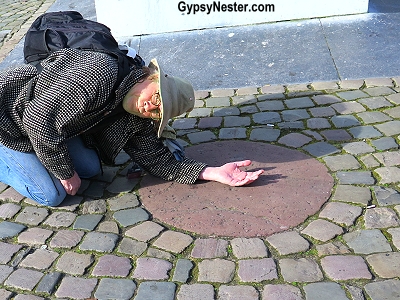
What seemed to be an insignificant plaza was the site of an infamous Nazi book burning in 1933. There is a memorial here but it is very easy to miss. We had to look pretty hard to find it.

The site is only marked by a window placed in the cobblestones looking down into a room filled with empty bookcases that would have held the 20,000 destroyed books.

The effect was certainly poignant, but by far the most powerful aspect of the memorial was a plaque set in the ground near the window with a scary, prophetic line from a play by one of the authors whose books were banned, Heinrich Heine.

He wrote: “Das war ein Vorspiel nur, dort wo man Bücher verbrennt, verbrennt man am Ende auch Menschen.” Which means “That was only a prelude; where they burn books, they will in the end also burn people.”

From the plaza we made our way back to the station and the end of this distressing day of emotional and draining history.

Our train ride back to the ship was spent in somber thought.

David & Veronica, GypsyNester.com

See all of our exploits aboard the Viking Star through the Baltic Sea here.

Thanks to Viking Ocean Cruises for inviting us along and providing this adventure! As always, all opinions are our own.
Misconceptions Surrounding the Price of High-End Luxury Travel

Everybody has dreams of taking to the skies in a private jet and indulging in luxury before landing in an exotic country for a vacation. Until now, this has been something that the majority see out of their grasp… CONTINUE READING >> 

Everybody has dreams of taking to the skies in a private jet and indulging in luxury before landing in an exotic country for a vacation. Until now, this has been something that the majority see out of their grasp due to the financial implications, but there is currently a shift in the travel industry which is helping this dream to become a reality for many.

Uber for the Skies

In recent times, Uber has revolutionised the world. Less and less people own their own vehicle and instead hail a lift from Uber to reach their destination. The same principle has started to happen up in the skies, as high fliers are opting for on-demand flights instead of owning their own private jets – if these individuals are regular flyers, it could actually save them a large sum in the long run.

On-Demand Flights

As an example, you could fly anywhere that you want in the world for a monthly fee, such as £2,500. After a couple of trips, you would break even whilst also getting to enjoy the luxury of flying in a beautiful and glamorous private jet. This may include fine dining, champagne, plenty of in-flight entertainment, space and service that is of the highest standard.

More Affordable Luxury Travel

Whilst this is still an expensive form of travel, it has opened up the possibility to many people who want to experience flying in a private jet. It is also made much more affordable if you have a large group and fly regularly, such as a business taking its employees on a ski trip. Some apps also take a large percentage off the original charter price when you use the seats on “empty legs” (empty seats on the jet after completing a one-way flight).

Tailored Flights

In many cases, apps like Victor enable travellers to tailor their on-demand charter flights. This includes a number of different stylish jets that could seat anywhere between 4 people and 45, destinations all around the world and a number of different deals. Many of these apps also offer a service where you can compare private jet charters to ensure that you can travel within your budget whilst also still in luxury.

For a long time, soaring through the air in a private jet to an exotic destination was reserved for CEO’s, rock stars and Hollywood stars. This is no longer the case, as aircraft sales continue to drop and instead companies offer the option to fly-on-demand and this opens up the possibility to enjoy luxury travel to many more.

We are happy to feature this collaborative post to offer valuable information for our readers.

This post may contain sponsored links.

New York City Travel Guide

New York City is the most popular destination in the world, and for good reason. With first-class entertainment options, world-famous landmarks, buzzing street activity and nightlife, it is an epicenter of culture, diversity and excitement. CONTINUE READING >> 

We are happy to reprint this post from IHG’s travel guides to provide valuable information to our readers.


New York City is the most popular destination in the world, and for good reason. With first-class entertainment options, world-famous landmarks, buzzing street activity and nightlife, it is an epicenter of culture, diversity and excitement.

Your choices are seemingly endless when it comes to hotels, which means deciding which hotel to book can be a challenge, as options range from hostels to ultra-luxurious global chains. IHG® can help you find accommodations that cater to your wants and needs while you explore what makes NYC so unique.

Things to See

New York City is home to a multitude of world-renowned landmarks, so prioritizing your time during your visit is essential. For the ultimate sightseeing adventure, consider one of the hotels in Manhattan, home to the Empire State Building, Times Square, Wall Street and the 9/11 Memorial.

Manhattan can easily fill your itinerary with must-dos, and a short boat ride across the harbor takes you to the Statue of Liberty. After a day of sightseeing, a stroll through Central Park is an excellent way to unwind.

Trinity Church New York

Hotels in New York City

New York City hosts almost 55 million visitors each year and offers an incredible array of destinations and attractions to explore. Regardless of when you go, where you stay or what you do, there are plenty of hotels to fit your specific needs, and by booking through IHG, you are assured a great stay while you explore New York.

Where to Stay

When considering hotels in New York City, first choose your ideal borough, since each has its own character, advantages and charms. You may want to be closer to the multicultural cuisine of Queens or the tree-lined streets of Brooklyn.

Midtown Manhattan is a prime location for visitors wanting to be within walking distance of Broadway plays or 5th Avenue shops, although they can be expensive. If you want to be in the middle of the action, look for a Times Square hotel location. Luckily, there are many reasonably priced hotels inside and outside of Manhattan, and getting around is easy.

How to Get to New York City

The New York City metropolitan area is served by three key airports: John F. Kennedy International Airport, La Guardia Airport and Newark Liberty International Airport in New Jersey, which is only 15 miles from Manhattan.

Those visiting the city by rail will enjoy the iconic Grand Central Terminal or Pennsylvania Station, the city’s two main railway stations. Travelers with shorter stays may find New York City hotels near major transportation hubs more convenient and more budget-friendly.

The thought of getting around the city can be intimidating for first-time visitors, but traveling throughout the city and its five boroughs is surprisingly easy, thanks to the extensive Metro subway system. Along with its low cost and vast network of routes, the Metro is an efficient way to explore the city. In addition, you can easily hail a cab for a direct route to your destination.

It’s All About the Benjamins in Philadelphia

As a teenager, Ben Franklin ran away to Philadelphia to seek his fame and fortune. A couple of centuries later, we went to Philly to retrace his footsteps.

Tracking down his landmarks was easier than we expected… CONTINUE READING >> 

As a teenager, Ben Franklin ran away to Philadelphia to seek his fame and fortune. A couple of centuries later, we went to Philly to retrace his footsteps. Tracking down his landmarks was easier than we expected, because they’re all within a few blocks of each other. Once we found the perfect IHG hotel near Old City, we were off.

Library Hall

Just a few steps past the Liberty Bell, we found America’s first public library, which good old Benjamin helped found in 1731. We couldn’t miss it because of the classic statue of Ben over the door. It looks like he was going for the Greek scholar look by sporting a toga.

Since the library is right next to Independence Hall, he invited the Founding Fathers to use the collection for study and reference, unofficially creating the first Library of Congress.

Today, the archives feature a copy of the Declaration of Independence written in Jefferson’s own hand, the original journals of the Lewis and Clark expedition, and first editions of Sir Isaac Newton’s “Principia” and Charles Darwin’s “Origin of Species.”

B. Free Franklin Post Office

Our next stop was to check out another Franklin first. In 1775, the Continental Congress appointed him as the first Postmaster General of the United States. The B. Free Franklin Post Office commemorates that and his many other contributions to postal service in the colonies, by remaining as much like it would have been back then as possible.

They take this authenticity so seriously that there is no need to look for the stars and stripes when trying to find this post office. It’s the only one in America that doesn’t fly the flag, because back when it opened, the U.S. was still a British territory and didn’t have a flag yet.

Franklin Court

Ducking through a small tunnel near the post office, we popped into a courtyard where the house that Franklin lived from 1763 until 1790 once stood. The original building is long gone, so now a “ghost house” of steel beams outlines its location.

Researchers excavated the site in the 1950s and 60s and installed windows in the ground to allow a peek at the foundations, walls, and even a privy below the surface. Talk about getting personal with a patriot!

Ben Franklin’s Print Shop

The courtyard also includes a replica of the print shop Franklin used when he produced many of his newspapers and political pamphlets, along with his famous wit and wisdom in “Poor Richard’s Almanac.” The type settings and printing press are exactly as they would have been in revolutionary times.

Since this is part of the National Park Service, rangers demonstrate the 18th-century printing techniques. When we looked in, we were lucky enough to see the Declaration of Independence being printed out as a souvenir for a group of schoolkids.

Benjamin Franklin’s Final Resting Place

We finished our day at Franklin’s grave at the Christ Church Burial Ground. He is laid to rest here next to Deborah, his common-law wife of 44 years.

It struck us as odd to find the tomb covered with pennies, until we learned that the coins stem from a longstanding Philadelphia tradition. Tossing a cent on the tomb is believed to bring good luck.

Certainly seems as though the man who said, “A penny saved is a penny earned,” would not approve of throwing money away like this, but the church doesn’t mind. In fact, the church collects thousands of dollars every year from the ritual. Now that’s turning some Lincolns into Benjamins!

Meanwhile, we collected a newfound admiration for the great statesman, inventor, printer, and patriot whose face adorns the C-note. The famous Philadelphian’s legacy practically requires us all to visit the City of Brotherly Love.

This article was created in collaboration with InterContinental Hotels Group.

Cycling Through Sacramento

We’re always on the lookout for new places to explore, especially if they’re easily accessible via bicycle, our favorite way to get around. With that in mind, we examined the pedaling possibilities in Sacramento. It turns out that California’s capital is quite a cycling city. CONTINUE READING >> 

We’re always on the lookout for new places to explore, especially if they’re easily accessible via bicycle, our favorite way to get around. With that in mind, we examined the pedaling possibilities in Sacramento. It turns out that California’s capital is quite a cycling city.

In no time at all, we figured out that near the river in Old Sacramento was the place to stay for bike enthusiasts like us. We found all kinds of great hotels in the old town, along with several good places to rent bikes.

Old Sacramento

Old Sacramento
Image via Flickr by Prayitno

The entire area is protected as a State Historic Park and a National Historic Landmark District. Harkening back to the gold rush days, the boardwalk-lined streets cover 28 acres along the waterfront. Much of the area is open to pedestrian and bicycle traffic only so get on your bicycle and keep some bike grease with you.

Should we feel the need for alternative transportation, stagecoaches still clatter across the cobblestones, and steamboats still whistle on the river.

The original ground level of Sacramento remains hidden beneath the surface. After devastating floods in the 1860s, rather than move the city, the residents raised it. In an amazing feat of engineering, the street level was brought up by 13 feet.

Old Sacramento’s forgotten basement is part of the Sacramento History Museum, which, along with the California Automobile Museum, Maritime Military Museum, Wells Fargo Museum, Schoolhouse Museum, and the California State Railroad Museum, has revitalized the historic center of California’s oldest incorporated city.

California Railroad Museum
Image via Flickr by Marcin Wichary

As a well-documented train nut, David is by far the most excited by the last on that list of attractions. Not only can he get the scoop on the first transcontinental railroad and the rich history of railroading in the Golden State, but he can also take a ride behind a live steam engine on the Sacramento Southern Railroad.

But biking is our inspiration, and the city is remarkably bike friendly with an incredible array of lanes, trails, and paths dedicated to those of us who prefer to get around on two wheels. Of these many trails, two stand out.

American River Bike Trail

Guy West Bridge
Image via Flickr by ** RCB **

Officially known as the Jedediah Smith Memorial Trail — a name we know from a prior visit to the redwood forests in northern California — this trail is Sacramento’s most popular. Here, old Jed begins in the historic district and runs 32 miles north and east along the American River to Folsom Lake.

This is the granddaddy of bike paths, as it dates back over a century. It wasn’t long before automobiles became commonplace, and the trail was left to overgrow. In the 1970s it was resurrected and paved, and now it’s used by about 5 million people each year.

A highlight lies a few miles east of Old Sacramento, where the Guy West Bridge spans the river on the campus of California State University, Sacramento. The suspension bridge was designed as a miniature Golden Gate, right down to the international orange paint job.

The Sacramento Northern Bikeway

Sacramento Northern Bikeway
Image via Flickr by jmf1007

This is a rail trail, our favorite kind. It uses the former right-of-way of a railroad, in this case the Sacramento Northern Interurban Railway. We love these because they are always very level and often incorporate many of the cool bridges, tunnels, and structures from their train track days.

The bikeway breaks off to the north from the American River Trail and runs 10 miles up to Rancho Elverta. This allows for a little glimpse of the suburban countryside around the city.

Now that we know what a cycle-centric city Sacramento has become, all that’s left is for us to pack our bags.

We were happy to write this in collaboration with hotelplanner.

The Best Activity Holidays in America

When visiting such a diverse country as the USA, the options are endless for adventure holidays.

So, we’ve picked out our three favourites that we think any active holiday-goer will love. CONTINUE READING >> 

Do you like to make the most of your holiday and try something new every day? Then an activity holiday in America could be for you. When visiting such a diverse country as the USA, the options are endless for adventure holidays.

So, we’ve picked out our three favorites that we think any active holiday-goer will love.

  1. Experience the Rocky Mountains

Head to the most prominent mountain range in North America – the Rockies. As well as some impressive views in the surrounding national parks, you can relax in Miette Hot Springs, spend a night in the cowboy town of Jackson or drive along the famous Icefields Parkway.

Those who enjoy extreme sports can head to the adventure capital of Whistler for skiing, snowboarding, snowmobiling and bungee jumping. Or, you could spend a day at the Whistler Olympic Park, which was built for the 2010 Winter Games. Take their tour, try your hand at some of their activities or watch world-class athletes as they train. Whistler is a haven for an activity holiday.

  1. Go Exploring the West

Live the Western Dream with a trip to the Wild West. This opportunity is perfect for an adventurous spirit and you can either book a pre-planned tour of the best of Western America or compose your own itinerary. There’s so much that you could fit into your trip, including:

  • Salt Lake City
  • Walking trails at Yosemite, Zion, Bryce Canyon and Grand Teton national parks
  • Monument Valley
  • Old Faithful geyser at Yellowstone
  • Watching the sunset at Grand Canyon
  • Visiting Death Valley

Whether you want to catch a glimpse of a wolf, or marvel at the natural beauty of the national parks, there’s plenty to do when you plan a trip in America’s magnificent West.

  1. Embark on an Alaskan Adventure

Any adventurous traveler who prefers the winter chill to the heat of the summer should plan a visit to Alaska. It’s great for those who love trying out new experiences with breath-taking scenery – you could go whale spotting or try your hand at dog sledding in this one-in-a-lifetime trip to Alaska.

Stay at a wilderness camp or in a rustic cabin in the Alaska Range to spend your holiday exploring the beauty of Kenai Fjords and Wrangell-St Elias National Parks. What better holiday can you imagine than spotting wildlife in their natural habitat, hiking in stunning landscapes and the opportunity to try sea kayaking?

If you’re looking for an activity holiday, then the USA is the destination for you. With so much to do and so much to see in this rich and diverse country, you’re sure to continue going back for your next adventure holiday time and time again.

We are happy to feature this collaborative post to offer ideas for vacations to our readers.

Brooklyn Travel Guide

The distinct culture, deep-rooted history and magnetic energy of Brooklyn make it one of the most beloved and revered destinations in America.

Celebrated around the world for its big-city excitement and unique brand of authenticity, this buzzing New York City borough… CONTINUE READING >> 

We are happy to reprint this post from IHG’s travel guides to provide valuable information to our readers.

The distinct culture, deep-rooted history and magnetic energy of Brooklyn make it one of the most beloved and revered destinations in America. Celebrated around the world for its big-city excitement and unique brand of authenticity, this buzzing New York City borough–the city’s most populous–constantly attracts visitors from around the globe, and you’ll find amazing hotels in Brooklyn to fit your travel needs.

Things to See in Brooklyn

Brooklyn Bridge
Image via Flickr by Marcos e Sislande

 You should have no problem finding things to do in Brooklyn, an iconic destination that has inspired many of the world’s most famous citizens. As soon as you cross the East River on the iconic Brooklyn Bridge, you’ll immediately know you’ve arrived in one of the world’s great cultural epicenters. This National Historic Landmark connects Brooklyn to Manhattan, and has been heralded in film, television and literature for generations. Visit the 85-acre Brooklyn Bridge Park for great Manhattan skyline views, public art installations, athletic fields and playgrounds for children and adults alike, and even a restored 1920s-era merry-go-round called “Jane’s Carousel.” For local history, see the four-story Brooklyn Historical Society building, where you can peruse archives of photography, newspapers and a large library of research from borough’s past. Other museums and family-friendly places to put on your must-see list include Prospect Park Zoo, New York Transit Museum, Waterfront Museum and Showboat Barge, Brooklyn Children’s Museum, and the Coney Island Cyclone historic wooden roller coaster.

Ride an East River Ferry to get off your feet for awhile and see the city from the water. Or, head to Brighton Beach for a day in the sun and the chance to walk along the picturesque boardwalk. Nearby, Russian restaurants and bakeries serve up delicacies you’ll savor to the last bite. More delicious eats can be found on Smith Street, a hotspot for foodies and grumbling stomachs across the city.

Coney Island is another beach destination you won’t want to miss; it’s the widest beach in the area and boasts amusement rides and entertainment that will bring smiles to the young and the young at heart. Hear the soaring chorus of voices at the famous Brooklyn Tabernacle. Stroll the rolling hills of Green-Wood Cemetery, where you’ll find monuments and tombstones of a surprising number of famous figures.

For a full day of outdoor and cultural activity, head to Prospect Park where the Zoo, Museum of Art and Botanical Gardens all offer great ways to spend a few hours. The Brooklyn Museum is the second largest in New York and features artifacts that stretch from ancient Egyptians to modern day, while the Transit Museum, housed in a 1930’s subway station, has interesting displays all its own.
Brooklyn is also a hotspot for new residents of New York City. The neighborhood of Williamsburg has attracted an impressive array of new restaurants ranging from casual to fine dining, and varying in cultural diversity. There are also many bars, lounges and performance venues where you can make unique discoveries to make your visit unforgettable.

Find the Best Hotels in Brooklyn

Your choices for Brooklyn Hotels range from rooms between culturally rich and trending neighborhoods to business-friendly establishments that put you close to downtown Manhattan, and many of the area’s central locations for business and government. You can expect around-the-clock amenities and services at many Brooklyn hotels, including 24-hour restaurants and room service, as well as all-day business center access.

Where to Stay in Brooklyn

Brooklyn Heights, the area’s oldest neighborhood, and downtown Brooklyn are usually preferred locations for business travelers looking to stay near Manhattan. Diverse neighborhoods like Fort Greene offer amazing architecture, reputable cafes, arts, entertainment and cultural experiences that put New York City’s reputation as a cultural melting pot on display.

The neighborhoods of Park Slope and Brooklyn Heights both offer boutiques and cafes, while Cobble Hill is worth walking through for the houses and neighborhood buzz alone. Williamsburg is the city’s creative hub, home to some of the best restaurants and most talented live entertainment. The nightlife here needs no introduction and party-goers won’t have to look far to find a cold drink and a bumping bass line.

How to Get to Brooklyn

The New York City metropolitan area is served by three key airports: John F. Kennedy International Airport, LaGuardia Airport and Newark Liberty International Airport in New Jersey.  JFK, at just 11 miles distance, is the closest airport to Brooklyn. It offers convenient service to Clinton Hill, Bedford-Stuyvesant, Williamsburg and Bushwick via Air Train, with less than an hour of travel time. LaGuardia Airport (LGA) is 16 miles away from central Brooklyn. Taxi or private transportation services are advised to and from LaGuardia, as there is no direct public transportation into Brooklyn. Newark Liberty is 21 miles from Brooklyn, with arrival times usually within an hour using the Air Train, then the Path train or NJ Transit to either Penn Station, the World Trade Center or Manhattan’s 33rd Street. Another option is the Airport Express Bus which goes to subway-connected Manhattan locations like Grand Central Station, Bryant Park and the Port Authority Bus Terminal.