To begin with, you’ll want to pick out the right safari destination. Among the best of them is the Kruger National Park, which covers almost two million hectares in the north, near the border with neighbouring Mozambique. Here, you’ll find an incredible diversity of wildlife, along with several private lodges from which you’ll be able to explore the surrounding wilderness.
On the other hand, there are private game reserves, like Sabi Sands, which will allow you a more intimate, personal experience. You’ll pay more, but you won’t have to compete with other tourists for the best views of the animals – and you’ll enjoy some of the best safari guides in the business.
Deciding When to Go
Timing your trip is crucial. If you visit at the wrong time of year, then you won’t get the chance to view certain species. Generally speaking, the dry months between June and September are best since the vegetation tends to be sparser, which makes the animals easier to see. Since water is scarcer, animals tend to flock to the limited water sources – which makes their behaviour more predictable. During summer (which is winter in the Northern Hemisphere, remember), the landscape is more lush, and you may get a chance to see newborn animals and all the unique behaviours that come with them – but you’re taking a bit more of a risk.
Selecting Accommodation: Lodges vs. Camps
On your safari adventure, you’ll be faced with a choice of two kinds of accommodation. There are luxury lodges which offer a hotel experience, with guided tours and world-class dining thrown in. If you want to get really close to the wilderness, on the other hand, you might consider a traditional campsite instead. The latter option tends to be more affordable, though you’ll sacrifice comfort. For some, this might be a desirable tradeoff.
Essential Packing Tips
Getting the most from your Safari adventure means, in many cases, packing a number of essential items. You’ll need clothing that you’ll feel comfortable in when you’re out all day. Avoid bright colours that might attract the attention of the animals themselves. Binoculars are a great investment, as they’ll allow you to see what you’re looking at, even when it’s a fair distance away!
The capital city of Costa Rica is not typically a tourist destination, which made us like it all the more.
We were ready for a taste of the day to day life that the locals describe as Pura Vida…. CONTINUE READING >>
The capital city of Costa Rica is not typically a tourist destination, which made us like it all the more.
After our stint visiting the beaches, jungles, and volcanoes that attract so many visitors to this Central American country, we were ready for a taste of the day to day life that the locals describe as “Pura Vida.”
This catch-all phrase that the native citizens, known as Ticos and Ticas, use liberally literally means pure life, but has taken on the universal character of hello, goodbye, take it easy, hang loose, it’s all good, or just about any other positive response, outlook, or greeting.
It has come to embody the Costa Rican attitude that life is good, so be happy and thankful for it. Not a bad viewpoint.
Aiding our emersion into the local life was the fact that we stayed at an AirB&B in a neighborhood instead of a hotel. Our house was right in the center of town, so everything was within an easy walk.
Pura Vida.
Just a couple of blocks away, we started with a walk in the park, the Parque Nacional. This beautiful urban green space centers around what is considered the most important monument in the country, the Monumento Nacional.
The statue depicts Costa Ricans expelling private military expeditions into Latin America led by William Walker in 1857. His plan, known back then as filibustering, was to establish English-speaking colonies under his personal control by organizing mercenary armies.
The idea of controlling the region because of its strategic position as a location for a canal linking the Atlantic and the Pacific made it irresistible to businessmen, including Cornelius Vanderbilt.
The private militias from the US and Europe intervened in several Central American countries, especially Nicaragua, but a coalition formed against the usurpers from the north, with the normally peaceful Costa Ricans playing a vital role.
Venturing outside of the park, we encountered the first of what would be many street vendors selling fresh mango.
Cut like French fries and served with a squeeze of lime, a dash of salt, or even a splash of hot sauce for the daring, it was a delicious and refreshing snack.
Teatro Nacional
Now that’s Pura Vida.
Moving on through the center of town, we came to the Teatro Nacional de Costa Rica. The national theatre is one of the premier landmarks in the city, and a symbol of the time in the late 1800s, when coffee was king and the economy was booming.
Héroes de la Miseria by Juan Ramon Bonilla
Built to house the National Symphonic Orchestra, the outside of the building is beautiful, but the interior is even more ornate.
The lobby serves as a defacto art museum, displaying works from some of the country’s most celebrated artists.
Edificio de Correos y Telégrafos de Costa Rica
Veering off of the main drag, we turned right from the theater for a look at another of the city’s most famous buildings, the main post office, the Edificio de Correos y Telégrafos de Costa Rica.
For one hundred years this stunning structure has served as the headquarters of the country’s postal service.
It seemed like we were never more than a few steps away from a park as we returned to the center of the city and Parque Central. Scattered among the citizens enjoying the beautiful day, we noticed that one guy wasn’t moving.
The Street Sweeper was stuck in mid-sweep so David tried to give him a hand, but Edgar Zúñiga’s bronze tribute to the workers who clean the city’s parks and streets wasn’t having any of it. He has stayed stoically standing still since 2003 and wasn’t about to change that for us.
Could be he is too deep in his own private Pura Vida.
Church of Our Lady of La Merced
By this time we had walked enough to work up quite an appetite, so we ducked into an open air café on the busy corner across from the Iglesia de Nuestra Señora de La Merced, the Church of Our Lady of La Merced.
Perhaps the most famous church in San José, it dates back to 1894, when it was built and dedicated to the Virgin of Mercedes, patroness of Barcelona.
The other corner is home to yet another park, Braulio Carrillo, usually just called La Merced Park.
We definitely got lucky when we picked La Casona Tipica because, as the name implies (tipica = typical), it turns out to be acclaimed as one of the best spots for authentic Costa Rican cuisine in San José.
casado
When it comes to food, we take the When in Rome… adage as words to live by. We can’t get enough of local delicacies so, with that in mind, it was a must for us to try a casado.
The name means married man, ostensibly originating from customers entering restaurants and proclaiming that they wanted to eat like a married man.
The ingredients can vary, but they will always be hearty, usually including salad, rice, plantains, black beans, picadillo (a dish made of diced chayote), and a serving of meat such as beef, chicken, pork, or fish.
olla de carne
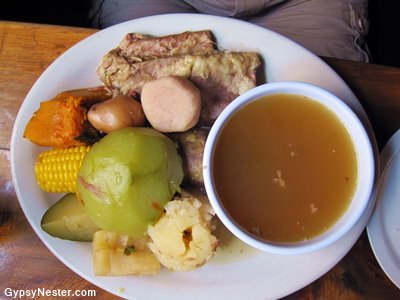
Another typical Tico dish is olla de carne, a stew of meat, potatoes, carrots, cassava, sweet potato, and corn.
It is often served deconstructed, as ours was, with the components removed from the broth and placed on a plate. The broth accompanies them in a bowl on the side.
We were more than happy to linger over our abundant meals while we took in the flavors, not only of the food, but also the quirky décor of memorabilia and odd-ball mannequins scattered about the dining room.
Definitely Pura Vida.
No meal in Costa Rica can be considered complete without coffee brewed right at the table. Costa Rican coffee is considered some of the best in the world, and even though bananas have surpassed it as the main cash crop, it is still an integral part of the economy.
If you look closely behind the chorreador you can see a few of the weird mannequins.
Our server brought us a chorreador, which is an ingeniously simple coffee maker that drip filters the brew through what looks more or less like a sock.
Luckily, the results tasted nothing like it had been filtered through any footwear.
This was high on the list of the best java we had ever encountered.
By being mindful about what you eat and drink, staying hydrated, and trying to adjust to cuisines gradually, you can enjoy tastes from around the world without putting your health at risk… CONTINUE READING >>
When you travel to new places, you get the chance to see different cultures, landscapes, and foods. But eating contaminated food or water can ruin your trip. Getting sick from food, having stomach problems, and feeling drained are common risks when you eat away from home. But if you make smart choices, you can try local foods without getting sick. Here are some tips and tricks to help you make the most of your trip and eat to your heart’s content without getting sick.
Choosing Safe Food and Water
Eating and drinking play a crucial role in maintaining your health during trips. Hot-prepared meals are usually safer options compared to raw or stored foods. While you might be tempted to try fresh salads, raw seafood, or local fruits, these items often have a higher chance of being contaminated. If you decide to eat raw fruits and veggies, make sure to clean and peel them yourself using clean water.
Water safety plays a key role in keeping you healthy while traveling. Many tourists make the mistake of drinking tap water in new places, which often leads to stomach problems. To stay safe, choose bottled, filtered, or boiled water instead. In areas where water quality is dubious, stick to drinks in sealed cans or bottles and avoid anything with ice.
Street food offers a great chance to dive into local culture, but you need to choose. Pick stands that cook food on the spot and keep things clean. Seeing a bunch of locals in line at a stall means the food is safe and well-liked. But watch out for self-serve buffets where food sits out for a long time – they can turn into bacteria hotspots.
Supporting Gut Health While Traveling
A healthy digestive system protects you from stomach issues when you travel. To boost your gut health, eat foods with probiotics. You can find probiotics in fermented foods such as yogurt, kimchi, and kefir. These foods help good bacteria grow in your gut and can lower your chances of stomach discomfort. If you think you might not be able to get foods rich in probiotics while traveling, think about taking probiotic supplements with you.
Fiber plays a key role in keeping your digestive system healthy, but eating too much of it all at once – if your body isn’t used to it – can cause bloating and discomfort. To give your digestive system time to adapt add foods high in fiber to your diet before you travel. Also when you eat unfamiliar meals, watch your portion sizes to avoid putting too much stress on your stomach.
Staying Hydrated Safely
Staying hydrated has a big impact on digestion and your overall health when you’re on the road. But you need to make sure what you drink is safe. Your best bet is bottled water, but if you like to use a refillable bottle, think about getting a portable water purifier.
People often mistake thirst for hunger, which can lead them to overeating. To avoid this, it’s crucial to drink enough liquids during the day. Soups, herbal teas, and broths are also great options to keep you hydrated and support your digestion.
Staying hydrated involves more than just drinking enough liquids; it also has an impact on keeping your gut balanced. When you don’t drink enough water, it can slow down your digestion, which might cause constipation and stomach issues. So, to feel your best while traveling, make sure you drink enough water.
Adjusting to New Cuisines Without Discomfort
Tasting local dishes is one of the best parts of traveling, but eating too many new foods at once can upset your stomach. Instead of jumping right into unfamiliar cuisines, try new foods little by little. Begin with less spicy options before moving on to spicier or richer dishes. This approach gives your stomach time to get used to the new flavors.
Hot dishes can be tough to handle for people who don’t eat them often. If you’re not used to food with lots of spices, start slow by trying less spicy options or eating smaller amounts. Don’t go overboard – eating too much heavy, greasy, or super hot food can give you heartburn, upset your stomach, or cause other tummy troubles.
Conclusion
Traveling should be fun and eye-opening, and food plays a big role in that adventure. By being mindful about what you eat and drink, staying hydrated, and trying to adjust to cuisines gradually, you can enjoy tastes from around the world without putting your health at risk. These steps let you dive into new food experiences while lowering the chances of getting sick from food or having stomach problems. With some planning and care, you can enjoy every mouthful on your trips while staying healthy and full of energy. Enjoy your meal and have a safe journey!
The Hamptons is synonymous with luxury, relaxation, and unforgettable experiences. Whether you own a summer home, are renting a stunning beachfront property, or are visiting for a weekend retreat, every aspect of your time in the Hamptons should be seamless and indulgent. One of the best ways to enhance your stay is by hiring a private chef.
Having a professional chef cater to your culinary needs transforms your retreat from ordinary to extraordinary. Instead of worrying about grocery shopping, meal prep, and cleanup, you can fully immerse yourself in the beauty and tranquility of the Hamptons. A private chef brings gourmet dining into your home, allowing you to enjoy world-class meals without lifting a finger.
Personalized Dining Experiences Tailored to Your Taste
One of the greatest benefits ofhiring a private chef for your Hamptons retreat is the ability to enjoy fully customized meals. Unlike dining at restaurants, where you must choose from a set menu, a private chef crafts dishes specifically suited to your preferences. Whether you have dietary restrictions, a favorite cuisine, or a desire to explore new flavors, a skilled chef can curate a menu that caters to your needs.
From fresh seafood caught just off the Hamptons coast to locally sourced organic produce, private chefs know how to create dishes that highlight the finest ingredients. They work with you to understand your tastes and preferences, ensuring that every meal is a delight. Whether you prefer elegant multi-course dinners, casual family-style meals, or nourishing breakfasts to start your day, a private chef provides an experience that feels tailored just for you.
The Ultimate Convenience: Relax and Enjoy Your Vacation
A Hamptons retreat should be all about relaxation. Cooking, grocery shopping, and meal planning can take time away from your enjoyment. Hiring a private chef eliminates the hassle of these tasks, allowing you to truly unwind.
Imagine waking up to the aroma of freshly brewed coffee and a beautifully prepared breakfast. Picture coming home from a day at the beach or exploring the vineyards to find a gourmet meal waiting for you. With a private chef handling everything from ingredient sourcing to cleanup, your time in the Hamptons becomes completely stress-free.
Not only does this enhance your relaxation, but it also allows you to spend quality time with loved ones. Instead of worrying about preparing meals, you can fully engage in meaningful conversations, enjoy long dinners under the stars, and make memories that last a lifetime.
Five-Star Restaurant Quality Dining in the Comfort of Your Home
The Hamptons boasts some of the finest restaurants in the country, but even the best dining establishments come with certain limitations. Reservations, long wait times, and the lack of privacy can sometimes detract from the experience. By hiring a private chef, you bring Michelin-star quality dining directly into your home.
Private chefs bring extensive culinary expertise, often having trained in top restaurants or worked with high-profile clients. They can prepare exquisite meals that rival any fine dining establishment. Whether you’re in the mood for a romantic candlelit dinner, a lively dinner party with friends, or a laid-back barbecue by the pool, a private chef crafts the perfect culinary experience for every occasion.
Additionally, having a chef at your disposal means that you can enjoy restaurant-quality meals at your preferred schedule. There’s no need to worry about late-night cravings, special dietary requirements, or early breakfasts before a morning excursion. A private chef ensures that every meal fits perfectly into your day.
Fresh, Locally Sourced Ingredients for a Healthier Lifestyle
Eating well is an essential part of any retreat, and a private chef ensures that your meals are both delicious and nutritious. Hamptons chefs have access to the freshest local ingredients, from farm-to-table produce to freshly caught seafood. They prioritize high-quality ingredients to create dishes that not only taste amazing but also nourish your body.
Whether you follow a specific diet such as keto, paleo, vegetarian, or gluten-free, a private chef can tailor meals to meet your nutritional goals. They ensure that every dish is balanced and packed with flavor, so you never have to compromise between health and indulgence.
Beyond meal preparation, a private chef can introduce you to new and exciting ingredients. If you’re interested in trying local artisanal cheeses, organic farm produce, or sustainable seafood, your chef can incorporate these elements into your meals. This creates an elevated dining experience that immerses you in the culinary culture of the Hamptons.
Perfect for Entertaining and Special Occasions
Whether you’re hosting a small family gathering or a lavish summer soirée, having a private chef takes your event to the next level. The Hamptons is known for its vibrant social scene, and what better way to impress your guests than with a professionally curated dining experience?
Private chefs specialize in creating memorable meals for any occasion. From intimate anniversary dinners to grand birthday celebrations, they bring creativity and sophistication to the table. A private chef can design a multi-course tasting menu, pair meals with exquisite wines, and even collaborate with mixologists to create signature cocktails for your event.
Having a chef on-site also means that you don’t have to worry about logistics. They handle everything from plating and presentation to timing and service, ensuring that your guests enjoy a flawless dining experience. All you need to do is relax and enjoy the company of your friends and family.
Save Time and Energy While Maximizing Enjoyment
One of the most underrated benefits of hiring a private chef is the time it saves. Grocery shopping, meal prepping, cooking, and cleaning up can take hours out of your day. A chef handles all these tasks, giving you back valuable time to spend on the things that matter most.
Instead of navigating busy grocery stores or dealing with meal planning, you can focus on enjoying your retreat. Whether you want to spend your days lounging by the pool, exploring Hamptons art galleries, or sailing along the coastline, having a private chef ensures that your time is spent on leisure, not chores.
A Luxurious Experience Worth the Investment
Hiring a private chef is more than just a convenience—it’s an investment in a high-quality experience. The Hamptons is a place where people come to indulge, relax, and create lasting memories. A private chef enhances that experience by providing gourmet meals, exceptional service, and the ultimate level of personalization.
While dining out every night at high-end Hamptons restaurants can be costly, a private chef offers a more intimate and exclusive alternative. You get to enjoy the best culinary experiences in the comfort of your own home, tailored to your tastes, and without the constraints of restaurant dining.
For those seeking the highest level of comfort and luxury, a private chef is an essential addition to any Hamptons retreat. From stress-free meal preparation to exceptional fine dining, the benefits of hiring a chef extend far beyond the plate. It’s about creating an experience that feels effortless, indulgent, and truly unforgettable.
Conclusion
A private chef transforms your Hamptons retreat into an unparalleled culinary experience. Whether you want personalized gourmet meals, a stress-free vacation, or an elevated dining experience for entertaining, a chef brings convenience, quality, and luxury to your stay.
By hiring a private chef, you gain more than just exceptional food—you gain the freedom to fully enjoy your retreat. Your time in the Hamptons should be about relaxation, indulgence, and creating cherished memories. A private chef ensures that every meal is an experience in itself, making your getaway truly unforgettable.
Have you ever wondered how active seniors can enjoy life to the fullest?
Community living is a wonderful option that provides social connections, safety, and a stress-free lifestyle. It allows seniors to stay active, meet new friends, and enjoy activities they love without worrying about home maintenance.
If you or a loved one are considering a better way to enjoy retirement, keep reading to discover the many benefits of community living.
Social Connections and Friendships
Seniors in a community setting have more chances to meet new people and build friendships. Social activities like group walks and hobby clubs help them stay connected. Spending time with friends can reduce stress and boost happiness.
Strong social bonds provide emotional support during life’s challenges. Having people to talk to each day prevents loneliness and isolation. Shared experiences create a sense of belonging and purpose. Friendships in a community setting make life more enjoyable and fulfilling.
Convenient and Safe Living Environment
A well-designed community offers a safe and comfortable place for active seniors to live. Many communities, such as this leading assisted living community in Marietta, provide secure buildings and emergency assistance. Well-lit pathways and accessible facilities make it easier for seniors to move around safely.
Maintenance services take care of repairs, so residents do not have to worry about home upkeep. Nearby medical facilities and staff ensure quick access to healthcare when needed. Daily necessities, like grocery stores and pharmacies, are often within easy reach.
Health and Wellness Support
Community living encourages seniors to stay active and maintain good health. Many communities provide fitness classes. This is to improve balance and strength. Access to healthy meals ensures proper nutrition and energy. Regular health check-ups help monitor medical conditions. It also prevent complications.
Social interactions reduce stress and promote emotional well-being. On-site staff can assist with medications and daily care when needed. A focus on health and wellness helps seniors enjoy a more independent and fulfilling life.
Engaging Activities and Hobbies
Community living offers a variety of activities that keep seniors engaged and happy. The following provide fun ways to stay active:
group exercises
art classes
music sessions
Hobbies like gardening and knitting help residents relax and enjoy their time. Social clubs bring people together and create lasting friendships.
Games and puzzles keep the mind sharp and improve memory. Organized outings allow seniors to explore new places and experiences. Staying involved in activities adds joy and purpose to daily life.
Freedom and Peace of Mind
Community living allows seniors to enjoy life without the worries of home maintenance. Daily tasks like housekeeping and lawn care are handled by staff. Secure facilities and emergency support provide a safe environment. Seniors have the freedom to focus on hobbies and social activities.
Access to transportation makes running errands and attending events easier. Family members feel at ease knowing their loved ones are well cared for. A worry-free lifestyle helps seniors relax and enjoy their independence.
Explore The Benefits of Community Living
Choosing to live in a senior community offers many benefits, from social connections to health and wellness support. It provides a safe, engaging, and convenient lifestyle that helps seniors make the most of their golden years.
For those looking for a vibrant and fulfilling way of life, community living is an excellent choice.
Looking for more tips and ideas? We’ve got you covered. Check out some of our other posts now.
In our travels we often wonder “How did this place get its name?”
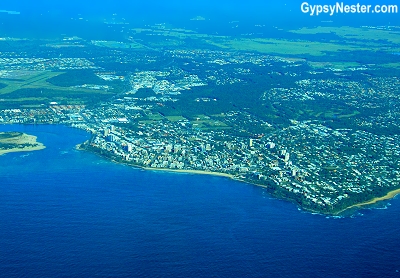
The Sunshine Coast of Queensland is most certainly not one of those places.
This stretch of Australia’s eastern seaboard is situated in the prime position on the planet to provide perfect conditions year-round…CONTINUE READING > >
In our travels we often wonder “How did this place get its name?”
The Sunshine Coast of Queensland is most certainly not one of those places.
This stretch of Australia’s eastern seaboard is situated in the prime position on the planet to provide positively perfect conditions year-round.
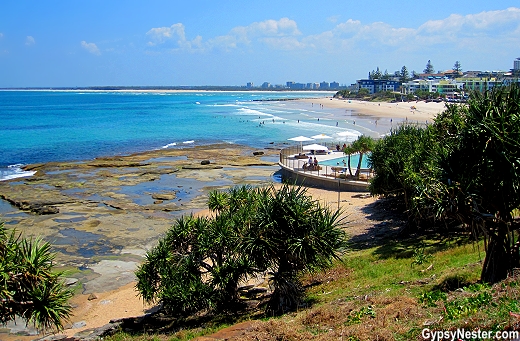
The Rumba Beach Resort in Caloundra offered the perfect beach setting for kicking back and soaking up some of those namesake rays.
We easily could have hung out for hours on our balcony overlooking Bulcock Beach and the northern tip of Bribie Island National Park, but then we would have missed the distinctive pool.
<– LOVED these rules (especially #5, 11 & 13!), but can’t fiqure out #7, 9, & 10– leave your guesses in the comment section below!
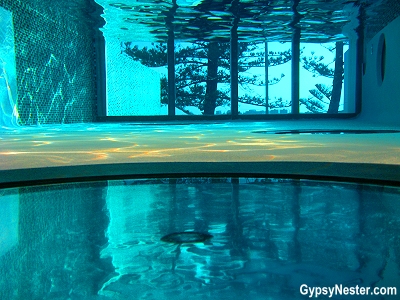
This was a swimming situation unlike any we have ever encountered.
Underwater!
A glass wall forms a window that offers an underwater view of all of the beach activities, while other windows in the floor of the pool look down into the lobby below.
It was so cool that we had to run back up to the room to get our diving masks and water-proof camera.
Sunset from our balcony at Rumba Resort as we were dressing for dinner!
Dried off and hungry, we headed a few steps up the beach to Tides Waterfront Dining to finish watching the sun set on the Pumicestone Channel with the Glasshouse Mountains in the distance.
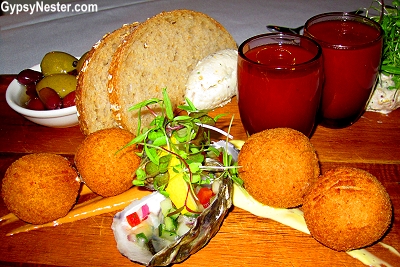
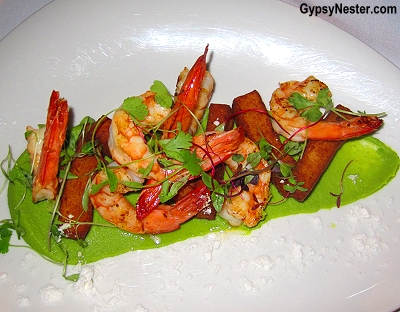
After toasting the day with a local riesling, we ordered some tapas, followed by Mooloolaba prawns, and a filet.
If any Australian had ever said “throw another shrimp on the barbie,” (which they never have because the tasty shellfish are always called prawns Down Under) they would have been talking about these bad boys from just up the coast in Mooloolaba.
These guys bypassed the bar-b-que and were served sautéed with garlic.
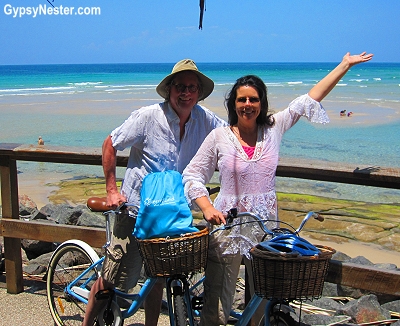
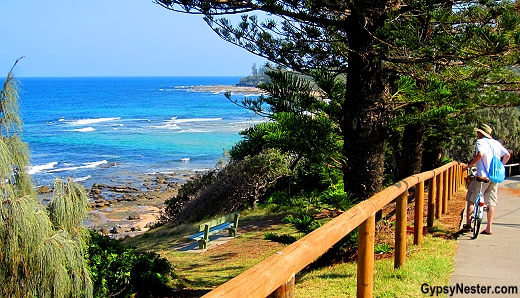
The next day, we rented bikes for a leisurely ride along the Caloundra Coastal Walk.
The walkway extends over fifteen miles along the shoreline from Golden Beach, just south of Caloundra, all the way up to Mooloolaba – home of those jammin’ prawns.
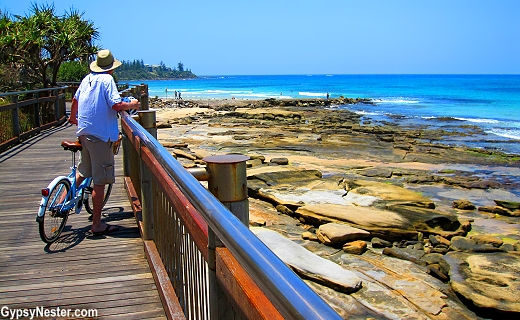
We rode the part of the trail that winds its way along the rocks of Moffat Head and through George Watson Park on our way up to Dicky Beach.
As we pedaled up from the sea and back down again, our reward for cresting each hill was a breathtaking view of the Coral Sea.
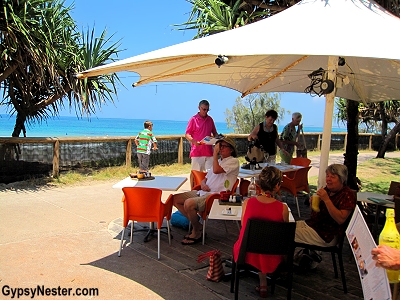
At the base of one of those hills we took a break at an aptly named seaside café, Saltwater.
Even though we grabbed a table outside, we noticed the cheeky dress code sign “no dick togs allowed.”
Once again we found ourselves confused by Aussie slang, but the sign was simply asking that men not wear their togs, otherwise known as swimmers, sluggos, budgie smugglers, cossies, lolly bags, bathers, or marble bags… all meaning swimsuits, inside.
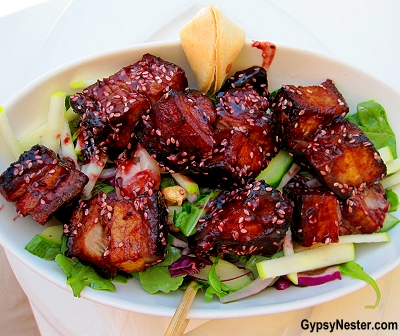
The upscale beach bar menu offered a new twist on what we had quickly discovered to be an Australian favorite (as well as one of ours), pork belly.
This is basically bacon that was never sliced.
The difference here was that Saltwater served the big hunks of deliciousness with an Asian flare, and on a salad.
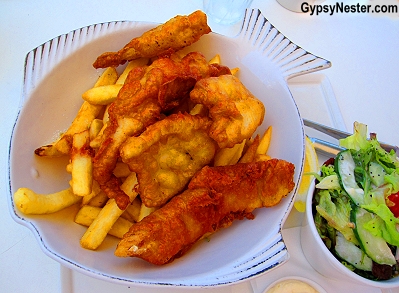
In an effort to keep either one of us from a slipping into a cholesterol induced coma, we decided to split it and share an order of traditional fish & chips too.
Usually that would offer little assistance, but luckily the fish was lightly breaded and fried to perfection, so the grease factor remained acceptably low.
We had plenty of time to work off the meal, with a good bit of riding still ahead of us to get to Dicky Beach and back.
The beach’s name has nothing to do with the previously mentioned swimwear, or any other article of clothing for that matter.
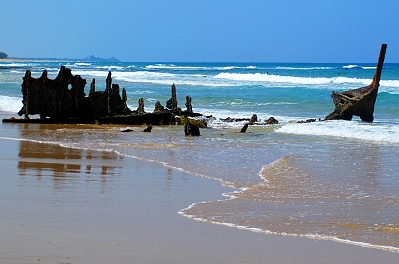
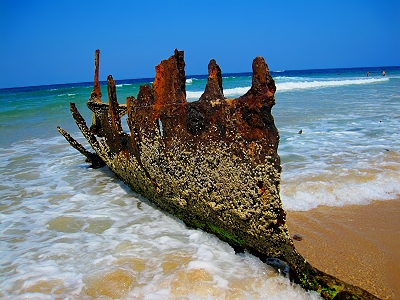
It takes the name from an old iron steamboat, the SS Dicky.
The ship ran aground during heavy seas in February of 1893.
After several efforts to refloat the SS Dicky failed, a decision was made to abandon it, which led to this becoming the only public beach in the world to be named after a shipwreck.
Our take was that it was pretty cool to explore the old hull in water that was shallow enough to stand up, which is certainly not the usual situation for a shipwreck.
Soaking up some well-earned beach time
It was also good timing on our part because plans are in the works to move the Dicky off the beach.
No final decision has been made, but the old wreck has been deemed a hazard after over a century of being battered by the surf.
The idea is to move it to a safe spot and create a memorial with a display telling the story of the steamer’s demise.
Feeling lucky to have seen the Dicky before her move to a final resting place, we climbed aboard our bikes and pedaled back down to Caloundra.
In no time at all our togs, and our throats, were dry as a dead dingo’s donger.
Not to mention we were getting a tad peckish from the ride.
No worries, the restaurant, Drift, was right below our hotel, so all we had to do was change out of our cossies and head down for a schooey of grog and a bit of tucker (better known as grub to us).
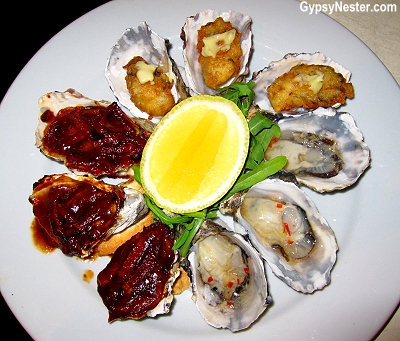
With the sea breeze blowing in, the evening’s special, oysters three ways, seemed ideal. The shell fish are found all along Australia’s coasts, so we knew they were fresh.
For a heartier second course, and in keeping with our day of Aussie slang, we opted for heapin’ helping of fancy bangers and mash. Spot on, and the perfect nightcap.
The debate between kava vs kratom has gained attention as more people look for natural ways to relax or manage pain. Both herbs have been used for centuries and offer unique benefits, but it can be confusing to figure out which one works best. Learning about where they come from and how they affect the body can help you choose the right option for your needs.
Want to know more? Keep reading to dive deeper into the differences and benefits of kava and kratom!
Exploring Kava: Origins and Effects
Kava is a drink made from the root of the kava plant, which grows in the South Pacific. It has been used for centuries in ceremonies. To make kava, the root is ground into a powder and mixed with water, creating a calming beverage.
The active ingredients in kava, called kavalactones, affect the brain’s neurotransmitters, GABA, helping you feel relaxed without affecting your thinking. Many people use it as a natural way to relax and socialize.
However, like other herbal supplements, kava should be used carefully. Drinking too much kava can harm the liver and cause other health issues. It’s important to consume it in moderation and talk to a healthcare professional before using it.
Understanding Kratom: Origins and Effects
Kratom, or Mitragyna Speciosa, is a tropical tree found in Southeast Asia. People have used its leaves for centuries by chewing them or brewing them into tea.
The leaves contain two main compounds, mitragynine and 7-hydroxy mitragynine, which affect opioid receptors in the brain. This helps with pain relief and can improve mood, making it a popular choice for those looking for natural remedies.
The effects of kratom can change depending on the strain and how much you take. Lower doses are known to be stimulating, giving users more energy, while higher doses tend to be calming and pain-relieving. However, long-term use of kratom can lead to withdrawal symptoms and dependence, so it’s important to use it carefully.
Kava vs Kratom: A Comparative Look
Kava and kratom both offer relaxation and pain relief, but their effects differ. Kava, from the South Pacific, promotes relaxation and reduces anxiety by interacting with GABA in the brain. Kratom, native to Southeast Asia, can boost energy at low doses and provide pain relief or sedation at higher doses due to compounds like Mitragynine.
Kava is consumed as a beverage, while kratom is available in powder or capsule form. Kratom is versatile, offering a range of effects depending on the dosage. Both should be used due to potential risks with long-term use.
Understanding what does kava do to the body can help users comprehend its relaxing effects and potential risks. Likewise, being aware of kratom’s diverse effects on mood and pain can guide proper usage.
Kava vs Kratom: Finding What Works for You
In the end, choosing between kava vs kratom depends on your health needs and preferences. Kava is great for relaxation and social ease, while kratom may be better for energy or pain relief. No matter which herb you pick, it’s important to use them carefully and understand their effects.
Always check with a healthcare expert before adding any new herbs to your routine. Want to learn more about how kava and kratom can work for you? Check out our blog for more helpful tips!






 It has come to embody the Costa Rican attitude that life is good, so be happy and thankful for it. Not a bad viewpoint.

 The idea of controlling the region because of its strategic position as a location for a canal linking the Atlantic and the Pacific made it irresistible to businessmen, including
 Venturing outside of the park, we encountered the first of what would be many street vendors selling fresh mango.