

Search…

Quick Tips for Successful Exam Preparation

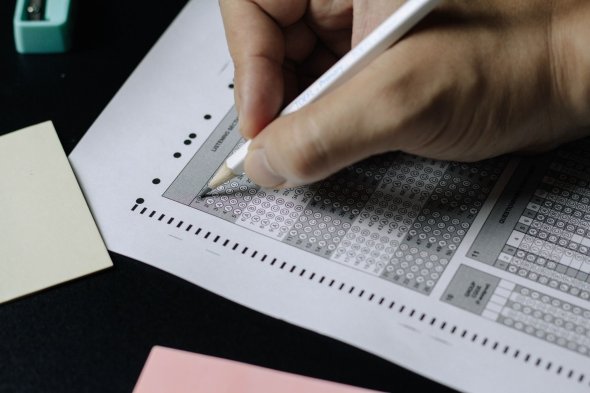
To properly prepare for an exam, it is necessary to have enough time. That’s the first thing, where we dedicate time to work on the material (read, underline, summarize or outline) and time to memorize the information.

At the same time, it is very important to review the information studied, and NEVER leave the review until the last morning or afternoon before the exam, as this will make us very nervous and will question what we know. The review must be done during the study process.

To this we must add healthy leisure activities. Not by spending more time studying we will perform better. The priority is the quality of the time dedicated, not the quantity. It will be essential to have regular sleep schedules and eat in a balanced way (you always have to have breakfast the morning before the exam), key aspects to good academic performance.

What is essential to manage the pressure, stress and/or anxiety of this exam period?

The first thing to understand is that in the face of an exam (or any situation that involves an evaluation for me) it is normal for us to be activated, in fact, this is good because it prepares us for action. If one insists on not feeling that activation (or what we normally call being nervous or anxious) the opposite happens, that is, we get even more nervous. It is essential to prepare very well for my exam, to train myself, and, as mentioned before, to sleep and eat properly, as well as to do any leisure activity that helps me to relieve pressure, for example, to practice some sport.

How can concentration be improved?

To improve concentration it is necessary to limit study time, that is, to limit what we are going to study by intervals of time, and not spend many hours working without resting. For example, set time intervals of no more than 45 minutes in a row, rest 10 minutes and do another interval. We recommend a small strategy for when you cannot concentrate well, consisting of keeping your hand busy, “if my hand is busy, my head is busy”, synthesizing or taking the main idea out of a paragraph. And if 45 minutes costs me, reduce the time to 30 minutes or even 15 minutes.

WHILE STUDYING:

– Allot the necessary study time to do all the things you need before the exam (eg, review study material, make diagrams, review the topics, etc.).

– Frequently review the material. This will increase your confidence in yourself.

– Set study goals and face them one by one so as not to saturate yourself.

– Do the reviews with the appropriate technique: read trying to memorize diagrams and summaries, write what is remembered without the material in front of it, develop the outlined topic orally or in writing, consult, if necessary, the notes or the book, ask questions such as taking a mock test, using mnemonics to memorize difficult concepts, and spacing reviews over time.

If you feel nervous, try to relax with one of the following techniques:

– Abdominal breathing. This consists of breathing slowly, completely filling the lungs from the abdomen, something that we do not usually do in normal breathing.

– Tense and relax different muscle groups. For example, tense your shoulders for a few seconds and then let them drop. Feel the sensation of relaxation that this produces and learn to identify states of tension of the muscles to relax them later.

– If recurring and distracting thoughts appear that threaten your concentration and / or self-esteem (eg, “I am going to suspend”, “I will not have time”, “I will not be able”, etc.), you can replace them with rational responses (eg, “I have the ability to pass”, “I just need to work more”, etc.), thoughts that help you manage stress (eg, “a little activation can help me”, ” I will do the best I can “, etc.) and thoughts that help you stay focused (eg,” I can answer the question if I elaborate the answer in small subsections “). If these strategies don’t work for you, write your thoughts down on paper and keep working under the “promise” that you will deal with them later.

BEFORE THE TEST:

– Check, if you have not done it before, when is the exam, place, time, and if you need any specific material for the exam.

– Be in contact with other colleagues to avoid possible mistakes.

– Arrive with enough time to sit in a place where you are comfortable.

– The night (or morning) before, prepare everything you need (pen, ID, calculator, dictionary, water bottle, chocolate bar, especially if you pass a full-day essay exam that is authored by the Indiana Board of Bar Examiner).

EXAM DAY:

– Get up early, shower, get ready, HAVE BREAKFAST, and leave with enough time to get to the faculty or school.

– Avoid those colleagues who make you nervous.

DURING THE EXAM:

Some of the relaxation techniques that you can use during the study phase can also help you during the exam. Take a couple of minutes off if you think you need to practice them. Practice abdominal breathing to regulate your activation level.

– Try to place yourself in the place that you are most comfortable / a.

– When you receive the exam, read the instructions a couple of times and organize your time efficiently.

– Start with the simplest questions, which will strengthen you and make you face the most difficult questions with greater confidence.

– Ask the teacher any doubts that arise during the exam.

– Do not rush if you see that your colleagues finish earlier, work at your own pace.

– Think before writing, draw an outline to organize the ideas and not to forget important aspects that must be dealt with.

– Write with brevity and precision, start with key concepts and develop them; if necessary, justify the answer.

– Take care of the presentation, cleanliness, order and spelling. They are essential (remember that you are not writing a message on your mobile or in the Whats App).

– Make sure you have answered the questions you wanted to answer.

– Never take a dirty test.

AFTER THE EXAM:

– Do not talk to other classmates (if this is going to harm your performance in the following exams).

– Write the exam questions that you remember or try to recognize them in your notes.

– Reward yourself with a prize.

Wonderful Ways to Make your Baby’s First Birthday Truly Special

Can you believe that the tiny bundle you brought home from the hospital is almost a year old already? One minute you cradle them safely in your arms and the next, you’re following them around the room as they crawl, bum-shuffle and even toddle from one activity to the next.

A first birthday is certainly an event that’s worth celebrating, with happy smiles, fun decorations, party games, families gathering together and plenty of meaningful gifts – to shop for cool toys for kids by age, click the link – it’s a rite of passage for every child. Unfortunately, most of us remember very little about our first ever slice of birthday cake, which makes some parents question whether or not they should go to the trouble of putting together a celebration.

However, there are plenty of ways you can make the event memorable and share these moments with your little one as they grow! Let’s explore some wonderful ways to make your baby’s first birthday truly special.

A Cake Smash

A popular trend you may have seen on social media, Smash Cakes are quickly becoming a traditional part of 1st birthday celebrations. The premise is simple, you create or purchase a colourful cake and photograph your little one smashing it and eating it to their heart’s content. For some little ones, this may be their first ever taste of sugar and confectionery, so it makes for some pretty memorable facial expressions you can catch on camera! If you’re not much of a baker, don’t worry – you could simply purchase a cake from your local supermarket or support a local cake baker and have one commissioned for you.

Create some video messages

We all know how precious family is. And as your little one grows, they may only have limited memories and time with family members who pass away before they’re grown. Creating video messages for your little one’s 1st birthday celebrations means creating memories for today and for the future. Being able to look back at the face and smile of a relative as they held them as a baby is a wonderful memory and gift they can treasure forever. Ensure everyone has a chat to the camera and says something special for your little one.

Have a professional photo shoot

Whether you do this on the day, you hire a professional photographer for the celebrations, or you head to a studio and enjoy a photoshoot, capturing your baby’s first birthday with some professional shots will make the day extra special. Having your baby wear a costume like your Marvel or DC superheroes or favorite Disney princess that you can get from Toynk will make that first birthday photoshoot more memorable. If you’re planning a cake smash, then a professional photographer could capture the moment perfectly.

Create a living memory

Living memories can grow with your child, making them an extra special way to celebrate their life today and for years to come. Consider planting a tree in your garden, a flowerbed or even growing some rose bushes for them.

Final thoughts…

However you want to celebrate your child’s 1st birthday, consider keeping it simple so you can enjoy the celebrations too.

What Kind of Visas Are Available To Visit Sri Lanka

Sri Lanka has experienced a sharp escalation in the number of positive Covid-19 cases as health professionals warned people of a new coronavirus variant that was quickly spreading across all the districts. As per the official figures, more than 50,000 new cases have been verified within the previous month. Altogether, Sri Lanka has registered 164,201 coronavirus cases in total, with 1,210 deaths reported till now.

Earlier, the Sri Lanka travel restrictions were scheduled to be raised off on May 28. However, on May 24, 2021, the Sri Lankan authorities declared that island wide travel restrictions that were to be imposed till May 28 will most likely be extended till June 7 to prevent the deadly Covid-19 pandemic from spreading any further. Hopefully, the island wide travel restrictions in Sri Lanka will be lifted, and travel will resume.

The Sri Lanka Electronic Travel Authority (ETA) has become an essential travel tool that business travelers and tourists simply love. It serves the primary objective of giving a reliable, simple, and efficient service to all those people who wish to visit Sri Lanka. And indeed, the Sri Lanka ETA has lived up to its expectations. Read this guide to learn all about the Sri Lanka ETA and the different types of Sri Lanka visas so you too can journey to Sri Lanka.

What is the Sri Lanka ETA?

The Sri Lanka ETA is an online endorsement that simply bypasses the standard visa application process. This method streamlines the process of entry for most people who want to enter Sri Lanka. It is easy to obtain the ETA online, and the processing time is also very minimal.

Most applicants can simply apply for their Sri Lanka ETA and have their authorized documents printed out the same day. This permit document explicitly serves the purpose of visiting Sri Lanka, meaning that visitors are not eligible to go beyond what they are granted to, nor can they exceed the maximum duration of stay permitted in Sri Lanka.

Who Needs a Sri Lankan Visa?

If the stay surpasses the number of days permitted or falls outside the list of activities allowed, a Sri Lanka visa might be needed. This might be a long-duration stay visa, student visa, employment visa, or a journalist visa.

These kinds of permits need to undergo a formal visa procedure and guidance from the Sri Lanka Embassy. The applicants might need to collect some relevant documents and information to apply for a Sri Lanka visa in order to complete the visa application process. This can be your employment history, visa application, passport, and financial statements.

After completing the visa application process, your Sri Lanka eVisa will be issued. You will be granted entry to Sri Lanka for a specified purpose. This specific purpose solely depends on the Sri Lankan visa category you apply for, which we will be covering next.

What is a Sri Lankan Visa?

A Sri Lankan visa is basically an authorization on a passport or another similar document that facilitates the official and authorized entry of non-Sri Lankans into Sri Lanka. The utmost aim of this visa is to regulate the duration of their stay and any other conditions governing such stay.

What are the Different Types of Sri Lankan Visas?

Altogether, four types of Sri Lankan visas can grant permission to an individual to enter the country premises and/or stay in Sri Lanka for a specified duration. Here are the four different kinds of visas you can apply for to visit Sri Lanka.

1.    Visit Visa

A visit visa is an entry visa that signifies the consent and approval of the Government of Sri Lanka for the admission of a foreign national to Sri Lanka. A visit visa includes all the relevant details of the conditions and period of their stay. Visit visas can be further divided into 2 sub-categories. They are Tourist visit visas and Business purpose visas.

●      Tourist Visit Visa

A Tourist Visit Visa is an entry permit issued to all the bonafide tourists who wish to go to Sri Lanka for excursions, vacations, relaxation, sightseeing, yoga training, or visiting relatives for a relatively short time.

●      Business Purpose Visa

A Business Purpose Visa is an entry permit that is issued to all foreign nationals who wish to go to Sri Lanka strictly for business and professional purposes. This visa is also granted for a short period.

It might be issued either for a single journey or a double journey. A Business Purpose Visa enables individuals to attend conferences, business meetings, seminars, and training sessions.

2.    Residence Visa

The next type of Sri Lankan visa is a residence visa which is an entry visa for non-Sri Lankans to acquire a residence facility for particular reasons. Altogether, the residence visa can be further divided into 8 sub-categories. Here are the residence visa sub-categories to know which eligibility category you belong to:

1)    Employment Category

    • Project Specialized employees whose services are needed for any projects that have been permitted by the expatriate and state personnel employed in projects under the Sri Lankan Board of Investment (BOI) and their dependents.
    • Volunteers
    • Employees who are working at banks and their dependents.
    • Employees who are attached to non-governmental organizations.
    • Employees who work in an institution, on a project, or in an organization under diplomatic missions in the country.
    • Employees who are working in a private firm and their dependents.

2)    Investor Category

    • People who are occupied in any sort of business activities in Sri Lanka
    • People who would like to invest their finances in Sri Lanka.

3)    Student Category

    • Students enrolled in state-approved educational institutions
    • University Students
    • Other Institutions

4)    Religious Category

    • Members of the Clergy

5)    Former Sri Lankans and their dependents

6)    Registered Indians who are protected by the 1954 Indo-Lanka Agreement

7)    Family members of a Sri Lankan

    • Spouse(s)
    • Children with a foreign nationality

8)    Resident Guest Visa Program

9)    My Dream Home Visa Program

10)   Diplomatic and Official Visa

3.     Transit Visa

The third of Sri Lanka is a Transit visa. This entry visa is issued to all foreign nationals who seek admission into Sri Lanka briefly for a few hours or so, which is incidental. This kind of visa only permits a traveler to pass through Sri Lanka without actually entering the country’s borders and is en route of their journey to another country.

4.     Gratis Visa

The holder of an Official or a Diplomatic Passport or a passport with a legal Official or Diplomatic authorization won’t be required to pay any amount for the visa.

Apply for your Sri Lanka ETA Visa Online

Submitting an online application is the initial step to getting an ETA for Sri Lanka. The applicants are requested to provide basic details like name, passport number, date of birth, home address, etc. Once the details have been provided on the application form, don’t forget to double-check it.

You cannot edit the details once the ETA visa is issued. The online form proceeds with a payment screen. After the payment has been made and captured successfully, your application form will be sent for processing. Head over to Natvisa.com to learn all about your Sri Lanka ETA.

Receiving the ETA

Once your Sri Lanka ETA gets approved, a consent email will be sent out. This will comprise all the details on your ETA, including your approval number. Print this document and keep it along with your passport.

You will be asked to show the ETA document upon your arrival to Sri Lanka. You will also be able to download your Sri Lanka ETA from your Natvisa dashboard, which will automatically be generated after you purchase the ETA.

Emotional Support Animals Will Support You During Tough Times

What is an emotional support animal (ESA)? In what cases is it used? Can any animal be considered emotionally supportive?

It is well known that pets or companion animals benefit the psychological and behavioral part of people, help fight depression, reduce stress, fear, anguish, strengthen self-esteem, avoid the feeling of loneliness. They also increase and improve the sense of responsibility, help create routines, organize people’s schedules, and motivate them to do physical activity.

What is an ESA?

It is an abbreviation that the United States housing and aeronautical authorities created to allow companion animals to travel in the cabin, and not be considered as pets when acquiring a home or to accompany their owners or guardians in spaces such as offices, colleges, or universities.

Emotional support animals are animals that help people overcome fear, anxiety, or trauma, providing therapeutic support to their owners through affection and company. They are part of the psychological, psychiatric, or medical treatment of patients.

They differ from service animals that help people with disabilities such as guide dogs, sound-detecting dogs, or conditions such as epilepsy, among others.

Unlike service animals that help people with different disabilities and must remain close to the human being they assist, those who provide emotional support do not necessarily have to be admitted in all spaces.

Who needs them?

They are recommended for people who have recurring episodes of fear, panic, anxiety, or phobias. Also, in cases of post-traumatic stress, since they have the power to make the owners feel better in case of presenting an adverse situation.

How to prove it?

ESA laws require you to have a prescription from a doctor, psychologist, or psychiatrist to certify an Emotional Support Animal. They evaluate the situation of the person and the benefits that the animal will bring to the psychological or emotional condition through techniques endorsed by the medical-scientific community.

In addition to this certificate, the animal needs to be trained in basic obedience so that it does not represent a danger to other people, knows how to behave in public, and responds easily and quickly to the orders indicated.

Legal documentation must:
    • Be written on a letterhead by the professional.
    • Have the original signature of the health professional with the registration number. Any false information or impersonation is considered a crime.
    • Contain the professional’s contact information: telephone, address, etc.
    • Certification of the physical or psychological condition for which emotional support is needed, as well as confirmation that said condition prevents the performance of significant vital activities such as being in public spaces, socializing, traveling by plane, among others.
    • A statement that the emotional support animal is part of the treatment.
    • It is always recommended to specify the name, species, breed, and age of the animal.

How do you travel with an emotional support animal?

To travel, you must check in advance with the airlines, transport companies, or other spaces, as some require notification of this condition at least 48 hours before the trip. In addition, fill out forms and report the carrying of items such as a leash, muzzle, and toilet.

It is recommended to carry the certificate issued by the health professional, and the basic training certificate, a No regulation specifies, and a veterinary medical certificate that guarantees the health conditions of the animal to make the trip. These may be required at the time of purchasing the tickets and at the time of travel.

There is no regulation that specifies that emotional support animals must be identified in any way, beyond the aforementioned documentation; however, ideally, the owner should identify them with a collar, harness, or special tag.

In the United States, emotional support animals can travel freely in any type of transport with their owner, without breed, size, or weight limitations, and additionally, travel free on some airlines. They do not require crates or other types of transport cages.

The most recommended breeds

Any animal, regardless of its species, can be considered emotionally supportive. There are ideal breeds for this work because they are intelligent, empathetic, balanced, and intuitive such as golden retrievers, labrador retrievers, german shepherds, corgi, and poodles. They can be any size and should be close to their guardian.


Litigation and its Important Parts

Litigation indicates the existence of a legal dispute between two parties (natural or legal persons) arising from the incompatibility of interests between them: it is resolved through legal procedures that involve lawyers and judges.

Definition of litigation

To understand what litigation is (also called legal conflict), let’s simply imagine a situation in which a natural or legal person tries to condition another through some act or omission.

In this scenario, there are two factors: the party that wants to impose or condition, and the party that claims its rights: a conflict of interest is taken for granted and verified, with the consequent potential damage for both parties.

A satisfactory outcome can’t emerge from this dispute, so the only way to solve it is to go to the relevant justice bodies, where a judge will apply the law to rule in favor of one party or another or to apply a sentence as fairest possible.

To proceed in this way, both parties must have proper legal representation in the person of lawyers who present the causes of the dispute in front of the court, and provide evidence that can tip the balance of justice in one direction or another.

Concept of legitimacy

The reason why the parties involved in litigation decide to undertake this process to defend their interests is that they firmly believe in the legitimacy of their claims or, at least, that is how they intend to prove it.

It is said that something is legitimate when it is protected by law: thus, a legitimate person can claim his rights before the judicial authority when he acts as a plaintiff.

Elements of a dispute

    • The disputed points

They are the constituent object of the dispute between both parties: it must be verified that there is a legal conflict on one or more specific aspects, in such a way that the judicial procedure will exclusively affect the object of the dispute.

    • The parts

The parties (or litigants) refer to the subjects who present conflicting positions or claims. In general, disputes are made up of two parties, but it may be the case that there are several parties that conflict with one another, and this fact is known as joint litigation.

    • Contradictory claims

They are, in themselves, the positions that the parties defend to justify their position: they comprise the set of reasons that each party argues to claim their rights.

    • The judicial authority

It comprises the body of justice in charge of conducting the litigation procedure, which is the judge or court that has attributed the powers over the case (courts of the first instance, investigation, among others).

    • The judicial process

It refers to the procedural aspects that determine how the litigation has to be carried out: depending on the nature of the litigation, they will be included in one or another legal regulation.

    • Тhe legal discovery process

Тhe legal discovery process is a formal process for the exchange of information between parties about witnesses and the evidence that will be presented at trial. This allows the parties to know, before the start of the trial, what evidence can be presented.

information between the parties about the witnesses and evidence

    • Litis in law

The Litis concept is a legal technicality used for the parties (litigants) to formalize their claim before the relevant courts and consists of three distinct phases: what happens before, during, and after litigation.

    • Litis lock

The barrier to litigation are the procedures that are given before the litigation ends in the courts: the demand is drawn up and it is sent to the defendant, who has a period (usually short) to answer.

    • Litisconsorcio

Joint litigation occurs once the claim has been filed, as long as an indication of several litigants in the process is accredited: joint litigation cannot be applied in cases of individual litigants.

The joint litigation proceeds when several parties litigate among themselves, distinguishing between the active joint litigation (plurality of plaintiffs) and the passive joint litigation (plurality of defendants); If the plurality is credited in both parts, we are facing mixed consortium litigation.

    • Lis pendens

When litigation does not end with a final judgment, a legal effect called lis pendens (pending litigation) is created; it is used as an exceptional measure that postpones the discussion of the case in the future.

In addition, the lis pendens originates that another procedure cannot be initiated in a different court for the same conflict because it is already being resolved in another court.

If a final judgment falls on the litigation and its resolution is issued, it is given as a finalized procedure (res judicata), and such conflict cannot be brought to trial again.

In a hypothetical scenario of repetition of the same litigation with the same litigants as protagonists, the defendant can appeal for this legal effect: in this case, the judge will have to dictate an act of dismissal, which renders the claim ineffective and prevents the holding. of the oral trial.

Andrew Bailey, the Bank of England Governor on Bitcoin

When the world is following Bitcoin, we hear a number of digital currencies are coming under their notice. One can see a wide range of things happening in this domain, and many more players are now coming into this domain and watching things in the right direction. Now, we see Andrew Bailey, who happens to be the governor of the Bank of England, was seen doing things the best. He has been critical about Bitcoin, and many more people are seen coming along invoice against them to say that they are going in the right direction, but he says that it has to come along in the right direction with the best of the care in order to reap the best at the end of the day. He claims that Bitcoin has no intrinsic value, and thus he does not retain intrinsic value in the market.

Ever since he was appointed as the governor of the Bank in 2017, he has remained active in this domain and has been speaking a lot about Bitcoin. He has known bitcoin in the recent past, and now people are seen coming along with it. He went on to say that Bitcoin is also extrinsic value as well. Thus you need to deal with the coin in a conscious way. Bailey has been talking a lot about bitcoin, and so is the case with the criticism that is seen getting repeated in a single statement as seen in December. While talking about the same, he said that if you are willing to invest in this domain, you need to prepare for the same. He said one might even lose and earn money as well, and that would come like a serious kind of warning. Exploring Bitcoin prices can give you some answers about it.

He said that bitcoin being volatile in nature is creating all problems that would give you a serious kind of warning. Early in 2020, we have seen the governor again talking about the same by putting across the position of the digital coin that seems to be caught on the right track along with giving away a number of comments as seen lagging behind the intrinsic value, and perhaps it is the possibility for the investors that would help in losing their money. His statement came from the perspective of the volatility of the Cryptocurrency domain. The central Bank further talked about the way things are going ahead in this market and that they would be bluntly saying that things should get in the right direction. He further said that currency and digital money are two different things and that it has to be understood in two different ways.

He further went on to say that since the two terms are different and they do not club again, the Bank has to come along with the announcement in the launching of the task force that deals with the opportunities and the risks that are linked with the central Bank and their digital currency as seen in the previous month. Last month, you were required to get things decided as per the digital pound and the way they would be looking ahead of time. He further said that it is tough to predict the way bitcoin is going to perform in the coming days. Although it did witness a good surge at the moment, the volatile nature of the coin makes all the difference.

One can find bitcoin to be stabilized in such a manner that the Tesla boss was seen coming up with the idea of allowing his customers to procure the vehicles by paying him in bitcoin. All thanks to his investment of whopping cost that made him worry about the same. We see the digital currency in a tough position, and the kind of narrative as seen in the market seems to have come along with the right kind of support to the room. Bitcoin can be called the most stable one when we talk about the bruising effects of the same, and the comments of the company seem to have come along in the right way. Well, let’s see how things are moving, but at the moment, things are not in the right shape.

How to Choose a Lawyer

Meet and talk to the lawyer. Between the lawyer and the client, there must be a mutual understanding: without this, nothing works even with the most experienced professional…
CONTINUE READING >> 

Before making a choice in favor of this or that lawyer, we recommend:

Check whether the lawyer is a lawyer. The lawyer should also have a certificate and be registered somewhere – in the bar association, bureau, office, or legal advice.

To learn about his specialization, experience, recommendations from clients and colleagues. Lawyers, as most professionals like alimony lawyers, have a division by specialization – someone takes on only murder, someone is well versed in drug disputes, someone prefers to protect fraudsters. It is good if you can find a lawyer who has the appropriate specialization, such as wrongful termination lawyers in Kansas City, MO. It is even better if he has a lot of experience and good recommendations. You can clarify this with the lawyer himself, or you can study his professional path through the Internet. You should be wary if there will be no information about the defender.

Meet and talk to the lawyer. On the phone or by correspondence, even if there are recommendations, the full impression of his future attorney will not make. Between the lawyer and the client, there must be a mutual understanding: without this, nothing works even with the most experienced professional. During the conversation and the discussion of the assignment, it is necessary to discuss in detail the technology of future work, the necessary organizational steps, deadlines for them, the documents that will have to be submitted to the client and will be prepared in the process of work, and the state bodies with which the interaction will be carried out.

How to understand that your lawyer is incompetent?

After the conclusion of the contract, a good lawyer periodically informs the client about the progress of the case, takes the necessary steps in a timely manner and agrees on them in advance, does not avoid meetings, answers to all emerging issues in an exhaustive manner. A lack of such action on the part of the chosen counsel is an obvious cause for concern. Understanding that the lawyer is incompetent, can also be seen in the reaction of the court to his work. If the documents that the lawyer prepares are systematically rejected by the court, read the texts of the relevant judicial acts. It usually does not require special legal knowledge to understand whether a document is rejected because the court has taken a different point of view from several possible ones (this does not indicate the lawyer’s unprofessionalism), or because the lawyer made a mistake (for example, the complaint was filed with the wrong court or body, or with a violation of the procedural deadline, or without the necessary set of documents). It is also not difficult to identify the lawyer who wants to enrich himself at your expense. If you do not understand what he does and why, and at the same time you cannot get intelligible explanations or do not see his work at all (for example, no one shows up for the trial), decide about further cooperation with such a lawyer.

We are happy to present this collaborative post to offer valuable information to our readers.

Delve Deeper: Tags