
Search…

Best Scuba Diving Destination: Hawaii?

Hawaii Scuba Diving

There’s plenty of reasons to go and visit Hawaii, from its beautiful beaches to the stunning scenery further inland and the chance to get away from it and relax in a tropical paradise. But it’s also a must-see for what lies below the waves that lap on the sandy shores. Hawaii might be a surfer’s paradise but it’s also an ideal location for an amazing scuba vacation.

Why’s Hawaii a great place to go scuba diving? It’s because of its volcanic origins which don’t just make it fascinating place to visit on land but also underwater, with volcanic craters and caverns formed out of collapsed lava tubes offering great spaces to explore as well as get up close and personal with some of the fascinating and colorful marine life that calls Hawaii’s shores its home.

From Galapagos sharks to sea turtles, tiger sharks, white tip reef sharks, migrating humpback whales, eagle rays, manta rays, monk seals, green sea turtles, black tip sharks, dolphins and much more, Hawaii’s waters are full of incredible sights. So while it’s over five hours on a plane from LA to get to America’s 50th state, if you’re as obsessed with diving as me, it’ll be worth it.

Going the distance to get the best dives doesn’t stop when you land in Hawaii either as I found out on my 40 minute boat ride to the Molokini Backwall. It’s part of a volcanic crater and goes more than 300 feet down (and 200 feet up above sea level), making it a stunning attraction even if the diving wasn’t up to much.

Getting down below the surface and you’ll see reef sharks (black tip, white tip, gray, take your pick), dolphins, manta rays and sea turtles and you could even hear humpback whales at the right time of year. Molokini Wall isn’t for beginners, it’s a drift dive that needs some experience but it’s one of the most dramatic dives around, especially on the vertical drop-off on the backside of the wall.

Dive in Hawaii

Another great drift dive that isn’t for the faint-hearted is Moloka’i, especially as it gives you the chance to see hammerhead sharks and even the very rarely spotted Hawaiian monk seals. There’s several sites to explore here, with names like Fish Bowl and Fish Rain, plus the equally imaginative Hole in the Wall (named after a hole… in a wall). They’re not easy to get into at times, but the colorful corals and butterfly fish make it worth the effort.

It’s not just natural splendor and aquatic beauty that I was here to see of course. Diving also gives you the chance to explore the past too and O’ahu is a great part of Hawaii for exploring wrecks.

One of the coolest is called Landing Craft Unit (L.C.U.) and it’s amazing because it ended up sinking upside down, making it a fairly unique experience. It’s said you can even see fish swimming upside down, I guess they tell which way up it’s meant to be?

Another classic wreck is the Mahi, a former US Navy minesweeper that was sunk on purpose as part of a project to create an artificial reef. It’s huge and is home to a great barracuda, reef fish, eels, sharks and much more. Other awesome wrecks include the San Pedro and YO 257 as well as a sunken Corsair airplane, which crashed and sank in 1946. It’s actually the only wreck on Oahu that happened as an accident.

Hawaii Diving with Sharks

Diving with sharks in Hawaii is an experience you can’t miss and one of the coolest places to do it is around the Cathedrals in Lana’i, a series of caverns that offer simply stunning conditions to dive on a sunny day. Gaps in the cavern ceilings let the light get in, illuminating them and creating hauntingly beautiful scenery like nothing I’ve seen before on a dive. It’s no wonder they’re named after religious buildings.

Elsewhere, there’s the Au’au crater which has the perfect name for an experience with sharks (‘ow, ow’, get it?) and it’s one of the best places in Hawaii to see them. I got lucky on my dive, getting to see oceanic whitetips, large jacks and hammerheads, as well as some sea turtles, while there was plenty of sealife on the walls around the crater, including nudibranches.

Flying to Hawaii

First things first, if you’re travelling from the UK, there’s no way to go direct to Hawaii. You can expect at least one stop but often two, depending which airline you travel with and how much you want to pay. Based on my experiences, there’s a good chance you’ll be spending some random time somewhere like Denmark or Canada en route to Hawaii, as crazy as that sounds.

When you get here, what if you’re not an experienced scuba diver?

Luckily, Hawaii has some great options for you too, starting right at the airport itself. Well, not the real airport. The old one. It’s called Old Kona Airport and it’s been turned into a recreation area, including a dive site where you can even have a great time snorkeling and still see a load of colorful fish. Beginner divers can see eagle rays, lionfish, eels and even the odd octopus if you go exploring the caverns and lava tubes.

Hawaii Dive Resorts

Unsurprisingly, there’s plenty of dive resorts in Hawaii with most of the big chain hotels offering dive packages, so you’ve got your pick of where to go, based not only on where you want to dive but (obviously) what’s going on back on dry land.

If you’re staying in Maui, you have to check out Black Rock, which is one of the best dive sites in the whole state. It’s also popular with snorkelers because there’s just so much marine life to be seen including sea turtles, rays and monk seals, but the diving is excellent too.

It’s actually part of the Sheraton resort, so be aware that you’ll need to go through that to get to the site. If you are visiting Maui, and interested to take Diving classes, we recommend In2Scuba Diving’s Maui Scuba Diving beginner classes.

Best Diving Hawaii

I’ve covered most of the best diving experiences you can have in Hawaii and each of them offers something unique and interesting so I’d recommend you give as many of them as you can a try. Of course, some are definitely for more experienced divers, like the awesomely named Suck ‘em Up Lava Tube, which is called that because it can actually suck you out of the cavern through the exit when the surge is right. It’s a hell of a thrill as long as you’re not new at this.

Another rare experience can be found in Kona at the manta ray night dive, where you can see potentially hundreds of rays feeding at the same time under the cover of darkness, swimming all around you as they do it. The dive organisers are so confident you’ll see them that if they don’t show up, you get offered a second trip for free to try again.

That’s the beauty of diving in Hawaii. There’s just so much of it that you’re bound to see something incredible and spectacular and sometimes if you don’t, you’ll get another go! Plus, you’re in Hawaii and there’s plenty of other sights and attractions to enjoy on dry land

Scuba Diving In Hawaii – Know Before You Go

Hawaii Water Temperature

You’re never likely to get too cold in the waters around Hawaii, with winter temperatures around 77 degrees and summer temperatures getting to around 82 degrees

Best Time to Dive Hawaii

Spring and fall/autumn are the best times to dive in Hawaii because it’s the low season with fewer tourists, calmer waters and better visibility.

Currency in Hawaii

As you’d expect from the 50th state of the USA, it’s the American dollar here.

Entry Requirements for Hawaii

All international visitors, regardless of country of origin, must present a valid passport or secure document when entering the United States, including Hawaii. You’ll also need prior authorization through a visa to enter the country.

Electricity in Hawaii

You’ll need your US two-pin plug adaptors here if you want to plug in any of your devices.

Common Bike Brake Problems and How to Solve Them?

Cycling brings calm and peace to fitness enthusiasts. Without maintenance, however, even a bicycle will come to a disturbing halt. There might be an issue with wiring, paddles, or brakes from time to time.

However, learn the problems and their solutions related to different types of bike brakes and other functionalities. This will make your journey on your favorite bicycle bikes better and smooth.

At least you won’t feel left out anywhere for no one to approach. Instead, with the proper knowledge, you know what to do.

Also, you get better at taking care of your bikes before going on for that amazingly super-charging ride of the day.

Common bike problems to tackle:

Brake pads stop engaging or moving

Something is wrong when you’re tugging the existing brake lever, and you see that the brake pads do not engage with the rim surface. It means the cable of this brake now has extra slack.

This could be due to the depreciating factor of the bike. It often happens after the incorrect assembly of wires or nonprofessional replacement of a tire or a tube. The disc-shaped cable end comes to use here, which connects the brake lever to the cable. At times, the cable loosely connects to the brake lever during assembly. So, the fix is simple: you tighten the disc-shaped cable end with the lever of your bike’s brake.

Noodle causing slack in the brake lever

If the cable isn’t the issue for brake pads to work inefficiently, it must be the noodle. If it isn’t correctly helmed over the brake channel, it causes slack. This further discourages the brake pads from engaging.

The brake system must be tightly looped in. Thus, sit this noodle on the brake arm properly and firmly. You can use your DIY tools to tighten this noodle.

Brake is squealing

This is the most common problem in the v-brakes of conventional bicycle bikes. This indicates that your bike brake is corrupted with contamination or any other dirt material/particle.

The best fix to such a problem is to clean your bike’s brake pads and rims. Make sure no debris is left at any corner of the brake system.

There are many degreasers available online that you can use to remove the dirt and gravel chunks from different nooks of your bike’s precious brake channel and system.

Brakes are rubbing

This means your bike’s brake pads consistently touch and rub against the rim surface. This shouldn’t happen when you don’t need them to touch the surface. Otherwise, riding the bike at its normal speed is challenging, even on a typical terrain.

Besides slowing the speed, premature rubbing can cause pads to tear, which causes further damage and nuisance to the rim surface.

The best fix here is to install pads and rims properly into the bike. You can go to the best technician or mechanic nearby. Let them solve this issue for you. If you’re planning to participate in a race or burn some calories using your bike, address this issue proactively.

Maligned wheel

Sometimes, a maligned wheel can also cause these premature brake rubs. The best solution here is to check the entire bike by an expert technician or mechanic in your locality.

When your bike’s wheel wobbles here and there without giving you control, know that it is disrupted and needs better assembly. A maligned wheel can cause accidents on the road as you lose the sense of direction while trying to wheel your bike onto a particular route.

The best fix here is to set the axle right on which the wheel moves. There is a quick release on your bike. Loosen it first to set the axle angle. Once you’re sure of the axle on the drop-outs, re-tighten your precious bike’s aforesaid, quick release.

This malign wheel will now be resolved. It also helps in tackling the previous problem of premature brake rubs. Give this wheel a spin to test the assembly and your DIY tactics. Check if it is still wobbling around.

If it, the best option here is to go to the mechanic nearby to avoid causing heavy or severe accidents on the road. It is for everyone’s safety, including yours, while riding the bike.

4 Reasons to Travel if You’re Over 50

Anyone over fifty should pay attention to this list and see if they might want to make travel plans before more time passes…
CONTINUE READING >> 

Some people feel like you should travel at any age. Maybe you agree with that, or perhaps you don’t. In any event, you might find that traveling when you hit fifty and over appeals to you more than traveling when you’re younger.

We’ll talk about reasons for that right now. Anyone over fifty should pay attention to this list and see if you feel the same way. If you do, you might want to make travel plans before more time passes.

It Gives You a Chance to Bond with a New Partner

At age fifty or over, maybe you divorce your spouse or separate from them. Many marriages end eventually, and you may want to find someone new with whom you can spend your golden years. You might also have widower status if you’ve already outlived a spouse.

If you meet someone using a dating app or website, as often happens these days, you should vet them thoroughly before you trust them. You can check on people by using a site like information.com. You simply put in a first and last name, and the tool goes to work.

If you know more about this person, such as their phone number, email address, or mailing address, you should get back a more complete report. This way, you’ll know about their marital status, criminal background, and other details that might lead you to break things off or allow yourself to grow closer to this new flame.

Assuming you decide to stay with this person after the background check, you can travel with them to get to know them better. In exotic locations, you can eat meals with them, enjoy cocktails, go for long walks, and find out a lot more than you otherwise might.

Traveling with someone forces you to confront the unexpected with them sometimes. You might choose to do so if you want to quickly fast-forward the relationship to a later stage.

You Can See Some Places on Your Bucket List

You probably know that “bucket list” means things you want to do before you kick the bucket. It’s a morbid term, but you know that if you reach age fifty or older, you have limited time to do the things you still want to cross off that list.

After age fifty, if you still want to see a place like Hawaii, Tokyo, Scotland, or Mexico City, you know you need to do it sooner rather than later. You want to check out these places while you still have the motivation.

If you start crossing places off your bucket list, it might motivate you to do other things on there as well. Maybe you’ll do something daring like skydiving if traveling awakens your adventurous spirit.

You Can Probably Travel in Style

If you travel after age fifty, you can probably do so in style, which you likely couldn’t do in your younger days. At age fifty, maybe you have some disposable income you didn’t have when you traveled in your twenties.

You might have some high-end credit cards you can use to eat in fancy restaurants. You may afford first class when you fly somewhere. You can shop in expensive boutiques you’d never bother entering as a younger person.

Age does not guarantee wealth, but more people accumulate money as they age. If you have that money to spend, why not take some of it traveling with you and live the high life for a few days, even if you can’t afford it all the time?

You Can Broaden Your Horizons

You might want to travel after age fifty because you feel like you’ve reached a stagnant period. Maybe you wanted to travel and see some places at a younger age, but you never got those opportunities. You know that when you travel, you’ll likely meet people from different cultures. You’ll see populations living places and doing things entirely apart from your daily existence.

You might want to see those things at this point. It’s easy to stay stuck inside your own head if you’ve lived in the same city for your whole life and you’ve rarely talked to anyone with a conflicting viewpoint from yours.

You’ll likely find all that when you travel as an older adult. You’ll learn some new customs and see some sights that you can take back with you to your set routine. You might find that with an alternate perspective, you’ll feel differently about your entire existence.

We are happy to present this collaborative post to offer valuable information to our readers.

A Whirlwind Two-wheeled Tour of St. Barths

There is something quite magical about waking up with the sun while island hopping across the Caribbean. Cruising into Saint Barths for our first ever view of this renowned playground for celebrities and tycoons was no exception… CONTINUE READING >> 

There is something quite magical about waking up with the sun while island hopping across the Caribbean. Cruising into Saint Barths for our first ever view of this renowned playground for celebrities and tycoons was no exception.

Perhaps Columbus felt the same when he first sailed here in 1493 and named the island St. Barthélemy, after his brother Bartoloméo.

The port at the main town and capital, Gustavia, is pretty little so there was not enough room for even a smaller expedition sized ship such as Viking Octantis to dock.

That meant we would stay in the harbor and take the tender boats in to shore. On the bright side, that gave us a chance to get a close up look at some of the yachts of the rich and famous that are always abundant here.

In keeping with our good ole Gypsynester motto “the plan is no plans,” we had very little idea of what to expect as we came ashore. Our rough outline was to find a scooter to rent and then go off half cocked and barnstorm as much of the island as we possibly could in one day.

After a brief walk through the town and poking our heads into a few of the incredibly high-end shops, we found our rental place. With some instructions under our belts, and a giant deposit charged to our credit card (about $2,000 or basically the value of the scooter) in lieu of insurance, we were off.
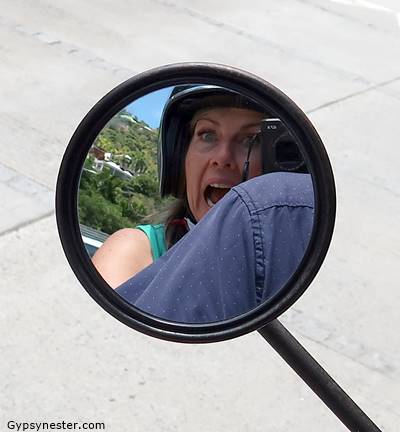
Right from the start we instantly realized that by far the biggest challenge for this bonkers adventure would be the incredibly steep hills.

Turns out that there is almost no flat ground on this little isle so even leaving the rental place to get back to the main road became quite an undertaking.

After a few minutes we got more comfortable with riding and settled in for some exploration. From town we headed to the east end of the island for a look at the salt ponds and some superb scenic overlooks.
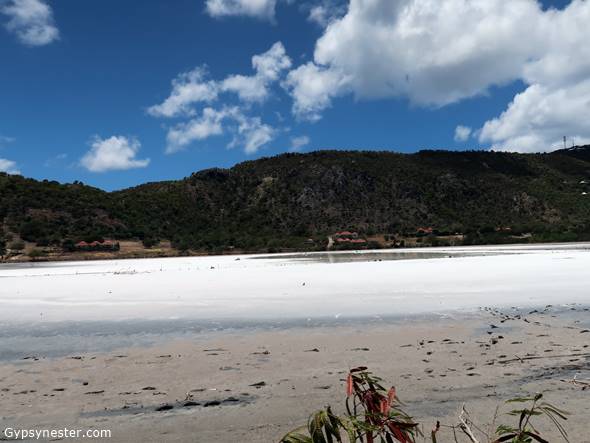
The salt pond, known as Grande Saline, was a source of salt for use and trade going all the way back to the native Arawak and Taíno people, who named the island Ouanalao, meaning Land of Salt. The salt was commercially produced until 1972, but now it simply covers the ground in a bright white layer as the water evaporates.

Leaving the salt behind we crested a ridge and an amazing panorama of Grand Fond spread out before us. This huge bay opens out to the south with practically perfect views of the Caribbean.
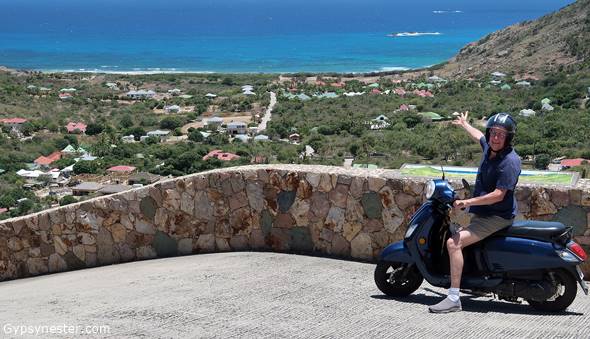
After stopping to take it all in for a few minutes, we followed the road down and along the beach before climbing back up and crossing over to the north side of the island.

This brought us to the neighborhood of Lorient and since we were beginning to get a little hungry we stopped off to pick up a very simple, traditional French picnic at a local market. With our bread, cheese, fruit, and of course a spot of wine we were ready for St. Barth’s most popular and wildly entertaining beach, Saint-Jean.

The reason for that, other than the fact that is is an absolutely gorgeous beach, is that one of the wildest airstrips ever ends right at the sand. The Gustaf III Airport is well known, especially among pilots, as one of the world’s most dangerous.
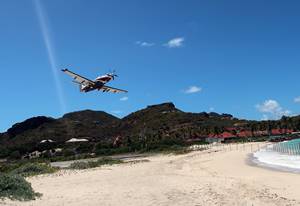
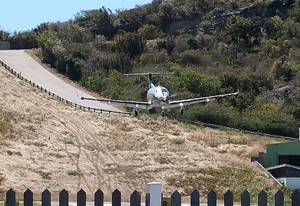
Landing aircraft must drop down just a few feet above a small gap in the hills at Col de la Tourmente and then smash the brakes to stop on this less than a half mile of runway. If they over shoot, they end up in the ocean.

That’s why a special certificate is required for pilots to be allowed to use the airport. But for beach goers like us, it was a gas watching the planes come and go with so little room for error. We sat for quite some time leisurely snacking on our lunch and checking out the show until it was time to go and turn in our scooter.
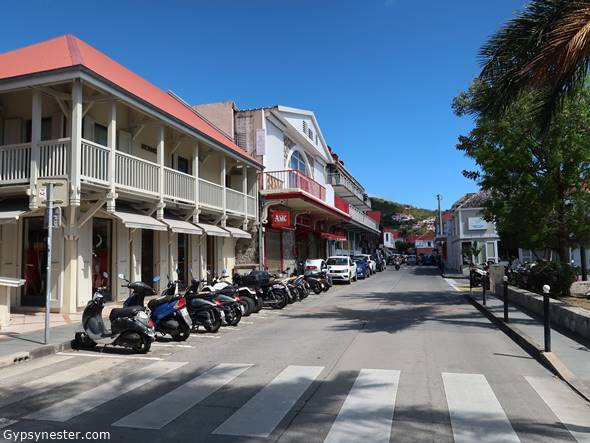
Once we returned our trusty steed I noticed that I had blisters on both thumbs from squeezing the brakes so hard. Yup, those were some steep hills!

David & Veronica, GypsyNester.com

Thanks to Viking Cruises for inviting us along and providing this adventure! As always, all opinions are our own.
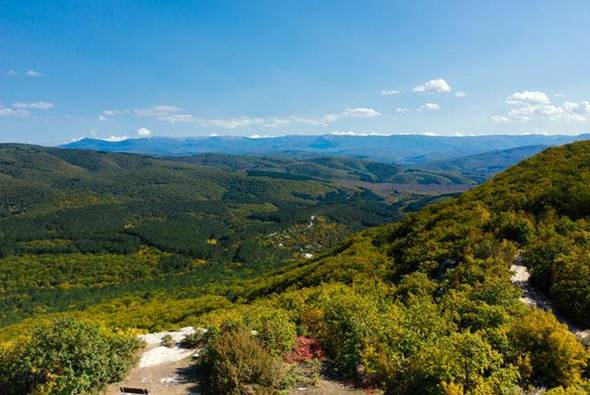
6 Great Things to Do in the Tamar Valley

From the incredible wines to the pristine beaches and all the yummy meals you’ll have along the way, the Tamar Valley has something for everyone… CONTINUE READING >> 

There’s a lot you can do in the Tamar Valley. In fact, you’ll be spoiled for choice when you visit this place. The natural beauty of this area is stunning. If you prefer the great outdoors far away from dry land, the Tamar Valley’s three rivers create a host of cool escapades you can enjoy.

Discover what you can explore when you come for your next adventure.

1. Try Tamar Valley Wines

If you like wine, the Tamar Valley is the best place to visit. The Tamar Valley region boasts the cleanest and most carbon-friendly category of wines.

Many internationally recognized and award-winning cellars and wineries are right here waiting for you. If you consider yourself a connoisseur of wines, you can’t miss out on this opportunity to visit a top spot for vino.

2. Visit the Lavender House

We all know perfumes smell good, but have you watched how they are manufactured? If not, you can visit the Lavender House and observe the manufacturing process through the glass. You’ll feel the aroma and see the over 70 different lavender species used in making perfumes.

In the end, you’ll get an opportunity to sample the perfumes and their additional products, including:

    • Body-care products

    • Toiletries

    • Natural remedies

    • Soaps

3. Enjoy the Tamar Valley Outdoors

Why should you drive when you can bike or walk around the Tamar Valley and enjoy what nature offers? For example, the Island Wetlands of Tamar are teeming with islands and bird life, and you can spend a whole day watching them. With so many walks to enjoy here, you’ll never want to go back to your hotel room.

4. Fishing in the Valley

The valley has the longest navigable estuary in Australia, making it an excellent spot for fishing in the country. If you’re a fishing enthusiast, you may have just found your paradise.

Depending on the season, you can hook into Australian salmon, mackerel, tailor, or kingfish. The estuary is also home to other fish species like whiting, flathead, and big snapper.

5. Food

We raved about the islands’ wines, but if you’re not pairing them with the local food, you’re missing out.

The Tamar Valley has over 60 food operators, including farm producers, wholesalers, and gourmet outlets. Many resale shops in this valley offer all types of food you can think of. To make life more comfortable, you’ll find cellar doors, restaurants, hotels, cafes, and bakeries, all offering the best products of Tamar.

If you like combining food and wine, you can visit the many joints in the Tamar Valley that sell both.

6. Tamar Beaches

Tasmania is home to some of the most gorgeous beaches you’ll see in your lifetime, and they’re not to be missed.

These beaches have all the features you might want for your day out by the water. For example, the pebble-styled Gravelly Beach in Tamar Valley has water closets, picnic areas, shops, and even fishing pontoons.

And with its cooler beaches, you won’t feel like you’re burning to a crisp!

See the Tamar Valley for Yourself!

The above list is by no means exhaustive. There are many other things you can enjoy in the Tamar Valley, and they’re just waiting for you. Once you make your first trip, you’ll feel like visiting the valley over and over again because the first visit will never be enough.

From the incredible wines to the pristine beaches and all the yummy meals you’ll have along the way, the Tamar Valley has something for everyone. So whether you go for the incredible fishing or just the lovely strolls in nature, you’ll find something you can’t ever forget.

We are happy to present this collaborative post to offer valuable information to our readers.

Traveling Checklist for Your Golden Years

Retirement can be an excellent opportunity for traveling and having new experiences! Using these tips as a checklist can set you up for success and help you get the most out of your trip… CONTINUE READING >> 

You’ve finally made it to retirement and are ready to travel! But how do you prepare? Like most people, you want to travel efficiently to ensure you can enjoy your trips to the fullest. It can be overwhelming knowing where to start when planning for travel. So, here is a traveling checklist for your Golden Years!

1. Health Insurance

Before traveling, it can be a good idea to check how your health insurance will cover you if needed. Although you may not need to utilize your insurance, it’s good to be prepared just in case, especially if you’ll be traveling out of state or internationally.

Like many people in retirement, you’ll likely have Medicare insurance. In this case, you’ll want to know what kind of plans you have. With Medicare, the type of plan you have determines how you are covered throughout and outside of the U.S. That’s why, to prepare for Medicare, you should carefully select your plan if you expect to travel frequently.

2. Safety Kit

Having a safety kit prepared for emergencies can also be beneficial. This is especially true if you plan to go hiking or engage in other strenuous activities. There are a variety of items you can keep in your kit. You may consider including band-aids, gauze, water, flashlights, batteries, extra cash, and more.

Another essential item you may consider bringing in your kit is medications, if you take any. It’s unlikely you will need extra, but it’s at least a good idea to restock your medications if needed.

3. Senior Discounts

A great benefit of being an older adult is you are likely to qualify for more discounts. Many stores, restaurants, and other businesses offer additional savings for those in their 50s and 60s and above. This includes certain airlines, so be sure to take advantage of these discounts. It’s always a good feeling to save money!

To find discounts, start with a simple Google search. Many articles outline the different potential discounts available to older adults. Just be sure to verify these savings with the specific businesses directly. Some policies may only apply to certain locations or have particular requirements that need to be met.

4. Create an Itinerary

Although not necessary for everyone, having a general plan about what you’d like to do on your trip can be helpful. Once you have picked a destination, consider researching what attractions or activities you’re interested in doing. Then you can create a timeline for each day of the trip, including times and costs.

Having all your travel materials organized and available in one place can also be helpful. For example, you can gather all your flight information like arrivals and departures and gate information. Also, if you’re traveling with others like a spouse or family and friends, be sure to include them on your itinerary plan.

5. Housing Preparation

One last thing to consider is your housing situation. If you own a home and will be traveling quite a bit, you might think about whether you need someone to housesit for you. For example, if you have pets that need to be taken care of, you’ll want someone to check on them. You may also have plants or need someone to check your mail.

For longer trips, you may think of any electronics that need to be unplugged and lights that you should turn off.

Final Thoughts

Retirement can be an excellent opportunity for traveling and having new experiences! Using these tips as a checklist can set you up for success and help you get the most out of your trip.

We are happy to present this collaborative post to offer valuable information to our readers.

What To Bring On Your Next Vacation? 6 Essentials You Need To Prepare

If you include these 6 essentials when preparing for your vacation, you’ll be all set for your travels…
CONTINUE READING >> 

When people go on vacation there’s often a lot of planning required beforehand. This includes everything from booking the flights and accommodation to doing the packing. If you leave this to the last minute you might forget something important. So if you’re getting ready for your next vacation, make sure you pack these 6 essentials!

1. Documentation

Without your flight tickets and passport, you won’t be able to get on the plane. If a visa is required and you don’t bring one, you won’t be allowed to enter the country. Pack your accommodation paperwork, as well as any documentation for day trips and excursions. If you’re planning on renting a vehicle, bring your driver’s license.

If you’re traveling outside of the country, it’s important to have all the necessary vaccinations. You should therefore bring along your vaccination certificate. In terms of travel insurance, bring along the relevant paperwork. Finally, if anyone in your party requires prescription medication, include the documentation in case there’s an issue while you’re away.

2. A Suitcase Or Bag

It’s important to have a good quality suitcase because it’ll last longer, protect your belongings and keep them organized. Choose a size that’s appropriate for the type of trip you’re taking. If you’re going on a long vacation, you’ll need a larger version.

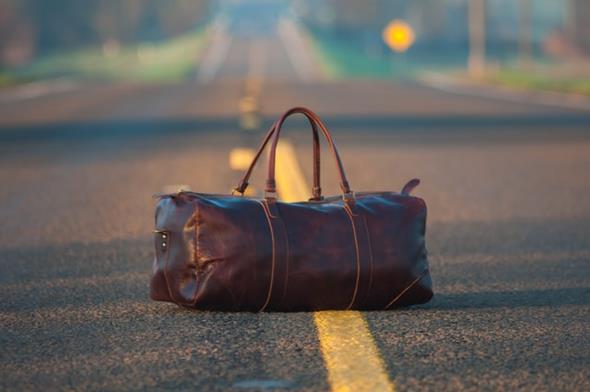
Duffle bags are typically used for sports or travel, and they’re often made from durable materials like canvas or nylon. They usually have one large compartment and several smaller pockets. If you need a duffle bag for travel there are websites discussing the best ones for digital nomads, photographers, international travel, and weekends. You can find bags designed for men and women, that are ideal for adventure or for people on a budget.

3. Weather Protection

It’s wise to research the climate of your destination, and also check the local weather reports before you travel. If you’re headed somewhere sunny, pack sunscreen, hats, sunglasses, and light clothing. If you’re traveling to a cold climate, remember to bring heavier clothing, a scarf, and gloves.

No matter what the climate is like, always bring a raincoat or umbrella just in case. Some countries that are warm during the day can be cold at night (or vice versa), so come prepared.

4. A First Aid Kit

It’s important to have a first aid kit with you in case of any minor injuries or illnesses. Here are a few essential items to consider:

    • Bandages: Elbow and knee bandages are great for scrapes and cuts. You can also get larger ones for bigger wounds.
    • Antiseptic cream or ointment: This will help clean and protect cuts and scrapes from infection.
    • Pain relief medication: For headaches, muscle aches, or pain from injuries.
    • Allergy medication: If you or anyone in your party has allergies, it’s important to have medication on hand in case of a reaction.
    • Tweezers: For splinters or other small objects that may have gotten lodged in the skin.
    • Scissors: Useful for cutting bandages or tape.

You’ll also want to tailor your kit to any specific needs your party might have. For instance, if visiting somewhere with a different climate, a no wonder nasal spray can act as a daily shield against harmful elements.

If anyone has diabetes, include some form of sugar in case their blood sugar levels drop. If you’re traveling with young children, include some child-friendly pain relievers and antiseptics. And don’t forget to pack the prescription medication we discussed earlier.

5. Snacks And Drinks

Bring these along to keep you feeling satisfied and hydrated while on your trip. This will help you save money and maintain your energy levels throughout the day. It’s also a great way of keeping children occupied during long journeys. Some examples include:

    • granola bars
    • carrots and celery sticks
    • trail mix
    • water bottle
    • Gatorade or Powerade

These are just a few examples, but you can bring whatever you think will sustain you. And don’t forget to pack some cups or utensils if you need them.

6. Entertainment

No matter where you’re going or how long you’ll be gone, you should always bring some form of entertainment. Books, magazines, and portable gaming devices are all great options.

This will help keep you occupied during downtimes, like when you’re on a plane or in the car. As with snacks and drinks, these things can keep your children content and occupied.

If you include these 6 essentials when preparing for your vacation, you’ll be all set for your travels. Then you can sit back and look forward to the experience, and the memories you’ll acquire. Don’t forget to pack a camera as well, so you can look back on your holiday for many years to come.