

In all of our travels, One thing we have come to understand is that it is much easier to learn a language when you are among people who speak it as their native tongue… CONTINUE READING >>
While we have been traveling to over sixty countries in the past fifteen years, and trying to pick up at least a little bit of the local language in each of them, one thing we came to understand is that it is much easier to learn a language when you are among people who speak it as their native tongue. That is one reason why we think it is a great idea to take Spanish Courses in Seville.
There is no better way to become fluent than to communicate day to day with people in their own words. That is why we think that the Maus School in Seville, Spain is such a good way to study Spanish. They offer in-person courses at their location right in the historic center of Seville with teachers who are all native Spanish speakers.
And we can’t think of a better place than Seville to spend this time learning. As Spain’s forth largest city, it has everything anyone could need, but it also has all the old world charm that Spain is famous for. It is home to the Cathedral of Seville, which is one of, or perhaps, the largest church in the world. From what we understand, it is the biggest when measured by interior volume.
It is also the final resting place of one fairly famous explorer, none other than Christopher Columbus. And Speaking of Columbus, the Real Alcázar in Seville is where his voyage was planned. Later, in 1785, King King Carlos III built the Archivo General de Indias (General Archive of the Indies). The city was chosen because it had served as the exclusive port for trade with the Americas. The archives include more than eighty million pages of documents and eight thousand drawings and maps of the new world.
The Palace of the Countess of Lebrija, or Palacio de Lebrija, is certainly worth seeing as well. It is known as the “best paved palace in Europe,” which sounded very odd to us until we found out that it is referring to the incredible Roman mosaics that cover almost all of the floors on the ground level.
We highly recommend a visit to the Plaza de España too, not so much because it was the site of the Ibero-American Exhibition of 1929, but because it served as a filming location for such classic movies as Lawrence of Arabia, The Wind and the Lion, and Star Wars Episode II: Attack of the Clones.
But all of this is secondary to learning to speak Spanish. Why, because Spanish is the second most spoken native language in the world with nearly half a billion people using it. It is also the second most common language in The United States, where over fifty million people speak it every day.
Even more importantly, Spanish has become one of the most commonly used languages for business and internet activities. So whether you are studying for commercial purposes, or personal reasons, the Maus School in Seville will definitely fulfill your needs.
We also love that they have the philosophy that history, art, literature, customs, and food, are a fundamental part of any education, because learning a language means experiencing the culture and seeing the world in a new and different way.
It is also great that even if you can’t make it to Seville, the Maus School offers online courses that can be taken wherever you may be in the world.
That is something everybody can take advantage of!
These places are so remote that there are no commercial flights, so you will have to fly with a private jet… CONTINUE READING >>
If you feel the need to escape the stresses of daily life, you might have thought about a vacation to a remote area. Remote areas can be the perfect way to disconnect, unwind and explore some of the most beautiful areas in the world. There are some remote locations around the world that are only accessible via private jet – the ideal way to travel.
Galapagos Islands
The Galapagos Islands are famous for their breathtaking wildlife, so if you are an animal lover then this could be the place for you. The volcanic archipelago around 1,000km from Ecuador is like anywhere else on the planet with all but four being uninhabited by humans, which means that you are limited for accommodation options! This does mean that it is a peaceful and quiet place and somewhere that you can only access by a private plane.
Lady Elliott Island, Australia
Lady Elliott Island is another breathtaking place to visit. A coral cay at the southern tip of the Great Barrier Reef, here you will find incredible marine life, including giant manta rays and turtles. It is also an island known for sustainability and you cannot drive on the island. It is also only accessible by a private jet and it is a scenic flight that will be a great start to your trip.
Necker Island
Necker Island is Sir Richard Branson’s own 30-hectare private island in the British Virgin Islands. As you might expect from a Caribbean private island, it is incredibly beautiful with white sandy beaches, turquoise waters and coral reefs making it the ideal place for a relaxing vacation. As a private island, your only option for access is a private jet lease.
Nauru
Nauru is the world’s smallest island nation at just 8 square miles, so you are certainly off the grid here! Located in Micronesia of Australia, the island features a coral reef and sandy beaches while inland you have tropical vegetation that surrounds Buada Lagoon. As you might expect, there are no commercial flights to this tiny island.
Ittoqqortoormiit
If you are looking for something a little bit different, you could fly to Ittoqqortoormiit in Greenland. One of the most remote settlements on the planet, Ittoqqortoormiit is considered to be “the edge of the world” with just 450 settlers. There is enough to keep you entertained, though, with Northeast Greenland National Park to the north and Scoresby Sound (the largest national park and fjord on Earth) to the south.
If you are feeling the need to escape and enjoy a remote vacation then these are some of the best places to consider. All of these places are so remote that there are no commercial flights, so you will have to fly with a private jet and this can be a fantastic start to your holiday.
Some English speakers from other countries may get confused about the Singapore English use of “tuition.” Most English-speaking countries commonly use tuition as “a sum of money charged for teaching or instruction by a school, college, or university” (Oxford Dictionary). While this meaning of tuition is also used in Singapore, the more common meaning used for tuition in that country is, “teaching or instruction, especially of individual pupils or small groups” (Oxford Dictionary). This is why home tuition in Singapore means a private tutor coming to the home of the student for one-to-one teaching of specific subjects. A home tuition agency in Singapore normally contains a large active tutor database of professional and experienced tutors/teachers. A large tuition database is needed to find suitable tutors for specific students and specific subjects.
The necessity of a home tuition agency in Singapore
Singapore’s education system is one of the main factors behind the advanced economic development of the country. The country’s education system churns out highly educated and qualified graduates who become the mainstay in Singapore’s business, technology, economics, education, etc. However, the high standard of Singapore’s education system can also take its toll on many students of all ages. This is where home tuition in Singapore comes in.
Learning at home or private tutoring in Singapore is now the most preferred learning method for students to catch up with difficult subjects and topics. Students are provided with individualized lessons, learning, and focus from tutors who can help them, including schoolwork, more effectively than in a crowded classroom environment.
Are there advantages to choosing a home tuition agency?
Convenience
A significant benefit of home tuition is the convenience it gives not only to the student but to parents as well. The student only needs to get ready at home to prepare for the tutor. The tutor goes to the student’s house on a designated day and time, usually on a twice-weekly schedule.
Individual attention
Probably the best benefit of home tuition is that students receive personal focus and attention from their tutor. This allows the tutor to hone in on the specific learning problems and difficulties of the student to help the child reach his or her learning potential. The tutor and student spend time answering questions that the student cannot ask in the classroom. The tutor often uses sample materials gathered from years of tuition experience to assess the student’s learning and make sure the student stays on track.
Assistance with schoolwork
Naturally, another significant benefit of home tuition is that the tutors can help students with schoolwork and homework. This means students don’t have to struggle through complex problems on their own that may be the cause of their falling behind in class. Since they can learn from their own learning pace and style, students can now learn faster with the help of the tutor. The tutor also assists in studying for any upcoming tests or quizzes.
Exam preparation
Tutors will help students prepare for quizzes, tests, and exams. Tutors work with their students to take these tests by using sample tests and exams while helping them understand how to handle test questions. This is a big help for parents who want to make sure that their children are ready and prepared for the next grade-level exam. Some parents do hire private tutors just to prepare their children for level examinations by doing practice exams. This is also one method that tutors can assess the student’s strengths and weaknesses while working with them to achieve their academic goals.
Choosing the right private home tuition agency for your children
Aside from other minor benefits from home tuition, this is the best option for students who need more individual attention because they have been left behind in class, or for students who want to get ahead in their classes and level exams. You only need to call FamilyTutor to match a suitable tutor for your children to improve their grades. Our tutors have the experience to build a good rapport and meaningful relationship with your children and the parents as well.
If you still have questions regarding a reliable home tuition agency, especially with private tutors and tuition classes, no need to worry. FamilyTutor can answer all your questions to save all parents their precious time. We can even help you pick your preferred private tutor for your children.
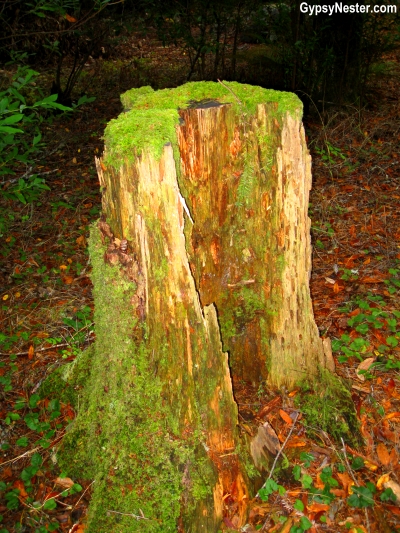
Let’s take a look back at our visit to one of the locations where the movie Star Wars was shot, Jedediah Smith State Park in Northern California… CONTINUE READING >>>>
Giant raindrops and David the Tree Model
Timber!
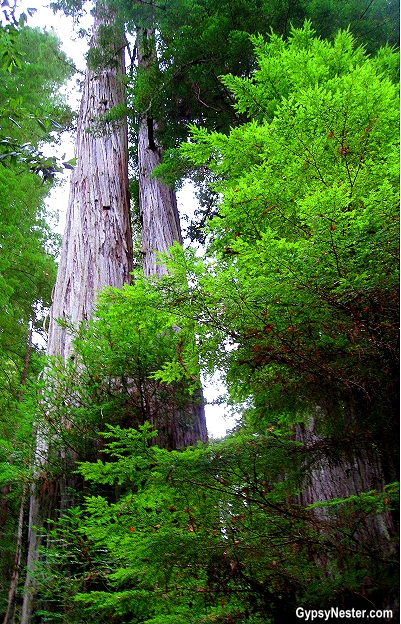
For over one hundred years that dreaded cry filled the forests of the northern California coastal region.
Redwoods over three hundred feet high and a thousand years old came crashing to the ground at a frightening pace.
Over two million acres of these majestic trees were reduced to a few groves.
Thankfully the State of California stepped in and established Prairie Creek, Del Norte Coast, Humboldt and Jedediah Smith Redwoods State Parks to protect the last of the Coastal Redwoods.
The National Park Service didn’t come on board until 1968, when 96% of the old growth forests were already gone. A sad commentary on the power that logging interests had on our government.
We assumed (and everyone knows what happens when you do that) that the biggest and best redwoods would be in Redwoods National Park.
Wrong. Because of their late entry into the save-the-redwoods movement, the National Park is a distant second to the State Parks when it comes to preserving big, tall, fat, ginormous, skyscraping trees.
Pure dumb luck brought us in from the north where we discovered Jedediah Smith State Park — and boy are we glad we did.
It turns out that this is where the Star Wars: Return of The Jedi chase scene on the flying motor bike speeder thingys was filmed. You know – the Forest Moon of the planet Endor, home to those adorable little kick-ass teddy bears, the Ewoks.
Pretty groovy, and a blast to talk about while gawking up at the surreal trees.
Named for the intrepid mountain man Jedediah (maybe his friends called him Jedi, get it, Star Wars?) Strong Smith, the park features some of the world’s largest redwoods by volume and untouched old growth groves.
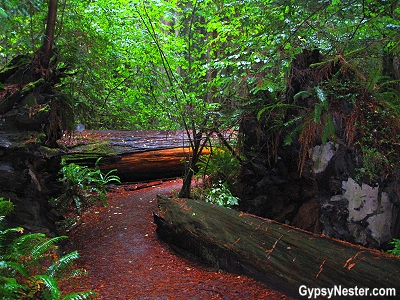
Stout Grove is an easy hike from the road but a journey into a wet, dark mossy world so dense that the deluge of rain falling as we entered the grove barely made it to the ground.
It is difficult to maintain a sense of time and direction in this strange land, so there were a few times when we wished we had picked up one of these great compass watches from The Gear Hut.
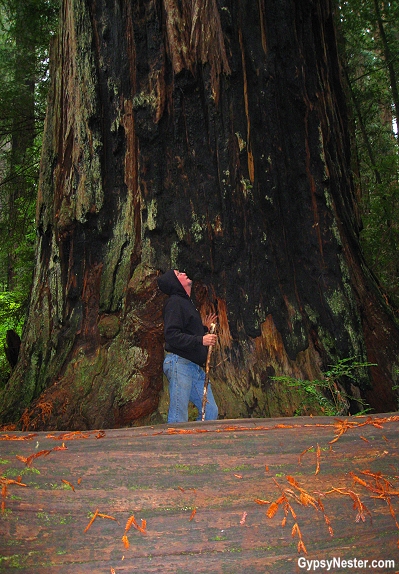
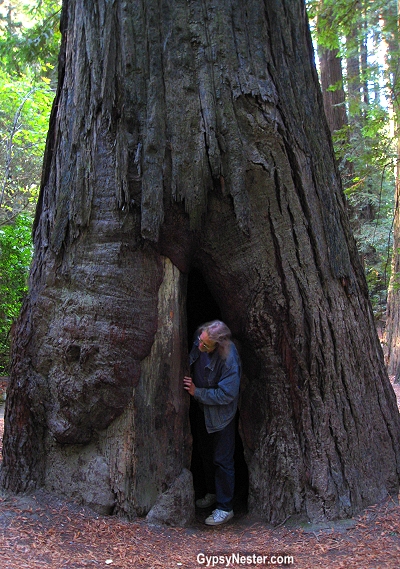
It was also hard to keep a perspective of size in this extraordinary world without something or someone near the trees for reference.
Hence, David making his debut as a “tree model” for our photos and video.
The legendary Grove of Titans is also within this park but is nearly impossible to reach because its whereabouts remain a closely guarded secret.
It’s heartening to know that a grove of these magnificent monster trees is being kept pristine.
We headed south from old Jed’s place along US 101, known as The Redwood Highway in these parts.
The road connects all of the parks and feels like a trip through time. Mature coastal redwoods average over five hundred years old with
a few documented to have lived over two thousand years. They are among the longest-living organisms on earth and the forests have
a dreamlike prehistoric feel.
These are the tallest, most massive plants on Earth.
Many are over three hundred feet high, taller than a thirty story building and weigh in at well over a million pounds.
Currently the tallest is Hyperion in Humboldt Redwoods State Park, towering just over three hundred and seventy-nine feet, but others may have been larger.
A tree claimed to be three hundred and eighty feet was cut down in 1912. Humboldt is home to the oldest of the redwoods as well — one goliath is known to be 2,200 years old.
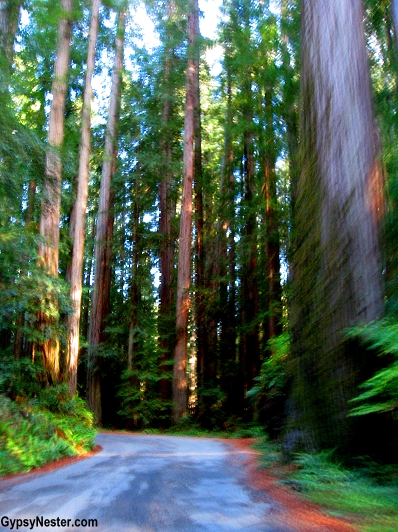
When US 101 was expanded a few years back, a new path was chosen to avoid disturbing the redwoods. Inside Humboldt Redwoods State Park the old highway, known as The Avenue of The Giants, was saved.
This is a road like no other.
Meandering into the forest, bright sunny days turn to twilight as the trees envelope the road.
The thirty-two miles of the old route running directly through the park were officially renamed California State Highway 254.
Once a stagecoach road to Oregon, later a US highway, now a national treasure, the narrow blacktop winds through the trees with the giants sometimes standing just inches from the pavement.
The temptation to gawk upward is great but keeping the rearview mirrors attached to the vehicle requires forward focus.
There are several interesting sights along the way and most are easily accessible. Founder’s Grove, The Immortal Tree, and the cheesy Drive Through Tree are all just off the road.
Further into the woods, The Rockefeller Forest is certainly worth the extra effort.
A very long couple of miles down the winding, beat up Mattole (rhythms with pothole) Road is rewarded with a walk through an untouched
stand along the banks of Bull Creek.
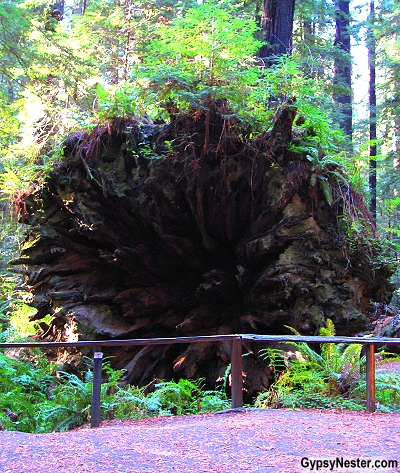
Upended!
This is the largest old-growth coastal redwood forest remaining in the world. In the center of the grove stands Giant Tree.
Aptly named, it is an absolutely mammoth specimen, touching the sky at three hundred and sixty-three towering feet.
Continuing on 101 south of The Avenue of The Giants we would periodically pass through another grove, the headlights would come on and our necks would crane again.
After a while these giants began to seem almost normal. Weird as it seems, we had been desensitized.
Waking up the next morning, our memories were jogged as to just how huge these Sequoia Sempervirens really are.
And our necks were killing us from looking up so much.
Moving to a new city can often feel like navigating through endless tasks and unpredictable challenges. It’s a journey that requires meticulous planning, a bit of savvy, and a great deal of patience. Coral Springs, Florida, with its serene neighborhoods and vibrant community, is a cherished home for many. However, the call to explore new cities and embrace different experiences is a journey filled with potential and excitement. Moving from Coral Springs to a new city opens up a world of opportunities, from career advancements to cultural enrichment. Whether you’re drawn by the bustling streets of a metropolitan area or the quiet charm of a smaller town, relocating can offer a refreshing change of scenery and a chance to reinvent your lifestyle.
This transition, while promising, comes with its own set of challenges. A well-executed move requires more than just packing boxes; it involves careful planning, organization, and consideration of every family member’s needs, including pets. This article aims to guide you through the intricacies of relocating from Coral Springs to another city, ensuring your move is as stress-free and efficient as possible.
1. Early Planning and Organization
The key to a stress-free move is early planning and organization. Start by creating a detailed moving checklist several weeks, or even months, in advance. This checklist should include every task you need to accomplish, from hiring movers to updating your address. Break down these tasks into smaller, manageable steps and set deadlines for each. Prioritize tasks based on their importance and urgency. For instance, begin by researching moving companies, then gradually move on to packing non-essential items as the moving day approaches. Remember, the more you plan ahead, the less you’ll have to worry about last-minute surprises.
2. Selecting the Right Moving Company
Selecting the right moving company is crucial for a hassle-free relocation experience. If you’re moving from areas like Coral Springs, choosing reputable Coral Springs movers can be a game-changer. Look for a moving company with a solid record of reliability and customer satisfaction. Don’t just settle for the first option you find; instead, compare quotes and services from different companies. Read reviews and ask for recommendations from friends or family. A trustworthy moving company will not only handle your belongings with care but also help you navigate the logistics of moving, significantly reducing your stress.
3. Budgeting for Your Move
A well-planned budget is essential to avoid financial stress during your move. Start by listing all potential expenses, including moving company fees, packing supplies, travel costs, and any additional services you might need like storage or special handling for delicate items. It’s also wise to set aside a contingency fund for unexpected expenses. To keep costs down, consider timing your move during off-peak seasons or doing some of the packing yourself. Be on the lookout for deals or discounts from moving companies and suppliers. A clear budget will help you keep track of your expenses and ensure that your move doesn’t become a financial burden.
4. Packing Efficiently
Efficient packing not only saves time but also ensures the safety of your belongings during transit. Begin by decluttering your home; donate, sell, or dispose of items that you no longer need. This reduces the volume of things you need to pack and move. Invest in good quality packing materials such as sturdy, well-made boxes, bubble wrap, and white packing tape. Label all boxes clearly and the room they belong to. This will make unpacking much easier in your new space. Additionally, consider packing a separate essentials box with items you’ll need immediately upon arrival, like personal care products, a change of clothes, and basic kitchenware.
5. Handling Essential Documents and Procedures
An integral part of your moving process involves handling essential documents and procedures meticulously. Start by gathering and organizing all critical paperwork – birth certificates, passports, medical records, school records, and legal documents. Ensure that these are easily accessible during the move. If you’re changing states or countries, be aware of the need to update legal documents like driver’s licenses and vehicle registrations. It’s also a good idea to notify banks, insurance companies, and other relevant institutions of your address change. By taking care of these details well in advance, you can avoid any last-minute hurdles and ensure a smooth transition into your new life.
6. Setting Up Utilities and Services in Your New Home
Before you move, take the time to set up utilities and essential services at your new home. Research local providers for electricity, gas, water, internet, and cable services. It’s often possible to arrange for these services to be connected a day or two before your arrival, ensuring that your new home is functional and comfortable from day one. Don’t forget to also cancel or transfer your current services to avoid unnecessary charges. This step is crucial for a seamless transition, allowing you to focus on settling in rather than dealing with utility setups upon arrival.
7. Familiarizing Yourself with the New City
Getting to know your new city can greatly ease the stress of moving. Spend time researching your new home before the move. Look into local amenities, public transportation options, healthcare facilities, schools, and recreational activities. Understanding the layout of the city, along with its key neighborhoods and cultural hotspots, can help you feel more at home upon arrival. If possible, visit the city ahead of your relocation to get a feel for the area. Otherwise, virtual tours and online communities can be great resources for familiarizing yourself with your new surroundings and even making connections before you arrive.
8. Taking Care of Your Emotional Well-being
Moving to a new city is not just a physical transition, but an emotional journey as well. Acknowledge the feelings of leaving behind familiar surroundings and facing the unknown. Stay connected with friends and family through calls, texts, or social media. Once you’ve moved, give yourself time to adjust to your new environment. It’s okay to feel homesick or overwhelmed at times. Seek out community groups or hobbies that align with your interests as a way to meet new people and start building your new life. Remember, it’s normal for this transition to take time, and taking care of your mental health is just as important as the physical aspects of the move.
Conclusion
Moving to a different city can be a challenging but ultimately rewarding experience. By meticulously handling essential documents, setting up utilities in advance, familiarizing yourself with the new city, and taking care of your emotional well-being, you can ensure a smoother transition. Each of these steps plays a crucial role in minimizing stress and enhancing your overall moving experience. Embrace this journey with an open mind and a proactive approach. As you unpack your boxes and start exploring your new surroundings, remember that you’re not just moving your belongings, but you’re also paving the way for new adventures, friendships, and memories in your new home. With these tips in hand, your move can be less about stress and more about the excitement of starting a new chapter in your life.
A trip to the beach may rejuvenate your mind, body, and spirit while giving you a much-needed reprieve from the stresses of daily life… CONTINUE READING >>
In today’s fast-paced environment, relaxing and recharging are essential to being healthy. Why not take a beach vacation? The relaxing sound of the ocean’s waves, the sand between your toes, and the calm ocean wind can improve your overall well-being. Consider renting a big houses to rent to improve your beach experience; it comes with many benefits for a genuinely rejuvenating getaway.
The allure of the beach
It seems as though time slows down when you’re on a beach, letting you forget about the demands and worries of your regular schedule. You may actually unwind there, discover calm, and re-establish your connection to nature. So, grab your favourite book and beach towel and let the calm waves and lovely air take care of all your troubles. A great setting for relaxation and reflection is created by the tranquil sounds of the ocean and the stunning sights. Beach vacations are very popular since they have so much to offer.
Advantages of renting a home away from home
The typical vacation is spent at a hotel or resort, but for a genuinely unique experience, think about renting a sizable home near the beach. Here are some benefits of doing so.
Space and privacy. Large house rentals give you and your loved ones plenty of room to spread out and socialize without feeling crowded. They frequently include multiple bedrooms, living spaces, and outdoor spaces so that everyone has a private retreat.
Comfortable environment. Unlike hotel rooms, large house rentals offer a comfortable setting. You can enjoy the comforts of home while being surrounded by the beauty of the beach thanks to fully furnished kitchens, inviting living spaces, and comfy furnishings.
Close relationships.One of the biggest benefits of renting a large home is the chance for close relationships with family and friends. The common areas in a huge house encourage deep ties and produce priceless memories, whether it’s playing board games, grilling out on the terrace, or just chatting over dinner.
Observing your environment.A seaside vacation offers a wealth of things to do and sights to see in addition to the comfort and luxury of the spacious house. Some ideas to maximize your experience are listed below.
Outdoor adventures.The beach includes activities for everyone, whether they enjoy surfing, snorkeling, kayaking, or paddle boarding. These activities not only provide you with a great workout but they also give you a sense of adventure, which stimulates your intellect and enlivens your spirit. So gather your supplies, enjoy the rush, and let the beach serve as your outdoor recreation playground.
Conclusion
A trip to the beach may rejuvenate your mind, body, and spirit while giving you a much-needed reprieve from the stresses of daily life. You can improve your experience by renting a big house and taking advantage of the room, solitude, and comfort they provide. Pack your bags, put your worries aside, and head to the beach for a vacation that will energize your body, soothe your soul, and feed your intellect. The ocean is waiting for you, eager to do its spell.
Each hour a huge crowd gathers to watch this clock trot out its lively cast of characters – including Death, Avarice and Vanity… CONTINUE READING >>
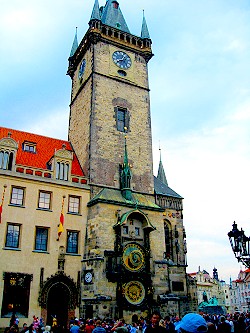
Any trip to Prague would have to be deemed incomplete without a stop at the Astronomical Clock, but it is only one of the many things to do in Prague.
The Pražský orloj has been keeping Praguinians, Praguites, Praguers… um, residents of Prague informed for over six hundred years.
We’re not just talking telling time either, this bad boy does way more than that… and with a show!
Back in 1410, clockmaker Mikuláš of Kadan and mathematics and astronomy professor Jan Šindel were brought together to create a clock to replace the old one in the tower of Prague’s Old Town Square.
They really went to town.
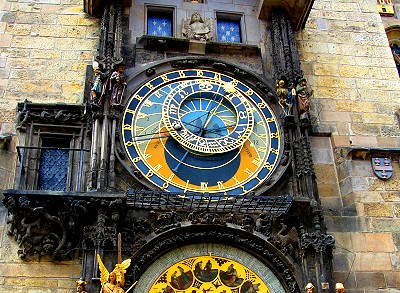
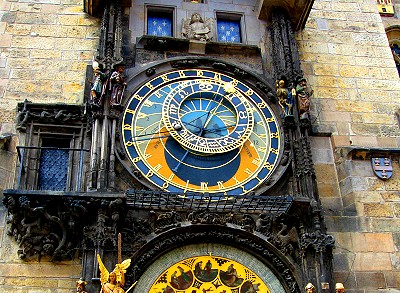
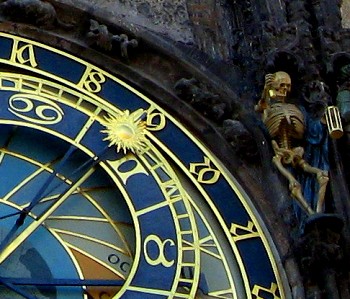
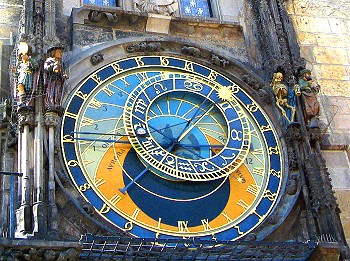
Their creation not only tells time in four different variations, but also the date, times for sunrise and sunset, the position of the sun in the zodiac and the phases of the moon.
We stood staring at the complicated system of dials, rings, hands and pointers and must say, as impressive as it was, we were pretty much at a loss as to what any of it meant.
Let’s see, if the big hand is on the VII and the little hand is… wait, which little hand?
We were going to need a helping hand.
Lucky for us, when we went inside the tower to purchase tickets for the climb to the top, an incredibly helpful lady had detailed information about the clock’s functions in several languages.
We chose English.
She was happy to part with the pamphlet for a couple dozen Koruna, or what we laughingly call Czech Bucks.
Since we were already in the tower, we decided to go on up before figuring out the complicated timepiece.
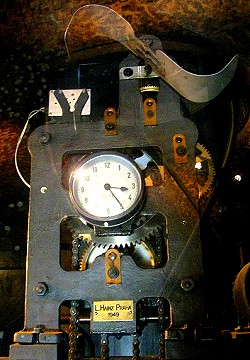
On the way up the stairs (there is a really cool elevator, but we would have missed half the fun) we got an inside, behind the scenes look at some of the mechanical workings of the clock.
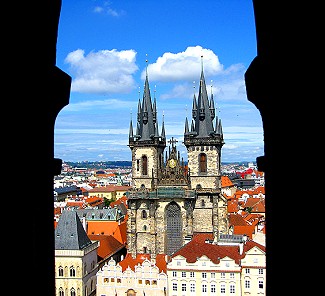
From the observation deck at the top we had an jaw-dropping view, not just of The Old Town Square, but of the entire city of Prague.
We stood there mesmerized until the clock was about to strike – we wanted to be right in front of it for the show – so we scurried back down to stake out a spot in the gathering crowd.
Utilizing our handy-dandy guide we began to decipher the faces.
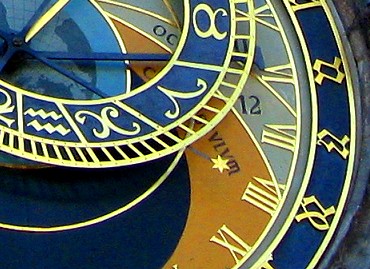
The higher of the two faces, the astronomical dial, displays sunrise and sunset, phases of the moon, and the sun’s place in the zodiac, along with Babylonian time, Old Bohemian or Italian time, German time and Sidereal time simultaneously.
Babylonian time, the most ancient time on the clock, is the same as the time used in the Bible.
The day is divided into twelve hours beginning at dawn, so that noon would be the sixth hour, three in the afternoon the ninth, and sunset is twelve.
The length of each hour changes as the days grow longer and shorter over the course of the year. The sun on the clock shows this as it passes through the markings for daylight that indicate sunrise and sunset along with the Babylonian hours throughout the seasons.
Old Bohemian, better known as Italian time, dates back to the middle ages.
It is similar to our modern time, the day has twenty-four hours, but begins at sunset.
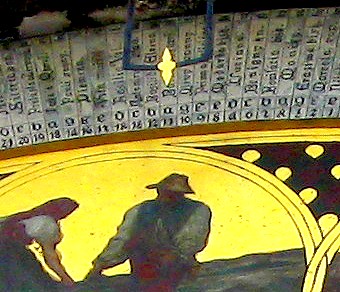
This is marked by a human hand pointing to the Gothic Arabic numbers on the outermost ring of the clock.
Because sunset changes through the year, the outer ring moves ever so slowly to adjust.
German time is basically the time that we know and love.
The day is divided into twenty-four hours, in two twelve hour segments, beginning at midnight. This is shown by the same human hand as the Italian time except that it is pointing to the stationary Roman numerals in the second row from the outside.
The last of the clock’s time displays is for Sidereal time. This is a timekeeping method based on the stars as opposed to the sun.
Astronomers developed it so that they would know exactly where to point their telescopes to find specific stars at any given moment.
The little gold star attached to the zodiac wheel of the clock marks the Sidereal time. Each day has twenty-four equal hours, but is about four minutes shorter than a solar day. This adds up to an extra day each year making every year leap year in Sidereal time.
In addition to these times we found the phase of the moon, sunrise and sunset as well as the sun’s position in the zodiac precisely presented on the clock face. But four o’clock had arrived and the real show was beginning.
Once again our handy-dandy guide kept us abreast of the situation.
Every hour, on the hour, the clock breaks out quite a conglomeration of characters to commemorate the passing of another sixty minutes.
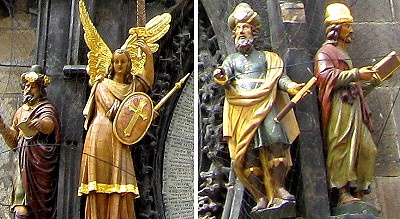
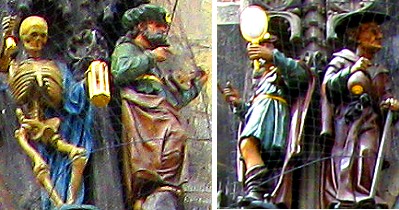
Eight figures adorn the outside, four representing characteristics that were honored back in medieval times and four that were despised.
The honorable folks, a philosopher, an angel, an astronomer and a chronicler, are on the bottom row and are stationary, but their dishonorable counterparts above them come to life every time the clock strikes the hour.
A skeleton representing Death rings his death knell bell while Vanity looks in a mirror.
The other two show that some things never change.
Incredibly prejudiced stereotypical depictions of a Jewish fellow, holding a money bag to represent Avarice, and a Turk representing the invading Muslim hordes, round out the four evils.
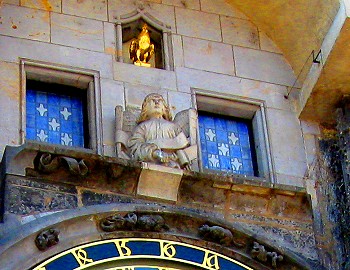
Good thing the parade of the twelve apostles was going on through the little windows up above to take our minds off the guys down below.
Once the disciples finished their march, a rooster popped out at the very top of the clock and crowed while a real live human trumpeter, dressed in full medieval tights and puffy shirt regalia, sounded his horn from the tower.
Cock-a-doodle cuckoo, cuckoo!
This bizarre amalgamation of icons is actually the culmination of several additions over the centuries, no doubt adding to the oddity and eccentricity. As with many historic landmarks, the clock has been constantly renovated, refurbished and repaired.
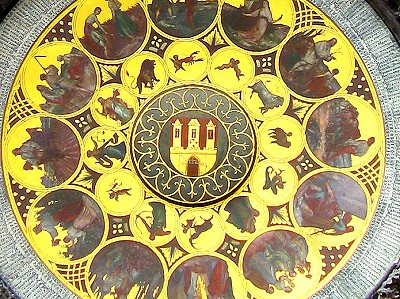
First the calendar dial was added around 1490. This face tells the date, each saint’s feast day, a pictorial depiction of the seasons for each month and the zodiac signs.
Around that same time the first of the moving figures appeared.
About a hundred years later Jan Taborský did extensive renovations, added the German time and the phases of the moon to the astronomical face.
Over the next century more repairs were carried out and the rest of the figures made their debut.
Several more renovations and face lifts were required up until World War II, when the wonderful chronometer was nearly destroyed.
At the end of the war, as the Czechs were overthrowing the occupation, the Germans felt the need to bomb the living crap out of the square and clock tower.
Just the kind of “up yours” parting shot that made the Nazis so darn popular in the countries that they conquered.
By 1948 the clock was up and working once again, making it the oldest working astronomical clock in the world and a must see in the beautiful city of Prague.
Looking for a place to stay near Prague? How about trying out a timeshare resale rental. These can be rented online from existing timeshare owners at heavily discounted prices for less than the cost of a hotel room. Renting a timeshare means you won’t be locked in to any contracts and won’t need to think about an RCI timeshare in the future.