


Search…

Making a Strong Opening Weekend Return for “Spider-Man”

The cinematic progression of Spider-Man has elicited considerable excitement among fans who keenly anticipate the forthcoming chapter of the protagonist’s journey… CONTINUE READING >> 

Since the beginning of the 21st century, the Spider-Man film franchise has captivated a worldwide audience with its thrilling superhero storyline and iconic characters depicted in various areas such as the entertainmentearth.com

The history of Spider-Man film series can be traced back to 2002, when director Sam Raimi’s “Spider-Man” was released, starring Tobey Maguire as Peter Parker/Spider-Man. This marked the beginning of a new era, which to a greater extent can be considered as the foundational ground upon which the superhero popularity in the years that followed came to realization. Some of the early release of Spiderman include the “Spider-Man” (2002), “Spider-Man 2” (2004), and “Spider-Man 3″ (2007). These three garnered significant financial gains and favorable evaluations from reviewers.

This series underwent significant changes upon the release of the “Amazing Spider-Man” in 2012. In this release, there was the featuring of the Andrew Garfield as the newly portrayal of the beloved character. However, this release didn’t auger well with some fans as it received significant negative reviews although not without a couple of positive reviews as well. However, regardless of the reviews, “The Amazing Spider-Man 2” was released in 2014, bolstering the sustained prominence of the superhero who traverses the cityscape by means of his web-slinging abilities. Despite critical differences in the receivership of both films, these movies were instrumental in sustaining the Spiderman character’s popularity.

On the backdrop of the first season popularity and criticism of the second season which ended in 2014, the Spider-Man series received a major boost in 2015. This came about when Sony Pictures Entertainment and Marvel Studios entered into a pioneering agreement that facilitated the inclusion of Spider-Man in the Marvel Cinematic Universe (MCU). This meant that the series could now access an already built fan-base, acquire an opportunity for cross-overs and shared storylines, leverage resources from experts, and benefit from the brand association with the MCU. With the entry into the MCU, an opportunity sprout for Tom Holland to assume the renowned character of Peter Parker/Spider-Man. In 2016’s “Captain America: Civil War,” Holland made his debut as the character, marking his initial foray into the vast Marvel Cinematic Universe. Holland’s depiction of the character was well-received by the audience, as it highlighted a relatable and youthful perspective, thereby establishing a stronger emotional bond with the character. The partnership between Sony and Marvel Studios yielded self-contained Spider-Man films set in the Marvel Cinematic Universe, including “Spider-Man: Homecoming” (2017) and its sequel “Spider-Man: Far From Home” (2019).These films integrated a setting of secondary education, blending super-heroic feats with motifs of juvenile development, thus strengthening Holland’s image as the congenial Spider-Man of the nearby populace.

Following the release of “Spider-Man: Into the Spider-Verse” in 2018, the animated realm of Spider-Man experienced a period of growth, coinciding with the development of live-action cinematic productions. The movie, directed by Bob Persichetti, Peter Ramsey, and Rodney Rothman, was an innovative piece of work that introduced a Spider-Verse featuring various dimensions, exhibiting a range of versions of the main character. The movie titled “Spider-Man: Into the Spider-Verse” received significant critical recognition and a dedicated fan base owing to its unique animation methodologies and a narrative that evokes emotional responses. The Academy acknowledged the artistic excellence of the work and bestowed upon it the prestigious award for Best Animated Feature.

This year, the highly anticipated film in the series; “Spider-Man: Across the Spider-Verse,” has been released. In this, the just concluded weekend has seen the film demonstrating a remarkable performance by generating an estimated revenue of $120.5 million from the domestic box office, attaining the second-highest debut of the year 2023.This film was second in terms of box office performance, with only Universal’s Super Mario Bros being on the first position. During its opening in the past weekend, “Spider-Man: Across the Spider-Verse,” attained the third-highest revenue for any Spider-Man film, irrespective of whether it is an animated or live-action rendition. This is according to the CNBC Entertainment. This success can be attributed to the movie’s extensive appeal among a youthful audience, exceeding the exclusive fan base of the PG-13 Spider-Man movies in live-action rendition. The PG classification of this animated movie guarantees its sustained popularity across multiple generations, thereby rendering it a lucrative enterprise for both the production company and cinema halls. “Spider-Man: Across the Spider-Verse,” showcases its ability to captivate audiences with innovative storytelling methods and explore fresh dimensions of the main character. The strong financial success of the film during its opening weekend not only demonstrates the broad popularity of Spider-Man, but also suggests a continued fascination with creative and bold adaptations of superhero and animated movies as depicted in other films as depicted in the entertainmentearth.com.

The cinematic progression of Spider-Man has elicited considerable excitement among fans who keenly anticipate the forthcoming chapter of the protagonist’s journey. The spectators are eager to observe the continuing exploits of the web-slinger and the impact he has on the film industry.

Having Our Cape and Eating It Too

We didn’t have any idea what we might discover if we drove all the way out to the end of Cape Cod but we had to do it — it was just too enticing to resist, challenging us there on the map… CONTINUE READING >>


Cape Cod, hmmm. We racked our brains and came up with romping  Kennedys and a cocktail that involves vodka and cranberries.

We didn’t have any idea what we might discover if we drove all the way out to the end of Cape Cod but we had to do it — it was just too enticing to resist, challenging us  there on the map.

The pine trees dwindled and the sand dunes gained hold as we approached the very tip of the cape and found lovely, eclectic Provincetown. P-town to the locals.

Home to amazing restaurants, America’s oldest gay bar and a massive monument recognizing the place where the Pilgrims really first landed, P-town possesses copious quantities of character. Toss in the power and beauty of the Atlantic Ocean encircling the tiny strip of land — forming  dazzling beaches — and it becomes nearly impossible not to love this easternmost tip of Massachusetts.
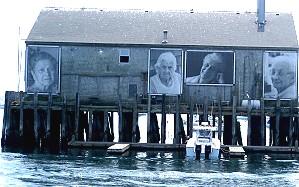
For centuries the bitter end of Cape Cod was home to only whalers
and fishermen. The population grew through the 1800s as numerous
Portuguese sailors settled in P-town and their influence is still strong
today.

Every year P-town hosts a Portuguese festival in late June and “They Also Faced the Sea,” a series of large portraits of Portuguese-American women living in Provincetown, is a beautiful tribute to the hardworking women who have kept tradition alive for over two centuries.

Through the years many writers, actors and artists sought the solace, solitude and inspiration that Cape Cod offered and settled among the seafarers. The eclectic mix worked well, with everyone adopting a live and  let live attitude. Today Provincetown is very much a summer destination,  with the population increasing nearly tenfold during the season. Only a little over 3,000 hardy souls are willing to brave the North Atlantic winters.

Pilgrim Monument in Provincetown, Massachusetts

We started the day by making our way up to the Pilgrim Monument and Provincetown Museum. The monument is a huge tower modeled after the Torre del Mangia in Siena, Italy.

With President Teddy Roosevelt laying the cornerstone in 1907, the tower  was built to commemorate the signing of the Mayflower Compact and mark the place where the Pilgrims actually first landed in November of 1620.

Immediately upon arrival, our celebrated Pilgrims began raiding the local Nauset tribe’s graves and food stores. None too pleased with these  newcomers stealing their corn right before winter, the Nauset forced the would-be settlers across the bay to Plymouth and its famous, if not entirely factual, rock.

Staring up at the 252 foot structure, we girded our loins for the 176 step climb to the crown (sorry, no elevators!). Trudging ever upward, we dug in as we tried to disregard our aching calves and ignore the adolescent boys whizzing by. Showoffs.
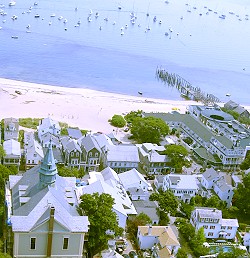
At the top, we were rewarded with breathtaking panoramic views of Provincetown and Cape Cod Bay and hey, we got a sticker bragging that we made it to the top.

Love us some goofy stickers!

Since parking is at quite a premium in P-town and the monument is near the center of town, we decided to take advantage of their lot and continued our exploration on two wheels.

Provincetown is incredibly bicycle friendly, it seemed like more bikes than cars were on the road. We brought our bikes with us, but rentals are readily available. Good thing too, because driving a car is nearly impossible through the narrow streets that are completely packed with pedestrians and cyclists in the summer months.

Though we have to say, the bicyclists are just as aggressive as the motorists in Massachusetts, so we were kept on our toes.
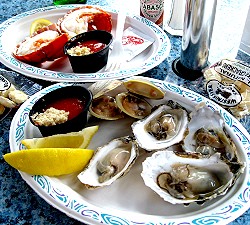
We stopped for lunch at Enzo, in the heart of the Commercial  Street district to sit outdoors and enjoy some bang-up people watching.

Enzo, a restaurant and guesthouse in an old Victorian mansion, has a  spectacular raw bar lunch. Imagine little neck clams for $1.50 each, Wellfleet oysters for two bucks or a lobster tail for eight. And the decadent spicy seafood chowder. Uh, wicked delicious.

Sitting outside and watching the world go by at one of the many  hotspots on Commercial Street should be mandatory doings
in P-town.

It makes one’s heart sing to see so many happy couples strolling by, hand-in-hand, without a care in the world.

We were lucky enough to see a wedding procession heading down Commerce Street (everyone on bikes, no less) and were swept up in the laughter of the revelers.

We were given an enthusiastic “thumbs up” and a big happy grin as we snapped a shot of the beaming couple. A quick note to first time visitors: It gets pretty raucous on Commerce Street as night falls, not a place for the kiddies or the easily shocked, so here’s a good rule of thumb — if the French Quarter of New Orleans offends you, so will Commerce Street at night. A big time is had by all.
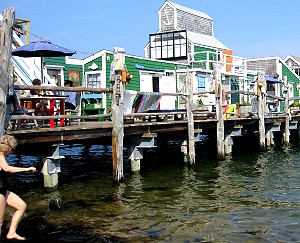
As we continued exploring the waterfront, we stumbled upon Captain Jack’s Wharf. A colorful collection of wooden domiciles, available to rent by the week, stacked upon an antiquey-looking pier jutting haphazard into the harbor.

Captain Jack’s looked like our kind of place. Several of the current inhabitants, boasting quite an array of European accents, were sunning, swimming and swilling a few drinks on the tiny strip of sand between their dock and the next group of houses.

Not much of a beach, but its coolness factor
more than made up for it.

After pedaling a few miles up and down the main drag, The Atlantic House seemed like it would make a good stop and give us an excuse for a little libation. Known locally as The A-House,  it has quite a history. Opened in 1798 as a tavern, this is P-town’s oldest bar.

The Atlantic has also served as a stage coach stop, hotel and restaurant. Many artifacts from its storied past adorn the walls.

During the 1920s the A-House became a popular hangout for some of America’s most famous writers. Eugene O’Neill and Tennessee Williams were frequent patrons.

Appealing to artistic and alternative lifestyles through the years, The Atlantic House became known as America’s first gay-friendly bar back in the early 1950s.

This live-and-let-live philosophy has served not just the bar but the whole town well.

As a sign on a trolley headed down Commerce Street said, “That ‘Love thy Neighbor’ thing? I MEANT IT…God.”

P-town means it as well.

David & Veronica, GypsyNester.com

Scuba Diving: How to Survive Underwater As a Beginner

Planning for your next scuba diving adventure, let the diver’s abode be your family and get destination ideas and other tips to make your scuba diving experience unforgettable… CONTINUE READING >> 

The thought of scuba diving alone is scintillating! It’s no wonder many divers and great swimmers love to experience it in their diving adventures. If you’re a fan of divers’ abode, you’d know that many exciting things, mysteries, and wonders await divers beneath great beaches and oceans.

While professional divers may be experienced with diving beneath the ocean without allowing weightlessness to completely overtake them as they slip beneath the ocean, the story is quite different for beginners.

Before you submerge yourself beneath the ocean and allow yourself to be overtaken by the wonders and mysteries that lie underneath, it is crucial to be aware of tips to survive under water as a beginner.

Breathing While Scuba Diving

Experts at Diver’s Abode and around the world are not surprised when people, especially beginners, ask the question, “How do you breathe underwater?” As ordinary and basic as it may sound, this is the foundation of every diver’s survival beneath the great oceans.

Humans are designed to breathe, regardless of where they find themselves. As you embark on a journey beneath the oceans with scuba diving, it is important that you breathe. You need to inhale and exhale as you breathe through the scuba diving equipment. Once you are able to adhere to this first rule in scuba diving, your survival underwater is guaranteed.

If you do not belong to a diving community, joining one such as a diver’s abode will expose you to professional instructions on how to survive under water.

How do scuba divers breathe underwater?

With the aid of scuba diving equipment, usually in the form of a tank or cylinder that contains gas or air, scuba divers are able to breathe easily. This cylinder contains an adequate amount of air or gas that the diver relies on during the period of adventure.

Snorkeling is another tool in scuba diving that aids proper breathing. This tool is used to collect and save some air before divers go beneath the waves of the ocean. A two-stage regulator is another vital tool that regulates or aids breathing underwater. It is attached to the submersible pressure gauge (SPG) and buoyancy control device (BCD).

How difficult is breathing while diving?

This is another question beginner divers ask before embarking on their first adventure. This is not surprising, as you are expected to ask as many questions as you have to clear your doubts.

Breathing while diving is not as hard as many people think. With the aid of the scuba tank, you are able to inhale and exhale air conveniently. You breathe in through your mouth while scuba diving, and this might not be a good signal for those who have trained themselves to breathe through their nose.

It is important to note that breathing while scuba diving is not as natural as breathing on land. Aside from the fact that the air is contained in a scuba diving cylinder, the circumstances underneath the water do not allow for natural breathing. But keeping a good, steady breath is mandatory.

And yes, divers do not inhale oxygen underneath water; rather, they inhale and exhale the air or gas supplied by the scuba diving tank. Oxygen under pressure, such as beneath the waves of the ocean, can be toxic; hence, scuba divers get a mix of air made up of a little oxygen and nitrogen.

Breath Control While Scuba Diving

This is another crucial element of your survival beneath the mighty oceans when you go on an adventurous scuba diving trip. It is not enough to just breathe; you must be able to control your breath and your buoyancy control device. This is why it is not advisable to embark on scuba diving without undergoing training or having an instructor.

Having a steady breathing cycle helps sustain adequate air consumption and keeps the diving experience enjoyable.

Also, it is vital to maintain a rhythmic breathing pattern while scuba diving. Know your rhythm, but keep it easy and relaxed so you can last underwater. Finding your breath balance might be a little challenging at first, but once you get a grasp of it, it has a comforting effect. If need be, you can master breathing techniques that are most suitable for you and keep you relaxed underwater.

Meditation and learning to stay calm also help you control your breathing because you become less anxious, have lower blood pressure, and have a good respiration rate. Preparing for difficult times while diving also helps to minimize tension and maintain good breath.

Final Words 

Do not dive alone as a beginner; belonging to a professional diving community is important. For your safety, go with people who can help you in case of any eventualities. As you make plans for your next scuba diving adventure, let the diver’s abode be your family. You can also get destination ideas and other professional tips to make your scuba diving experience unforgettable.

5 Things to Do in Your Final Year of High School

The end of your high school career can be somewhat anxiety-inducing. Here are five things you can do in your final year that will help make the transition process a little easier… CONTINUE READING >> 

The end of your high school career is a time full of nostalgia and trepidation. It’s the end of a chapter and a time you’ll spend preparing to begin a new one.

However, with so much ahead of you, it can be tough to know how exactly to prepare, what to focus on, and how to handle this seemingly pivotal year. While this time can be somewhat anxiety-inducing, there’s no need to fear. Here are five things you can do in your final year that will help make the transition process a little easier.

Plan For the Future

Of course, this will be a time when you’ll need to be thinking ahead. This will mean making some big decisions, such as will you go to college, and if so, which ones are you interested in? You might need to research how to get into competitive colleges, or even the best ways to spend a gap year, if that’s a route you might prefer to take.

While it might seem daunting, it’s important that you spend some time thinking about what you want for the next few years of your life, and make some plans for how you’re going to get there.

Set Goals and Prioritize

Unfortunately, you can’t spend the entire year daydreaming and visiting college campuses – you still have your final grades to worry about! At the beginning of the year, set yourself some goals and a plan to achieve them.

If you know you need to achieve certain stats or pass a specific test for the college of your choice, set yourself a study plan and a schedule to prepare. When you know what you’re working towards, it becomes much easier to stick to the plan and prioritize!

Explore Your Passions

This year is also a great time to start exploring more of who you are as a person, what you’re good at, and how you enjoy spending your time. These elements of who you are will play a major role in the courses you decide to take after school, and the career path you may end up following.

When you’re not studying, allow yourself to explore hobbies, sports, and interests that you might not have looked into before.

Dedicate Yourself

This year, make peace with the fact that you’re going to need to put your head down and work hard. Your final year of high school isn’t the be-all and end-all of your academic career, but the grades you achieve will play a vital role in your future options.

Commit yourself to really focusing on your grades, even if that means missing out on some weekends with friends or that part-time job you were considering.

Make Time for Self-Care

Finally, even though you need to dedicate yourself to studying this year, it’s also not helpful to push yourself until you burn out!

Try to strike up a good balance between working hard and taking care of yourself in whichever ways you need – taking some evenings off, exercising regularly, making time for your loved ones, etc.

Inside the Golden Triangle tour of India

The Golden Triangle Tour in India is a popular travel circuit that connects three historic and culturally rich cities: Delhi, Agra, and Jaipur…. CONTINUE READING >> 

What is the Golden Triangle Tour?

The India Golden Triangle Tours is a well-established travel route that forms a triangle on the map, connecting the cities of Delhi, Agra, and Jaipur. Each city showcases a unique aspect of India’s history and culture, making it an ideal itinerary for travelers seeking a comprehensive experience.

Destinations Covered

Delhi:

Delhi, the capital of India, is a city of contrasts where modernity coexists with ancient heritage. The city is known for its historical landmarks, bustling markets, and diverse culinary scene. Must-visit attractions include the iconic Red Fort, Jama Masjid, Qutub Minar, and the vibrant streets of Chandni Chowk.

Agra:

Agra is home to one of the Seven Wonders of the World, the Taj Mahal. This magnificent white marble mausoleum is a testament to eternal love and a UNESCO World Heritage Site. Apart from the Taj Mahal, Agra Fort and Fatehpur Sikri are also significant historical sites worth exploring.

Jaipur:

Jaipur, famously known as the Pink City, is the capital of the vibrant state of Rajasthan. The city boasts stunning palaces, majestic forts, and vibrant markets. The Amber Fort, Hawa Mahal, City Palace, and Jantar Mantar are some of the must-visit attractions that showcase the grandeur of Rajput architecture.

Highlights of the Golden Triangle Tour

Delhi – A City of Contrasts:

Explore the contrasting facets of Delhi, from the ancient lanes of Old Delhi to the modern architecture of New Delhi. Indulge in delicious street food, shop for traditional handicrafts, and visit historical sites that reflect India’s diverse heritage.

Agra – Home of the Iconic Taj Mahal:

Witness the ethereal beauty of the Taj Mahal, an architectural masterpiece and a symbol of love. Marvel at the intricate marble inlays and soak in the romantic ambiance of this iconic monument.

Jaipur – The Pink City:

Immerse yourself in the regal charm of Jaipur. Visit the majestic forts and palaces of Rajasthan, explore the colorful bazaars, and experience the warm hospitality of Rajasthan. Don’t miss the opportunity to witness a mesmerizing sunset at Nahargarh Fort.

Cultural Experiences and Heritage Sites

The Golden Triangle Tour offers numerous cultural experiences and heritage sites that provide insights into India’s rich history and traditions. Explore the bustling markets of Delhi, witness traditional craftsmanship in Agra, and indulge in Rajasthani cuisine and folk performances in Jaipur. Additionally, visit heritage sites like the Humayun’s Tomb in Delhi, the Agra Fort, and the Jantar Mantar observatory in Jaipur.

Best Time to Visit

The best time to embark on the Golden Triangle Tour is during the winter months, from October to March, when the weather is pleasant and suitable for exploring the cities. Avoid visiting during the scorching summer months of April to June.

Planning Tips for the Golden Triangle Tour

Plan Sufficient Time: Allocate at least 5-7 days to fully explore the Golden Triangle Tour, allowing ample time for each city and its attractions.

Choose Accommodations Wisely: Opt for centrally located accommodations in each city to save travel time and have easy access to popular attractions.

Hire Local Guides: Engage knowledgeable guides who can provide historical and cultural insights during your visits to the monuments and sites.

Respect Local Customs: Familiarize yourself with local customs and dress modestly, especially when visiting religious sites.

Conclusion

The Golden Triangle Tour in India offers a captivating journey through Delhi, Agra, and Jaipur, providing a glimpse into the country’s rich heritage and cultural diversity. From historical monuments to vibrant markets and mouth-watering cuisine, this tour leaves a lasting impression on every traveler. Plan your trip wisely, immerse yourself in the cultural experiences, and create memories that will last a lifetime.

How To Find an Excellent Safari Experience in Tanzania

Located in East Africa, Tanzania is one of Africa’s classic safari destinations with the most beautiful wildlife and landscapes on Earth. From open savannas teeming with lions and elephants to lush jungles filled with exotic birds, Tanzania has something for everyone who loves nature. Moreover, it is the place for the great wildebeest migration where a herd of some two million wildebeest, gazelle and zebra make their epic annual voyage. Make your safari trip incredible with the best parks and camps.

What is Tanzania’s main safari places to visit?

Tanzania has three main safari regions:

    1. Northern region

    2. Southern Tanzania for safari

    3. The western region of Tanzania

By far the most popular Tanzania safari region is the popular “northern circuit” that is easily accessible from Kilimanjaro International Airport. This region has several places to visit including the famed Serengeti, Ngorongoro Crater, Tarangire National Park and Lake Manyara.

Next comes southern Tanzania which is best suitable Tanzania region to visit for those who’ve already been to the Serengeti and have already been to the Big Five north Tanzania destinations and now are seeking a wilder experience. There are two major destinations here in the Southern part: the Selous and the Ruaha.

The third major safari region is Western Tanzania. This is the least visited area of the three major safari regions. Because it’s not easily accessible, and it is costly to visit there. Plus, to the western region, there are only two main hubs of Arusha or Dar es Salaam and also two scheduled expensive flights in a week. If we talk about the driving then it will take a couple of days to reach there. But if money isn’t an issue for you then you are heartily welcome and you’ll be rewarded with a remote safari experience in western Tanzania.

The 7 Best Tanzania Safaris And Tours 2023!!

Visiting Tanzania is like entering another world; animals roamed freely across vast grasslands and colorful birds flew overhead. The environment is picturesque and you can take photos or just observe wonderful wild creatures throughout the drive. This collection of photographs will make this safari trip an unforgettable life experience! Here are 10 must visiting places in Tanzania:

    1. Tanzania Trails Here you can visit to explore amazing places and perform remarkable activities:

    • Explore the game-rich Serengeti National Park in Tanzania Trails.

    • Enjoy staying in traditional mobile African safari camps

    • Travellers can search for the Big 5 in the Ngorongoro Crater

    • Get an incredible experience of Tanzania’s rural life

    1. Tanzania: Full Northern Circuit- This is the best part to pursue your wildlife search and explore wild animals of an African safari. Tanzania offers several things for everyone! Here you can visit a local Maasai community and can also learn about traditional tribal customs.

    • You can have a tour coffee cooperative in Uru and visitors can also participate in the harvesting process

    • Get the Safari experience through Tarangire National Park, which is most popular for ancient baobab trees

    • Here you have the opportunity to explore Ngorongoro Crater, which is the world’s largest caldera

    • Outlook lions and leopards closely in your drive through the Serengeti

    1. Mt Kilimanjaro Lemosho Climb- Tanzania’s this beautiful place stands proudly above the African Continent, for a terrifying task and this is the best place for trekkers.

    • Spend days hiking through Mt Kilimanjaro National Park on your Tanzania trip

    • You have the option to explore the rugged terrain of Africa’s highest mountain

    • Grab the experience of camp sleeping in an isolated high-altitude

    • Must take out a free day to enjoy visiting Moshi, Tanzania

    1. Tanzania Fly-in Safari This next place in Tanzania is to have a close look at large herds of elephants around Tarangire National Park. Here are some of the highlights of this place.

    • Come to the place and take a walk in the African bush and engross yourself in the wilderness

    • Here you can also observe the largest migration of land mammals

    • Enjoy nights while gazing at the stars of Africa

    • Take pleasure in trekking, biking, safari game rides, and traditional village visit

    1. Zanzibar, Aldabra & the Treasures of the Indian Ocean- The next port of call in Tanzania safari is an opportunity to discover several new wonders of Zanzibar. Here are some of the tourist attractions.

    • Discover islands here including Seychelles, Scattered, and Mayotte islands.

    • Get the best pleasure to ride in Zodiacs with professional guides and then get landing on idyllic beaches.

    • There on beaches watch tortoises and many other bird species on Aldabra and Latham Island.

    1. Tanzania Family SafariDiscover Tanzania’s exciting wildlife in this safari trip starting from Arusha to the Ngorongoro conservation area. Some of the must-visit places are:

    • Explore the capital of northern Tanzania -Arusha city

    • Visit the Karatu town in Tanzania’s green hills

    • Explore Ngorongoro Crater which is well-known for its natural beauty and wildlife

    1. Tanzania Culture and Wildlife- This is the last on our list but not in Tanzania. Here you’ll get a chance to visit native tribes like the Datoga, Maasai and Hadzabe. Plus, explore Ngorongoro Crater, which is best known for its wildlife beauty.  

    • Visit the seasonal soda lake that is the shores of Lake Eyasi

    • Explore wildlife, river valleys and granite ridges of Tarangire National Park

    • Plus, visit the Karatu town in the green hills

Overall, stay on the lookout for Africa’s most iconic wildlife in a Tanzania safari visit. That is why, Safari in Tanzania has always been a big attraction for all wildlife tourists. Because, everyone loves to roam freely in open jeeps, and to spot wild animals along with the natural beauty of fresh air. All in all, the Tanzania safari trip is an exciting activity packed with lots of adventure and enthusiasm. Do not wait!! and go on board an unforgettable exploration in Tanzania in the coming holidays and get the pleasure of the African “big five” and gaining insights. Moreover, on the Tanzania tour, you will get the best safari camps and lodges for an electrifying experience.

What to Do in Isla Mujeres

Deciding what to do in Isla Mujeres starts with embracing the laid-back island lifestyle. There’s always something to see and do in this tropical paradise… CONTINUE READING >> 

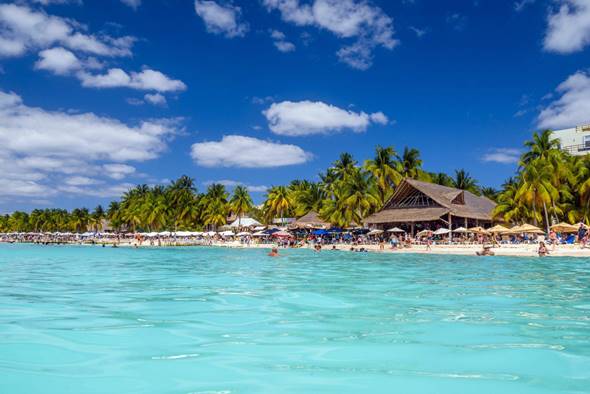
Visiting Mexico’s Caribbean coast and wondering what to do in Isla Mujeres? This paradise island is renowned for its crystal-clear turquoise waters, vibrant culture, and stunning natural beauty.

The name “Isla Mujeres” translates as “Island of Women,” and it certainly offers a treasure trove of unique experiences that everyone can enjoy. You can reach the island by taking a ferry to Isla Mujeres from Cancun, which adds an element of adventure to the whole experience.

Activities in Isla Mujeres

There’s a plethora of activities in Isla Mujeres to fill your vacation with joy and memories. The charm of this small island extends beyond its beautiful beaches:

Explore Playa Norte

    • This is one of the best beaches in the Caribbean. Sunbathing, swimming, and picnicking are popular activities here.

Visit the Underwater Museum (MUSA)

    • Dive or snorkel through this underwater exhibition of over 500 life-sized sculptures, promoting coral life.

Discover Hacienda Mundaca

    • The historic ruins of a 19th-century hacienda built by a pirate offer an intriguing glimpse into the island’s past.

Participate in Turtle Conservation

    • Isla Mujeres is known for its turtle conservation efforts. Participate by visiting the local turtle farm.

Adventure on a Golf Cart

    • Rent a golf cart for the day, and you can explore the island at your own pace.

How to Get to Isla Mujeres

Thinking about how to get to Isla Mujeres? It’s easier than you might think. A 20-minute ferry ride from Cancun is the most popular method of transport to this idyllic island. Ferry services run from early morning until late at night, allowing you the flexibility to plan your trip as you wish.

Whether you want to enjoy a day trip or stay overnight, the convenience of the ferry to Isla Mujeres makes it a hassle-free journey.

Isla Mujeres Tour

If you’re looking for a more organized experience, an Isla Mujeres tour is a fantastic option. Various operators provide tours, which typically include round-trip ferry rides, a guided exploration of the island’s landmarks, snorkeling opportunities, and often, a fresh local meal.

These tours offer an excellent way to experience the island’s highlights without the stress of planning each detail yourself.

Getting Around Isla Mujeres

By Golf Cart

As mentioned before, exploring Isla Mujeres by golf cart is a popular choice among visitors. It allows for an intimate experience of the island’s culture and sights, giving you the freedom to stop and explore as you wish.

By Taxi

For those seeking convenience, taxis are readily available throughout Isla Mujeres. They provide a quick and easy way to get to your chosen destinations on the island.

On Foot

Given the island’s compact size, walking is also an option. The slow pace allows you to fully take in the surroundings, immerse in the local atmosphere, and discover hidden gems.

The Rich History of Isla Mujeres

The Mayan Past

Isla Mujeres was once a sanctuary dedicated to Ixchel, the Mayan goddess of fertility and healing. Numerous relics and temples still stand today as testaments to this history. Visiting these sites offers a fascinating insight into the island’s ancient roots.

Pirate Lore

The island has its share of pirate history too. It’s said that the notorious pirate Mundaca built his hacienda here to impress a local woman, adding a dash of intrigue to the island’s past.

Delicacies of Isla Mujeres

Fresh Seafood

Being a Caribbean island, Isla Mujeres boasts a wealth of delicious, fresh seafood. Many beachside restaurants offer dishes prepared with the catch of the day.

Traditional Mexican Cuisine

Don’t miss the chance to sample traditional Mexican cuisine while on Isla Mujeres. From tacos to enchiladas, the island’s eateries serve up a variety of classic dishes bursting with flavor.

Responsible Tourism in Isla Mujeres

Environmental Conservation

As a visitor, you can support Isla Mujeres’ environmental conservation efforts. For instance, when snorkeling, be careful not to touch the coral or disrupt marine life. Participating in organized beach cleanups is another way to give back.

Supporting Local Businesses

Shopping locally-made crafts and eating at local restaurants not only offers a more authentic experience but also supports the island’s economy.

Wrapping Up Your Isla Mujeres Adventure

As your time on the island comes to an end, you’ll surely find yourself wondering what other adventures await in this little paradise.

With its stunning landscapes, rich culture, vibrant marine life, and a wide array of activities, it’s no surprise that many visitors find themselves returning to Isla Mujeres year after year.

In conclusion, deciding what to do in Isla Mujeres starts with embracing the laid-back island lifestyle. Take a ferry to immerse yourself in the crystal-clear waters or join an Isla Mujeres tour to explore the vibrant surroundings. There’s always something to see and do in this tropical paradise, ensuring a diverse and exciting itinerary.

Whether you’re an adventure enthusiast, history buff, nature lover, or beach bum, you’ll find activities that resonate with your travel desires. Engaging in various Isla Mujeres activities allows you to fully experience this beautiful island. Make the most of your visit to truly discover what to do in Isla Mujeres, and you’ll return home with unforgettable memories.