

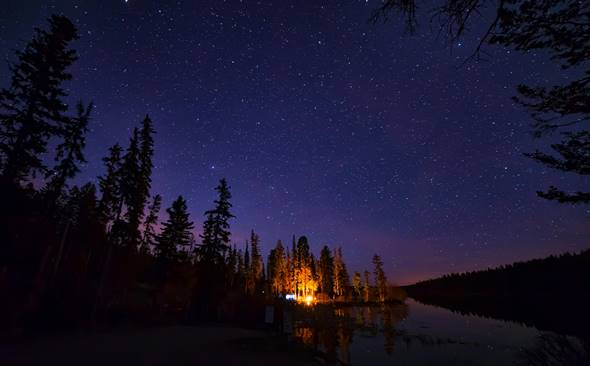
The kids are launched, the calendar is suddenly yours, and the house feels three sizes too big. For a growing wave of retirees, the answer to that strange new quiet isn’t a bigger television; it’s a set of wheels, a campsite reservation, and a horizon that changes every week.
The National Park Service’s visitor-use statistics show 323 million recreation visits across the system in 2025, and retirees with flexible schedules are a big part of that midweek traffic. This same pattern is playing out in campsites all across the USA. Camping has quietly become the empty nester’s adventure of choice, solving the retirement equation perfectly.
Here’s exactly why this particular adventure has become so popular among retirees specifically.
Empty Nests Open the Door to the Open Road
Camping was always a family compromise: school calendars picked the dates, crowds picked the campgrounds, and someone was always asking when you’d be back. Retirement deletes every one of those constraints at once. Shoulder seasons, midweek arrivals, and monthlong stays belong almost exclusively to people no longer tethered to a job or a school run.
There’s a deeper appeal, too. After decades of routines built around other people, a campsite is a life temporarily reduced to essentials: coffee, weather, a map, and whatever the day suggests. Couples rediscover conversation without screens competing, and solo travelers find that campgrounds are among the easiest places in America to be alone without being lonely.
Camping Fits Retirement Budgets and Timetables Alike
Fixed incomes reward travel styles with adjustable dials, and camping has more dials than any of them. The same trip can flex to fit whatever a month’s budget allows:
-
-
Campsite fees run a fraction of hotel rates, and longer stays usually get a further discount.
-
Cooking your own meals turns the biggest travel expense into an ordinary grocery run.
-
Off-peak, midweek travel cuts costs exactly when retirees are free to go
-
Annual passes for public lands turn entry fees into a one-time purchase
-
The timetable flexes just as easily. When there’s no return date, weather delays become extra days somewhere pleasant rather than missed flights, and the trip expands or contracts to match energy rather than obligation.
Destination Campgrounds Turn Travel Into the Event Itself
The modern surprise for many new retirees is that campgrounds are no longer just places to sleep between sights; increasingly they are the sights. Wineries, music festivals, national seashores, and speedways now court campers directly with on-site pitches. Motorsport weekends show the model at its best, and RV Camping at Road America puts guests trackside for entire race weekends instead of commuting from distant hotels. The venue itself spreads across roughly 640 wooded acres in Wisconsin, with an event calendar that runs from spring into fall.
Waking up inside the event changes the entire experience: no parking queues, no last-call drives, and neighbors who share the same enthusiasm that brought you there. For empty nesters building a travel year around their interests rather than just school breaks, destination camping is the format that finally matches the freedom.
Community Is the Secret Ingredient of Campground Life
Ask longtime RVers what keeps them on the road and they rarely mention scenery first; they mention people. Campgrounds run on a social contract that vanished from most neighborhoods decades ago: propane gets loaned, awnings get fixed by committee, and happy hour assembles itself around whichever rig put chairs out first.
For retirees leaving behind workplace friendships, that instant community matters more than any amenity. Caravan clubs, rallies, and volunteer camp-host programs turn strangers into a rolling circle of friends who reappear, season after season, in different states. Loneliness is retirement’s quiet risk, and the campground is one of the few places that solves it by default.
Staying Comfortable Keeps the Adventure Sustainable
The stereotype of camping as roughing it is decades out of date, which is precisely why retirees have embraced it. Sustainable adventure means honest planning around comfort.
-
-
Choose a rig you can confidently drive, park, and maintain, not the biggest one financed
-
Prioritize a real mattress, climate control, and a bathroom you’ll actually use
-
Book accessible sites with hookups where needed, and keep travel days short
-
Carry a telehealth plan and prescription strategy that works across state lines
-
Comfort isn’t a compromise of the adventure; it’s the engine of it. The couples still happily touring in their eighties are the ones who built trips their bodies could repeat.
Final Thoughts
Camping became the ultimate retirement adventure for empty nesters because it hands back everything the working years rationed: time, flexibility, novelty, and company, at a price a fixed income can love. The empty house stops being a void and becomes a base camp. The itinerary stops being an annual splurge and becomes a lifestyle with wheels under it. No boarding passes, no checkout times, no one else’s schedule. Just a country full of campgrounds, tracks, coastlines, and forests waiting on no particular date. The nest didn’t empty; it simply learned to move.

Fantastic article! The insights highlighted regarding “How Camping Became the Ultimate Retirement…” offer genuine value.
Kind regards,
Lukas | Swiss Media Relations
Sehr aufschlussreiche Ausführungen zu ‘How Camping Became the Ultimate Retirement Ad…’, die den Nagel auf den Kopf treffen.
Sonnige Grüße von Mallorca,
Merava Private Concierge Mallorca – Merava Private (Merava Private)
Fantastic article! The points you highlighted in “How Camping Became the Ultimate Retirement…” really hit the nail on the head.
Best wishes,
Marc