

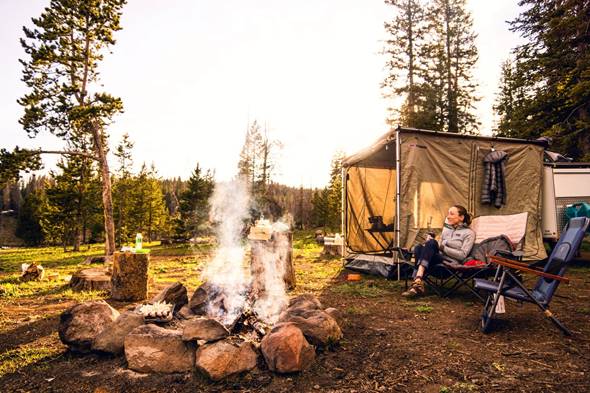
We know that blending traditional camping must-haves with smart power solutions elevates every trip.
Below is your guide to gear that ensures comfort, safety, and energy wherever your journey takes you.
Tent & Sleep Setup
A solid night’s rest is the backbone of any great camping experience. Start with a tent that matches your climate and crew size. Use a footprint or groundsheet to protect your tent floor, and carry extra guylines in case conditions change.
Choose a sleeping bag rated a few degrees colder than your expected low temperature. Combine it with an insulated sleeping pad to block cold from the ground. A compact pillow or a stuff sack filled with clothes works well. A thin liner or blanket can also give you extra warmth or let you turn a summer bag into a three-season option.
Camp Kitchen & Meals
Eating well at camp can turn a simple trip into a highlight. Pack a reliable stove and fuel source, even if you plan to use fire—wind or rules may force you indoors. Bring pots, pans, utensils, a cutting board, and a sharp knife.
Always carry a way to purify water—filters, chemical purifiers, or UV — or plan to bring clean water. Don’t forget basics like oil, salt, pepper, and a spice mix to liven food up. Re-sealable bags, foil, trash bags, and containers for leftovers help keep everything organized.
Mornings are special—carry a kettle or French press so you can enjoy coffee by the dawn. Good food, shared stories, and warm drinks around the fire build memories.
Lighting & Power
Bring headlamps for hands-free work, lanterns for ambient light, and string/camp lights to set mood. Use LED lights to maximize efficiency.
Most importantly, bring ALLPOWERS portable power gear — a solar panel, power bank, or power station — so you can charge your phone, camera, lights, or other small appliances.
Always carry spare cables and batteries. With proper power, nightfall doesn’t mean shutting down — it means a different mode of living.
Safety & Tools
Adventure is better when you’re prepared. A well-stocked first-aid kit is non-negotiable. Include bandages, antiseptics, blister treatment, pain relievers, and any personal meds.
Have navigation tools—map, compass, GPS, or offline map apps. Bring a multitool or knife, firestarter materials, extra cord (paracord), duct tape, and repair kits. A whistle, signal mirror, and emergency blanket are lightweight lifesavers.
Sun and insect protection are essential: sunscreen, sunglasses, lip balm, insect repellent, and a hat go a long way. Read up on local fire and wildlife rules, and always carry a trash bag to leave no trace.
Comfort Items & Extras
Layered clothing is key—base layer, insulating mid-layer, and a waterproof outer shell. Pack extra socks, a warm hat, and quick-dry garments. Bring camp chairs, a folding table or mat, and a tarp for shade or extra shelter.
Personal hygiene matters: a small towel, biodegradable soap, toothbrush, toothpaste, toilet paper, and hand sanitizer. If you expect long stays, a solar shower or water bag helps.
For downtime, carry a book, playing cards, a journal, or a compact musical instrument. Binoculars, star charts, or a nature guide can bring the outdoors to life. Use dry bags or gear sacks to keep things sorted and easy to access.
Power Management & Tech
Your devices are only as useful as your power plan. With portable power solutions, you can keep phones, cameras, headlamps, and GPS units charged—even in remote areas.
Set up solar panels in the sun during the day and store energy in batteries or a power station. Prioritize essential devices first. Use power-saving modes on your devices.
Carry a compact speaker or tablet (with offline media) for fun. For remote trips, consider satellite communicators or emergency beacons.
Packing Strategy & Pre-Trip Checks
A checklist is your best friend. Segment items into categories (sleeping, cooking, lighting, power, safety, comfort), and pack by time of use. Items needed at night or early morning should be accessible without digging.
Do a trial setup before leaving: pitch your tent, test your stove, charge your power station, and run a mock meal. Pack an extra meal, warm clothes, and a rain layer for surprises.
Respect the environment. Pack out everything, stay on durable surfaces, and follow Leave No Trace ethics.
Final Thoughts
A memorable camping trip isn’t about packing every gadget — it’s using the right gear wisely.
Shelter, sleep, cooking, lighting, safety, comfort, and reliable power turn a weekend in the wild into an adventure you’ll relive in stories.

Attractive content. I just stumbled upon your blog and enjoyed your posts.
This is a great article, Thank you.