
Search…

The Ultimate Guide to Your First Vegas Trip

You have not lived until you have visited the ultimate vacation hotspot, otherwise known as Sin City: Las Vegas…
CONTINUE READING >>

There is an oft-quoted adage to separate casual vacationers from world travelers, citing that there are two types of people in the world: those who have seen the Taj Mahal and those who have not.

Now, even if your usual vacation preferences involve more history and culture, you have not lived until you have visited the ultimate vacation hotspot, otherwise known as Sin City: Las Vegas.

Continue reading for some helpful hints and tips to make the most of your first trip to the gambling and partying capital of the world.

Wear Comfortable Shoes

Even though, especially if you are planning on partying all day and night, you will unavoidably have to spend a lot of your money on drinks and food, when it comes to taking in the sights and sensory experience of Vegas, all you need to do is walk.

Now, there are several affordable shoe shops on the Strip, namely the large Havaianas store just outside the Flamingo, but to be safe, you should wear supportive trainers or even walking boots.

Be sure to also bring a change of clothes for the evening; Las Vegas is in the center of the desert, and in the summer, the evenings can get particularly cool, and in the winter, the evenings are surprisingly warm.

Stay on the Strip

If you intend to come back to Vegas again and again, then by all means, you can look to stay in more affordable hotels in Downtown for future trips. However, for your first Vegas experience, it is strongly advisable to stay on the Strip.

Generally cheaper than others, the more affordable hotel-casinos on the Strip include Luxor, Excalibur, New York New York (only off-peak), and on the other end of the Strip, Flamingo and Circus Circus.

Mid-range Vegas hotels include Paris, MGM, MGM Park, The Mirage, and Harrah’s, and for a once-in-a-lifetime stay, look into The Venetian, Wynn, or the Bellagio, the latter being famous for its water fountain show

Stick to a Budget

Even if you have never been much of a gambler in the past, once you walk into the beautiful casino floors in iconic locations such as Caesar’s Palace (as featured in the TV show Friends), you will find you are quickly drawn to the machines.

For total beginners, before settling down at a machine on the casino floor, why not learn the way in which slots work by registering for one of the leading real money casinos? This way, even though games vary from machine to machine, you will have a basic framework upon which to budget.

Make sure, under no circumstances, that you do not deviate from your pre-planned gambling budget, and if you feel as if you have been ‘sucked in’ by a particular game, that you get yourself out of there as soon as possible.

Vegas casinos are designed to keep players playing, and you will never find a clock on the wall in either your room or, indeed, anywhere on site and the windows are permanently tinted to give the appearance of bad weather, even when it is hot and sunny outside.

Legal Aspects Of Car Accidents In Texas: What Travelers Need To Know

Cruising through the vast landscapes of Texas is an adventure, but what happens if your road trip takes an unexpected turn with a car accident? The city is known for its wide-open spaces, but unfortunately, it also sees its fair share of car accidents.

In fact, according to the Texas Department of Transportation (TxDOT), a car accident occurs every 57 seconds on average. That equates to around 1,680 crashes per day!

That’s why whether you’re a Texan or just passing through, understanding the laws regarding car accidents is crucial. Here’s a guide to help you navigate the complexities of a car crash, ensuring you’re prepared no matter what happens on the road.

Let’s dive in!

Understand Comparative Fault Rules

Texas operates under a “fault” system, which means the individual responsible for causing the accident is liable for all resulting damages. This includes medical expenses, property damage, and other related costs.

As a traveler, it’s crucial to determine whether you should file a claim with your own insurance or pursue a claim against the other driver directly.

The state also follows a modified comparative fault rule. Under this system, if you are found to be partially responsible for the accident, your compensation could be reduced proportionally to your degree of fault. Notably, if you are more than 50% at fault, known as the 51% bar rule, you may be ineligible to receive compensation.

Understanding this rule is vital as it significantly influences potential recovery, primarily if the other party contends that you were partly at fault.

Consult An Attorney

Navigating the legal landscape after a car accident away from home can be daunting, especially in Texas’s strict legal environment. To deal with such cases, it is crucial to contact an attorney who is familiar with the local laws. They can provide the guidance you need.

They can help you with important steps, such as filing a police report and understanding the local traffic rules, which could significantly enhance your case outcomes. In fact, according to the Herrman & Herrman Texas car wreck lawyers, it’s imperative to report any accident involving injury, death, or substantial property damage to the police. This report can serve as crucial documentation in insurance claims or potential lawsuits.

An experienced attorney will ensure your rights are protected while helping to gather and document evidence to support your claim effectively.

Time Limits for Insurance Claims

Handling insurance claims after an accident in a state you’re not familiar with can be complex. Different states have varying coverage limits, so it’s essential to understand the specifics of your policy thoroughly. This will enable you to provide accurate information to your attorney. Your lawyer will handle communications and negotiations with your insurance company on your behalf.

Apart from this, be aware that the city has a two-year statute of limitations for personal injury claims. This timeframe is crucial because you lose the right to seek compensation if you miss it. As a visitor, it’s critical to start this process promptly, particularly if you plan to return to your home state soon. Therefore, contact your attorney immediately after an accident to relay the details and get expert guidance.

Local Traffic Laws and Regulations

Familiarize yourself with Texas’s local traffic laws and regulations; it poses strict rules. Different places may have unique driving rules, speed limits, and road signs. Understanding these laws can help you avoid potential fines, legal issues, and accidents.

Additionally, knowing the local regulations can assist you in navigating unfamiliar roads more safely and confidently.

Rental Car Accidents

If you are traveling on a rental car, there are some crucial aspects you need to consider. Post-accident immediately informs the rental company of the accident. They will guide you through the steps to follow, which can typically include filing a report with them and possibly their insurance company.

It’s crucial to understand the insurance coverage stipulated in your rental agreement. Many rental contracts offer various levels of coverage, which can protect you financially in the event of an accident. Additionally, check if your personal auto insurance or credit card offers coverage for rental cars, as this can further protect you from out-of-pocket expenses.

Rest assured, call your attorney. They will provide guidance on how to handle potential disputes or liability issues that may arise.

The Final Thoughts

Being involved in a car accident while traveling can be overwhelming, but understanding the legal landscape in Texas can help you navigate the situation. Remember to prioritize your safety, gather information, and seek legal counsel. With preparation and knowledge, you can ensure a smoother recovery and protect your rights.

Write A Journal & Express Self Respect & Gratitude

Deemed to be one of the most effective and simplest routes to wellness, journaling is a habit that grows on you and offers a surprising array of advantages…
CONTINUE READING >>

Would you like to join Louisa May Alcott, Lord Byron, Lewis Carroll, Queen Victoria and Nijinsky among millions of others? We’re talking about journaling. As personal journals go, the oldest one that’s available today is that of the 2nd CE Roman philosopher statesman, Marcus Aurelius. He wrote a series of meditations that he titled To Myself. 

And that has remained the concept of a journal throughout history – it is something that you address only to yourself, where you share your most private thoughts, reflections, observations and ideas. Some journals are kept for a specific reason such as travel, hobbies, to record the day’s events or dreams, gratitude and kindness, reading list, ideas for writing or speaking and more. 

Post the Covid 10 pandemic, journaling has gained more traction, as people cope with feelings of isolation, anxiety, job loss, grief on losing a loved one or embarking on a new path in life or at work. Deemed to be one of the most effective and simplest routes to wellness, journaling is a habit that grows on you and offers a surprising array of advantages.

Journaling Benefits

The process of maintaining a journal requires mindfulness, consistency, and complete honesty. Today, many people who keep a journal do so on blogs, vlogs, or social media updates. While these have indisputable pluses, the traditional journal scores way above all these. 

Stress Buster: You could plunge straight in,  and use your journal to rant, vent and generally unload your stress and angst. Or if you’d like a more structured approach, you could play by a few rules of your own making – write 5 things that made you sad, happy, grateful, envious or reflective. Either way, you’ll find your stress levels dropping by the time you finish for the day. 

Secret sharing: There are things you wouldn’t want your best friend to know, which could create emotional blocks that weigh you down. Penning them down in a journal helps you to unburden your heart and mind. Writing down negative stuff creates a more objective view of them. 

Boost confidence: When you look back at the things you’ve gone through and recorded in your journal, your self-confidence rises as you note how well you’ve coped and how far you’ve come.

Planning: Journaling is a great way to plan for life events, career strategies, and social and emotional goals. Seeing them in black and white is a great way to take them forward. 

Mindfulness: The act of bringing thoughts from the subconscious to the conscious mind is a mindful, effective way to cleanse the emotional ecosystem. 

Self Respect and Gratitude Journal

Respect is the food that allows relationships to grow, sustain and thrive. But unless you respect yourself first, it’s hard to develop respect for anyone else. Self-respect allows you to value yourself, set boundaries and protect yourself from being exploited or manipulated. 

It’s only when you respect yourself that you can see the positive things in your own life. The next logical step is to acknowledge these aspects through a sense of gratitude. And before you think you have to be grateful only for big things, take a look around you – sunlight dappled on water, a baby’s smile, a stranger giving up a seat on a crowded train, the taste of freshly baked apple-pie, hearing music drifting out of an upstairs window – all these can give you an instant boost of happy hormones. 

You can develop self respect one day at a time through your gratitude journal. Most of us are very hard on ourselves, and we tend to make harsh self judgements. When you pen your thoughts down in your gratitude journal, you put some distance between your emotions and your words – and this helps you to see things from an alternate perspective. 

Practiced daily, self respect and gratitude journaling can improve your physical health. In today’s world, our fight vs flight response is always on high alert, not giving the rest and digesting complementary response to bring our bodies back to equilibrium and stability. Mindful activities such as journaling help to resume normal body functions such as digestion.

According to psychologists, there are 3 main stages of gratitude:

    • The feeling of gratitude, responding to something good that has happened or is there in your life
    • Expressing gratitude to those who have been good to you
    • Changing your behavior as a result of gratitude

It is important to pass through all the stages so that you reach the final point where you can be less judgmental of yourself and others, become more perceptive and empathetic, and adopt a more positive attitude towards life events. 

All you need is a few minutes of your time every day. You can make it a bedtime ritual that helps you to unwind after a hectic day. Some people prefer to start the morning with their self-respect and gratitude journals available at https://restanddigest.com.au/collections/gratitude-journal, to set the tone for the day. 

Accidentally Attending the Alarde Festival

As we were approaching the town of Hondarribia on the Camino de Santiago, little did we know that a huge festival was underway… CONTINUE READING >> 

As we were approaching the town of Hondarribia on the Camino de Santiago, little did we know that a huge festival was underway.

Actually, our guide Txaro (pronounced Charo) knew but she didn’t want to spoil the surprise.

See all of our adventures in the Basque Country here.

Our plan was to stop at a small church up on Monte Jaizkibel above the city, the sanctuary of the Virgin of Guadalupe, for a look at the famous Madonna inside. The statue was found centuries ago and is one of only three so-called black Madonnas in Spain.

While we did get a peek at the figure, we had to fight our way through some serious crowds because we had stumbled upon an event that we will never forget.
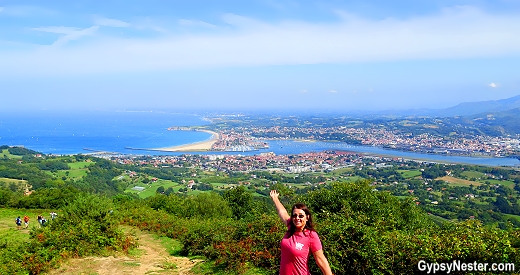
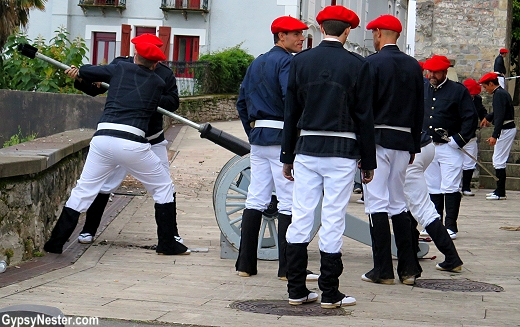

The festivities were part of the Alarde, an annual celebration commemorating Hondarribia’s survival of a siege by the troops of King Louis XIII of France.

In the summer of 1638, the city was surrounded and the citizens swore to the Virgin of Guadalupe that if they managed to escape they would hold an annual procession to her shrine.

The blockade lasted sixty nine days, but the Basques endured, and now each year they honor their pledge with a party more than worthy of the victory.

The little chapel was overflowing with worshipers attending the special mass that began the proceedings, so we waited outside in what became an incredibly noisy perch overlooking Hondarribia, the Bidasoa River, Txingudi Bay, and France across the water.

Cannon fire was coordinated to punctuate, and we do mean strongly, certain parts of the service, and we just happened to end up right by them as they went off. When a final blast signaled the end of the liturgy, the priest led the congregation out into the streets to begin the parade.

With ears ringing, we watched dozens of men in huge sheepskin hats and long black beards march around the church.

They carried various tools, shovels and so forth, as a reminder of the townsfolk who dug their way past the enemy lines disguised as sheep in order to seek help from neighboring villages.
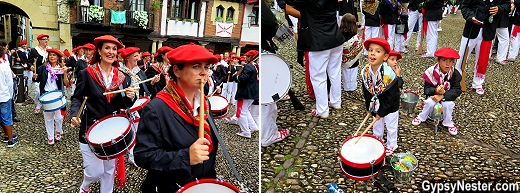

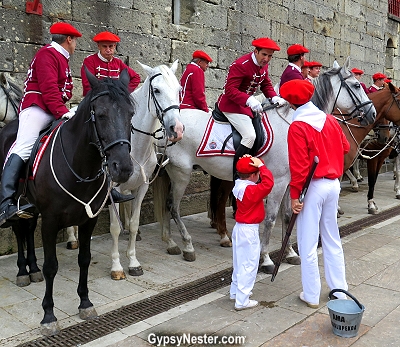
These guys, called hatxeroak in the Basque language, are without a doubt the rock stars of the spectacle and the crowd went crazy.

Next, several companies of fife and drum corps marched past, followed by a huge troop of riflemen.

The armed contingent stopped in front of the church to fire a salute, the first of much gun fire we would be observing during the day. By now our ears were shot, but we figured out that this seemed to signal that it was time to make way for the city below.

We walked down the path to Hondarribia and prepared for the scene to repeat, but this time with a much larger crowd of spectators.

The entire old town within the medieval walls was wall-to-wall merrymakers. The cobblestone lanes were jammed and every balcony filled with spectators.

In a much larger parade than the one up on the mountain, numerous regiments representing the town’s neighborhoods marched through the streets to the Plaza de las Armas where they gathered and loaded up for numerous volleys.

At the same time the cannons, we think the same ones as before, fired incredibly loud barrages out toward the vanquished French.

Clouds of gun powder induced smoke billowed and hovered over the city.

The smell was something akin to the Fourth of July on steroids.

We had a leg up on blending in because this is Txaro’s hometown, so to help us look like locals she had instructed us to wear white shirts and gave us all red bandanas to wear around our necks.

It was a wonderful touch that, even though we’re sure most folks could tell we were visitors from afar, made us feel right at home.

Feeling a bit less conspicuous, we wandered among the throngs and joined the merriment as artillery and rifle reports, music and peals of church bells surrounded us.

Each square we came to had crowds of revelers singing, waving flags, and drinking beer or cider.

The celebration continued while afternoon turned to evening, and then night, so we crawled into bed while listening to the joviality go on well into the wee hours…

David & Veronica, GypsyNester.com

See all of our adventures in the Basque Country here.

A big thank you to VBT Bicycling and Walking Vacations for providing this adventure, as always, all opinions are our own.

Exploring the Balkans by Car: The Ultimate Road Trip Guide

The Balkans are known for warm hospitality, diverse cultures, and stunning landscapes. Take time to immerse yourself in the rich history and natural beauty of the region… CONTINUE READING >>

The Balkans, a region rich in history, culture, and natural beauty, offers one of the most rewarding road trip experiences in Europe. Traveling by car provides the freedom to explore hidden gems, picturesque landscapes, and vibrant cities at your own pace. Here’s everything you need to know to embark on an unforgettable Balkan road trip adventure.

Why Travel the Balkans by Car?

Traveling by car through the Balkans is an ideal way to experience the region’s diversity and charm. Unlike fixed itineraries of guided tours or the constraints of public transportation, a road trip offers flexibility and spontaneity. You can stop at a quaint village for lunch, take a detour to a secluded beach, or extend your stay in a city that captures your heart.

Key Benefits of Driving in the Balkans:

    • Flexibility: Adjust your itinerary on the go and explore off-the-beaten-path destinations.
    • Accessibility: Reach remote areas and natural attractions that are not easily accessible by public transport.
    • Comfort: Enjoy the convenience of traveling at your own pace with all your essentials in tow.
    • Adventure: Discover hidden gems, interact with locals, and experience authentic Balkan culture.

Preparing for Your Balkan Road Trip

Before setting off on your Balkan road trip, there are several essential preparations to ensure a smooth and enjoyable journey.

Documentation and International Driving Permit (IDP)

First and foremost, ensure you have all the necessary documentation. Most Balkan countries accept foreign driver’s licenses, but it’s highly recommended to carry an International Driving Permit (IDP). An IDP translates your license into multiple languages and is recognized in over 150 countries. It’s a valuable asset if you’re stopped by local authorities or renting a car.

Car Rental

Renting a car in the Balkans is straightforward, with numerous international and local rental agencies available. Book your vehicle in advance, especially during peak tourist seasons. When choosing a car, consider the following:

    • Size: Compact cars are ideal for navigating narrow city streets, while larger vehicles are better for long-distance travel and carrying luggage.
    • Fuel Efficiency: Opt for a fuel-efficient model to save on costs, as fuel prices can vary across the region.
    • Insurance: Comprehensive insurance is crucial for peace of mind. Ensure it covers cross-border travel if you plan to visit multiple countries.

Navigating the Balkans

While GPS and smartphone navigation apps are invaluable, it’s wise to have physical maps as backups. Road conditions in the Balkans can vary, with some rural areas having less reliable GPS coverage. Familiarize yourself with road signs and local driving regulations in each country you plan to visit.

Border Crossings

The Balkans consist of multiple countries, each with its own border control. Keep your passport, car rental agreement, and insurance documents handy for inspections. Check visa requirements for each country in advance to avoid any surprises.

Top Balkan Destinations by Car

The Balkans offer a myriad of stunning destinations. Here are some must-visit places to include in your road trip itinerary:

Croatia: Dubrovnik and the Dalmatian Coast

Start your journey in Dubrovnik, Croatia’s jewel on the Adriatic Sea. Explore the city’s historic old town, stroll along the ancient city walls, and enjoy breathtaking views of the coastline. From Dubrovnik, drive along the scenic Dalmatian Coast, stopping at charming towns like Split and Zadar. Don’t miss the stunning Plitvice Lakes National Park, known for its cascading waterfalls and crystal-clear lakes.

Bosnia and Herzegovina: Mostar and Sarajevo

Cross into Bosnia and Herzegovina to visit Mostar, famous for its iconic Stari Most (Old Bridge) and vibrant bazaar. Continue to Sarajevo, a city with a rich cultural tapestry and a poignant history. Explore the old town, visit the Sarajevo Tunnel Museum, and enjoy traditional Bosnian cuisine.

Montenegro: Kotor and Durmitor National Park

Head south to Montenegro and discover the enchanting Bay of Kotor. The town of Kotor, with its medieval old town and dramatic mountain backdrop, is a UNESCO World Heritage site. For nature enthusiasts, Durmitor National Park offers spectacular hiking trails, glacial lakes, and the awe-inspiring Tara River Canyon.

Albania: Tirana and the Albanian Riviera

Drive into Albania and experience the vibrant capital, Tirana. Visit Skanderbeg Square, explore the Blloku district’s cafes and restaurants, and learn about Albania’s history at the National History Museum. Continue to the Albanian Riviera, where pristine beaches and charming coastal villages like Himara and Saranda await.

North Macedonia: Ohrid and Skopje

In North Macedonia, the lakeside town of Ohrid is a must-see. Known for its beautiful churches, ancient ruins, and stunning lake views, Ohrid is a cultural gem. Drive to the capital, Skopje, to explore its mix of historic and modern architecture, including the impressive Skopje Fortress and the vibrant Old Bazaar.

Serbia: Belgrade and Novi Sad

In Serbia, start with the lively capital, Belgrade. Visit the historic Belgrade Fortress, stroll along Knez Mihailova Street, and enjoy the city’s vibrant nightlife. Head to Novi Sad, located on the banks of the Danube River, known for its Petrovaradin Fortress and the annual EXIT music festival.

Tips for a Smooth Road Trip

To make the most of your Balkan road trip, consider these practical tips:

Plan Your Route

While spontaneity is part of the adventure, having a rough itinerary helps ensure you don’t miss key attractions. Plan your route to include must-see destinations while allowing time for unexpected discoveries.

Respect Local Driving Laws

Each Balkan country has its own driving laws and regulations. Familiarize yourself with speed limits, road signs, and local customs. Be particularly cautious in rural areas, where road conditions may vary.

Accommodation

Book accommodations in advance, especially in popular tourist areas during peak seasons. Consider staying in a mix of hotels, guesthouses, and Airbnb rentals to experience different aspects of Balkan hospitality.

Safety and Security

While the Balkans are generally safe for travelers, it’s essential to take standard precautions. Keep your belongings secure, avoid driving at night in unfamiliar areas, and have a reliable means of communication.

Enjoy the Journey

Above all, savor the journey. The Balkans are known for their warm hospitality, diverse cultures, and stunning landscapes. Take the time to interact with locals, try regional cuisines, and immerse yourself in the rich history and natural beauty of the region.

The Hidden Treasures of Costa Rica: Prepare for an Unforgettable Journey

With lush forests, paradise beaches, and spectacular national parks, there is so much to discover in Costa Rica…
CONTINUE READING >>

Costa Rica is a fantastic destination where nature lovers and adventurers can explore decades of natural wonders. Between lush forests, paradise beaches, and spectacular national parks, there is so much to discover. This article delves into some of the best places to visit in Costa Rica to ensure a memorable trip.

First and Foremost, Choosing the Right Mode of Transportation

Costa Rica is a small country, making it easy to get around. We recommend renting a vehicle. It’s undoubtedly the best way to travel: it offers you great freedom in terms of both distances and schedules. You will find car rental agencies at the airport. This is indeed the simplest way to pick up your vehicle. Do not hesitate to contact these agencies well in advance of your stay. This will allow you to benefit from the best rates, as well as a wider selection of car models.

For the sometimes rough roads of Costa Rica, there’s nothing better than an SUV or even a 4×4. This type of vehicle easily handles the unpredictability of the road and can safely transport you and your luggage.

Now let’s discover the most amazing places to visit in Costa Rica.

Manuel Antonio National Park

Manuel Antonio National Park is one of the country’s most popular destinations. Known for its beautiful beaches and rich biodiversity, this park attracts thousands of visitors each year. Nature trails guide you through the dense forest, offering breathtaking views of the Pacific Ocean. Activities also include snorkeling and kayaking, perfect for exploring the colorful marine life.

The park is also home to several species of animals, including capuchin monkeys, sloths, and various types of birds. Enjoy idyllic beaches like Playa Manuel Antonio and Playa Espadilla Sur, where white sand and turquoise waters create a perfect setting for relaxing and soaking up the tropical sun.

Exploring the Trails

Walking on the well-marked trails of the park allows you to discover incredibly diverse flora and fauna. Each path reveals hidden gems, whether it’s ancient trees or panoramic views of the ocean. Along the way, it’s not uncommon to encounter iguanas, bats, or even snakes. It’s recommended to come early in the morning to fully enjoy the tranquility and to observe more active animals during these hours.

Tortuguero: Canals and Turtles

Nicknamed the “Little Amazon,” Tortuguero offers a unique experience with its navigable canals and lush vegetation. This isolated village is accessible only by plane or boat, making it an adventure in itself. It is one of the best places to see sea turtles laying their eggs. The black sand beaches are a prime site for green, hawksbill, and leatherback turtles that come to lay their eggs between July and October.

Hop aboard a canoe or kayak to explore the winding canals that snake through this wet ecosystem. Silently navigating the waterways, you may have the chance to see caimans, jaguars, howler monkeys, and a multitude of bird species. Tortuguero National Park is a perfect escape for those looking to immerse themselves in nature away from tourist crowds.

Hiking and Guided Tours

To deepen your discovery of Tortuguero, join a guided hike with a local naturalist. These excursions allow not only to walk in the jungle but also to learn a lot about the conservation of this unique region. Many guides share their vast knowledge of local fauna and flora, adding an educational dimension to your visit. You will discover how threatened habitats are protected to ensure their sustainability. Costa Rica tours often include insights into how threatened habitats are protected to ensure their sustainability.

Mount Arenal: Active Volcano and Hot Springs

Mount Arenal is another major natural icon of Costa Rica. Its imposing slopes rise majestically above the surrounding landscapes, offering a spectacular backdrop. At its base, you will find a variety of attractions and activities. Hiking at the foot of the volcano, bathing in hot springs, and visiting picturesque waterfalls are just a few examples of the possibilities offered.

The area around Mount Arenal is also famous for its sparkling lagoon, ideal for water sports such as paddleboarding, fishing, and boating. For thrill-seekers, zip-lining through the rainforest is a must-do adventure. Don’t forget to explore the suspension bridge that offers a unique perspective on the forest canopy.

Night Walks

For a truly exceptional experience, opt for a night walk around Mount Arenal. Accompanied by an experienced guide, you will be immersed in the mysterious atmosphere of the forest at night. The darkness reveals a whole new facet of the local fauna, such as colorful tree frogs, phosphorescent insects, and possibly bats. It’s an opportunity to feel nature differently, when everything becomes calm yet vibrant with nocturnal life.

Nicoya Peninsula: Beach Paradise

Located on the Pacific coast of Costa Rica, the Nicoya Peninsula is renowned for its superb beaches and charming small villages. Santa Teresa, Montezuma, and Mal Pais are some of the coastal gems where you can enjoy entire days of sun and surf. These beaches offer a relaxed atmosphere and are perfect for those seeking both relaxation and adventure.

The peninsula is also rich in natural parks and reserves where you can observe various animal species like howler monkeys and red parrots. For yoga and wellness enthusiasts, several centers offer revitalizing retreats amid the tranquil and soothing sounds of nature.

Water Activities

The warm Pacific waters surrounding the Nicoya Peninsula are ideal for a range of varied aquatic activities. Whether it’s scuba diving to explore coral reefs, snorkeling to admire marine life, or sport fishing to catch exotic fish, each activity promises an unforgettable experience. The sunsets from the beaches of this region are among the most beautiful in the world, so taking time to simply admire the end of the day is highly recommended.

Monteverde: Cloud Forest and Biodiversity

Perched in the heights of the central mountain range, Monteverde is famous for its stunning cloud forest. This region attracts eco-tourists from around the world who come to enjoy the cool altitudes and marvel at the extraordinary biodiversity. The Monteverde Biological Reserve contains numerous trails that allow exploration of this natural wonder.

Walking through the cloud forest, you discover endemic plants, rare orchids, and sometimes even the famous resplendent quetzal, a mythical bird of Mesoamerican cultures. Visiting the suspension bridges of Monteverde is a highlight, offering a fascinating perspective of the canopy.

Conservation and Research

Monteverde is not only a destination for tourists but also an important center for conservation and scientific research. Several institutes dedicated to preserving the cloud forest work here to protect this exceptional habitat. A visit to the Tropical Science Center will provide a better understanding of the efforts made to safeguard biodiversity. Participating in tree-planting projects is a way to actively contribute to environmental protection during your trip.

5 Steps to Protect Your Patient’s Health Information

This article gives you five simple steps to ensure the protection of Patient’s Health Information in the Electronic Health Records…
CONTINUE READING >>

The protection of Patient Health Information (PHI) issue was addressed for the first time by the Health Insurance Portability and Accountability Act (HIPAA) of 1996. This was later supported by the Health Information Technology for Economic and Clinical Health Act (HITECH) of 2009. The HITECH Act fixed some issues related with HIPPA about enforcement of the law on business associates of healthcare providers. The Act also encourages the adoption of meaningful use of Electronic Health Records (EHR). Furthermore, there are additional Federal and State laws protecting patient information.

Under HIPAA law, there are three sets of rules regarding privacy, security, and breach notification. An experienced Medical billing company will know these well. The Privacy Rule states how and when the protected PHIs can be disclosed, i.e., who can use them and how.

The Security Rule pertains to how the health information is to be secured by the covered organizations and their business associates. This should certainly include cybersecurity monitoring to be completely safe and secure.

And last but not the least, the Breach Notification Rule, required all healthcare organizations to promptly notify the affected parties (and if applicable, the media) about unauthorized disclosure of information.

The Ponemon Institute in its annual study stated in 2006 that it found, for the sixth year in a row, the trend of a high number of breaches in the healthcare industry. The report further revealed that 90 percent of healthcare providers maintained that they had a data breach in last two years, and nearly half of them had more than 5 data breaches during the same period. This is a serious concern for the patients, healthcare organizations, and the government. Various government agencies and courts have levied hefty fines due to HIPAA law infringement upon multiple organizations.

Thus, it is obvious that protection PHIs, or more precisely ePHIs, is paramount to all parties connected with healthcare industry; practices, hospitals, their business associates and insurance providers. This article gives five simple steps to ensure that no stone is left unturned when it comes to patient data protection:

Do A Proper Privacy and Risk Assessment

Perform a periodic privacy and security assessment. Be thorough about your analysis; review each and every step of the data collection, transmission, and storage process. Be on the lookout for recent breach incidents and analyze how those breaches occurred. Then compare these breaches with your system and see if you also have any vulnerabilities.

Implement Data Encryption and Privacy Policy

Implement a proper data encryption strategy for all types of electronic equipment that have access to the electronic medical records (EMR). Ensure all parties are clear about the privacy policy of your organization. Having your privacy policy in written form and distributed to all employees and contracting parties will go far in ensuring HIPAA compliance by all parties.

Keeping the Technology Up-to-Date

Keep all your software and equipment Up-to-Date. Since professional hackers always find new ways of getting around even the most advanced technology. Thus, it is essential always to stay one step ahead of these professional hackers. Having a secure firewall and multiple step validation improves data security manifold.

Have an Incidence Response Plan

Despite all your efforts, there is still no surety of complete patient data security. Data breaches do occur, and you need to be prepared in case an incident does happen with data under your supervision. Having a medical billing company mitigates the risk of data breach. Furthermore, to avoid having to pay huge fines, ensure that you or your medical billing company in USA has a proper data breach insurance coverage. Fines could go in millions depending on the type and level of breach.

P3 Healthcare Solutions uses the state of the art technology to ensure that all data under its responsibility is kept safe and secure. We do not only keep the reputation of our clients and the legal requirements in mind but also are aware of the patient’s right to their privacy.

We are happy to present this collaborative post to offer valuable information to our readers.