
Search…

Nepal’s Iconic Treks: EBC, Langtang & Annapurna Circuit

In a world that moves as well quickly, these Himalayan trails welcome you to moderate down, breathe profoundly, and reconnect—with nature, with culture, and with yourself…
CONTINUE READING >>

Nepal, a destination for taking off peaks, old trails, and warm-hearted individuals, remains one of the most captivating goals for trekkers from all around the globe. Among the heap of trails, three treks have ended up incredible: the Everest Base Camp trek, the Langtang trek, and the Annapurna Circuit trek. These treks are not just courses through tough terrain—they are ventures into the soul of the Himalayas, each advertising a unmistakable window into Nepal’s magnificent magnificence, dynamic conventions, and otherworldly depth.

Everest Base Camp trek

Arguably the most famous trek in the world, the Everest Base Camp trek is a dream come true for globe-trotters and mountain climbers alike. The trip starts with an exciting flight to Lukla, a little airstrip roosted on a mountainside. From there, trekkers set off on foot, winding through a scene of pine timberlands, thundering waterways, and conventional Sherpa towns. As the elevation rises, the view becomes progressively stark and magnificent, overwhelmed by views of a few of the world’s most elevated peaks, counting Ama Dablam, Lhotse, and of course, Mount Everest itself.

The path climbs through the bustling Sherpa center of Namche Bazaar, an exuberant town that offers an idealized blend of social interaction and acclimatization. Here, trekkers can visit neighborhood historical centers, appreciate cafés ignoring the mountains, or climb to the adjacent Everest See Inn for their to begin with see of the forceful top. As the trek proceeds, the way leads to the otherworldly heart of the region: Tengboche Religious community, settled in the midst of all encompassing Himalayan seas. The peaceful chants of ministers and the fragrance of juniper incense make a sense of peace indeed in this tough wilderness.

Finally, after days of acclimatization and amazement, trekkers reach Everest Base Camp, arranged at 5,364 meters. Whereas you won’t see the summit from base camp, the colossal scale of the Khumbu Icefall and the encompassing peaks is extraordinary. Most trekkers moreover climb to Kala Patthar (5,545 meters) for the best close-up see of Mount Everest, especially amid dawn when the mountain shines in tones of gold and orange. 

Langtang trek

For those looking for tranquility absent from the swarmed trails of Everest and Annapurna, the Langtang trek offers a tranquil, however similarly staggering, involvement. Found a few hours’ drive north of Kathmandu, the Langtang region is frequently alluded to as Nepal’s “best-kept secret.” The path winds through lavish woodlands of rhododendron and bamboo, over crystal-clear streams, and through towns wealthy in Tibetan culture and tradition.

Unlike the EBC trek, which rotates around Everest and the Sherpa culture, the Langtang region is domestic to the Tamang individuals, who have near social ties with Tibet. Their one of a kind dialect, clothing, and way of life are a central portion of the trekking encounter. As you move through towns like Lama Lodging, Langtang Town, and Kyanjin Gompa, you experience conventional stone houses, supplication wheels, chortens, and rippling supplication banners that tell stories of confidence and endurance.

Encompassed by taking off peaks such as Langtang Lirung, this is a place of tranquility and reflection. Trekkers regularly spend a rest day here to investigate the region or climb adjacent Tserko Ri (4,984 meters) for an all encompassing see of the Langtang Himalayas. The climb is soak but fulfilling, advertising breathtaking views of snow-clad mountains, clearing valleys, and glaciers.

The Langtang region was deplorably crushed by the 2015 seismic tremor, and the scars of that calamity are still unmistakable. Be that as it may, the versatility of the nearby communities and their endeavors to revamp have brought unused life to the region. By trekking in Langtang, travelers not as it were witness extraordinary excellence but moreover contribute to the progressing recuperation and maintainability of a once-silent valley that is singing again.

Annapurna Circuit trek

Spanning over a expansive segment of central Nepal, the Annapurna Circuit trek is considered one of the most arranged and satisfying touring gests in the world. Not at all like the Everest or Langtang treks, which take after moderately direct ways, the Annapurna Circuit circles around the gigantic Annapurna massif, advertising changing scenes and societies at nearly each turn. The trip starts in the rich subtropical marshes of the Marshyangdi Stream Valley, where terraced ranches, waterfalls, and conventional Hindu towns make a warm and welcoming atmosphere.

As the path continuously rises, trekkers pass through changing environmental zones—from the green rice areas and rhododendron woodlands to snow capped glades and at long last to the windswept, high-altitude leaves of the Manang and Colt regions. Along the way, you’ll experience an assortment of ethnic bunches, counting Gurungs, Thakalis, and Tibetans, each with their own traditions, dialects, and otherworldly homes. This social combination is a characteristic of the Annapurna Circuit, making it as improving to the soul as it is challenging to the body.

It is the most noteworthy point on the circuit and a ceremony of section for those who endeavor it. Trekkers ordinarily begin the climb some time during the day break to dodge solid winds, and coming to the summit brings not fair staggering sees, but a significant sense of achievement. 

The plunge proceeds through the bone-dry excellence of Lower Colt, where the scene takes after the Tibetan level. Conventional towns like Kagbeni and Jomsom offer an interesting experience—mud-walled religious communities, apple plantations, and centuries-old exchange courses. Numerous trekkers conclude their travel at Tatopani, where characteristic hot springs offer an unwinding compensation after weeks on the path, or amplify it to incorporate Poon hill, celebrated for its astonishing earliest gleam sees over the Annapurna and Dhaulagiri ranges.

Choosing the Right trek for You

Each of these journeys — Everest Base Camp, Langtang, and the Annapurna Circuit has its claimed character, challenges, and prices. The EBC trip is idealized for those who bear to include the wonderfulness of the world’s most hoisted mountain and submerge themselves in Sherpa culture.. While it’s less capitalized , the experience is reasonable as critical, important given the astonishing value sees, social wealth, and availability. Langtang offers a noteworthy connection with nature and individualities in a further shown setting. The Annapurna Circuit, on the other hand, is a trip of contrasts Langtang offers a critical connection with nature and individualities in a further demonstrated setting.

The Annapurna Circuit, on the other hand, is a travel of contrasts. It combines the best of Nepal’s landscapes—lush valleys, tall mountains, parched deserts—and presents trekkers to a range of societies. Its well-developed framework, shifted courses, and teahouse housing make it a favorite among those looking for a longer, more immersive adventure.

When to Go and What to Know?

The best time to journey in spring (Walk to May) and gathering time (September to November) seasons. In the midst of these months, the climate is by and expansive clear, the temperatures are coordinated, and the mountain sees are at their best. Winter treks are conceivable but require true blue gear and arranging for cold and snow, especially at higher heights. Storm season (June to August) brings overwhelming downpours and destitute perceivability, making it less perfect for trekking, especially in landslide-prone areas.

Permits are required for all major treks. These incorporate the TIMS (Trekkers’ Data Administration Framework) card and particular national park or preservation region grants depending on the region. Contracting a neighborhood direct or doorman is profoundly recommended—not as it were for security and ease but too for supporting the nearby economy and picking up more profound bits of knowledge into the culture.

Teahouse trekking is the standard on these courses. Whereas a few offer hot showers and Wi-Fi, others in inaccessible zones may have as it were negligible civilities. 

Practical Tips for Trekking in Nepal

Acclimatize Appropriately: Height ailment is a genuine chance. Take your time, drink a bounty of water, and tune in to your body.

Hiring a guide or porter : Not required, but profoundly prescribed, particularly for security and route. It too underpins the nearby economy.

Teahouse Trekking: All three treks offer teahouse accommodations—basic lodges that give nourishment and lodging, regularly run by nearby families

Packing Basics: A great match of climbing boots, layered clothing, a resting sack, water filtration tablets, sunscreen, and a dependable rucksack are must-haves.

Respect Neighborhood Traditions: Dress humbly, inquire some time recently taking photographs, and take an interest deferentially in nearby rituals.

Conclusion

Trekking in Nepal is not fair around strolling from one point to another—it is almost grasping a travel that challenges the body, opens the intellect, and touches the heart. Whether you select to stand at the foot of Everest, meander through the enchanted valleys of Langtang, or total the circuit around the compelling Annapurna, you’ll return home with more than recollections. You’ll carry stories of towering peaks and warm grins, of shared suppers in mountain cabins, and of calm minutes when the magnificence of nature makes everything else drop away.

In a world that moves as well quickly, these Himalayan trails welcome you to moderate down, breathe profoundly, and reconnect—with nature, with culture, and with yourself. Nepal’s notorious treks are holding up, and each step you take is a step into something extraordinary. Contact us for more information.
Choosing a Bike for Cycling Touring

Remember that a comfortable and correct fit increases comfort and improves riding efficiency, reduces the risk of injury, and makes cycling more enjoyable…
CONTINUE READING >>

Choosing a bike for cycling touring is an important step that requires considering many factors. You must first determine your needs and riding style to make the right choice. Ask yourself the following questions⁚

How often and how far do you plan to ride?

What roads will you primarily travel on?

What gear will you be carrying?

What budget are you willing to allocate?

The answers to these questions will help you narrow your options and find the bike that best suits your needs.

Identify Your Needs

Choosing a bike for cycling touring starts with identifying your needs and riding style.

Here are some key factors to consider⁚

Ride frequency and distance⁚: If you plan on taking long, frequent rides, you’ll want a comfortable and efficient bike over long distances.

Terrain type⁚: The bike should be appropriate for the type of terrain you’ll be riding. A road or hybrid bike will do if you plan to ride mostly on paved roads. For off-road riding, a mountain bike is a better choice.

Gear to carry: If you plan to carry a lot of gear, you’ll want a bike with a sturdy frame and reliable racks.

Budget⁚ Bike touring bikes can range in price from a few hundred to a few thousand dollars. Figure out your budget before you start searching to narrow down your options.

Physical ability: Consider your physical abilities and fitness level. If you have any limitations, choose a bike that fits your abilities.

Riding style: Determine your preferred riding style. If you like to ride fast, a sports bike is for you. If you prefer a more relaxed ride, choose a more comfortable bike with an upright seating position.

Taking the time to understand your needs will help you choose a bike that suits your riding style and provides you with enjoyable and memorable rides.

Select your preferred bike type or rent one at bicycle rent in Cascais for a comfortable riding experience.

Once you have identified your needs, the next step is choosing the bike type for bike touring.

Here is a quick overview of the most popular options⁚

Road bike⁚ Designed for fast and efficient riding on paved roads. It has narrow tires, a lightweight frame, and a sporty seating position.

Hybrid bike: A versatile bike that combines the features of a road bike and a mountain bike. It has wider tires than a road bike and a more upright seating position, which makes it more comfortable on longer rides.

Mountain bike⁚ Designed for riding on rough terrain. Features wide, deep-tread tires, a sturdy frame, and a suspension fork.

Gravel Bike⁚ A hybrid between a road bike and a mountain bike, designed for riding unpaved roads and light off-road terrain. Features wider tires than a road bike but narrower than a mountain bike and a sportier riding position.

Touring Bike⁚ Specifically designed for bike touring. Features a sturdy frame, reliable racks, and a comfortable riding position.

Choosing the type of bike depends on your individual needs and preferences. Consider the terrain you’ll be riding, the gear you’ll be carrying, and your riding style.

Consider the size and fit.

Your bike’s right size and fit are critical to your comfort and efficiency.

Here are some tips to help you find the perfect bike⁚

Frame Size⁚ Frame size is the length of the seat tube (from the center of the bottom bracket to the center of the seat post clamp). You can use online calculators or consult an experienced bike mechanic to determine the correct frame size.

Fit: Your riding position should be comfortable and supportive. You should be able to easily reach the handlebars and pedals, and your back should be slightly forward.

Saddle Height: The saddle height should be high enough so your leg is almost completely straight at the bottom of your pedal stroke.

Handlebar Height: The handlebar height should be adjusted so that your arms are slightly bent at the elbows, and your back is straight.

If you are unsure about the right bike size or fit, consult with an experienced bike mechanic. They can help you find the perfect bike.

Remember that a comfortable and correct fit increases comfort and improves riding efficiency, reduces the risk of injury, and makes cycling more enjoyable.

Find Ideal Family-friendly Amenities at a Hotel in Ao Nang

Book a Hotel in Stunning Ao Nang

Many families want to introduce their children to Thailand’s beautiful scenery. Every parent should teach children to appreciate natural beauty. It encourages conservation and empathy for nature. Ao Nang, Krabi, is surrounded by some of the most stunning and magnificent cliffs, beaches, and forests in the world. 

The region has been featured as the backdrop in countless Hollywood movies and is an important tourist destination for Thailand. However, many parents are not sure if they’ll find comfortable, family-friendly accommodations in Ao Nang. 

A Family-friendly Hotel in Ao Nang

Rest assured, Deevana Plaza Krabi-Aonang offers the perfect accommodations for active families visiting and enjoying the gorgeous scenery of the region. 

Our Ao Nang hotel features five types of guest rooms, including a spacious 46 sqm family room that features a king-size bed and bunk beds. The family room has a convenient kid’s corner with its own 26″ LCD TV with satellite channels in addition to the 32″ TV for the parents. It also has a large bathroom with a rain shower and branded toiletries.  

Kids from 4 to 12 years old will love the Myna Kid’s Club at our Ao Nang hotel. It offers a wide range of entertaining activities, games, toys and a TV, all watched over by our resort’s friendly and well-trained staff. There’s also a special children’s swimming pool and an outdoor playground they can explore. 

Amenities for Active Parents

While the kids are having the time of their lives in the Myna Kid’s Club, their parents can enjoy a workout in our well-equipped Argus Fitness Center. They can also enjoy a relaxing swim in our large lagoon-style swimming pool, laze away the day in one of our poolside sun loungers, or refresh themselves with a snack and beverage at our convenient Sunbird Pool Bar. 

Parents can also indulge themselves with a variety of massages and spa treatments at our luxurious and elegant Oriental Spa. The spa features a steam room and Jacuzzi, two private single rooms and a special open-air space where foot reflexology massages and authentic Thai massage are performed. 

Meet in the Kingfisher Restaurant

At mealtimes, the family can meet in the Deevana Plaza’s Kingfisher Restaurant and enjoy a meal of Thai and international favorites. Start the day with a buffet breakfast of Asian and international specialties to fuel the family before seeing the beautiful natural sights of the surrounding Krabi area. The Kingfisher is open all day from 6 AM to 10 PM.

Book Your Next Family Vacation in Ao Nang

Whether taking a sunset walk along Ao Nang Beach or exploring the jungle trails of the forests and cliffs, The Deevana Plaza Krabi-Aonang is the perfect place to book a family vacation and introduce your kids to the stunning beauty of Thailand. Book your accommodations today and see the natural beauty of Krabi!

5 Unique Travel Experiences That Double as Personal Growth Bootcamps

What’s missing? Usually, a little challenge. Something that gets the heart racing or the mind working in new ways. Like sailing your way across Croatian islands or taking on a trail longer than your legs thought possible. Awkward at first. Empowering by the end.

These aren’t just trips—they’re catalysts. Sounds interesting? Well then, read on! This blog shares five such travel experiences that act like personal growth boot camps and give you stories worth keeping.

Learn to Sail on the Open Sea

Some travel stories fade fast, but learning to sail? That sticks. It teaches you how to move forward even when conditions shift, how to stay calm under pressure, and how to work together without saying a word. It’s the kind of experience that changes you without you realizing it.

And no, you don’t need experience to get started. There are plenty of travel-based sailing schools that offer beginner-friendly courses in several locations. One of the most popular and accessible options among them is the Croatian coastline.

The waters are gentle, the breeze is steady, and the coastline winds through some of the most beautiful towns and islands in Europe. The best part? Many schools here that help you learn to sail in Croatia also offer real ASA certifications. So, you’ll go home with stories, sure, but also a sense of pride that’s hard to get from just sitting on a beach.

Trek a Long-Distance Trail

If you’ve ever felt the urge to unplug and just walk for a while, you’re not alone. Long-distance hikes are becoming a favorite for people looking to reset their minds while challenging their bodies.

The beauty of a trail-based trip is in its simplicity. No tight schedules. No noise. Just your breath, your feet, and the path ahead. Trails like Spain’s Camino de Santiago are popular, but there are quieter ones, too. This includes the rugged Velebit hiking route, where the views stretch for miles and the crowds are few.

It’s not about speed. It’s about showing up every day, rain or shine, and letting the trail do its quiet work. You leave stronger, calmer, and usually with a much clearer head.

Take a Freediving or Breathwork Retreat

This isn’t about holding your breath to break records. It’s about learning how your breath controls your mind—and your fears. Freediving and breathwork retreats, especially those near the ocean, offer a full reset.

They train your body, calm your nervous system, and build mental toughness without a single piece of gym equipment. You’ll learn how to lower your heart rate, manage stress, and move underwater with focus and control.

And that sense of peace? It follows you long after you come up for air. These retreats are great for anyone feeling overwhelmed, anxious, or simply stuck. And the ocean? It’s the best teacher. Deep, quiet, and honest.

Go Silent for Ten Days

Think about how often you’re surrounded by noise—conversations, notifications, background chatter. Now imagine spending ten full days without any of it. No talking. No phone. No distractions.

Silent meditation retreats, like Vipassana, offer something many don’t expect: clarity. It’s not about forcing calm; it’s about observing what your mind does when nothing else is pulling on it.

The first few days are tough. Your brain doesn’t like stillness at first. But once you settle in, there’s a quiet strength that starts to build. You notice your thoughts, your habits, even your emotions—all without judgment. You return lighter, more focused, and better at managing everyday stress.

Build Something With Your Hands

Travel doesn’t always need planes and passports. Sometimes it’s about creating something real. Programs that let you help build earthen homes, plant trees, or work on a farm in exchange for a stay and meals can ground you in the best way possible.

There’s a special kind of satisfaction that comes from working with your hands. It’s physical, it’s useful, and it teaches you to focus on the present. No screen time. No small talk. Just sweat, dirt, and purpose.

It’s the kind of experience that pulls you out of your head. You’re not multitasking. You’re not rushing. You’re just doing one thing, with care. And that alone can be a quiet reset.

Wrapping Up

Not all vacations leave you changed, but the right kind of challenge can. Whether you’re navigating open water, hiking through silence, or learning to breathe differently, growth often hides in these quiet, powerful moments. Choose a trip that does more than entertain. Choose one that builds you.

Social Betting Platforms: Turning Wagers into Group Activities

Social betting networks transform the way people participate in sports events by uniting strategic betting with shared communal excitement that provides fans, along with their friends, a more exciting experience… CONTINUE READING >>

From solitary gambling to social entertainment

The world of online betting progressed from solitary play to group-based participative entertainment during the past couple of years. Modern technology and entertainment sectors combined to create social betting platforms, which have revolutionized the way people gamble, alongside sharing predictions and watching sports events. Betway and similar brands have transformed online betting by implementing features that provide thrillingly improved gambling experiences while creating communities of users.

Users can experience group interactivity through betting solutions that retain their ability to make strategic game predictions. Users now have the option to join private leagues where they can engage in betting and interact with friends through chat features and compare scores as well and view shared betting slips for group opinion. The interactive functionality of social betting assumes characteristics commonly found in a traditional sports bet space and offers them through digital interfaces.

Users rely on the built-in social media capabilities of betting applications to drive this popular trend. Users can access real-time commentary as well as instant messaging and leaderboards on platforms that show their friends’ live performance data. The community aspect extends beyond wager winnings into bragging sessions and mutual excitement. Betway adopted these features from its established sportsbook collection to deliver its users a clean betting experience that creates interactive opportunities between members.

A focus on connection and gamification

The fundamental concept of social betting exists in creating social connections through the betting process. Social betting gets a lot of support from the youth, for it helps satisfy the needs of socializing and group interactions. Gamification features like badges and streaks, or accomplishments, keep sports betting very personalized and fulfilling for the players. By their emphasis on collective experiences over personal rewards, Premier League pools and World Cup pools reinforce even more the interpersonal bonding that occurs through working together on betting activities versus working alone. 

Social betting provides users with the opportunity to learn from happenings in their community. New users get the chance to study experienced gambling specialists who might also share their bets with them and collaborate for decision-making. The ability for beginners to feel more at ease with the betting process makes social betting access a democratic experience. Novice engagement increases when Betway provides friendly betting platforms alongside educational materials that facilitate group learning through which new users progress and gain skills.

Aligning with broader digital trends

The social betting concept follows major digital trends which shape modern entertainment. Modern users expect platforms to combine engagement with interactivity, which results in their attraction to fantasy leagues and multiplayer gaming. The new consumer preference toward social betting activities has led betting companies to modify their product offerings. Betway achieved this innovation through enhanced user experience development, which keeps social interaction features while maintaining reliability and security measures.

Social betting networks transform the way people participate in sports events, along with placing wagers. Betting platforms unite strategic betting elements with shared communal excitement that provides fans, along with their friends, a more exciting betting experience. The momentum behind sports betting platforms using community features will expand further in the coming years, which makes Betway, along with similar brands, well-suited to become leaders in the next generation of online gambling.

Medieval Mayhem and Martyrs in Minerve

When we venture off the beaten path we often find that the most interesting places are tiny tucked away surprises that we, and almost everybody else it seems, have never heard of. Minerve is just such a place…
CONTINUE READING >> 

When we venture off the beaten path we often find that the most interesting places are tiny tucked away surprises that we, and almost everybody else it seems, have never heard of. Minerve is just such a place.

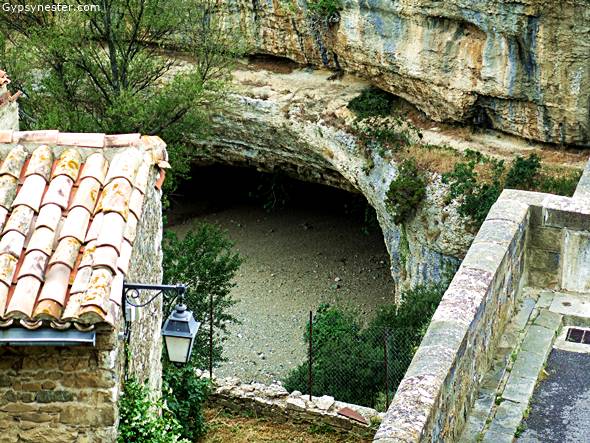
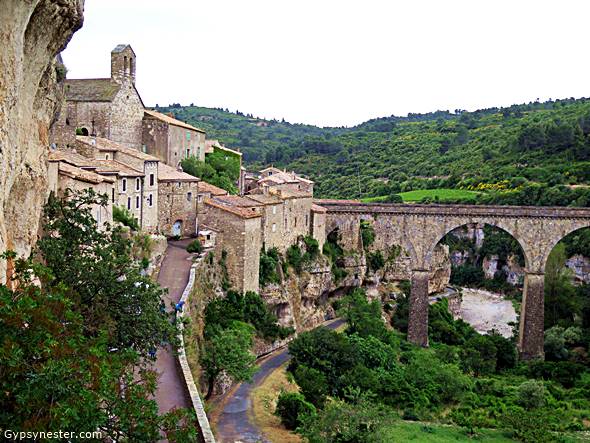
This southern French village is perched precariously atop a ridge between two rivers, le Brian and la Cesse, which have carved out cliffs that make the spot a nearly perfect stronghold. We must say nearly because we soon learned that it failed tragically under a relentless siege.

But before we found out about that failure we were wildly impressed with the fortifications. Most of the defenses are natural, left behind when water eroded the local limestone into a formidable castle-like formation that certainly looks impenetrable. With a little additional stone work the original inhabitants no doubt felt pretty safe a thousand years ago.
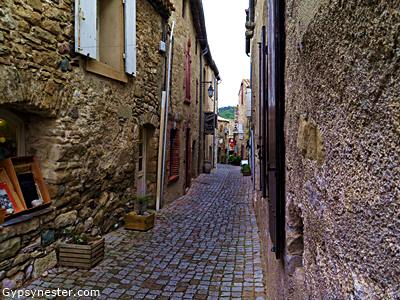
As we approached we marveled at the enormous bridge required to gain entry into the city, and the sheer walls that dropped away on every edge.

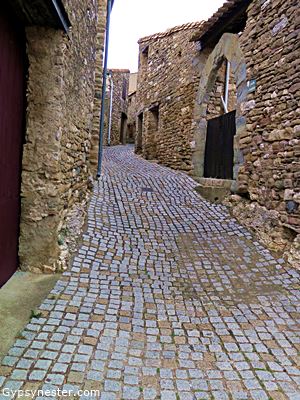
Once inside, we were also thrilled by the fact that we had the narrow medieval lanes almost all to ourselves while we explored. It was about that time that Antoine, our guide for the barge cruise along the Canal du Midi that brought us here, pointed out that the street we were walking on was named Rue des Martyrs.
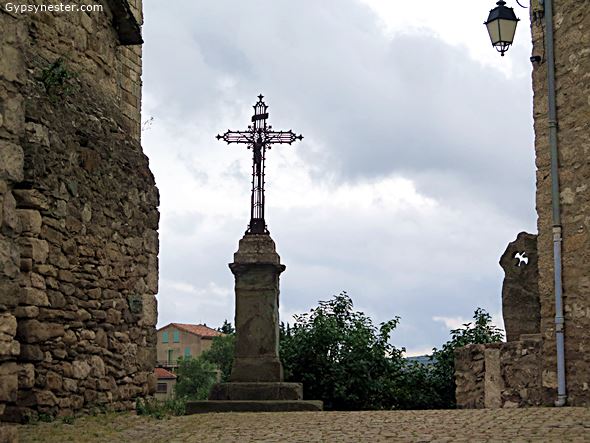
That got us wondering what might have happened here. He didn’t explain until we arrived at a memorial to those martyrs.

At the small monument consisting of a Christian cross and the outline of a dove carved in a stone he began to relay the story of how, after several centuries of safety, the residents found that their security was fleeting. In 1210 the village fell at the hands of the Albigensian Crusade. The tale is one of the saddest we have heard throughout European history.

A relatively small religious sect, the Cathars, was living peacefully in this region when Pope Innocent III decided that he didn’t like their views and therefore they must be wiped clean off the planet. The Kingdom of France was more than happy to oblige in the extermination of the heretics.

Their heresy mainly consisted of believing in two gods, a good and an evil, and worse yet, allowing women to have nearly equal standing in the church. Obviously it was imperative to eliminate every last one of them.

Once the Crusaders cleared the harmless Gnostics from the nearby cities of Béziers and Carcassonne the relentless zealots set their sights on Minerve. The town’s natural defenses held off a direct attack, so the invaders set up a siege.
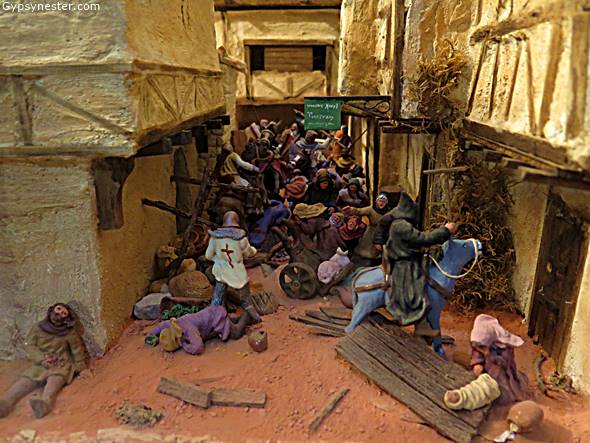
Catapults were placed on the opposite walls of the canyons surrounding the city and commenced firing. Several weeks of bombardment finally led to a surrender and the Cathars that lived in Minerve were given a choice, return to the Catholic faith or be put to death.

One hundred and forty refused the offer and were burned at the stake. This was at least slightly better than the crusaders had done in previous cities, there they simply killed everyone whether they were Cathars or not.

After hearing this tale while walking the path of the martyrs we ended up outside a small museum, the Musée Hurepel de Minerve. Stepping inside we encountered something completely unexpected, the entire history we had just discussed brought to life in remarkably meticulous miniature dioramas.

Each scene was accompanied by a detailed description in one of the booklets provided available in a dozen different languages. At first the whole set up struck us as very odd, even a bit off base for such serious subject matter, but within a few minutes we were completely engrossed and the story was forever imprinted in our memories.
Feeling extremely somber by the time we left, we made our way back across the colossal bridge (vehicles are not allowed in the town unless owned by a resident) and began our trek back to the boat. Along the way we had one more stop to make.

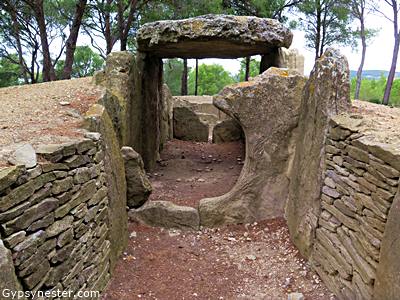
Not far from Minerve, Antoine pulled off the highway onto a nearly nonexistent dirt road. We bounced a half a mile or so before stopping, then he jumped out and he led us up a small hill.

At the top we found a few isolated megalithic burial stones, dolmens left behind by the Celts who lived here thousands of years ago, well before the time of Christ.  These were kin to the people who made Stonehenge hundreds of miles to the north.

Like the much larger and more famous archaeological marvel, this also lines up with the sun on the solstice. So while not as overwhelming, we were still duly impressed.

We were also glad to have this dose of celestial alignment help put the day’s earlier distressing history behind us.

David & Veronica, GypsyNester.com

See all of our previous adventures in France!

A big thank you to France Cruises for providing this adventure, as always, all opinions are our own.

How To Enjoy Cabo San Lucas Whilst Avoiding The Crowds

Let’s take a look at some of the most unique destinations and activities to enjoy in Cabo San Lucas, and how to enjoy this city without battling with the giant crowds who flock here each year… CONTINUE READING >>

A popular city-beach break in northern Mexico, Cabo San Lucas has become a famous destination world-wide for its golden-sand beaches and nightlife scenes.

It’s for this reason that over 3 million tourists visit each year, who look to enjoy the tropical climate and great weather south of the US border. However it can be easy to get stuck into the same routine in Cabo, given most activities revolve around drinking, eating, drinking some more and then hitting the beaches. With some extra effort we’ll find that there’s much more to this Mexican Pacific city than what originally meets the eye, and it’s very much possible to have an authentic-style trip here.

In this post we’ll take a look at some of the most unique destinations and activities to enjoy in Cabo San Lucas, and how to enjoy this city without battling with the giant crowds who flock here each year.

Unique Destinations To Enjoy In Cabo San Lucas

While the popular beach of Medano and adjacent harbourside are great for eating out and enjoying some drinks, it can quickly feel repetitive given this is the typical route a lot of tourists take when exploring the city. Below we’ll take a look at some unique activities you can do around Cabo to keep it fresh, and also to have less crowds around you!

Reel In Prized Fish On A Deep-Sea Fishing Tour

The warm waters of Cabo San Lucas attract many types of exotic and strange-looking fish species, and as such it has become one of the best places to go sport fishing in the North American continent. This includes the long-horned Blue Marlin as well as the golden Mahi-Mahi (also known as Dorado locally), and catching one of these giant fishes is an experience you’ll truly never forget. Local Cabo fishing charter Boats Baja are one of the most reputable companies in the region, which are ideal for both pros as well as first-time beginners who want a taste of what it’s like going fishing. Best of all is that you’ll have the endless Pacific around you – and no noise or crowds that are found back in-land!

Head On A Local Taco Tour

Yes that’s right! There’s nothing quite like sampling maiden foods from a strange new country that you’ve just arrived in – and Mexico in particular really needs no introduction. Around Cabo San Lucas we’ll of course find a variety of local restaurants that cover this country’s famous cuisine well, from classics like tacos and chilaquiles to more novel seafood dishes from the Baja California Sur region. However, heading on a local taco tour may just be the most fun way of doing so, whilst also breaking away from the usual tourist trap areas and restaurants. Juan More Taco Tours takes you on a journey through the streets of Cabo, where your expert guide will introduce you to several dishes and local street venues. In case you’re interested – they also do cooking lessons too!

Go Whale Watching In The Mexican Pacific

As if catching elusive fishes like the Blue Marlin isn’t enough, in these waters just offshore of Cabo we can also spot a variety of Whales. There are up to 9 different species that pass through here during the winter months (between December and March), which include Humpback Whales, Gray Whales, Orcas, Sperm Whales as well as the incredible Blue Whale – which is the largest living animal on planet Earth. There are many tour providers that can take you out on group tours to see whales, however there’s also a more unique and relaxing way too – which is by hiring your very own private catamaran. Companies like Cabo Deluxe Sailing offer a range of top-of-the-line catamarans and yachts to choose from, and during peak months it’s possible to see some of these incredible Whales while you are out relaxing in the Pacific Ocean.

Hike Up To The Cerro De La Zeta

This one is particularly good if you quickly get bored of sitting on beaches all day, and yearn for more of an outdoor adventure. The Cerro de la Zeta mountain lies just west of the Medano Beach and harbour area, and has a walking trail that leads up to the peak of the 245m summit – which offers us spectacular views over the city and surrounding Pacific Ocean. Along the way we can enjoy desert vegetation growing wild on the path, and also a more peaceful walk given very few crowds or groups are found along the route. We highly recommend heading up here either for sunrise or sunset, where we can enjoy front-row seats to a whole range of striking red, orange and pink sunsets.

Top Tips For Visiting Cabo San Lucas

Visiting Cabo During The Off-Peak Months

The busy tourist season is the dry season, which runs from December until April and is when most crowds form along the beaches and within the city centre. Now the great thing about Cabo is that given its dry desert climate, even the wet season has a maximum of 2.5 inches of rainfall within its peak month. This means we can still enjoy a visit in the wet season (May until November) with less crowds, and have good weather most days to hit the different beaches with. Shoulder season months like May and June are especially good times to plan your visit.

Use Private Transport To Get Around The City

Of course nothing beats using public buses from a cultural point of view, which is also great for their cheap prices in Cabo. However sometimes we may be feeling extra tired some days or evenings, and a private transfer service in Cabo will do the job perfectly. In some cases using this transport option will be very useful, such as when heading to or from the airport (which is over half an hour away), and also if heading to further-afield restaurants and destinations. We suggest booking your ride with All Ways Cabo Transportation, which is one of the safest options and is especially ideal for when we are travelling during the evenings around Cabo San Lucas.