

Search…

The Angelic Aura of St Michael’s Mount

When is an island not an island?

Perhaps when there is a cobblestone path leading to it.

The thought was so intriguing, and the castle topped hill so inviting, that we could hardly wait. However, the tide… CONTINUE READING >> 

When is an island not an island?

Perhaps when there is a cobblestone path leading to it.

Considering our first view of St Michael’s Mount at the end of our coast to coast trek over St. Michael’s Way, it was hard to imagine that we would be able to walk to the mountain we saw rising out of the sea about a half mile offshore.

The thought was so intriguing, and the castle topped hill so inviting, that we could hardly wait. However, the tide, which can run as high as twenty feet in Cornwall, insisted that we wait until the morning.

The mount has been the site of legends and lore, as well as a prized piece of real estate, for thousands of years.

There is evidence of inhabitants as far back as 5000 BC, and by the time of Christ this may have already been a major port for shipping tin from nearby mines.

Around the year 500 AD it is said that the Archangel Michael appeared sitting upon the summit to guide boats through a storm, giving the mount its name. A few hundred years later monks laid claim to it and a series of monasteries followed.

Somewhere between Michael and the monastery, the giant Cormoran was said to rule the mountain. The monster terrorized the region, stealing livestock and eating children until a young man named Jack had had enough.

Sneaking up the hill one night, Jack dug a pit, lured Cormoran into it, and disposed of the menace with a pickaxe to the head. Gruesome and effective!

The feat earned him the name Jack the Giant Killer. While very similar stories, we learned that this was not the same Jack that climbed the beanstalk.

For centuries St Michael’s Mount was sought as a stronghold by a string of various British royals and nobility, until around 1650 when the St Aubyn family moved in. Now it is managed by the National Trust, but the family continues to hold forth in the castle.

Marazion Town Hall

With our history lesson learned, and a good night’s rest in the picturesque town of Marazion behind us, we were ready to walk on water. But alas, no need. The tide had receded and a granite causeway had appeared.

Arriving at the fortified entrance to the village by the mount’s harbor, we were met with an unhappy revelation. It was Saturday, and the castle is always closed on Saturdays in order to give the St Aubyns a day away from the crowds.

Disappointed that we would not be able to climb to the top, we made the best of it and found that there was a lot to be discovered down at the base of the hill.

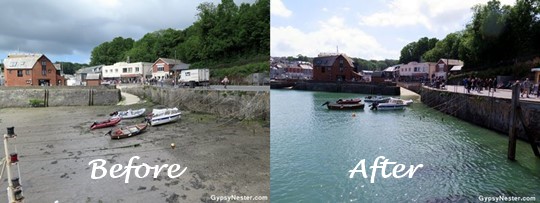
Our exploration began by walking around the port, which was bone dry because of the huge tide. Even though we had seen this at several places around Cornwall, it still seemed strange to see boats sitting on the dry bottom of the bay.

The lack of water made the stone sea walls look more like a fort than a breakwater. At the stairway up to the entrance we looked down and found a bronze footprint of Queen Victoria commemorating her visit in 1846.

Up near the walkway entrance we discovered that Queen Elizabeth & Prince Philip, as well as Prince Charles & Camilla, also have their footprints immortalized in metal.

A little village is clustered around the waterfront, so we walked the cobblestone streets up and down… both of them. It didn’t take long, especially since it was Saturday and none of the island’s handful of shops or cafes were open.

Undaunted, we poked around and found some interesting features.

The mount actually has a subway built to haul things up to the castle. It’s not something they advertise to tourists, but by standing on our tiptoes we could see it hidden behind a fence.

The single car looks a bit like a coffin on wheels and dates back to Victorian times. For some reason, they chose to dig a tunnel instead of going overland, so it makes the entire trip underground.

Passing a row of homes, obviously inhabited, aroused our curiosity as to who lived here. We speculated that they must be people who work up in the castle, or perhaps own the businesses.

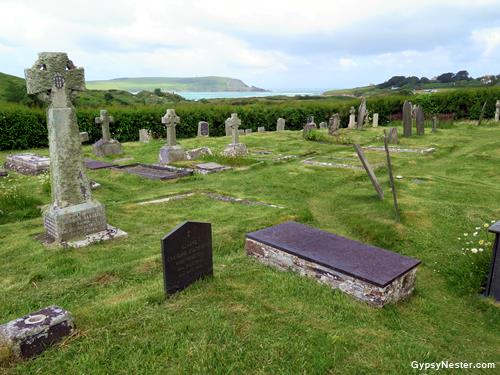
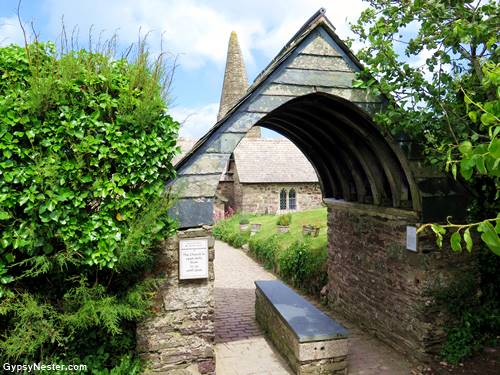
At the end of the road we found a lychgate leading to the parish cemetery. The misty gray day seemed perfectly fitting for the scene of moss covered headstones and Cornish Crosses.

Perhaps it was a day like this that inspired director John Badham to use St Michael’s Mount as the setting for his 1979 movie version of Dracula.

On our way out we were surprised to see an unexpected car pulling through the entrance gate of the causeway. The gatekeeper was standing by so we inquired and he filled us in on a few interesting tidbits and confirmed some of our theories.

Cars and small trucks are permitted to drive across the walkway, but only for delivering items to the homes and shops, and only for boat owners or people who live on the island.

The population is currently about thirty five people, in addition to the St Aubyn family, and he was quick to add that he was not one of them. Normally he works on the mainland and was just filling in.

Residents must work on the island, no vacation homes or getaways here and, not that we were in the market, out of curiosity we asked if there are any rentals. No Air B&B allowed, there is no way a tourist can stay the night.

Even though our timing was bad for seeing the castle, and the weather didn’t really cooperate as far as getting good shots of the mountain, we walked back to Marazion ahead of the tide happy that we had made the pilgrimage.

On the train to London the next day we met Matt Thatcher, a student who is also a photographer. When he showed us his shot of the mountain crowned by the Milky Way we were blown away and had to ask if we could share it. He was happy to oblige.

Matt Thatcher Photography

Seeing his shot we could tell why people felt there was an angelic presence on the mount.

David & Veronica, GypsyNester.com

See more from our Cornwall walking tour here.

A big thank you to Country Walkers for providing this adventure, as always, all opinions are our own.

7 Day Trips from Paris to Make the Most of Your Visit to France

Paris is magical. Indeed, no trip to France is complete without exploring the city. However, one must think beyond the city’s iconic boulevards to truly experience the whole country.

By the way, the day-trips from Paris give you the chance to explore history, countryside charm, or royal grandeur. So, if you’re planning a French getaway and want to expand your horizons without the hassle, here are seven unforgettable day trips from Paris.

So, what’s the wait for? Dive into the article to learn about the places!

1. Versailles

Let’s start with the most iconic and time-tested getaway: Versailles. Only 20 kilometers southwest of Paris, this historic palace is the epitome of French royal opulence. This was built in the 17th century by Louis XIV. The Palace of Versailles boasts a range of features, from gilded apartments to world-renowned gardens.

Here, the must-sees include the following:

      • Hall of Mirrors,
      • Royal Chapel,
      • Marie Antoinette’s retreat at Petit Trianon.

However, it is always recommended to book a guided Versailles tour from Paris with skip-the-line entry and round-trip transportation. This not only saves hours in queues but also brings context to what you’re seeing. In short, it tells you the meaning behind the 357 mirrors in the Hall of Mirrors, to the secret tunnels once used to transport wine and food!

Fun fact: Before Versailles became a palace, it was a humble hunting lodge built in 1624 by Louis XIII.

2. Giverny

This is the ideal destination for art enthusiasts. Just 45 minutes by train from Paris lies Giverny, the former home of Claude Monet (the Father of Impressionism).

The town is practically a watercolor painting in itself. Here, you can see the Monet House and Gardens, where you’ll find the very pond and water lilies that inspired some of the world’s most celebrated paintings.

You can also stop by the Museum of Impressionism to see works from Monet’s peers and successors. Note that spring to early autumn is the best time to visit. This is when the gardens are in full bloom and truly look like Monet’s brushstrokes come to life.

3. Champagne Region

What better place to celebrate your trip to France than in the birthplace of champagne? Hop on a 1.5-hour train to Épernay or Reims, and you’re in the land of Dom Pérignon and Veuve Clicquot. You can take a guided cellar tour, enjoy tastings, and learn about the méthode champenoise (the traditional way champagne is made).

Many day tours from the capital city include lunch and multiple food and wine tastings. If you’re looking for a more intimate experience, consider a small-group tour.

Fun fact: Only sparkling wine made in this region using strict methods can legally be called “Champagne.”

4. Fontainebleau

If Versailles feels a bit too crowded, Fontainebleau offers a royal escape without the heavy foot traffic. Located just an hour southeast of Paris, this château was a favorite of Napoleon Bonaparte. Plus, it was a former royal residence dating back to the 12th century.

Inside, you’ll find Renaissance and classical décor, vast ballrooms, and Napoleon’s personal throne room. Outside, the surrounding Fontainebleau Forest is perfect for a post-tour hike or picnic.

All in all, this is the best place to visit for history buffs who prefer a quieter, more contemplative atmosphere.

5. Chartres

If you are a history and architecture lover, make your way to Chartres. This is just over an hour from the capital city. The town is best known for its Chartres Cathedral, a UNESCO World Heritage site that’s considered the finest example of French Gothic architecture.

With its towering spires, flying buttresses, and stunning stained glass windows, it’s like stepping into a medieval storybook. You can also wander the quaint town streets, filled with artisan shops and charming cafés.

Fun fact: The cathedral’s labyrinth is one of the most famous in Europe, and many pilgrims still walk it as a form of meditation.

6. Loire Valley

If your idea of a dream day trip includes castles, vineyards, and river views, head to the Loire Valley. Though a bit longer (about 2 hours from Paris), this trip is worth every minute.

Home to over 300 châteaux, you can visit fairy-tale spots like Château de Chambord, Château de Chenonceau, and Amboise. Combine it with a wine tasting session, and you’ve got the perfect day out.

7. Provins

Want something off the usual tourist path? Provins is your answer. This fortified medieval town is about 90 minutes from Paris and offers an authentic slice of French heritage.

Explore the UNESCO-listed ramparts, underground tunnels and see live falconry or jousting shows. Provins is one of the best-preserved medieval towns in France and a great option if you’re traveling with kids or history buffs.

Fun fact: Provins was once a powerful trading hub in the 12th century and hosted massive trade fairs that drew merchants from all over Europe.

Final Tips for Planning Your Day Trips

    • Book in advance: Especially for tours like the Versailles tour, spots can fill up quickly in high season.
    • Pack light: Wear comfortable walking shoes, and bring a refillable water bottle.
    • Watch the Clock: Most day trips last between 6 and 10 hours, depending on the location. Start early and double-check return train times, especially if you’re traveling independently. Rural lines often have fewer trains in the evening.
    • Keep Some Cash Handy: Although cards are widely accepted, some small towns or local vendors at day trip spots may still prefer cash, especially for snacks, souvenirs, or market stalls.

To Sum It All Up!

Paris is just the beginning. With so much culture, history, and natural beauty just a short ride away, day trips allow you to discover the layers of France that tourists often miss. From opulent palaces to painterly villages, there’s something for every kind of traveler.

So, if you’re crafting your 2025 French itinerary, don’t stop at the capital city only. Whether it’s a peaceful garden walk in Giverny or a Versailles tour packed with royal history, there’s a world to explore.

Essential Guide for Families Visiting a Water Park with Kids

A family trip to a water park in Thailand is an exciting experience that can create wonderful memories for your family. Parents should make the time to prepare for this trip and remember that the water park is not only for the children, it’s for the parents too… CONTINUE READING >>


Spending a day at the water park is fun. It’s a way to escape the hot weather. Families can enjoy their vacation in Thailand with kids. It’s a must to be ready and plan. Make sure everyone has a safe and relaxing experience at a water park in Thailand. This guide ensures you have an enjoyable time.

Pick the Safest Water Park for Your Family

Water parks vary when it comes to experience. Some are made for those looking for excitement and adventure. Others are better for families with young kids. Make sure you check those that have special areas for kids. Give it time to look at reviews and visit the park’s website. Find out more about the age and height requirements. Make sure your children have as much experience as they can enjoy.

Pack Wisely: Bring All Necessary Items

Choosing the right items to pack can change your day at the water park. There are several important items to bring:

      • Swimwear (rash guards are best for sun safety)
      • Towels to save from rentals.
      • Waterproof sunscreen
      • Water shoes
      • Bags for wet and dry clothes.
      • Spare clothes.
      • Snacks and water bottles.
      • Floaties or life jackets for younger kids.
      • Waterproof wristband with kids’ and parents’ information.

Review Safety Rules From the Website

Spend some time teaching about safety and appropriate behaviour with your children before they enter the water park. They must understand the risks of running close to water attractions without adult supervision. Make sure they remember to use flotation devices if necessary. Choose a meeting place in case one of your kids gets lost. Also, they should know where to find the lifeguards.

Schedule the Best Times to Go

Water parks often become quite busy in the summer. It could also get packed with visitors during weekends or holidays. Make sure you book ahead. Get there as early as possible. This lets your family experience the best attractions before the lines get too long. Going on weekdays or visiting later in the afternoon ensures that there are fewer people. In addition, check the weather forecast and the park’s hours in advance. This way, you can avoid bad weather that can dampen this experience.

Hydrate and Take Breaks

Children can easily feel overwhelmed and too excited at a water park. Make sure they take breaks between attractions. Reapply sunscreen as often as you can. They should take breaks to drink water and relax for a bit. Dehydration and heat exhaustion are easy. This can still happen when they are in the water. Kids can easily forget to drink water and take breaks when they have a good time.

Be Vigilant of Your Surroundings

Water parks make sure they have enough lifeguards. Still, parents must always keep an eye on their kids. They should accompany the smaller ones. Keep young children close by when they want to experience the wave pools or deeper water. Do not depend on older siblings to look after younger children. Make sure they always remember not to talk to strangers. Having an adult companion close by is very important to keep them safe from water or dangerous individuals.

Conclusion

A family trip to a water park in Thailand is an exciting experience. This can create wonderful memories for your family. That is why parents should make the time to prepare for this trip. Going over the tips above can help you decide and plan accordingly. Make sure everyone has a fun and safe time together. Planning can make this a memorable day for kids. But remember that the water park is not only for the children, it’s for the parents too.

Trek Through the Serengeti and Ngorongoro Crater: A Trek Through Tanzania’s Timeless Wilderness:

Including Treks in Serengeti National park and the Ngorongoro Crater Tanzania is an arrival where time moderates, skylines extend perpetually, and each corner of the wild tells an antiquated story. No place is this more genuine than in Serengeti National park and the Ngorongoro Crater—two famous points of interest of Africa’s normal legacy. Together, they shape the beating heart of a Serengeti safari, advertising travelers exceptional experiences with natural life, picturesque glory, and immersive strolling treks that develop the association with the land.

Serengeti National Park: The Endless Plains of Life:

The word “Serengeti” stems from the Maasai word Siringet, meaning “the pit where the arrival runs on forever.” That lovely truth is obvious in each clearing sea, each thundering group, and each predator quietly observing from the brilliant grass. Serengeti National park, a UNESCO World Legacy Location, ranges over 14,700 square kilometers of flawless savannah and is domestic to the Awesome Wildebeest Migration, the Big Five, and incalculable other species.

Wildlife Wonders

The Serengeti is popular for its gigantic biodiversity:

    • Lions meander the open fields in prides.
    • Cheetahs race over the grasslands.
    • Elephants, giraffes, and buffalo brush in quiet herds.
    • Leopards cover up in acacia trees, and hyenas watch the fringes.

The natural life seen here is year-round, with top seasons bringing particular exhibitions like the wildebeest calving season (January–March) and the emotional stream intersections (June–August).

The great Migration: Serengeti’s Wild Symphony

One of the most noteworthy common displays on Soil, the Awesome Wildebeest Migration is a key highlight of any Serengeti safari. Over 1.5 million wildebeest, along with zebra and gazelle, move in a gigantic circular design through the Serengeti and into Kenya’s Masai Mara, chasing regular downpours and greener pastures.

When and Where
    • Southern Serengeti (December–March): Calving season and predator drama.
    • Western Passage (May–July): Grumeti Waterway crossings.
    • Northern Serengeti (July–October): Notorious Mara Stream crossings.

Each arrange offers a distinctive photographic and passionate encounter, from infant calves learning to March to crowds braving crocodile-infested rivers.

Marching Safari: Serengeti Safari Off the Beaten Path

While diversion drives give clearing sees and to expansive natural life get-togethers, strolling safaris in assigned parts of the Serengeti Safari a more insinuating, tactile association to nature. These treks are conducted in inaccessible ranges with outfitted officers and master naturalist guides.

Key Highlights of Serengeti Treks
    • Learn the Dialect of the Wild: Distinguish tracks, compost, and caution calls.
    • See the Little Stuff: Find creepy crawlies, plants, and fowls missed on drives.
    • Feel the Beat: Strolling among the landscape includes weight to each stir and removed roar.
Best Ranges for Strolling Safaris:
    • Eastern Serengeti: Close Namiri Fields, known for enormous cats and open spaces.
    • Northern Serengeti: Lesser-visited and perfect for couples or picture takers looking for privacy.
    • Grumeti Saves: Private concessions with strict guest limits, advertising both consolation and wildness.
Ngorongoro Hole: Nature’s Amphitheater

From the Serengeti, the Trek proceeds to the Ngorongoro Hole, a 2.5-million-year-old caldera shaped from the collapse of a gigantic well of lava. The Crater is 610 meters deep and 20 kilometers wide, encasing a self-contained environment overflowing with wildlife.

What Makes Ngorongoro Special?
    • Density of Natural life: More than 25,000 huge warm blooded creatures live inside the hole year-round.
    • Black Rhinos: One of the few places in Tanzania to dependably see them.
    • Predators: Tall concentrations of lions and hyenas.
    • Varied Scenes: Lakes, timberlands, meadows, and swamps—each supporting unmistakable species.
The Crater Floor Safari Experience

Descending into the hole is like entering another world. The soak drive down uncovers an Eden where zebras brush next to flamingo-speckled lakes, elephants meander through acacia woodlands, and lions rest on the edge of tall grasses.

Key Natural life Sightings
    • Hippos in freshwater pools.
    • Flamingos and storks at Lake Magadi.
    • Buffalo, eland, and warthogs on the open plains.
    • Leopards in the Lerai timberland, once in a while spotted in early morning light.

Photographers will charm in the light varieties, reflected waters, and near vicinity to wildlife.

Highland Treks Around the Crater

The Ngorongoro Preservation Range is more than fair the Crater itself—it amplifies into the good countries and interfaces with the Serengeti biological system. Here, you’ll discover less-explored treks advertising emotional scenes and social encounters.

1. Olmoti Crater Trek

A direct Trek to the Olmoti Hole takes after old Maasai cattle trails through elevated knolls and closes at the Munge Waterfall.

    • Highlights: Social intuitive, all encompassing sees, delicate climb.
    • Duration: 2–3 hours.
    • Best For: All wellness levels.
2. Empakaai Crater Trek

This Trek plummets through thick timberland into a covered up caldera with a Crater lake regularly encompassed by pink flamingos.

    • Highlights: Flamingos, all encompassing edge sees, birdlife.
    • Duration: Half-day trek.
    • Challenge Level: Direct, with a soak rising on return.
3. Ngorongoro to Lake Natron Trek

For the gutsy, a multi-day Trek over volcanic good countries to Lake Natron offers an exceptional involvement. March nearby Maasai warriors, rest beneath the stars, and conclude at the ghostly, wonderful shores of Lake Natron underneath Ol Doinyo Lengai, a dynamic volcano.

Best For: Fit explorers, social devotees, and those looking for crude wilderness.

The Serengeti Safari Involvement: Amusement Drives, Lodges, and Romance

While treks offer profundity and closeness, diversion drives convey the show of the chase and the scope of the wild. Most safaris combine morning and evening drives, with unwinding early afternoon breaks at lodges or bush camps.

Game Drive Essentials
    • Sunrise Begins: Capture creatures when they’re most active.
    • Private Vehicles: Culminate for picture takers or honeymooners.
    • Professional Guides: Key to spotting slippery species and understanding behavior.
Lodges and Camps in the Serengeti & Ngorongoro

You’re never distant from luxury—even in the heart of the wild.

    • Sayari Camp (Northern Serengeti): Close the Mara Stream, perfect for Migration views.
    • Lemala Ngorongoro Camp: Found close to the Crater edge, permitting early access to the Crater floor.
    • Sanctuary Kusini (Southern Serengeti): Idealize for calving season and lion activity.
    • Ngorongoro Hole Hold up: Luxury roosted on the edge, with unmatched Crater views.

These properties adjust supportability, consolation, and vicinity to nature—many are eco-certified and bolster neighborhood communities.

Cultural Association: The Maasai of the Ngorongoro Highlands

No Trek or safari is complete without the Maasai, semi-nomadic pastoralists who have coexisted with natural life for centuries. Numerous trekking routes pass by conventional manyattas (towns), where you can learn about Maasai traditions, melody, beadwork, and cattle culture.

For conscious travelers, this is an improving portion of the travel that includes human profundity to the environmental wonders.

Best Time to Visit Serengeti and Ngorongoro

Dry Season (June–October)

    • Best for waterway intersections, predator action, and comfortable trekking.
    • Wildlife is simpler to spot due to diminishing vegetation.

Green Season (November–May)

    • Lush scenes, calving season, and lower rates.
    • Excellent for photography due to dynamic backdrops and emotional skies.

The whole floor offers steady seeing year-round due to its encased ecosystem.

Photography on Safari and Trek

Whether you’re a prepared natural life picture taker or a traveler with a smartphone, Tanzania offers minutes worth capturing each minute.

Tips:
    • Golden Hours: Arrange shots amid early morning or late afternoon.
    • Zoom Focal point: Basic for natural life close-ups (least 200mm).
    • Wide-Angle: Capture broad scenes and creature herds.
    • Stability: Utilize bean bags for tripods, particularly on treks.
Planning Your Travel: How to Combine the Serengeti & Ngorongoro Crater

Sample Schedule (7–10 Days):

    • Day 1–2: Entry in Arusha and exchange to Ngorongoro Highlands.
    • Day 3: Trek to Empakaai Crater and overnight in the highlands.
    • Day 4: Plummet into Ngorongoro Hole for a full-day amusement drive.
    • Day 5: Exchange to Serengeti (by means of Olduvai Pig out), start diversion drives.
    • Day 6–8: Full Serengeti safari with discretionary strolling treks.
    • Day 9–10: Fly to Zanzibar for post-safari shoreline unwinding (optional).

Final Reflections: 

To travel through Serengeti National park and the Ngorongoro Crater is to step into one of Earth’s final awesome wildernesses—where life streams in its rawest shape, and each experience carves itself into memory. A Serengeti safari thrills the faculties, whereas treks through these old lands extend your understanding of put and presence.

Whether you discover yourself observing a lioness blend beneath acacia shade, trekking into a dim hole, or sharing calm ponder with the Maasai, this travel is one of change. Tanzania’s wild north doesn’t offer safaris—it offers stories that remain with you until the end of time.

Strategy Slots Are Taking Over Online Casinos In A Big Way

Classic slots are even made more interesting and entertaining when skill and gamification techniques like level progression, awards, and fun challenges are included. Adding these extra features encourages participants to do more than just spin… CONTINUE READING >>

Due to the presence of strategy-based slots, online casinos are moving toward a different and interesting way for players to play slots. Traditional slots at Betway usually have the goal of finding luck, but strategy-based slots make the games way more appealing to young players because they require careful planning and strategy. Let’s talk about how and why they are the new leaders in slot games:

Shifting Player Demographics

More strategic slots are being added in online casinos as Millennials and Generation Z become a bigger part of the player community, and they prefer games that are way different from their older peers. While older slot players enjoy slots that depend entirely on luck, today’s players select more interactive games that encourage them to learn new skills. Because they grew up with video games and apps, they look at various features such as making choices, facing difficulties, earning rewards, and competing alongside their friends. Because the main players at online casinos are now in these demographics, companies are starting to focus on offering strategy-based games to keep their players involved for the long haul.

Increased Player Engagement

Slot machines that use strategy add interesting features, so players find the games more fun. Combining the choices you make, the mini-games, and the advancement systems, they all help capture your interest and make your play fun. Experiencing control in the game can help players continue to play and keep returning. Gamers feel more interested in strategy-based slots because the decisions they make can seem to affect the outcome. Increased player involvement can help make sure that people enjoy the games while operators could have better retention and profits.

Gamification And Skill Elements

Classic slots are even made more interesting and entertaining when skill and gamification techniques like level progression, awards, and fun challenges are included. Adding these extra features encourages participants to do more than just spin at the Betway casino, increasing both their strategy and the role they play in shaping the outcome. As an example, players can go through bonus levels that would require quick decisions or games that can switch their routes which could affect the rewards that they get. Thanks to chance and skill, online slots can now offer a ton of excitement and keep players coming back, thereby appealing to a broader group and going beyond the traditional casino players.

Higher Retention And Lifetime Value

Using strategic slots can help players stick with their favorite games longer and motivate them to keep coming back. This is because these games use both skill and interactivity, so users can feel a lot more accomplished and would love to play more to get further. Playtime and spending could then increase as players aim to get new things, bonus perks, or take part in various challenges. For those who manage casinos, it offers the chance for a more engaged user group who would love to keep coming back because games don’t lose their excitement the way they might with other traditional slots.

Online Casinos Are Betting Big On Strategy-Based Fun

While many think strategy-based slots are simply a fad, they are actually a very important development. They combine simple gaming fun with gambling-related activities that could give them more appeal to the current customers. Online casinos like Betway want to continuously expand their reach to as many players as possible, and this could mean that slots will be a major contributor to future growth.

Prioritizing Needs Over Wants

Prioritizing needs over wants is a powerful practice that keeps your finances healthy and stress low. By focusing on essentials first, budgeting clearly, and managing wants with intention, you set yourself up for long-term stability and financial freedom… CONTINUE READING >>

Managing money wisely means making choices that support your financial well-being—not just for today, but for the long haul. One of the most important decisions you can make is prioritizing your needs over your wants. It sounds simple, but in a world full of tempting offers and instant gratification, distinguishing between what’s essential and what’s optional can be tough.

If debt has become overwhelming, finding the best debt relief companies can offer a fresh start. But no matter where you are financially, focusing on needs before wants lays a solid foundation for lasting stability and peace of mind.

Here’s why prioritizing needs matters—and how you can do it without feeling deprived.

What Counts as Needs vs. Wants?

Needs are the basics—things you must have to live and function day to day. This includes housing, utilities, groceries, healthcare, transportation, and minimum debt payments. These are non-negotiable because without them, your well-being and security are at risk.

Wants, on the other hand, are extras that improve your life but aren’t critical. This includes dining out, entertainment subscriptions, designer clothes, vacations, or the latest gadgets.

Understanding this distinction is the first step toward smarter spending.

Why Prioritize Needs?

Covering your needs first ensures that your essential expenses are met before spending money on less important things. This keeps you out of financial trouble, prevents missed bills or late fees, and supports basic living standards.

It also frees you to address debt and save money, both of which contribute to long-term financial health.

When needs take a backseat to wants, bills get missed, debts pile up, and stress increases—leading to a cycle that’s hard to break.

Create a Needs-First Budget

The most practical way to prioritize needs is with a budget. Start by listing your monthly income and subtracting fixed essential expenses: rent or mortgage, utilities, food, insurance, and minimum payments on debts.

Once those are covered, allocate funds to savings or debt repayment.

Only after these categories are funded should you look at discretionary spending.

Make Needs Visible and Tangible

Sometimes needs get overlooked because wants seem more appealing or urgent. Try keeping a visible list of your needs to remind yourself why they matter.

You might also separate your money into accounts or envelopes labeled “Needs” and “Wants.” Physically seeing these categories helps keep your priorities clear.

Handle Wants With Intention

Prioritizing needs doesn’t mean cutting out all fun or indulgences. It’s about managing wants thoughtfully. Set aside a reasonable amount in your budget for wants—this prevents feelings of deprivation.

Before spending on a want, pause and ask yourself if it fits your financial goals or if the money could serve a more important purpose.

Avoid Lifestyle Inflation

As income increases, it’s tempting to boost spending on wants. This is called lifestyle inflation and can sabotage financial progress if needs aren’t still prioritized.

Instead, keep your needs stable and use extra income to build savings, invest, or pay down debt.

Reassess Priorities Regularly

Financial situations change. Maybe healthcare needs increase, or you pay off a loan freeing up money.

Regularly review your budget and spending to ensure your needs are still met first and adjust wants accordingly.

Use Support When Needed

If debt is making it difficult to prioritize needs, don’t hesitate to reach out for help. The best debt relief companies can negotiate with creditors, consolidate payments, or help you develop a plan to regain control.

Professional support, combined with a needs-first mindset, accelerates financial recovery.

Prioritizing needs over wants is a powerful practice that keeps your finances healthy and stress low. By focusing on essentials first, budgeting clearly, and managing wants with intention, you set yourself up for long-term stability and financial freedom.

Delve Deeper: Tags

From Sea to Shining Sea on St. Michael’s Way

It’s not every day that we can walk from coast to coast so the prospect was pretty exciting to us. The feat could be accomplished by following St. Michael’s Way traversing England’s South West Peninsula. In addition to allowing us to cover an entire landmass, the trail afforded us the opportunity to… CONTINUE READING  

It’s not every day that we can walk from coast to coast. Granted, traversing England’s South West Peninsula isn’t exactly like crossing a continent, but the prospect was pretty exciting to us.

The feat could be accomplished by following St. Michael’s Way from St. Ives to St Michael’s Mount.

In addition to allowing us to cover an entire landmass, the trail afforded us the opportunity to revisit the Camino de Santiago. The Way became a section of the trans-European pilgrimage path because pilgrims coming from Ireland chose to walk across Cornwall rather than brave the treacherous waters that faced them by sailing around Land’s End at the far western end of England.

We set out from Cardis Bay and climbed about a mile to the first landmark along the way, Knill’s Steeple.  This 50ft granite obelisk is a self-styled tribute that John Knill, the eccentric mayor of St Ives, built to himself back in 1782.

His idea was to be buried beneath it, but he messed up the memorial by going off and dying in London, so he is interred there.

Yet this didn’t keep his legacy from living on at the monument, because he left an endowment in his will to fund an odd celebration every five years, which continues to this day.

Every fifth St James Day, on 25th of July, the current mayor of St. Ives, a vicar, two widows in black, a fiddler, and ten young girls dressed in white dance their way up to the shrine, followed by a gala dinner.

We missed the big doings, but the next one is set for 2021. One thing we didn’t miss was the celebratory view of the Cornish coast from the summit of Worvas hill.

We continued upward on our way to the top of Cornwall, Trencrom Hill, the only place in the county where both coasts are visible, the Celtic Sea on our north to the English Channel on the south.

This apex was used as a hillfort in the Iron Age, and it is easy to see why. There is no way any intruders could sneak up.

The hill was also said to home to the giant Trecobben, which explains the preponderance of boulders strewn about the area.

Supposedly, he and his giant pal Cormoran, who resided on St Michael’s Mount, liked to toss huge rocks back and forth to each other in a giant game of catch.

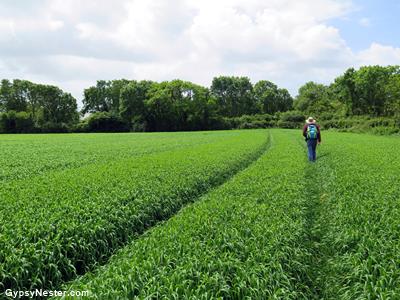
Descending, we dodged rocks until we entered a stretch of farm fields, then made our way along stone fences and hedges before crossing a brook and into some woods.

Breaking out of the thick forest, we came to the town of Ludgvan and its church dedicated to Saint Ludowanus.

Like pilgrims going back to the 15th century, we had been following its tower for the last few miles. There is even an ancient carving above the doorway that may or may not be of an early traveler.

After looking inside and wandering through the graveyard, we stopped in next door at the White Hart Inn. This old roadhouse has hundreds of years of history and bills itself as a classic Cornish pub.

As the only place providing sustenance along the twelve miles we would walk of the Way, we could hardly pass it up. Charmed by the quaint interior, and refreshed by a quick bite and a pint, we’d say it lived up to its billing.

All that lay between us and our destination at that point was the Marazion Marsh, so we waded in.  This nature reserve has one of Cornwall’s largest reed beds and is an important refuge for breeding and migrating birds.

For us it was yet another interesting change of scenery before we reached the shore and came face to face with St Michael’s Mount.

As we walked along the beach in the town of Marazion, the mountain stood as an island about a half a mile offshore, yet we could walk there to finish our journey.

That is because the tides in this area can run as much as twenty feet, and when it is out the mount sits on dry land, easily accessible by a cobblestone foot path.

We had seen it in pictures, but with the sun going down we would have to wait until morning to make the last few hundred yards of our trek.

David & Veronica, GypsyNester.com

See more from our Cornwall walking tour here.

A big thank you to Country Walkers for providing this adventure, as always, all opinions are our own.