


Portugal has a habit of turning visitors into future residents.
You arrive for the beaches, the food, the history or a few days wandering around Lisbon or Porto. Then, somewhere along the way, the question changes.
Could we actually live here?
For many international professionals, Portugal is becoming more than a place to visit. It is somewhere to work, run a business, invest and build a longer-term life.
Once that idea becomes serious, there are practical questions to consider. Where will you live? What type of residency do you need? What happens to your income once you become a Portuguese tax resident?
That last question has become particularly interesting because of Portugal’s IFICI tax regime.
What is IFICI in Portugal?
IFICI stands for Incentivo Fiscal à Investigação Científica e Inovação, or the Tax Incentive for Scientific Research and Innovation.
You may also see it described as NHR 2.0 because it followed Portugal’s former Non-Habitual Resident regime.
But IFICI is not simply a replacement for NHR.
It is a more targeted tax incentive designed to attract professionals working in areas connected with research, innovation, technology and other activities considered important to the Portuguese economy.
For people who qualify, eligible Portuguese employment or professional income can benefit from a special 20% personal income tax rate. The majority of foreign-sourced income is exempt from Portuguese personal income tax.
The regime can apply for up to ten years.
For international professionals already considering Portugal, that can make IFICI an important part of the decision.
For a more detailed look at qualification routes, income treatment and the application process, Fresh Legal Group has a complete guide to the IFICI tax regime in Portugal.
Who can qualify for IFICI?
This is where the rules become more specific.
IFICI is not available to everyone simply because they decide to move to Portugal.
As a starting point, an individual needs to become a Portuguese tax resident without having been tax resident in Portugal during the previous five years.
The person must also carry out an activity covered by one of the IFICI qualification routes.
Depending on the circumstances, these can include professionals working in scientific research, higher education, technology, innovation, qualifying startups and certain highly qualified professions.
For some routes, your job is only part of the answer.
The company you work for can matter too.
Its business activity, sector and other requirements can influence whether your position qualifies.
This means two people with similar careers could move to Portugal at the same time and have completely different IFICI outcomes.
Simply working in technology or having a senior position does not automatically mean that someone qualifies.
Why does the 20% tax rate matter?
The 20% rate is naturally the part of IFICI that attracts the most attention.
Portugal normally applies progressive personal income tax rates to employment and professional income.
Under IFICI, qualifying Portuguese employment or professional income connected with the eligible activity may instead benefit from the special 20% rate.
For someone deciding where to base their career, this can become an important part of comparing Portugal with other countries.
But there is an important detail.
IFICI does not mean that everything you earn is taxed at 20%.
Different income can receive different treatment.
Someone moving to Portugal might have a salary, consulting income, dividends, investments, rental income or capital gains.
Those sources of income should not all be treated as if they were the same.
The headline 20% rate is therefore only one part of the picture.
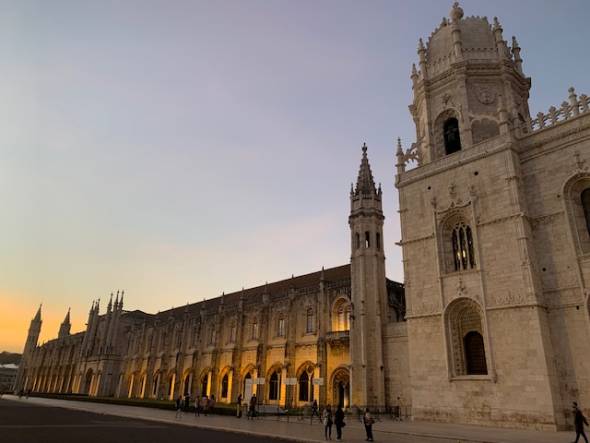
What happens to income from outside Portugal?
This question is especially relevant for people who have built their financial lives across several countries.
You may work for a Portuguese company while still owning investments abroad.
You might run a business outside Portugal.
Or perhaps you receive rental income, dividends or other income from another country.
Under IFICI, the majority of foreign source income can generally benefit from an exemption from Portuguese personal income tax.
However, there are exceptions.
Pension income is treated differently, and special rules can apply to income connected with jurisdictions that Portugal considers to have a clearly more favorable tax regime.
For anyone with an international income structure, it is worth understanding how each source of income will be treated rather than assuming that IFICI makes all foreign income tax free.
How is IFICI different from the old NHR regime?
Anyone who has been researching Portugal for a few years has probably heard of NHR.
For a long time, the Non-Habitual Resident regime was one of the best known tax incentives for people moving to Portugal.
IFICI takes a different approach.
The former regime had broader eligibility.
Under IFICI, your professional activity has become much more important.
Your qualifications, the work you perform and, in some cases, the company or organisation you work for can all determine whether you have access to the regime.
Portugal is effectively focusing the incentive more closely on the people and activities it wants to attract.
That makes IFICI particularly relevant to some researchers, founders, executives, technology professionals and other highly qualified workers.
It also means that eligibility needs to be checked individually.
Why should you look at IFICI before moving?
Tax planning is probably not the most exciting part of preparing for Portugal.
There are neighborhoods to research, homes to find and restaurants to add to your list.
But the date you become Portuguese tax resident can matter.
The IFICI benefit is linked to the year in which Portuguese tax residency begins, and the normal application deadline is 15 January of the following year.
Applying later may still be possible if the requirements are met, but the ten-year period does not simply restart when the application is submitted.
That can mean losing some of the years available under the regime.
So, if IFICI could be relevant to your profession, it makes sense to look at it before the moving boxes are packed.

From a trip to a life in Portugal
For many people, living in Portugal starts with travel.
A few visits become longer stays. Longer stays turn into conversations about residency. Eventually, Portugal starts to feel less like somewhere you visit and more like somewhere you could call home.
If you are already thinking about the longer term, GypsyNester has also looked at the journey to Portuguese citizenship, another part of the story for people considering a future in Portugal.
But there are plenty of decisions to make before reaching that stage.
Tax residency is one of them.
IFICI will not be relevant to everyone moving to Portugal. But for the international professionals it was designed to attract, understanding the regime before relocating can make a meaningful difference.
Portugal may first win you over with a holiday.
If you decide to stay, understanding what happens next is what turns the idea into a plan.

Nice article! Thanks again for the useful content.