

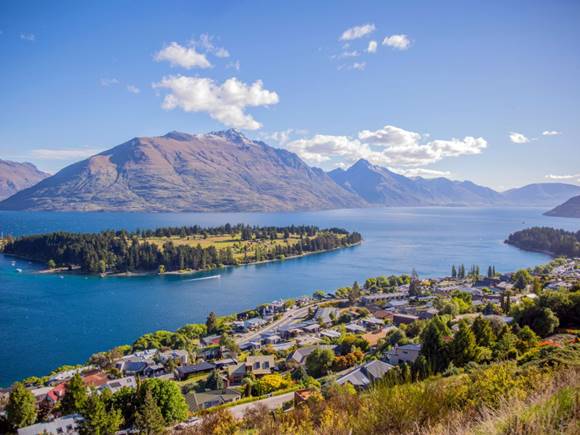
Most New Zealand itineraries fail before the trip even starts, and the culprit is almost always the spreadsheet. Someone maps out fourteen stops in twelve days, color-codes the drive times, and calls it a plan. Then they land in Auckland, hit traffic on the way to Rotorua, and spend the rest of the trip playing catch-up. Building an itinerary that actually works means starting from a different set of assumptions than the ones most travel blogs hand you.
Start With Days, Not Destinations
The instinct is to list every place you want to see and then figure out how to connect them. Flip that. Start with the number of days you actually have, subtract travel days on both ends, and work backward from there. If you have 14 days total, you realistically have 11 or 12 on the ground once you account for arrival grogginess and a departure-day buffer. That number should shape your list, not the other way around.
A useful rule of thumb: budget at least two full nights in any place you want to genuinely experience, not just photograph. One night means you arrive, sleep, and leave — you never actually see the town in daylight doing anything but packing the car.
The Two-Island Problem
New Zealand looks small on a map, which is exactly why so many itineraries go wrong. The North and South Islands are separated by a ferry crossing that takes about three and a half hours, plus a couple of hours on either side for check-in and driving to the terminal. That’s most of a day gone just for the crossing.
Trying to do both islands properly in under two weeks usually means shortchanging one of them badly. A common and more honest approach is to treat this as two separate trips: one focused on the North Island (Auckland, Rotorua, Taupo, Wellington) and another on the South Island (Christchurch, the West Coast, Queenstown, Fiordland). If you only have 10 to 12 days, pick one island and do it well rather than skimming both.
Match Driving Distances to Reality
Google Maps will tell you Franz Josef to Queenstown is about 4 hours. It doesn’t account for the fact that this road hugs a coastline, crosses mountain passes, and is dotted with one-lane bridges where you have to wait for oncoming traffic. Add 20 to 30 percent to any estimated drive time in New Zealand, especially on the South Island’s western routes.
This matters directly for itinerary planning because it changes how many places you can realistically string together in a week. A route that looks like five stops on paper often plays out as three once you factor in stopping for photos, fuel, and the inevitable sheep crossing.
Build In at Least One Buffer Day
Weather in New Zealand changes fast, particularly around Milford Sound, Aoraki/Mt Cook, and the West Coast glaciers. A boat cruise or scenic flight booked for a specific day can get cancelled with little notice if conditions turn. Without a spare day built into the schedule, that experience just disappears from the trip entirely.
A single buffer day placed roughly at the trip’s midpoint gives you flexibility to rebook a cancelled activity, extend a stay somewhere unexpectedly good, or simply rest. It’s the cheapest insurance you can build into a schedule, and it costs nothing if you don’t end up needing it.
Choose a Pace That Matches How You Travel
Some travelers do better with a hub-and-spoke approach: settle into Queenstown or Wanaka for four or five nights and take day trips from there. Others prefer a point-to-point road trip where each stop is new. Neither is more correct, but mixing them without deciding in advance usually results in the worst of both — packing and unpacking constantly while also feeling stuck in one place too long.
Deciding your pace before booking accommodation prevents a lot of wasted money on cancellations later. Many independent operators offering guided routes for touring New Zealand already build these pacing decisions into multi-day packages, which can be a useful reference point even for travelers planning their own route from scratch.
Leave Space for the Unplanned Stop
Some of the best stretches of a New Zealand trip aren’t on any itinerary — a lookout on State Highway 6, a roadside pie shop in a town with 200 people, a waterfall with no sign pointing to it. An itinerary booked down to the hour leaves no room for these, because every hour already has a job.
Leaving two or three unscheduled hours per driving day, rather than treating the drive as pure transit, changes the character of the whole trip.
The Real Takeaway
The itineraries that hold up in practice are the ones with fewer stops, longer stays, and at least one day with nothing booked at all. Before finalizing any plan, count the total number of overnight stops and cut it by at least 20 percent. That single edit does more to fix a rushed itinerary than any amount of route optimization ever will.