

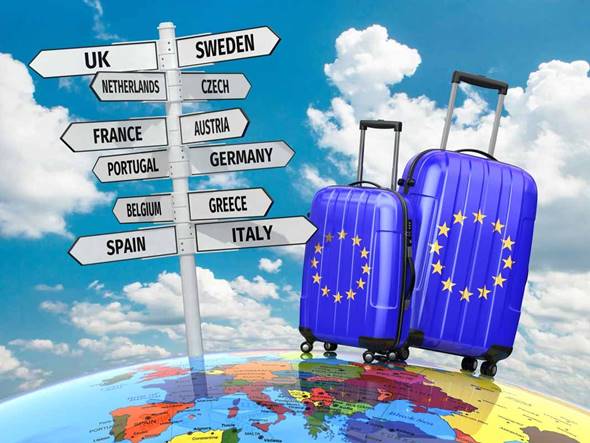
 Planning a European trip often means moving between countries with very different laws, cultures, and expectations. Cannabis is a good example. A product that can be legally purchased or possessed in one destination may be restricted in another, while rules around public use and transportation can change from one border to the next.
For travelers, the biggest mistake is assuming that Europe has one approach to cannabis. It doesn’t. The European Union Drugs Agency (EUDA) explains that there is no harmonised EU law covering personal cannabis possession, meaning individual countries establish their own rules.
Before you buy anything during a European trip, it is worth understanding the local law, what you are actually purchasing, and what happens if you continue traveling afterward.
Europe Does Not Have One Cannabis Rule
Cannabis laws vary significantly across Europe. Some countries have introduced limited forms of personal possession, cultivation, or regulated access, while others continue to prohibit recreational cannabis.
Recent changes make the landscape even more varied. The EUDA reports that Malta, Luxembourg, and Germany have introduced different forms of personal-use regulation, while Czechia introduced legislation in 2026 allowing individuals to cultivate up to three cannabis plants for private consumption. The Netherlands also continues its distinctive coffeeshop model while testing a regulated cannabis supply chain in selected municipalities.
That means a rule you encounter in one country should never be treated as a European-wide rule. Even neighboring countries can have different requirements for possession, purchasing, cultivation, and use.
The first step is therefore simple: identify the country you are actually visiting and check its current regulations.
Check What You Are Actually Buying
The word “cannabis” can cover several different products, and they may not all fall under the same legal framework.
Before making a purchase, consider:
-
-
- What exactly does the product contain?
- Is it intended for recreational or medical use?
- Does the country regulate that particular product?
- Are there age requirements?
- Are there possession limits?
- Are there restrictions on where it can be used?
-
This distinction matters because recreational cannabis, medical cannabis, CBD products, foods, cosmetics, and other cannabis-derived products can be subject to different rules. The EUDA’s current guidance specifically covers medical cannabis and low-THC products alongside recreational cannabis.
A product being displayed in a shop or advertised online does not automatically mean every traveler can legally purchase, possess, use, or transport it.
Don’t Assume a Cannabis Shop Means Everything Is Legal
Travelers researching a destination may come across cannabis-related stores, websites, and advertisements. But the existence of a business does not necessarily tell you what products are legally available or what restrictions apply to customers.
When exploring the market online, travelers might encounter a Weed shop online while researching different cannabis-related products and services. Europe Cannabis can be useful as part of that research, but visitors should still verify the applicable national rules before assuming that a particular product or transaction is permitted.
This is especially important when a website serves customers across several countries. A product may be promoted internationally even though the laws governing its sale, possession, or delivery differ from one destination to another.
Commercial websites can help travelers understand what is being offered, but their descriptions should always be considered alongside current official legal guidance.
Pay Attention to Possession Limits
Even in countries that allow some form of recreational cannabis, access can come with specific conditions.
Those conditions may concern the amount a person can possess, where cannabis can be used, whether it must remain in private, or whether commercial sales are permitted. Some countries have created personal-use systems rather than conventional retail markets.
The EUDA notes that possession thresholds vary considerably across Europe, with countries using different quantities and legal definitions for personal possession. So instead of asking only, “Is cannabis legal here?” travelers should ask more specific questions:
-
-
- How much can I legally possess?
- Can visitors purchase it?
- Where can it legally be used?
- Are there age restrictions?
- Does the rule apply to the specific product I am considering?
-
Those details provide a much clearer picture than a simple “legal” or “illegal” label.
Public Use Can Have Different Rules
Buying or possessing cannabis does not automatically mean you can use it anywhere. Public-use restrictions can apply even in destinations where limited possession is permitted. Rules may be particularly relevant around schools, public transportation, government buildings, entertainment venues, and other sensitive locations.
Your accommodation may also have separate policies. A hotel, hostel, or rental property can prohibit smoking or cannabis use even where private consumption is otherwise permitted under national law.
Travelers should therefore consider both the country’s legislation and the rules of the specific place they are visiting. Being respectful of residents and other visitors is also important, particularly in busy tourist areas.
Be Careful When Crossing Borders
This is one of the most important considerations for anyone visiting multiple European countries. A purchase that is lawful in one country does not automatically become lawful to carry into another. The EUDA confirms that there is no harmonised EU law covering personal cannabis possession, while European legislation does establish minimum provisions concerning illicit drug trafficking.
That distinction matters even when countries are part of the Schengen Area. An open internal border does not mean that national drug laws disappear. If your itinerary includes several countries, check the rules of each destination rather than assuming that the law of your first stop follows you throughout the journey.
Medical Cannabis Requires Extra Planning
Medical cannabis should also be treated separately from recreational purchasing. A prescription or authorization issued in your home country does not automatically guarantee that you can carry the same medication into another country without meeting additional requirements. National rules can differ concerning controlled medicines, documentation, quantities, and permitted forms.
If you travel with prescribed cannabis, check the official requirements of every country on your itinerary before departure. Keep the relevant documentation with you and make sure you understand any restrictions that apply.
The same principle applies to other controlled medicines: international travel can create requirements that do not exist during ordinary domestic use.
A Simple Checklist Before You Buy
Before purchasing cannabis during a European trip, take a moment to check:
-
-
- Local legality: Is recreational cannabis permitted in that country?
- Product type: What exactly are you buying?
- Age requirements: Are there minimum-age rules?
- Possession limits: Is there a quantity restriction?
- Use restrictions: Can it be used publicly or only privately?
- Border rules: Can you legally take it to your next destination?
- Current information: Are the rules you’re relying on still valid?
-
These questions only take a few minutes to answer but can prevent a simple misunderstanding from creating a much bigger travel problem.
Conclusion
Buying cannabis while traveling in Europe requires more research than simply finding a destination where cannabis appears to be tolerated. European countries have different rules covering possession, sales, public use, medical products, and cross-border travel, and those rules continue to evolve. Before purchasing anything, check the current law in the specific country, understand exactly what you are buying, and never assume that a legal purchase can automatically be carried into your next destination. A little preparation can help travelers understand the local rules and enjoy their European trip without relying on outdated assumptions.