

Paris rewards visitors who plan with intention rather than trying to see everything at once. The city packs centuries of art, architecture, and daily ritual into a compact footprint, which means a smart itinerary can cover an astonishing amount of ground on foot. Here are eight experiences that deliver on the promise of a first (or fifth) trip to the French capital.
Climb to the Top of the Eiffel Tower at Sunset
Skip the midday crowds and book a ticket for the hour before sunset, when the light turns gold over the Seine. The summit level sits at 906 feet, and on a clear day you can see up to 42 miles in every direction. Elevator tickets sell out days in advance during summer, so reserve online through the official Eiffel Tower site rather than risking the ticket line at the base.
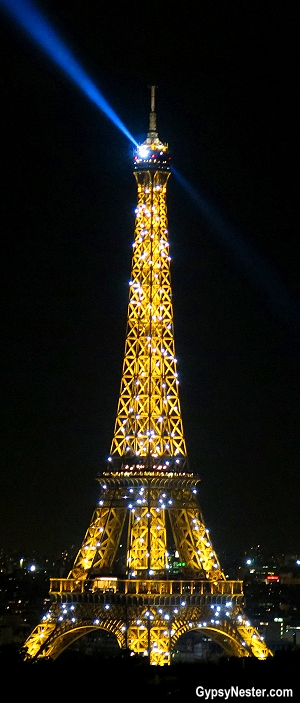
Staying until the tower’s light show begins on the hour after dark adds a second payoff to the same visit. The sparkling display lasts five minutes and repeats hourly until 1 a.m., visible from the Trocadéro gardens across the river if you’d rather watch the tower than stand inside it.
Wander the Louvre with a Plan, Not a Checklist
The Louvre holds roughly 35,000 works on display across three wings, far more than anyone can absorb in one visit. Rather than sprinting toward the Mona Lisa, pick one wing, such as Richelieu for French and Northern European painting, and spend two unhurried hours there. The museum is far less crowded on Wednesday and Friday evenings, when it stays open until 9:45 p.m.
Entering through the Porte des Lions or the Carrousel du Louvre underground entrance instead of the main pyramid can save 20 minutes of queuing. Timed-entry tickets are mandatory and should be booked at least a week ahead for anything close to peak season.
Explore Notre Dame Cathedral’s Restoration
Notre Dame reopened to the public in December 2024 after a five-year restoration following the 2019 fire, and the results are striking. The stonework has been cleaned to reveal a lighter, almost golden facade, and the interior’s acoustics and lighting have been restored to a clarity many visitors say surpasses what existed before the blaze. Free entry is available, but timed slots fill quickly, especially on weekends.
For those who want context beyond a self-guided walk-through, Notre Dame tours Paris options led by art historians or architecture specialists explain the engineering behind the restoration and the symbolism carved into the facade’s 28 kings and rose windows. Understanding what burned and how it was rebuilt changes how the space reads once you step inside.
Get Lost in Montmartre’s Back Streets
Beyond the crowds at Sacré-Cœur, the surrounding streets of Montmartre retain a genuine village feel. Rue de l’Abreuvoir and Rue Saint-Rustique are quiet enough to feel like a private discovery, lined with ivy-covered buildings and small vineyards tucked between apartment blocks. Place du Tertre still hosts working artists, though prices for portraits and caricatures have climbed well above what a casual passerby might expect.
Visit early on a weekday morning if possible, before tour buses arrive around 10 a.m. The neighborhood’s steep staircases and funicular make for a workout, but the payoff is a view over the rooftops of Paris that rivals anything from the Eiffel Tower.
Spend an Afternoon in the Marais
The Marais neighborhood mixes medieval architecture with some of the city’s best small museums and food. Place des Vosges, built in 1612, is the oldest planned square in Paris and remains one of the most peaceful spots to sit with a pastry from a nearby boulangerie. The Musée Picasso, housed in a 17th-century mansion, holds over 5,000 works and rarely has the lines found at bigger institutions.
The neighborhood is also home to a concentrated stretch of falafel shops on Rue des Rosiers, a legacy of the area’s historic Jewish community. Comparing two or three stands is a reasonable way to spend a lunch hour.
Take a Boat Along the Seine
A one-hour Seine cruise offers a low-effort way to see a dozen landmarks from a different angle, including Notre Dame, the Musée d’Orsay, and the Statue of Liberty replica near the Pont de Grenelle. Evening departures after 8 p.m. in summer catch the city’s monuments freshly lit against a darkening sky. Boarding at the Pont Neuf dock tends to involve shorter waits than the more heavily trafficked piers near the Eiffel Tower.
Sample a Real Parisian Market
Marché des Enfants Rouges, established in 1615 in the Marais, is the oldest covered market in Paris and a working lunch spot for locals rather than a tourist attraction dressed up as one. Stalls sell Moroccan tagines, Japanese bento, and French cheese counters within a few feet of each other. Arriving before noon avoids the worst of the lunchtime rush from nearby offices.
Watch the City from Sacré-Cœur at Night
Sacré-Cœur’s terrace stays open late, and the basilica itself is free to enter until shortly before closing. Unlike the Eiffel Tower’s illuminated views, the vantage point from Montmartre’s hill offers a wide, quiet panorama with fewer crowds after dark. The dome is climbable for a fee and adds an even higher perspective for those willing to handle the narrow spiral stairs.
Paris tends to reward travelers who slow down enough to notice details rather than racing between landmarks. Picking three or four of these experiences and giving each one real time will leave a stronger impression than trying to check off all eight in a single trip.