

Buenos Aires moves at two speeds: the unhurried afternoon coffee that stretches for hours, and the electric pulse of a milonga after midnight. The city rewards travelers who slow down enough to notice both. Between grand European-style architecture, working-class neighborhoods turned art districts, and a food culture built on Italian and Spanish roots, there’s enough here to fill a week without repeating a single experience. These seven activities cover the range of what makes the Argentine capital worth the long flight south.
Watch (or Take) a Tango Lesson in San Telmo
Tango was born in the tenements of Buenos Aires in the late 1800s, and San Telmo still feels like its spiritual home. On Sundays, Plaza Dorrego fills with an antiques market by day and impromptu tango performances by dusk, with dancers moving across cobblestones for tips and the sheer joy of it. Several venues in the neighborhood offer beginner lessons before the evening milongas start, so you can learn basic steps before watching professionals take over the floor. Even without dancing, sitting at a café along Defensa Street with a glass of Malbec while watching a couple perform is worth the detour.
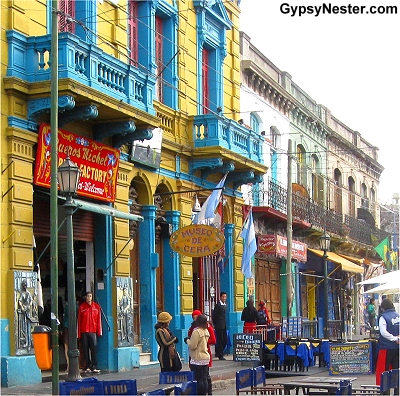
Explore La Boca’s Caminito Street
La Boca is a working-class port neighborhood known for its brightly painted houses made from leftover ship paint, a tradition dating back to the late 19th century when Italian immigrants settled the area. Caminito, the pedestrian street at its center, functions as an open-air museum with tango dancers, street vendors, and artists selling work inspired by the neighborhood’s history. It’s touristy, and locals will tell you not to wander far outside the main strip after dark, but the concentrated color and energy make it worth an hour or two. Pair the visit with a stop at La Bombonera, the stadium home to Boca Juniors, one of Argentina’s most fiercely supported football clubs.
Visit the Recoleta Cemetery
Recoleta Cemetery holds more architectural ambition per square foot than most city blocks. Marble mausoleums, some over a century old, line narrow pathways in a maze that took decades to reach its current density. Eva Perón is buried here, in the Duarte family vault, and her grave remains one of the most visited spots in the entire city. Set aside at least 45 minutes to wander without a fixed route, since some of the most striking tombs are the ones without a name anyone recognizes.
Join a Walking Food Tour Through Palermo or San Telmo
Argentine cuisine goes well beyond steak, though beef absolutely earns its reputation here. Empanadas, choripán, dulce de leche pastries, and Malbec wine all tell part of the story, and a guided outing makes it far easier to taste a lot in a short window without guessing which spots are worth the calories. Several operators run Buenos Aires food tours through neighborhoods like Palermo and San Telmo, stopping at family-run bakeries, parrillas, and wine bars that don’t always show up on a typical tourist itinerary. Going with a local guide also opens up conversations about Argentina’s economic history and how it shaped what people eat and drink today.
Wander the Bookstores and Cafés of Avenida Corrientes
Buenos Aires has more bookstores per capita than almost any other city in the world, and Avenida Corrientes is where that reputation lives most visibly. El Ateneo Grand Splendid, a former theater converted into a bookstore, keeps its original stage, balconies, and ceiling murals intact, with a café now sitting where the stage once was. Beyond that single famous shop, the avenue is lined with smaller, independent bookstores open late into the night, reflecting a culture where reading and conversation carry real social weight. Stop at a nearby café for a cortado and medialunas to fully settle into the pace of the street.
Take in the Views from Puerto Madero
Puerto Madero is the newest of the city’s neighborhoods, a redeveloped dockland now lined with glass towers, upscale restaurants, and a long riverside walkway. The Puente de la Mujer, a white pedestrian bridge designed by Santiago Calatrava, is the area’s visual centerpiece and a popular spot for photos at sunset. It’s a useful contrast to the older, more ornate parts of the city, showing how Buenos Aires has grown outward from its European-influenced core. An early evening walk here, followed by dinner at one of the waterfront restaurants, makes a good way to close out a day of sightseeing.
Catch a Live Show at Teatro Colón
Teatro Colón ranks among the finest opera houses in the world acoustically, a claim backed by architects and musicians alike. Guided tours run during the day, covering the building’s Italian marble, French stained glass, and gold leaf detailing, but seeing an actual performance is the better way to experience the space. Tickets for standing-room sections are inexpensive relative to the quality of what’s on stage, whether it’s opera, ballet, or a symphony performance. Check the schedule before arriving in the city, since popular shows sell out days or weeks ahead.
Buenos Aires rewards travelers who mix structured sightseeing with unplanned wandering, since some of its best moments happen between the official stops. Build a loose itinerary around these seven activities, then leave room for a long lunch or an unplanned tango lesson to fill in the rest.