

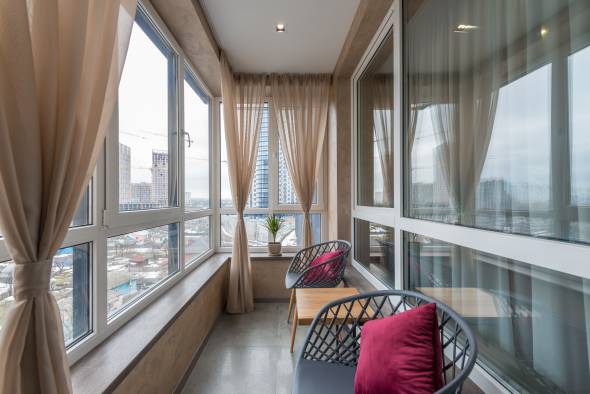
Most people shop for window coverings the way they shop for paint: they pick something that looks nice and hope it works. Then the afternoon sun bakes the living room, the bedroom never gets fully dark, and the bathroom feels exposed. The truth is that a window covering is a function decision first and a style decision second. What a window needs depends entirely on the room it lives in, how that room is used, and which direction it faces.
Here is a room-by-room way to think it through before you spend a dollar.
Living rooms and great rooms
These are the rooms where glare and heat cause the most complaints. A big west-facing window can turn a comfortable space into a greenhouse by four in the afternoon and fade your furniture over a couple of summers. Light-filtering roller shades or honeycomb cell shades soften the sun without blacking out the room, and cellular shades add a layer of insulation that helps hold temperature. If the view matters to you, motorized shades let you drop them halfway with a tap instead of fighting a dozen cords.
Bedrooms
Bedrooms are about darkness and privacy, full stop. Blackout roller shades or drapery with a blackout lining make the difference between waking up at dawn and sleeping in. Layering helps here too: a light-filtering shade for the daytime paired with a heavier drape for night gives you control at any hour. Bedrooms that face a neighbor or a streetlight benefit from a treatment that seals close to the window frame rather than one that leaves a bright halo around the edges.
Kitchens and bathrooms
Moisture and cleaning are the deciding factors in these rooms. Fabric can hold humidity and stains, so faux wood blinds and vinyl-friendly shades tend to hold up better over the years. In a bathroom, top-down bottom-up shades are a clever pick because they let daylight pour in from the top while the bottom of the window stays covered for privacy.
Home offices and media rooms
Screen glare is the enemy. You want to cut direct light without plunging the room into darkness during a video call. Solar screen shades are built for exactly this, knocking down glare and heat while preserving a soft view to the outside. In a dedicated media room, layered drapery over a blackout shade gives you full theater-level control.
The measurement problem nobody warns you about
Even the right product fails if the fit is wrong. A shade mounted a half inch off leaves light gaps. Blinds cut a hair too wide bind in the frame. This is where a professional measurement and installation pays for itself, because a covering that seals properly is the one that actually controls light and heat the way the manufacturer promised. It is also why a lifetime installation guarantee matters more than most buyers realize when they are comparing quotes.
For homeowners in North Alabama who would rather get it right the first time, working with a company that handles the measuring and the installing in house removes the guesswork. A local specialist in custom window treatments can walk each room with you, look at how the sun tracks across your house, and match the product to the job instead of selling you whatever is on the shelf.
Start with the problem, not the product
The best way to shop is to name the problem in each room out loud. Too much heat. Not enough privacy. A view worth protecting. A nursery that needs to be pitch black at noon. Once the problem is clear, the right product usually picks itself, and you avoid the expensive mistake of covering an entire house in one material that only truly suits one room. Treat your windows like the working parts of your home that they are, and the comfort follows.